Disclosure: airfryerkitchensupply.com is reader-supported. When you buy through links on our site, we may earn an affiliate commission at no extra cost to you.
Where to buy
Looking for the best chairs for long sitting hours? Every chair in this guide is sold through Amazon, and each pick below links straight to its listing so you can check the current price on Amazon, confirm the exact configuration, and read the full manufacturer description before you commit. Long-sitting chairs vary a lot by production run and by the options selected on the listing page, so treat the listing itself as the final word on what is in the box. If a chair is out of stock in the finish you want, the same model is often listed in other colors on the same page rather than under a separate product.
- Furmax Office Chair — Best Budget: Check the current price on Amazon
- BestOffice Ergonomic Office Chair — Best Value Sponge Seat: Check the current price on Amazon
- SIHOO M18 Ergonomic Office Chair — Best Mid-Range All-Rounder: Check the current price on Amazon
- Marsail Ergonomic Office Chair — Best High-Back Mesh: Check the current price on Amazon
- Steelcase Leap — Best Premium Support System: Check the current price on Amazon
- Herman Miller Embody — Best Splurge for All-Day Sitting: Check the current price on Amazon
Finding the best chairs for long sitting hours is less about buying the most expensive seat in the catalog and more about matching a chair’s support geometry to the way you actually work. A chair that feels wonderful for a twenty-minute email check can become genuinely punishing by hour six, because the problems of long sitting are cumulative: pressure builds under the thighs, the lower back slowly rounds into the backrest, shoulders creep forward, and heat builds up where your body meets the cushion. The right chair does not eliminate those pressures, but it spreads them out, supports the spine’s natural curve, and gives you enough adjustment to change position before discomfort sets in.
This guide focuses on desk and office chairs, because that is where most long sitting actually happens: full workdays at a computer, long study sessions, and hybrid schedules where the same chair carries you from morning standup to evening gaming. Every pick here was verified against the manufacturer’s own Amazon listing, and we only describe features the listing itself states. Where a listing is silent about something — a weight capacity, a recline range, a seat depth — we say so rather than guess, because an unstated spec is exactly the kind of detail that matters at hour eight.
You will find a deliberate spread below: simple mesh task chairs at the affordable end, fully adjustable ergonomic chairs in the middle, and two premium chairs from Steelcase and Herman Miller whose support systems are engineered specifically for people who sit all day, every day. None of them will fix a workstation with a badly placed monitor or a desk at the wrong height, and the buying guide further down explains how the chair, the desk, and your own movement habits share the work. But the chair is the foundation, and it is the piece most worth getting right first.
In this guide
Quick Picks
If you are short on time, here is the short version. All six chairs support long workdays, but they do it at very different price tiers and with very different levels of adjustment, so match the badge to your situation rather than defaulting to the top pick.
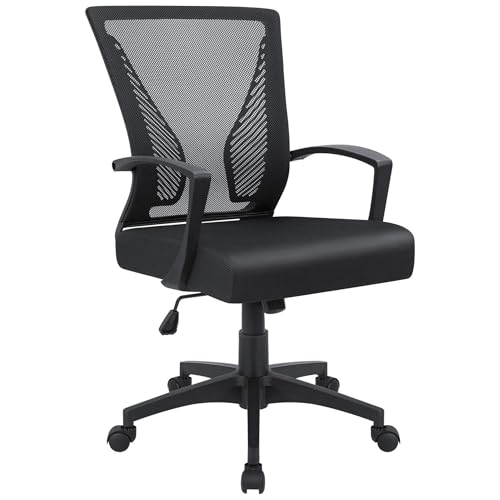
Furmax Office Chair — Best Budget. A mid-back mesh desk chair with lumbar support, an adjustable-height seat, a breathable backrest, and a 360-degree swivel — the simplest credible way to upgrade from a dining chair or a worn-out task chair without spending much. Check the current price on Amazon
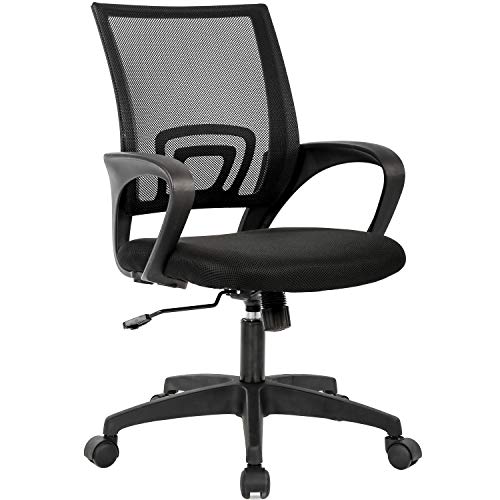
BestOffice Ergonomic Office Chair — Best Value Sponge Seat. A mid-back swivel desk chair with lumbar support, adjustable height, a breathable backrest, and a padded sponge seat — a step up in seat cushioning from basic mesh chairs at a still-modest tier. Check the current price on Amazon
SIHOO M18 Ergonomic Office Chair — Best Mid-Range All-Rounder. A mesh-back desk chair with a headrest, adjustable lumbar support, a stated 330 lb capacity, 2D armrests, a wide cushion, and tilt lock — the point in the range where real adjustability starts. Check the current price on Amazon
Marsail Ergonomic Office Chair — Best High-Back Mesh. A high-back mesh chair with adjustable lumbar support, 3D armrests, and a headrest — for taller users and anyone who wants back support that continues up to the shoulders and head. Check the current price on Amazon
Steelcase Leap — Best Premium Support System. Steelcase’s long-running ergonomic work chair in Onyx, built around its Natural Glide System and LiveBack technology, with wheels specified for carpet — a support system designed to move as your posture changes. Check the current price on Amazon
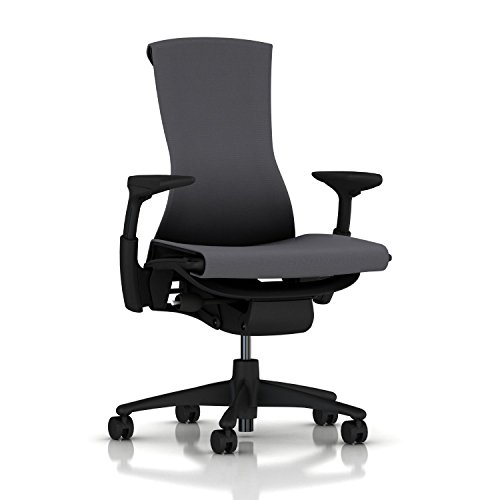
Herman Miller Embody — Best Splurge for All-Day Sitting. Herman Miller’s flagship ergonomic chair in Charcoal Rhythm fabric, with fully adjustable arms and carpet casters — the top-tier option for people whose chair is their primary workplace. Check the current price on Amazon
How These Picks Were Chosen
We started from the features that research on seated comfort keeps coming back to: lumbar support that meets the lower back instead of hovering near it, a seat that does not cut circulation at the front edge, a backrest that lets you shift posture, and materials that do not trap heat over a long day. Each candidate chair was then checked against its live Amazon listing, and only chairs whose listings clearly state their key features made the cut. That verification step matters more than it sounds: marketplace listings for chairs are notorious for borrowing feature language from other models, so if a listing did not state a feature, we did not credit the chair with it.
We also weighted adjustability heavily. Two people of the same height can need very different seat depths and lumbar heights, and a fixed chair that happens to fit you is a gamble when you cannot try it first. Adjustable height is the bare minimum; adjustable lumbar support, armrests that move in more than one direction, headrests, and tilt lock all raise the odds that the chair can be tuned to your body instead of the other way around. Finally, we spread the picks across budget tiers on purpose. Long sitting is a daily, years-long use case, and the honest answer is that spending more does buy better support systems — but a well-chosen budget mesh chair, set up correctly, beats an expensive chair left at factory settings.
The 6 Best Chairs for Long Sitting Hours
Furmax Office Chair — Best Budget
The Furmax is the chair we would point to first for someone setting up a home office on a tight budget, a student facing long study sessions, or anyone whose current seat is a kitchen chair that was never meant for eight-hour days. It is a mid-back mesh design: the backrest is a breathable mesh panel rather than padded upholstery, which is a real advantage for long sitting because air keeps moving behind your back instead of heat building up hour after hour. The listing states lumbar support, adjustable height, and armrests, and the chair swivels a full 360 degrees on rolling casters.
What you give up at this tier is fine-grained tuning. The lumbar support is built into the shape of the backrest rather than being a separate mechanism you can raise, lower, or push deeper, so whether it lands exactly on your lower back depends on your torso length. The armrests are fixed in position. The seat is a mid-back chair’s seat — serviceable for long days, but without the deep adjustability of the chairs further down this list. For the price tier, though, the fundamentals are the right ones: mesh ventilation, a supported back, and a seat height you can set so your feet rest flat.
Strengths
- Breathable mesh backrest keeps air moving during long sessions
- Lumbar support and adjustable height cover the two most important basics
- 360-degree swivel with armrests suits desk work and calls alike
Trade-offs
- Lumbar support is fixed in the backrest shape, not separately adjustable
- Armrests do not adjust, so elbow height is take-it-or-leave-it
- Listing does not state a weight capacity, so heavier users should check the listing
Key specs (from the manufacturer listing)
- Backrest: Mesh, mid-back, breathable
- Lumbar support: Stated in listing (built-in)
- Height adjustment: Yes, stated
- Swivel: 360 degrees
- Weight capacity: Not stated
Set up carefully, this chair punches above its tier: raise the seat until your thighs are level or sloping very slightly down, and scoot back until the lumbar curve actually touches your lower back — many people sit perched on the front half of the seat and then blame the chair. If you are tall, check the listing’s dimensions before ordering, because mid-back chairs run smaller than high-back models and the top of the backrest will land between your shoulder blades rather than behind your head. As a first real desk chair or a spare-room chair, it is an honest, sensible buy.
Best for: Budget home offices, students, and first-time desk-chair buyers / Not suited for: Users who need a headrest, deep adjustability, or a stated high weight capacity
BestOffice Ergonomic Office Chair — Best Value Sponge Seat
The BestOffice chair follows the same proven formula as the Furmax — mid-back, lumbar support, adjustable height, breathable backrest — but swaps in a sponge seat cushion, and that difference is the whole reason it earns its own slot. Mesh seats and foam seats feel very different at hour six: a padded sponge seat gives a softer initial sit and spreads pressure for people who find firm mesh seats harsh under the thighs, while the mesh backrest still handles ventilation where your back needs it most. The chair swivels, rolls on wheels, and is sold as a single pack for home and office use.
Like most chairs in this tier, the adjustments are the essentials rather than the full ergonomic toolkit. The lumbar support is part of the backrest design, the armrests are fixed, and there is no headrest. The listing does not state a weight capacity or a seat-depth adjustment, so this is a chair for average-sized users who want a comfortable, padded sit for a standard workday rather than a precision-fitted workstation seat. Assembly on chairs of this type is typically a one-person job with the hardware included, and the simple construction is part of the appeal: fewer mechanisms means fewer things to rattle or fail.
Strengths
- Sponge seat cushion softens pressure under the thighs on long days
- Breathable backrest plus lumbar support covers heat and back basics
- Simple, proven mid-back design that is easy to live with
Trade-offs
- No headrest and no separately adjustable lumbar mechanism
- Fixed armrests cannot be tuned to desk height
- Weight capacity and seat depth are not stated in the listing
Key specs (from the manufacturer listing)
- Seat: Sponge cushion
- Backrest: Breathable, mid-back
- Lumbar support: Stated in listing (built-in)
- Height adjustment: Yes, stated
- Weight capacity: Not stated
Choose this one over the Furmax if you know from experience that you prefer a padded seat to a mesh one, or if your workday mixes desk time with reading and calls where a softer sit matters. Choose the Furmax if you run hot and want maximum airflow. Either way, the honest framing for this tier is that these chairs make long sitting comfortable enough for most people at most desks; the chairs below exist for people who have already discovered, through their own backs, that ‘comfortable enough’ is not cutting it anymore.
Best for: Users who prefer a padded seat and want an affordable all-day desk chair / Not suited for: Tall users needing a high back or anyone wanting a headrest

SIHOO M18 Ergonomic Office Chair — Best Mid-Range All-Rounder
The SIHOO M18 is where this list moves from ‘comfortable chair’ to ‘adjustable ergonomic chair,’ and the listing backs that up with specifics. The lumbar support is adjustable rather than fixed, which means you can position it against your lower back instead of hoping the backrest curve happens to match you. There is a headrest for leaning back between tasks, 2D armrests that adjust in two directions, a wide seat cushion, and a tilt lock so you can fix the backrest at the angle you actually work at instead of fighting spring tension all day. The stated capacity is 330 lbs, which covers a broader range of users than most chairs in this class bother to state.
The mesh back keeps the ventilation advantage of the budget picks while the wider cushion addresses one of the most common long-sitting complaints: a seat that feels like it is squeezing your hips by mid-afternoon. For hybrid workers who sit six to ten hours with breaks, this is the tier we would call the sweet spot — you are paying for adjustments you will genuinely use every day, not for branding. The trade-offs are the usual mid-range ones: armrests adjust in two directions rather than three or four, and the listing does not promise the kind of dynamic, body-tracking back support that the premium chairs at the end of this list are built around.
Strengths
- Adjustable lumbar support can be positioned to your lower back
- Headrest, 2D armrests, and tilt lock support posture changes through the day
- Stated 330 lb capacity and wide cushion suit a broad range of users
Trade-offs
- Armrests stop at 2D adjustment rather than 3D or 4D
- No dynamic backrest system that moves with your spine
- Mesh seat-back feel is firmer than padded upholstery, which not everyone likes
Key specs (from the manufacturer listing)
- Backrest: Mesh with headrest
- Lumbar support: Adjustable, stated
- Armrests: 2D adjustable
- Capacity: 330 lbs, stated
- Tilt: Tilt lock, stated
If you buy one chair from this list without knowing much about your own preferences, this is the safest recommendation: it adjusts in the places that matter, states its capacity honestly, and does not ask premium money. Spend the first week actually using the adjustments — lumbar height one day, tilt tension the next — because a chair like this only earns its keep when it is tuned, and most returns on ergonomic chairs are really failures to set them up. For users over six feet tall, confirm the seat height range on the listing against your desk before ordering.
Best for: Full-time remote workers who want real adjustability at a mid-range tier / Not suited for: Users who want a plush padded back or fully 4D armrests

Marsail Ergonomic Office Chair — Best High-Back Mesh
The Marsail’s defining choice is its high back. Where mid-back chairs end between the shoulder blades, this chair’s mesh backrest continues up to a headrest, which changes the feel of long sitting in two ways: your upper back stays supported when you lean back to think or take a call, and the headrest gives your neck somewhere to rest during the natural pauses in a workday. The lumbar support is adjustable, the armrests adjust in three dimensions, and the whole chair rolls and swivels as a proper task chair should. For tall users especially, a high back is often the difference between a chair that fits and a chair that almost fits.
Three-dimensional armrests deserve a word, because armrests are the most under-adjusted part of most setups. Height alone is not enough: being able to move the pads forward, back, and sideways lets you support your forearms while your elbows stay near your body, which is what actually unloads your shoulders over a long day. The listing does not state a weight capacity, which is a genuine gap for a chair in this tier — check the listing details and the manufacturer’s specifications there before buying if capacity matters to you. The mesh construction keeps the same trade-off as all mesh chairs: excellent airflow, a firmer and more ‘held’ sitting feel than foam upholstery.
Strengths
- High-back design with headrest supports shoulders and neck on lean-backs
- 3D armrests help position forearms without shrugging shoulders
- Adjustable lumbar support plus full mesh ventilation
Trade-offs
- Weight capacity is not stated in the listing
- High back takes more visual and physical space in a small room
- Mesh feel is firmer than padded chairs, which some users dislike
Key specs (from the manufacturer listing)
- Backrest: High-back mesh with headrest
- Lumbar support: Adjustable, stated
- Armrests: 3D adjustable
- Swivel: Rolling swivel task chair
- Weight capacity: Not stated
Pick the Marsail over the SIHOO if you are tall, if you lean back often to read or think, or if your current chair’s biggest flaw is that it simply ends too low on your back. Pick the SIHOO if you want the stated capacity and the tilt lock. Either way, measure your desk height first: a high-back chair with 3D arms only helps if the arms can slide under or level with your desk without forcing your shoulders up, and that is a measurement, not a guess.
Best for: Tall users and lean-back workers who want head and shoulder support / Not suited for: Small rooms, or buyers who need a stated weight capacity before ordering

Steelcase Leap — Best Premium Support System
The Steelcase Leap is one of the most widely deployed ergonomic chairs in corporate offices, and it earns its place on a long-sitting list for a specific reason: its back is designed to change shape as you do. Steelcase calls the technology LiveBack — the backrest flexes to follow the changing curve of your spine as you shift between upright work, reclined thinking, and everything in between — and pairs it with a Natural Glide System that lets the seat move as you recline so your eyes and arms stay in a natural relationship with your desk. That matters over long hours because nobody actually sits in one posture all day, whatever the posture posters say; a chair that supports movement beats a chair that enforces stillness.
This listing is the Onyx finish with wheels for carpet, a detail worth noticing if your office has hard floors — caster type is one of those small specs that affects both floor wear and how freely the chair rolls, and the listing states carpet casters specifically. The Leap’s adjustments are extensive in the way premium chairs are: this is a chair meant to be fitted to one person and then to disappear underneath them for years. The honest trade-offs are price tier — it sits firmly in premium territory — and the fact that its firm, engineered feel is a different experience from a plush executive chair. It supports; it does not coddle.
Strengths
- LiveBack backrest flexes to follow your spine as you change posture
- Natural Glide System keeps your posture aligned with the desk as you recline
- Proven long-service design from a major ergonomic manufacturer
Trade-offs
- Premium price tier, well above the mesh chairs above
- This listing specifies casters for carpet, not hard floors
- Firm, supportive feel rather than plush cushioning
Key specs (from the manufacturer listing)
- Back system: LiveBack technology, stated
- Seat system: Natural Glide System, stated
- Finish: Onyx
- Casters: For carpet, stated
- Weight capacity: Not stated in listing text
The Leap makes the most sense for someone who has already tried a mid-range chair, sits eight-plus hours daily, and knows their remaining discomfort is about support through movement rather than basic fit. It is also the pick for buyers who keep chairs for a decade: the economics of a premium chair look very different spread over ten years of workdays than they do on the day of purchase. If your floors are hardwood or laminate, confirm caster options on the listing before ordering, since this configuration is specified for carpet.
Best for: All-day professionals who want a backrest that moves with them / Not suited for: Budget buyers, or hard-floor offices without confirming caster options
Herman Miller Embody — Best Splurge for All-Day Sitting
The Embody is Herman Miller’s statement chair for long sitting, designed from the start around the idea that a chair should distribute pressure evenly and support the spine through a full day of micro-movements. This listing is the Charcoal Rhythm configuration with fully adjustable arms and casters specified for carpet. Fully adjustable arms matter at this level because the whole point of a chair like this is that every contact point can be tuned: arm height, width, and position should land your forearms in support without lifting your shoulders, and the Embody’s arms are built to be dialed in rather than lived with.
We are deliberately restrained about the Embody’s internal construction here, because this listing’s text is brief — it confirms the model, the finish, the adjustable arms, and the carpet casters, and we would rather point you to the listing for the manufacturer’s full description than paraphrase claims we have not verified in this pass. What can be said plainly: the Embody sits at the top of this list’s price tiers by a wide margin, it is bought by people who sit for a living, and its value case rests on daily use over many years. If you are furnishing a first apartment desk, it is overkill. If your back ends every workday aching in a mid-range chair, it is the chair this list has been building toward.
Strengths
- Flagship ergonomic design built specifically for long daily sitting
- Fully adjustable arms allow precise forearm support
- Premium build intended for years of daily use
Trade-offs
- Highest price tier on this list by a wide margin
- Listing specifies carpet casters; hard-floor users should confirm options
- Listing text is brief, so verify full specifications on the product page
Key specs (from the manufacturer listing)
- Model: Embody Ergonomic Office Chair
- Finish: Charcoal Rhythm
- Armrests: Fully adjustable, stated
- Casters: For carpet, stated
- Weight capacity: Not stated in listing text
Treat the Embody the way you would treat any professional tool purchase: it is justified by hours of daily use, not by occasional sitting. If you work from home four or five days a week and expect to for years, the per-day cost of the top tier becomes reasonable surprisingly fast, and the support difference versus a basic task chair is the kind you feel at 4 p.m., not at 9 a.m. Everyone else on this list will serve you well for less — which is exactly what a good list should be able to say about its most expensive pick.
Best for: Full-time professionals who sit 8+ hours daily and keep chairs for years / Not suited for: Occasional users, first setups, or anyone furnishing on a budget
Comparison Table
The table below lines the six chairs up by the specs their listings actually state. The pattern to notice is the ladder of adjustability: as you move down the list, lumbar support goes from built-in to adjustable, armrests gain dimensions of movement, and backrests gain headrests and dynamic systems. That ladder, more than any single feature, is what the price tiers are buying.
| Pick | Badge | Key spec | Best for |
|---|---|---|---|
| Furmax Office Chair | Best Budget | Mesh mid-back, lumbar support, adjustable height | Budget home offices, students, and first-time desk-chair buyers |
| BestOffice Ergonomic Office Chair | Best Value Sponge Seat | Sponge seat, breathable mid-back, lumbar support | Users who prefer a padded seat and want an affordable all-day desk chair |
| SIHOO M18 Ergonomic Office Chair | Best Mid-Range All-Rounder | Adjustable lumbar, headrest, 330 lb capacity, tilt lock | Full-time remote workers who want real adjustability at a mid-range tier |
| Marsail Ergonomic Office Chair | Best High-Back Mesh | High-back mesh, 3D armrests, headrest, adjustable lumbar | Tall users and lean-back workers who want head and shoulder support |
| Steelcase Leap | Best Premium Support System | LiveBack flexing backrest, Natural Glide seat, carpet casters | All-day professionals who want a backrest that moves with them |
| Herman Miller Embody | Best Splurge for All-Day Sitting | Fully adjustable arms, Charcoal Rhythm, carpet casters | Full-time professionals who sit 8+ hours daily and keep chairs for years |
How to Choose a Chair for Long Sitting Hours
Start with the honest math of your day. Count the hours you actually spend in the chair — not your contracted hours, but seated hours, including the evening gaming or study session in the same seat. Under four hours a day, a basic mesh chair like the Furmax or BestOffice will serve most people well. Six to eight hours, the adjustable lumbar and armrests of the SIHOO or Marsail start paying for themselves daily. Beyond eight hours, or if you already end days with an aching back, the dynamic support systems of the Steelcase Leap and Herman Miller Embody exist precisely for you, and their cost should be judged per year of use, not per purchase.
Next, separate the adjustments into essential and useful. Essential for everyone: seat height that lets your feet rest flat with knees at roughly ninety degrees, and lumbar support that physically touches your lower back when you sit against the backrest. Useful for most: armrests that adjust at least in height so your shoulders can stay down, a backrest that can tilt and lock, and a headrest if you lean back to read or take calls. If a chair cannot do the essentials for your body — because you are very tall, very petite, or outside its stated capacity — no amount of premium branding further down the spec sheet will rescue it.
Finally, think about heat and movement. Long sitting generates heat where body meets chair, which is why mesh backrests dominate this list: they trade plushness for airflow, and most all-day sitters end up preferring the trade. And plan to move anyway. No chair, at any price, makes ten motionless hours healthy; the best chair is the one that supports several postures well, so you can shift, lean, and perch through the day instead of being locked into one ‘correct’ position that becomes its own kind of strain by hour five.
Seat Height, Depth, and Lumbar Fit: The Three Measurements That Matter
Most chair disappointment is a measurement problem, not a quality problem, so take three measurements before you order. First, your desk height: standard desks sit around 28 to 30 inches, and your chair’s seat height range must let you sit with forearms roughly level with the desktop. Second, your popliteal height — the distance from the floor to the crease behind your knee when seated — which tells you the seat height you need for flat feet. Third, your thigh length, which governs seat depth: you want roughly two to three fingers of space between the front edge of the seat and the back of your calf, because a seat that presses into the calf restricts circulation and creates exactly the leg fatigue people blame on ‘sitting too long.’
Lumbar fit is checked differently: sit in the chair, scoot fully back, and notice whether the backrest’s curve meets the small of your back without you having to slump to find it. With adjustable lumbar systems like those on the SIHOO M18 and Marsail, you can move the support to meet you, which is why they are safer buys sight-unseen than fixed-lumbar chairs. If you are between sizes or buying for a shared household office, prioritize the chair with the widest adjustment ranges rather than the one with the longest feature list — range is what lets one chair fit two different bodies.
Do not forget the floor. Two chairs on this list are specified with casters for carpet; on hard floors, the wrong casters roll too freely, scuff finishes, and make the chair feel unstable when you shift weight. Check what your listing includes, budget for a chair mat if your carpet is thick, and remember that a chair that cannot roll smoothly discourages the small position changes that keep long sitting tolerable.
Budget Tiers for Long-Sitting Chairs, Explained Honestly
Chair pricing confuses people because the visible differences look small while the prices multiply. Here is what the tiers on this list actually buy. At the budget tier — the Furmax and BestOffice — you get the correct fundamentals in fixed form: mesh or breathable backs, built-in lumbar shaping, height adjustment. The engineering is simple and the fit is generic, but the fundamentals are genuinely right. In the mid-range — SIHOO and Marsail — the same fundamentals become adjustable: lumbar you can position, armrests that move in two or three dimensions, headrests, tilt locks, wider seats, and stated capacities. This is the tier where fit stops being luck.
At the premium tier — Steelcase and Herman Miller — you are paying for dynamic support: backrests and seats engineered to respond as you move, plus the build quality and parts support of manufacturers whose chairs furnish large offices for a decade at a time. Whether that tier is ‘worth it’ depends entirely on your hours and your history. A useful rule: if a cheaper chair has already failed you — you have owned the budget chair and your back still complains — stepping one tier up is a rational purchase, not an indulgence. If you have never owned a real desk chair at all, start at budget or mid-range, learn what your body actually wants, and let that knowledge guide any later upgrade.
How to Set Up Your Chair for a Long Workday
A good chair at factory settings is only half a chair. Run through this setup once, carefully, on the day the chair arrives, and then revisit it after a week of real use — your body will tell you things on day six that it cannot tell you on day one.
- Set the seat height first: sit down, and adjust until your feet rest flat on the floor with your knees at about ninety degrees and your thighs level or sloping very slightly downward. If your feet dangle, everything downstream — lumbar contact, circulation, shoulder position — goes wrong from here.
- Scoot all the way back so your hips touch the backrest, then adjust the lumbar support (on chairs that have adjustable lumbar, like the SIHOO M18 and Marsail) until you feel it fill the curve of your lower back. It should feel like support, not like a fist pushing you forward.
- Set the backrest tilt so you are reclined very slightly — a few degrees past upright is more sustainable for long sitting than bolt-upright posture — and if your chair has a tilt lock, lock it there for focused work and unlock it when you want to rock gently through calls.
- Adjust the armrests so your forearms rest on them with your shoulders completely relaxed and down. If your shoulders rise to meet the armrests, the armrests are too high; if you lean sideways to reach one, they are too wide or too low. On 2D and 3D armrests, bring the pads inward and forward until your elbows sit close to your body.
- Position the headrest, if your chair has one, so it meets the back of your head when you lean back — not when you sit upright. A headrest that pushes your head forward during normal work is set too far forward or too high.
- Now check the desk relationship: your monitor’s top third should be near eye level at arm’s length, and your keyboard should let your elbows stay near ninety degrees. The chair cannot fix a monitor sitting on a stack of books at the wrong height, and it should not be blamed for it.
- Set a movement rhythm: every thirty to forty-five minutes, stand, walk, refill water, look at something far away. Use the chair’s tilt and swivel to change posture between breaks. Long sitting comfort is a system of chair plus habits, and the habits are free.
After the first week, make one adjustment at a time and live with it for a day before judging it. Ergonomic setup is iterative, and the people who get the most from chairs like these are the ones who treat the first fortnight as a fitting process rather than expecting perfection out of the box.
Common Buying Mistakes
Buying by looks alone. A chair that photographs beautifully in a styled office may have a short seat, a low back, or fixed arms that fight your desk. For long sitting, fit specifications — seat height range, back height, stated capacity — predict your experience far better than upholstery color. Read the dimensions on the listing before you fall for the photos.
Sitting on the front half of the seat. Perching forward means the lumbar support and backrest you paid for never touch you, and your own back muscles do all the work for eight hours. If you catch yourself perching, the usual causes are a seat that is too deep, a monitor that is too far away, or a footrest situation that leaves your feet unsupported — fix the cause, not just the habit.
Cranking the lumbar support to maximum. More lumbar pressure is not better lumbar support. Set too aggressively, it pushes you into an exaggerated arch that fatigues the back just as surely as slumping does. The right setting is the one you stop noticing after ten minutes.
Ignoring caster and floor compatibility. Chairs specified with carpet casters behave badly on hardwood, and hard casters on thick carpet make the chair feel stuck. Check what the listing includes, and use a chair mat on deep pile — your future self, rolling freely at hour seven, will be grateful.
Expecting the chair to cancel out a bad desk setup. A premium chair under a too-high desk still forces shrugged shoulders; a great chair facing a laptop screen at desk level still bends your neck all day. Budget for the whole workstation — chair, monitor height, keyboard position — or the best chair on this list will underperform a mid-range chair in a well-arranged setup.
Never readjusting after the first week. Cushions settle, gas lifts drift, and your own preferences sharpen with experience. The adjustments exist to be used more than once. A five-minute re-fit once a month keeps a good chair feeling like the chair you chose, instead of slowly becoming a chair you tolerate.
Key Takeaways
- For long sitting, adjustability beats plushness: lumbar support you can position, armrests that move, and a backrest that lets you change posture.
- Mesh backrests dominate this list because heat buildup is a real factor at hour six, not just hour one.
- The SIHOO M18 is the value sweet spot; the Steelcase Leap and Herman Miller Embody are for people who sit all day, every day, for years.
- Measure before you order: seat height range, seat depth against your thigh length, and caster type against your floor.
- No chair replaces movement — pair any pick here with regular standing breaks.
Final Recommendation
If you need one recommendation: most people reading this guide should buy the SIHOO M18. It is the chair where the adjustments that matter — positionable lumbar support, a headrest, 2D armrests, tilt lock, a wide cushion, and a clearly stated 330 lb capacity — arrive without premium pricing, and it will fit the widest range of bodies and workdays. Tall users and committed lean-back workers should step sideways to the Marsail for its high back and 3D arms. On a strict budget, the Furmax covers the fundamentals honestly, and the BestOffice is its padded-seat alternative.
If your workday genuinely runs eight hours or more in the chair, every day, and you have the budget, the Steelcase Leap and Herman Miller Embody are not indulgences — they are the two chairs here engineered around how a spine actually behaves across a long day, and their cost makes sense divided by years of workdays. Whichever you choose, spend the first week fitting it properly using the setup steps above; the difference between a good chair and a great one is usually fifteen minutes of adjustment.
Start with the shortlist: Furmax Office Chair (Best Budget), BestOffice Ergonomic Office Chair (Best Value Sponge Seat), SIHOO M18 Ergonomic Office Chair (Best Mid-Range All-Rounder).
Related guides on this site: Best Chairs For 8 Hours Best Chairs For Sitting At Desk Best Chairs For Back And Neck Best Chairs For Good Posture Inexpensive Best Chairs For Movie Viewing
Frequently Asked Questions
How long can you comfortably sit in an office chair?
Comfort depends far more on fit and movement than on the chair alone. A well-fitted chair supports focused work for long stretches, but no chair makes uninterrupted sitting for an entire day a good idea. Plan on standing and moving every thirty to forty-five minutes; the chair’s job is to support you well between those breaks and to let you change posture easily while you are seated.
Is mesh or foam better for long sitting?
They solve different problems. Mesh backrests breathe, which matters over long sessions because heat builds up against a padded back. Foam and sponge seats, like the one on the BestOffice chair, give a softer sit and suit people who find mesh seats harsh under the thighs. Many long-sitting users end up happiest with the combination most picks here use: a breathable back with a supportive, well-shaped seat.
What weight capacity should I look for?
Choose a chair whose stated capacity comfortably exceeds your weight, and treat a missing capacity as a real gap in the listing rather than a detail. On this list, the SIHOO M18 states 330 lbs; several other listings do not state a capacity in their titles, so check the full product page specifications before ordering if this matters to you — and it should, because capacity correlates with frame and lift durability over years of use.
Do I need a headrest for long sitting?
Only if you use it. A headrest helps during lean-back moments — calls, reading, thinking — and high-back chairs like the Marsail build it in. If you sit upright and forward-focused all day, a headrest adds cost without adding comfort, and a mid-back chair will serve you just as well. Be honest about how you actually work rather than how the posture posters say you should.
How do I know if a chair will fit me before ordering?
Compare three numbers: the chair’s seat height range against your lower-leg length, the seat depth against your thigh length (you want a small gap behind the calf), and the backrest height against your torso if you want shoulder or head support. Adjustable chairs forgive more uncertainty, which is why the mid-range picks are safer sight-unseen purchases than fixed budget chairs.
When is a premium chair like the Steelcase Leap or Herman Miller Embody worth it?
When the chair is your workplace. If you sit eight or more hours a day, most days, and expect to keep doing so for years, the dynamic support systems and build quality of the premium tier repay their cost in daily comfort and longevity. If your sitting is occasional or your budget is shared across a whole home office, the mid-range picks deliver most of the benefit for far less, and the remaining budget is better spent on monitor height and desk setup.


