Disclosure: airfryerkitchensupply.com is reader-supported. When you buy through links on our site, we may earn an affiliate commission at no extra cost to you.
Where to buy
All six picks in this guide are sold through Amazon, where you can compare dimensions, weight capacities, and adjustment ranges on one page. Most readers should start with the SIHOO M18, our Best Overall, because it packs the most genuine ergonomic adjustment into the inexpensive tier. If the budget is truly tight, look at the Furmax Office Chair next. Readers who want a headrest without leaving the budget tier should shortlist the TRALT Ergonomic Desk Chair. Every linked model was confirmed against Amazon’s catalog data before publication; check price on Amazon on the listing page, and read the section on what actually supports posture at this price below, because at the inexpensive end the difference between a genuinely supportive chair and a chair-shaped object is entirely in the adjustments.
Introduction: posture is a fit problem, and fit is adjustable
Shopping for the best chairs for good posture inexpensive enough for a home office starts with a liberating fact: your spine does not know what a chair cost. What supports a comfortable, upright working posture is fit — a seat height that lets your feet rest flat, a backrest whose lumbar curve meets your lower back where your lower back actually is, a seat depth that supports your thighs without pressing behind your knees, and armrests that let your shoulders hang rather than shrug. Premium chairs deliver that fit with more materials and more micro-adjustment. Inexpensive chairs deliver it — when they do — with a shorter list of well-chosen adjustments. The buyer’s job at this tier is to separate the chairs that spent their budget on those adjustments from the chairs that spent it on racing stripes and leatherette.
A framing note, because this category attracts wild claims: a chair is furniture, not treatment. This guide talks about posture support strictly in ergonomic and comfort terms — a chair that fits you makes it easier to sit well through a workday, encourages position changes, and removes the small misalignments that make long sitting unpleasant. It does not diagnose, fix, or prevent medical conditions, and if you have persistent pain or a diagnosed back issue, the right advisor is a clinician or physiotherapist, ideally one who can look at your whole workstation. Within that honest scope, the difference between a well-fitted inexpensive chair and a bad one is enormous, and it is the difference this guide is about.
There is a second-hand trap in this category worth naming before the picks. Used premium chairs are often suggested as the clever alternative to new inexpensive ones, and sometimes they are — but a used chair’s cylinder, foam, and mesh have already lived most of their service life, its hygiene history is unknown, and its warranty is gone. A new inexpensive chair with the right adjustments, bought knowingly, is frequently the better ergonomic instrument than a tired flagship. Readers who do buy used should test the cylinder’s hold and the lumbar’s integrity in person, and price in a replacement cylinder from the start.
The six picks share a pattern: mesh or breathable backs, real lumbar support rather than a decorative curve, adjustable height as a minimum and adjustable lumbar or headrests as you move up the list, and honest weight capacities. They differ in where each spends its money — the SIHOO on adjustment range, the Furmax and BestOffice on ruthless simplicity, the Sweetcrispy on small-space manners, the TRALT on a headrest and capacity, the DUMOS on a relaxed rocking brief. The reviews call out who each chair fits, because at this tier the most common failure is not quality — it is a good chair bought by the wrong-sized human.
In this guide
Quick Picks
- Best Overall — SIHOO M18 Ergonomic Office Chair: mesh back with headrest, adjustable lumbar support, 2D armrests, and a 330 lb capacity — the most complete ergonomic package in the inexpensive tier.
- Best Budget — Furmax Office Chair: an ergonomic mesh mid-back chair with lumbar support and adjustable height, the long-running budget benchmark for home offices.
- Best Ultra-Budget Classic — BestOffice Ergonomic Office Chair: a mid-back swivel desk chair with lumbar support, breathable backrest, and a sponge seat, at the lowest tier in this guide.
- Best for Small Spaces — Sweetcrispy Ergonomic Desk Chair: a mesh chair with comfortable lumbar support and flip-up arms that tuck the chair fully under a desk.
- Best with Headrest — TRALT Ergonomic Desk Chair: lumbar support, headrest, and flip-up armrests in a 330 lb capacity home-office chair.
- Best for a Relaxed Sit — DUMOS Home Office Chair: an ergonomic mid-back mesh chair with lumbar support, height adjustment, and a rocking mode for readers who move while they think.
How These Picks Were Chosen
We screened the inexpensive tier with an ergonomist’s checklist rather than a shopper’s. Non-negotiables: a lumbar support that is either adjustable or positioned for an average torso, seat-height adjustment spanning the range ordinary desks require, a backrest tall enough to support the shoulder blades, and a stated weight capacity we could print. Breathable mesh backs scored over bonded leather at this price, because inexpensive leatherette cracks and peels while mesh simply works, and because a back that breathes is a back you sit against properly instead of perching away from. Flip-up armrests scored for small rooms; headrests scored only where the chair’s back height makes them usable by average-to-tall sitters rather than decorative.
Every product named here was verified on this site’s own Amazon integration: searched by brand and model, the returned catalog title matched to the intended product, and only then was its ASIN used for links. All six picks confirmed cleanly, so none needed a link-free write-up. Capacities and features quoted in the spec lines come from those verified listings. Prices and ratings are deliberately absent throughout — both change constantly — so each pick tells you to check price on Amazon instead. Finally, we kept the tier honest: every chair here is genuinely inexpensive, and the guide says plainly what that money cannot buy, so readers who need more know when to step up a tier rather than sideways.
The 6 Best Inexpensive Chairs for Good Posture

SIHOO M18 Ergonomic Office Chair — Best Overall
The M18 is the chair that makes the inexpensive tier respectable. Its mesh back carries an adjustable lumbar support — the single most valuable posture feature at any price, because lower backs are not all in the same place — plus a headrest, 2D armrests that move up, down, and sideways, and a stated capacity of 330 lbs that signals a frame built with margin. The wide cushion suits long workdays better than the narrow perches common at this tier. It suits home-office workers who sit six-plus hours and want one inexpensive chair that can actually be fitted to them, rather than a chair they must fit themselves to. Buyers well over six feet should still check the back height against their torso; adjustable lumbar helps most bodies, but no mid-back chair fits every frame.
Strengths
- Adjustable lumbar support — the key posture feature, rare at this tier
- Headrest and 2D armrests complete a genuinely fittable package
- 330 lb capacity and a wide seat suit a broad range of bodies
Trade-offs
- The most expensive chair in this guide, though still firmly inexpensive-tier
- Mesh back feel is firmer than padded chairs; a matter of taste
- Assembly and adjustment take a little time to dial in properly
Key specs (verified listing): SIHOO M18 Ergonomic Office Chair; mesh back desk chair with headrest; adjustable lumbar support; holds 330 lbs; 2D armrests; wide cushion.
The M18 rewards the twenty minutes the how-to section prescribes: set the height, find the lumbar with the adjustment, place the armrests under relaxed elbows, and it disappears under you for hours — the true test of a posture chair. Readers upgrading from a kitchen chair or a bargain-bin special will feel the difference in the first afternoon, not because the chair is luxurious but because every contact point is finally where their body expected it. If your budget stretches to exactly one chair in this guide, this is the one whose adjustments cover the most bodies and the most working styles.
Best for: full-time home-office sitting and buyers who want real adjustability / Not suited for: the very tightest budgets or buyers who prefer a soft padded back.
Check the current price on Amazon
Furmax Office Chair — Best Budget
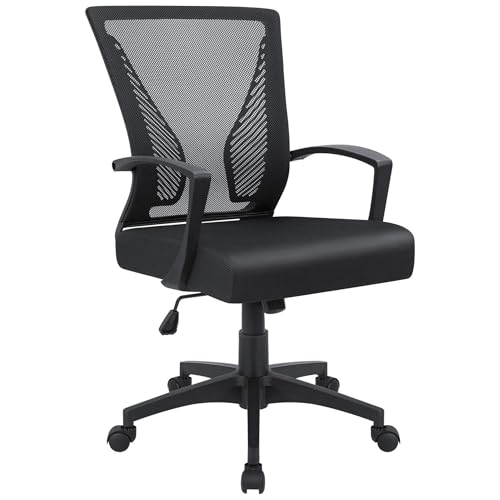
The Furmax is the inexpensive ergonomic chair in its purest form: a mesh mid-back with lumbar support shaped into the backrest, adjustable height, a breathable back that keeps you sitting against it rather than sliding off it, and a swivel base on casters — nothing else, and nothing else needed for a first proper desk chair. It has been a budget benchmark for years because the formula is right: at this tier, money spent on a sound mesh back and a decent lift cylinder beats money spent on upholstery every time. It suits students, first home offices, spare-room desks, and anyone replacing a dining chair that has been silently ruining their working posture. Taller and heavier users should look at the SIHOO or TRALT instead; the Furmax is sized for the middle of the population, and it serves that middle honestly.
Strengths
- Sound ergonomic basics — lumbar-shaped mesh back, height adjustment — at a budget tier
- Breathable backrest encourages sitting back properly through long sessions
- Simple assembly and a design sold in huge numbers, with parts easy to find
Trade-offs
- Lumbar support is fixed in position; fit depends on your torso matching it
- Fixed armrests will not suit every desk height or body
- Seat cushion is thinner than the SIHOO’s; very long days may want a cushion upgrade later
Key specs (verified listing): Furmax Office Chair; ergonomic computer desk mesh chair; lumbar support; black; adjustable height and breathable backrest; mid-back 360° swivel with armrests.
The right way to buy the Furmax is as a foundation. Fit it carefully — height so your feet are flat and thighs level, back against the mesh — and it will carry a workday in comfort that a dining chair cannot approach. If, months in, you find one specific shortcoming (most owners name the seat cushion first), a separate seat pad is a cheaper fix than a new chair. That upgrade path is the budget tier at its most sensible, and it is why this unglamorous chair outsells prettier rivals year after year.
Best for: students, first home offices, and the tightest sensible budget / Not suited for: very tall or heavy users, or anyone needing adjustable lumbar position.
Check the current price on Amazon
BestOffice Ergonomic Office Chair — Best Ultra-Budget Classic
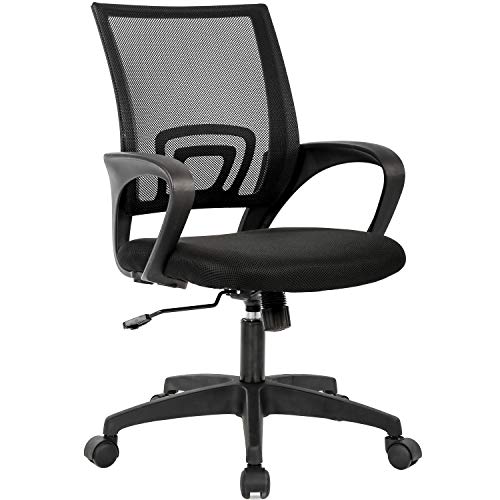
BestOffice’s chair is the floor of the respectable market: a mid-back swivel desk chair with lumbar support, an adjustable-height breathable backrest design, and a sponge seat, sold at the lowest tier in this guide. It exists for the buyer whose alternative is a kitchen chair or a folding chair — and against those alternatives it is transformative, because even a fixed lumbar curve and a proper seat height change a working day completely. It suits occasional desks, teenagers’ rooms, reception and utility seating, and households equipping several workstations at once. What it does not do is fit unusual bodies or pamper long hours; at this price the honest promise is “proper chair, correct basics,” and it keeps that promise.
Strengths
- The lowest-cost route to a real ergonomic desk chair in this guide
- Lumbar support, breathable back, and a cushioned sponge seat cover the basics
- Mid-back swivel format fits small desks and multi-chair rooms
Trade-offs
- Fixed lumbar position and basic armrests limit fine fitting
- Materials and casters are budget-grade; expect a service life, not a decade
- Not the pick for full-time, all-day sitting if the budget can stretch
Key specs (verified listing): BestOffice Ergonomic Office Chair; mid-back swivel desk chair; black; lumbar support; adjustable height and breathable backrest; sponge seat.
Think of the BestOffice as the chair that ends an ergonomic emergency. A household that suddenly needs two workstations — a job change, a student home for the term — can equip both properly for the price of one mid-tier chair, and proper basics at both desks beat one excellent chair and one dining chair every working day of the week. When the emergency passes and hours at the desk grow, the upgrade path leads to the SIHOO; until then, this chair’s honest basics are exactly what its tier should provide.
Best for: multi-desk households, occasional sitting, emergency workstations / Not suited for: all-day professional sitting or bodies far from average size.
Check the current price on Amazon

Sweetcrispy Ergonomic Desk Chair — Best for Small Spaces
The Sweetcrispy’s signature is its flip-up arms, and in a small room that feature is worth more than a spec-sheet of adjustments: the arms fold away and the chair slides fully under the desk, returning a metre of floor to a bedroom, a studio, or a desk-nook that doubles as something else. Around that trick sits a competent ergonomic chair — mesh construction, comfortable lumbar support, a mid-back rolling swivel format — aimed squarely at home-office and bedroom desks. It suits renters, students in halls, and anyone whose “office” is a corner that must disappear at night. Fixed-arm traditionalists and the broad-shouldered should test the fit mentally against the arm width; everyone else in a small space will find this the most liveable pick in the guide.
Strengths
- Flip-up arms let the chair tuck completely under the desk
- Mesh build with comfortable lumbar support for daily work
- Rolling swivel format sized for bedrooms and small home offices
Trade-offs
- Flip-up arms are less padded and less adjustable than the SIHOO’s 2D set
- Mid-back height will not serve the tallest torsos
- Lumbar support is built-in rather than adjustable
Key specs (verified listing): Sweetcrispy Ergonomic Computer Desk Chair; mesh office chair; comfortable lumbar support; mid-back; rolling swivel; flip-up arms; home office and bedroom.
Small-space ergonomics is a chain: the chair must fit the body, the desk, and the room, in that order but without breaking any link. The Sweetcrispy is the only pick here designed for all three. Owners in compact flats consistently report the same discovery — a chair that disappears under the desk changes how the whole room feels in the evening, which is a quality-of-life feature no lumbar curve can match. Pair it with the fitting routine in the how-to section and a small desk becomes a legitimate workstation.
Best for: small rooms, bedroom desks, renters and students / Not suited for: very tall users or buyers wanting maximum armrest adjustment.
Check the current price on Amazon

TRALT Ergonomic Desk Chair — Best with Headrest
The TRALT is the big-value generalist: an ergonomic desk chair with adjustable lumbar support, a headrest for leaning back between tasks, flip-up armrests, and a stated 330 lb capacity, in a reading-and-computer chair format meant for long home-office days. The headrest is its headline because at this tier headrests are usually the first feature cut — and for readers who think, read, and take calls at their desk, a headrest changes the chair from a typing perch into a place you can actually recline and reset your posture in. It suits taller and broader users better than most of this guide, and households that want one chair to cover work and evening reading. The mesh-and-lumbar package keeps the working hours honest while the headrest covers the pauses.
Strengths
- Headrest plus adjustable lumbar support at an inexpensive tier
- 330 lb capacity suits taller and broader sitters
- Flip-up armrests add small-desk flexibility
Trade-offs
- Larger format needs a larger desk footprint than the Sweetcrispy
- Headrest fit depends on torso length; very short sitters may find it high
- Styling is functional rather than decorative
Key specs (verified listing): TRALT Office Chair; ergonomic desk chair with lumbar support; black; 330 lbs home office desk chair with headrest; reading chair with flip-up armrests.
A word about headrests and posture, since the pairing confuses buyers: a headrest does nothing while you type — nor should it; your head is balanced over your spine in a good working posture. Its value is in the recline, the call, the thinking pause, where it lets your neck and shoulders fully unload instead of holding a half-lean. Chairs get judged on their working hours, but they earn loyalty in the pauses, and the TRALT covers both halves of the day at a price that keeps it in this guide’s tier.
Best for: taller and broader users, readers and call-takers, long desk days / Not suited for: the smallest desks or very short torsos.
Check the current price on Amazon

DUMOS Home Office Chair — Best for a Relaxed Sit
The DUMOS builds its ergonomic mid-back mesh chair around a feature the others treat as an afterthought: a rocking mode. Posture guidance is consistent on one point — the best position is the next position — and a chair that lets you rock gently while you read, think, or sit on a call builds movement into the day without a timer or an app. Around the rocking sits the expected package: lumbar support in a breathable mesh back, height adjustment, fixed armrests, and a 360° swivel in a compact home-office format. It suits thinkers, readers, and anyone who finds a locked-upright chair makes them fidget destructively; the rock gives the fidget somewhere productive to go. Buyers who want maximum adjustability should take the SIHOO; buyers who want to move should take this.
Strengths
- Rocking mode builds posture-friendly movement into long sitting
- Ergonomic mid-back mesh with lumbar support for the working hours
- Compact, simple format at an inexpensive tier
Trade-offs
- Fixed armrests and fewer adjustments than the SIHOO M18
- Rocking is a taste; focused typists may prefer a firmer lock
- Mid-back format will not serve the tallest users
Key specs (verified listing): DUMOS Home Office Chair; computer desk chair; lumbar support; ergonomic mid-back mesh; height adjustable; fixed armrest; rocking mode; 360° swivel.
The DUMOS is the chair we would put in a study or a reading corner as readily as at a desk, because its centre of gravity is the long, thoughtful sit rather than the intense typing hour. Students revising, writers drafting, and anyone whose work alternates between keyboard and contemplation will find its rhythm natural. Set the height with the same care as any pick here — rocking does not excuse a bad base fit — and it will carry both halves of that working style comfortably.
Best for: readers, thinkers, and movers; study and desk double duty / Not suited for: buyers wanting full adjustability or a tall back.
Check the current price on Amazon
Comparison Table
| Pick | Badge | Key spec | Best for |
|---|---|---|---|
| SIHOO M18 | Best Overall | Adjustable lumbar; headrest; 2D arms; 330 lbs | Full-time home-office sitting |
| Furmax Office Chair | Best Budget | Mesh mid-back; lumbar support; height adjustable | Students and first home offices |
| BestOffice Ergonomic Chair | Best Ultra-Budget | Mid-back swivel; lumbar support; sponge seat | Multi-desk and occasional use |
| Sweetcrispy Desk Chair | Best for Small Spaces | Flip-up arms; mesh; lumbar support | Bedroom desks and small rooms |
| TRALT Ergonomic Chair | Best with Headrest | Headrest; adjustable lumbar; 330 lbs | Taller users, reading and calls |
| DUMOS Home Office Chair | Best Relaxed Sit | Rocking mode; mesh mid-back; lumbar support | Thinkers, readers, movers |
How to Choose an Inexpensive Chair for Good Posture
Spend on adjustability, in this order. Seat height first — without feet flat and thighs roughly level, nothing else can be right. Lumbar position second — adjustable on the SIHOO and TRALT, fixed-but-well-placed on the others; if your torso is notably long or short, adjustable lumbar is worth the step up. Armrest fit third — arms should meet your elbows with shoulders relaxed, or flip away entirely if your desk makes that impossible (Sweetcrispy, TRALT). Headrest last — a comfort for pauses, never a working-posture feature. A chair that gets the first two right will serve your posture better than a chair with a headrest and neither.
Fit the chair to your measurements, not your hopes. Three numbers matter: your popliteal height (floor to the crease behind your knee, in your work shoes) against the chair’s seat-height range; your torso length against backrest and lumbar placement; and your weight against the stated capacity, with margin — capacities in this guide run to 330 lbs on the SIHOO and TRALT, and a chair used near its limit ages faster and flexes more. Retail listings give dimensions; measure yourself in two minutes and the fit lottery becomes arithmetic.
Prefer mesh at this tier. Inexpensive bonded leather looks like an upgrade and behaves like a countdown — it cracks, peels, and makes you sit forward off its clammy surface in summer. Mesh breathes, keeps you in contact with the lumbar curve, and ages invisibly. Every pick in this guide is mesh-backed for exactly those reasons. If you love a padded feel, the SIHOO’s wide cushion is the closest this tier comes to having it both ways.
Match the chair to the desk and the room. Desk height sets the armrest question: fixed arms that collide with the desktop push the chair — and you — back from the work. Flip-up arms solve it mechanically. Small rooms reward the Sweetcrispy’s tuck-under trick; shared and multi-desk rooms reward the BestOffice’s price. Casters suit hard floors; on carpet, every chair here rolls with more effort, and a chair mat is a cheaper fix than a different chair.
Buy for the sitter’s next two years, not the next two weeks. Students grow, jobs change sitting hours, and a chair bought exactly at its capacity or height limit has nowhere to go. Where two picks tie, choose the one with margin — the higher capacity, the wider adjustment range — because margin is what turns a purchase into a fixture instead of a stopgap. This is the practical reason the SIHOO and TRALT, with their 330 lb capacities and adjustable lumbar systems, headline a guide about inexpensive chairs: they are the inexpensive chairs least likely to need replacing when the sitter or the job changes.
Know what the tier cannot buy. Inexpensive chairs will not give you seat-depth adjustment, dynamic lumbar that follows you, or a decade of daily service — those live a tier up. What they give, chosen well, is correct basic fit for years of ordinary use. Buy the fit, accept the lifespan, and the tier is a bargain; buy expecting premium longevity at a budget price and every chair here will eventually disappoint you.
How to Set Up Your Chair for Better Posture
- Start with height. Sit with feet flat on the floor, knees at roughly a right angle or slightly open, thighs level or sloping very slightly down. If your feet dangle, the chair is too high or you need a footrest — a box or a stack of books works honestly. If your knees ride above your hips, raise the chair or lower the desk plan.
- Set the seat’s relationship to the desk. Your elbows, hanging relaxed, should meet the desktop at about a right angle when your hands are on the keyboard. Adjust chair height for the elbow rule if it conflicts slightly with the knee rule, and use a footrest to restore the feet.
- Find the lumbar. Sit fully back so your lower back contacts the support. On adjustable models (SIHOO, TRALT), move the lumbar until it fills the curve of your lower back without pushing you forward. On fixed models, if a gap remains, a small cushion or rolled towel in the gap is a legitimate, honest fix.
- Leave a fist’s width behind the knees. Two to three fingers — roughly a fist on its side — between the seat edge and the back of your calves. Pressure there means the seat is too deep for you; a back cushion that brings the support forward is the budget remedy.
- Place armrests under relaxed elbows, or remove them from the equation. Shoulders down, elbows lightly supported. If fixed arms force a shrug or block the desk, flip them up (where fitted) or accept sitting without them rather than sitting wrongly with them.
- Bring the work to you. Screen top near eye level, screen an arm’s length away, keyboard close enough that elbows stay by your sides. The chair can only hold your half of the posture bargain; the desk must hold its half.
- Re-check after a week. Foam settles, bolts relax, and your body adapts; a setup that felt right on day one can drift. After the first week, re-run steps one to five in order, tighten any assembly bolts that have loosened, and adjust the lumbar once more with a week’s experience behind you. Ten minutes of re-fitting is the difference between a chair that was set up and a chair that is set up.
- Move on a rhythm. Every half hour or so, stand, walk, or simply recline and rock for a minute — the DUMOS builds this in. Posture is a pattern of positions across a day, not a statue held for eight hours.
The Anatomy of a Supportive Inexpensive Chair
The lift cylinder is the chair’s foundation and its commonest quiet failure. A decent cylinder holds its height setting indefinitely; a tired one sinks a centimetre an hour, and you spend the day sitting lower than your setup assumed, wondering why your shoulders ache. Every pick here uses a standard cylinder design, which carries a hidden benefit: cylinders are generic, cheap, and replaceable in ten minutes, so a sinking chair at year three is a repair, not a replacement.
The lumbar mechanism divides the tier. Fixed-curve chairs (Furmax, BestOffice, Sweetcrispy, DUMOS) bake the support into the backrest’s shape — effective when your torso matches the designer’s average, immovable when it does not. Adjustable systems (SIHOO, TRALT) move the support to meet you, which is why they headline this guide. A third approach, the add-on cushion, is not a failure mode but a legitimate fitting tool: a chair you already own plus a well-placed lumbar cushion can out-fit a new chair bought blind.
The seat is where inexpensive chairs most visibly economise. Foam density decides whether month six feels like day one; waterfall front edges — a seat that curves down at the front — protect circulation behind the knees and are worth seeking at any price. The SIHOO’s wide cushion is this guide’s best seat; the slimmer seats elsewhere are honest for their tier and are the first thing their owners upgrade with a pad.
The base and casters decide stability and floor manners. Five-star bases are universal here; what varies is caster quality and suitability. On hard floors, soft casters roll quietly and spare the finish; on carpet, everything rolls harder and a mat helps. A chair that feels tippy is usually a chair assembled with the base not fully seated — check the build before blaming the design.
Posture Habits That Matter More Than the Chair
Ergonomists repeat one sentence in various forms: the best posture is a changing posture. A perfectly fitted chair used as a statue stand for eight hours still produces a stiff, uncomfortable human, because bodies are built to move. The habits that complete what a chair starts are unglamorous and free. Stand up every half hour, even briefly. Let your eyes leave the screen for distance at the same rhythm — posture includes where your head points, and a head craned at a low screen will defeat the best lumbar support ever moulded. Alternate, if your space allows, between the desk chair and a perch, a standing spell at a counter, or a walking call; the DUMOS’s rocking mode and the TRALT’s recline exist to make the in-chair version of that variety easy.
Feet deserve a sentence of their own. Dangling feet pull the pelvis and undo the lumbar contact the chair is providing; crossed legs held for hours rotate the whole arrangement. Flat feet, or a footrest where the desk height demands one, is the cheapest posture intervention in this entire guide. And the final habit is honesty about the workday’s shape: if your sitting is six hours of typing, fit for typing; if it is reading, calls, and thinking, the relaxed-sit picks will serve you better than a rigid typing perch. The chair is half the system. The other half is a body that is allowed to be a body.
Common Buying Mistakes
- Buying the racing-chair look. High bolsters and leatherette stripes are styling, not support. At this tier they usually mark the chairs whose budget skipped the lumbar hardware.
- Ignoring your own measurements. A well-reviewed chair in the wrong size is the wrong chair. Two minutes with a tape measure prevents the commonest disappointment in the category.
- Assuming a headrest improves working posture. Headrests serve reclining and pauses. Working posture is built at the seat, lumbar, and armrests.
- Choosing bonded leather for durability. At inexpensive prices it is the least durable common finish. Mesh outlasts it and breathes better.
- Blaming the chair for the whole workstation. A perfect chair under a too-high desk with a low screen still produces a hunched day. Set up the system, per the steps above.
- Skipping assembly care. A budget chair assembled with half-tightened bolts wobbles, creaks, and flexes its way out of every adjustment you set. Build it on a clear floor, tighten in the manual’s order, and re-tighten after the first week.
- Expecting furniture to treat pain. A supportive chair improves comfort and sitting habits; persistent or diagnosed pain belongs with a clinician. Any listing that promises otherwise is telling you something about the listing, not the chair.
Final Recommendation
Measure first, choose second, set up third — in that order, the inexpensive tier stops being a compromise and becomes simply good buying. For most readers, buy the SIHOO M18: its adjustable lumbar support is the feature that most determines whether an inexpensive chair actually fits you, and the headrest, 2D arms, and capacity complete the strongest package in the tier. On the tightest budget, the Furmax covers the ergonomic basics with years of proof behind it, and the BestOffice equips extra desks for less again. Small rooms should take the Sweetcrispy and its tuck-away arms; taller readers and call-takers the TRALT; and thinkers who move while they work the DUMOS. Whichever you choose, spend the twenty minutes to fit it properly using the steps above — at this tier, setup is worth more than the price difference between any two chairs in this guide.
Related guides in this series: Best Ergonomic Office Chairs · Best Office Chairs For Back Support · Best Mesh Office Chairs · Best Desk Chairs For Small Spaces · Best Budget Office Chairs
Related guides
Frequently Asked Questions
Should I add a lumbar cushion or seat pad to a budget chair?
Sometimes, and it is a strength of this tier rather than an admission of failure. A lumbar cushion can correct a fixed support that sits slightly wrong for your torso, and a seat pad can extend a thinner cushion’s comfort for long days — together they cost a fraction of a chair upgrade. Add one at a time, live with it for a week, and keep only what measurably improves your day; a chair buried under three pads is usually a chair whose base fit was wrong, and the money is better redirected at the right chair.
Can an inexpensive chair really support good posture?
Yes — because posture support is about fit, and the essential fits (seat height, lumbar placement, backrest contact) are achievable at budget prices when the money is spent on adjustments rather than styling. Every pick in this guide delivers those basics. What the inexpensive tier gives up is refinement: fewer micro-adjustments, simpler materials, and a shorter service life. For most home-office bodies and hours, that trade is entirely rational.
What is the most important feature for posture in a cheap chair?
Lumbar support that meets your lower back in the right place. Height adjustment is the entry ticket — every pick here has it — but the lumbar is where chairs differ and where posture is won or lost. Adjustable lumbar (SIHOO M18, TRALT) fits the widest range of torsos; a fixed lumbar suits you only if its position matches your back, which is why the fitting steps in this guide matter as much as the purchase.
How do I know if a chair fits me before buying?
Measure three things: the height from floor to the crease behind your knee (your seat height should adjust to roughly that), your weight against the chair’s stated capacity with margin to spare, and your torso against the backrest type — long torsos should prefer chairs with headrests or higher backs like the TRALT, compact torsos suit the mid-backs. Listings publish dimensions for every pick here; two minutes of arithmetic replaces most fit guesswork.
Is a mesh chair better than a padded chair for posture?
At this price, usually yes. Mesh keeps its shape, breathes so you stay seated back against the lumbar curve instead of perching forward, and does not suffer the cracking and peeling that ends inexpensive leatherette chairs early. Padded seats still have their place — the SIHOO pairs a mesh back with a wide cushion, which many readers find the best of both. The posture-critical surface is the back, and there mesh is the budget tier’s honest winner.
How long will an inexpensive ergonomic chair last?
Expect years of ordinary home-office service rather than a decade: gas lifts, casters, and mesh hold up well, while arm pads and seat foam are the usual first signs of age. You can extend any of these chairs’ lives by keeping casters free of hair and grit, not using the armrests as a push-off crane, and staying within the stated capacity. When a component does tire, the popular models in this guide — Furmax especially — have widely available generic parts.
Are kneeling chairs or balance-ball chairs better for posture?
They are different tools with real trade-offs. Kneeling chairs encourage an open hip angle and an upright trunk, but load the knees and offer no back support for reclining work; most people use them in rotation rather than all day. Ball chairs build gentle movement into sitting but provide no lumbar placement, no armrests, and a fixed relationship to desk height. For a full workday at an ordinary desk, a well-fitted conventional chair — the kind in this guide — remains the most complete and forgiving answer, with kneeling or ball seating as variety acts rather than the main performance.
What if I am between sizes — too tall for mid-backs but on a budget?
Prioritise in this order: capacity with margin, seat height range that reaches your popliteal height, and the highest back available in the tier. In this guide that points to the TRALT, whose headrest and 330 lb capacity serve longer torsos best, with the SIHOO M18 close behind. Accept a compromise at the armrests before accepting one at the seat height — your feet and thighs set the foundation that everything above them depends on.
My back hurts at my desk. Will one of these chairs fix it?
A well-fitted chair can make long sitting substantially more comfortable and remove common setup faults — wrong height, absent lumbar contact, perching — that aggravate a working day. It is not a medical treatment, and this guide makes no such claim for any pick. If pain persists, is severe, or comes with other symptoms, see a clinician or physiotherapist; bring your workstation measurements with you, because the fix is often a system of chair, desk, and screen rather than any single product.


