Disclosure: airfryerkitchensupply.com is reader-supported. When you buy through links on our site, we may earn an affiliate commission at no extra cost to you.
Where to buy
Every pick in this guide to the best campervan toilets was cross-checked against Amazon’s own catalog data before it earned a link, so the model names and capacities below match the listings you will land on. Prices move constantly on portable sanitation gear, so instead of printing numbers that go stale, each pick links straight to its live listing — check the current price on Amazon before you decide. If a model ever shows as unavailable, the closest substitute is usually the next pick down in the same size class.
- Separett Tiny Self-Contained Urine-Separating Compost Toilet — Best Overall for Campervans
- OGO Origin Compact Composting Toilet — Best Tightest Footprint
- Compo Closet Cuddy Composting Toilet — Best Sealed and Portable
- Thetford Porta Potti 345 Portable Toilet — Best Cassette for a Campervan
- Dometic 972 Portable Toilet, 2.6 Gallon — Best Small Cassette
- TROBOLO WandaGO Composting Toilet — Best Height-Adjustable Dry Option
Best campervan toilets: What Actually Matters Before You Buy
The best campervan toilets are chosen under the harshest space discipline in this whole category. A campervan has no bathroom to hide a toilet in — it lives in a pull-out drawer, under a bench, in the garage area or beside the bed — and it shares air with your kitchen and your sleeping bag. That reality pushes campervan buyers toward three designs: compact sealed cassettes, small urine-separating dry toilets, and truly compact composters that earn their footprint.
Be honest with yourself about which campervan life you actually live. If you tour campsites with facilities and need the toilet for nights and emergencies, a compact cassette is simple and cheap to run. If you boondock for weeks and resent dump-point detours, a separating dry toilet removes the dump point from your life almost entirely. Both answers are right — for different vans.
All six picks were verified against Amazon’s catalog before receiving a link, and every dimension and capacity quoted comes from those verified listings. Where a pick needs a vent, a fan or a carry routine, the review says so, because in a van there is nowhere for a compromise to hide.
There is also a social dimension unique to vans: your toilet will be used by partners, friends and occasionally near-strangers in a space where everyone can hear everything. Systems that minimize ceremony — quick to deploy, quick to service, discreet to empty — earn a premium in van life that no specification sheet captures. Several badges below were decided by exactly that lived reality.
In this guide
Quick Picks
If you only read one section, read this one. These six picks cover the realistic spread of the best campervan toilets market — different sizes, different waste systems and different budgets — and each one earned its badge for a specific job rather than a generic ranking.
Best Overall for Campervans — Separett Tiny Self-Contained Urine-Separating Compost Toilet. Urine separation in a self-contained body with a built-in container and emptying sensor — the dry system that best matches how vans are actually used, with no drain line to plumb.
Best Tightest Footprint — OGO Origin Compact Composting Toilet. A real composting toilet built around a 15-inch footprint — the pick when the build plan gives the toilet one small square and not an inch more.
Best Sealed and Portable — Compo Closet Cuddy Composting Toilet. A waterless, chemical-free unit with a 12V fan and carbon filter at 3.9-gallon scale — sealed, movable, and equally at home in the van, a tent annex or a boat.
Best Cassette for a Campervan — Thetford Porta Potti 345 Portable Toilet. The mid-size Porta Potti with published dimensions of 13 x 16.8 x 15 inches — the cassette to choose when you want flushing familiarity in a van-sized box.
Best Small Cassette — Dometic 972 Portable Toilet, 2.6 Gallon. Dometic’s 2.6-gallon portable: the established-maker option in the smallest cassette class, for vans where the toilet shares a cupboard with everything else.
Best Height-Adjustable Dry Option — TROBOLO WandaGO Composting Toilet. A urine-diverting dry toilet with height adjustment — the pick for mixed crews of adults and kids, and for owners who refuse to carry water for a toilet.
How These Picks Were Chosen
We selected for the campervan use case specifically: units that store in drawers, benches and garages, seal completely against odor in a small shared airspace, and match either the campsite-touring pattern (compact cassettes) or the long boondock pattern (separating and composting dry toilets). Every model was verified on this site before linking. Badges follow the van-life decision points — tightest footprint, best sealed cassette for a drawer, best dry system with a fullness warning, best height flexibility — and specifications come only from verified Amazon titles. No prices or fixed ratings are printed; both change constantly and neither measures whether a toilet fits your build.
We gave extra weight to two van-specific tests. The 3 a.m. test: can a half-asleep person use this toilet, in the dark, without a mistake that tomorrow’s driver will smell? And the services test: can the unit be emptied or serviced in a public place — a campsite, a marina, a lay-by bin area where permitted — without spectacle? Every pick here passes both, though by different mechanisms, and the reviews note which mechanism each relies on.
The 6 Best campervan toilets — Reviewed in Detail

Separett Tiny Self-Contained Urine-Separating Compost Toilet — Best Overall for Campervans
The Separett Tiny takes Best Overall because it solves the van problem in the right order. Separation keeps odor down in a small shared space, the built-in urine container means no drain plumbing in a build that has none to spare, and the emptying sensor replaces the guesswork that causes overflows in vehicles. Its listing explicitly spans vans, RVs, cabins and boats, and its compact self-contained format stores like a cassette while behaving like a proper dry toilet.
Strengths
- Emptying sensor prevents the classic van overflow surprise
- No drain line or plumbing needed — fully self-contained
- Urine separation keeps a small airspace noticeably fresher
Trade-offs
- Urine container cycles faster than a plumbed drain would
- Guests and partners must learn the sit-down separation rule
- Dry system routine differs from the flush toilets most people expect
| Specification | Detail |
|---|---|
| System | Self-contained urine-separating toilet |
| Urine handling | Built-in container with emptying sensor (per Amazon title) |
| Medium | No additives or mixing needed (per Amazon title) |
| Stated uses | Vans, RVs, cabins and boats (per Amazon title) |
In practice the Tiny changes van logistics: no hunting for dump points, no cassette weight to haul through a campsite, and a solids side that stays dry and slow. The discipline it asks for is small — empty the urine container when the sensor says so, bag solids as directed, keep the seat rule sacred. For full-time and long-trip van life, that trade is overwhelmingly worth it, which is why it leads this guide ahead of more familiar names.
The Tiny’s container discipline deserves one refinement for van life: empty the urine container at fuel stops, not at campsites. Fuel stations are already a stop, the facilities are anonymous, and the container never becomes a campsite conversation. Owners who adopt the fuel-stop rhythm report that the toilet effectively disappears from their trip planning — the highest state any van system can reach, and one this little separator achieves more completely than any cassette.
Best for: long-trip and full-time campervan life without dump-point dependence / Not suited for: campers who want a familiar flush and nothing new to learn
Check on Amazon — check the current price on Amazon and confirm the tank size on the listing matches what is described here before ordering.
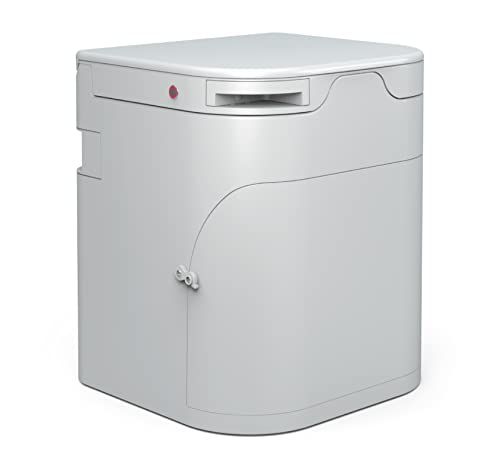
OGO Origin Compact Composting Toilet — Best Tightest Footprint
Campervan builds are won and lost in inches, and the OGO Origin’s 15-inch footprint is the smallest serious claim in this guide. It brings genuine composting — not a bucket, not a bag — into the space a build usually reserves for a compact cassette, which makes it the choice for owners who want a dry, medium-based system and have planned their furniture around exactly one small square of floor.
Strengths
- 15-inch footprint fits drawer and bench installations
- True composting system rather than a bag or bucket compromise
- Designed for vans, RVs and boats from the outset
Trade-offs
- Compact chamber needs disciplined moisture management
- Composting medium is a consumable to carry
- Venting must be planned into the build, not improvised
| Specification | Detail |
|---|---|
| Footprint | 15 inches (per Amazon title) |
| System | Compact composting toilet |
| Stated uses | Van, RV and boat (per Amazon title) |
The Origin rewards builders who plan: give it its vent path, a spot where the unit can be serviced without dismantling furniture, and a small stash of medium, and it disappears into van life. Its compact chamber is less forgiving of sloppy use than a big composter, so it suits owners and couples rather than rotating guests. Judged purely on sanitation per square inch, nothing else here is close.
Builders should note the Origin’s servicing geometry before the furniture is final: the unit needs to come out, or open fully, in place. A drawer that presents the toilet for use but traps it for servicing is the classic build error with compact composters. Leave the extraction path as generous as the footprint is tight, and the Origin’s small size stays a pure advantage; trap it, and every service becomes a furniture project that gets deferred until it becomes a problem.
Best for: space-critical builds that still want real composting / Not suited for: vans hosting frequent guests who will not learn a routine
Check on Amazon — check the current price on Amazon and confirm the tank size on the listing matches what is described here before ordering.

Compo Closet Cuddy Composting Toilet — Best Sealed and Portable
The Cuddy is the flexible pick: self-contained, waterless and chemical-free, with a fan-and-filter odor strategy that suits the still air of a parked van. At 3.9-gallon scale it stays genuinely portable, so it can live in the van’s garage, move to an awning annex at a long stop, or serve on a boat in the off-season. Vans with a leisure battery can feed its 12V fan without thinking about it.
Strengths
- 12V fan and carbon filter actively manage odor in still air
- Waterless and chemical-free — no additive or dump chemistry
- 3.9 Gal scale stays light enough to reposition as the trip demands
Trade-offs
- Fan performance depends on having 12V power available
- Smaller capacity cycles faster for couples on long stops
- Filter replacements belong on the van’s consumables list
| Specification | Detail |
|---|---|
| Capacity | 3.9 Gal (per Amazon title) |
| Odor control | 12V fan and carbon filter (per Amazon title) |
| System | Waterless, self-contained, no chemicals (per Amazon title) |
What makes the Cuddy van-appropriate is the combination of sealing and mobility. Many van toilets are effectively fixed by their plumbing or their bulk; the Cuddy is furniture you can move. That matters in small vans where the same square metre is kitchen by day and bathroom by night. Keep a spare filter aboard, run the fan when parked up, and it behaves with a discretion that passive systems in small spaces struggle to match.
The Cuddy’s fan creates a small electrical decision with outsized consequences: wire it to a switch you can reach from bed. Night use is when still air and closed vans concentrate odor, and a fan that requires getting up and opening a cupboard is a fan that stays off at exactly the wrong hour. Ten minutes of wiring during installation buys the feature’s entire value, every night, for the life of the van.
Best for: vans with 12V power that want a movable, sealed dry toilet / Not suited for: power-free builds that cannot feed a fan
Check on Amazon — check the current price on Amazon and confirm the tank size on the listing matches what is described here before ordering.

Thetford Porta Potti 345 Portable Toilet — Best Cassette for a Campervan
If your van life is campsite-based and you want a flush, the Porta Potti 345 is the cassette that fits the brief: a genuine sealed Porta Potti in a mid-size body whose verified listing dimensions — 13 by 16.8 by 15 inches — let you plan a drawer or cupboard around it precisely. It is bigger than the smallest Porta Potti, which buys a more usable seat and tank, yet still honestly van-sized.
Strengths
- Published dimensions let you design storage around it exactly
- Sealed cassette with a familiar flush routine for any user
- Mid-size body balances seat usability against storage volume
Trade-offs
- Cassette system means dump points stay on your route
- Uses flush water and additive, unlike the dry picks
- Too large for the very tightest micro-van drawers
| Specification | Detail |
|---|---|
| Dimensions | 13 x 16.8 x 15 inches (per Amazon title) |
| Model | 92814 (per Amazon title) |
| System | Sealed portable cassette toilet |
The 345 is the pragmatic heart of this guide: no routine to teach, no vent to cut, no medium to stock — just fill, use, and empty at facilities you were probably visiting anyway. For touring vans that rarely spend more than a night or two away from services, that simplicity beats dry-system sophistication. Check your storage opening against the dimensions before ordering; cassette happiness is mostly a tape-measure question.
Cassette-in-a-drawer owners should steal one habit from boat life: a drip tray under the 345, always. Cassettes are sealed and reliable, and boats still tray everything, because the cost of the tray is trivial and the cost of the alternative is a cupboard. In a van drawer — surrounded by bedding, clothes and food storage — that cheap insurance is the difference between a toilet incident and a toilet anecdote.
Best for: touring campervans that use campsite facilities and want a flush / Not suited for: long boondockers avoiding dump points entirely
Check on Amazon — check the current price on Amazon and confirm the tank size on the listing matches what is described here before ordering.

Dometic 972 Portable Toilet, 2.6 Gallon — Best Small Cassette
The Dometic 972 occupies the smallest sealed-cassette tier in this guide at 2.6 gallons, which is exactly the point: in a compact van, the toilet competes with water, tools and food for the same cupboards, and a 2.6-gallon unit concedes gracefully. It suits solo travelers and couples whose pattern is one or two nights between facilities, and who prefer an established sanitation brand’s take on the format.
Strengths
- 2.6 Gal format stores where larger cassettes cannot
- Established maker’s portable line, shared with marine use
- Light, frequent emptying keeps the routine fresh
Trade-offs
- Small capacity is the wrong choice for long off-grid stretches
- Lower, compact format will not suit every adult’s comfort
- No headline extras — this is the simple end of the range
| Specification | Detail |
|---|---|
| Capacity | 2.6 Gallon (per Amazon title) |
| System | Portable cassette toilet |
| Maker line | Dometic Sanitation (per Amazon title) |
Small cassettes teach good habits: they are emptied often because they are light and quick to empty, and a frequently emptied cassette is a fresh cassette. In a van that already stops for water and fuel every couple of days, the 972’s rhythm matches the trip rather than fighting it. Buy it for the space it saves, not the stops it avoids, and it will never disappoint you.
The 972 rewards a particular packing trick: it stores beautifully in the dead space many vans have behind a wheel arch or under a raised bed, precisely because its 2.6-gallon format concedes the big cupboards to everything else. Measure those dead spaces before writing the small class off. In well-packed vans, the toilet that fits the leftover space is the toilet that comes on every trip, and attendance is the first feature.
Best for: solo and couple vans on a facilities-every-few-days rhythm / Not suited for: long off-grid trips needing maximum capacity
Check on Amazon — check the current price on Amazon and confirm the tank size on the listing matches what is described here before ordering.

TROBOLO WandaGO Composting Toilet — Best Height-Adjustable Dry Option
The TROBOLO WandaGO brings a feature no other pick here offers: height adjustment, in a portable urine-diverting dry toilet. In a van that carries both adults and children — or adults of very different heights — an adjustable seat height is a genuine comfort and usability difference, not a gimmick. As a dry diverting system it needs no flush water and no cassette additive, and its portable format suits vans that set the toilet up in an annex or tailgate shelter as often as inside.
Strengths
- Height adjustment suits mixed adult and child crews
- Urine-diverting dry system uses no flush water
- Portable format works inside the van or in an annex setup
Trade-offs
- Dry diverting routine must be taught to every user
- Height mechanism is one more thing to keep clean
- Less sealed and furniture-like than the cassette picks for in-van storage
| Specification | Detail |
|---|---|
| System | Urine diverting dry toilet (per Amazon title) |
| Seat | Height adjustment (per Amazon title) |
| Format | Portable outdoor camping toilet (per Amazon title) |
The WandaGO makes the most sense at the family end of van life, where the toilet serves small children at night and adults at dawn, and where carrying flush water for a cassette feels like waste. Diversion keeps the solids side dry and manageable, and the adjustable height stops the nightly compromise where nobody is quite comfortable. It is the least conventional pick here and, for the right crew, the most thoughtful one.
For the WandaGO in family vans, set the height once for the children and let adults adapt, rather than adjusting constantly: the mechanism is happiest when it is not a daily ritual, and children are the users least able to compensate for a wrong height. One less nightly adjustment also means one less thing to do in the dark — a small decision that pays out on every single night of a family trip.
Best for: families and mixed-height crews in campervans / Not suited for: owners wanting a sealed cassette stored inside the van
Check on Amazon — check the current price on Amazon and confirm the tank size on the listing matches what is described here before ordering.
Comparison Table
The table below compresses the six picks into the four facts that decide most purchases in this category: what the product is, the badge it earned, the one specification that defines it, and the buyer it fits. Use it to shortlist two candidates, then read their full reviews above before spending money.
| Pick | Badge | Key spec | Best for |
|---|---|---|---|
| Separett Tiny Self-Contained Urine-Separating Compost Toilet | Best Overall for Campervans | Built-in urine container with emptying sensor | long-trip and full-time campervan life without dump-point dependence |
| OGO Origin Compact Composting Toilet | Best Tightest Footprint | 15-inch footprint, compact composting | space-critical builds that still want real composting |
| Compo Closet Cuddy Composting Toilet | Best Sealed and Portable | 3.9 Gal, 12V fan, carbon filter, no chemicals | vans with 12V power that want a movable, sealed dry toilet |
| Thetford Porta Potti 345 Portable Toilet | Best Cassette for a Campervan | 13 x 16.8 x 15 in (per Amazon title) | touring campervans that use campsite facilities and want a flush |
| Dometic 972 Portable Toilet, 2.6 Gallon | Best Small Cassette | 2.6 Gal portable toilet | solo and couple vans on a facilities-every-few-days rhythm |
| TROBOLO WandaGO Composting Toilet | Best Height-Adjustable Dry Option | Urine diverting dry toilet, height adjustment | families and mixed-height crews in campervans |
How to Choose the Best Campervan Toilets for Your Build
Start with the storage truth: measure the drawer, cupboard or garage slot the toilet will live in, including the opening it must pass through, and measure it again. Campervan toilets fail purchases on centimetres, not features. Then decide your waste philosophy by trip pattern — facilities-based touring points to a compact cassette; long off-grid stretches point to separation or composting; mixed use points to the flexible, movable dry units.
Power and water budgets come next. A fan-assisted unit needs a 12V feed worth planning into the build. A cassette needs flush water carried and dump points on the route. A separator needs a urine routine — container or drain — and the discipline to brief every user. None of these is onerous; all of them are annoying if discovered after the build is finished.
- Measure storage volume and the access opening before shortlisting
- Choose the waste system by trip pattern, not by fashion
- Plan venting and 12V power during the build, not after
- Check seat height against your crew, especially with children aboard
- Keep the emptying or servicing path physically easy — awkward routines get skipped
Dry Versus Cassette in a Van: An Honest Comparison
The cassette’s case is familiarity and sealing: anyone can use it, it closes tight for driving, and facilities-based touring makes emptying trivial. Its costs are structural — dump points anchor your route, the cassette is a real carry when full, and you haul flush water and additive for the privilege of flushing. In a small van that tours campsites, those costs are minor. In a van that disappears into the hills for two weeks, they compound daily.
Dry systems invert the ledger. Separation and composting remove the dump point, the flush water and most of the odor chemistry, at the price of a routine: sit correctly, manage containers or medium, vent the unit. The routine is small but non-negotiable, which is why dry toilets suit owners and regular crews better than rental vans and rotating guests. Choose by who will actually use it, not by which technology sounds cleverer.
Odor, Venting and Driving With a Toilet in a Small Van
A van concentrates everything, so odor control deserves engineering respect. Sealed cassettes rely on their closure — keep it rinsed and it works. Dry systems rely on separation plus moving air: a small vent to outside, ideally with the fan assist some picks build in, transforms a parked van on a still night. What never works is hoping: an unvented dry toilet or a dirty cassette seal will make itself known at 3 a.m. in a way no air freshener survives.
Driving adds a mechanical point: secure the toilet. A cassette or dry unit that slides in a corner will eventually stress a seal, a vent joint or a container lid. A simple strap, a fitted recess or a drawer with a latch is part of the toilet installation, not an afterthought — and it doubles as crash-worthiness common sense for anything heavy in a living space.
How to Install and Vent a Campervan Toilet Properly
A campervan toilet installation is mostly carpentry and foresight. These steps apply across the cassette and dry picks in this guide; follow your model’s manual for its specific fittings.
- Dry-fit the unit in its storage position and confirm you can sit on it, service it and remove it without dismantling furniture.
- Create a level, secure base — a fitted recess, straps or a latched drawer — so the unit cannot move while driving.
- For dry and composting units, run the vent to outside air with the shortest practical path, sealed joints and an exit that will not draw exhaust fumes back in.
- Wire any 12V fan to the leisure system with an accessible switch, and test it before closing up the cabinetry.
- Set up the waste path: cassette charged with water and additive, or dry system commissioned with container, bags or medium as directed.
- Brief every regular user on the routine for your chosen system before the first trip, not during the first night.
- After the first trip, re-check fixings, vent joints and seals while everything is fresh in memory, and adjust the storage setup once, properly.
Keep a small kit with the toilet: gloves, a cloth, spare bags or medium, and any filter or additive your system uses. In a van, the difference between a two-minute chore and a festering problem is whether the supplies are within arm’s reach.
Campervan Toilet Etiquette for Couples, Crews and Guests
Small spaces run on agreements. The vans that stay pleasant have usually settled three things early: the toilet is used as its system requires (which, for separators, means everyone sits, every time); whoever fills a container or cassette to the warning point owns the emptying, promptly; and the unit is left clean enough that the next person never has to think about the last one. These sound obvious and are, in practice, the entire difference between van life that feels civilized and van life that feels like camping in a cupboard.
Guests deserve a kind briefing rather than a lecture: ten seconds on how this toilet works, where the kit lives, and what to do if the sensor or indicator says it is full. Most guest problems with van toilets are really host problems — nobody explained the system. A tiny laminated card in the toilet cupboard has saved more friendships than any feature on any product in this guide.
Finally, plan the bad day. A full cassette with no dump point in range, a urine container at capacity on a rainy night, a fan that stops — each has a calm answer if you have thought about it once in advance, usually involving the sealed backup or the spare container you carry for exactly this. Campervan toilets are simple machines; the system around them is what you are really designing.
Stealth, Services and the Social Side of a Van Toilet
Van toilets operate in public in a way no other category’s do. You will service yours in campsite blocks, marina facilities, and — for urine containers and bagged waste, where rules allow — ordinary public amenities. Discretion is therefore a design feature: units that empty without spectacle, carry without announcing themselves, and store without explaining themselves to passengers are worth real money in this life. The sensor, seals and self-contained formats praised in this guide all serve that discretion, whether or not their makers marketed them that way.
Stealth camping sharpens the point. A van that might be parked on a street or a quiet lay-by needs its toilet to be an entirely internal affair: no annex, no outdoor setup, no servicing event visible from outside. That requirement quietly eliminates several otherwise fine camping toilets and elevates the sealed cassette and self-contained dry units that dominate this guide. If stealth nights are part of your pattern, choose from those two families and treat everything else as fair-weather gear.
Finally, the social contract inside the van: the toilet belongs to everyone aboard, and its routine must survive everyone’s worst mood at the end of a long driving day. Simple, visible, shared rules — posted, even — are what carry a system through a three-week trip intact. The technology choices above set the ceiling; the household agreement sets the actual experience.
Campervan Toilet Buying Checklist
Five checks, done with a tape measure and an honest calendar, prevent nearly every bad van toilet purchase:
- Storage and access measured twice: the space, the opening, and the extraction path for servicing — all three, not just the first.
- Trip pattern stated plainly: facilities-based touring, long off-grid stretches, or stealth nights — each points to a different family in this guide.
- Power planned: any fan-assisted unit gets its 12V feed and a bed-reachable switch during the build, not after.
- Securing solved: strap, recess or latched drawer, so the unit cannot move at speed or in a sudden stop.
- Crew briefed in advance: everyone who will use it knows the routine before the first night, especially the sit-down rule for separators.
Living Small: The Daily Rhythms That Keep a Van Sweet
A van toilet succeeds or fails in daily rhythm, not in specification. The vans that stay fresh share a handful of micro-habits so small they are easy to miss: the urine container emptied at the same stop as fuel, the cassette checked with the same glance that checks the water, the vent or fan run as automatically as the lights are switched, the kit restocked at the same supermarket run that restocks everything else. None of these is a chore. Together they are the entire difference between a van that smells like a home and a van that smells like a compromise.
Rhythm beats intensity because van life is long. A heroic weekly deep-clean cannot rescue a system neglected in the small hours of every day, and it does not need to: the systems in this guide were designed for exactly the light, frequent attention that rhythm provides. New van owners often over-maintain for a month and under-maintain for a year. The owners who last do the opposite — a little, always, without thinking about it much at all.
There is a design lesson for builders in this: place the toilet’s service points where the rhythm wants them. A container that empties from outside the van gets emptied. A cassette behind three layers of cargo gets deferred. A fan switch by the bed gets used at night. When you plan the build, you are not placing a toilet; you are placing the hundred small services of the next three years. Place them kindly, and the van stays sweet with almost no visible effort — which is to say, with effort designed in advance.
Power, Water and Waste: The Van’s Three Budgets in Balance
Every campervan runs on three budgets that meet at the toilet: electrical power, fresh water and waste capacity. A plumbed mindset treats them as unlimited; van life teaches otherwise within a week. The toilet choices in this guide are, at bottom, different ways of spending those budgets. A fan-assisted dry unit spends a trickle of power to save all water and most waste hassle. A cassette spends water and dump access to save power and learning curve. A separator spends a container routine to save nearly everything else. There is no free option — there is only the budget your van is richest in.
Thinking in budgets makes the right choice startlingly clear for most builds. A van with a large solar array and small tanks should spend power, not water. A van touring serviced sites is rich in dump access and should spend that. A van built for long, remote stretches is poor in everything except time, and should spend the routine. When a toilet purchase feels confusing, it is usually because the buyer has not yet priced their own budgets honestly. Price them, and the shortlist in this guide sorts itself.
Common Buying Mistakes
Buying before measuring the storage opening
Vans reject toilets on centimetres. A unit that fits the cupboard but not the doorway is a return shipment, not a toilet.
Skipping the vent on a dry toilet
In a van’s small airspace, an unvented dry system will make itself known. The vent is the system; install it properly during the build.
Choosing a cassette for two-week boondocking
Dump-point dependence is a route-planning tax that grows daily. Long off-grid patterns belong with separation or composting.
Not securing the toilet for driving
A sliding toilet stresses seals and containers and is a hazard in a stop. Strap it, recess it or latch the drawer — always.
Assuming guests will figure the system out
They will not, and the failure will be olfactory. Brief every user once, kindly, before the first night.
Final Recommendation
For most campervans, the Separett Tiny is the right default: separation without plumbing, a sensor instead of guesswork, and a format that stores like a cassette. Builders with one small square of floor should look at the OGO Origin, and vans with 12V to spare and a need for flexibility at the Compo Closet Cuddy. If your touring is facilities-based and you simply want a flush, the Porta Potti 345 is the cassette sized for vans, the Dometic 972 is the smallest sealed option, and the TROBOLO WandaGO is the thoughtful pick for mixed-height family crews.
Measure first, choose the waste system by your real trip pattern, and vent and secure whatever you buy. Do those three things and a campervan toilet stops being a compromise and becomes what it should be: invisible infrastructure for the trips you actually take.
If you want the short version of this entire guide, it is this: start with Separett Tiny Self-Contained Urine-Separating Compost Toilet, OGO Origin Compact Composting Toilet, Compo Closet Cuddy Composting Toilet. One of those three fits the large majority of buyers in this category, and the full reviews above explain exactly which buyer each one fits.
Keep exploring the rest of this cluster once you have a shortlist: Best Cabin Toilets Best Camper Toilets Best Camping Toilets Portable 2.8 Gal Best Car Camping Toilets Best Cassette Toilets
Frequently Asked Questions
What type of toilet is best for a campervan?
It depends on trip pattern: compact sealed cassettes suit facilities-based touring, while urine-separating and compact composting toilets suit long off-grid travel because they remove dump points and flush water from the equation. This guide’s top pick is a separator because most campervan owners overestimate their campsite use and underestimate their wild nights.
Do campervan toilets smell?
Properly sealed cassettes and properly vented dry toilets should not. In a van, odor almost always traces to a fouled cassette seal, an unvented dry unit, or an overfull urine container — all maintenance issues, not design inevitabilities.
Can I fit a toilet in a small campervan?
Yes — that is what the compact classes are for. The OGO Origin is built around a 15-inch footprint, the Dometic 972 is a 2.6-gallon cassette, and the Porta Potti 345 publishes full dimensions so you can design storage around it. Measure your space and access opening first.
Do dry campervan toilets need power?
Separating designs work without power for separation itself. Fan-assisted models like the Cuddy use a small 12V draw to manage air and moisture, which a typical leisure battery handles easily. Cassettes need no power at all.
How do I empty a campervan toilet?
Cassettes empty at dump stations, campsites or a household toilet, then get rinsed and recharged. Separating toilets need their urine container emptied to a drain or facilities and solids bagged per the maker and local rules. Composting chambers empty on a longer cycle. Each review above describes its own routine.
Is a campervan toilet worth it versus campsite facilities?
For night-time use, early starts, remote stops and any trip with children, almost every van owner who fits one keeps it. The honest cost is a small servicing routine; the honest gain is independence from facility queues, closures and midnight walks.
How do I handle van toilet servicing on a long trip far from home?
Plan the trip in service intervals rather than miles. Know your system’s rhythm — how many days a urine container, cassette or composting cycle lasts your crew — and mark the facilities that reset it: campsites, marinas, RV services and, for containers and bagged waste where permitted, ordinary public amenities. Carry the small kit that makes any of those stops a two-minute, discreet event: gloves, a cloth, and your system’s consumable for the reset. Build one buffer day into the rhythm so a closed facility or a changed plan never becomes an emergency, and keep the sealed backup option in the van for the night the buffer gets used. Long-trip owners consistently report that this interval thinking, adopted once, removes the toilet from their planning anxiety entirely — it becomes like fuel: monitored, routine, and never quite empty. That calm, more than any single product feature in this guide, is what experienced van owners are actually describing when they say their toilet setup finally works for them, season after season, without drama, improvisation or last-minute detours through unfamiliar towns at inconvenient hours.


