Disclosure: airfryerkitchensupply.com is reader-supported. When you buy through links on our site, we may earn an affiliate commission at no extra cost to you.
Where to buy
Every pick in this guide to the best cabin toilets was cross-checked against Amazon’s own catalog data before it earned a link, so the model names and capacities below match the listings you will land on. Prices move constantly on portable sanitation gear, so instead of printing numbers that go stale, each pick links straight to its live listing — check the current price on Amazon before you decide. If a model ever shows as unavailable, the closest substitute is usually the next pick down in the same size class.
- Separett Villa Urine-Separating Compost Toilet — Best Overall for Cabins
- Nature’s Head Self Contained Composting Toilet (Close Quarters Spider Handle) — Best Self-Contained Composting
- Separett Tiny Self-Contained Urine-Separating Compost Toilet — Best for Small Cabins and Tight Bathrooms
- OGO Origin Compact Composting Toilet — Best Compact Footprint
- Compo Closet Cuddy Composting Toilet — Best for Cabins Without Power to Spare — With a Fan When You Have It
- Thetford Porta Potti 365 Portable Toilet (92820) — Best Flush-Style Backup
Best cabin toilets: What Actually Matters Before You Buy
Shopping for the best cabin toilets means solving a different problem than shopping for a house. Most cabins have no sewer connection, many have no pressurized water for weeks at a time, and almost all of them sit empty between visits — so the right toilet is the one that handles waste safely with little or no water, survives being left alone, and does not turn a weekend retreat into a plumbing project. That is why this guide leads with waterless and urine-separating designs rather than flush fixtures.
Two honest warnings before the picks. First, there is no single best system for every cabin: a composting toilet suits a cabin visited most weekends, while a simple sealed cassette makes more sense as a backup or for a hunting cabin used six weekends a year. Second, every system here shifts work from plumbing to routine — carrying, venting, emptying or maintaining a medium. The reviews below are blunt about that routine, because a cabin toilet you dread servicing is a cabin toilet you will stop using properly.
All six picks were verified against Amazon’s catalog data before receiving a link, and the specifications quoted in the mini spec boxes come from those verified listings only. Where a design needs a vent, a fan or a drain path to work well, the review says so plainly instead of burying it.
One more framing point before the reviews: a cabin toilet is infrastructure, not furniture. You are choosing how your household will handle waste for a decade, in a building that may freeze, flood with guests, or sit empty for a month. The picks below were ordered with that decade in mind — systems whose routines stay tolerable in year five, not just impressive in week one.
In this guide
Quick Picks
If you only read one section, read this one. These six picks cover the realistic spread of the best cabin toilets market — different sizes, different waste systems and different budgets — and each one earned its badge for a specific job rather than a generic ranking.
Best Overall for Cabins — Separett Villa Urine-Separating Compost Toilet. A urine-separating design with high capacity and no mixing or additives to manage, which is exactly the low-attention profile a cabin that sits empty between visits needs.
Best Self-Contained Composting — Nature’s Head Self Contained Composting Toilet (Close Quarters Spider Handle). The established self-contained composting format with a close-quarters handle, built for cabins where a single sealed unit must handle everything without a separate urine line.
Best for Small Cabins and Tight Bathrooms — Separett Tiny Self-Contained Urine-Separating Compost Toilet. A compact urine-separating unit with a built-in urine container and an emptying sensor, sized for the small converted spaces where many cabin bathrooms actually live.
Best Compact Footprint — OGO Origin Compact Composting Toilet. A compact composting toilet built around a 15-inch footprint, for cabins where the bathroom floor plan is the hardest constraint of all.
Best for Cabins Without Power to Spare — With a Fan When You Have It — Compo Closet Cuddy Composting Toilet. A waterless self-contained unit with a 12V fan and carbon filter that can move between cabin, van and boat, with no chemicals involved.
Best Flush-Style Backup — Thetford Porta Potti 365 Portable Toilet (92820). The conventional sealed cassette option: a familiar flush-and-carry routine for cabins where a dry system is a step too far, or as the guest and overflow toilet.
How These Picks Were Chosen
We chose these picks by starting from how cabins are actually used: off-grid or semi-off-grid water supply, long empty stretches, cold winters in many regions, and owners who want the least servicing per visit. Each candidate had to be a real, currently listed product verified on this site, with a waste system that works without a sewer hookup. We then split the field by system type — urine-separating composting, self-contained composting, compact dry toilets and one sealed flush cassette as the conventional fallback — and gave badges by job, not by brand size. Specifications in this article come only from the verified Amazon titles; we did not print prices or fixed ratings, because both change constantly and neither tells you whether a toilet suits a cabin.
We also weighted repairability and forgiveness. Cabin systems are serviced by owners, not technicians, often in poor light with whatever is in the shed. A design that tolerates a missed week, a guest’s mistake or a late-season freeze warning earned credit here; a design that demands perfection to avoid odor lost it, however elegant its engineering. That bias toward forgiving systems runs through every badge in this guide.
The 6 Best cabin toilets — Reviewed in Detail

Separett Villa Urine-Separating Compost Toilet — Best Overall for Cabins
The Separett Villa suits cabin owners who want the closest thing to a normal toilet routine without water or sewer. Because it separates urine from solids at the seat, the solids stay drier, odor drops sharply, and there is no compost medium to churn, buy or troubleshoot. It fits permanent cabin installations where the toilet stays in one place all season and gets steady use from a family or a rotating cast of guests.
Strengths
- Urine separation keeps solids dry and dramatically reduces odor
- No additives or mixing needed, so there is no medium to stock or manage
- High-capacity design suits family cabins and frequent guest use
Trade-offs
- Needs a urine drain path or container routine planned at install
- Solids bags or container must be emptied and disposed of responsibly
- Less portable than a cassette if the cabin layout changes
| Specification | Detail |
|---|---|
| System | Urine-separating compost toilet |
| Medium | No additives or mixing needed (per Amazon title) |
| Capacity class | High-capacity design (per Amazon title) |
| Stated uses | Homestead, schoolie, cottage use (per Amazon title) |
The Villa’s real advantage shows up on the third and fourth weekend, not the first. Separating liquids is the single most effective odor strategy in dry sanitation, and because nothing needs mixing, a guest can use it correctly with a ten-second explanation — a genuine concern in cabins that host friends and family. Plan the urine line carefully at installation: a gentle, continuous fall to a drain or container, protected from freezing where winters are harsh, is what separates a Villa that works silently for years from one that gets blamed for a problem that was really plumbing geometry.
Ownership detail worth knowing: the Villa’s solids side uses a bag or container system that most owners line before a busy weekend, so a full house never means an awkward mid-visit service. Keep the liner supply, a small scoop of cover material if you choose to use any, and gloves in one box beside the unit. Cabins run on systems, and the Villa rewards the household that treats its consumables like firewood — stocked before they are needed, never during.
Best for: cabins with regular use that can route a urine drain / Not suited for: owners who want a fixed installation they never move
Check on Amazon — check the current price on Amazon and confirm the tank size on the listing matches what is described here before ordering.
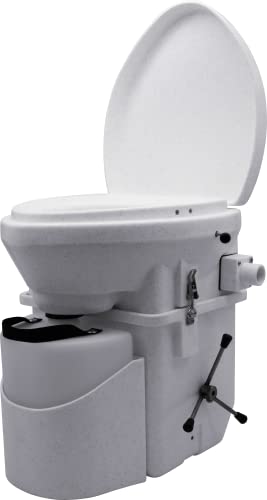
Nature’s Head Self Contained Composting Toilet (Close Quarters Spider Handle) — Best Self-Contained Composting
Nature’s Head is the pick for cabin owners who prefer one self-contained unit over a plumbed urine line. Liquids and solids are separated inside the unit, solids go into a composting chamber with a medium you turn with the handle, and the close-quarters spider handle variant is made for tight cabin bathrooms where elbow room is scarce. It suits owners comfortable with a hands-on routine in exchange for a proven, widely understood system.
Strengths
- Self-contained design needs no separate urine drain plumbing
- Close-quarters handle suits small cabin bathrooms
- Long-established format with widely understood maintenance routine
Trade-offs
- Requires composting medium and regular handle turning
- Solids chamber emptying is a more involved job than swapping a bag
- Fan venting must be installed properly to control moisture and odor
| Specification | Detail |
|---|---|
| System | Self-contained composting toilet |
| Handle | Close quarters spider handle design (per Amazon title) |
| Installation | Single unit, vented |
Living with a Nature’s Head is a rhythm: add medium, turn the handle after use patterns the maker describes, empty the urine bottle frequently, and empty the solids chamber on a much longer cycle. Cabins reward that rhythm because use is intermittent — the chamber gets rest time between weekends, which composting systems appreciate. The failure mode is neglect dressed as convenience: skipping the vent, overfilling the urine bottle, or letting the medium get saturated. Buyers who know they will follow a simple routine get a genuinely waterless cabin toilet; buyers who will not should choose the Villa or a cassette instead.
The urine bottle deserves its own paragraph, because it is where Nature’s Head ownership is won or lost. It is small, it fills faster than new owners expect, and it is trivially easy to empty into a drain or suitable spot outdoors. Build the habit of emptying it at the same moment as a daily chore — morning coffee water, say — and it never becomes an event. Let it brim, and the system’s one real weakness announces itself. Discipline here is the entire difference between devotees and detractors.
Best for: hands-on owners who want one self-contained unit / Not suited for: cabins where running a urine drain is impractical
Check on Amazon — check the current price on Amazon and confirm the tank size on the listing matches what is described here before ordering.

Separett Tiny Self-Contained Urine-Separating Compost Toilet — Best for Small Cabins and Tight Bathrooms
The Separett Tiny fits the cabin reality the Villa sometimes cannot: a bathroom carved from a closet, a bunkie, a sauna conversion or a tiny A-frame loft. It keeps the urine-separating principle that makes dry toilets pleasant, but stores urine in a built-in container instead of demanding a drain line, and the emptying sensor tells you when that container needs attention instead of letting you discover it the unpleasant way.
Strengths
- Built-in urine container removes the need for a drain line
- Emptying sensor warns before the container overfills
- Compact self-contained format suits tiny cabin bathrooms
Trade-offs
- Container capacity means more frequent emptying under heavy use
- Still a dry system — guests need the separation explained
- Smaller format will feel compact for larger users
| Specification | Detail |
|---|---|
| System | Self-contained urine-separating toilet |
| Urine handling | Built-in container with emptying sensor (per Amazon title) |
| Medium | No additives or mixing needed (per Amazon title) |
| Stated uses | Vans, RVs, cabins and boats (per Amazon title) |
The sensor is not a gimmick in a cabin context. Cabins host guests, and guests do not check containers. A visible prompt turns an awkward failure into a two-minute chore. The Tiny also travels well between roles: the same unit can serve a cabin build in summer and a van or boat in other seasons, which matters for owners whose off-grid life is not confined to one building. Pair it with a simple house rule — sit every time, container emptied at checkout — and it stays odor-light and trouble-free.
Installation flexibility is the Tiny’s hidden strength in cabins specifically. Because the urine container is internal, the unit can be trialled in a spot for a season before anyone commits to it — move it from the main bathroom to the bunkie, lend it to the guest cabin, bring it home for winter. Fixed plumbing never offers that optionality. For owners still learning how their cabin is actually used, a toilet that can move with the learning is worth more than a theoretically perfect fixed answer.
Best for: small cabins, bunkies and converted spaces without drain options / Not suited for: households that need one dry toilet to serve several settings
Check on Amazon — check the current price on Amazon and confirm the tank size on the listing matches what is described here before ordering.
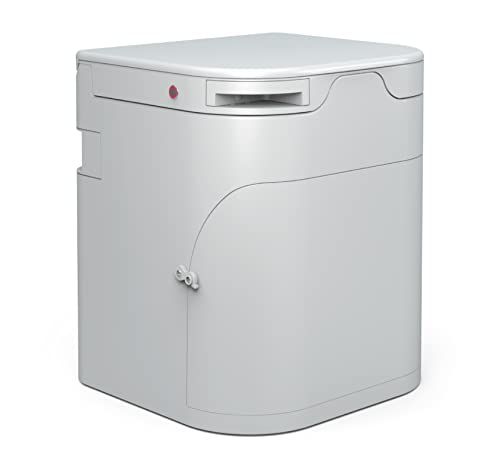
OGO Origin Compact Composting Toilet — Best Compact Footprint
The OGO Origin is the pick when the tape measure, not the waste system, is making the decision. A 15-inch footprint is genuinely small for a composting toilet, which opens up placements — under a sloped ceiling, beside a shower stall, in a converted pantry — that rule out full-size units. It suits single owners and couples whose cabin bathroom is small but used often enough to justify a real composting system over a bucket or cassette.
Strengths
- 15-inch footprint fits placements other composters cannot
- Purpose-built compact composting rather than a cut-down design
- Sized for vans, RVs and boats as well as small cabins
Trade-offs
- Compact chamber means a tighter emptying cycle for groups
- Small footprint still needs venting planned like any composter
- Less forgiving of guest misuse than a simple cassette
| Specification | Detail |
|---|---|
| Footprint | 15 inches (per Amazon title) |
| System | Compact composting toilet |
| Stated uses | Van, RV and boat (per Amazon title); equally suited to small cabin bathrooms |
Small composters live or die on moisture management, because there is less chamber volume to forgive mistakes. Vent the Origin properly, keep the urine path disciplined, and it behaves like its larger relatives. In a cabin it pairs naturally with a simple backup — even a lidded bucket system in the woodshed — for the one weekend a year when twelve people show up. Judged on its intended job, though, nothing else in this guide puts real composting capacity into this little floor space.
In cabins the Origin often ends up sharing a room with a shower, and that pairing deserves respect: composting systems manage their own moisture, and a steamy room tests the venting more than the toilet. Run the vent fan habitually after showers if your setup allows, keep the door airflow sensible, and the small chamber stays in balance. It is a minor operational note, but small chambers reward owners who understand that the bathroom’s whole air system — not just the toilet — is the machine.
Best for: cabins with very small bathrooms and one or two regular users / Not suited for: owners who need full composting in a tight footprint
Check on Amazon — check the current price on Amazon and confirm the tank size on the listing matches what is described here before ordering.

Compo Closet Cuddy Composting Toilet — Best for Cabins Without Power to Spare — With a Fan When You Have It
The Compo Closet Cuddy suits the cabin that is also a basecamp: it can live in the cabin most of the year, then ride in a van or boat for a trip, because it is self-contained, waterless and chemical-free. The 12V fan and carbon filter are its odor strategy, which makes it a natural fit for cabins with a small solar setup or battery bank that can spare a trickle of power, and its 3.9-gallon scale keeps the whole unit manageable to carry and empty.
Strengths
- Waterless and chemical-free, with a 12V fan and carbon filter for odor control
- 3.9 Gal scale keeps the unit portable between cabin and vehicle
- Self-contained format works off-grid in RVs, vans, boats and tiny homes
Trade-offs
- Fan wants a 12V supply to do its best work
- Smaller capacity than the Villa for heavy family use
- Carbon filter is a consumable to keep on the cabin shelf
| Specification | Detail |
|---|---|
| Capacity | 3.9 Gal (per Amazon title) |
| Odor control | 12V fan and carbon filter (per Amazon title) |
| System | Waterless, self-contained, no chemicals (per Amazon title) |
The Cuddy’s honest trade is capacity for flexibility. A family of five on a holiday week will cycle it often; a couple using a cabin as a quiet base will find the rhythm easy. The fan makes a real difference in a small, still cabin bathroom, and because the unit is sealed and self-contained, moving it for cleaning or travel is a normal chore rather than a project. Keep a spare filter at the cabin and it asks very little of you.
The Cuddy’s filter and fan create one cabin-specific chore worth planning: in a cabin visited monthly, check the fan actually spins on arrival, the way you check the water and the mouse traps. A fan that sat dead for a month in a closed cabin means the unit was sealed storage, not active ventilation, and the first evening will tell you so. Ten seconds on the arrival round prevents the only bad version of this toilet’s story.
Best for: cabins with a small 12V power system and mixed cabin/vehicle use / Not suited for: permanent installations for large groups
Check on Amazon — check the current price on Amazon and confirm the tank size on the listing matches what is described here before ordering.

Thetford Porta Potti 365 Portable Toilet (92820) — Best Flush-Style Backup
Not every cabin should go dry. The Thetford Porta Potti 365 is the conventional answer — a sealed portable cassette toilet with a familiar sit-and-flush routine that any guest understands instantly, listed for RV, marine, camping, van, truck and healthcare use. In a cabin it shines as the ensuite backup in a guest room, the overnight option that saves a trip to the main bathroom, or the primary toilet in a lightly used hunting or fishing cabin where a composting system would sit idle and unmanaged for months.
Strengths
- Familiar flush routine needs no explanation for guests
- Sealed cassette contains waste for transport to a dump point
- Proven Porta Potti format from a long-running portable line
Trade-offs
- Uses water and cassette additive, unlike the dry picks
- Cassette must be carried and emptied — weight grows as it fills
- Ongoing additive cost the composting picks avoid
| Specification | Detail |
|---|---|
| Model | 92820 (per Amazon title) |
| System | Sealed portable cassette toilet |
| Stated uses | RV, marine, camping, vans, trucks, healthcare (per Amazon title) |
The 365 earns its place here on honesty: a composting toilet that nobody maintains is worse than a cassette that anybody can empty. For a cabin used a handful of weekends a year, the cassette’s routine — fill the flush tank, add cassette fluid, empty at a proper dump point or household toilet — is proportionate. Just respect the carry weight, empty before it is brim-full, and never empty a chemically treated cassette into a septic system or the woods unless the additive and local rules explicitly allow it.
For the 365 in cabin duty, buy the experience properly: a second cassette is the upgrade owners consistently praise, because it turns emptying from an urgent interruption into a swap — full cassette out, fresh cassette in, the full one dealt with at leisure on the way home. In a guest room or bunkie, that swap system is the difference between a backup toilet that feels considered and one that feels like camping indoors.
Best for: lightly used cabins, guest rooms and as an overflow backup / Not suited for: owners seeking a fully waterless, chemical-free setup
Check on Amazon — check the current price on Amazon and confirm the tank size on the listing matches what is described here before ordering.
Comparison Table
The table below compresses the six picks into the four facts that decide most purchases in this category: what the product is, the badge it earned, the one specification that defines it, and the buyer it fits. Use it to shortlist two candidates, then read their full reviews above before spending money.
| Pick | Badge | Key spec | Best for |
|---|---|---|---|
| Separett Villa Urine-Separating Compost Toilet | Best Overall for Cabins | Urine-separating, high-capacity, no additives or mixing needed | cabins with regular use that can route a urine drain |
| Nature’s Head Self Contained Composting Toilet (Close Quarters Spider Handle) | Best Self-Contained Composting | Self-contained composting, close-quarters spider handle | hands-on owners who want one self-contained unit |
| Separett Tiny Self-Contained Urine-Separating Compost Toilet | Best for Small Cabins and Tight Bathrooms | Built-in urine container with emptying sensor | small cabins, bunkies and converted spaces without drain options |
| OGO Origin Compact Composting Toilet | Best Compact Footprint | 15-inch footprint, compact composting | cabins with very small bathrooms and one or two regular users |
| Compo Closet Cuddy Composting Toilet | Best for Cabins Without Power to Spare — With a Fan When You Have It | 3.9 Gal, 12V fan, carbon filter, no chemicals | cabins with a small 12V power system and mixed cabin/vehicle use |
| Thetford Porta Potti 365 Portable Toilet (92820) | Best Flush-Style Backup | Model 92820, sealed cassette design for RV, marine and camping use | lightly used cabins, guest rooms and as an overflow backup |
How to Choose the Best Cabin Toilets for Your Setup
Start with water, because water decides everything. If your cabin has reliable pressurized water and a septic system, you do not need this guide — a conventional fixture is simpler. The moment water is hauled, seasonal, frozen half the year or feeding a fragile septic, dry and cassette systems win. Urine-separating designs like the Villa and Tiny remove the largest, smelliest fraction of waste as a liquid you can route to a drain or container, which is why they dominate serious off-grid installations.
Next, count real usage: nights per year, typical party size, and worst-case party size. A composting chamber sized for a couple will resent a ten-person holiday week, while a high-capacity separator shrugs it off. Then be honest about the operator. Cabins are maintained by whoever shows up, so choose the system your least technical regular guest can use correctly after a ten-second briefing.
- Decide water first: dry, separating or cassette — never a flush fixture without reliable water and waste handling
- Match capacity to worst-case weekends, not average ones
- Plan the vent, drain or dump route before the toilet arrives, not after
- Pick the system your guests can operate correctly without a manual
- Keep a simple sealed backup for peak weekends and maintenance days
Composting, Urine-Separating, Dry and Cassette: The Four Cabin Systems Compared
Urine separation is the quiet breakthrough in cabin sanitation. Most odor and most volume in a toilet is urine; remove it at the seat and solids become a dry, slow, manageable material instead of a slurry. The Villa uses this principle at family scale, the Tiny packages it for small spaces with a sensor-equipped container, and both avoid medium, mixing and chemicals entirely.
Self-contained composting, represented by the Nature’s Head and the compact OGO Origin, also separates liquids but then composts solids in a chamber with a medium you manage. It asks more of the operator and returns a system with no bags and no drain line. Fan-assisted dry toilets like the Cuddy sit between the camps: sealed, waterless and chemical-free, using airflow and a carbon filter to stay pleasant in small spaces. The cassette — the Porta Potti 365 — is the conservative baseline: real flushing, real carrying, and a chemical routine, in exchange for total familiarity.
Venting, Freezing and Leaving the Cabin Empty: The Practical Details
Every dry system in this guide depends on moving a little air. A vent that exits above the roofline, kept as straight and warm as the building allows, does more for odor control than any additive or filter. In cold climates, insulate the vent run so moist air does not condense and rain back, and think about where a urine drain line can freeze: a line with continuous fall and no traps survives winter far better than a creative one.
Leaving the cabin empty is its own test. Before a long absence, empty containers and cassettes, leave composting chambers in their resting state as the maker directs, and close lids. Systems fail over winter through neglect of these small steps, not through design flaws. A laminated card on the bathroom wall — what to do on arrival, what to do before leaving — is the cheapest reliability upgrade any cabin toilet can get.
How to Set Up a Cabin Toilet That Stays Odor-Free
Setup decides whether a cabin toilet is a quiet success or a recurring complaint. The steps below apply across the systems in this guide; follow the specific manual for your model alongside them.
- Choose the spot with the vent and drain in mind first, toilet second: the shortest, straightest vent path and a workable urine route matter more than a few inches of floor position.
- Level and secure the unit so it cannot rock; movement breaks seals, stresses vent joints and makes any toilet feel cheap.
- Install the vent run with continuous rise, minimal bends and an exit above the roofline where possible, sealing every joint.
- If your system separates urine, route the line with constant fall, no low traps, and a freeze plan appropriate to your climate.
- Commission the system exactly as the manual directs — medium in a composter, water and additive in a cassette — before the first real use.
- Brief every regular user in person once: sit to use a separator, what may and may not go in, and who empties what.
- Post the arrival and departure routine on the wall, including emptying, lid position and what to check before locking up.
After the first weekend, inspect the vent joints, the urine path and the area under the unit while everything is still clean and new. Small weeps and loose fittings announce themselves early, and fixing them in week one is what makes year three uneventful.
Cabin Toilet Rules, Etiquette and Waste Handling Done Properly
Waste handling is where cabin toilets meet the real world, so treat it as part of the purchase. Solids from separating and composting systems must be disposed of according to local rules — bagged waste to household refuse where permitted, finished compost handled as the maker and local guidance direct, and never dumped casually near water or trails. Urine, diluted, is the least problematic stream, but it still belongs in a proper drain, soakaway where allowed, or container emptied responsibly — not beside the cabin steps.
Etiquette keeps the peace in shared cabins. The rules that work are boring and visible: sit down on separators, keep the lid closed, leave the system as you found it, and tell the owner when a container or cassette is near full instead of hoping the next person deals with it. Owners help by keeping supplies — bags, medium, additive, gloves, a spare filter — stocked in one labelled box, so doing the right thing is always the easy thing.
Finally, think in seasons. Spring commissioning, a mid-season check of vents and seals, and a deliberate winterizing routine will make any of these six picks outlast the cabin furniture around it. The toilet is the least glamorous purchase in a cabin build and the one everyone remembers if it goes wrong — the systems above, set up and run properly, are how it becomes a non-event.
Seasonal Cabins Versus Year-Round Cabins: Different Toilets for Different Rhythms
A seasonal cabin — opened in spring, closed in autumn, visited in bursts — punishes systems that need steady attention and rewards systems that rest well. Urine separators rest beautifully: emptied and cleaned at closing, they wake in spring exactly as they were left. Cassettes rest well too, provided they are stored rinsed and dry rather than sealed with their last weekend inside them. Self-contained composters rest adequately if the chamber is left in its resting state as directed, though a chamber mid-cycle at closing time deserves finishing properly before the cabin sleeps.
A year-round cabin with weekly use inverts some of this. Steady traffic favors capacity and the systems that convert steady use into steady, boring routine — the high-capacity separator most of all. It also justifies the small power draw of fan-assisted units, because the cabin’s systems are alive anyway. The mistake is buying for the cabin you describe at the estate agent’s office rather than the one your calendar actually shows: count last year’s nights, honestly, and let that number steer the size and system before any badge in this guide does.
Either rhythm benefits from one shared habit: a toilet page in the cabin’s house book. Arrival steps, departure steps, where the consumables live, and what ‘full’ looks like for your system. Guests read it, owners forget less, and the toilet — whichever of these six you choose — stops depending on any one person’s memory.
Cabin Toilet Buying Checklist
Run this checklist before ordering, and most cabin toilet regrets never happen:
- Water reality confirmed: no reliable pressurized water or sewer means dry, separating or cassette — full stop.
- Vent path planned on paper: exit point, run length, bends, and how it behaves in your winter.
- Urine route decided for separators: drain line with continuous fall, or container with a named person emptying it.
- Capacity matched to your worst weekend, with a sealed backup plan for overflow crowds.
- Consumables stocked at the cabin before the toilet arrives: bags, medium, additive or filters as your system requires.
- Guest briefing prepared: ten seconds of explanation and a card on the wall beat any product feature.
- Disposal route confirmed locally: what your area permits for bagged solids, compost and cassette waste.
Teaching the Cabin: House Rules That Make Any System Work
Every successful cabin toilet in this guide ultimately runs on a document, not a device: the house rules. The cabins that stay sweet write them down, keep them short, and put them where the toilet is. Four rules cover almost everything. Everyone sits on a separator, every time, no exceptions for speed or weather. Nothing goes in that did not come out of a person or off the toilet paper roll. Whoever notices a container, cassette or indicator at the warning level owns the service, immediately, without negotiation. And the last person out at the end of a visit runs the departure routine on the card, even — especially — when everyone is tired and the car is loaded.
Owners sometimes resist posting rules for paying-attention adults, and the resistance is understandable and wrong. Cabins scramble context: guests arrive from homes with flush plumbing, tired, in the dark, and habits run on autopilot. A card on the wall is not bureaucracy; it is the interface between your system and a sleepy autopilot. The makers of these toilets cannot design for your guests. Your card can, in four lines.
Review the rules once a season the way you review the whole cabin. Systems drift — a new consumable, a changed disposal route, a container that moved — and the card should drift with them. The toilet you chose from this guide will do its part for years. The card is how the household does its part, visit after visit, guest after guest.
Common Buying Mistakes
Buying a flush toilet for a cabin without water or waste handling
It happens constantly in cabin builds: a familiar fixture goes in, then hauling water and managing a holding tank turns every visit into chores. Choose the waste system your infrastructure can actually support.
Skipping the vent to save an afternoon
Dry and composting toilets without a proper vent get blamed for odor that the vent would have prevented. The vent is not an accessory; it is half the system.
Sizing for average weekends
Cabins peak. A system sized for two will fail socially on the one weekend twelve people arrive. Size for the peak or keep a sealed backup for overflow.
Letting guests guess how a separator works
Urine separation only works if everyone sits and uses it as designed. One briefing and a small sign prevent the moisture problems that cause odor.
Emptying cassettes or containers in the wrong place
Cassette waste and untreated solids never belong in the woods, a stream setback or a random septic. Use proper dump points and follow local rules every time.
Final Recommendation
For most cabins, start with the Separett Villa: urine separation, high capacity and no medium to manage make it the easiest serious system to live with. If a urine drain is impossible, the Nature’s Head is the proven self-contained alternative, and the Separett Tiny brings the same separating principle to genuinely small bathrooms. The OGO Origin wins when floor space is the binding constraint, the Cuddy when one unit must serve cabin and vehicle, and the Porta Potti 365 when familiarity and guest-proofing matter more than going fully dry.
Whichever you choose, budget the same care for the vent, drain and house rules as for the toilet itself. That combination — right system, right setup, clear routine — is what the best cabin toilets all have in common.
If you want the short version of this entire guide, it is this: start with Separett Villa Urine-Separating Compost Toilet, Nature’s Head Self Contained Composting Toilet (Close Quarters Spider Handle), Separett Tiny Self-Contained Urine-Separating Compost Toilet. One of those three fits the large majority of buyers in this category, and the full reviews above explain exactly which buyer each one fits.
Keep exploring the rest of this cluster once you have a shortlist: Best Camper Toilets Best Campervan Toilets Best Cassette Toilets Best Camping Toilets Under $200 Best Car Camping Toilets
Frequently Asked Questions
Do cabin toilets smell?
A correctly installed dry or separating toilet should not smell in normal use, because odor comes mainly from urine mixing with solids and from stagnant air. Separation, a working vent and a closed lid address all three. If a cabin toilet smells, the cause is almost always a blocked or missing vent, an overfull urine container, or guests using a separator incorrectly.
Can a cabin toilet freeze in winter?
The toilet itself tolerates cold; water lines, urine lines with traps, and cassette flush water are the vulnerable parts. Route urine lines with continuous fall, drain or protect cassette water before hard freezes, and follow the maker’s winter guidance. Many owners simply commission the system in spring and rest it in winter.
What do you do with the waste from a composting cabin toilet?
Liquids go to a drain, container or approved soakaway. Solids are bagged or emptied according to the maker’s instructions and local rules — commonly to household waste where permitted, with finished compost handled as directed. Never dump untreated waste near water, trails or a neighbor’s boundary.
Is a cassette toilet a good primary toilet for a cabin?
For a lightly used cabin, yes: the routine is familiar and the sealed cassette is easy to manage at low volumes. For a family cabin used most weekends, the carrying and emptying cycle usually pushes owners toward a separating or composting system within a season or two.
Do these toilets need electricity?
The separating Separett designs work without power for the separation itself, the cassette needs none, and composting or fan-assisted units use a small fan — typically a modest 12V draw — to manage moisture and odor. A small cabin solar setup handles that load easily.
How often will I empty a cabin toilet?
It depends on the system and headcount: urine containers on compact units may need attention every few days of steady use, cassettes on a similar rhythm when full, and composting solids chambers on a far longer cycle measured in weeks of use. The sensor on the Tiny and the level discipline on cassettes exist to make this predictable rather than surprising.


