Disclosure: airfryerkitchensupply.com is reader-supported. When you buy through links on our site, we may earn an affiliate commission at no extra cost to you.
Where to buy
All six books in this guide to the best books on custom smokers are current Amazon listings, verified before publication. Several exist in hardcover, paperback, and digital editions, and prices differ between formats — use the links below to check the current price on Amazon in the format you prefer.
Quick links to the picks in this guide: Franklin Barbecue: A Meat-Smoking Manifesto; Project Smoke; Franklin Smoke: Wood. Fire. Food.; Smoking Meat 101: The Ultimate Beginner’s Guide; The Complete Guide to Smoking Meat; Master the Wood Pellet Grill.
Owners of custom smokers — the welded offset in the driveway, the drum build in the garage, the smokehouse behind the barn — read differently from everyone else in barbecue, which is why the best books on custom smokers are not simply the best barbecue cookbooks. A custom pit has no manual. Its draft quirks, hot spots, fuel appetite, and capacity were decided by its builder, and the books that serve its owner best are the ones that teach transferable craft: fire behavior, smoke quality, meat science, and the judgment to adapt a method to a cooker nobody else owns.
That is the standard applied here. Every book on this list was chosen because it makes the owner of a non-standard cooker better — better at reading a fire by its smoke, better at knowing when a brisket is done by feel rather than by clock, better at running a pellet or charcoal rig to its strengths. Recipe-only collections that assume a specific commercial cooker and a specific pellet flavor were passed over, however popular they are.
Two honest notes about the category. First, ‘custom smoker’ owners skew experienced, so this list weights depth over novelty; a famous beginner book appears here only where it genuinely earns a place. Second, the craft’s landmark titles cluster around wood fire — because most custom pits burn wood or charcoal — but pellet and electric owners are served by a dedicated pick rather than left to translate everything themselves.
In this guide
Quick Picks
Franklin Barbecue: A Meat-Smoking Manifesto — Best Overall. The defining book of modern wood-fire barbecue, written by the pitmaster whose name is on the restaurant and the pits. Uniquely relevant to custom owners because it treats the cooker itself — including building and modifying pits — as part of the craft, not a given. Check price on Amazon.
Project Smoke — Best for Range and Experimentation. Steven Raichlen’s systematic tour of smoking in all its forms — hot, cold, smoke-roasting, and more — organized around a seven-step method and a hundred recipes that deliberately roam beyond brisket. The best book here for the custom owner whose pit can do anything and who wants to use all of it. Check price on Amazon.
Franklin Smoke: Wood. Fire. Food. — Best Advanced Companion. The sequel to the manifesto, pushing past classic barbecue into everything wood fire can cook — and into the fire craft itself at a deeper level. For owners who have cooked the canon and want the next education, written by the same authority. Check the current price on Amazon. Check price on Amazon.
Smoking Meat 101: The Ultimate Beginner’s Guide — Best for New Custom-Pit Owners. Not everyone with a custom smoker built it from mastery — many inherit, buy, or finish a build and then face their first fire as genuine beginners. This is the honest on-ramp: fundamentals, temperatures, and forgiving recipes in plain language, without pretending to be more. Check price on Amazon.
The Complete Guide to Smoking Meat — Best Recipe Workhorse. A hundred recipes organized for the way people actually use a smoker week to week, with enough guidance around them to cook confidently on any rig. The practical workhorse of this list — the book that lives in the kitchen rather than the library. Check the current price on Amazon. Check price on Amazon.
Master the Wood Pellet Grill — Best for Pellet-Rig Owners. Custom does not always mean stick-burning: plenty of one-off and competition rigs are pellet-fed, and their owners deserve a book that speaks pellet natively — smoke settings, pellet selection, and the techniques that coax real smoke flavor from an auger. This is that book on this list. Check price on Amazon.
How These Picks Were Chosen
Books were verified as live listings through Amazon’s catalog data, then judged on four criteria specific to custom-smoker ownership. Transferability: does the teaching survive translation to a cooker the author has never seen? Fire literacy: does the book teach smoke and fire as skills, with causes and effects, rather than as settings? Depth: will an experienced cook still learn from it in year three? And honesty of scope: does the book do what its title claims, at the level its audience needs?
Cookbooks that are essentially brand manuals for one manufacturer’s cooker were excluded, as were unattributed recipe compilations whose instructions assume equipment and ingredients the custom owner may not use. Prices are not printed — editions and formats shift — so check the current price on Amazon for the format you want.
A final methodological note: this list was built for owners, not for browsers. Every title was asked a single question — what will the owner of a one-off, undocumented cooker be able to do better after reading you? Books that answered with settings for a cooker the reader does not own were set aside, however celebrated they are in their own ecosystems. Books that answered with judgment — how to read smoke, judge doneness, manage a fire, choose a recipe and adapt it — form the six above. If you apply that same question to every barbecue book you meet in the future, your shelf will stay as honest as your pit.
The 6 Best Books on Custom Smokers
Franklin Barbecue: A Meat-Smoking Manifesto — Best Overall
Most barbecue books start at the meat. This one starts at the wood pile and the pit, which is exactly where a custom smoker owner’s education should start. Its early chapters on smokers — how they work, how they are built, what separates a cooker that drafts cleanly from one that fights you — read like a letter to precisely the audience of this guide: people whose cooker is a project, not a product.
The cooking chapters that follow are equally cooker-agnostic. Brisket, ribs, and sausage are taught through fire quality, smoke color, wrapping judgment, and feel, so the method transfers to any wood-burning pit. Owners of pellet rigs will translate rather than follow literally, but the underlying smoke science still applies.
Strengths
- Treats pit design and modification as part of the craft — rare among famous cookbooks
- Teaches smoke quality and fire management as observable skills, not settings
- Depth that rewards experienced cooks; this is not a beginner primer wearing a famous name
Trade-offs
- Wood-fire-centric; pellet and electric owners must adapt methods
- Brisket and Central Texas barbecue dominate the food chapters
- Demands patience — its methods assume long cooks and close attention
| Publisher | Ten Speed Press |
| Subject | Wood-fire smoking craft and pit building |
The reason this book tops a list for custom smoker owners, specifically, is its respect for the cooker as a variable. Commercial-cooker cookbooks can assume consistency; this book assumes the opposite — that your pit has its own personality — and teaches you to read and respond to it. That is the daily reality of cooking on a build, and no other popular title addresses it as directly.
If your custom pit burns wood or charcoal and you own one barbecue book, the consensus choice is this one, and the consensus is right. Check the current price on Amazon — the hardcover is the format most owners keep by the pit.
One more audience should be named: the builder between projects. The manifesto’s smoker chapters have launched a thousand modifications — a stack raised here, a firebox door refitted there — because they teach the reader to see their existing pit as a draft system rather than a finished object. Custom owners report reading those chapters with their own cooker in mind and a notebook in hand, and emerging with a work list. A cookbook that improves your hardware is a rare thing; it is part of why this one sits on fabrication-shop shelves as well as kitchen ones.
Finally, a note on rereading: owners consistently report that this book improves after their first season, because its observations about smoke and fire describe things they have now seen. Schedule the second reading deliberately — it is the cheapest education in this entire guide.
Best for: wood and charcoal custom-pit owners who want the craft’s benchmark text / Not suited for: readers wanting quick weeknight recipes or pellet-specific settings
Check on Amazon — check the current price on Amazon before you decide, because configurations and included accessories change.
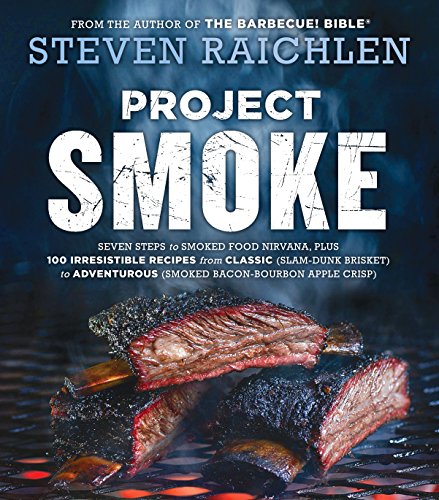
Project Smoke — Best for Range and Experimentation
A custom smoker’s great advantage is versatility: the same chamber that holds a brisket on Saturday can cold-smoke cheese, cure bacon, or smoke-roast vegetables on Sunday. Project Smoke is the book that exploits that range. Its seven-step framework — choose the food, season, choose the cooker and fuel, and so on — is cooker-neutral by design, and its recipes are explicit about adapting between smokers, grills, and improvised setups.
It suits the curious, experienced owner who already has the basics and wants a wider repertoire, including drinks, desserts, and smoke-kissed staples from several world cuisines. Purists seeking a single regional tradition taught to the bone should look at the Franklin titles instead.
Strengths
- Broadest technique range on this list — cold smoking, smoke-roasting, and unconventional items included
- Cooker-neutral method that adapts cleanly to one-off and homebuilt pits
- Raichlen’s instructions are famously precise, with timing and doneness cues that transfer between cookers
Trade-offs
- Breadth trades against depth in any single tradition
- Some recipes call for specialty setups or ingredients a small pit may not suit
- Less on pit design and fire theory than the Franklin manifesto
| Publisher | Workman Publishing |
| Author | Steven Raichlen |
Where the manifesto teaches you to master one fire deeply, Project Smoke teaches you to think in categories: once you understand smoke as an ingredient with intensity levels, every food becomes a candidate. Custom owners, whose pits often have the chamber size and temperature range to attempt anything, get more usable ideas per chapter from this book than from any regional cookbook.
It is also the most giftable book on this list — the one that pulls a confident brisket cook toward salmon, cocktails, and smoked ice cream without a hint of gimmickry, because the technique underneath is sound.
Its treatment of smoking setups deserves a specific nod from this list’s perspective: Raichlen has cooked on everything, everywhere, and the book’s willingness to smoke in improvised and unconventional rigs makes it spiritually a custom-smoker book even when the equipment pictured is commercial. Readers who built something unusual will feel recognized rather than accommodated. That recognition matters practically, too — the adaptation notes assume intelligence, and intelligence is what a custom owner has instead of a manual.
Its global range also makes it the shelf’s best argument against boredom, the quiet killer of smoking hobbies. When the brisket routine palls, a book that can send you to smoked Camembert or a tea-smoked duck by Sunday is not a luxury; it is retention.
Best for: versatile custom-pit owners who want to smoke far beyond the barbecue canon / Not suited for: single-tradition purists who want one cuisine taught exhaustively
Check on Amazon — check the current price on Amazon before you decide, because configurations and included accessories change.
Franklin Smoke: Wood. Fire. Food. — Best Advanced Companion
Sequels to landmark cookbooks usually dilute the original. This one instead changes the subject: where the manifesto codified Central Texas barbecue, Franklin Smoke explores the wider world of cooking with wood fire — the management of coals, the use of smoke as one note among several, and dishes that owe more to live-fire traditions worldwide than to the barbecue circuit.
It suits the experienced custom-pit owner whose cooker can grill, roast, and smoke in the same session and who wants a book that treats those modes as one continuous craft. Newer smokers should start with the manifesto; this is the graduate text.
Strengths
- Extends fire craft beyond barbecue into live-fire cooking generally — ideal for versatile custom pits
- Deepens the original’s fire teaching rather than repeating its recipes
- Same uncompromising standard on wood, smoke quality, and patience
Trade-offs
- Assumes the reader already commands basic smoking; not a starting point
- Wood fire only — no pellet or electric translation provided
- Menu range will push some readers outside their comfort zone, deliberately
| Publisher | Ten Speed Press |
| Subject | Advanced wood-fire cooking beyond barbecue |
For the custom owner, the value is in how the book reframes the cooker. A pit with a good firebox and adjustable airflow is not just a smoker; it is a wood-fired kitchen, and this book is a curriculum for that kitchen. Owners of offset and drum builds with grilling capability will find their hardware suddenly more capable than they had been using it.
Read it after the manifesto, or instead of it if your cooking already leans live-fire. Either way, it belongs to the small set of books that change how you cook rather than what you cook this weekend.
Consider its effect on how a custom pit gets used across a week. The manifesto’s world is the long Saturday cook; this volume’s world includes the weeknight fire, the vegetable course, the fish, the bread — the pit as the household’s wood-fired oven rather than its weekend altar. For owners whose custom build has the airflow range to cook at varied temperatures, that shift in ambition may be the book’s largest gift: more fires, more often, with more of the household fed from them.
Treat its arrival in your library as a prompt to audit your pit’s range: the cooks it proposes will expose airflow and temperature capabilities you may not have tested, and learning them expands the machine you already own.
Best for: experienced wood-fire cooks ready to use their custom pit as a full live-fire kitchen / Not suited for: beginners or pellet-only owners
Check on Amazon — check the current price on Amazon before you decide, because configurations and included accessories change.
Smoking Meat 101: The Ultimate Beginner’s Guide — Best for New Custom-Pit Owners
Every list for experienced owners needs one book for the person standing in front of a new custom pit with a bag of charcoal and rising anxiety. Smoking Meat 101 covers the discipline’s foundations — fuel, temperature control, wood choices, food safety, and the core cuts — in a structure designed to produce early successes, which is what keeps a new owner cooking long enough to become an experienced one.
It suits new owners of any cooker type, including the reader who just acquired a custom build and needs the basics before the deep texts make sense. Veterans will find it elementary, and it does not pretend otherwise.
Strengths
- Clear, structured fundamentals with no assumed knowledge
- Cooker-general guidance that works for a one-off build’s first season
- Forgiving, success-oriented recipes that build confidence
Trade-offs
- Experienced smokers will outgrow it quickly
- Little on fire theory, pit design, or advanced technique
- Generalist scope means less detail per cooker type
| Publisher | Callisto |
| Subject | Beginner smoking fundamentals and recipes |
The most common failure pattern with a new custom smoker is not bad building — it is a discouraging first month: a fire that will not stabilize, a brisket ruined by creosote-heavy smoke, a family dinner saved by the oven. A fundamentals book prevents exactly those failures by teaching clean smoke, patience, and realistic first cooks. That is a more valuable service to a new custom owner than any advanced text.
Buy it as the first book, keep it as the loaner for friends who borrow your pit, and graduate to the Franklin titles when its recipes start feeling easy.
Best for: new owners of a custom smoker cooking their first season / Not suited for: experienced pitmasters seeking depth
Check on Amazon — check the current price on Amazon before you decide, because configurations and included accessories change.
The Complete Guide to Smoking Meat — Best Recipe Workhorse
There is a category of book every pit owner ends up needing: not philosophy, not a manifesto, but a reliable recipe bench — chicken on Thursday, ribs on Saturday, a shoulder for the freezer — with times, temperatures, and seasoning frameworks that behave predictably on an unfamiliar cooker. This guide fills that role with a hundred recipes spanning the barbecue repertoire and beyond.
It suits the custom owner whose pit is a weekly appliance rather than a competition instrument, and who values breadth and dependability over lore. It will not teach you to build or deeply understand a pit, and it does not claim to.
Strengths
- Large, varied recipe set sized for regular real-world cooking
- Consistent format makes adapting recipes to a custom pit’s quirks straightforward
- Good coverage of the everyday cuts families actually smoke
Trade-offs
- Recipe-led, so fire theory and cooker insight are light
- Times and temperatures still need adjustment for your specific pit
- Less distinctive voice than the author-driven titles on this list
| Publisher | Callisto |
| Subject | 100 smoking recipes with guidance |
Judge this book as infrastructure. The famous titles change how you think; this one changes how often you cook, because a deep bench of dependable recipes is what turns an impressive custom pit into a used one. Its consistency is a feature for custom owners: uniform recipe structure makes it easy to build a personal correction — your pit runs hot on the left, your smoke runs clean at a given intake setting — into every cook.
Pair it with one deep book from this list and you have the complete shelf: understanding from one, Tuesday dinner from the other.
Its hundred recipes also make it the best troubleshooting mirror on this list. When a cook disappoints on your custom pit, a deep recipe bench lets you isolate variables — same cut, different method; same method, different cut — until the pit’s habits reveal themselves. Owners of one-off cookers are always running these experiments whether they plan to or not; a consistent, structured cookbook turns the accidents into data. Keep it with a pencil, and let the margins become your pit’s biography.
Bindery advice, offered in earnest: this is a book to cook from weekly, so protect it like a tool — it will live near heat, moisture, and marinade, and a copy that survives the kitchen is worth more than a pristine one that never leaves the shelf.
Best for: custom-pit owners who cook weekly and want a dependable recipe bench / Not suited for: readers seeking fire science or pit-building guidance
Check on Amazon — check the current price on Amazon before you decide, because configurations and included accessories change.
Master the Wood Pellet Grill — Best for Pellet-Rig Owners
Pellet cooking has its own craft that wood-fire books cannot teach: managing smoke output at low temperatures, choosing pellet species and blends, using the grill’s convection character, and compensating for the cleaner burn that makes pellet smoke subtler. This book addresses pellet owners directly, with technique and recipes built around how these cookers actually behave.
It suits owners of pellet grills and pellet-fed custom builds who want maximum smoke flavor and a full repertoire from their rig. Stick-burner owners will find the fuel chapters irrelevant, though the recipes translate with effort.
Strengths
- Pellet-native technique — smoke management, pellet choice, and settings — not translated wood-fire advice
- Recipes designed for pellet cookers’ temperature and convection profile
- Helps pellet owners close the smoke-flavor gap with wood pits
Trade-offs
- Little use to charcoal and wood custom-pit owners
- Cookbook-led; not a source on pellet rig construction or modification
- Brand-agnostic guidance still needs tuning to your controller’s behavior
| Publisher | Callisto |
| Subject | Pellet grill smoking technique and recipes |
The honest challenge of pellet smoking is smoke intensity, and the honest books say so. This one’s value is that it treats that challenge as technique — temperature staging, pellet selection, cook positioning — rather than pretending it does not exist. For a custom pellet build, whose insulation and airflow differ from factory rigs, that technique-first approach adapts better than any settings chart.
It earns the pellet slot on this list by respecting its audience: pellet owners are not failed stick-burners, and a book that starts from that premise teaches them more.
Pellet owners should also know what this book is not asked to do here: it does not replace the fire-craft classics for understanding smoke itself. The strongest pellet shelf pairs this book’s native technique with one cue-based classic from this list — the manifesto for wood-fire thinking, or Project Smoke for range — translated through the pellet lens this book provides. That pairing respects both the fuel’s real differences and the craft’s real continuities, and it is how the best pellet cooks actually read.
Pellet cooks should keep its counsel beside the grill’s own manual, not instead of it: the manual governs your machine’s safety and maintenance, while this book governs your cooking. The pair, together, is the complete documentation a custom pellet rig never shipped with.
Best for: owners of pellet grills and pellet-fed custom rigs / Not suited for: wood and charcoal pit owners
Check on Amazon — check the current price on Amazon before you decide, because configurations and included accessories change.
Comparison Table
| Pick | Badge | Key spec | Best for |
|---|---|---|---|
| Franklin Barbecue: A Meat-Smoking Manifesto | Best Overall | Landmark manifesto on wood fire, smoke quality, and cooker design | wood and charcoal custom-pit owners who want the craft’s benchmark text |
| Project Smoke | Best for Range and Experimentation | Seven-step smoking method with 100 recipes across every cooker type | versatile custom-pit owners who want to smoke far beyond the barbecue canon |
| Franklin Smoke: Wood. Fire. Food. | Best Advanced Companion | The follow-up volume: wood fire applied beyond traditional barbecue | experienced wood-fire cooks ready to use their custom pit as a full live-fire kitchen |
| Smoking Meat 101: The Ultimate Beginner’s Guide | Best for New Custom-Pit Owners | Plain-language fundamentals of smoking for first-time pit owners | new owners of a custom smoker cooking their first season |
| The Complete Guide to Smoking Meat | Best Recipe Workhorse | A hundred-recipe working cookbook for regular smoker use | custom-pit owners who cook weekly and want a dependable recipe bench |
| Master the Wood Pellet Grill | Best for Pellet-Rig Owners | Pellet-specific technique and recipes for auger-fed custom rigs | owners of pellet grills and pellet-fed custom rigs |
How to Choose a Book as a Custom Smoker Owner
Start from your fuel, because it decides which books can speak to you directly. Wood and charcoal owners are the best-served readers in barbecue publishing — the Franklin books and Raichlen assume live fire and reward it. Pellet owners should anchor on the pellet-specific pick and translate the classics selectively. Electric and propane cabinet owners sit between: the fundamentals and recipe books here serve them well, while fire-management chapters translate into burner and chip-management judgment.
Next, be honest about your stage. The pit does not confer experience; a first-season owner of a magnificent custom build is still a first-season cook, and the beginner pick on this list will do more for their food than any manifesto. Conversely, experienced cooks should skip introductory texts without guilt — depth is what keeps a book in use for years, and the two Franklin volumes are the deepest here.
Finally, think in pairs. One understanding book plus one recipe book covers nearly every need a custom owner has: the manifesto or Project Smoke for craft, the hundred-recipe guide for the weekly bench. A shelf built that way outperforms a shelf of five similar cookbooks, and costs less.
What Makes a Barbecue Book ‘Custom-Smoker Friendly’
The defining trait is cooker-agnostic teaching. A custom-friendly book explains its methods through observable cues — smoke color and smell, bark formation, probe tenderness, coal state — that exist on every cooker. A custom-hostile book teaches through equipment specifics: a named setting, a proprietary mode, a branded accessory. When you evaluate any barbecue book for use with a one-off pit, flip to a brisket recipe and ask whether you could execute it on your cooker from the cues given. If the answer requires owning the author’s exact rig, the book will frustrate you.
Second, look for fire literacy. Custom pits vary in draft and heat distribution, so their owners must understand causes: why smoke turns bitter, why a fire chokes, why a stall happens. Books that teach causes make owners better on any cooker, forever. Books that teach only procedures make owners dependent on the procedure matching their pit — which, with a custom build, it often will not.
Building a Two-Book Shelf for a Custom Pit: The Pairings That Work
The guide above recommends thinking in pairs; here are the pairings that cover the ownership map. Wood or charcoal pit, experienced cook: the manifesto for craft, the hundred-recipe guide for the weekly bench. Wood pit, hungry for range: Project Smoke plus Franklin Smoke, which together cover breadth and depth with almost no overlap. New owner, any fuel: Smoking Meat 101 first, and the manifesto bought at the start of season two, when it will be read with experienced eyes. Pellet rig: the pellet book as the anchor, Project Smoke as the range-expander.
Notice what no pairing includes: two books doing the same job. Barbecue publishing is full of honorable redundancy — many fine brisket chapters exist — but a custom owner’s shelf should be built like their pit, with every component earning its space. Two books, well chosen, will teach you more in a year than six books skimmed in parallel, because each gets cooked from, argued with, and absorbed.
How to Read a Barbecue Book With a Notebook: The Custom Owner’s Method
Authors assume a reader; custom owners should be a specific kind. Read any book on this list with your pit in mind and a notebook open, translating as you go: when the author names a temperature, ask where on your pit that temperature lives; when they name a time, convert it into the cues they also give; when they describe their fire, compare its behavior to yours at the same stage. The notebook fills with your pit’s dialect of the book’s language, and after two or three cooks the translation becomes instinct.
This is also the honest way to evaluate barbecue advice generally, including the advice in this guide. A claim that survives translation to your cooker, your fuel, and your climate is knowledge; a claim that only works on the author’s setup is advertising. The books recommended here were chosen because they translate — that is the whole meaning of ‘custom-smoker friendly,’ and it is a standard you can apply to every barbecue book you meet from now on.
Reading the Classics Critically: Where Famous Books Date, and Where They Do Not
Landmark barbecue books age unevenly, and a custom owner should know which parts to trust at full strength. Fire behavior, smoke chemistry, meat science, and cue-based doneness do not date — a brisket’s collagen has not revised its position since any of these books were written. What dates is equipment context: references to specific cooker models, pellets, gadgets, and supply chains reflect their publication moment, and a method welded to a discontinued accessory needs the translation this guide keeps recommending.
The practical approach is to read the classics for principles at full confidence and for procedures at one remove — asking, of any step, what it is trying to achieve, and whether your pit achieves it differently. That single habit converts even a dated passage into useful instruction, and it is why experienced cooks keep returning to books they have owned for a decade: the text is stable, but the reader’s pit, and the reader, keep changing.
How to Adapt Any Cookbook Recipe to Your Custom Smoker
Recipes are written for the author’s cooker; yours is different. This adaptation routine — the working method behind every book on this list — converts any published recipe into a reliable cook on a one-off pit.
- Run the recipe’s cut once before it matters. Choose a forgiving first attempt — a pork shoulder over a brisket — and treat the inaugural cook as data collection, not dinner service.
- Hold the recipe’s target temperature, but verify it at grate level on your pit. Custom builds often read differently at the factory gauge position than where food sits; a grate-level thermometer reading is the only temperature that counts.
- Map your hot spots with a cheap test — slices of white bread across the grate, toasted at cooking temperature, reveal the heat map in minutes. Rotate food through zones deliberately on every cook afterward.
- Translate the recipe’s times into cues: note the bark color, smoke character, and tenderness signs the author describes, and cook to those. On a custom pit, times are the least portable part of any recipe.
- Adjust one variable per cook — fuel size, intake opening, water pan, wrap timing — and write down the result. A notebook by the pit is the custom owner’s real manual, and every author on this list keeps one.
- Build a personal correction sheet for your pit: how long it takes to stabilize, how it behaves in wind and cold, which end runs hot. Tape it inside the cookbook you use most.
After four or five documented cooks, something valuable happens: recipes stop being instructions and become starting points, because you know your pit’s answers to the questions every recipe raises. That is the moment a custom smoker starts outperforming the commercial cooker it replaced — and the moment the deeper books on this list begin paying their highest dividends.
Common Buying Mistakes
Buying brand-manual cookbooks for a cooker you do not own. Many popular smoker cookbooks are written around one manufacturer’s rig, its settings, and its accessories. On a custom pit those instructions dead-end. Check that a book teaches by cues and principles before buying — the picks here were screened on exactly that basis.
Following times instead of cues. A recipe’s clock was set on the author’s pit, in the author’s climate, with the author’s fuel. Your custom build will differ on all three. Every serious book on this list teaches doneness by feel, color, and probe behavior; cook to those and use times only as rough planning guides.
Skipping the fire chapters to get to the recipes. On a commercial cooker with a thermostat, fire chapters can feel optional. On a custom pit, the fire chapters are the book — smoke quality and draft management decide your results more than any rub. Read them first, and reread them after your first season.
Collecting five similar cookbooks instead of two complementary ones. Redundancy is the quiet waste in barbecue shelves. One craft book plus one recipe bench — the pairing recommended in the guide above — teaches more than a stack of interchangeable recipe collections.
Ignoring food safety in the smoking craft. Curing, cold smoking, and long low cooks all carry real safety requirements. The stronger titles here treat them seriously; make sure at least one book on your shelf does, and follow it over any forum advice.
Reading only new books. Barbecue publishing rewards novelty, but the craft’s foundations were written down properly years ago and have not been improved upon in every case since. A shelf of only recent titles inherits the current moment’s blind spots — an over-rotation toward gadgets and competition style among them. The classics on this list are not here from nostalgia; they are here because their chapters on fire and smoke remain the standard the new books are quietly measured against. Read across eras and let them argue with each other on your shelf.
Final Recommendation
If your custom pit burns wood or charcoal, the shelf starts with Franklin Barbecue — it is the rare famous book that speaks directly to people who build and modify their cookers. Add Project Smoke when you want range, Franklin Smoke when you want the graduate course, and the hundred-recipe guide as the weekly workhorse. New owners should honestly start with Smoking Meat 101 and graduate; pellet-rig owners should anchor on Master the Wood Pellet Grill and borrow the classics selectively.
All six are current listings — check the current price on Amazon in your preferred format before ordering, and if your pit has a builder, a fabricator, or a previous owner in your life, know that the manifesto is the most reliably appreciated gift in this entire category.
Revisit the shortlist: Franklin Barbecue: A Meat-Smoking Manifesto; Project Smoke; Franklin Smoke: Wood. Fire. Food.; Smoking Meat 101: The Ultimate Beginner’s Guide; The Complete Guide to Smoking Meat; Master the Wood Pellet Grill.
Keep reading in this series: Best Books On Building Custom Smokers; Best Box Smokers; Best Built Pellet Smokers; Best Bullet Smokers; Best Built Bbq Smokers.
Frequently Asked Questions
What is the best book for someone who built their own smoker?
Franklin Barbecue: A Meat-Smoking Manifesto is the strongest single choice — it covers how smokers work and are built as well as how to cook on them, and its cue-based teaching transfers to any one-off pit. Pair it with a plan-led building book if construction is still ahead of you.
Are these books useful for pellet grill owners?
Yes, with the right pick. Master the Wood Pellet Grill is written pellet-natively, and Project Smoke’s cooker-neutral method adapts well. The Franklin books are wood-fire texts; pellet owners will translate their smoke teaching rather than follow settings, since there are none to follow.
I just bought a custom smoker and have never smoked meat. Where do I start?
Start with Smoking Meat 101 for fundamentals and early wins, and keep a notebook by the pit from your first cook. After a season, the Franklin manifesto will read completely differently — and much more valuably — than it would have on day one.
Do any of these books teach how to build a smoker?
The Franklin manifesto discusses smoker design and building as part of the craft, but it is a cooking book with building insight, not a plans book. For construction itself, use a dedicated building guide — the companion roundup in this series covers the best books on building custom smokers in depth.
Which book has the most recipes?
The Complete Guide to Smoking Meat, with a hundred recipes organized for regular use. Project Smoke also offers a hundred recipes with a wider, more adventurous range, including cold smoking and unconventional items.
Are hardcover editions worth it for pit-side use?
For the two or three books you will cook from weekly, yes — hardcovers lie flatter, survive grease and weather better, and the Franklin and Raichlen volumes are built to that standard. Check the current price on Amazon for both formats; the difference is often smaller than expected, though prices change and are not printed here.
Should I buy these books in hardcover or digital?
For pit-side use, physical books win on durability and glanceability — you cannot ask a tablet to hold a greasy page open in the wind. Digital editions win for travel and search. Many owners keep the two core books physical and everything else digital; the format listings let you compare, so check the current price on Amazon for each before deciding.
My custom smoker is a pellet-fed build. Is this list still for me?
Yes — with the pellet pick as your anchor and the cooker-neutral titles as your range. The one caution is the Franklin books: their fire chapters assume wood you feed by hand, so read them for smoke philosophy and cue-based cooking rather than procedure, and let the pellet book govern your actual settings and technique.


