Disclosure: airfryerkitchensupply.com is reader-supported. When you buy through links on our site, we may earn an affiliate commission at no extra cost to you.
Where to buy
Every book in this roundup of the best books on building custom smokers is a current Amazon listing, verified against the publisher listings before this guide was written. Books go in and out of print more often than smokers do, so use the links below to check the current price on Amazon and confirm you are looking at the latest edition before ordering.
Quick links to the picks in this guide: Meat Smoking and Smokehouse Design; Smokehouse Handbook; Build a Smokehouse: Storey Country Wisdom Bulletin A-81; The Complete Smokehouse Building Guide; Building Your Own Smoker: Beginner to Expert DIY Smokers Plan; The Beginner’s Guide to Building and Using a Smokehouse.
If you are searching for the best books on building custom smokers, you are probably past the point of buying another off-the-shelf cooker and ready to build the pit you actually want — a smokehouse for cold smoking, a drum smoker, a masonry pit, or a welded offset built around your own cooking style. That is a genuinely different purchase from a barbecue cookbook. A building book earns its place on your shelf by giving you dimensions, materials lists, draft and airflow reasoning, and fire-management guidance you can trust with real money and real weekends, not by printing glossy photos of brisket.
The honest state of this market is that it splits into two camps. On one side are a small number of serious, technically grounded books — some decades old, some recent — written by people who cure, smoke, and build for a living. On the other side is a long tail of thin, self-published pamphlets that promise a smokehouse in a weekend and deliver forty pages of generalities. Both camps appear in search results side by side, and the covers tell you nothing about which is which. This guide separates them: six books, each checked as a real, current listing, each assigned to the builder it actually serves.
One more thing before the picks. Building a smoker is a construction project with fire inside it. The best books treat clearances, food-safe materials, chimney sizing, and ventilation as first-order topics, and the books below were chosen partly on that basis. If a plan book you find elsewhere waves those subjects away, close it and come back to this list.
In this guide
Quick Picks
Meat Smoking and Smokehouse Design — Best Overall. The most technically serious book on this list, written from the sausage-making and smokehouse tradition. It treats the smokehouse as a system — heat source, smoke generator, chamber, draft — and designs each part deliberately. If your custom build is a smokehouse rather than a metal pit, start here. Check price on Amazon.
Smokehouse Handbook — Best for Technique Alongside the Build. A full-size handbook from Storey Publishing that pairs smokehouse building with the craft of using one — curing, cold and hot smoking, and specialty recipes for meat, fish, and vegetables. The best single purchase if your project is as much about what you will smoke as how you will build. Check price on Amazon.
Build a Smokehouse: Storey Country Wisdom Bulletin A-81 — Best Budget. A short, inexpensive Storey bulletin that has guided small smokehouse builds for decades. It will not design a masonry showpiece, but for a straightforward backyard smokehouse it gives proven plans at the lowest commitment on this list. Check the current price on Amazon — it is the budget pick in every sense. Check price on Amazon.
The Complete Smokehouse Building Guide — Best Step-by-Step Plans. A modern, plan-forward guide that walks a backyard smokehouse build in sequence, from layout to first fire. Where the design-led books explain principles, this one sequences tasks, which is what many first-time builders actually stall on. A good middle path between the bulletin and the big technical manual. Check price on Amazon.
Building Your Own Smoker: Beginner to Expert DIY Smokers Plan — Best for DIY Metal and Drum Builds. The entry on this list aimed at the fabricator rather than the smokehouse traditionalist: DIY smoker plans that scale from beginner projects toward expert builds. If your custom smoker starts life as a drum, a tank, or a steel box rather than a wooden house, this is your starting point. Check price on Amazon.
The Beginner’s Guide to Building and Using a Smokehouse — Best for First-Time Builders. Written for the reader who has never built or run a smokehouse: design basics, essential equipment, fire management, and meat preparation in one gentle on-ramp. If the technical manual on this list looks intimidating, start here and graduate to it later. Check price on Amazon.
How These Picks Were Chosen
Each book here was verified as a live listing through Amazon’s own catalog data before inclusion, and each was judged on four criteria. First, build substance: does it contain actual plans, dimensions, or design calculations you could hand to a builder or follow yourself? Second, technical grounding: does it explain why a firebox, flue, or chamber is sized the way it is, rather than just asserting a shape? Third, scope honesty: does the book do the thing its title promises, at the depth its page count allows? Fourth, fit: every pick is matched to a specific kind of builder — the smokehouse traditionalist, the welder, the first-timer — instead of pretending one book serves everyone.
Where a widely recommended title could not be confirmed as a current listing, it was left out rather than linked on faith. Where a book is a short bulletin rather than a full manual, that is stated plainly in its review, because a focused forty pages can be exactly right for one project and a waste of money for another. Prices are not printed here because book prices and formats shift constantly; check the current price on Amazon for the edition you want.
The 6 Best Books on Building Custom Smokers

Meat Smoking and Smokehouse Design — Best Overall
This is the book experienced smokehouse builders reach for when a plan needs to be right rather than merely plausible. Its authors come from the meat-processing and sausage-making world, where smokehouses are working equipment rather than garden ornaments, and the text reflects that: chamber sizing, smoke density, humidity, and airflow are treated as variables you control, not mysteries you endure.
It suits the builder who wants to understand a smokehouse deeply enough to adapt a design — resizing a chamber, changing a fuel source, adding cold-smoking capability — instead of copying one drawing exactly. Readers building a one-off pit from a single fixed plan may find it more book than they need.
Strengths
- Deepest treatment of smokehouse design principles on this list — draft, smoke generation, and chamber behavior explained as one system
- Covers both construction and the smoking and curing processes the building must support
- Written from professional meat-processing practice, so details like food-safe surfaces and cleanout access are taken seriously
Trade-offs
- Focused on smokehouses; builders planning a welded steel offset will find less that applies directly
- Dense, technical tone rewards careful reading rather than weekend skimming
- Design-led rather than a single step-by-step project, so you still make layout decisions yourself
| Publisher | Bookmagic |
| Subject | Smokehouse design and meat smoking technique |
What separates this book from the pamphlet end of the market is causality. When it recommends a flue size or a firebox arrangement, it explains the draft behavior behind the recommendation, which means the knowledge transfers: build a smaller chamber, site the smokehouse on a slope, switch from a internal fire to an external smoke generator, and you can reason about what changes. That is exactly what ‘custom’ building demands, because no published plan matches your yard, your materials, and your fuel supply exactly.
Pair it with a plan-led book from this list if you want drawings to work from while you learn, but if budget forces one purchase for a smokehouse build, this is the one whose advice is least likely to lead you into a chamber that will not draw or a cold-smoking setup that runs hot.
A word on how to read it: treat the design chapters as the build and the smoking chapters as the commissioning. Readers who skip straight to dimensions miss the book’s real gift, which is the habit of asking what the smoke is doing — how dense, how fast, how moist — before asking what the chamber measures. Work through it once before you buy materials, and again with a pencil while your specific site, fuel, and product list are on the table. The second reading is where the custom in your custom smoker actually gets designed.
Best for: builders constructing a permanent smokehouse who want design principles they can adapt / Not suited for: readers who want a single fixed plan with a shopping list and no theory
Check on Amazon — check the current price on Amazon before you decide, because configurations and included accessories change.
Smokehouse Handbook — Best for Technique Alongside the Build
Many build books abandon you at the moment of completion: the smokehouse stands finished, and the question of how to actually run it — cure schedules, smoke density, when to cold smoke versus hot smoke — is left to other books. This handbook refuses that split. Building and technique live in one volume, so the design choices it recommends are constantly justified by the smoking they are meant to produce.
It suits the homestead-minded builder whose custom smoker is really a small food-preservation system: hams, bacon, sausages, fish, cheese, and vegetables across the seasons. Competition pit builders chasing offset design will find it aimed elsewhere, and happily so.
Strengths
- Integrates construction with curing and smoking technique, so the finished build gets used properly from day one
- Particularly strong on fish, vegetables, and specialty items most pit books ignore
- Comes from an established homestead publisher with a long track record in practical rural skills
Trade-offs
- Metal pit and offset builders get less design detail than smokehouse builders
- Recipe and technique content means fewer pages devoted to construction than a pure plan book
- Aimed at the homestead scale; commercial-size builds are out of scope
| Publisher | Workman Publishing (Storey) |
| Subject | Smokehouse building and smoking techniques |
The practical value shows up in sequencing. Because the same book covers building and curing, it can warn you — before you pour a footing — that the chamber you are planning needs a way to hang product, manage condensation, and hold low temperatures for cold smoking, requirements a pure construction guide might never mention. Retrofitting those features into a finished smokehouse is miserable work; designing them in costs nothing.
For the builder whose end goal is a working smokehouse rather than a fabrication project, this is the most complete single volume on the list, and the one most likely to still be in regular use five years after the build.
Its specialty recipes deserve a mention of their own, because they change what a smokehouse is for. Most pit literature orbits a dozen famous cuts; this handbook’s range — fish in several traditions, vegetables, cheeses, and preserved items — turns the finished build into a year-round food system rather than a summer hobby. Builders motivated by self-sufficiency, hunting and fishing harvests, or a farm stand will find that breadth is not decoration; it is the business plan for the building they are about to raise.
Best for: homestead builders who want building and smoking craft in one book / Not suited for: welders focused purely on steel pit fabrication
Check on Amazon — check the current price on Amazon before you decide, because configurations and included accessories change.

Build a Smokehouse: Storey Country Wisdom Bulletin A-81 — Best Budget
Storey’s Country Wisdom Bulletins are deliberately small: focused pamphlets that each teach one rural skill properly. This one teaches smokehouse building — siting, materials, construction, and firing — in a format you can read in an evening and carry into the yard the next morning. Its plans reflect the traditional small smokehouse: a compact chamber, an external or offset fire, and construction a competent DIYer can finish with ordinary tools.
It suits the builder whose project is a practical smokehouse for bacon, sausage, and fish, built from lumber, block, or a repurposed structure, without a large budget. It does not suit anyone wanting engineering depth or large-capacity designs.
Strengths
- Proven, time-tested plans in a format with zero filler
- Lowest cost of entry on this list — an easy first purchase before committing to a build
- Clear enough to serve as a working document during construction
Trade-offs
- Short by design; no depth on curing science or advanced design variations
- Traditional small-scale plans only — not a source for large or metal builds
- Older bulletin format means fewer photographs than modern books offer
| Publisher | Workman Publishing (Storey) |
| Format | Short Country Wisdom Bulletin |
There is a real argument that this little bulletin has produced more working smokehouses than every glossy book on the list combined, simply because its plans are buildable: modest materials, forgiving tolerances, and a design refined by generations of farm use. Custom building culture tends to overvalue novelty, but a smokehouse is a mature technology, and a plan that has worked for decades is evidence, not a lack of ambition.
Buy it first even if you intend to buy a bigger book later. Reading it will teach you the vocabulary and the basic layout decisions, which makes every other book on this list easier to judge — and if its plan matches your needs, you may not need the bigger book at all.
Practical counsel for using a bulletin well: read it at the site. Walk the ground with its siting advice in hand — drainage, wind, distance from the house, where the wood pile will live — and let the plan meet the land before you commit to either. Bulletins reward this kind of direct application because they were written for it, in an era when the reader was assumed to be standing in a farmyard, not browsing. It is also the ideal loaner: the friend who keeps asking about your smokehouse project can be handed this and become usefully dangerous in an evening.
Best for: first-time builders who want a proven small smokehouse plan at minimal cost / Not suited for: builders planning large, masonry, or highly customized designs
Check on Amazon — check the current price on Amazon before you decide, because configurations and included accessories change.

The Complete Smokehouse Building Guide — Best Step-by-Step Plans
The full title states the method: step-by-step plans and practical techniques for building your own backyard smokehouse. That sequencing matters more than it sounds. Most failed DIY builds do not fail on any single hard step; they fail on order of operations — a footing poured before the door swing was considered, a roof framed before the flue route was settled. A guide organized as a build sequence defends against exactly that.
It suits a handy homeowner building a first permanent smokehouse who wants to be told what happens next, in order, with the practical reasoning attached. Experienced builders designing something unusual will use it as a checklist rather than a teacher.
Strengths
- Build sequence laid out step by step, reducing order-of-operations mistakes
- Modern presentation aimed squarely at the backyard scale most readers are building
- Practical techniques included alongside plans, so the finished smokehouse gets fired correctly
Trade-offs
- Self-published production values; expect plainer presentation than the big-publisher titles
- Backyard scale only — not a reference for commercial or competition-size builds
- Less design theory than the Marianski-style manual, so heavy customization still needs judgment
| Subject | Step-by-step backyard smokehouse plans |
Judge this book by the standard its title sets: completeness of the path from empty yard to working smokehouse. On that standard it earns its place, because it treats the build as a project to be managed, not a pile of tips. The practical-techniques content matters too — a smokehouse that is built correctly but seasoned and fired incorrectly will still disappoint, and this guide closes that gap.
It pairs well with the Storey bulletin: the bulletin gives you the traditional plan in miniature, and this guide expands the same territory into a full project walkthrough. Between the two, a first-time builder has both the map and the itinerary.
One underappreciated virtue of a sequenced guide is procurement: a build laid out in order doubles as a shopping list in order, which prevents the classic project stall — everything framed, no hinges; chamber built, no thermometer; first fire planned, no cured wood. Work through the guide once with a notebook before buying anything, extracting the materials stage by stage, and your build will move at the speed of your weekends instead of the speed of your deliveries. That project-management value is real, and the older classics on this list simply do not provide it.
Best for: first-time builders who want the whole project sequenced for them / Not suited for: experienced fabricators designing an unconventional build
Check on Amazon — check the current price on Amazon before you decide, because configurations and included accessories change.
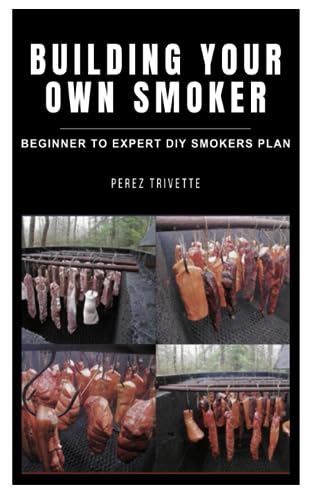
Building Your Own Smoker: Beginner to Expert DIY Smokers Plan — Best for DIY Metal and Drum Builds
Most smokehouse literature assumes timber, block, and a rural setting. A large share of real custom builds, though, are metal: the ugly drum smoker, the file-cabinet smoker, the converted tank offset. This book addresses that world, laying out DIY smoker plans across skill levels so a builder can start with a simple drum and progress toward more ambitious fabrication as tools and confidence grow.
It suits the hands-on maker whose workshop is a garage, whose materials come from salvage and hardware stores, and whose idea of a good Saturday involves an angle grinder. It is not the book for masonry or traditional cold-smokehouse construction.
Strengths
- Covers the metal-build world — drums and DIY fabrications — that smokehouse books ignore
- Projects graded from beginner to expert, so the book grows with your skills
- Salvage-friendly approach keeps build costs realistic
Trade-offs
- Self-published; plan precision varies more than in professionally edited titles — measure twice
- Food-safety guidance on salvaged materials deserves supplementing from the technical books on this list
- Less help for traditional smokehouse or masonry projects
| Subject | DIY smoker plans from beginner to advanced |
The critical judgment a drum-smoker builder must make is about the drum itself: only food-grade barrels that held food products are appropriate, and any build book should push you toward verified-safe materials, thorough burn-out, and high-temperature food-safe finishes. Treat this book’s plans as a framework and apply the safety standards from the technical titles here — that combination is how most successful drum builds actually happen in practice.
Within its lane, the book fills a genuine gap. The drum smoker is the most-built custom smoker in the world, and a plans book that takes it seriously — intake sizing, baffle and diffuser choices, grate heights — saves real trial and error.
The graded structure deserves emphasis, because it mirrors how fabricators actually develop. A first drum build teaches intake control and fire behavior; a second, more ambitious build — better seals, a diffuser, a proper charcoal basket — applies those lessons in steel. A plans book that spans that arc saves you from buying a second book at exactly the moment your confidence peaks. Just hold the safety line the review insists on: food-grade vessels, thorough burn-outs, and finishes rated for heat and food contact are not optional garnishes on any plan, here or anywhere.
Best for: garage fabricators building drum and metal smokers from salvaged materials / Not suited for: masonry or traditional smokehouse builders
Check on Amazon — check the current price on Amazon before you decide, because configurations and included accessories change.

The Beginner’s Guide to Building and Using a Smokehouse — Best for First-Time Builders
The title lists the curriculum honestly: smokehouse design, essential equipment, fire management, meat preparation, and step-by-step technique. That breadth is the point. A first-time builder’s real risk is not any single construction detail; it is not knowing what the whole undertaking involves — the curing supplies, the thermometers, the fuel storage, the time a smoke actually takes — until the build is half finished.
It suits the genuine beginner who wants the complete picture in plain language before spending money, and who plans a modest home smokehouse rather than a competition pit. Builders with a few seasons of smoking behind them will find it introductory.
Strengths
- Whole-project overview — build, equipment, fire, and food — pitched at true beginners
- Plain-language explanations of design choices, with no assumed knowledge
- Fire management coverage helps the first smokes succeed instead of discouraging the builder
Trade-offs
- Introductory depth; serious builders will outgrow it within a season or two
- Self-published presentation, plainer than the Storey and Workman titles
- Not a source of advanced plans or large-capacity designs
| Subject | Smokehouse design, equipment, and fire management for beginners |
Beginner books earn their keep by preventing expensive sequencing errors, and this one’s equipment and fire-management chapters do quiet, valuable work: a builder who understands fire management before building will size intakes and place the firebox differently — better — than one who treats the fire as an afterthought. That is design education disguised as a how-to, and it is the right order to learn in.
Consider it the orientation course for this list. Read it to learn what you do not know, then choose between the plan-led guide and the technical manual for the build itself, with this book remaining as the friendly reference for your first cures and smokes.
Consider also who else this book serves: the partner, family member, or friend who will share the smokehouse’s output and occasionally its operation. Its plain language makes it the household copy — the one that explains to everyone why the bacon cures for the time it does, why the fire is managed the way it is, and what the equipment list is actually for. Projects with a shared understanding behind them get maintained, funded, and used; this book builds that understanding better than any other on the list.
Best for: complete beginners who want the whole smokehouse picture before building / Not suited for: experienced smokers looking for advanced design detail
Check on Amazon — check the current price on Amazon before you decide, because configurations and included accessories change.
Comparison Table
| Pick | Badge | Key spec | Best for |
|---|---|---|---|
| Meat Smoking and Smokehouse Design | Best Overall | Design-first smokehouse manual covering construction and smoking science | builders constructing a permanent smokehouse who want design principles they can adapt |
| Smokehouse Handbook | Best for Technique Alongside the Build | Build guidance plus comprehensive smoking technique and recipes in one volume | homestead builders who want building and smoking craft in one book |
| Build a Smokehouse: Storey Country Wisdom Bulletin A-81 | Best Budget | Compact, inexpensive bulletin with proven small-smokehouse plans | first-time builders who want a proven small smokehouse plan at minimal cost |
| The Complete Smokehouse Building Guide | Best Step-by-Step Plans | Modern step-by-step plans and practical techniques for a backyard smokehouse | first-time builders who want the whole project sequenced for them |
| Building Your Own Smoker: Beginner to Expert DIY Smokers Plan | Best for DIY Metal and Drum Builds | DIY smoker plans spanning beginner projects to advanced builds | garage fabricators building drum and metal smokers from salvaged materials |
| The Beginner’s Guide to Building and Using a Smokehouse | Best for First-Time Builders | Beginner-friendly coverage of design, equipment, fire management, and first smokes | complete beginners who want the whole smokehouse picture before building |
How to Choose a Book on Building a Custom Smoker
The first decision is what you are actually building, because the literature splits cleanly by structure. A smokehouse — a chamber, often wooden or masonry, fed by a fire that may be inside or piped in from outside — is a cold-and-hot smoking appliance with centuries of literature behind it. A metal pit — drum, offset, cabinet — is a fabrication project with a different literature. Books rarely serve both well. The picks above are labeled by which world they serve, and choosing outside your world is the most common way readers waste money in this category.
Second, decide whether you need plans or principles. Plans tell you what to cut; principles tell you why, and let you change the plan when your materials, site, or budget differ from the author’s — which they always do. First-time builders usually need both, sequenced: a plan-led book to follow, a principle-led book to understand. Experienced builders can often work from principles alone, which is why the technical manual tops this list.
Third, weigh the food side. A smoker is not finished when construction ends; it is finished when it produces good food safely. Books that cover curing, smoke management, and food safety alongside building produce builders who succeed in their first season. If your chosen build book is construction-only, budget for a technique book as well — several picks here bundle both deliberately.
Budget Tiers for Build Books: What Your Money Actually Buys
This category has an unusual price shape. The cheapest item on the list, the Storey bulletin, is also one of the most proven, because its cost reflects its format — a short pamphlet — rather than its quality. At the budget tier generally, expect focused, practical guidance with modest production values: self-published plan books and bulletins that teach one build well. What you give up is editing polish, photography, and depth, not necessarily correctness.
The mid-range and premium tiers buy you comprehensiveness and authority: professionally edited handbooks that integrate building with curing and smoking science, and technical manuals written from commercial practice. For a build that will consume real materials money and several weekends, the book is the cheapest line item in the project — spending slightly more for the reference that prevents one structural mistake is the easiest money in the whole budget. Frame it that way, check the current price on Amazon for each candidate, and do not let a small difference steer you to a thinner book.
Smokehouse vs Metal Pit: Which Build Deserves Your First Book
Readers arrive at this list with two different projects sharing one search term, and the fork matters enough to state plainly. The smokehouse is a building: sited, stationary, often masonry or timber, optimized for controlled smoke across a wide temperature range including genuine cold smoking. Its literature is old, deep, and concerned with curing as much as construction. The metal pit is a fabrication: welded or assembled steel, optimized for hot smoking and barbecue, mobile in principle, and documented by a younger, more improvisational literature.
Neither project is the other’s lesser version. The smokehouse serves preservation and range; the pit serves barbecue and craft. What goes wrong is cross-shopping the literature — judging a smokehouse manual harshly for lacking offset plans, or a drum book for lacking curing science. The picks above are labeled by world precisely so you can stay in yours, and the happiest builders are the ones who knew which project they were actually starting before the first book arrived.
Reading a Build Book Critically: Four Tests Before You Trust a Plan
Apply these tests to any build book, including the ones recommended here. First, the materials test: does it name specific, appropriate materials — and warn against the unsafe ones — or does it wave at ‘scrap’ and move on? Second, the numbers test: are dimensions given as decisions you can adapt, with reasons, or as unexplained magic numbers that collapse the moment your barrel or yard differs? Third, the failure test: does the author describe what goes wrong — poor draft, condensation, runaway fires — and how the design prevents it? Books written from real builds always discuss failure; books assembled from other books never do.
Fourth, the food test: does the book’s guidance end at construction, or does it follow through into curing, smoking, and safety in use? A build book that ignores food safety is giving you a structure, not a smoker. The strongest titles on this list pass all four tests, and the weakest pass at least the first two within their narrower scope — which is exactly what their reviews say, in those terms, so you can weigh them yourself.
How to Plan a Custom Smoker Build Before You Cut Anything
Good custom builds are decided on paper. This planning sequence — drawn from the shared advice of the books above — turns a vague ambition into a buildable design, and it costs an afternoon instead of a rebuild.
- Define the cooking first: list what you will actually smoke in the first year — briskets, bacon, sausage, fish, cheese — because cold-smoking capability, hanging room, and capacity all follow from that list, not from the biggest thing you might cook once.
- Fix your capacity honestly: size the chamber for your typical cook plus modest headroom. Oversized chambers waste fuel, hold temperature poorly at small loads, and cost more to build and to run.
- Choose the structure that matches your skills and site: timber smokehouse, masonry, drum, or welded steel — and confirm local rules, setbacks from buildings, and any permit or fire-code requirements before committing.
- Design the airflow on paper: firebox or fire location, intake size, smoke path through the chamber, and flue exit. Draft is the soul of a smoker; every book on this list returns to it, and it is far easier to resize a drawing than a chimney.
- List materials with food safety as a filter: food-grade drums only, no galvanized surfaces in hot food-contact zones, food-safe high-temperature finishes, and hardware you can clean.
- Plan access and cleaning now: door size and swing, removable grates, ash removal, and grease management decide whether you enjoy using the finished smoker or quietly stop.
- Sequence the build and the budget: foundation, structure, fire components, hardware, seasoning — with a materials cost for each stage, so the project never stalls half-built for want of one forgotten part.
- Schedule a seasoning burn and a first test cook with cheap, forgiving food before any important occasion depends on the new smoker.
That last step deserves emphasis. Every new smoker — bought or built — behaves idiosyncratically for its first few cooks: hot spots reveal themselves, draft changes with weather, and your fire routine needs calibrating. The builders who enjoy their custom smokers are the ones who treat the first month as commissioning, not performance. Keep notes from those cooks; they become the operating manual no book can write for your specific pit.
Common Buying Mistakes
Buying a cookbook when you need a construction book. Famous barbecue cookbooks are wonderful teachers of fire and meat, and several include a chapter on the author’s smokers — but a chapter is not a plan. If your project is building, buy building literature first and cooking literature second; the picks above are construction-led for exactly this reason.
Trusting a plan that never mentions draft. A smoker is an airflow machine that happens to contain food. Plans that specify chamber dimensions but say nothing about intake, exhaust, or smoke path are drawings of a box, not a smoker. The absence of airflow reasoning is the single most reliable tell of a low-quality build book.
Building from unsafe salvage. A drum that held chemicals, galvanized steel in the hot zone, or mystery coatings burned ‘mostly’ off are false economies with real health stakes. The technical books on this list are strict on materials for good reason; be strict too.
Oversizing the chamber. Builders routinely double the capacity they need, then fight temperature stability and fuel costs forever. Your typical cook, plus headroom, is the right size. Ambition belongs in the food, not the cubic footage.
Skipping the food-safety half of the craft. Curing salts, temperatures, and smokehouse hygiene are not garnish on the hobby; they are the difference between a smokehouse and a hazard. Choose at least one book — the handbook and the technical manual here both qualify — that treats curing science as seriously as construction.
Final Recommendation
If you buy one book, buy Meat Smoking and Smokehouse Design for a smokehouse project or the DIY plans book for a metal build — those two anchor the technical end of this list. If you buy two, add the Smokehouse Handbook, whose integration of building and technique prevents the classic outcome of a beautifully built smoker used badly. On a tight budget, the Storey bulletin plus the beginner’s guide cover a first build completely and honestly.
Whichever you choose, check the current price on Amazon and confirm the edition before ordering, and remember that the book is the cheapest component of the build it will guide. Spend the savings on good materials and a proper thermometer.
Revisit the shortlist: Meat Smoking and Smokehouse Design; Smokehouse Handbook; Build a Smokehouse: Storey Country Wisdom Bulletin A-81; The Complete Smokehouse Building Guide; Building Your Own Smoker: Beginner to Expert DIY Smokers Plan; The Beginner’s Guide to Building and Using a Smokehouse.
Keep reading in this series: Best Books On Custom Smokers; Best Box Smokers; Best Bullet Smokers; Best Built Bbq Smokers; Best Built Vertical Smokers.
Frequently Asked Questions
What is the best book for building a smokehouse from scratch?
For design depth, Meat Smoking and Smokehouse Design is the strongest choice — it explains the principles behind chamber, fire, and draft decisions. For a guided project sequence, The Complete Smokehouse Building Guide walks the build step by step, and the Storey bulletin offers a proven traditional plan at the lowest cost.
Do I need a book, or can I build from free online plans?
Free plans can work for simple drum smokers, but they rarely explain airflow design or food-safe materials, and errors in either are expensive or unsafe. A book — even the inexpensive bulletin on this list — gives you edited, coherent guidance and the reasoning behind dimensions, which free plans seldom include.
Which book is best for building a drum smoker?
Building Your Own Smoker: Beginner to Expert DIY Smokers Plan is the pick aimed at metal DIY builds including drums. Pair its plans with the food-safety and materials standards from the technical titles here, and use only a verified food-grade drum.
Are old smokehouse books still relevant?
Yes — smokehouse design is a mature technology, and classic guidance on draft, siting, and curing has not been superseded. What newer books add is presentation, modern materials notes, and step-by-step project management. The fundamentals in the long-lived titles on this list remain sound.
What should a beginner read first?
Start with The Beginner’s Guide to Building and Using a Smokehouse for the whole picture — design, equipment, fire management, and first smokes — then graduate to a plan-led or technical book for the build itself. The Storey bulletin is also an excellent, inexpensive first read.
Do these books cover cold smoking?
The smokehouse-focused titles do — cold smoking is a core smokehouse function, and the handbook and technical manual both treat it, including the curing that must accompany it. Metal pit books concentrate on hot smoking and barbecue temperatures instead.
How many of these books do I actually need?
Two covers most builders completely: one plan-led book to build from and one principle-led or technique book to cook from. The pairings recommended in the final section of this guide — technical manual plus handbook, or bulletin plus beginner’s guide — were chosen to be non-overlapping, so your money buys new knowledge rather than the same chapters twice.
Can I build a smoker from a book if I have never built anything?
Yes, if you choose the project to match the builder. A drum smoker or a small timber smokehouse from the beginner-friendly books here is well within a careful novice’s reach, provided you respect the safety guidance on materials and fire. Masonry and welded builds are second projects; the books will still be on your shelf, and so will the skills from the first one.


