Disclosure: airfryerkitchensupply.com is reader-supported. When you buy through links on our site, we may earn an affiliate commission at no extra cost to you.
Where to buy
Every model in this guide to the best built pellet smokers was verified as a current Amazon listing before inclusion. Pellet grills are revised frequently — controllers, hoppers, and included probes change between model years — so use the links below to check the current price on Amazon and confirm the exact configuration before ordering.
Quick links to the picks in this guide: recteq Flagship 1600; Traeger Woodridge Pro; Pit Boss 1600 Navigator Series; Green Mountain Grills Ledge Prime 2.0; Z GRILLS 2026 Pellet Smoker & Grill; Traeger Pro 22.
Asking for the best built pellet smokers is asking the right question about this category, because pellet grills are machines: an auger, a fan, a controller, and a steel body that lives outdoors in all weather. When a pellet smoker is well built, the electronics are protected, the body holds heat through winter, the auger feeds without drama for years, and the controller’s intelligence actually translates into steady temperatures. When it is badly built, you get flameouts, rust, and a very expensive patio ornament with a power cord.
This roundup therefore judges pellet smokers the way you would judge any appliance you intend to keep: body construction and insulation, controller quality, hopper capacity and design, cooking area that is honestly usable, and the maker’s track record of supporting what it sells. All six picks are current, verified listings spanning the premium, mid-range, and budget tiers, and each review states plainly what its build money bought and what it did not.
The field has genuinely improved — PID controllers, double-wall construction, and serious hopper capacities have moved down the price ladder — which makes the current market a good one to buy in, provided you choose on build rather than on app features alone.
In this guide
Quick Picks
recteq Flagship 1600 — Best Overall Build. The build-quality flagship of the pellet world: 1,667 square inches of cook space, a 40 lb hopper that swallows a full bag and then some, Wi-Fi control, and a reputation for heavy construction and temperature stability that owners consistently confirm. The premium pick, priced like it and built like it. Check price on Amazon.
Traeger Woodridge Pro — Best Smart Features. Traeger’s modern mid-premium answer: 970 square inches, WiFIRE app control with a digital sensor, a Super Smoke mode for low-temperature smoke intensity, and a 500°F ceiling that makes it a real grill as well as a smoker. The connected pick, done properly. Check price on Amazon.
Pit Boss 1600 Navigator Series — Best Large-Capacity Value. The capacity-per-dollar champion: 1,593 square inches, a 30 lb hopper, WiFi and Bluetooth with a touchscreen controller, a meat probe — and Pit Boss’s signature Flame Broiler, a sliding plate that opens direct flame for searing. Big, versatile, and priced to embarrass rivals. Check price on Amazon.
Green Mountain Grills Ledge Prime 2.0 — Best Mid-Size Wi-Fi Grill. GMG’s Prime 2.0 generation in the versatile mid-size format: Wi-Fi control, a loyal dealer-supported brand behind it, and a feature set aimed at the cook who wants modern pellet cooking without flagship dimensions. The thinking person’s middle choice. Check price on Amazon.
Z GRILLS 2026 Pellet Smoker & Grill — Best Budget Build. The budget pick that reads like a mid-range one: PID 3.0 precision control, dual meat probes, a 28-hour hopper, a dual-wall insulated base, 700 square inches, 8-in-1 versatility — and a cover in the box. Proof of how far the budget tier has come. Check the current price on Amazon. Check price on Amazon.
Traeger Pro 22 — Best Simple Classic. The classic that defined the category for a generation: 572 square inches, an 18 lb hopper, a meat probe, 6-in-1 versatility, and the simplest ownership experience in the Traeger line. No app required, no drama — the pellet grill for people who distrust pellet grills with apps. Check price on Amazon.
How These Picks Were Chosen
Picks were verified through Amazon’s catalog data, and each listing’s stated specifications — cooking area, hopper size, temperature range, controller features — were taken from the manufacturer’s own listing data rather than from roundups or reviews. Models were then ranked on construction and control quality, capacity honesty, and value at their tier. Where a model’s headline area includes warming racks, that is treated as a caveat in the review, not hidden.
Prices are not printed because pellet grill pricing is promotional and seasonal; check the current price on Amazon for each model, and judge the build you get against that day’s number.
One more consideration shaped the final order: repairability as an owner experiences it. A pellet grill’s life includes an igniter someday, a fan eventually, and questions throughout — and the brands above answer with parts pipelines, documentation, and communities that have already solved your exact problem in public. That infrastructure is invisible in a product photograph and decisive in year five, which is why it was weighted here as heavily as steel. The cheapest grill to own is rarely the cheapest grill to buy; this list was ordered by the cost of owning.
The 6 Best Built Pellet Smokers
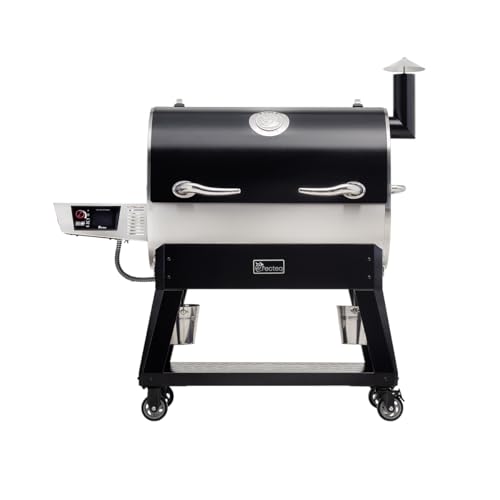
recteq Flagship 1600 — Best Overall Build
recteq built its name on a simple proposition — pellet grills constructed more like equipment than appliances — and the Flagship 1600 is the fullest expression of it. The cook space is genuinely large rather than marketing-large, the 40 lb hopper removes refueling from even the longest brisket cooks, and the controller holds temperatures with the steadiness that makes owners stop checking the app and start trusting the grill.
It suits the serious pellet cook: big loads, long cooks, all-season use, and an expectation that this purchase ends the search for years. It does not suit the casual griller, for whom its size and price are both more than the cooking justifies.
Strengths
- Heaviest, most confidence-inspiring construction in this roundup
- 40 lb hopper makes overnight cooks genuinely unattended
- 1,667 sq in of honest cook space for crowds and batch cooking
Trade-offs
- Premium pricing — this is the top of the mainstream market
- Large and heavy; it claims its patio territory permanently
- More grill than most households will ever fill
| Cook space | 1,667 sq in |
| Hopper | 40 lb |
| Control | Wi-Fi smart control |
What the premium buys is margin: thermal margin in January, capacity margin at the family reunion, and the confidence margin of a controller and auger that simply do their jobs for years. Owners of lesser pellet grills know the failure modes — flameouts at hour nine, rust at the seams, a controller that hunts — and the Flagship’s reputation is precisely that these do not happen.
If the budget reaches it, this is the pellet smoker to buy once. Check the current price on Amazon; it anchors the premium tier, and the rest of this list should be judged against the distance from it.
Consider who this grill quietly serves best: the cook whose barbecue has become infrastructure — the standing brisket for the team dinner, the holiday production line, the neighborly obligations of the person on the street who owns the big smoker. At that point, reliability is not a luxury; a flameout is a social event. The Flagship’s entire design brief reads as an answer to that responsibility, from the hopper that cannot run dry mid-brisket to a controller whose steadiness owners describe with the word ‘boring,’ which in this category is the highest praise available.
Its controller’s steadiness also makes it the best teacher in the roundup: when temperature stops being a variable, every result is attributable to your choices — rub, wrap, rest — and learning accelerates accordingly.
Best for: serious pellet cooks who want to buy once, at scale / Not suited for: casual grillers or small households
Check on Amazon — check the current price on Amazon before you decide, because configurations and included accessories change.

Traeger Woodridge Pro — Best Smart Features
The Woodridge Pro represents the category’s inventor in its current form: a well-finished grill whose intelligence is the point. WiFIRE control is mature — set, monitor, and adjust from the app with a digital sensor feeding it honest data — and Super Smoke addresses the pellet grill’s oldest criticism by maximizing smoke output at smoking temperatures. The 500°F maximum and side shelf make it a complete backyard station rather than a single-purpose smoker.
It suits the connected cook who runs cooks from the couch, the office, or the school run, and who grills as often as they smoke. Purists who want maximum steel per dollar rather than software should look at the recteq and Pit Boss picks.
Strengths
- Most polished app and control ecosystem in the category
- Super Smoke mode meaningfully boosts smoke at low temperatures
- 500°F ceiling plus 970 sq in makes it a true grill-smoker
Trade-offs
- You pay for the ecosystem, not only for steel
- Connected features depend on your home Wi-Fi behaving at the patio
- Hopper and ultimate capacity trail the flagship-class picks
| Cook space | 970 sq in |
| Max temperature | 500°F |
| Control | WiFIRE app control, digital sensor |
| Mode | Super Smoke Mode |
Traeger’s bet is that convenience is a build quality — that a grill which starts reliably, reports honestly, and adjusts remotely will be used more and maintained better than a heavier grill that demands presence. For busy households that bet is often right, and the Woodridge Pro is its best current expression: the hardware is solid, and the software layer is the most experienced in the business.
Choose it when the app will genuinely run your cooks. Check the current price on Amazon, and compare its total cost against the recteq’s steel-first proposition before deciding which kind of premium you value.
A word about Super Smoke, since it is this model’s signature: pellet smoke is naturally cleanest at low temperatures, and the mode leans into that physics, maximizing smoke production in the range where briskets, butts, and ribs spend their first hours. Used as intended — the opening act of a long cook, not a whole-show setting — it closes much of the flavor gap that sends pellet skeptics back to their offsets. Owners who learn that one discipline get this grill’s full value; owners who never press the button bought only most of a Woodridge.
Keep the firmware and app current; Traeger’s ecosystem improves by update, and owners who maintain the software side own a measurably better grill in year two than the one that left the box.
Best for: connected cooks who grill and smoke in equal measure / Not suited for: buyers who want maximum steel per dollar and no software
Check on Amazon — check the current price on Amazon before you decide, because configurations and included accessories change.
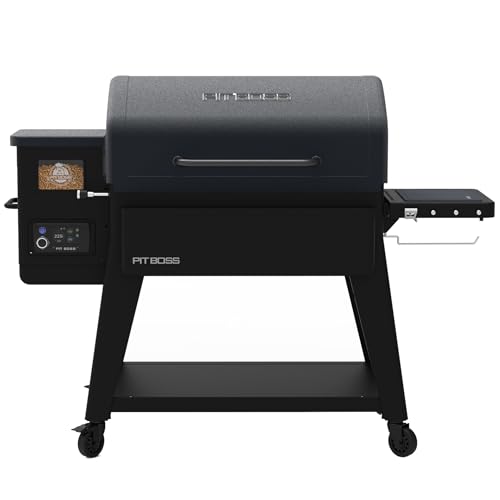
Pit Boss 1600 Navigator Series — Best Large-Capacity Value
Pit Boss built its following by refusing the category’s usual trade — size or features, pick one. The 1600 Navigator offers flagship-class area, a hopper that handles long cooks, modern connectivity, and the Flame Broiler, which matters more than it may sound: the ability to finish a steak or crisp chicken skin over direct flame answers the most common pellet-grill complaint, that everything emerges tasting gently roasted.
It suits the value-maximizing cook feeding crowds, who wants one machine for smoking, grilling, and searing. It does not suit the buyer who prizes the heaviest steel and the quietest refinement above all — that is the recteq’s ground, at recteq prices.
Strengths
- Largest value proposition in the roundup — area, hopper, and features per dollar
- Flame Broiler adds real searing, rare in pellet grills
- Touchscreen plus WiFi/Bluetooth control and an included meat probe
Trade-offs
- Fit and finish sit a grade below the premium leaders
- Its size is wasted on small households
- Temperature range starts at 180°F — fine for smoking, not a cold smoker
| Cook space | 1,593 sq in |
| Temperature range | 180°F to 500°F |
| Hopper | 30 lb |
| Extras | Flame Broiler, touchscreen controller, meat probe |
The honest way to judge this grill is against grills costing considerably more, because that is the comparison its specification invites — and in capability terms it holds up remarkably. What the extra money elsewhere buys is refinement: tighter tolerances, heavier feel, a more polished app. What it does not buy is meaningfully more cooking ability for most households.
For the cook who measures value in food produced per dollar spent, this is the pick. Check the current price on Amazon; Navigator pricing moves with promotions, and at its best it is the bargain of this guide.
The Flame Broiler deserves its own paragraph because it changes the weekly menu, not just the spec sheet. A pellet grill that can open a direct-flame window under a steak, a tray of wings, or a finishing ribeye is a pellet grill that stops apologizing on weeknights. The technique is simple — slide, sear, slide back — and the result is the Maillard crust that pure convection cooking cannot make. For households choosing one machine to replace both a smoker and a grill, that single mechanism is often the deciding argument, and it is exclusive to this brand’s approach in this roundup.
The touchscreen rewards a gloved-hand test in the store of your mind: big targets, honest feedback. It is designed for the way people actually stand at a grill, and that usability is part of the build, not a garnish on it.
Best for: crowd cooks who want flagship capacity at a mid price / Not suited for: buyers prioritizing ultimate fit and finish
Check on Amazon — check the current price on Amazon before you decide, because configurations and included accessories change.

Green Mountain Grills Ledge Prime 2.0 — Best Mid-Size Wi-Fi Grill
Green Mountain Grills occupies a distinctive place in this market: a brand built on dealer relationships and owner community rather than big-box volume, and the Ledge Prime 2.0 carries that philosophy — a sensibly sized grill with current-generation Wi-Fi control, designed to be the only pellet grill a household needs rather than the biggest one it can buy.
It suits the household that smokes and grills for four to eight people, values a supported brand, and has a patio measured in feet rather than yards. It does not suit event-scale cooking, where the Flagship and Navigator earn their size.
Strengths
- Right-sized for real households — capability without the flagship footprint
- Prime 2.0 generation brings current Wi-Fi control and refinements
- Dealer-and-community brand culture means strong owner support
Trade-offs
- Specification detail varies by retailer listing — verify configuration before ordering
- Less cooking area than the big Pit Boss and recteq picks
- Smaller big-box presence than Traeger or Pit Boss in some regions
| Control | Wi-Fi controlled |
| Series | Prime 2.0 |
| Type | Mid-size pellet grill |
Mid-size is where most pellet cooking actually happens, and the Ledge’s appeal is proportion: enough area for a brisket and sides, a hopper matched to overnight cooks, and controls from the current generation, in a machine that does not dominate the deck. GMG owners are notably loyal, which in an appliance category is meaningful evidence about durability and support.
Choose it when the flagship class is simply more grill than your life requires. Check the current price on Amazon and confirm the Prime 2.0 configuration — the generation matters, and it is the one to buy.
GMG’s ownership culture deserves a sentence of its own, because it functions as a build feature: a dealer network that knows the machines, an owner community that documents every quirk and fix, and a model line that evolves by generation rather than churning by season. Buying the Ledge is partly buying that support structure, and for an appliance expected to live outdoors for years, the support structure is not a soft consideration. Ask any long-term pellet owner what their grill’s second-most-important feature is, and the honest ones name the people who answer when something squeaks.
Its size makes it the easiest flagship alternative to store under a cover on a real deck — a mundane virtue that decides, in practice, whether a grill gets used twice a week or twice a month.
Best for: households wanting current-generation pellet cooking at a sensible size / Not suited for: event-scale cooks needing maximum area
Check on Amazon — check the current price on Amazon before you decide, because configurations and included accessories change.

Z GRILLS 2026 Pellet Smoker & Grill — Best Budget Build
Z GRILLS made its reputation by manufacturing for others before selling under its own name, and this 2026 model shows the confidence that background produces. The specification attacks the budget class’s traditional weaknesses directly: a PID controller for real temperature precision, dual-wall insulation at the base where heat loss hurts most, two probes instead of one or none, and a hopper rated in hours — up to 28 — so overnight cooks are a plan, not a gamble.
It suits the first-time pellet buyer who wants modern control without the flagship bill, and the household cooking for up to six or eight. It does not suit the buyer who wants a decade of brand history behind the purchase; Z GRILLS’ own-name track record is still being written.
Strengths
- PID 3.0 control at a budget price — temperature precision is the headline
- Dual-wall insulated base helps winter and windy-day performance
- Dual probes and a cover included; very little left to buy
Trade-offs
- Newer brand name with a shorter long-term track record
- 700 sq in is mid-size — crowds will queue
- App and ecosystem polish trail Traeger’s maturity
| Cooking space | 700 sq in |
| Control | PID 3.0 precision control |
| Probes | Dual meat probes |
| Hopper | 28-hour hopper |
| Body | Dual-wall insulated base |
Five years ago a budget pellet grill meant a wandering controller and a prayer. This model’s significance is that the budget tier now includes the two features that most determine results — precise PID control and insulation — rather than treating them as premium luxuries. For most cooks, that combination will produce better food than a bigger, dumber grill at the same money.
It is the easiest recommendation in this guide for a first pellet grill. Confirm the 2026 configuration when you check the current price on Amazon, since Z GRILLS revises models frequently and the current one is the one you want.
The dual-wall insulated base deserves emphasis beyond its line in the spec box, because insulation is where budget grills traditionally confess. Heat lost through the body is pellets burned for the patio’s benefit and temperature stability surrendered to every breeze. A budget model that insulates — and pairs it with a PID controller smart enough to exploit the steadiness — is attacking the two variables that most determine your results, at the price point where rivals are still spending on cosmetic stainless. That prioritization is the sound of a manufacturer who knows what cooking is.
Spend the savings deliberately: the difference between this and a mid-range rival buys a season of quality pellets and a good cover, which together will do more for your results than the badge would have.
Best for: first-time pellet buyers wanting modern control on a budget / Not suited for: brand-loyal buyers or crowd-scale cooks
Check on Amazon — check the current price on Amazon before you decide, because configurations and included accessories change.

Traeger Pro 22 — Best Simple Classic
The Pro 22 has been the default first pellet grill for so long that its virtues are easy to overlook: a size matched to real families, a hopper that handles a brisket cook, a controller that asks nothing of you but a temperature, and the largest owner community in the category answering every question you will ever have. Its 450°F ceiling covers grilling duty for most households, and its simplicity is a feature that connected models cannot replicate — there is almost nothing to go wrong.
It suits the buyer who wants pellet convenience with appliance simplicity, and the smaller household that will never fill a flagship. It does not suit the app-driven cook or the crowd feeder; Traeger and this guide both offer bigger, smarter machines for them.
Strengths
- Proven, simple, and supported by the category’s largest owner community
- 572 sq in and 18 lb hopper are honestly matched to family cooking
- Fewer electronics means fewer failure modes over a long life
Trade-offs
- No Wi-Fi control — monitoring is in person or by probe
- 450°F ceiling limits hard searing
- Newer rivals offer more area and features at similar money
| Cook space | 572 sq in |
| Max temperature | 450°F |
| Hopper | 18 lb |
| Extras | Meat probe, 6-in-1 versatility |
There is a mature wisdom in buying the classic: every accessory fits it, every recipe’s Traeger setting assumes it, every problem it might have has been solved publicly a thousand times. In a category where models churn yearly, the Pro 22’s stability is itself a build quality — the quality of a design that stopped needing revision.
Choose it for a first pellet grill you intend to keep, in a household that cooks for two to six. Check the current price on Amazon; it is frequently the sensible middle number in the whole pellet market.
Its used market tells the build story better than this review can: Pro 22s change hands constantly, at respectable fractions of their original price, because they keep working for second and third owners. Appliances with that kind of afterlife are built correctly in the ways that matter — a simple controller with nothing to brick, a body that shrugs off seasons, parts that remain available. Buy one new and you are buying into that longevity with a warranty; the classic status is not nostalgia, it is actuarial evidence.
Its simplicity has a social dimension: anyone in the household can run it. A grill the whole family can operate gets used by the whole family — and fed from accordingly — which is a feature no specification lists.
Best for: households wanting simple, proven pellet cooking / Not suited for: app-driven cooks or large-crowd feeders
Check on Amazon — check the current price on Amazon before you decide, because configurations and included accessories change.
Comparison Table
| Pick | Badge | Key spec | Best for |
|---|---|---|---|
| recteq Flagship 1600 | Best Overall Build | 1,667 sq in, 40 lb hopper, Wi-Fi control | serious pellet cooks who want to buy once, at scale |
| Traeger Woodridge Pro | Best Smart Features | 970 sq in, WiFIRE, Super Smoke, 500°F max | connected cooks who grill and smoke in equal measure |
| Pit Boss 1600 Navigator Series | Best Large-Capacity Value | 1,593 sq in, 30 lb hopper, flame broiler, touchscreen | crowd cooks who want flagship capacity at a mid price |
| Green Mountain Grills Ledge Prime 2.0 | Best Mid-Size Wi-Fi Grill | Prime 2.0 generation, Wi-Fi control, mid-size footprint | households wanting current-generation pellet cooking at a sensible size |
| Z GRILLS 2026 Pellet Smoker & Grill | Best Budget Build | 700 sq in, PID 3.0, dual probes, dual-wall insulated base | first-time pellet buyers wanting modern control on a budget |
| Traeger Pro 22 | Best Simple Classic | 572 sq in, 18 lb hopper, 450°F max, meat probe included | households wanting simple, proven pellet cooking |
How to Choose a Pellet Smoker on Build Quality
Start with the controller, because it is the brain you will live with: modern PID control holds temperatures in a tight band and is now available even at budget prices, as the Z GRILLS pick shows. A grill without it will cook fine food but demand more of your attention and forgiveness. Second, judge the body: insulation and lid fit decide winter performance and pellet consumption, and dual-wall construction where it counts is worth more than decorative stainless. Third, size the hopper to your longest cook — an overnight brisket should never require a 3 a.m. refill — and the cook space to your honest typical load, remembering that headline areas often count warming racks.
Finally, weigh the ecosystem as part of the build. Covers that fit, replacement parts that exist, an app that is maintained, and a community that answers questions are all forms of durability. The brands in this roundup have all demonstrated that staying power; it is a legitimate reason the cheapest no-name pellet grills, however shiny, are absent here.
Pellet Smoker Ownership: The Costs and Care Nobody Mentions
Pellet grills burn money slowly in three places: pellets themselves (buy quality, store them dry — damp pellets cause more auger and fire problems than any defect), electricity (modest, but real on long cooks), and wear parts — igniters, fans, and eventually auger motors live hard lives near fire. None of this is a reason to avoid the category; all of it is a reason to buy a build whose parts are available and whose maker answers the phone, which is precisely the filter this roundup applied.
Care is equally simple and equally decisive. Vacuum the fire pot and interior ash regularly — ash buildup is the leading cause of flameouts and temperature weirdness. Keep the grill covered, keep pellets in a sealed container, and run the grill after long idle periods before an important cook depends on it. A well-built pellet smoker maintained this way is a decade appliance; neglected, even the flagship becomes temperamental.
PID Controllers, Explained for Buyers: Why the Brain Matters Most
Early pellet grills used timed controllers — the auger ran on a fixed rhythm, and temperature was whatever the weather made of it. A PID controller instead measures the grill’s temperature continuously and adjusts feeding and fan in small, constant corrections, the way a careful driver holds a speed. The practical results are tighter temperature bands, better recovery after the lid opens, and less of your attention spent supervising a machine you bought to supervise itself.
This is why the controller tops this guide’s build hierarchy, and why the budget Z GRILLS’ PID 3.0 is genuinely significant rather than a badge: the algorithm narrows the cooking difference between price tiers more than any other single component. When comparing models, ask not whether a grill has Wi-Fi — ask whether its control is PID, how it behaves at your climate’s extremes, and whether owners report it holding a line through a windy night. Those answers predict your brisket better than any app screenshot.
Hopper Size, Honestly: Matching Capacity to Your Longest Cook
Hopper capacity should be sized like the smoker itself: to your longest realistic cook, with headroom. A brisket through the night is the standard test — the grill will burn pellets at a rate that climbs with cold and wind, and the hopper that suffices in July can empty in January. The 40 lb class of the Flagship removes the question entirely; the 30 lb Navigator answers it for nearly everyone; the 18 lb Pro 22 asks the owner to check before bed on the longest cooks, which its owners do without resentment because the grill told them the truth about its size.
The failure mode to avoid is not an empty hopper — it is an empty hopper discovered at dawn, with the grill cold and the meat in the danger zone of a ruined cook. Size generously if your cooks are long and your winters cold, keep pellets dry and topped up as a habit, and the hopper becomes what it should be: a specification you read once and never think about again.
Pellet Selection: The Fuel Decision That Actually Changes Dinner
Pellets look identical and cook differently, and a well-built grill deserves deliberate fuel. Species is the first variable: oak and hickory bring the assertive smoke of traditional barbecue; fruitwoods — apple, cherry — run milder and sweeter for poultry, fish, and pork; blends aim for balance and economy. The second variable is quality: dense pellets with little dust burn hotter, feed smoother, and ash less, and the difference shows up in your grill’s temperature stability and your fire pot’s cleanliness.
Buy pellets the way you buy charcoal for an offset: a brand you trust, stored sealed and dry, in quantities matched to your cooking rate so stock stays fresh. Experiment by the bag, one variable at a time, and note the results in the same notebook as your cooks. Owners who treat pellets as an ingredient get measurably better food from the same machine — the cheapest upgrade in this entire category, hiding in a paper bag.
How to Set Up a Pellet Smoker for Its First Cook
A pellet grill’s first hour decides whether you trust it. This setup sequence applies to every pick in this roundup.
- Unbox and inspect before assembly: confirm the auger turns freely by hand where accessible, the fire pot is clear, and no shipping damage hides under the lid. Photograph anything questionable before you build — it is your warranty evidence.
- Assemble on the grill’s permanent, level home, near an outdoor outlet, with clearance from walls and overhangs per the manual. Pellet grills are heavy and produce smoke on startup; siting is a one-time decision worth making well.
- Fill the hopper with quality pellets and run the manufacturer’s priming or seasoning cycle exactly as directed. This feeds the auger, burns off manufacturing oils, and proves the igniter, fan, and controller before food is involved.
- During seasoning, verify the grill against a known thermometer at grate level and note any offset. Every grill has a personality; learning yours now prevents a ruined first brisket later.
- Cook something forgiving first — chicken thighs, a pork shoulder, sausages. Watch how the controller recovers after lid openings, how the smoke looks at your target temperature, and how much pellet the cook consumes.
- Record it all in a notebook or the app: pellets used, weather, settings, results. Pellet grills reward documented cooks more than any other format, because their consistency makes your notes genuinely predictive.
After the first cook, vacuum the fire pot once cool and make it a habit measured in cooks, not months. That single discipline — plus dry pellets and a cover — is most of what separates the pellet grills still cooking in year ten from the ones on the curb in year three.
Common Buying Mistakes
Buying on app features and ignoring the body. Software is updatable; thin steel, a leaky lid, and an undersized hopper are forever. Judge insulation, fit, and hopper capacity first — the guide above orders the priorities — and let the app break ties, not make decisions.
Trusting headline cooking area. Many listings count warming racks and secondary shelves in the headline number. Compare main-grate capacity and picture your actual cooks — a brisket, two chickens, four racks of ribs — before letting a big number impress you.
Storing pellets in the hopper outdoors. Pellets are compressed sawdust; humidity swells them, and swollen pellets jam augers and smother fires. Keep the hopper reasonable, store the bag sealed and dry, and most ‘defective grill’ stories never happen to you.
Skipping ash cleanout. A fire pot buried in ash cannot breathe, and the symptoms — temperature swings, flameouts, lazy ignition — masquerade as controller failure. Vacuum regularly; it is five minutes that protect every other component.
Judging smoke flavor on the first cook. Pellet smoke is subtler than stick-burner smoke by design. Learn the grill’s low-temperature smoke behavior, use any smoke-enhancing mode for the first hours of long cooks, and season food confidently — the format rewards technique over complaint.
Ignoring the startup and shutdown cycles. Pellet grills are healthiest when their proper startup and shutdown sequences are allowed to complete — unplugging mid-cycle or rushing shutdown leaves pellets smoldering in the auger and ash where it does not belong. These small disciplines, invisible in a specification, decide whether a well-built grill stays well-behaved. Read the manual’s cycle instructions once, follow them always, and most ‘electronic gremlins’ attributed to pellet grills never visit your patio at all.
Final Recommendation
Buy the recteq Flagship 1600 if the budget allows and the goal is to end the search: it is the best built pellet smoker in the mainstream market. The Traeger Woodridge Pro is the smart-features alternative, the Pit Boss 1600 Navigator the capacity value, and the GMG Ledge Prime 2.0 the right-sized middle. On a budget, the Z GRILLS 2026 model delivers modern PID control without the flagship bill, and the Traeger Pro 22 remains the simple classic that a generation of owners has validated.
Check the current price on Amazon for your pick — pellet pricing is promotional, and timing a purchase to a sale is the easiest money in this category — and confirm the current model-year configuration before ordering.
One last piece of timing advice: pellet grills are among the most promotionally priced products in outdoor cooking, with the deepest discounts clustering around the major holiday weekends and the end of the grilling season. If your chosen model is not urgent, a short wait for one of those windows can move a mid-range budget into flagship territory — the single easiest upgrade available in this category. Set the shortlist from this guide, watch the two models that fit your cooking, and let the calendar do the negotiating for you.
Revisit the shortlist: recteq Flagship 1600; Traeger Woodridge Pro; Pit Boss 1600 Navigator Series; Green Mountain Grills Ledge Prime 2.0; Z GRILLS 2026 Pellet Smoker & Grill; Traeger Pro 22.
Keep reading in this series: Best Built Bbq Smokers; Best Built Vertical Smokers; Best Built Vertical Propane Smokers; Best Box Smokers; Best Bullet Smokers.
Frequently Asked Questions
What makes a pellet smoker well built?
A precise PID controller, solid body construction with insulation where it counts, a hopper sized for overnight cooks, protected electronics, and a maker that stocks parts and supports owners. In this roundup, the recteq Flagship sets the build standard, but modern budget models like the Z GRILLS now include PID control and insulation that were premium-only a few years ago.
How long will a pellet smoker last?
With ash vacuumed regularly, pellets kept dry, and the grill covered, a well-built pellet smoker is a many-year appliance. The wear items are the igniter, fan, and auger motor — which is why parts availability and brand support are treated here as build qualities, not afterthoughts.
Do pellet smokers make real smoke flavor?
Yes, though subtler than a stick burner. Smoke output is strongest at lower temperatures, and features like Traeger’s Super Smoke mode exist to maximize it. Cooking technique — starting low, using quality pellets, and giving food time in the smoke — closes most of the gap for most palates.
What size pellet smoker do I need?
For most households, 570–700 sq in handles family cooking and the occasional party. Regular crowd cooking justifies the 1,500+ sq in class of the Flagship and Navigator. Judge by main-grate space and your honest typical load, not by the largest cook you can imagine.
Can a pellet smoker replace my gas grill?
Mostly, yes. Models reaching 500°F grill credibly, and the Pit Boss’s Flame Broiler adds genuine direct-flame searing. What pellet grills do not do is instant heat — they need startup time — so many households keep both, using the pellet grill for everything except the fastest weeknight sear.
Why do pellet grills flame out, and how do I prevent it?
Flameouts usually trace to ash-choked fire pots, damp or poor pellets, or an empty hopper — maintenance issues, not mysteries. Vacuum the fire pot regularly, store pellets sealed and dry, and keep the hopper fed on long cooks, and a well-built grill will hold fire reliably.
How many pellets does a pellet smoker use?
Roughly a pound or two per hour at smoking temperatures in mild weather, climbing in cold and wind and at grilling temperatures. A full hopper on the larger models here covers the longest overnight cooks; smaller hoppers handle typical sessions easily. Pellet cost per cook compares favorably with charcoal for most households.
Can I use any brand of pellets in any grill?
Generally yes — food-grade hardwood pellets are a standard product, and grills are not locked to their maker’s pellets, whatever the marketing implies. What matters is quality and dryness: dense, low-dust pellets from fresh hardwood feed and burn cleanly, while damp or crumbly pellets cause the majority of auger and fire problems blamed on grills.


