Disclosure: airfryerkitchensupply.com is reader-supported. When you buy through links on our site, we may earn an affiliate commission at no extra cost to you.
Where to buy
If you are shopping for the best bbq smokers for beginner cooks, start with the shortlist below. A first smoker has one job: to hold a low, steady temperature for hours while you learn, without demanding that you learn fire management, electronics and meat science all on the same Saturday. Every pick below is a current model sold through Amazon, spanning the three beginner-friendly fuels — electric, pellet and charcoal — with cooking areas and features taken from the listings. Check the current price on Amazon for the model you choose, and budget for the cover, probes and fuel in the same order.
- Masterbuilt 30-Inch Digital Electric Smoker MB20071117 — check the current price on Amazon and confirm the exact variant on the listing before you order.
- Traeger Pro 22 Pellet Grill and Smoker — check the current price on Amazon and confirm the exact variant on the listing before you order.
- Weber Smokey Mountain Cooker 18-Inch — check the current price on Amazon and confirm the exact variant on the listing before you order.
- Masterbuilt 30-Inch Analog Electric Smoker MB20070210 — check the current price on Amazon and confirm the exact variant on the listing before you order.
- Z Grills ZPG 550B2 Pellet Smoker — check the current price on Amazon and confirm the exact variant on the listing before you order.
- Cuisinart 18-Inch Vertical Charcoal Smoker COS-118 — check the current price on Amazon and confirm the exact variant on the listing before you order.
Forgiveness is the beginner specification that matters: temperature that holds itself, room for a whole brisket or two chickens, and a design your second year will still respect. The six below are ordered by exactly that logic.
The best bbq smokers for beginner cooks are not the cheapest smokers, the biggest smokers or the smokers competition pitmasters pose beside. They are the smokers that make a first year of barbecue end in encouragement: ribs that come off tender in July, a pork butt that forgives a long afternoon in September, a brisket attempted by Christmas without dread. Beginner barbecue fails for one mechanical reason far more than any other — temperature that will not sit still — and every pick in this guide is chosen to remove that variable in a different way, at a different budget, with a different kind of smoke.
The three fuels divide the beginner field honestly. Electric smokers, led here by two Masterbuilts, are the set-and-forget school: a thermostat holds the temperature, a chip tray adds the smoke, and the cook learns meat, timing and seasoning with almost no fire craft. Pellet grills — the Traeger and the Z Grills — burn real wood pellets under automatic control, giving genuine wood smoke with near-electric convenience, plus the ability to grill. Charcoal smokers, the Weber Smokey Mountain and the Cuisinart bullet, ask the most and teach the most: real fire, managed with vents, and a flavour and a skill set that transfer to every cooker you will ever own.
All six picks were verified as current Amazon listings before writing, with cooking areas, hopper sizes and features from those listings. Sizes were matched to real first-year cooking — a packer brisket, two chickens, three racks of ribs — rather than to marketing photographs. Read the reviews by the cook you want to be in twelve months, buy once at that level, and spend the difference on meat and thermometers.
In this guide
Quick Picks
Six first smokers across electric, pellet and charcoal. Badges match the full reviews — start with the fuel that matches your patience.
Best Overall for Beginners — Masterbuilt 30-Inch Digital Electric Smoker MB20071117
The default first smoker: the listing confirms a 30-inch digital electric vertical smoker with a side wood chip loader, chrome racks and 710 square inches of cooking space. Digital control holds the temperature while the side loader lets you add smoke wood without opening the door and dumping your heat. For a first year of ribs, butts and chickens, nothing in this guide asks less of the cook.
Best Pellet for Beginners — Traeger Pro 22 Pellet Grill and Smoker
The pellet school’s classic: the listing confirms a wood pellet grill and smoker with 572 sq in of cooking space, 6-in-1 versatility, a meat probe, a 450°F maximum and an 18 lb hopper. Pellets burn real wood under automatic feed and fan control, so the beginner gets genuine smoke flavour with electric-style steadiness — and a grill when smoking is not the plan. It is the first smoker for people who want one outdoor cooker, full stop.
Best Charcoal to Learn On — Weber Smokey Mountain Cooker 18-Inch
The bullet that teaches barbecue: the listing confirms an 18-inch charcoal smoker with dual cooking grates, a porcelain-enameled kettle and temperature control dampers. No electronics, no auger — charcoal, water pan and vents, in the design that has started more pitmasters than any other. Buy it if you want to learn fire itself, with the most forgiving charcoal design ever sold as your teacher.
Best Budget Electric — Masterbuilt 30-Inch Analog Electric Smoker MB20070210
The electric idea at its simplest: the listing confirms a 30-inch analog electric vertical smoker with analog temperature control, chrome smoking racks and 535 square inches of cooking space. No digital panel to fail and less to pay — a dial, an element and a cabinet. It is the first smoker for a tight budget or a second home, with the same gentle learning curve as its digital sibling.
Best Value Pellet — Z Grills ZPG 550B2 Pellet Smoker
The pellet value play: the listing confirms a wood pellet smoker with PID technology and an LCD controller, auto temperature control, a meat probe and 553 sq in of cooking space, in an 8-in-1 design. PID control is the pellet world’s precision instrument — it anticipates temperature swings instead of chasing them — and getting it at the value end of the category is this grill’s whole argument.
Best Compact Charcoal — Cuisinart 18-Inch Vertical Charcoal Smoker COS-118
The small-footprint bullet: the listing confirms an 18-inch vertical charcoal smoker with an integrated thermometer, a water bowl and dual vents, with chrome-plated grates, pitched for brisket, camping and tailgates. It teaches the same charcoal craft as the Weber in a lighter, more portable and more budget-friendly form — the first smoker for balconies, small patios and cooks who take their barbecue with them.
The one-line version: electric for effortlessness, pellet for wood smoke without the fire craft, charcoal for learning barbecue itself. All three are respectable first choices.
How These Picks Were Chosen
Picks were chosen for temperature forgiveness first, because that is what a beginner is actually buying. Every model had to verify as a current Amazon listing with an exact title match, so cooking areas, hopper capacities and stated features below are listing facts. Smokers we could not verify were not carried on reputation, however famous.
We then weighted the first year’s real curriculum: capacity for the canonical learning cooks (pork butt, ribs, whole chicken, brisket), a temperature-control method a novice can succeed with on the first attempt, and build quality that keeps a cooker honest through a season of weather and learning mistakes. Included probes, chip loaders and controllers were counted where the listing states them, because a beginner’s budget is real and accessories are not free.
The six spread across the three fuels and the realistic budgets rather than crowning one school: two electrics at different prices, two pellets at different prices, and two charcoal bullets at different sizes of commitment. Prices in this category move with seasons, so the guide uses check-price links throughout instead of figures that would date by the next holiday weekend.
- Temperature control a beginner can succeed with on the first cook
- Verified current Amazon listing, exact model match
- Capacity matched to brisket, butt, ribs and chicken in household quantities
- Fuel and running costs stated plainly — chips, pellets or charcoal
- Accessories and probes counted only where the listing states them
- No fixed prices or ratings printed — check price on Amazon for the current figure
The 6 Best BBQ Smokers for Beginners
Each review covers the beginner the smoker suits, its strengths, its honest trade-offs, and the listing-verified specifications. Badges match the Quick Picks.

Masterbuilt 30-Inch Digital Electric Smoker MB20071117 — Best Overall for Beginners
The Masterbuilt 30-inch Digital Electric Smoker is the beginner benchmark for a reason, and its verified listing states the formula: a digital electric vertical smoker with a side wood chip loader, chrome racks and 710 cooking square inches. Every element serves the novice. Digital control turns temperature — the variable that ruins first cooks — into a number you set rather than a fire you manage. The side chip loader solves the electric smoker’s classic flaw, letting you refresh the smoke wood through a side port instead of opening the cabinet and losing the heat and humidity you spent an hour building.
Strengths
- Digital temperature control removes the beginner’s hardest variable
- Side wood chip loader adds smoke without opening the door
- 710 sq in over chrome racks fits the full first-year curriculum
Trade-offs
- Electric smoke is gentler than charcoal or pellet smoke — a milder bark
- Needs an outdoor outlet and is not a grill; no high-heat searing
- Cabinet style means briskets may need separating or creative placement
Key specs (from the manufacturer’s Amazon listing title):
- Cooking space: 710 cooking square inches, per listing title
- Control: Digital electric, per listing title
- Smoke: Side wood chip loader, per listing title
- Racks: Chrome racks, per listing title
- Model: MB20071117, per listing title
A first year on this Masterbuilt looks like a curriculum designed by a kind teacher. Chicken in the first weeks, because it is fast and forgiving. Ribs next, where the steady cabinet teaches timing and the bend test. A pork butt for the first long cook, where the digital control lets an eight-hour smoke happen alongside a normal day instead of instead of one. Brisket when confidence arrives, with the honest caveat that a vertical cabinet asks you to plan the fit of a full packer. The flavour trade is real and should be named: electric smokers produce a cleaner, milder smoke profile than wood-fired cookers, and competition palates notice. First-year palates, however, notice tenderness, juiciness and a cook who wants to do it again — and on those measures this is the most successful first smoker in the guide.
Best for: first-time smokers wanting set-and-forget temperature and easy long cooks / Not suited for: purists chasing deep wood-fire flavour or anyone needing to grill and sear
Check the Masterbuilt 30-Inch Digital Electric on Amazon — check price on Amazon and read the full listing details for the current configuration.

Traeger Pro 22 Pellet Grill and Smoker — Best Pellet for Beginners
The Traeger Pro 22 is the machine that taught a generation of beginners that wood smoke could be thermostatically calm. Its verified listing confirms the specification: a wood pellet grill and smoker with 572 square inches of cooking space, 6-in-1 versatility, a meat probe, a maximum temperature of 450°F and an 18 lb pellet hopper. The pellet mechanism is the beginner’s friend — an auger feeds wood pellets to a fire pot as the controller demands, holding a smoking temperature for hours and refilling from a hopper sized for a long cook — while the fuel is real wood, with the flavour that electrics only approach.
Strengths
- Real wood-pellet smoke with automatic, steady temperature control
- 572 sq in and a meat probe cover the beginner curriculum properly
- Grills as well as smokes — one cooker for the whole patio
Trade-offs
- Pellets are an ongoing fuel cost, and the cooker needs power and dry pellet storage
- Costs more to buy than the electrics — it is a grill investment, not just a smoker
- Pellet smoke at high temperatures fades; it is a smoker first at low settings
Key specs (from the manufacturer’s Amazon listing title):
- Cooking space: 572 sq in, per listing title
- Versatility: 6-in-1 BBQ versatility, per listing title
- Probe: Meat probe included, per listing title
- Max temperature: 450°F max, per listing title
- Hopper: 18 lb hopper, per listing title
The Pro 22’s beginner case is confidence through versatility. A new cook who can smoke ribs on Saturday and grill burgers on Tuesday uses one machine weekly, and weekly use is what turns a purchase into a skill. The included meat probe matters more than beginners expect: brisket and butt are done by temperature and feel, not by the clock, and a cooker that watches the meat’s temperature with you teaches doneness faster than any video. The ownership realities are fuel and care. Pellets must be kept dry, the fire pot needs its ash cleared on a rhythm, and the purchase sits at grill money rather than starter-smoker money. Households ready for one serious outdoor cooker will call that fair. Households testing whether they like barbecue at all should start with the Masterbuilt above and let the Traeger be the second cooker it so often becomes.
Best for: beginners wanting one outdoor cooker that smokes with real wood and grills / Not suited for: tentative beginners testing the hobby or anyone avoiding pellet fuel costs
Check the Traeger Pro 22 on Amazon — check price on Amazon and read the full listing details for the current configuration.
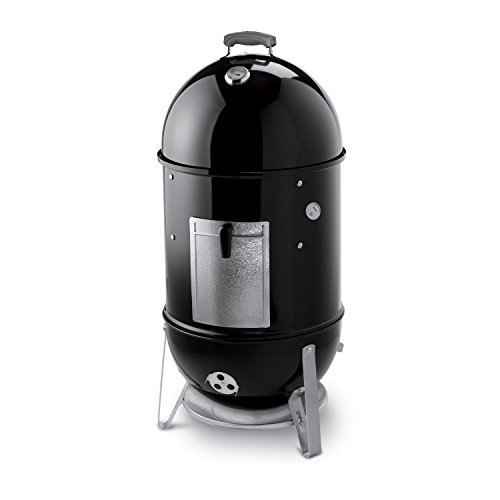
Weber Smokey Mountain Cooker 18-Inch — Best Charcoal to Learn On
The Weber Smokey Mountain Cooker 18-Inch is the charcoal beginner’s rite of passage, and its verified listing describes the classic bullet formula: an 18-inch charcoal smoker with dual cooking grates, a porcelain-enameled kettle body and temperature control dampers. The design’s genius is stability. A charcoal bed in the base, a water pan above it acting as a heat sink and deflector, two grates of food above that, and vents to govern the fire — a system that, once settled, holds a smoking temperature for hours with a steadiness that surprises everyone who feared charcoal meant constant tending.
Strengths
- Legendary temperature stability for a charcoal cooker, once the vents are learned
- Dual grates give real capacity in a compact footprint
- Porcelain-enameled Weber build with decades of community knowledge behind it
Trade-offs
- Charcoal means lighting, ash and a learning curve the electrics skip
- No electronics: temperature is read and governed by you and the dampers
- Fuel and attention costs are ongoing — this is a hobbyist’s teacher, not an appliance
Key specs (from the manufacturer’s Amazon listing title):
- Size: 18-inch charcoal smoker, per listing title
- Grates: Dual cooking grates, per listing title
- Body: Porcelain-enameled kettle, per listing title
- Control: Temperature control dampers, per listing title
A year on the Smokey Mountain teaches what no automatic cooker can: how a fire breathes, how vent changes take twenty minutes to arrive, how weather leans on a cook, and how bark and smoke ring are actually made. Its graduates run every other cooker better for the rest of their lives, and the 18-inch size is the sweet spot of the line — big enough for a brisket or two chickens, efficient enough for a Tuesday. The honesty owed to beginners is about temperament, not difficulty. If your Saturdays want a smoker that behaves like an oven while you do other things, this is the wrong pick and the Masterbuilt exists for you. If the craft itself is the attraction — if you want to be good at barbecue, not just served by it — there is no better first teacher in this guide, and few better second or third cookers either.
Best for: beginners who want to learn real fire craft with the most forgiving charcoal design / Not suited for: set-and-forget cooks who want smoking to behave like an oven
Check the Smokey Mountain 18 on Amazon — check price on Amazon and read the full listing details for the current configuration.
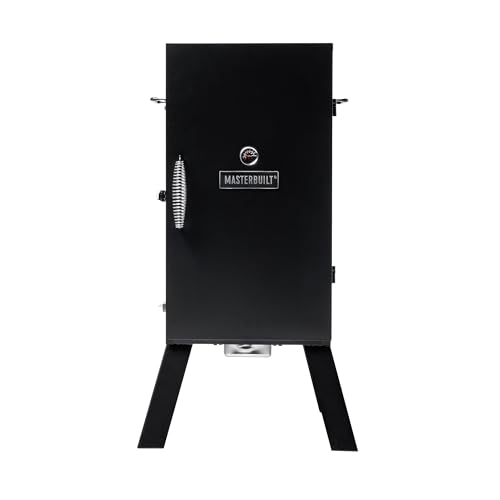
Masterbuilt 30-Inch Analog Electric Smoker MB20070210 — Best Budget Electric
The Masterbuilt 30-Inch Analog Electric Smoker is the budget expression of the guide’s easiest school. Its verified listing confirms an electric vertical smoker with analog temperature control, chrome smoking racks and 535 cooking square inches. Where the digital model sets a number, this one turns a dial — and for many beginners that is not a downgrade but a preference. Analog control has nothing to update, no panel to fade in the sun, and a directness that suits a first smoker kept at a cabin, a rental or a starter patio where simplicity outranks precision theatre.
Strengths
- The simplest possible electric smoking: a dial and a cabinet
- 535 sq in still covers chickens, ribs and a modest butt
- Budget position makes it the low-risk way to test the hobby
Trade-offs
- Analog control is less precise than the digital model — expect wider swings
- Smaller cooking space than the 710 sq in digital pick
- Same electric limits: mild smoke, outlet required, no grilling
Key specs (from the manufacturer’s Amazon listing title):
- Cooking space: 535 cooking square inches, per listing title
- Control: Analog temperature control, per listing title
- Racks: Chrome smoking racks, per listing title
- Model: MB20070210, per listing title
Judge this smoker as the hobby’s sampler and it succeeds completely. The first-year curriculum fits: whole chickens and ribs in its 535 square inches without contortion, a pork butt with room to breathe, and sausages, fish and cheese at the gentle temperatures electrics do best. The analog dial asks the cook to check in with a thermometer rather than trusting a display, which — quietly — is a good habit being taught by a limitation. Where the budget shows is headroom and finesse: a full packer brisket is a squeeze the digital 30-inch handles more gracefully, and temperature will wander a little more around its setting. A beginner who catches the barbecue bug will eventually want more cooker; a beginner who does not has spent the least learning so. Both outcomes make this a rational first purchase, and its simplicity means it often survives as the household’s second smoker for fish and sides.
Best for: budget beginners, second homes and anyone wanting the simplest electric start / Not suited for: brisket-focused cooks or anyone wanting set-a-number digital precision
Check the Masterbuilt Analog Electric on Amazon — check price on Amazon and read the full listing details for the current configuration.

Z Grills ZPG 550B2 Pellet Smoker — Best Value Pellet
The Z Grills ZPG 550B2 makes the pellet school’s value case with a controller headline: PID technology. Its verified listing confirms a wood pellet smoker with the latest PID technology and an LCD controller, auto temperature control, a meat probe, 553 square inches of cooking space and 8-in-1 versatility. PID control matters to a beginner more than to an expert, which is the point. A basic controller reacts after the temperature drifts; a PID controller learns the cooker’s rhythm and feeds pellets ahead of the swing, holding the steady low temperatures that brisket and butt reward — the forgiveness this whole guide is buying, in its most engineered form.
Strengths
- PID auto temperature control holds smoking temperatures with minimal swing
- Meat probe and LCD controller included, per the listing
- 553 sq in and 8-in-1 versatility cover smoking and grilling in one cooker
Trade-offs
- Value-brand support and longevity are less proven than Traeger’s network
- Pellet fuel costs and dry storage apply, as with every pellet cooker
- 8-in-1 breadth means it is a generalist; dedicated smokers out-smoke it at the margins
Key specs (from the manufacturer’s Amazon listing title):
- Cooking space: 553 sq in, per listing title
- Control: PID technology, LCD controller, auto temperature control, per listing title
- Probe: Meat probe, per listing title
- Versatility: 8-in-1 BBQ grill, per listing title
- Model: ZPG 550B2, per listing title
The 550B2 buyer is the beginner who read the pellet chapter and wants the Traeger idea at a friendlier commitment, and on the evidence of its listing the compromise is smaller than the sceptics suggest. The cooking space matches the class, the probe is included, and the controller is arguably the more modern instrument. What the value price cannot buy is the surrounding certainty: the depth of the dealer and parts network, the size of the owner community answering questions at midnight, the resale shrug if the hobby does not take. None of that cooks a rib. For a beginner whose budget is the binding constraint, this Z Grills is the rational pellet — buy it, keep pellets dry, clear the ash on schedule, and let the PID do for your first brisket what it promises on the listing.
Best for: budget-minded beginners wanting PID pellet control and grilling versatility / Not suited for: buyers who weight brand network and resale above purchase value
Check the Z Grills 550B2 on Amazon — check price on Amazon and read the full listing details for the current configuration.

Cuisinart 18-Inch Vertical Charcoal Smoker COS-118 — Best Compact Charcoal
The Cuisinart 18-Inch Vertical Charcoal Smoker COS-118 brings the bullet design to the compact and portable end of the beginner field. Its verified listing confirms the working parts: an integrated thermometer, a water bowl and dual vents, with chrome-plated grates, in an 18-inch vertical format the listing itself aims at smoked brisket, camping and tailgates. That portability is a genuine beginner consideration nobody puts on a spec sheet — a first smoker that can travel to the campsite, the tailgate and the borrowed backyard gets used more, and use is the whole curriculum.
Strengths
- Compact, portable bullet — suits small patios, camping and tailgates
- Integrated thermometer, water bowl and dual vents: the full charcoal toolkit
- Budget-friendly way into real charcoal craft
Trade-offs
- Lighter build than the Weber — expect to tend it a little more closely
- 18-inch vertical capacity suits modest batches, not crowd cooking
- Charcoal’s learning curve applies in full: lighting, ash and vent craft
Key specs (from the manufacturer’s Amazon listing title):
- Size: 18-inch vertical charcoal smoker, per listing title
- Features: Integrated thermometer, water bowl and dual vents, per listing title
- Grates: Chrome-plated grates, per listing title
- Model: COS-118, per listing title
The COS-118 and the Smokey Mountain teach the same subject at different levels of intensity, and choosing between them is really choosing a teacher’s manner. The Cuisinart is lighter, simpler and cheaper to start, and its integrated thermometer and dual vents give a beginner the complete control set from day one; in exchange it asks for a touch more attention to hold a temperature through a long cook, which some beginners experience as the hobby itself and others as homework. Its vertical 18-inch format handles the canonical cooks in modest quantity — a brisket as the listing promises, ribs, chickens — and packs away or travels in a way the heavier Weber does not volunteer for. Small-space and mobile beginners should take it seriously as a first smoker rather than a compromise: a cooker that fits your actual life gets lit, and a cooker that gets lit teaches.
Best for: small-space, camping and tailgate beginners wanting real charcoal craft / Not suited for: hands-off cooks or anyone regularly feeding a crowd
Check the Cuisinart COS-118 on Amazon — check price on Amazon and read the full listing details for the current configuration.
Comparison Table
Fuel is the first column that matters, control the second. Capacity differences inside a fuel matter less to a beginner than the control method they will live with.
| Pick | Badge | Key spec | Best for |
|---|---|---|---|
| Masterbuilt 30-Inch Digital Electric Smoker MB20071117 | Best Overall for Beginners | 710 sq in, digital control, side chip loader | first-time smokers wanting set-and-forget temperature and easy long cooks |
| Traeger Pro 22 Pellet Grill and Smoker | Best Pellet for Beginners | 572 sq in, 18 lb hopper, meat probe, 450°F max | beginners wanting one outdoor cooker that smokes with real wood and grills |
| Weber Smokey Mountain Cooker 18-Inch | Best Charcoal to Learn On | 18-in charcoal bullet, dual grates, damper control | beginners who want to learn real fire craft with the most forgiving charcoal design |
| Masterbuilt 30-Inch Analog Electric Smoker MB20070210 | Best Budget Electric | 535 sq in, analog control, chrome racks | budget beginners, second homes and anyone wanting the simplest electric start |
| Z Grills ZPG 550B2 Pellet Smoker | Best Value Pellet | 553 sq in, PID + LCD control, meat probe, 8-in-1 | budget-minded beginners wanting PID pellet control and grilling versatility |
| Cuisinart 18-Inch Vertical Charcoal Smoker COS-118 | Best Compact Charcoal | 18-in vertical charcoal, thermometer, water bowl, dual vents | small-space, camping and tailgate beginners wanting real charcoal craft |
How to Choose a First Smoker: Fuel, Control and Capacity
Choose fuel by temperament before anything else, because you will live with it weekly. Electric is an appliance: plug in, set, add chips, and the learning goes to meat and seasoning. Pellet is an appliance that burns wood: the flavour is real, the control is automatic, and the costs are pellets, power and ash care. Charcoal is a craft: the flavour ceiling is highest and the skill transfers everywhere, and the price is attention. None of these is the beginner fuel in the abstract — the beginner fuel is the one whose demands match the Saturdays you actually have.
Control is the specification hiding inside the fuel choice. A beginner’s cooks fail on temperature swings, so judge every smoker by how it holds a low temperature without you: digital electric and PID pellet controllers hold it best, standard pellet controllers nearly as well, and a well-designed charcoal bullet holds it surprisingly well once its vents are learned — with ‘once learned’ doing real work in that sentence. If you will abandon a hobby that needs babysitting, buy the control, not the romance.
Capacity, finally, should be bought for the canonical cooks, not the crowd. A smoker that fits a whole packer brisket flat, two chickens or three racks of ribs covers a family’s first years; the next size up mostly buys air. Vertical cabinets stack their area in racks, bullets in two grates, pellet grills on one broad grate — the same square inches arranged differently — so picture your brisket in the shape before you compare the number.
- Electric for appliance ease, pellet for wood flavour with control, charcoal for craft
- Prioritise steady low temperature over maximum temperature
- Fit a brisket, two chickens or three rib racks — that is enough first smoker
- Budget the cover, a good probe thermometer and the first fuel in the same purchase
- Buy the size for your household’s Sundays, not its biggest party
The Beginner’s First-Year Curriculum: What to Cook in What Order
Order matters because each cook teaches the next one’s skill. Start with chicken — fast, cheap, and it teaches your smoker’s hot spots and your seasoning hand. Move to ribs, where time, temperature and the bend test come together in an afternoon. Then the pork butt, the great confidence cook: a long smoke that forgives almost everything and feeds everyone, teaching patience and the stall without punishing either. Sausages, fish and cheese fill the gaps at gentle temperatures, especially on the electrics. Brisket comes last and on purpose — it is the exam the first four cooks were revision for, and on a steady smoker, by then, it is a pleasure rather than a gamble.
Keep a cook log from the first Saturday: meat, weight, temperature, fuel, weather, time, result. It feels excessive for exactly one cook. By the fifth, it is the difference between a beginner who repeats their successes and one who re-rolls the dice every weekend — and it is the cheapest accessory in this entire guide.
Thermometers, Fuel and the Accessories That Actually Matter
A smoker’s built-in thermometer is a rough guide at grate level’s neighbourhood, not the truth about your meat. The accessory that changes beginner outcomes most is a decent probe thermometer — ideally a leave-in probe for the meat plus an instant-read for checks — because doneness in barbecue is temperature and tenderness, never the clock. Several picks in this guide include a meat probe in the listing; treat that as real value, and add an instant-read alongside regardless.
Fuel discipline is the second accessory. Chips for the electrics, kept dry and used in modest handfuls — oversmoked food is the true beginner flavour fault. Pellets for the pellet grills, stored sealed and dry, because damp pellets swell, jam augers and end cooks. Charcoal of consistent quality for the bullets, lit in a chimney rather than with fluid, because the fire you start with is the flavour you finish with. Add a cover, heat-safe gloves and a wide spatula, and the beginner kit is complete — everything else can wait for the second year.
- A leave-in probe plus an instant-read thermometer — the highest-value accessories
- Dry, consistent fuel: chips modestly, pellets sealed, charcoal chimney-lit
- A cover from day one; weather ages an uncovered smoker fast
- Heat-safe gloves and a wide spatula for moving whole cuts
- A cook log, kept from the first Saturday
How to Run Your First Smoke: A Beginner’s Pork Butt, Step by Step
The pork butt is the perfect first long cook on any smoker in this guide: inexpensive, forgiving, and genuinely difficult to ruin. This walkthrough assumes a steady smoking temperature in the range your smoker’s manual recommends for low-and-slow, and works on electric, pellet and charcoal alike — only the fire-tending differs.
- The night before: trim excess surface fat, season the butt generously with your rub, wrap and refrigerate. Take it out an hour before cooking so it is not fridge-cold at the start.
- Prepare the smoker: chips in the electric’s tray or loader, pellets in the hopper with the fire pot clean, or charcoal lit in a chimney for the bullets. Bring the smoker up to its smoking temperature and let it settle there for twenty minutes — stability before meat, always.
- Place the butt fat-side as your smoker’s heat direction suggests, insert a leave-in probe into the thickest part away from bone, and close the lid. Note the time and temperature in your log.
- Add smoke wood in modest amounts in the early hours, when the meat takes it up most readily. Resist opening the lid to admire it: every opening is heat and time leaving the cook.
- Expect the stall: somewhere in the middle temperatures, the internal temperature will sit nearly still for a long stretch as moisture evaporates. This is normal physics, not a fault. Hold your temperature and wait, or wrap the butt in foil or butcher paper to push through — both are legitimate, and the log should record which you chose.
- The butt is done when it is tender, not merely hot: the probe should slide in with almost no resistance and the bone should wiggle loose, typically at a higher internal temperature than lean meats use. If it resists, it is not done, whatever the clock says.
- Rest it, wrapped, for at least an hour. Then pull it with forks or gloved hands, discarding hard fat, and season the pulled meat with a little of its own juices and a fresh pinch of rub.
- Log everything: total time, fuel used, weather, what you would change. Eat very well. That log page is the foundation of your second cook.
Clean while the smoker cools: grates brushed, ash out once fully cold, grease managed as the manual directs, cover on. A smoker cleaned after every cook is a smoker that is ready — and readiness, on a free Saturday, is what turns beginners into barbecue cooks.
Common Buying Mistakes
First-year barbecue produces the same handful of failures on every kind of smoker. Each one is a lesson with a known fix, listed here so you can skip the tuition.
- Buying by maximum temperature or sheer size instead of low-temperature steadiness
- Oversmoking: loading chips or wood until the food tastes like an ashtray instead of a fire
- Cooking by the clock instead of by probe temperature and tenderness
- Opening the lid constantly to check, and extending the cook an hour at a time
- Panicking at the stall and cranking the heat, which tightens the meat the stall was tenderising
- Skipping the rest — slicing or pulling immediately and watching the juices leave on the board
Final Recommendation
If one first smoker must be named, it is the Masterbuilt 30-inch Digital Electric: the steadiest, simplest path to a successful first year. Beginners who want one cooker for the whole patio should step to the Traeger Pro 22, and those who want pellet control on a budget to the Z Grills 550B2 and its PID. Beginners who want to learn barbecue itself should choose charcoal without fear — the Weber Smokey Mountain for the classic apprenticeship, the Cuisinart COS-118 where space and travel matter — and the budget electric Masterbuilt analog remains the lowest-risk first taste of the hobby in the guide.
The programme’s neighbouring guides cover the smokers around this one: step-up and specialist fields continue in Best Bbq Smokers Under $400 and Best Bbq Smokers Under $1000, the fuel-specific worlds in Best Bbq Wood Smokers and Best Bullet Smokers, and the thermometer that this guide keeps recommending is covered in Best Bluetooth Meat Thermometer For Smokers. Buy for steadiness, cook in order, keep the log — your second year will thank your first.
Before you decide, re-check the shortlist leaders at their current listings: Masterbuilt 30-Inch Digital Electric Smoker MB20071117, Traeger Pro 22 Pellet Grill and Smoker, Weber Smokey Mountain Cooker 18-Inch — check price on Amazon for each and confirm the exact variant.
- Best Bbq Smokers Under $400
- Best Bbq Smokers Under $1000
- Best Bbq Wood Smokers
- Best Bullet Smokers
- Best Bluetooth Meat Thermometer For Smokers
Frequently Asked Questions
What is the easiest type of smoker for a complete beginner?
An electric smoker, and it is not close. A thermostat holds the temperature, wood chips in a tray or side loader provide the smoke, and there is no fire to light, feed or govern — the beginner learns meat, timing and seasoning with the hardest variable removed. The Masterbuilt digital in this guide is the archetype. Pellet grills are the next easiest and add real wood flavour with automatic control. Charcoal is the most rewarding and the most demanding, and suits beginners who actively want the craft.
How big a smoker does a beginner need?
Big enough for the canonical cooks, no bigger: a whole packer brisket, a pork butt, two chickens or about three racks of ribs. In practice that means roughly 500 to 700 square inches arranged usefully — the range every pick in this guide occupies. Bigger smokers cost more to buy and to heat, and their extra air mostly serves parties a beginner hosts rarely. Buy for your household’s ordinary Sundays and rent or borrow capacity for the exceptional day.
Why does my smoked meat stall at one temperature for hours?
The stall is normal evaporative physics, not a malfunction. As the meat’s surface moisture evaporates, it cools the meat at roughly the rate the smoker heats it, and the internal temperature plateaus — often for hours on a brisket or butt. Cooks either wait it out at a steady temperature, which produces excellent bark, or wrap the meat in foil or butcher paper to push through it, which is faster and softer. What not to do is raise the heat sharply in a panic; patience is the recipe working, not failing.
Can an electric or pellet smoker produce real barbecue flavour?
Yes, with an honest difference in degree. Pellet grills burn real wood and produce genuine wood-smoke flavour, closest to charcoal at their low, smoky settings. Electric smokers burn real wood chips too, but in smaller quantities and at cabinet temperatures that yield a cleaner, milder smoke profile — most beginners and their families find it delicious, and it is far better than oversmoked charcoal food. Charcoal retains the deepest, most complex smoke and bark. All three make real barbecue; they make it at different intensities.
Do I need a separate thermometer if my smoker has one built in?
Yes. A lid or door thermometer reads the air near itself, not the temperature at the grate or inside the meat, and it can be meaningfully off in either direction. Barbecue doneness is judged by the meat’s internal temperature and its tenderness, so a leave-in probe in the cut — included with the pellet picks in this guide — plus an inexpensive instant-read for verification will improve your results more than any other accessory. It is the first upgrade every beginner should make, ahead of any rub, tool or gadget.
How much should a beginner spend on a first smoker?
Enough to buy steadiness, not so much that a change of heart hurts. The analog electric in this guide is the low-risk entry; the digital electric and value pellet are the middle where most beginners land happily; the Traeger and Weber are buy-once answers for beginners already sure the hobby is theirs. Judge the sum as machine plus cover, probes and first fuel, and be suspicious of any price — high or low — that promises competition results in your first season. The cook, practising in order, is the variable that matters.


