Disclosure: airfryerkitchensupply.com is reader-supported. When you buy through links on our site, we may earn an affiliate commission at no extra cost to you.
Where to buy
All six of the best bang for buck high capacity smokers below are current-production models sold on Amazon, and every ASIN was verified against the live Amazon catalog before publication — brand and model searched, returned listing title matched, link issued only on a confident match. These are large, heavy cookers; check price on Amazon and read the freight and assembly notes on the listing in front of you before ordering.
- Pit Boss 1600 Navigator Series Pellet Grill — Check the current price on Amazon
- recteq Flagship 1600 Pellet Smoker Grill — Check the current price on Amazon
- Masterbuilt 40-inch Digital Electric Smoker MB20072918 — Check the current price on Amazon
- Char-Griller Texas Trio Gas & Charcoal Grill and Smoker — Check the current price on Amazon
- HAKKA Commercial Electric Smoker DSH-S50B — Check the current price on Amazon
- Oklahoma Joe’s Highland Reverse Flow Offset Smoker — Check the current price on Amazon
The best bang for buck high capacity smokers answer a specific household math problem: you cook for crowds, or you batch-cook for the freezer, and running a mid-size smoker twice costs more — in fuel, in time, in Saturdays — than running a big one once. This guide ranks six genuinely large cookers by value, where value means usable capacity and reliable temperature control delivered at a fair tier of the market, not merely the biggest number printed on a box. Per this site’s standing rule we do not print static prices — they change too fast to be honest — so “bang for buck” here is judged structurally: how much real cooking area, hopper endurance, and control you get for the tier each cooker sits in, and what each one costs you per cook over years of ownership.
First, an honesty pass on capacity itself, because high-capacity marketing is where square inches go to be inflated. Manufacturers count every rack, shelf, and warming surface; cooks care about area that holds food at smoking temperature with air space around it. A brisket needs its footprint plus breathing room. Ribs laid flat eat area fast; ribs in a rack cheat it. Vertical cabinets multiply area honestly for tray foods — sausage, jerky, wings, beans — and less honestly for wide cuts. Every pick below was assessed on food, not figures: how many butts, briskets, or racks actually ride at once, and whether the cooker’s heat distribution lets you use the edges or only the middle.
Second, the value trap to avoid: capacity you use twice a year is not value, it is storage with a fire inside. The picks are ordered so that the first three serve households that cook big regularly — weekly family-plus loads, freezer batches, team-and-church events — while the later picks serve more specialized big cooking: sausage and charcuterie batches, and the wood-fire traditionalist’s crowd work. Match the cooker to your real calendar and every one of them is a bargain; mismatch it and the biggest one becomes the most expensive shelf on your patio.
In this guide
Quick Picks
- Best Overall Value — Pit Boss 1600 Navigator: 1,593 square inches, a 30 lb hopper, Flame Broiler searing, and touchscreen-class control at a value brand’s tier. Check the current price on Amazon
- Best Premium Capacity — recteq Flagship 1600: 1,667 square inches and a 40 lb hopper — the most capacity and endurance in this guide, at the premium tier. Check the current price on Amazon
- Best Electric Capacity — Masterbuilt 40-inch Digital Electric MB20072918: 970 square inches of cabinet with digital control and a side chip loader — big-batch smoking with the least labor. Check the current price on Amazon
- Best Combo Capacity — Char-Griller Texas Trio: 1,390 square inches across gas, charcoal, and a side firebox — three cookers’ worth of roles in one footprint. Check the current price on Amazon
- Best for Sausage and Batch Meats — HAKKA Commercial Electric Smoker DSH-S50B: an 8-rack commercial-style cabinet built for sausage, bacon, pastrami, and whole-batch charcuterie work. Check the current price on Amazon
- Best Offset Capacity — Oklahoma Joe’s Highland Reverse Flow: 1,093 square inches of even, baffled offset cooking for crowd-size wood-fired barbecue. Check the current price on Amazon
How These Picks Were Chosen
Every model was verified: brand and model searched, the returned listing title matched to the intended product, and only then was the ASIN linked. Specifications in the mini boxes — cooking areas, hopper sizes, rack counts — come from those verified listing titles.
Value scoring used four lenses. Usable capacity per tier: what the cooker holds in real food relative to where it sits in the market — entry, mid, or premium. Cost per cook: fuel appetite at capacity (a big cooker run half-empty is the worst value in barbecue; run full, the same cooker is often the cheapest per pound). Control at load: whether temperature discipline survives a full chamber, because a packed cooker is a different thermal animal from an empty one — cold meat is a heat sink, and marginal controllers and fires show it. And fourth, endurance: hopper size, tank or element capacity, and whether the machine is built to be loaded heavily for years, since value compounds over lifespan.
We excluded party-rental-scale trailer pits and commercial smokers that need commercial power or permits; the HAKKA cabinet is the deliberate edge case, included because it runs in a home context and serves a batch-cooking style the others cannot. Everything else here is a household purchase that ships to a driveway.
The 6 Best Bang-for-Buck High-Capacity Smokers
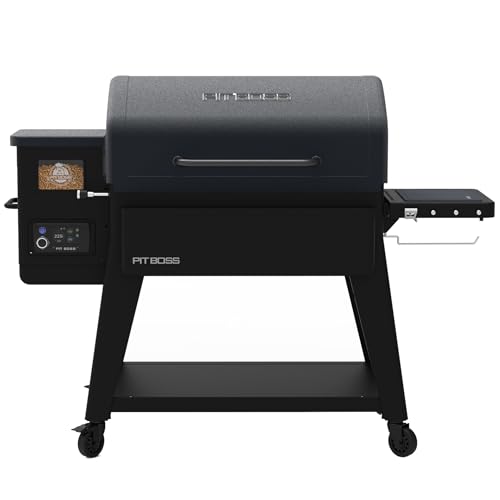
Pit Boss 1600 Navigator Series — Best Overall Value
The 1600 Navigator is the value argument in its purest form: 1,593 square inches of cooking space, a 30 lb hopper, the Flame Broiler for direct-flame finishing, a touchscreen controller, WiFi and Bluetooth monitoring, and a 180–500°F working range — from the brand that has built its entire identity on undercutting the premium names. For a household that cooks big every week, this is the most barbecue per tier-dollar in the guide, and it is not close.
Strengths
- 1,593 square inches swallows event loads — multiple briskets, a case of butts, ribs for a team — in one batch.
- 30 lb hopper plus connectivity makes the big overnight cook a monitored non-event.
- Flame Broiler means the big cooker also sears, so it is not a one-role patio tenant.
Trade-offs
- Temperature discipline is good, not flagship-class; a full cold load will test recovery.
- At partial loads it burns like the big cooker it is — value appears when you fill it.
- Size and weight commit you: measure the patio and the gate.
- Cooking space: 1,593 sq in (per Amazon listing)
- Hopper: 30 lb (per Amazon listing)
- Range: 180–500°F, Flame Broiler, touchscreen controller, meat probe (per Amazon listing)
The Navigator’s deeper value is operational. Big cooks fail on logistics more than on flavor — the second batch still raw when guests arrive, the brisket held too long while ribs finish. A single 1,593-square-inch batch ends those failures. Add the sear lever for the steaks that inevitably join the menu, and the 1600 becomes the only cooker a serious hosting household needs, at a tier the flagship brands do not contest.
Best for: weekly big cooks, hosting households, and freezer batchers wanting pellet ease. / Not suited for: couples cooking two racks of ribs, or precision-obsessed cooks. Check the current price on Amazon
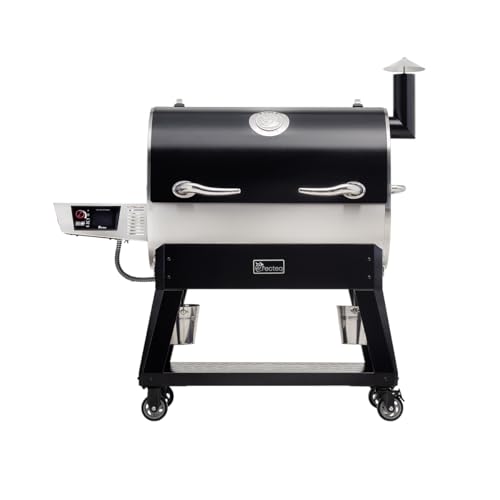
recteq Flagship 1600 — Best Premium Capacity
The Flagship 1600 matches the Navigator’s scale — 1,667 square inches, the largest area in this guide — and raises the endurance and control stakes: a 40 lb hopper, recteq’s flagship Wi-Fi platform, and the build-and-support reputation that makes recteq the pellet market’s premium benchmark. It is the pick when “bang for buck” is measured over a decade: more paid at the start, less paid in frustration, parts anxiety, and replacement cookers.
Strengths
- 1,667 square inches plus a 40 lb hopper: the longest, largest unattended cooks in this guide.
- Controller discipline recteq is known for, which matters most exactly at full load.
- Support and parts ecosystem aimed at keeping the cooker in service for years.
Trade-offs
- Premium tier: the value case is lifespan and control, not the purchase moment.
- No direct-flame sear system.
- The largest footprint here; it is patio infrastructure, not an appliance you shuffle.
- Cooking space: 1,667 sq in (per Amazon listing)
- Hopper: 40 lb (per Amazon listing)
- Control: Wi-Fi smart grill platform (per Amazon listing)
Choose the Flagship when the big cooks are also the important cooks — the reunion briskets, the holiday production, the small catering jobs where a temperature excursion costs real money in meat. Its controller’s composure under a full, cold load is the premium feature, and it is invisible in spec sheets and obvious at hour ten. For households whose big cooking is occasional and forgiving, the Navigator above is the smarter spend; for households whose big cooking has stakes, this is the value pick wearing a premium badge.
Best for: high-stakes big cooks, small caterers, and decade-horizon buyers. / Not suited for: casual or occasional smokers. Check the current price on Amazon

Masterbuilt 40-inch Digital Electric Smoker MB20072918 — Best Electric Capacity
The 40-inch Masterbuilt is the labor-saving route to capacity: 970 square inches of vertical cabinet on chrome racks, digital temperature control, and the line’s signature side wood chip loader, which lets you renew smoke without opening the door and dumping the heat your full load took an hour to build. Electric cabinets are the mildest smokers in this guide, and also the most consistent — and for big batches of poultry, fish, sausage, and party wings, consistency is the flavor that matters.
Strengths
- 970 square inches across stacked racks — tray foods and poultry batches scale beautifully.
- Digital control holds temperature regardless of wind or a full cold load’s demands.
- Side chip loader preserves heat during long cooks; no fire to tend at all.
Trade-offs
- Electric smoke is the lightest in this guide; bark and smoke depth trail charcoal and pellet.
- Wide briskets may need trimming to fit rack width — vertical cabinets trade width for count.
- Needs outdoor power and a covered spot for its electronics.
- Cooking space: 970 sq in (per Amazon listing)
- Controls: digital, with side wood chip loader (per Amazon listing)
- Racks: chrome smoking racks
The 40-inch Masterbuilt’s value story is the cook’s calendar. A pellet or offset big cook consumes the cook; an electric big cook consumes electricity and chips. For the household producing trays of wings for game day, salmon for a family gathering, or jerky and sausage in seasonal batches, that labor difference is the entire purchase — and the per-cook fuel cost is the lowest in this guide. Buy it for the foods cabinets do best and it will seem underpriced within a month.
Best for: poultry, fish, sausage, and party-batch cooking with minimal labor. / Not suited for: brisket purists chasing deep bark, or wide-cut cooking. Check the current price on Amazon

Char-Griller Texas Trio — Best Combo Capacity
The Texas Trio counts capacity differently: 1,390 square inches spread across a 3-burner gas grill, a charcoal grill, and a side firebox that converts the charcoal side into an offset smoker, plus a side burner for sauces and beans. Judged purely as a smoker it is a mid-size offset; judged as a backyard system, it is three appliances sharing one frame and one footprint — and for a household replacing everything at once, that consolidation is the bargain.
Strengths
- Gas for weeknights, charcoal for weekends, offset firebox for smoking — one purchase covers the whole calendar.
- 1,390 total square inches with dual temperature gauges and push-button gas ignition.
- Side burner handles the beans, sauces, and coffee that big cooks always involve.
Trade-offs
- As a pure smoker, its chamber is smaller than the dedicated picks here; the capacity is distributed, not concentrated.
- More systems to maintain: burners, charcoal grates, firebox, and their respective cleanups.
- Offset mode needs the usual sealing attention to perform at its best.
- Cooking space: 1,390 sq in total (per Amazon listing)
- Configuration: 3-burner gas + charcoal grill + side firebox smoker + side burner, model 3070 (per Amazon listing)
The Trio’s buyer is doing a patio reset: the old grill is dying, a smoker is wanted, and the budget allows one frame. In that negotiation it wins easily, because its smoking mode is honest — a real offset firebox, not a smoke tube gimmick — while its gas side keeps Tuesday dinners at push-button speed. Specialists will outgrow its smoker eventually; households will simply use it for everything, for years, and that is what value looks like in practice.
Best for: households consolidating grill and smoker into one high-capacity frame. / Not suited for: dedicated smokers wanting maximum single-chamber area. Check the current price on Amazon

HAKKA Commercial Electric Smoker DSH-S50B — Best for Sausage and Batch Meats
The HAKKA is the specialist: a vertical smoke oven with 8 racks, built and marketed for the charcuterie end of smoking — sausage, bacon, pastrami, smoked chicken and pork in quantity. Its capacity is not measured in briskets but in pounds of links and slabs riding at once, evenly, under electric control that holds the gentle temperatures sausage work demands. For the home charcuterie maker who has outgrown a 30-inch cabinet, this is the honest next step that stays inside a home budget’s logic.
Strengths
- 8 racks purpose-arranged for hanging and laying batch meats — sausage days become single runs.
- Electric control suits the low, steady temperatures curing and sausage smoking require.
- Commercial-style cabinet build aimed at repeated heavy loading.
Trade-offs
- A specialist’s tool: it will not grill, sear, or charm a brisket-first buyer.
- Electric smoke profile is light — appropriate for its foods, limiting for others.
- Confirm power requirements and placement on the listing; commercial-style cabinets expect a dedicated spot.
- Racks: 8 (per Amazon listing)
- Format: vertical electric smoke oven, model DSH-S50B (per Amazon listing)
- Intended loads: sausage, bacon, pastrami, smoked chicken and pork (per Amazon listing)
Value, for the charcuterie household, is throughput per batch day. Curing is a calendar craft — bacon takes a week to cure whether you smoke ten pounds or forty — so the smoker that finishes the whole cure in one run quadruples the craft’s output without touching its timeline. The HAKKA exists for that math. Buyers whose smoking is brisket-and-ribs should pass it by; buyers with a grinder, a stuffer, and a curing fridge will understand it instantly.
Best for: sausage makers, bacon and pastrami producers, and batch charcuterie. / Not suited for: general-purpose barbecue households. Check the current price on Amazon

Oklahoma Joe’s Highland Reverse Flow — Best Offset Capacity
For the wood-fire traditionalist, capacity value means one thing: how much of the grate cooks evenly enough to use. The Highland Reverse Flow’s answer is 1,093 square inches behind a baffle plate that flattens the offset gradient, turning the whole chamber into working area instead of a hot third, a perfect third, and a cool third. Against dedicated offsets in its tier, that usable-area honesty is the bargain — you are buying a chamber you can actually fill.
Strengths
- Baffle-evened heat converts headline area into usable area better than any traditional offset here.
- Real split-wood flavor at crowd scale — the deepest smoke in this guide.
- Radiant baffle heat sets bark on big loads of butts and briskets beautifully.
Trade-offs
- The labor is the price: splits every hour, fire judgment every cook.
- Baffle plate needs scheduled grease cleaning.
- Fuel costs per cook exceed the electric and pellet picks; value here is flavor per dollar, not fuel per dollar.
- Cooking area: 1,093 sq in (per Amazon listing)
- Format: reverse-flow offset charcoal smoker and grill
The Reverse Flow’s economics run on a different ledger: wood and time in, benchmark barbecue out. For the cook whose gatherings are famous for the brisket, no other pick in this guide produces that brisket at this scale for this tier. It is the value choice for the traditionalist exactly as the Navigator is for the pellet household — the most of what you care about, per dollar, in one machine.
Best for: wood-fire crowd cooking and brisket reputations. / Not suited for: anyone counting labor or fuel as costs. Check the current price on Amazon
Comparison Table
| Pick | Badge | Key spec | Best for |
|---|---|---|---|
| Pit Boss 1600 Navigator | Best Overall Value | 1,593 sq in, 30 lb hopper, Flame Broiler | Weekly big cooks and hosting |
| recteq Flagship 1600 | Best Premium Capacity | 1,667 sq in, 40 lb hopper | High-stakes cooks, decade value |
| Masterbuilt 40-inch Electric | Best Electric Capacity | 970 sq in, digital control, side chip loader | Batch poultry, fish, sausage, wings |
| Char-Griller Texas Trio | Best Combo Capacity | 1,390 sq in, gas + charcoal + firebox | One-frame grill and smoker consolidation |
| HAKKA DSH-S50B | Best for Sausage and Batch Meats | 8-rack commercial-style cabinet | Charcuterie throughput |
| Oklahoma Joe’s Highland Reverse Flow | Best Offset Capacity | 1,093 sq in baffled offset | Wood-fired crowd barbecue |
How to Choose a High-Capacity Smoker Without Overbuying
Audit your three biggest cooks of the last year, in food, not in guests. Write down what actually rode the cooker: two butts and a brisket is roughly 500–700 square inches of honest demand; a case of ribs for a team party is 1,200-plus; forty pounds of sausage is a rack-count question, not an area question at all. Buy for the biggest of those three, plus modest headroom. The audit protects you in both directions — from the giant that idles, and from the mid-size cooker that forces the double-batch Saturdays this guide exists to end.
Area vs. racks: two kinds of capacity
Horizontal area (pellet grills, offsets) suits wide, flat, irregular food: briskets, rib racks, whole chickens. Vertical rack count (electric cabinets) suits uniform, stackable food: wings, sausage, jerky, fish, trays of sides. Mixed households should weight horizontal area, because the wide cuts are the ones that cannot be subdivided — a brisket does not fold. Charcuterie and wing households should weight racks. The Texas Trio and the HAKKA sit at the two poles of this guide precisely because “high capacity” means different geometries to different cooks.
Cost per cook, the value metric that matters
Run the rough math for your pattern. A big pellet grill filled to capacity cooks more pounds per bag of pellets than the same grill at a third load — the fire heats the chamber either way. An electric cabinet’s cost per cook barely moves with load at all, which is why batch households love them. An offset run full is a fuel bargain per pound and run nearly empty is a bonfire with a brisket nearby. The conclusion generalizes: high-capacity cookers are value machines only in households whose loads match them, and the matching — not the sticker tier — is where the bang for the buck actually lives.
Control under load
A chamber full of cold meat is a refrigerator fighting your fire for the first two hours. Controllers with real recovery power, fires with real coal beds, and elements with headroom all matter more at capacity than in any showroom test. This is why the premium picks in this guide justify themselves to serious batch cooks: their discipline shows up precisely when the cooker is fullest and the cook is busiest. If your big cooks are also your highest-stakes cooks, weight control above area in the final decision.
Lifespan is the multiplier
Every value calculation in this guide quietly assumes the cooker lasts. Stretch a mid-tier cooker across eight years of weekly big cooks and its cost per cook becomes trivial; replace a flimsy giant in year three and the “bargain” inverts. That is why the picks favor brands with parts catalogs and owner communities over no-name capacity plays: the cheapest square inch is the one still cooking in year eight. When you compare a known brand’s 1,100 square inches against an unknown brand’s 1,400 at a lower tier, you are not comparing area — you are comparing area multiplied by expected years, and the known brand usually wins the multiplication.
How to Run a Full-Load Cook: A Batch Day Walkthrough
Batch cooking is a workflow, and the workflow starts the day before: meat trimmed and seasoned, fuel staged (hopper filled, splits stacked, chips portioned, tank checked), refrigerator space planned for both raw product and finished rest. On cook day, preheat longer than feels necessary — a big cooker carrying a big load needs its mass heat-soaked before the cold meat lands, or the first two hours are recovery instead of cooking. Load with a map: the thickest, most forgiving items where the heat runs strongest (near the firebox on offsets, top racks in rising-heat cabinets, center on pellet grills), and the delicate items in the gentle zones.
Resist rearranging. Every opening dumps the heat your load spent an hour accumulating, and full chambers recover slowest. Use probes per zone rather than per item — you are managing neighborhoods now, not individuals. Plan the finish as a sequence, not a moment: items will complete across a window, so stage a holding strategy (a warm oven, a dry cooler for wrapped briskets and butts) and let early finishers rest while late ones ride. Finish with the cleanup while the cooker is still warm and your energy lasts — grease volume scales with load, and tomorrow-you will not be more motivated. Batch days reward this choreography with a freezer full of barbecue and a cook who is tired in the satisfied way, not the defeated one.
The Freezer Is the Point: Batch Economics for Households
For many high-capacity buyers, the real product is not the cookout — it is the stocked freezer. Pulled pork, sliced brisket, smoked sausage, and shredded chicken freeze and reheat exceptionally well, and a household that batch-cooks monthly converts one Saturday of smoking into a dozen weeknight dinners that taste like the weekend. That conversion is where the value math turns decisive: the per-meal cost of batch-smoked meat, fuel included, undercuts takeout and most convenience food by a wide margin, at a quality no freezer aisle matches. Size your cooker by the batch your household actually eats through in a month, portion and freeze flat in bags that stack, and label with dates like you mean it. The smoker becomes a grocery strategy that happens to produce legendary Saturday lunches as a by-product.
Holding and Serving: The Last Mile of a Big Cook
Big cooks are won or lost after the meat is done. A brisket that finishes three hours before guests arrive is an asset if you hold it correctly and a tragedy if you do not. The reliable methods scale from the same principles as small cooks: wrap finished butts and briskets, rest them, then hold them in a dry cooler (the classic faux Cambro) where their own heat keeps them in the safe, tender zone for hours, or in a low oven for the longest holds. Slice and pull at serving time, never before — pulled pork dries by the minute once it is shredded, while a whole butt holds its moisture like it was designed to, because it was.
Serving logistics deserve the same planning as the fire. Big cooks produce big quantities of everything: grease to drain, trays to stage, sides to keep warm. Work out in advance where finished food lands, what it lands on, and how it travels to the table. The cookers in this guide with side shelves and work tables earn quiet gratitude here, and the households that host often end up adding a simple folding table beside the smoker — the cheapest capacity upgrade in this entire guide, and the one nobody regrets.
Cleaning at Scale: Grease Is a Volume Problem
Everything about a high-capacity cooker is bigger, including its mess. A full-load brisket cook renders quarts of fat, and that fat goes exactly where the design sends it — into cups, buckets, trays, and baffles — or onto your patio. Build the cleaning rhythm around volume: liners in drip pans for big cooks, buckets emptied before they are full rather than after, baffle plates scraped on schedule, and cabinet floors wiped while the residue is warm and cooperative. Pellet owners vacuum proportionally more ash; offset owners rake proportionally more coals; electric owners degrease racks that carried forty pounds of wings.
The failure mode to respect is the neglected grease fire, which in a big cooker is a big event. It is prevented by the boring liturgy above and by one rule: never run a high-heat grill or sear session on a cooker carrying a season of uncleaned grease. Before the steaks, clean the tray. High-capacity ownership is mostly this — systems that handle volume gracefully because the owner respects that volume is the whole point and the whole risk of the format.
Fuel and Power Logistics for Big Cookers
Capacity consumes. A household running a 1,600-square-inch pellet grill weekly should think in terms of pellet storage by the sealed bin, not by the bag — bought ahead, stored dry, and rotated so old stock cooks first. Offset households at this scale graduate from bagged chunks to a real wood stack: seasoned splits, off the ground, covered on top and open at the sides, sized to the firebox they feed. Electric households should confirm the circuit: a big cabinet plus a garage freezer plus a holiday’s worth of kitchen appliances can find the limit of a shared breaker at the worst moment, and a dedicated outdoor outlet is cheap insurance.
Propane and charcoal households have their own versions — a spare tank policy so a big cook never dies at hour nine, and charcoal bought in the multi-bag rhythm that matches batch cooking. None of this is complicated, and all of it is the difference between a high-capacity cooker that performs like infrastructure and one that performs like a gamble. The cookers in this guide were chosen partly for how gracefully they accept this logistics layer: big hoppers, honest fuel appetites, standard power, standard tanks. Scale the support with the cooker, and the system simply works.
Two Households, Two Right Answers
Consider the event household: a family whose backyard hosts the reunion, the team parties, and the holiday production for thirty. Their cooks are infrequent but enormous, and their failure mode is the second batch — food still raw when the first wave of guests is holding plates. For them, the big pellet flagships earn their keep in a handful of days a year, because those days are the point of the backyard. The Navigator or the Flagship, loaded once and monitored from the kitchen, converts their hardest hosting problem into a schedule. The rest of the year the cooker idles large — and that is fine, because value was never about weekly use; it was about the six days that matter.
Now the freezer household: two adults, busy jobs, a standing Sunday batch cook. Their smoker runs fifty weeks a year at two-thirds load — butts, chickens, sausage, a brisket when it is on sale — and their failure mode is not capacity at all but labor: a cooker that demands tending steals the Sunday it was meant to stock. For them the electric cabinet or the mid-large pellet grill is the value pick, and the giant flagships would be a category error: too much cooker, too much fuel overhead, for a rhythm built on consistency. The lesson generalizes beyond these two sketches — “bang for buck” is a ratio between a machine and a calendar, and the calendar is yours. This guide can rank the machines; only you can supply the denominator.
When High Capacity Is the Wrong Buy
The honest closing argument of a value guide is the case against its own category. If your smoking is two racks of ribs for four people, a high-capacity cooker will cost you fuel, patio, preheat time, and cleaning effort on every cook to serve a capacity you use never. If your household’s tastes run to variety — small amounts of many things, cooked fresh — batch economics work against you. And if storage is tight, a cooker that cannot be sheltered will age faster than a smaller one that can, erasing its lifespan value entirely. The mid-size guides in this cluster exist for those households, and there is no virtue in owning the biggest tool in the shed. There is only the fit between the cooker and the cooking — which is, in the end, the only definition of value this guide has ever used.
Common Buying Mistakes
Buying for the annual party. Fifty-one weeks of oversized fuel bills to serve one weekend is the classic capacity error. Buy for the monthly big cook; rent, borrow, or batch for the annual one.
Counting warming racks as cooking area. Headline area includes surfaces that do not cook like the main grate. Judge by the racks that hold food at smoking temperature with airflow, and by the widest cut you cook regularly, not by the largest number on the box.
Ignoring the load’s effect on control. A cooker that is steady empty can wander when packed with cold meat. Favor controllers and fires with recovery headroom if you cook full.
Forgetting the support equipment. Big cooks need big trays, a cooler for holding, freezer bags, and shelf space. Budget the system, not just the smoker.
Assuming bigger means less often. A full big cooker produces a lot of food at once — wonderful for freezers and crowds, wasteful for households that prefer fresh variety weekly. Match the machine to the meal pattern, not to the appetite of your biggest day.
Final Recommendation
For most high-capacity households, the Pit Boss 1600 Navigator is the value summit: near-flagship area, a real sear, and a 30 lb hopper at a value tier. Step up to the recteq Flagship 1600 when the big cooks carry stakes and the horizon is a decade. Take the Masterbuilt 40-inch Electric if your batches are poultry, fish, and trays; the Texas Trio if one frame must do everything; the HAKKA 8-rack cabinet if charcuterie is the mission; and the Highland Reverse Flow if the fire itself is non-negotiable. Whichever you choose, do the capacity audit in writing before you order, stage the support gear — trays, a holding cooler, freezer bags, a cover — in the same purchase, and make the first cook a pair of pork butts at full working load rather than a ceremonial brisket. Big cookers reward households that treat them as systems; treat yours that way from day one and the value this guide promises will show up in the freezer, on the table, and in a Saturday that finally ends when the cooking does. Related cluster reading: Best Backyard Smokers, Best Backyard Pellet Smokers, Best Backyard Heavyduty Smokers, Best Backyard Offset Smokers, Best Barbecue Smokers Grills, Best Barbeque Smokers.
Frequently Asked Questions
How much capacity does a batch-cooking household need?
Work backward from the batch: a month of pulled pork for a family is typically two to four pork butts at once, which fits comfortably in 700–1,000 square inches. Event hosts cooking briskets plus sides should shop the 1,300-plus class. Sausage makers should count racks, not inches — six to eight racks is the productive zone. One more consideration: leave the cooker headroom for the cook you are growing into, not the cook you might theoretically become. A household that has cooked big twice a month for a year has earned the flagship; a household planning its first brisket should let the mid-size picks prove the habit before the patio commits to it. And when the audit lands between sizes, round toward the cooker whose fuel and format you prefer — a slightly small pellet grill you love running beats a cavernous offset that turns every batch day into a negotiation.
Is a bigger smoker more expensive to run?
Per cook, somewhat — you are heating more steel and air. Per pound of food cooked, a full big cooker is usually cheaper than a small one, because the overhead is shared across the load. The waste case is the big cooker run nearly empty. There is a second, quieter cost to size: time. A large chamber takes longer to preheat and longer to clean, so the household that cooks small and often pays for capacity in minutes on every single cook — which is why this guide keeps steering small-load households toward the mid-size picks despite the big ones’ undeniable appeal.
Pellet, electric, or offset for high capacity?
Pellet for unattended event cooking, electric for labor-free tray and charcuterie batches, offset for maximum flavor at crowd scale with a cook who wants the job. All three appear in this guide because “high capacity” households split honestly along those lines. A useful tiebreaker is the cook’s presence: if the person running the smoker also hosts the party, pellet and electric buy back their attention for guests; if the cook’s place is proudly beside the fire with a drink and an audience, the offset’s labor is not a cost at all — it is the entertainment, and its capacity economics should be judged on flavor alone.
Can one person manage a full-load cook?
Yes, with the workflow in this guide: staged fuel, a loading map, zone probes, and a holding plan. The cooks that overwhelm solo operators are the improvised ones, not the big ones. Two habits help most: mise en place taken seriously — every tray, wrap, and probe staged before the meat moves — and a written timeline on the fridge door, because a full-load cook has enough moving parts that memory alone drops one. Experienced batch cooks also recruit a runner for the serving window rather than the cooking hours; the fire needs one calm operator, but the last thirty minutes before a crowd eats is where extra hands pay. Keep a simple batch log — load, fuel, weather, finish times — and by the third production day the whole operation will run from the log instead of from memory, which is when a big cooker starts feeling like the bargain this guide promised.
How do I store a very large smoker?
It lives where it cooks: a level, covered spot with room to open doors and lids fully and to work the firebox or hopper side. Measure the gate and the storage footprint before ordering — returns on freight-size cookers are a headache nobody needs. Add working clearances to the tape measure, not just the cooker’s silhouette: you need space to stand with a full tray, to swing a firebox door, to pull an ash pan, and to walk around with a hot brisket at the end of a long day. The households that regret a big cooker almost never regret its cooking — they regret discovering its true footprint after the truck left.
What is the best first batch cook?
Pork butts: cheap, forgiving, freezable, and they teach your cooker’s loaded behavior across a long cook. Two butts and a tray of beans will tell you more about your new machine than any brisket, at a fraction of the stakes. Follow them with a rib cook to learn your zones at shorter duration, and only then schedule the first full brisket production — by that point you will know your cooker’s recovery time, its honest capacity in food rather than inches, and the fuel a full load actually consumes, which is the complete operating manual no manufacturer can print for you. Write those three numbers down; they are the data every future batch day gets planned from, and they turn the second month of ownership into a routine instead of an experiment.


