Disclosure: airfryerkitchensupply.com is reader-supported. When you buy through links on our site, we may earn an affiliate commission at no extra cost to you.
Where to buy
Every product in this guide to the best audio mixers for home studios was verified against Amazon’s own catalog data before it earned a place here, and Amazon is where we recommend buying in this category: the listing states the exact variant, the returns window protects you if a unit arrives with a fault, and marketplace pricing in this category moves often enough that a printed figure would mislead you. Use the links below to check the current price on Amazon for each pick.
- Allen & Heath ZEDi-10FX — Best Overall for Home Studios: check price on Amazon
- Tascam Model 12 — Best All-in-One Studio: check price on Amazon
- Yamaha MG12XU — Best Analog Studio Workflow: check price on Amazon
- Mackie ProFX10v3+ — Best for Studio-Plus-Streaming: check price on Amazon
- Soundcraft Notepad-12FX — Best Compact Studio Board: check price on Amazon
- Zoom LiveTrak L-12 — Best for Recording Studio Sessions: check price on Amazon
A home studio mixer has a harder job than its live counterpart: it must be a recording front end, a monitor controller, a rehearsal board and — increasingly — a streaming hub, in a room that is also a bedroom, an office or a garage. The best audio mixers for home studios divide by one question above all: how do you record? Layer by layer, in tracks, all at once, or all of these depending on the day. The six picks here map to those answers, and every one is a current model verified against the retailer’s catalog data.
The honest headline of this category is that stereo-only recording — the mix printed as performed — is right for more studios than marketing admits, while multitrack is transformative for the studios that genuinely work that way. This guide refuses to upsell: it names which pick serves which workflow and what each workflow gives up. Prices are not printed, because they move; tiers are described in words, and the links let you check the current price on Amazon before you buy.
Choose the workflow first and the shortlist shortens itself. The rest of this guide — preamps, effects, setup method — exists to make whichever workflow you choose sound like a record.
In this guide
Quick Picks
- Allen & Heath ZEDi-10FX — Best Overall for Home Studios. A mixer that records multitrack — the home studio centrepiece for bands and songwriters — Check on Amazon
- Tascam Model 12 — Best All-in-One Studio. The complete recording studio that needs no computer until you want one — Check on Amazon
- Yamaha MG12XU — Best Analog Studio Workflow. Hands-on analog tracking and mixing for studios that record sources one or two at a time — Check on Amazon
- Mackie ProFX10v3+ — Best for Studio-Plus-Streaming. Creators whose studio also streams, podcasts and takes calls — Check on Amazon
- Soundcraft Notepad-12FX — Best Compact Studio Board. Small desks and focused setups where two great inputs beat twelve ordinary ones — Check on Amazon
- Zoom LiveTrak L-12 — Best for Recording Studio Sessions. Capturing the full band session in multitrack, without a laptop in the room — Check on Amazon
How These Picks Were Chosen
Candidates were verified against catalog data for model, format and — critically — recording architecture, since the difference between stereo and multitrack capture defines this category. We required preamps suited to condenser microphones and quiet sources, effects or monitoring provisions appropriate to tracking, and build suited to a permanent desk rather than a flight case.
Judging weighted recording workflow first, preamp quality at the low gains home studios actually use, effects quality for tracking confidence, and how completely each board covers the modern hybrid duties of streaming and collaboration. No prices or scored ratings are printed; tier language and live price links carry that load honestly.
The 6 Best Audio Mixers for Home Studios
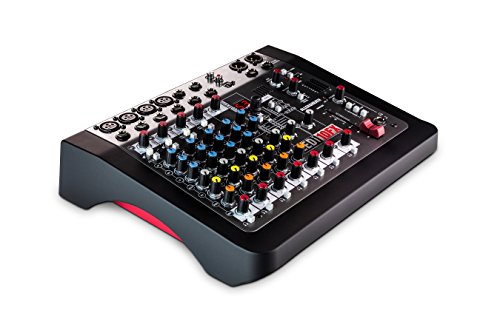
Allen & Heath ZEDi-10FX — Best Overall for Home Studios
Most home studio mixers record only their stereo mix, which quietly caps every project. The ZEDi-10FX breaks that ceiling with a 4×4 USB interface: four channels recorded separately while the board still works as a hands-on mixer with proper effects. It suits songwriters who track vocals and guitars in passes, small bands demoing properly, and producers who think in tracks. It is not a 16-input tracking desk — large drum kits exceed it — but within its count it is the most complete home studio mixer in this guide, and the one whose recordings need no apology later.
Strengths
- 4×4 USB records four separate tracks, not just the mix
- Studio-quality effects for tracking with confidence
- Mixer tactility with interface convenience
- Preamps with genuine console lineage
Trade-offs
- Four simultaneous tracks cap full-band live tracking
- Compact format means compact controls
- Rewards a proper DAW workflow — bring your software skills
| Specification | Detail |
|---|---|
| Channels | 10 |
| USB | 4×4 interface |
| FX | 61 studio-quality effects |
| Preamps | GSPre lineage |
The 4×4 interface changes the creative workflow, not just the specification: a vocal, two guitars and a guide track captured separately can be balanced tomorrow, when ears are fresh, instead of being frozen into tonight’s stereo guess. Tracking through its effects lets performers hear a finished-feeling sound while the recorded tracks stay flexible. That combination — perform with confidence, decide later — is the definition of a grown-up home studio tool, and it is why this board leads the guide.
Best for: Songwriters and small bands who record in tracks / Not suited for: Producers tracking large drum kits in one pass
Check on Amazon — check the current price on Amazon before you decide, because bundles and variants change.

Tascam Model 12 — Best All-in-One Studio
The Model 12 revives the Portastudio idea at modern quality: a mixer that is also a 12-track digital recorder and a USB interface, so songs can be composed, tracked and mixed on one surface without a computer in the room. It suits writers who think at an instrument rather than a screen, bands capturing rehearsals as multitrack, and studios that back everything up to a DAW later. Its digital-recorder workflow is a commitment — menus where analog boards have knobs — and live-sound buyers should take the live guides instead. As a self-contained song factory, it stands alone in this guide.
Strengths
- Records multitrack standalone — no computer required
- Mixer, recorder and interface in a single unit
- DAW integration when the project grows up
- Built for the write-track-mix cycle
Trade-offs
- Recorder workflow has a learning curve
- Less immediate than a pure analog board for live work
- Storage and file management join your studio chores
| Specification | Detail |
|---|---|
| Format | 12-track digital multitrack |
| Recording | Standalone multitrack |
| Heritage | Tascam Portastudio lineage |
The Model 12’s magic is the absence of friction between an idea and its capture: sit down, press record, and the song exists in multitrack before the mood evaporates. Writers who lose material to computer setup rituals will recognise the value instantly. And because the files transfer to a DAW cleanly, nothing recorded in that first flush is trapped — the sketch can become the record, which is more than most demos ever get to say.
Best for: Writers and bands who compose by recording / Not suited for: Live engineers needing a stage board
Check on Amazon — check the current price on Amazon before you decide, because bundles and variants change.

Yamaha MG12XU — Best Analog Studio Workflow
Many home studios record the way records were always made: one or two sources at a time, built into arrangements. For that workflow the MG12XU is the classic tool — D-PRE preamps, SPX effects, subgrouping for organising a mix, and a stereo USB path that prints the performance as it sounded. It suits producers layering vocals, guitars and keys, and studios that also rehearse live through the same board. Its stereo-only recording is the honest limit: simultaneous multitrack lives in the two picks above. Within the layered workflow, its sound and reliability are the benchmark.
Strengths
- D-PRE preamps flatter layered vocal and guitar tracking
- Subgroups organise complex mixes physically
- SPX effects for tracking and mixdown colour
- Doubles as the rehearsal and small-live board
Trade-offs
- Stereo USB only — no multitrack capture
- Analog workflow means mixes are performances, not files
- Twelve inputs still cap very large rigs
| Specification | Detail |
|---|---|
| Channels | 12-input, 4-bus |
| Preamps | D-PRE |
| FX | SPX effects |
| USB | Stereo interface |
There is a discipline the MG12XU teaches that multitrack convenience can postpone forever: committing. When the mix is printed as performed, balance decisions happen with ears and hands in real time, and arrangements get finished. Producers raised on this workflow mix faster and second-guess less. Pair the board with a good condenser microphone and it will produce demos and releases whose limitation is never the mixer — the correct outcome for a studio purchase.
Best for: Layered-recording producers and rehearsing bands / Not suited for: Bands needing simultaneous multitrack
Check on Amazon — check the current price on Amazon before you decide, because bundles and variants change.

Mackie ProFX10v3+ — Best for Studio-Plus-Streaming
The modern home studio is rarely only a studio: it streams, podcasts, demos to collaborators over calls and records — sometimes in the same hour. The ProFX10v3+ is built for that blended life, with Onyx preamps, GigFX+ effects, USB recording and Bluetooth for the phone that always joins the session. It suits creators and hybrid producers whose work crosses formats daily. Pure recording purists should take the multitrack picks; this board’s genius is logistics — everything connects, quickly, every time, and sounds like Mackie while doing it.
Strengths
- Bluetooth input ends the phone-cable ritual
- Onyx preamps keep the core sound serious
- GigFX+ covers vocal polish for streams and tracks
- USB recording for the stereo archive
Trade-offs
- Stereo recording only
- Feature breadth serves hybrid work, not tracking depth
- Bluetooth is convenience, not a critical listening path
| Specification | Detail |
|---|---|
| Channels | 10 |
| Preamps | Onyx |
| FX | GigFX+ |
| Connectivity | Bluetooth |
Judge this board on a Tuesday: a vocal tracked in the morning, a collaborator’s phone demo Bluetoothed in at noon, a stream in the evening, all through one set of gains that never needed rebuilding. That continuity is a creative feature no specification captures — the studio that is always ready gets used, and the ProFX10v3+ is engineered to be always ready. For the hybrid creator, readiness is the whole product.
Best for: Hybrid creators who record, stream and podcast from one desk / Not suited for: Multitrack tracking projects
Check on Amazon — check the current price on Amazon before you decide, because bundles and variants change.

Soundcraft Notepad-12FX — Best Compact Studio Board
The Notepad-12FX is the small-desk argument made by a serious maker: Soundcraft preamps, Lexicon effects and USB in a footprint that shares a desk with a keyboard, a monitor and a life. It suits singer-songwriters, voiceover studios and producers who track one or two sources beautifully rather than many adequately. Its scale is its limit — no subgroups, no multitrack, no band tracking. For the focused studio it is the board that disappears into the desk and reappears in the recordings, which keep sounding better than the setup’s size suggests.
Strengths
- Lexicon reverb elevates tracked vocals immediately
- Compact footprint designed for real desks
- Clean preamps for voice and acoustic sources
- USB integrates with any DAW workflow
Trade-offs
- No multitrack recording
- Small format, closely spaced controls
- Not expandable as the studio grows
| Specification | Detail |
|---|---|
| Format | Small-format |
| FX | Lexicon |
| USB | I/O |
| Preamps | Soundcraft mic pres |
Reverb printed or monitored while tracking is a commitment device: the performer hears the record, not the rehearsal, and sings accordingly. The Notepad’s Lexicon algorithms are the class of effect that survives that exposure — spacious without washing, present without fizz. Studios built around a voice and an instrument will find this little board’s ceiling surprisingly high, and its floor — the worst it ever sounds — higher than most.
Best for: Singer-songwriters, voiceover and focused small studios / Not suited for: Band tracking and expanding studios
Check on Amazon — check the current price on Amazon before you decide, because bundles and variants change.

Zoom LiveTrak L-12 — Best for Recording Studio Sessions
When the home studio’s job is capturing a band — rehearsing, writing, recording a live EP — the LiveTrak L-12 removes the laptop from the equation and records every channel to SD while mixing the room. It suits bands whose studio is a rehearsal space and producers who track live ensembles. Its session-first ergonomics differ from a tracking desk’s, and solo producers layering parts will move faster on the picks above. For ensemble capture, its proposition is unique here: press record, play the set, own the multitrack.
Strengths
- Multitrack SD recording of complete sessions
- No computer needed in the recording room
- Mix and record in one pass, one unit
- Sessions become releasable material, not just tapes
Trade-offs
- Session workflow differs from DAW-first habits
- Solo layered work is faster on other picks
- Card and file management is part of the deal
| Specification | Detail |
|---|---|
| Channels | 12 |
| Recording | Multitrack to SD |
| Format | Session mixer/recorder |
| Heritage | Zoom LiveTrak line |
Bands chronically under-record themselves because the laptop-and-interface ritual kills the rehearsal’s momentum. The LiveTrak restores the oldest studio virtue — the tape is always rolling — at modern quality. Months of sessions accumulate into an archive where the great take, when it happens, already exists in multitrack. Studios are remembered for the performances they captured; this is the pick that captures them by default.
Best for: Bands and ensembles recording sessions and live EPs / Not suited for: Solo producers working layer by layer
Check on Amazon — check the current price on Amazon before you decide, because bundles and variants change.
Comparison Table
| Pick | Badge | Key spec | Best for |
|---|---|---|---|
| Allen & Heath ZEDi-10FX | Best Overall for Home Studios | Hybrid mixer / 4×4 USB interface | A mixer that records multitrack — the home studio centrepiece for bands and songwriters |
| Tascam Model 12 | Best All-in-One Studio | Mixer, recorder and USB interface in one | The complete recording studio that needs no computer until you want one |
| Yamaha MG12XU | Best Analog Studio Workflow | Analog with D-PRE preamps and SPX effects | Hands-on analog tracking and mixing for studios that record sources one or two at a time |
| Mackie ProFX10v3+ | Best for Studio-Plus-Streaming | Analog with Bluetooth and USB recording | Creators whose studio also streams, podcasts and takes calls |
| Soundcraft Notepad-12FX | Best Compact Studio Board | Small-format analog with Lexicon effects | Small desks and focused setups where two great inputs beat twelve ordinary ones |
| Zoom LiveTrak L-12 | Best for Recording Studio Sessions | Mixer/recorder for musicians and podcasters | Capturing the full band session in multitrack, without a laptop in the room |
How to Choose a Mixer for a Home Studio
The multitrack question, answered honestly
Multitrack recording — each input captured separately — buys freedom: balances fixed tomorrow, mistakes repaired, arrangements rebuilt. It costs workflow: files to manage, mixes to finish, decisions deferred until they pile up. Studios that record bands, or writers who arrange as they track, should buy multitrack (the ZEDi-10FX for tracked passes, the Model 12 and LiveTrak for standalone capture). Studios that layer parts one at a time and finish songs as they go are often happier printing stereo through a fine analog board like the MG12XU — the commitment is a feature.
Be honest about which producer you are at month six, not which you admire. The archive of finished stereo prints beats the hard drive of unfinished multitracks every time.
Preamps at bedroom gain levels
Home studios record quiet: a voice at conversational distance, a fingerpicked guitar, a condenser microphone in a treated corner. At those levels, preamp self-noise and character dominate the recording, which is why named preamp families anchor this guide — D-PRE, Onyx, GSPre and Soundcraft’s designs all stay composed where generic preamps begin to hiss. If you buy one specification with your full attention, buy this one, and test candidates with your own microphone at your own singing volume whenever possible.
Phantom power, needed by every condenser microphone, is present across these picks; what varies is how gracefully each preamp handles the loud moment inside the quiet take — headroom, again, is the quiet specification that matters.
The hybrid duties: streaming, calls and collaboration
A contemporary home studio board earns its desk space daily, not just on recording days: streaming through its USB, taking a collaborator’s phone demo, running the rehearsal. The ProFX10v3+ exists for this blended reality, and even the purist picks were judged partly on how gracefully they join it. Count your weekly uses honestly — if the board serves five duties, small frictions multiply fivefold, and the connected pick pays for itself in removed annoyance.
How to Set Up a Home Studio Mixer for Recording
[‘This sequence builds a tracking-ready setup on any pick in this guide.’]
- Place the board at the listening position. The mixer lives where you sit to judge sound — within reach of the monitors, gains visible. A board across the room is a board you will not adjust, and unadjusted boards make tentative recordings.
- Connect monitors first and calibrate them. Set a reference level with a familiar record and mark it. Every later judgement assumes this mark; consistency of monitoring is the home studio’s substitute for a professional room.
- Set the vocal chain completely. Microphone, gain at healthy peaks on the loudest chorus, a touch of compression if available, reverb in the monitor path for the performer’s confidence. Save or photograph the settings — this chain is your studio’s signature.
- Record a test take and listen on two systems. Monitors, then earbuds or a car. The gap between the two is your room and your mix telling the truth; adjust the chain, not the take.
- Establish the session ritual. Same power-up order, same starting settings, same file naming. Rituals remove the setup tax that kills home studio momentum.
- Back up the day’s work before anything else. Cards and drives fail on their own schedule. The session you lose will be the good one — plan accordingly.
Common Buying Mistakes
Buying multitrack you will never mix
Deferred decisions are still decisions, made later with colder ears and less time. If your history says stereo prints get finished and multitracks pile up, buy the board that matches your history.
Judging preamps at maximum gain in a shop
Home studios live at moderate gains with quiet sources. Test with your microphone, your voice, your material — the shop’s loud demo hides exactly the noise floor you will record.
Treating the studio board as only a recording tool
A desk mixer that cannot run the rehearsal, the stream and the call will be bypassed daily and resented weekly. Cover the week’s real duties, not just the album’s.
Skipping monitor calibration
Uncalibrated monitors make every mix a guess that changes with the volume knob. One reference level, marked and kept, is the cheapest accuracy in the entire studio.
Letting files live on one card
Session media is not storage. Copy everything to two places the same day, or accept that the archive is a loan, not a possession.
Final Recommendation
Name the workflow and the choice makes itself: tracked passes with flexibility — the Allen & Heath ZEDi-10FX; a self-contained song factory — the Tascam Model 12; layered analog craft — the Yamaha MG12XU; the hybrid creator’s desk — the Mackie ProFX10v3+; the focused small studio — the Soundcraft Notepad-12FX; and the band’s session archive — the Zoom LiveTrak L-12. A home studio is not a smaller professional studio; it is a different instrument, and these are its six best current forms.
Related guides in this series: Best Audio Mixers · Best Audio Mixers For Beginners · Best Small Mixers For Home Studios · Best Audio Mixers For Podcasting
Monitoring: The Home Studio’s Real Sound
Every mix decision is made through your monitoring, so the monitoring chain deserves the same seriousness as the recording chain. Nearfield monitors at ear level, forming a triangle with your listening position, fed from the mixer’s main or control-room outputs at a calibrated level, are the standard this guide’s setups assume. Headphones serve a different duty — detail checking, tracking without bleed, late-night work — and a studio needs both, because mixes that only work on one will fail on the other’s audience. The board’s headphone path is therefore a working feature, not a courtesy socket: check that it can drive your headphones to honest levels without the main outputs changing.
Room treatment follows monitoring in priority and precedes almost everything else in effect. A home studio’s corners and parallel walls colour every recording and every playback judgement; modest treatment — bass absorption in corners, softening at the first reflection points, a rug and bookshelves doing quiet work — improves the truth of both. None of the mixers in this guide can compensate for a lying room, and all of them sound a class better in a treated one. Budget the treatment with the board, not after the disappointment.
Tracking Vocals at Home: The Session That Matters Most
Most home studios exist, in the end, to record a voice well, and the vocal session concentrates every lesson in this guide. Place the condenser microphone in the room’s quietest, softest corner, the singer a hand’s width away with a pop filter between, and set the preamp gain for the loudest line of the loudest song — then leave it alone. Monitor reverb from the board’s effects gives the singer a finished feeling without printing to the track on the stereo picks, or while the multitrack picks capture the dry performance for later decisions. Either way, the singer hears confidence; the engineer keeps options.
Record more takes than the plan requires and comp later if your workflow allows; the home studio’s superpower over the commercial room is time without a meter running. Label takes while the session’s memory is fresh, back the session up before the singer leaves, and note the chain settings in the session file — microphone, gain, distance — because the sequel session in three months will want to match the sound, and memory will not.
From Demo to Release: What These Boards Can Finish
A generation of released music was tracked on equipment no better than these picks, which recalibrates what a home studio board must prove. The limiting factors on a release are arrangement, performance and monitoring truth — the board’s job is to not be among them, and every pick here clears that bar for its workflow. Stereo-print studios finish as they record, which suits singles and live-feeling material. Multitrack studios finish in the DAW, where the ZEDi, Model 12 and LiveTrak files become mixes with editing, tuning and automation the performance never had to survive.
The practical advice is to finish something small first: one song, end to end, through the whole chain your pick implies. That single completed journey teaches the studio’s real bottlenecks — rarely the mixer — and converts the remaining questions in this guide from theory into shopping with evidence. Studios are built by finished songs, not by accumulated capability.
The Studio as a System: Cables, Stands and Storage
Home studios fail at their peripheries more than their centres. A microphone stand that drifts mid-take, a cable that crackles when the singer moves, a session card that fills during the chorus — each is a small purchase deferred into a ruined performance. Budget alongside the board: two quality XLR cables plus a spare, a stand that locks where it is set, headphones that isolate for tracking, and storage media with same-day backup as a ritual rather than an intention. Label the cables at both ends; a home studio’s wiring changes often, and future you is a stranger.
Power deserves its sentence: run the audio chain from one distribution point, keep phone chargers and dimmers off that circuit where possible, and the hum that haunts home recordings usually never arrives. The system view is unglamorous and decisive — the boards in this guide are all capable of clean work, and the system around them decides whether they get to do it.
Acoustic Instruments and the Layered Studio
Acoustic guitar is the home studio’s second voice and its sternest test: a source that is quiet, detailed and brutally honest about preamp noise and room colour. The layered-workflow picks earn their badges here — a D-PRE or GSPre channel, a condenser placed at the twelfth fret angled toward the soundhole, gain set for the strummed chorus rather than the fingerpicked verse. Record the same part twice and pan the takes gently apart, and the home studio produces the width that listeners identify as professional, using nothing but patience and the board already on the desk.
Electric instruments simplify everything except taste: a DI input or a miked small amplifier both work, and the board’s EQ exists to seat the part in the arrangement rather than to rescue it. Keys and synths arrive at line level and ask only for balance and the occasional subgroup. The layered studio’s craft, in other words, is sequencing — the order in which parts are recorded determines how easily they mix — and a board with honest meters and repeatable settings is the instrument of that craft.
Podcasts and Voice in the Music Studio
Many home studios now split their week between music and voice work — a podcast, a lesson series, a channel — and the mixer choices interact. Voice work rewards the same preamps and punishes the same rooms as vocals, with one difference: consistency across episodes outranks beauty within one. Mark the voice chain’s settings, treat the recording corner once, and the series sounds like itself forever. The hybrid pick exists for studios where this split is the business model; the purist picks serve it perfectly well with discipline, because a voice chain is just a vocal chain that shows up on schedule.
Second-Hand Studios and Sensible Saving
Home studio budgets stretch furthest where depreciation is kindest, and mixers from the makers in this guide hold up well in the second-hand market — with the same testing discipline the main guide prescribes: every channel, every fader, the USB path actually recording, the effects actually returning. Buy used microphones with more caution and stands hardly at all; stands are cheap new and expensive in ruined takes. The saving belongs redirected to the room and the monitoring, where a home studio’s money is most audible.
The First Song, Finished: A Workflow in Miniature
Day one with any pick in this guide should end with one finished song, however small. Write or borrow a simple arrangement — voice, one instrument, one harmony — and take it through the whole chain: chain set, takes recorded, balance printed or mixed, file exported and backed up. The exercise is diagnostic, not artistic: it reveals whether your workflow’s friction lives in the setup, the monitoring or the file handling, while the stakes are a Tuesday rather than a deadline. Fix the friction it exposes before the second song, and the studio’s habits form around finishing.
Studios that adopt the finish-small rule discover that gear questions answer themselves in its light. The board that helped finish the song was adequate; the upgrade that would not have changed the song can wait. It is the home studio version of the live engineer’s creed — the performance first, the equipment in service — and it is the note on which this guide is content to end its advice and begin your catalogue.
Ergonomics: The Desk You Will Actually Use
A home studio is used at the speed of its ergonomics. The board belongs where the hands fall, the monitors where the ears are, the microphone where the singer stands without rearranging furniture, and the session’s controls reachable without standing. Every minute of setup friction is taxed against every session’s enthusiasm, and studios die of that tax more often than of any equipment limitation. Arrange the room so the default state is ready — board on, chain set, microphone dressed — and the picks in this guide will be used daily, which is the only state in which any of them justify their desk space.
Collaboration at a Distance: Sending Stems and Sessions
The multitrack picks reveal a second talent when collaborators live elsewhere: sessions recorded at home travel as files, and a song can gather a bassist in one city and a harmony in another without either entering your room. The discipline that makes this work is boring and total — consistent sample settings, named tracks that describe their contents, a count-in and a reference mix in every export. Do that, and the home studio stops being a place and becomes a node, which is how a great deal of current music is actually made. The stereo-print studios join the same world one part at a time, sending finished passes that slot into someone else’s session.
Either way, the mixer’s contribution is the quality of what leaves the room. A clean, well-gained performance recorded through any pick in this guide needs no excuses in any session anywhere — the final democratisation these boards represent, and a fair place to rest the case for buying the workflow that fits and then making music with it for years.
Learning to Mix in a Home Studio: The Honest Curriculum
Mixing is learned in a specific order and the order is not negotiable: balance before EQ, EQ before effects, effects before automation, and references throughout. A month spent only balancing — faders and pans, nothing else — teaches more than a year of plug-in tourism, because most amateur mixes fail at the balance stage and are then decorated instead of repaired. The boards in this guide, with their physical faders and honest meters, are unusually good teachers of that first stage: the hands learn what the ears are deciding, and the lesson survives every future platform change.
Keep reference tracks in the session and compare at matched levels every time doubt arrives, which will be often, and which is a sign of seriousness rather than weakness. The home studio’s final advantage is that its teacher — the playback, in the room, on the car stereo, on earbuds — is always in session. Use it relentlessly, finish songs small and often, and the gap between your room and the records you love will close at the speed of finished work.
Noise, Hum and the Home Studio Detective Kit
Home recordings collect noises that studios pay to exclude, and the detective method is always the same: change one variable, listen for the specific symptom. Hiss that rises with the preamp gain on an empty input is the preamp’s honest floor — manage it with closer microphones and louder sources, not with worry. Hum that changes when a laptop charger connects is a power story; run the audio chain from one outlet and lift nothing you do not understand. Buzz that follows a phone’s arrival is interference looking for an unbalanced cable to bully; balanced XLR runs and distance are the whole defence.
Keep a fault notebook with the session notes, because home studio faults recur seasonally — the heater in winter, the garden equipment in summer — and the notebook turns each recurrence from a mystery into a lookup. The boards in this guide are rarely the culprit and often the diagnostic instrument, their meters showing exactly where a problem enters the chain. Learn to read them and the studio becomes a quiet place on purpose.
The Long Game: A Studio That Grows by Songs
Studios should grow by finished work rather than by catalogue, and the healthiest upgrade trigger is a specific song that the current system genuinely cannot serve — a drum kit that needs the multitrack width, a collaboration that needs the hybrid connections. Upgrades bought for a named song earn their place immediately; upgrades bought for a hypothetical studio tend to become the next hypothetical’s furniture. The picks in this guide were chosen to make that trigger arrive late: each covers its workflow completely enough that the next purchase is about repertoire, not rescue.
Keep the session archive as the studio’s memory and its résumé. A year of dated, backed-up, finished work is worth more — to collaborators, to clients, to your own confidence — than any single piece of equipment discussed here. Build the archive on whichever pick matches your workflow, and let the archive, in time, choose the next board with evidence instead of appetite.
A closing note on taste, since every other note here was about method. The records you love were made by people whose equipment was, by the standards of their own day, simply the professional tool available — and whose real advantage was finishing. Your home studio, built around any pick in this guide, is now somebody’s professional tool available. The advantage is there for the taking, in the same currency it has always been paid in: finished songs, kept.
One Desk, Many Lives: A Parting Checklist
Before the first session, confirm the small things in one pass: the board at the listening position, monitors calibrated and marked, the vocal chain set and photographed, media formatted and labelled, the backup destination chosen, and one finished test recording listened to somewhere that is not the studio. That twenty-minute pass is the difference between a room that invites work and a room that negotiates with it. Every pick in this guide rewards the pass identically, because readiness is a property of the studio, not of the mixer — and readiness, compounded daily, is what a home studio actually is.
Then press record on something that matters to you, however roughly, and let the studio start becoming the place where your music lives. The boards are ready when you are; they have been ready, in their makers’ workshops and warehouses, for exactly that moment. Make it this week, and make the second song easier than the first by writing down how the first one went.
Your future self, opening a session from tonight three years from now and hearing it sound exactly like the room felt, sends thanks in advance.
Begin today, and begin small enough to finish well, because finished is the habit everything else is built on.
Frequently Asked Questions
Do I need a mixer at all, or just an audio interface?
If you only ever record one or two sources straight to a DAW, an interface alone can suffice. A mixer earns its place when you rehearse through it, track with hardware feel, stream, or record without a computer — the duties this guide’s picks divide among themselves.
What is the real advantage of the ZEDi-10FX’s 4×4 USB?
Four tracks recorded separately instead of one stereo print: vocal, guitars and a guide can be balanced after the performance. For songwriters who arrange while tracking, that flexibility changes what a demo can become.
Can a home studio mixer also play live?
The analog picks can and do — the MG12XU especially leads a double life. The recorder-first picks are studio instruments whose workflows assume a desk, not a stage.
How many inputs does a home studio need?
Count simultaneous sources, not total instruments. Layered studios thrive on ten to twelve inputs with a few in use at once; band-capture studios should count the whole ensemble plus spares.
Is onboard reverb useful when recording?
As monitor confidence for the performer, enormously; printed to the track, use it sparingly or not at all, since DAW effects can be changed later and printed ones cannot. The Lexicon and SPX engines here serve the monitoring role beautifully.
Why are there no prices in this guide?
Studio gear pricing shifts with bundles and software offers too quickly for print. Each pick’s tier is described in words; check the current price on Amazon through the links at the moment of purchase.


