Disclosure: airfryerkitchensupply.com is reader-supported. When you buy through links on our site, we may earn an affiliate commission at no extra cost to you.
Where to buy
Every pick in this guide to the best affordable convection wall ovens was verified against Amazon’s catalog on 2026-11-20. The short version: the Empava 30-inch convection wall oven with air fry is the affordable 30-inch to beat, the Cosmo COS-30ESWC is the true-convection value alternative, and the 24-inch class — led by the Empava 24-inch — is where the lowest honest prices in built-in convection live. Check the current price on Amazon from any pick’s link; we do not print static prices, because built-in appliance pricing moves with promotions and regions, and a printed number would be wrong by the time you read it.
“Affordable” needs an honest definition before the picks, because wall ovens are not countertop appliances. A built-in convection oven involves a cabinet cutout, a hardwired 240V connection and a decade-plus service life, so the affordable tier of this category is not the cheapest ovens on the internet — it is the tier where real convection, self-cleaning and a warranty from a brand that will still exist in five years overlap. Below that tier sit no-name ovens with fan-only “convection,” no parts pipeline and no service story. This guide stays on the right side of that line: six verified ovens, five of them from value brands that have built their name on exactly this niche, plus a clear explanation of where the mainstream brands’ step-up models fit if your budget stretches.
In this guide
Quick Picks
- Best Overall Affordable — Empava 30-inch Single Wall Oven Air Fryer Combo: 10 cooking functions, convection plus air fry, LED digital display, in a full-size 30-inch built-in. Check the current price on Amazon
- Best True Convection Value — Cosmo COS-30ESWC 30-inch: 5 cu ft, true convection, self-cleaning and a blue porcelain interior from Cosmo’s Haven collection. Check the current price on Amazon
- Best for Small Kitchens — Empava 24-inch Single Wall Oven: 10 cooking modes with convection fan and rotisserie in the compact 24-inch format. Check the current price on Amazon
- Best Knob-Control Budget — Cosmo C51EIX 24-inch: true convection, 2.9 cu ft and simple knob controls — the pick for buyers who distrust touch panels. Check the current price on Amazon
- Best Compact Electronic — Midea 24-inch Single Wall Oven: 2.5 cu ft, 8-in-1 cooking modes and a mainstream appliance giant behind the badge. Check the current price on Amazon
- Best Ultra-Budget — ThermoMate 24-inch Electric Wall Oven: 2.8 cu ft, ETL certified, anti-mistouch knobs — the lowest rung we are willing to stand on. Check the current price on Amazon
How These Picks Were Chosen
Three filters built this list. First, verification: every model had to appear in Amazon’s catalog with a title matching the product we describe — brand, size and convection claim all readable in the listed title itself. That is why you will not find famous mainstream models padding this list at implausible prices; when a listing could not be pinned to a real model, it did not become a pick. Second, real convection: each pick’s listing states a convection system — a fan at minimum, true convection where claimed — because “affordable convection” that turns out to be a fan stirring bake-element air is the category’s oldest disappointment. Third, ownership reality: the brand must have a US presence, a warranty story and a parts path, because a built-in oven you cannot repair in year six was never affordable at any purchase price.
We also split the list by the market’s real shape. Affordable built-in convection lives at two widths: 30 inches, where Empava and Cosmo fight the mainstream brands’ entry models, and 24 inches, where compact ovens for apartments, ADUs, galley kitchens and second-oven installs undercut everything. Both widths get full coverage here, because “affordable” means something different to a homeowner replacing a dead 30-inch oven this weekend than to a landlord fitting out a small rental kitchen.
One exclusion deserves a sentence: the very cheapest generic 30-inch listings — the ones whose titles are keyword strings without a brand — were left out deliberately. A wall oven is hardwired into your home; the saving is not worth an unverifiable appliance, and our API checks could not tie those listings to manufacturers with service networks.
The 6 Best Affordable Convection Wall Ovens

Empava 30-Inch Single Wall Oven Air Fryer Combo — Best Overall Affordable
Empava built its US business on exactly this product: a full-size 30-inch built-in that reads like a mainstream spec sheet — 10 cooking functions, convection cooking, an air fry mode, an LED digital display — at a value-brand tier. The listing-verified title confirms the combination that matters: single wall oven, air fryer combo, convection, 10 functions. For a buyer replacing a dead big-brand oven and balking at big-brand replacement pricing, this is the default recommendation, and it earns that status by covering the whole week: convection roasts on Sunday, air fry wings on Friday, self-respecting baking in between.
Strengths
- Full 30-inch format with 10 functions including convection and air fry — no compact-oven compromises.
- Digital display and controls that feel current rather than cut-rate.
- Empava has a real US support operation for its built-in line, which is the whole ballgame at this tier.
Trade-offs
- Value-brand fit and finish: door alignment and trim feel a step below GE or Frigidaire at close inspection.
- Air fry in a full-size cavity is batch cooking, not basket-fryer speed — set expectations accordingly.
- Long-term parts depth is good for a value brand but not yet proven across 15 years like the mainstream platforms.
| Spec | Detail |
|---|---|
| Format | 30-inch electric single wall oven |
| Functions | 10 cooking functions including air fry |
| Convection | Built-in convection system (per Amazon title) |
| Controls | LED digital display |
The cooking itself is the pleasant surprise of the affordable tier: convection evenness on sheet pans and roasts is genuinely competitive, because the physics of a fan and an element do not care what the badge cost. Where the tier shows is in the details around the cooking — the sound of the door, the brightness of the display in sunlight, the crispness of the button presses. None of those cook dinner. If your budget conversation is “mainstream replacement quote versus this,” the Empava is how you keep the difference and spend it on the installer instead.
Empava also sells a touch-screen sibling configuration of this oven (verified in the same API search), so if you prefer glass touch controls to the standard layout, the family gives you the choice without leaving the tier.
Best for: homeowners replacing a 30-inch oven who want convection and air fry without mainstream-brand pricing. / Not suited for: buyers who equate value brands with risk regardless of support, or design-led remodels where finish is the point. Check the current price on Amazon

Cosmo COS-30ESWC 30-Inch — Best True Convection Value
Cosmo’s Haven collection 30-inch is the pick for the buyer who reads spec sheets: the Amazon title confirms 5 cu ft of capacity, true convection — a third element around the fan, not just a fan — a self-clean function and the brand’s signature blue porcelain interior. That combination, at Cosmo’s tier, is the strongest paper specification in this guide, and it is aimed squarely at cooks who bake on multiple racks and know exactly why true convection matters to them.
Strengths
- True convection at a value tier — the feature this search is actually about, without the mainstream markup.
- Full 5 cu ft cavity takes holiday loads that the 24-inch picks cannot.
- Self-cleaning plus a porcelain interior that wipes down easily between deep cleans.
Trade-offs
- No air fry headline mode; convection roast covers similar ground but without the dedicated program.
- Cosmo’s dealer and service footprint is smaller than Empava’s in some regions — check local support.
- The blue interior is a love-it-or-tolerate-it aesthetic choice you will see every day.
| Spec | Detail |
|---|---|
| Format | 30-inch electric single wall oven |
| Capacity | 5 cu ft (per Amazon title) |
| Convection | True convection |
| Interior | Blue porcelain, self-clean function |
In the kitchen, the COS-30ESWC is the baker’s budget pick. True convection’s evenness shows up exactly where fan-only systems fade: two racks of cookies browning at the same rate, a roast and a gratin finishing together without a mid-cook swap. If your cooking leans that way — and if you are reading an affordable-convection guide closely enough to reach pick number two, it probably does — this is the oven whose spec sheet respects you.
Against the Empava, the trade is features versus system: Empava gives you air fry and a broader function list; Cosmo gives you the better convection hardware and the bigger cavity. Neither answer is wrong; they are answers for different cooks.
Best for: bakers and multi-rack cooks who want true convection and full capacity at a value price. / Not suited for: air fry-first households, or buyers in regions where Cosmo service is a long drive away. Check the current price on Amazon

Empava 24-Inch Single Wall Oven — Best for Small Kitchens
Drop to 24 inches and the affordable math changes completely: this Empava packs 10 cooking modes, a convection fan and a rotisserie into the compact format, with screen touch controls, per its listing-verified title. Twenty-four-inch ovens serve the kitchens the 30-inch world forgets — apartments, condos, in-law suites, basement bars, and the second-oven slot in a remodel — and they do it at the lowest installed prices in built-in cooking. A rotisserie in this class is a genuine differentiator: Sunday chicken, rotating and self-basting, from an oven that fits a galley.
Strengths
- 10 modes including convection and rotisserie — the fullest feature set in the 24-inch class.
- Touch controls and a modern face that make a small kitchen feel upgraded, not compromised.
- Empava’s support operation again, behind the compact line as well as the 30-inch.
Trade-offs
- Compact cavity rules apply: half sheet pans do not fit; think quarter sheets and smaller roasts.
- Rotisserie capacity is one modest chicken, not a holiday bird.
- Touch panels and greasy fingers are eternal enemies; keep a towel handy.
| Spec | Detail |
|---|---|
| Format | 24-inch electric single wall oven |
| Functions | 10 cooking modes |
| Convection | Convection fan with rotisserie (per Amazon title) |
| Controls | Screen touch control |
The honest way to judge a 24-inch oven is against the cooking its owner actually does. For one to three people, a compact convection cavity covers the entire week — roasts, bakes, reheats, the rotisserie chicken — while heating less empty space and preheating faster than a 30-inch box. It only disappoints when asked to be a holiday oven for twelve, and that is a calendar problem two days a year, solvable with a countertop oven borrowed for the weekend.
Best for: apartments, ADUs, small households and second-oven installs that want full features in a compact built-in. / Not suited for: large-family daily cooking or sheet-pan batch meal prep. Check the current price on Amazon

Cosmo C51EIX 24-Inch — Best Knob-Control Budget
The C51EIX, from Cosmo’s Lumin collection, is the compact pick for people who want an oven to be an oven: the Amazon title confirms true convection, a 2.9 cu ft cavity — generous for 24 inches — 8 oven functions and knob controls. In an era of touch panels that beep at a wet fingertip, physical knobs are a feature with a real constituency: landlords, older cooks, anyone who has ever tried to set a timer with oven mitts on. And true convection at this size and tier is the spec that separates this pick from the fan-only crowd.
Strengths
- True convection in a compact, budget-tier oven — the headline spec, present and verified.
- 2.9 cu ft is the roomiest cavity among our 24-inch picks.
- Knob controls are glove-friendly, kid-resistant and immune to touch-panel failures.
Trade-offs
- No digital timer sophistication — plan on a phone or a kitchen timer for precision work.
- Styling is straightforward stainless utility; it will not anchor a design kitchen.
- Cosmo also sells a touch-control sibling (C106SIX-PT) — make sure the listing you order is the knob model you intended.
| Spec | Detail |
|---|---|
| Format | 24-inch electric single wall oven |
| Capacity | 2.9 cu ft (per Amazon title) |
| Convection | True convection |
| Controls | Knob controls, 8 oven functions |
For rental properties and multi-generational kitchens, this is quietly the smartest pick in the guide. Knobs do not delaminate, do not need firmware, and do not confuse a tenant at midnight. The convection system does the cooking work that matters, and the cavity is big enough for real meals rather than token ones. If we were fitting out a quality rental kitchen on a budget, this is the oven we would install and then not think about for a decade.
Best for: landlords, knob loyalists and small kitchens that want true convection without touch-panel anything. / Not suited for: cooks who rely on digital timers, probes and programmed modes. Check the current price on Amazon

Midea 24-Inch Single Wall Oven — Best Compact Electronic
Midea is one of the largest appliance manufacturers on earth, and its 24-inch wall oven brings that scale to the affordable compact class: the Amazon title confirms a 2.5 cu ft cavity and 8-in-1 cooking modes in a stainless built-in. The Midea argument is institutional — a giant manufacturer’s quality systems, documentation and parts pipeline behind a compact oven at a value tier. For buyers nervous about value-brand longevity, that backing is the reason to pick this one over similarly specified rivals.
Strengths
- Mainstream manufacturing giant behind the badge — documentation, parts and support at scale.
- 8-in-1 modes cover the compact week: bake, roast, broil and convection duties included.
- Clean stainless design that sits comfortably in modern small kitchens.
Trade-offs
- 2.5 cu ft is the smallest cavity among our picks — measure your pans twice.
- The mode list is broad rather than deep; no rotisserie theater here.
- Midea’s US built-in support is newer than its countertop presence; keep the warranty paperwork.
| Spec | Detail |
|---|---|
| Format | 24-inch electric single wall oven |
| Capacity | 2.5 cu ft (per Amazon title) |
| Functions | 8-in-1 cooking modes |
| Finish | Stainless steel |
Daily cooking in the Midea is unremarkable in the best way: it preheats, it holds temperature, it browns evenly at compact scale, and it asks nothing of you. Compact ovens live or die on whether owners trust them with real food rather than treating them as reheating boxes, and the Midea’s competent convection makes that trust easy. Choose it over the Empava 24-inch if manufacturer scale reassures you more than the Empava’s extra modes and rotisserie tempt you.
Best for: compact kitchens that want a big-manufacturer safety net at a value price. / Not suited for: cooks who need the largest compact cavity or a rotisserie. Check the current price on Amazon

ThermoMate 24-Inch Electric Wall Oven — Best Ultra-Budget
ThermoMate is the floor of this guide, and we include it with eyes open: the Amazon title confirms a 24-inch built-in at 2.8 cu ft, ETL certification and anti-mistouch knobs. ETL matters — it means the oven has been tested to North American safety standards by a recognized lab, which is the non-negotiable line between “ultra-budget” and “do not hardwire this into your house.” Within that line, the ThermoMate offers a surprisingly honest package: a mid-size compact cavity, simple controls that resist accidental changes, and a price tier that makes built-in convection possible in projects where the Empava is already a stretch.
Strengths
- ETL certified — the safety paperwork that ultra-budget appliances must show, shown.
- 2.8 cu ft beats several pricier compacts on raw room.
- Anti-mistouch knobs suit households with kids and rental kitchens alike.
Trade-offs
- Thinnest brand infrastructure in this guide; support is email-and-warranty, not a dealer network.
- Feature set is basic — this is a bake/roast/broil oven with convection assistance, not a mode playground.
- Finish and door feel announce the tier immediately; set expectations at “honest utility.”
| Spec | Detail |
|---|---|
| Format | 24-inch electric wall oven |
| Capacity | 2.8 cu ft (per Amazon title) |
| Certification | ETL certified |
| Controls | Anti-mistouch knobs |
Who should buy the floor? The cabin kitchen, the garage apartment, the rental where the alternative is no built-in at all, and the budget remodel where the oven line item must leave room for everything else. Who should not: anyone whose kitchen is the center of daily family cooking, because the support and longevity questions compound with use. Bought for the right job, the ThermoMate is a rational tool; bought as a main family oven to save a modest sum, it is a false economy.
Best for: secondary kitchens, rentals and the tightest budgets that still demand certified built-in cooking. / Not suited for: primary family ovens or buyers who want a deep feature set. Check the current price on Amazon
Comparison Table
| Pick | Badge | Key spec | Best for |
|---|---|---|---|
| Empava 30-inch Air Fryer Combo | Best Overall Affordable | 30″, 10 functions, convection + air fry | Mainstream replacement on a budget |
| Cosmo COS-30ESWC 30-inch | Best True Convection Value | 30″, 5 cu ft, true convection, self-clean | Multi-rack bakers |
| Empava 24-inch | Best for Small Kitchens | 24″, 10 modes, rotisserie | Compact full-feature cooking |
| Cosmo C51EIX 24-inch | Best Knob-Control Budget | 24″, 2.9 cu ft, true convection, knobs | Rentals and knob loyalists |
| Midea 24-inch | Best Compact Electronic | 24″, 2.5 cu ft, 8-in-1 modes | Big-manufacturer reassurance |
| ThermoMate 24-inch | Best Ultra-Budget | 24″, 2.8 cu ft, ETL certified | Secondary kitchens, tightest budgets |
How to Choose an Affordable Convection Wall Oven
Start with width, because width is destiny. Your cutout is either 30 inches, 24 inches, or something legacy like 27 inches (a different guide entirely). Within your width, the affordable field sorts itself quickly: at 30 inches you are choosing between feature breadth (Empava) and convection hardware (Cosmo); at 24 inches you are choosing among controls, cavity size and brand backing. Do not let a sale talk you across widths — the cabinet work to change widths costs more than any oven in this guide.
Second, interrogate the word “convection” on any listing you consider, including ours. A fan-only system circulates air heated by the bake element; it helps, modestly. True convection adds an element around the fan and holds multi-rack cooking together. At the affordable tier, fan-only systems dominate the no-name listings, which is one more reason this guide sticks to listings whose titles state their systems plainly. If you bake two racks at once with any regularity, true convection — the two Cosmo picks here — is worth prioritizing over extra modes.
Third, price the whole project, because at this tier the oven is often barely half the installed cost. Delivery, a licensed electrician’s connection if your jurisdiction requires it, installation labor, and haul-away of the old unit all belong in the spreadsheet. An affordable oven with a surprise electrical upgrade is still affordable if you budgeted for it; it is a crisis if you did not. Fourth, check the warranty’s fine print for the labor question — parts-only warranties on a hardwired built-in can leave you paying the expensive half of a repair. And fifth, confirm return logistics before ordering: built-ins are freight items, and “free returns” means something different at 100 pounds than at 10.
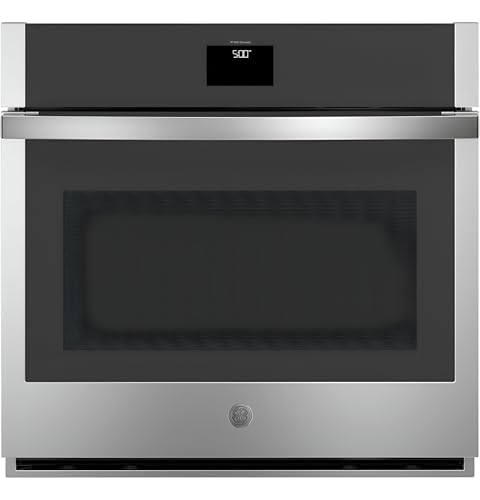
Budget framing, in the search’s own terms: the affordable tier at 24 inches runs meaningfully below the 30-inch tier, and both run well below mainstream-brand 30-inch replacements — that gap is the entire premise of brands like Empava and Cosmo. The step-up worth knowing about is the mainstream entry point, exemplified by GE’s 30-inch single smart convection oven with no-preheat air fry (verified in our API search, noted in this article’s sources): if your budget stretches to it, you buy the deepest service network in the business. If it does not, the six picks here are not consolation prizes — they are the category’s real value core.
How to Install a Wall Oven on a Budget Without Cutting Corners
The installation is where affordable projects are won or lost, so here is the sequence that saves money safely. Before the oven arrives: download its installation manual, measure the cutout against the manual’s requirements, and photograph your junction box and breaker panel. If the circuit needs upgrading, get the electrician’s quote now, while you can still change the plan — not with the oven sitting in your driveway. Confirm the cabinet floor is level and rated for the oven’s weight; compact 24-inch ovens are forgiving here, 30-inch ovens less so.
On the day: kill the breaker and verify it is dead. Two people slide the old unit out onto a sturdy support — never onto the open door. Photograph every wire before disconnecting. Connect the new oven exactly per its manual’s diagram for your home’s wiring (three-wire versus four-wire is a code question with a right answer for your house, not a preference). Slide the oven in level, secure it with its screws, restore power, and run the manufacturer’s burn-in cycle with windows open. Then test: bake a tray of biscuits on two racks and check the browning pattern; an affordable convection oven should brown evenly, and catching a dead fan on day one is what warranties are for.
Where not to save: do not skip the permit or inspection where your jurisdiction requires one for a hardwired appliance swap, do not reuse a damaged conduit or a junction box that does not close, and do not let anyone talk you into a plug conversion. The oven is the cheapest part of a fire. Everything else — shopping the picks, doing your own removal and prep, timing the purchase to a promotion — is fair game.
24-Inch vs. 30-Inch: The Affordable Fork in the Road
Every affordable search eventually hits the same fork: a full-featured 24-inch oven and a basic 30-inch oven can land in the same budget conversation, and the right choice depends on the kitchen, not the spec sheet. Choose the 30-inch if your cutout is 30 inches — that sentence sounds obvious, yet buyers cross-shop widths constantly because a compact oven’s feature list seduces. The cutout rules: a 24-inch oven in a 30-inch hole needs filler work that costs money and looks like an apology, while a 30-inch oven in a 24-inch hole needs cabinet surgery. Where the kitchen itself is being designed — a new ADU, a basement suite, a galley remodel — the 24-inch class is a legitimate first choice rather than a compromise: it buys back cabinet space for storage, preheats faster, and covers the cooking of one to three people completely.
The cooking difference, honestly stated, is batch size and pan size. A 30-inch cavity takes the half sheet pan that anchors modern weeknight cooking and the biggest holiday birds; a 24-inch cavity takes quarter sheets, standard casseroles and family roasts for four. If your cooking life is sheet-pan dinners for five, the 24-inch will frustrate you weekly no matter how good its convection is. If your life is dinners for two and a roast on Sunday, the 30-inch’s extra volume is air you pay to heat. Match the oven to the household’s real headcount and the fork resolves itself.
What the Affordable Tier Leaves Out — and Why Most Cooks Will Not Miss It
Mainstream and premium ovens justify their tiers with a familiar list: Wi-Fi control and remote preheat, guided cooking programs, temperature probes with brand apps, steam assist, French or dual doors, and fit-and-finish details like soft-close hinges. The affordable picks in this guide mostly skip that list, and it is worth being precise about what you are trading. You are not trading convection quality in any fundamental way — a fan, an element and a sealed box obey the same physics at every tier, and the Cosmo picks’ true convection is hardware some mainstream mid-tier ovens do not even offer. You are not trading capacity at a given width, or safety certification, or the ability to self-clean on the models that list it.
What you are trading is polish and insurance. Polish: quieter doors, brighter displays, finer trim alignment, controls that feel machined rather than molded. Insurance: the statistical comfort of a service network with a van in every suburb and parts guaranteed for two decades. For a primary family oven in a forever home, that insurance has genuine value and the mainstream step-up exists for exactly that buyer. For everyone else — rentals, second kitchens, first homes, budget remodels — the affordable tier’s trade is the rational one, and the six picks here were chosen to make it with the fewest real sacrifices.
Running Costs and Ownership at the Value Tier
Ownership economics favor the prepared at every tier. Electric wall ovens are not energy gluttons as appliances go — the cost of a roast is measured in cents of electricity, and a 24-inch cavity’s smaller volume gives it a small daily edge over a 30-inch for the same meal. The real ownership costs are events, not utilities: an element, a fan motor, a control board, a door gasket. This is where the affordable tier’s homework pays off. Register the warranty the week the oven lands. Keep the model and serial numbers photographed somewhere that is not the oven itself. Learn the error codes in the manual before you need them, because a code that means “temperature sensor” is a cheap part, while an undiagnosed oven is an expensive service call. And keep the cavity clean enough that self-clean cycles stay short — heavy soil is what turns a routine self-clean into a thermal event that stresses boards and locks.
One more ownership habit matters more at this tier than any other: buy the oven from a listing you can verify, keep the receipt and the listing details, and do the first-week tests described in the installation section. Value brands honor warranties; they simply honor them through channels that reward documentation. Owners who treat a value oven like an appliance — registered, tested, maintained — routinely get the decade-plus service the tier promises. Owners who treat it as disposable tend to fulfill their own prophecy.
A Short Pre-Purchase Checklist
Five checks before any affordable wall oven order: one, confirm your cutout width, height and depth against the exact model’s installation manual — not the listing’s rounded numbers. Two, confirm your circuit and junction box match the manual’s requirements, and get an electrician’s quote if they do not. Three, read the convection claim on the listing and classify it honestly: true convection, fan convection, or marketing fog — and walk away from fog. Four, verify who services the brand within a reasonable drive of your home. Five, total the project — oven, delivery, install, haul-away, any electrical work — and make sure the affordable oven is still affordable as a project. Pass those five and the picks above will not surprise you.
Common Buying Mistakes
The first mistake is buying the appliance and forgetting the project: at this tier, installation and electrical surprises are the budget, so a buyer who spends every dollar on the oven has made the classic error. The second is trusting the word “convection” without asking which kind — fan-only systems in no-name listings are how affordable searches go wrong. The third is ordering a 24-inch oven for a 30-inch hole (or the reverse) because the price was pretty; filler kits exist, but they announce themselves forever and can complicate heat management.
The fourth mistake is ignoring the service question until the first fault code. Value brands have improved enormously, but support is regional: spend ten minutes confirming who services Empava, Cosmo, Midea or ThermoMate near you before the purchase, not after. The fifth is skipping the burn-in and the first-week tests, letting a fixable defect age past the easy-return window. And the sixth is treating self-cleaning as a substitute for reading the manual: several affordable ovens ask you to remove racks before a self-clean cycle, and learning that from a warped rack is the expensive way.
Cooking Habits That Make a Budget Oven Perform Like an Expensive One
The gap between tiers narrows dramatically in the hands of a cook with good convection habits, because most of what premium ovens automate is technique you can supply yourself. Preheat fully — not until the display claims temperature, but a few minutes past it, so the walls and racks are heat-soaked and the first tray does not donate its heat to cold metal. Use the convection conversion rule when adapting conventional recipes: drop the set temperature by about 25 degrees or start checking doneness a quarter earlier, and trust a thermometer over any chart for large roasts. Keep pans off the cavity walls and leave air lanes around them; convection is airflow, and a pan sealed against three walls has hired a fan it refuses to use.
Match the mode to the mission. Delicate bakes — custards, soufflés, lean cakes — prefer the gentlest convection or plain bake, because strong airflow skins surfaces and leans risers. Roasts and sheet-pan vegetables want the fan working hard and the food in a single layer. For air fry modes, dry surfaces are the whole game: pat proteins dry, oil lightly, salt after if your seasoning burns, and never pile the tray. Finally, learn your specific oven’s personality in the first month with cheap experiments — a tray of toast squares mapped across the racks tells you more about your unit’s hot spots than any review, including this one. A cook who knows their affordable oven’s quirks will out-cook a stranger with a premium oven every single week.
When Repairing the Old Oven Beats Buying Affordable
An affordable replacement guide should say this plainly: sometimes the most affordable convection wall oven is the one already in your wall, repaired. If your existing oven is a mainstream brand with a single failed wear part — a bake element that no longer glows evenly, an igniter, a fan motor, a temperature sensor — the repair is usually a fraction of even the cheapest pick in this guide, and the oven you keep has a known cutout, a known circuit and a known personality. Get the diagnosis first; a control-board failure on an old platform is the case that flips the math, because board prices plus labor can approach the cost of a new value-tier oven carrying a fresh warranty.
The second repair-favorable case is the weird cutout. If your kitchen holds a legacy size — 27 inches being the classic — and the cabinet work to change formats is real money, repairing buys you years to plan a remodel on your own schedule instead of a dead oven’s. The case for replacing anyway: repeated failures in a year, cavity or door damage that no part fixes, safety concerns like a door that will not latch or stay closed, or a household whose cooking has outgrown a compact cavity. Run the numbers with an actual repair quote in hand; deciding from vibes is how both unnecessary ovens and unnecessary repair bills happen.
Final Recommendation
For a 30-inch cutout, buy the Empava 30-inch if you want the fullest feature set, or the Cosmo COS-30ESWC if true convection and capacity matter more than air fry. For a 24-inch cutout, the Empava 24-inch is the feature pick, the Cosmo C51EIX is the knob-and-value pick, the Midea 24-inch is the big-manufacturer pick, and the ThermoMate is the honest floor for secondary kitchens. Every one of them beats the true false economy: a no-name oven with no certification, no parts and no one to call. Check the current price on Amazon for your width, budget the install, and cook.
Related guides in this category: Best 27 Inch Wall Convection Ovens, Best Convection Wall Ovens For New Home, Best Air Fryer Convection Ovens, Best Convection Ovens Under $1000, and Best Convection Ovens Under $2000.
Frequently Asked Questions
Are budget wall oven brands like Empava and Cosmo reliable?
They are legitimate US-market brands with warranties, support operations and parts channels — a different species from no-name marketplace listings. Their ovens use the same basic convection hardware as mainstream models; the savings show in finish, feature polish and network depth rather than in the ability to cook. Buy through a verifiable listing, register the warranty, and confirm local service options before you need them.
Is a 24-inch wall oven big enough for a family?
For daily cooking for two to four people, yes — a 2.5–2.9 cu ft compact handles weeknight roasts, casseroles and baking without drama. It becomes the wrong tool for holiday-scale cooking: the largest turkeys and multi-tray batch prep exceed it. Many small households pair a 24-inch built-in with a capable countertop oven for the few big days a year.
What is the difference between convection and true convection?
A basic convection oven uses a fan to circulate air heated by the standard bake and broil elements. True (European) convection adds a third heating element around the fan itself, so the air being moved is heated evenly at the source. The difference shows most in multi-rack baking: true convection browns two racks at the same rate, while fan-only systems usually need a mid-cook swap.
How much does it cost to install a wall oven?
Costs vary by region and by your electrical situation, so treat any number as a quote to collect rather than a fact to assume. A straightforward like-for-like swap on an existing, adequate circuit is the cheap case; a panel upgrade or junction box relocation is the expensive one. Get the electrician’s assessment before ordering the oven, and include delivery and haul-away in the same budget conversation.
Can an affordable wall oven really air fry?
Yes, within the physics of a big cavity. An air fry mode is high-heat convection with a perforated tray; in a wall oven it crisps family-size batches well, though more slowly per piece than a small countertop basket. Use a single layer, preheat fully, and do not crowd the tray — the same rules as any air fryer, at a larger scale.
Do affordable wall ovens need a special circuit?
They need the standard wall oven circuit: a dedicated 240V line sized to the model’s manual, hardwired through a junction box. Nothing about the affordable tier changes the electrical rules — a value oven draws like any oven of its size. If your kitchen’s existing oven circuit was adequate for the old unit and the new model’s requirements match, the swap is straightforward; if the manual asks for more than your panel offers, that electrician quote belongs in the budget before you order.
How long do value-brand wall ovens last?
Expect the same mechanical lifespan as any electric wall oven — a decade or more — provided the basics are honored: correct installation, reasonable cleaning, and prompt attention to small faults before they cascade. The realistic difference versus mainstream brands is not the oven’s hardware life but the support tail: how long parts stay stocked and how close service sits. Registering the warranty, keeping documentation and choosing brands with real US operations — the standard this guide applied — is how owners protect that tail.
Are affordable convection wall ovens loud?
Convection means a fan, and fans make some noise — a soft, steady hum while the fan runs, comparable across brands at this tier and generally quieter than a range hood on low. Premium ovens sometimes damp the fan better, but no pick in this guide is intrusive in a normal kitchen, and the fan stops when the cooking does. If your kitchen opens directly into a quiet living space, the practical test is the first-week trial: run a convection roast at dinner volume and decide with your own ears while the return window is open.
Should I buy the mainstream step-up instead?
If your budget reaches the mainstream entry tier — GE’s 30-inch smart convection class and its Frigidaire and Samsung equivalents — you gain the deepest service networks and the longest proven parts pipelines, which have real value across a 15-year appliance life. If it does not, the picks in this guide are engineered to the same cooking task; the honest trade is network depth and finish, not dinner.