Disclosure: airfryerkitchensupply.com is reader-supported. When you buy through links on our site, we may earn an affiliate commission at no extra cost to you.
Where to buy
Every pick in this guide to the best 110 volt electric heater options was verified live before inclusion. Every heater in this guide was verified on Amazon through the Creators API before it earned a place here. Prices move with the season, so no prices are printed in this article — use the links below to check the current price on Amazon for each model, and confirm wattage, thermostat and safety features on the listing before ordering, because heater line-ups are refreshed often and model years matter.
- Lasko 23-Inch Oscillating Ceramic Tower Space Heater (1500W) — Best Overall
- DREO Space Heater Portable 1500W PTC Ceramic — Best Quiet Bedroom Heater
- DREO Quiet Space Heater 1500W Oscillating with Remote — Best for Fast Room Warm-Up
- GiveBest Portable Electric Space Heater (1500W/750W) — Best Compact Value
- PELONIS 30-Inch Ceramic Tower Heater — Best for Larger Rooms
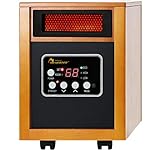
- Dr. Infrared Heater DR-968 Portable Space Heater (1500W) — Best Infrared Cabinet
Shopping for the best 110 volt electric heater means shopping for the most familiar appliance in this entire product group: the plug-in room heater. Every model here runs on standard 110–120 volt household current, and nearly all of them share the same ceiling — 1,500 watts, the most a standard circuit delivers to a plug-in appliance — which means the real differences between good and bad electric heaters are not power at all. They are how the heat is delivered, how quietly, how safely, and how intelligently the heater controls itself once the room is warm.
Delivery style is the first fork. Ceramic fan heaters — most of this list — push warm air into the room quickly and suit bedrooms, offices and living spaces where heat is wanted now. Infrared cabinet heaters warm people and furniture more directly and suit larger, draughtier rooms. Tower heaters spread heat across a room with oscillation while taking almost no floor space. All three styles appear below, because the best electric heater for a nursery, a home office and a draughty farmhouse sitting room are genuinely different machines wearing the same wattage.
The six picks were verified live on Amazon with matching titles: Lasko’s long-running oscillating ceramic tower, two DREO models that lead the modern quiet-and-controlled class, GiveBest’s compact dual-wattage workhorse, PELONIS’s tall tower for larger rooms, and Dr. Infrared’s cabinet-style infrared for spaces that defeat fan heaters. Every spec in the mini boxes — wattage, oscillation, timers, thermostats — comes from those verified listings, and the guide that follows explains how to match style, size and safety features to the room you actually live in.
In this guide
Quick Picks
Best Overall — Lasko 23-Inch Oscillating Ceramic Tower Space Heater (1500W): The established all-rounder: a 23-inch oscillating ceramic tower with thermostat, remote and timer at the full 1500W — the heater format most living rooms end up with.
Best Quiet Bedroom Heater — DREO Space Heater Portable 1500W PTC Ceramic: Built for bedrooms: a 1500W PTC ceramic heater with a thermostat, five modes, a 12-hour timer, remote — and quiet operation as its headline feature.
Best for Fast Room Warm-Up — DREO Quiet Space Heater 1500W Oscillating with Remote: Speed and spread: 1500W with 70° oscillation, fast airflow, an adjustable thermostat and a stated suite of safety protections.
Best Compact Value — GiveBest Portable Electric Space Heater (1500W/750W): The compact classic: dual 1500W/750W settings, a thermostat, and a small footprint rated for rooms up to 200 sq ft — the desk-and-small-room heater in its most proven form.
Best for Larger Rooms — PELONIS 30-Inch Ceramic Tower Heater: The tall tower: 30 inches of ceramic tower with thermostat, remote and 12-hour timer — more presence and spread for larger rooms.
Best Infrared Cabinet — Dr. Infrared Heater DR-968 Portable Space Heater (1500W): The furniture-style alternative: a 1500W infrared cabinet heater in a cherry finish — radiant-style warmth for larger and draughtier rooms that fan heaters cannot hold.
How These Picks Were Chosen
Picks were chosen on the criteria that separate heaters people keep from heaters people return. First, control: a heater without a decent thermostat either roasts or sulks, so adjustable thermostats and multiple modes were weighted heavily. Second, safety as standard — overheat protection and tip-over shut-off are the baseline expectation of a modern room heater, and models were favoured whose listings state their protection plainly.
Second, verified identity. Each heater was searched by brand and model through the Creators API on this site’s own Amazon connection, drawing on this product group’s verified cache, and an ASIN was attached only where the returned title matched the model and features intended. Specs printed in the mini boxes come only from those verified titles — nothing about a heater’s performance in this article rests on a guess.
Third, coverage of real rooms: a tower for the living room, quiet models for bedrooms and offices, a compact for desks and small spaces, a tall tower for bigger rooms, and an infrared cabinet for draughty spaces where fan heat dissipates. All are 110–120 volt plug-in models; hardwired and 240 volt heaters were excluded as off-brief.
The 6 Best 110 Volt Electric Heater Models for Rooms and Workspaces

Lasko 23-Inch Oscillating Ceramic Tower Space Heater (1500W) — Best Overall
Lasko has sold versions of this tower for years because the format simply works: a tall, slim ceramic heater that oscillates warm air across a living room, answers to a remote from the sofa, and holds a set temperature with its thermostat. It is the default shape of a modern room heater.
Strengths
- Oscillation spreads heat across the room instead of one hot column
- Remote and timer make it a set-and-live-with appliance
- Thermostat holds temperature rather than running blindly
Trade-offs
- Fan-based heat is audible on higher settings
- Tower format warms rooms, not the draughty corners of old houses
- Ceramic elements heat fast but the room cools fast when it stops
| Power | 1500W plug-in |
| Type | Ceramic tower, oscillating |
| Controls | Thermostat, remote control, timer |
| Height | 23 inch |
The tower heater won the living room by respecting it: almost no floor footprint, no glowing elements at ankle height, heat delivered at seated height and swept across the room so no single chair roasts while another freezes. Lasko’s version adds the controls that turn a heater into infrastructure — a thermostat that makes temperature a decision you make once, a timer for bedrooms and nurseries, and a remote because nobody should have to cross a cold room to fix the heating. In a reasonably insulated room of ordinary size, this is the complete answer, and its long production run means filters, remotes and replacement knowledge are all easy to come by. Buy it as the house heater; the specialist picks below exist for rooms and needs this honest all-rounder does not claim to cover.
The Lasko’s longevity in production carries a practical benefit: it is the heater your future self can still buy parts and remotes for, and the one a landlord, a parent or a student can be given with confidence that its controls need no explanation. In a category refreshed annually for marketing reasons, that continuity is a consumer feature — the known quantity in a sea of model numbers.
Best for: Living rooms, bedrooms and general household heating / Not suited for: Large draughty spaces or silent-running purists on high fan settings
Check the current price on Amazon

DREO Space Heater Portable 1500W PTC Ceramic — Best Quiet Bedroom Heater
Bedroom heating fails on noise more than on heat: a heater that clicks, hums and whooshes will be switched off by 2 a.m. whatever the temperature. DREO built this model around quiet running, then added the full control set — thermostat, five modes, timer and remote — that overnight heating needs.
Strengths
- Quiet operation designed for bedrooms and light sleepers
- Thermostat plus five modes gives fine control over overnight heat
- 12-hour timer suits sleep schedules and morning warm-ups
Trade-offs
- Portable format heats a room, not a whole floor
- Quietest running is on lower modes — full power is not silent
- Modern model years refresh often; confirm the current listing’s features
| Power | 1500W PTC ceramic |
| Controls | Thermostat, 5 modes, remote |
| Timer | 12-hour timer |
| Noise | Quiet operation (manufacturer emphasis) |
A bedroom heater is really a sleep appliance, and this DREO understands the assignment in a way spec-sheet heaters do not. The thermostat ends the midnight negotiation between too cold and too hot; the timer lets the room warm before the alarm and rest while the house is empty; the modes let a draughty night and a mild night be different settings rather than different compromises. Its noise discipline is the deciding feature — fan heaters live or die in bedrooms by their sound, and a heater engineered and marketed on quietness is aiming at the right target. In living rooms it is merely good; in the bedroom, the nursery-adjacent guest room and the home office where calls run all day, it is the pick of this list, and the one most likely to still be running, unremarked, at 3 a.m. — which is the entire point.
This DREO also suits the growing class of home workers whose office is a bedroom corner: quiet enough for calls, thermostat-true enough to forget, and timed to warm the room before the workday rather than after the first cold hour of it. The five modes stop being a spec and become a schedule — sleep, work, evening, away — and a heater that follows a household’s schedule is the kind that stays plugged in for years.
Best for: Bedrooms, nurseries and home offices where noise matters / Not suited for: Very large or draughty rooms needing infrared delivery
Check the current price on Amazon

DREO Quiet Space Heater 1500W Oscillating with Remote — Best for Fast Room Warm-Up
Some rooms need heat eventually; others need it now — the bathroom-adjacent dressing room, the office that is cold until noon, the guest room prepared in an hour. This DREO pairs full wattage with wide oscillation and fast airflow to shorten the wait, while keeping the family’s quiet-running character.
Strengths
- 70° oscillation plus fast airflow warms a room’s occupants quickly
- Adjustable thermostat for set-and-hold comfort
- Stated safety protections suit family households
Trade-offs
- Fast airflow means audible fan on demand settings
- Like all fan heaters, warmth fades quickly when switched off
- Best in enclosed rooms; open-plan spaces dilute its speed advantage
| Power | 1500W |
| Oscillation | 70° |
| Controls | Adjustable thermostat, remote |
| Safety | Multiple safety protections (per listing) |
Warm-up speed is a system property: wattage, airflow and spread working together. This model’s combination — full 1500 watts, a fan that actually moves air, and a 70-degree sweep that distributes it — produces the experience owners describe as the room feeling warm in minutes rather than the heater feeling hot in minutes, which is the distinction that matters. The thermostat then converts that sprint into a hold, cycling to maintain rather than overshooting into stuffiness. It is the natural second heater for a house that already owns the Lasko pattern, or the first for rooms used in bursts: offices, guest rooms, hobby rooms, anywhere the heating schedule is an hour here and two hours there rather than all evening. For continuous overnight duty the quieter sibling above shades it; for everything time-sensitive, this is the faster tool.
The fast DREO earns a specific recommendation for renters: it asks for nothing — no installation, no modification, no landlord conversation — and it answers the renter’s classic problem, the one cold room in a home whose heating they do not control. Guest room, nursery, the study over the garage: the rooms that central heating forgets are exactly the rooms a fast, oscillating, thermostat-held portable exists to reclaim.
Best for: Offices, guest rooms and any space heated in bursts / Not suited for: Open-plan areas where fan-driven warmth dissipates
Check the current price on Amazon

GiveBest Portable Electric Space Heater (1500W/750W) — Best Compact Value
The GiveBest compact has been the budget room-heater answer for years: two heat settings, a thermostat, a footprint that fits under a desk or beside a bed, and a coverage claim — 200 square feet — that matches the small rooms it actually serves.
Strengths
- Dual wattage suits both full heating and gentle background warmth
- Compact size fits desks, bedside spots and small rooms
- Thermostat control at a budget tier
Trade-offs
- Small fan heaters are audible at full power
- Coverage is for enclosed, reasonably insulated rooms
- Basic design prioritises function over features like remotes
| Power | 1500W / 750W settings |
| Type | Portable ceramic heater |
| Controls | Thermostat |
| Coverage | Up to 200 sq ft (manufacturer figure) |
Dual wattage is the underrated feature of the compact class. The 750W setting is the one owners actually live on: background warmth that takes the edge off a bedroom or office for hours, gentler on the circuit and the air than full-blast cycling, while 1500W remains for the cold-start warm-up. The thermostat completes the picture — set it, and this little box quietly manages a small room’s temperature with no further thought, which is why these compacts accumulate in homes: one under the desk, one in the spare room, one in the bathroom-adjacent corner (placed dry and safe, per the safety section below). It will not heat a living room party or forgive a draughty hall, and it does not pretend to. As the small-room, small-budget answer, it has earned its longevity honestly.
The GiveBest compact’s dual settings create the classic two-heater household pattern at a single-heater price: full power for the evening warm-up, low power as the overnight background in a bedroom or the all-day tick-over in a small office. Owners who discover the low setting’s economy tend to stop thinking of the heater as an appliance they run and start thinking of it as the room’s climate — which is the end state every heater in this guide is aiming at.
Best for: Desks, bedrooms and small enclosed rooms up to about 200 sq ft / Not suited for: Living rooms, open-plan spaces or draughty halls
Check the current price on Amazon

PELONIS 30-Inch Ceramic Tower Heater — Best for Larger Rooms
Room size is the tower heater’s one real variable, and PELONIS’s 30-inch tower is the larger-room answer: a taller column moving warm air across bigger living spaces, with the thermostat, remote and timer set that all-evening heating requires.
Strengths
- Taller tower suits larger living rooms and open seating areas
- Thermostat, remote and timer cover all-evening use
- Slim footprint keeps floor space in bigger rooms too
Trade-offs
- Same 1500W ceiling as every plug-in — bigger room means longer warm-up
- Height makes it a more visible piece of furniture
- Fan heat in a large room still loses to draughts and high ceilings
| Height | 30 inch |
| Type | Ceramic tower space heater |
| Controls | Thermostat, remote control |
| Timer | 12-hour timer |
A taller tower does not make more heat — the wattage ceiling forbids it — but it delivers the same heat better in a larger room: a bigger outlet sweeping warm air across a wider seating area, at heights that reach people on sofas rather than pooling at the floor. PELONIS pairs that physical advantage with the control set that larger-room heating actually uses over an evening — thermostat to hold, timer to stop, remote to adjust without leaving the chair. The expectation to set is time: a large room warms gradually, and this heater rewards being switched on before the room is occupied rather than in response to complaints. For households whose heating problem is one big living space rather than several small ones, this is the tower to buy, with the infrared cabinet below reserved for the rooms where even patient fan heat gives up.
A taller tower also distributes heat more kindly in rooms where people sit at different distances — the sofa near, the reading chair far — because its sweep and column height even out the gradient that makes small heaters into local weather systems. In family rooms that host everyone at once, that evenness is felt as fairness: nobody’s seat is the cold seat. It is an unglamorous virtue, and it is the one large rooms actually need.
Best for: Larger living rooms and open seating areas / Not suited for: Small rooms, where its size and spread are wasted
Check the current price on Amazon

Dr. Infrared Heater DR-968 Portable Space Heater (1500W) — Best Infrared Cabinet
Some rooms defeat fan heaters: high ceilings, old windows, air that leaves as fast as it warms. Infrared cabinet heaters answer by warming the room’s contents — floor, furniture, people — which then hold and re-radiate the heat. The DR-968 wraps that approach in a cherry-finished cabinet that looks like furniture rather than equipment.
Strengths
- Infrared delivery suits draughty, high-ceilinged rooms
- Cabinet design blends with living-room furniture
- 1500W plug-in power — no installation, standard outlet
Trade-offs
- Cabinet format is a real piece of floor furniture, not a tuck-away tower
- Infrared warmth builds more gradually than fan heat
- Heavier and less portable than the compact picks
| Power | 1500W |
| Type | Portable infrared cabinet heater |
| Finish | Cherry |
| Model | DR-968 |
The cabinet infrared is the traditionalist’s heater, and its following is earned in the rooms other heaters lose. By warming mass instead of air, it keeps working where draughts strip fan heat away, and the room it heats feels different — evenly warm surfaces rather than a current of hot air — which many people simply prefer for an evening in one room. The cherry cabinet is part of that proposition: this heater is meant to live in the room visibly, all winter, and its finish acknowledges it. Its costs are presence and pace — floor space surrendered permanently, and warmth that accumulates rather than arrives. For the farmhouse sitting room, the draughty rental, the high-ceilinged lounge, those costs buy the only style of plug-in heat that genuinely works there. For everywhere else, the towers above are quicker, smaller and simpler.
The DR-968 has one more audience: the music room, the reading room, the workshop where a fan’s noise and moving air are unwelcome on principle. Infrared cabinet heat is silent in operation and stirs no dust across instruments, pages or finishes. In rooms valued for stillness, the cabinet is not the old-fashioned option; it is the only one whose operation cannot be heard, felt as a draught, or noticed at all — except in the temperature, which is the point.
Best for: Draughty, high-ceilinged or older rooms used all evening / Not suited for: Small rooms, quick warm-ups or minimal-furniture households
Comparison Table
| Pick | Badge | Key spec | Best for |
|---|---|---|---|
| Lasko 23-Inch Oscillating Ceramic Tower Space Heater (1500W) | Best Overall | 1500W ceramic tower, oscillation, remote, timer | Living rooms, bedrooms and general household heating |
| DREO Space Heater Portable 1500W PTC Ceramic | Best Quiet Bedroom Heater | 1500W PTC ceramic, thermostat, 5 modes, 12H timer | Bedrooms, nurseries and home offices where noise matters |
| DREO Quiet Space Heater 1500W Oscillating with Remote | Best for Fast Room Warm-Up | 1500W, 70° oscillation, adjustable thermostat | Offices, guest rooms and any space heated in bursts |
| GiveBest Portable Electric Space Heater (1500W/750W) | Best Compact Value | 1500W/750W ceramic, thermostat, up to 200 sq ft | Desks, bedrooms and small enclosed rooms up to about 200 sq ft |
| PELONIS 30-Inch Ceramic Tower Heater | Best for Larger Rooms | 30in ceramic tower, thermostat, remote, 12H timer | Larger living rooms and open seating areas |
| Dr. Infrared Heater DR-968 Portable Space Heater (1500W) | Best Infrared Cabinet | 1500W infrared cabinet, cherry finish | Draughty, high-ceilinged or older rooms used all evening |
How to Choose the Best 110 Volt Electric Heater for Your Room
Match the style to the room first. Enclosed, insulated rooms of ordinary size suit ceramic fan and tower heaters, which warm air quickly and hold it with a thermostat. Draughty, high-ceilinged or older rooms suit infrared, which warms contents rather than escaping air. Small rooms and desks suit compacts, whose lower settings then run for hours as background warmth. The wattage will be 1,500 almost whatever you buy — spend your decision on delivery, controls and safety instead.
Then interrogate the controls. A thermostat is the difference between a heater and a heating system: it holds a temperature, saves electricity, and ends the roast-and-freeze cycle of manual switching. Timers matter in bedrooms and for morning warm-ups; remotes matter wherever the heater serves people who are seated, elderly or asleep-adjacent. Finally, treat stated safety protections — overheat shut-off, tip-over switches, recognised certification — as requirements, and place any heater with clear space around it, plugged directly into the wall.
- Style first: fan/tower for enclosed rooms, infrared for draughty ones, compact for desks
- A thermostat is non-negotiable for a heater that runs for hours
- Coverage figures assume insulation — derate honestly for old houses
- Tip-over and overheat protection are baseline, not upgrades
- Directly into a wall outlet; never a power strip or extension cord
Electric Heater Running Costs and the 1,500 Watt Ceiling
Every plug-in electric heater converts electricity into heat at effectively the same efficiency — a watt is a watt of warmth — so running cost is decided by how many hours the element runs at full power, which is decided by your room and your thermostat discipline. A 1,500 watt heater at full output uses 1.5 kilowatt-hours per hour; in a well-insulated room the thermostat cycles it down to a fraction of that across an evening, while in a draughty room it runs flat out and still loses. That is why the cheapest heating upgrade is always the room: a draught excluder outperforms a second heater.
It is also why “more watts” is not a shopping axis in this category — the circuit caps everyone at the same ceiling — and why claims of miraculous economy from any resistive heater should be read as claims about controls and delivery, where real differences do live. Buy the thermostat, the timer and the style that fits; the physics handles the rest identically for everyone.
Bedroom, Nursery and Office: Heating Rooms With Rules
Rooms where people sleep deserve the strictest heater discipline: a thermostat to prevent overnight overheating, a timer so the heater’s duty matches the sleep schedule, quiet running as a genuine feature, and placement well clear of bedding, curtains and anything that can fall onto the heater in the night. The DREO picks above were chosen with exactly this room in mind. Children’s rooms add one more rule — the heater should be a fixture of the room’s safe geography, not a tempting object, and its controls ideally out of casual reach.
Offices have the opposite problem: a heater under a desk warms legs while the room stays cold, and its thermostat, sensing the warm pocket, switches off early. Place office heaters to warm the room, or accept the under-desk unit as personal warmth and dress for the room it cannot change. Either way, keep the heater off the same circuit as a desktop computer setup if the wiring is old — a tripped breaker costs more work than a cold hour.
Space Heater Safety: The Non-Negotiables
Space heaters are safe appliances with an unforgiving streak, and the rules are short enough to memorise. Keep at least a clear metre — more where the manufacturer says so — between the heater and anything combustible: furniture, curtains, bedding, paper, clothing. Plug directly into a wall outlet, never an extension cord, power strip or timer plug not rated for heating loads. Never leave a heater running unattended overnight outside its thermostat-and-timer design, and never run one in a bathroom or wet area unless it is specifically rated for it.
Choose heaters whose listings state overheat and tip-over protection, keep intakes and outlets dust-free, and retire any heater with a damaged cord, a cracked case or a mind of its own. Followed plainly, these rules make the plug-in heater what it should be: the most boring appliance in the house, quietly holding a temperature.
Heating the Person vs Heating the Room
The cheapest watt is the one aimed at a person. Much of this guide concerns heating rooms, but a large share of real heater use is heating one seated human — at a desk, in a reading chair, in bed — and for that task the compact picks, aimed and close, deliver comfort at a fraction of the running cost of warming the whole room’s air. The thermostat on the room’s main heating can sit lower, the plug-in heater handles the occupied corner, and the bill reflects the difference.
The principle scales to the whole house: zone by occupancy, heat people before volumes, and let empty rooms rest cool. Electric plug-in heaters are uniquely good at this strategy because they are instant, portable and precise — no other heating system lets you move the warm room around the house with the household. Bought and used with that strategy, a 1,500 watt heater is not a compromise appliance; it is the sharpest tool in the heating plan.
A Heater for Every Room: The Household Pattern
Houses rarely need one perfect heater; they need a pattern. The living room takes the tower, oscillating over the seating for the evening. The bedroom takes the quiet thermostat model on its timer. The office takes the fast unit or the desk compact. The spare room takes whatever is left, because it is heated six nights a year. Households that assign heaters to rooms — rather than carrying one hero heater around — report the pattern this guide’s picks were chosen to serve.
The pattern has an economics: several modest heaters, zoned and timed, cost less to run than one space heated heroically or a whole house held at comfort for two occupied rooms. It also has a resilience — a failed heater in a patterned house is an inconvenience, not a cold house. Buy the pattern one room at a time, starting with the room where your household actually lives, and let each purchase teach you what the next room needs.
When a Plug-In Heater Is Not Enough
Honesty requires the boundary paragraph. A plug-in heater cannot heat a whole house, rescue a room with no insulation and single-glazed walls in a hard winter, or substitute for a failed central system beyond the room it sits in. Households facing those situations need building work or a heating system, and money spent stacking space heaters against them is money spent reaching a breaker’s limit rather than a warm home. The picks in this guide are room appliances, excellent inside their brief and silent outside it.
Recognising the boundary makes the appliance better, not worse: a heater bought for the room it can genuinely serve, with a thermostat it can satisfy, will cycle contentedly for years — while the same heater asked to fight a whole draughty house runs flat-out, costs a fortune and still loses, through no fault of its engineering. Size the job before the heater, and let this guide’s styles be matched to rooms that deserve them.
The one whole-house role plug-in heaters play honourably is the emergency: the boiler failure in a cold snap, where two or three zoned heaters keep the occupied rooms and the pipes safe until the engineer arrives. Every house in a cold climate should own that insurance, stored and tested — which is, in the end, one more reason the humble 110 volt heater belongs in this product group’s hall of fame.
The Heater as Household Infrastructure
There is a moment in a heater’s life when it stops being an appliance and becomes infrastructure: the bedroom unit that has simply always been there, the office compact whose thermostat nobody has touched since November, the tower that comes out of the cupboard each autumn like a decoration in reverse. The picks in this guide were chosen for that destiny — controls that hold their settings, builds that survive storage and seasons, brands that will still answer for the product when the second winter asks a question of it.
Treat the purchase that way and the decision simplifies: buy the heater your household will still be glad of in five winters, for the room it will actually live in, with the safety features stated rather than implied. The wattage will be the same as every other box on the shelf. The decade will not be — and the decade, not the December, is what a heater is for.
One last habit completes the picture: at the start of each heating season, run every heater in the house for ten supervised minutes — checking cords, clearing dust from intakes, confirming thermostats cycle and tip-over switches still cut the power. Ten minutes in October is the entire maintenance contract of the plug-in heater, and it is the difference between a household that discovers a fault on the coldest night and one that never discovers faults at all. Infrastructure, treated as infrastructure, behaves like it.
Measure the room before the heater, in the end, is the whole method of this guide: its size, its draughts, its hours of occupation, its people. The six heaters above are six answers to six versions of that measurement, and the one whose version matches your room will feel, within a week, less like a purchase and more like a correction — the room finally holding the temperature it was always supposed to hold, on an ordinary outlet, without another thought.
Rooms, measured honestly, are this category’s only real specification sheet — everything else is a label on a box.
How to Set Up a 110 Volt Electric Heater for a Room
A room heater works from the moment it is plugged in, but five minutes of deliberate setup — placement, circuit and controls — is the difference between even comfort and a hot corner beside a cold sofa.
- Place the heater on a flat, stable floor area with clear space on all sides, away from curtains, furniture, bedding and door swings — never on furniture or thick carpet unless the manual allows it.
- Plug it directly into a wall outlet on a circuit that is not already carrying another heavy load, and never through an extension cord or power strip.
- Aim the heat at the room’s occupants, not at a wall or the thermostat of another heating system; towers should sweep the seating area.
- Set the thermostat by comfort, not by maximum: start moderate, let the room settle for half an hour, then adjust in small steps.
- Programme the timer around your real schedule — warm before waking or arriving home, off when the room empties.
- Test the tip-over behaviour gently on day one so you know the protection works, and check that the cord runs where feet and chair castors will not damage it.
- Vacuum or wipe the intake grille monthly through the season; dust is the enemy of airflow, sensors and smells alike.
Placement, a clean circuit and a thermostat set by patience — that is the whole craft of room heating. Set it up once and the best electric heater becomes invisible: a room that is simply the right temperature whenever you are in it.
Common Buying Mistakes
Shopping for watts. Every plug-in heater shares the 1,500 watt ceiling. The differences that matter are style, controls and safety — shop those.
Buying fan heat for a draughty room. Warm air leaves through the same gaps the cold enters. Draughty, high-ceilinged rooms belong to infrared.
Skipping the thermostat. A heater without one roasts, then freezes, and runs up the bill doing both. Thermostat control is the feature that pays for itself.
Using an extension cord or power strip. Continuous full-wattage loads are exactly what light cords and strips cannot carry. Wall outlet, directly, always.
Cramming the heater into the clutter. Combustibles within reach of a heater are the classic house-fire recipe. Clear space is part of the product.
Heating the whole house one room at a time. A plug-in heater is a room appliance. Zone your heating — occupied rooms warm, empty rooms cool — and the costs behave.
Final Recommendation
For most rooms, the Lasko tower remains the recommendation: proven, oscillating, thermostat-controlled and remote in hand. Bedrooms and offices belong to the DREO models — the quiet one for overnight, the fast oscillating one for rooms heated in bursts — while the GiveBest compact covers desks and small rooms on a budget, the PELONIS tower stretches to larger living spaces, and the Dr. Infrared DR-968 takes the draughty, high-ceilinged rooms that defeat everything else.
Whichever you choose, set it up with clear space, a direct wall connection and a thermostat you trust, and let style — not wattage — be your deciding vote. On standard household current, that is how a room stays warm all winter.
Start with Lasko 23-Inch Oscillating Ceramic Tower Space Heater (1500W), or DREO Space Heater Portable 1500W PTC Ceramic if your needs are narrower, and keep DREO Quiet Space Heater 1500W Oscillating with Remote on the shortlist as the alternative.
Related guides in this series: Best 110 Volt Electric Garage Heaters, Best 110 Volt Dryer, Best 110 Volt Dust Collector, Best 110 Volt Electric Driveway Gate Opener, Best 110 Volt Winches, Best 110 Volt Air Compressor.
Frequently Asked Questions
Are all 110 volt electric heaters equally efficient?
Effectively, yes: every resistive plug-in heater turns electricity into heat at the same rate, and all share the roughly 1,500 watt ceiling of a standard circuit. What differs is delivery — fan, tower or infrared — plus controls and safety features. Spend your decision there, and treat miraculous economy claims from any brand as claims about thermostats and zoning, where real savings do live.
What size room can a 1500W heater handle?
In a reasonably insulated, enclosed room, 1,500 watts is the standard answer for bedrooms, offices and living rooms of ordinary size — the coverage figures in this guide are manufacturer figures for such rooms. High ceilings, old windows and open-plan layouts all spend heat faster; those rooms suit infrared delivery or accept a slower, zoned warm-up.
Is it safe to run a space heater overnight?
A modern heater with a thermostat, timer and stated overheat and tip-over protection, placed with clear space on a hard floor and plugged directly into the wall, is designed for overnight bedroom duty — the DREO picks here were chosen for exactly that. The standing rules still apply: nothing combustible within reach, no extension cords, no heater in a wet area unless rated for it, and a smoke alarm in working order.
Why does my heater keep tripping the breaker?
Because the circuit is shared. A heater at full draw leaves little headroom, so a kettle, microwave or second heater on the same circuit finishes the job. Give the heater its own circuit where you can, run it on a lower setting where the model offers one, and never solve tripping with a heavier breaker or an extension cord — the breaker is delivering information.
Tower heater or infrared — which should I buy?
Enclosed, insulated rooms: a ceramic tower, which warms air quickly, oscillates it around the seating and holds it with a thermostat. Draughty, high-ceilinged or older rooms: infrared, which warms the room’s contents and occupants directly and keeps working where fan heat escapes. Small desks and spare rooms: a compact. The room decides; the wattage is the same everywhere.
How much does it cost to run an electric heater?
At full output a 1,500 watt heater uses 1.5 kilowatt-hours per hour — multiply by your electricity rate for the full-power cost. In practice a thermostat cycles the element, so an insulated room held at comfort costs a fraction of the flat-out figure across an evening, while a draughty room runs the heater constantly. Insulation and thermostat discipline are the entire economics of electric heating.


