Disclosure: airfryerkitchensupply.com is reader-supported. When you buy through links on our site, we may earn an affiliate commission at no extra cost to you.
Where to buy
Wedding cake work punishes weak mixers: you are creaming large batches of butter, whipping egg whites to exact peaks, and mixing fondant-adjacent batters for hours across a single weekend. Every pick below was confirmed, and each one is sold on Amazon, so you can compare configurations and included bowls in one place before committing to a machine that has to perform on a deadline with no backup.
- KitchenAid Commercial Series 8-Qt Bowl-Lift Stand Mixer (KSM8990) — check price on Amazon
- KitchenAid 7 Quart Bowl-Lift Stand Mixer (KSM70) — check price on Amazon
- Ankarsrum Original Stand Mixer (AKM6230) — check price on Amazon
- Bosch Universal Plus Stand Mixer (500 Watt, 6.5 Quart) — check price on Amazon
- Cuisinart Precision Pro Digital Stand Mixer (SMD-50) — check price on Amazon
- KitchenAid Artisan 5-Qt Tilt-Head Stand Mixer (KSM150PS) — check price on Amazon
Finding the best stand mixers for wedding cake making is a different problem from finding a good everyday mixer. A wedding cake is not one cake; it is three or four tiers, often in two or three flavours, plus Swiss meringue or Italian meringue buttercream in quantities that would fill a stockpot, plus the test bakes, the crumb coats, and the inevitable remake when a tier cracks or a client changes the filling at the last minute. The mixer sits at the centre of all of it, running for long stretches at both extremes of its range — the slowest fold for a genoise and the highest whip for meringue — and it has to do that without walking across the counter, overheating, or leaving a ring of unmixed butter at the bottom of the bowl.
The honest starting point is capacity and torque, not colour. Most wedding tiers are baked as multiple same-size layers, and buttercream is usually made in double or triple batches to keep colour and texture consistent across the whole cake. A 4.5-quart tilt-head machine that delights a home baker on Sunday pancakes will force you into four small buttercream batches that never quite match, and its motor will strain audibly on a stiff all-butter recipe. The machines on this list start where wedding work actually starts: generous bowls, bowl-lift or heavy tilt-head designs that stay planted, and speed ranges with a genuinely gentle low end for folding and a stable high end for whipping.
We also weighted the unglamorous details that decide whether a wedding weekend feels controlled or chaotic: whether a second bowl is available so batter and buttercream can move in parallel, whether the beater actually reaches the bowl bottom so you are not stopping to scrape every thirty seconds, whether the machine can be carried to a venue kitchen or a rented prep space, and whether attachments like a flex-edge beater exist for that exact model. If you bake one celebration cake a year for family, some of these machines are more than you need, and we say so in the verdicts. If weddings are your business, or the one wedding in front of you simply has to be right, this is the shortlist worth your money.
In this guide
Quick Picks
Six machines, six distinct wedding jobs — from a commercial bowl-lift built for production weekends to a design-led mixer for the baker who makes two or three showpiece cakes a year.
- Best Overall for Production Weddings: KitchenAid Commercial Series 8-Qt Bowl-Lift Stand Mixer (KSM8990) — the 8-quart bowl-lift built for back-to-back tiers and triple batches of buttercream without splitting the batch. — Check on Amazon
- Best for Serious Home Wedding Bakers: KitchenAid 7 Quart Bowl-Lift Stand Mixer (KSM70) — a 7-quart bowl-lift with a true half-speed for folding — the sweet spot for one big wedding at a time. — Check on Amazon
- Best for Enormous Buttercream and Dough Volume: Ankarsrum Original Stand Mixer (AKM6230) — the rotating-bowl Swedish design that kneads and creams in volumes tilt-heads cannot touch. — Check on Amazon
- Best Lightweight High-Capacity Pick: Bosch Universal Plus Stand Mixer (500 Watt, 6.5 Quart) — 6.5 quarts of capacity in a machine light enough to carry to a venue kitchen or rented prep space. — Check on Amazon
- Best for Precise, Repeatable Recipes: Cuisinart Precision Pro Digital Stand Mixer (SMD-50) — digital 12-speed control with preprogrammed settings for bakers who repeat the same wedding recipes exactly. — Check on Amazon
- Best for Occasional, Smaller Weddings: KitchenAid Artisan 5-Qt Tilt-Head Stand Mixer (KSM150PS) — the familiar 5-quart tilt-head — right-sized for two-tier cakes and intimate weddings, with the deepest accessory ecosystem here. — Check on Amazon
How These Picks Were Chosen
Every product below was cross-checked against Amazon listing data through this site’s own provider account: we searched by brand and model, matched the returned title to the machine we intended to recommend, and only then attached a purchase link using the ASIN from the listing response. Where a colour or bundle variant was the listing the listed, we name that variant plainly. No ASIN in this article was guessed, copied from another site, or carried over from a different model.
The selection criteria were wedding-specific. First, effective capacity: bowl size on paper matters less than how much buttercream or batter the machine mixes without sloshing or straining, so we favoured 5.5-quart and larger bowls for the primary picks. Second, low-speed control, because folding flour into a sponge and finishing a meringue buttercream both happen at the bottom of the dial, and a machine whose slowest speed is already fast will knock air out of everything. Third, stability under load — bowl-lift designs and heavier tilt-heads earned their places because a mixer that creeps across the counter mid-whip is a liability when your hands are holding a piping bag.
Finally, we considered the ecosystem around the machine: spare bowls, flex-edge beaters, pouring shields, and the availability of the same model in a configuration you can actually order today. Wedding baking is scheduled to the hour, and a mixer is only as useful as the second bowl you can buy for it. Machines that failed on capacity, low-speed manners, or stability — however well reviewed for general baking — were left off this list.
The 6 Best Stand Mixers for Wedding Cake Making

KitchenAid Commercial Series 8-Qt Bowl-Lift Stand Mixer (KSM8990) — Best Overall for Production Weddings
This is the machine for the baker whose wedding calendar is a business: multiple cakes per month, tiers baked in sequence, buttercream made in the largest batch the recipe allows. The 8-quart bowl swallows a triple batch of Swiss meringue buttercream in one go, which matters more than it sounds — one batch means one colour, one texture, one sweetness level across every tier, instead of three near-identical batches you have to blend and pray over. The bowl-lift design keeps the head fixed and raises the bowl into the beater, so the whole unit stays planted even when a stiff dough or a cold-butter start tries to rock it.
Strengths
- 8-quart capacity handles triple buttercream batches and large tier batters in a single bowl
- Bowl-lift frame stays stable under heavy, cold, or stiff loads that make tilt-heads shudder
- Commercial positioning means it is built for long, repeated duty cycles across a full prep weekend
Trade-offs
- Tall and heavy — it wants a permanent counter home, not a cupboard, and it is a two-handed move
- More machine than a once-a-year celebration baker will ever use
- The scale of the bowl makes very small batches awkward; tiny test quantities get lost under the beater
| Design | Bowl-lift |
| Bowl capacity | 8 quart |
What separates this machine in wedding work is not raw power on a spec sheet but composure over time. Meringue buttercream asks for ten-plus minutes of continuous whipping before the butter goes in, then several more minutes of beating as the emulsion forms, and cheaper machines heat up, slow down, or start to smell warm partway through that cycle. The Commercial Series is built for exactly that kind of sustained work, and the bowl-lift mechanism means the mixing geometry never changes — the beater-to-bowl relationship at minute one is the same at minute fifteen, which is why the bottom-of-bowl unmixed ring is less of a problem here than on flexing tilt-head designs.
Plan your workflow around the bowl. With 8 quarts you can whip the meringue, add the butter, finish the buttercream, and still have headroom for the paddle to move without throwing silk over the rim. If you regularly deliver three-tier cakes, pairing this machine with a second 8-quart bowl turns it into a small production line: buttercream resting in one bowl while the next tier’s batter mixes in the other. It is the most expensive direction on this list, and we only recommend it where the cake volume justifies it — but for working wedding bakers it is the pick that removes the mixer from your list of worries entirely.
Best for: working wedding bakers producing multiple tiered cakes a month / Not suited for: occasional bakers or anyone who must store the mixer in a cupboard
Check on Amazon — check the current price on Amazon before you buy, because configurations and included accessories vary by listing.

KitchenAid 7 Quart Bowl-Lift Stand Mixer (KSM70) — Best for Serious Home Wedding Bakers
If you are the designated cake person for your family and circle — the one who makes the wedding cake as the gift — this is the machine that matches the job. The 7-quart bowl handles double batches of buttercream and the largest tier batters comfortably, the bowl-lift frame keeps it steady, and the speed range includes a genuine half speed designed for folding, which is the single most useful wedding feature on any mixer here: genoise, chiffon, and mousse-based fillings all live or die on how gently the flour goes in.
Strengths
- True 1/2 folding speed protects delicate sponges and mousses that faster low speeds deflate
- 7-quart bowl covers double buttercream batches without splitting
- Included flex-edge style beater reduces the stop-and-scrape cycle on buttercream
Trade-offs
- Bowl-lift footprint is tall; check your upper cabinets before ordering
- Still a heavy lift if you planned to carry it to a venue kitchen
- Single-bowl kit means parallel batter-and-buttercream work needs a second bowl purchase
| Design | Bowl-lift |
| Bowl capacity | 7 quart |
| Speeds | 11, including 1/2 fold speed |
The half speed deserves emphasis because most mixers cheat at the low end: their slowest setting is still brisk enough to develop gluten and knock air from a foam. A dedicated fold speed lets you add flour to a whipped sponge in the machine instead of by hand with a spatula, which is faster, more consistent, and one less bowl to wash on a weekend when the sink is already full. Across a three-tier cake, that small mercy repeats dozens of times. The 11-speed range also gives you fine control at the whip end, so meringue can be brought up gradually instead of shocked at full speed.
In capacity terms the 7-quart bowl sits in the practical wedding sweet spot: big enough that buttercream for a three-tier cake happens in one or two batches, small enough that a standard cake batter still engages the beater properly. The included accessories push it further — a flex-edge beater that sweeps the bowl sides genuinely cuts scraping stops during buttercream finishing, when temperature and timing matter. For the baker doing several weddings a year rather than several a month, this is the better-balanced purchase than the commercial machine above.
Best for: committed home bakers making one full wedding cake at a time / Not suited for: production bakers who need 8-quart triple batches
Check on Amazon — check the current price on Amazon before you buy, because configurations and included accessories vary by listing.
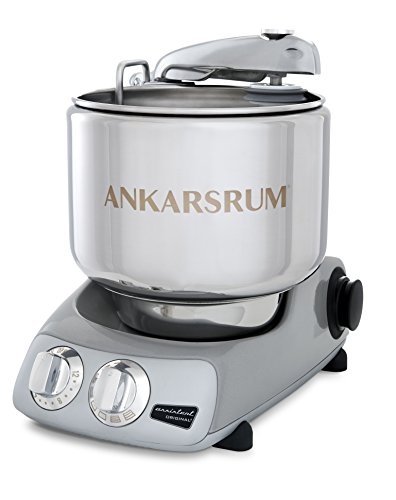
Ankarsrum Original Stand Mixer (AKM6230) — Best for Enormous Buttercream and Dough Volume
The Ankarsrum breaks every assumption formed by KitchenAid-style machines: the bowl rotates, the tools stay still, and the whole geometry favours volume. For wedding bakers who also produce the bread for the reception, large enriched doughs, or truly industrial quantities of buttercream, that rotating bowl is a revelation — ingredients are continuously drawn into the working zone, and the open top lets you add sugar, butter, or flavourings mid-mix without stopping or reaching around a head. It is also the machine to consider when the wedding menu extends beyond cake into laminated or yeasted work for a dessert table.
Strengths
- Rotating bowl design excels at very large batches and heavy doughs
- Open bowl top makes mid-mix additions easy during long buttercream builds
- Long-standing design with a reputation for durability across decades of service
Trade-offs
- Learning curve is real — technique differs from every planetary mixer and the first bakes need practice
- Whisking small volumes of egg white is less its natural territory than volume creaming and kneading
- Premium positioning; hard to justify for cake alone if you never use the dough capacity
| Design | Rotating bowl |
| Model | AKM6230 |
Judged purely as a wedding cake machine, the Ankarsrum’s case rests on batch size and stamina. A reception that wants a tiered cake plus a sheet cake for cutting, plus rolls or a brioche element, turns into a mixing marathon, and this is the machine least likely to be the bottleneck. The scraper and roller system keeps heavy mixtures moving in a way that a planetary beater in an oversized bowl cannot, and because the motor drives the bowl rather than swinging a head through the mixture, long kneading and creaming cycles are its home ground rather than its limit.
Be honest with yourself about the learning curve before a wedding depends on it. Speeds, tool choices, and the order of additions all behave differently, and meringue — the one wedding task where planetary whisks shine — takes more attention here. Buy it well before the event, run your exact buttercream and sponge recipes through it twice, and it will reward you. Buy it the week of a wedding and you will spend the rehearsal bake swearing at a bowl that will not do what your hands expect.
Best for: high-volume bakers combining tiered cakes with dough and dessert-table work / Not suited for: bakers who want familiar planetary technique with zero learning curve
Check on Amazon — check the current price on Amazon before you buy, because configurations and included accessories vary by listing.
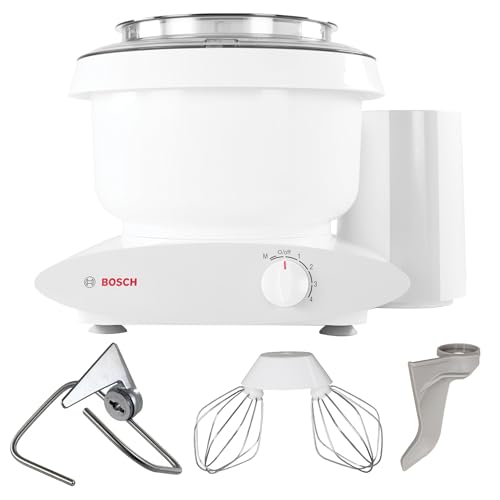
Bosch Universal Plus Stand Mixer (500 Watt, 6.5 Quart) — Best Lightweight High-Capacity Pick
Wedding baking often happens somewhere other than your own kitchen — a church hall, a rented prep kitchen, the venue itself. The Bosch Universal Plus is the pick for that reality: a 6.5-quart bowl and a 500-watt motor in a body dramatically lighter than the cast-metal bowl-lifts on this list, with a drive system that has handled heavy doughs for decades. The open, centre-drive bowl design also makes it easy to see and reach the mixture, which helps when you are adding hot syrup to whipping whites for Italian meringue in an unfamiliar kitchen.
Strengths
- High capacity at a fraction of the weight of metal bowl-lift machines — genuinely portable
- Open bowl design gives clear visibility and easy additions during meringue work
- Proven drive handles stiff mixtures and doughs without drama
Trade-offs
- Plastic-forward construction feels less heirloom than cast-metal rivals, even though the drive is durable
- Whipping very small quantities is less precise than in a narrow planetary bowl
- Aesthetic is functional rather than counter-jewellery; it will not match a design-led kitchen
| Motor | 500 watt (Amazon listing) |
| Bowl capacity | 6.5 quart |
The Bosch earns its wedding place on logistics. Two people can run a serious cake operation out of a borrowed kitchen if the mixer travels well, and this one does — it is the machine you can put in a car boot alongside the tiers without planning the lift like a furniture move. Once set up, the centre-drive bowl and wire whips produce well-aerated batters and creams, and the capacity means buttercream batches stay sensibly sized rather than split into threes. For destination weddings, where the baker flies in and works from a holiday rental, that combination of capacity and portability has no real rival on this list.
Where it concedes ground is finesse at the extremes: the very gentlest folding and the smallest test batches are better served by the KitchenAid 7-quart’s half speed or a hand whisk and a bowl. Treat the Bosch as the volume-and-travel workhorse of a wedding kit — possibly paired with your existing smaller machine at home — and it makes enormous practical sense. The bundle configuration confirmed through the listing includes wire whips and the dough hook, covering both the cake and the bread sides of a reception menu.
Best for: bakers who travel to venues or work in rented and borrowed kitchens / Not suited for: bakers who prioritise cast-metal feel and the gentlest fold speed
Check on Amazon — check the current price on Amazon before you buy, because configurations and included accessories vary by listing.
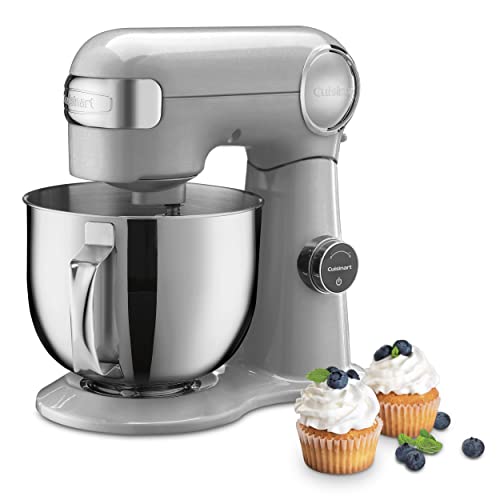
Cuisinart Precision Pro Digital Stand Mixer (SMD-50) — Best for Precise, Repeatable Recipes
Some wedding bakers are artists; others are engineers, and this machine is for the engineers. The Precision Pro’s digital control and 12 speeds, with preprogrammed settings for common prep tasks, suit the baker who has dialled in a buttercream method — whip whites to a specific point, stream syrup, beat butter in stages — and wants the machine to return to the same speeds every time rather than relying on the feel of a lever. The 5.5-quart bowl covers a standard three-tier workload in one-to-two buttercream batches.
Strengths
- Digital speed control makes repeatable wedding recipes easier to reproduce exactly
- 12 speeds give fine gradations for meringue stages and buttercream finishing
- 5.5-quart bowl is the right size for a single three-tier cake workflow
Trade-offs
- Smaller bowl than the bowl-lift picks — very large receptions mean an extra batch
- Digital controls are a preference, not an upgrade; lever loyalists will not convert
- Tilt-head design is less planted than bowl-lift frames under the stiffest loads
| Design | Tilt-head, digital control |
| Bowl capacity | 5.5 quart |
| Speeds | 12, with preprogrammed settings |
Repeatability is an underrated wedding virtue. When a couple tastes a sample cake in March and marries in September, they expect the same buttercream — and buttercream texture is speed-and-time work: how fast the whites whipped, how gradually the syrup went in, how long the finished cream beat at low speed to knock out air bubbles. A digital mixer with defined settings turns your recipe notes (‘setting 8 for six minutes’) into instructions the machine reproduces faithfully, which is also how you hand a step to a helper without hovering. That is a genuine production advantage disguised as a convenience feature.
The trade-off is headroom. At 5.5 quarts this is a one-wedding-at-a-time machine, and a four-tier cake with a kitchen sheet cake alongside will push you into batch discipline — workable, but plan the schedule. Within that envelope it is a precise, modern tool, and the included whisk, flat beater, and dough hook cover the full wedding repertoire from sponge to fondant-adjacent doughs. Choose it when your recipes are written down and your cakes are consistent, rather than when your volume is enormous.
Best for: methodical bakers repeating tested wedding recipes to a standard / Not suited for: bakers needing maximum single-batch volume
Check on Amazon — check the current price on Amazon before you buy, because configurations and included accessories vary by listing.
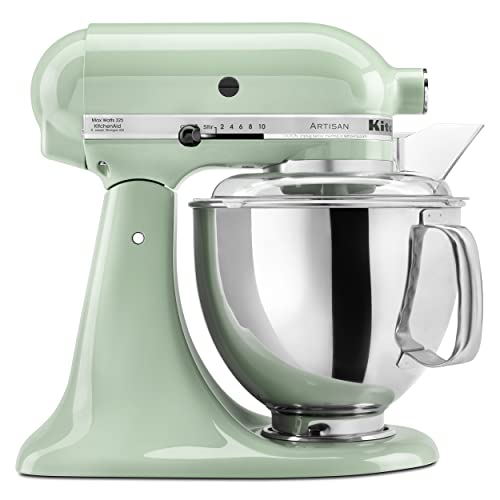
KitchenAid Artisan 5-Qt Tilt-Head Stand Mixer (KSM150PS) — Best for Occasional, Smaller Weddings
Not every wedding cake is a four-tier production. For a two-tier cake for forty guests, a naked cake for a garden wedding, or a single statement tier with cupcakes around it, the Artisan is honestly enough machine — and it is the mixer many bakers already own, which matters: the best wedding mixer is often the one whose speeds and quirks your hands already know. Its 5-quart bowl and 10 speeds cover standard batters and buttercreams in sensible batches, and the pouring shield in this configuration helps when flour and icing sugar go in during a long prep day.
Strengths
- Familiar, confidence-inspiring handling for the huge number of bakers who learned on this platform
- Deepest accessory ecosystem here — spare bowls, flex-edge beaters, and attachments are easy to source
- Right-sized for two-tier and intimate wedding cakes without counter dominance
Trade-offs
- Buttercream for larger cakes means multiple batches, with the colour-matching care that requires
- Tilt-head can shudder and creep under stiff, cold loads if not on a grippy surface
- No true fold speed — delicate sponges need a gentle hand or a finish by spatula
| Design | Tilt-head |
| Bowl capacity | 5 quart |
| Speeds | 10 |
The Artisan’s wedding case is about scale honesty. Bakers overspend on capacity they use once and underspend on the second bowl, the flex-edge beater, and the spare whisk that actually smooth a wedding weekend. If your cakes are two tiers, this machine plus a second bowl is a better wedding kit than a giant mixer with one bowl and no accessories — parallel working beats raw volume at this scale, because your bottleneck is usually waiting on a bowl, not motor strength. The 10-speed range whips meringue properly and creams butter and sugar to the pale, fluffy stage a good sponge depends on.
Know its limits and work inside them: split big buttercream into two batches and blend them together at the end for consistency, chill the bowl before whipping cream fillings in a warm kitchen, and put a damp cloth or mat under the base for the stiffest mixes. Do that, and the Artisan will deliver a beautiful small wedding without complaint. Ask it to feed a hundred and fifty guests across four tiers in one afternoon, and you are no longer testing the mixer — you are testing your own patience.
Best for: intimate weddings, two-tier cakes, and bakers who already know the platform / Not suited for: large multi-tier cakes or high guest counts
Check on Amazon — check the current price on Amazon before you buy, because configurations and included accessories vary by listing.
Comparison Table
| Pick | Badge | Key spec | Best for |
|---|---|---|---|
| KitchenAid Commercial Series 8-Qt Bowl-Lift Stand Mixer (KSM8990) | Best Overall for Production Weddings | 8-qt bowl-lift, commercial duty | working wedding bakers producing multiple tiered cakes a month |
| KitchenAid 7 Quart Bowl-Lift Stand Mixer (KSM70) | Best for Serious Home Wedding Bakers | 7-qt bowl-lift, 11 speeds, 1/2 fold speed | committed home bakers making one full wedding cake at a time |
| Ankarsrum Original Stand Mixer (AKM6230) | Best for Enormous Buttercream and Dough Volume | Rotating bowl, high-volume capacity | high-volume bakers combining tiered cakes with dough and dessert-table work |
| Bosch Universal Plus Stand Mixer (500 Watt, 6.5 Quart) | Best Lightweight High-Capacity Pick | 6.5-qt, 500W, lightweight body | bakers who travel to venues or work in rented and borrowed kitchens |
| Cuisinart Precision Pro Digital Stand Mixer (SMD-50) | Best for Precise, Repeatable Recipes | 5.5-qt digital, 12 speeds | methodical bakers repeating tested wedding recipes to a standard |
| KitchenAid Artisan 5-Qt Tilt-Head Stand Mixer (KSM150PS) | Best for Occasional, Smaller Weddings | 5-qt tilt-head, 10 speeds | intimate weddings, two-tier cakes, and bakers who already know the platform |
Read the table by workload, not by rank: match bowl capacity and design to your largest realistic cake, then check the fold-speed and portability rows against how and where you actually bake. Every machine here can make a wedding cake; they differ in how many batches, how much lifting, and how much attention the process demands.
How to Choose a Stand Mixer for Wedding Cake Making
Start with the largest cake you will actually make
Guest count drives everything. A three-tier cake serving around a hundred guests needs buttercream in quantities that expose small bowls immediately, while a two-tier cake for forty is a different purchase entirely. Work backwards from your largest realistic order: estimate your biggest buttercream batch, then choose a bowl that makes that batch in one or two goes, not three or four. Splitting batches is not just slower — each batch whips, heats, and sets slightly differently, and blending them into one consistent cream is a skill you should not need on a wedding morning.
Also count the parallel work. While buttercream rests, the next batter wants the mixer. A slightly smaller machine with a second bowl frequently outperforms a larger machine with one bowl across a real prep day, so price the second bowl into any comparison before deciding a bigger machine is better value.
Bowl-lift versus tilt-head for tiered work
Bowl-lift machines keep the head fixed and crank the bowl up into the tools. That rigidity is why they dominate the top of this list: under a cold, stiff load the geometry does not flex, the beater stays where it was set, and the unit does not walk. The cost is height and weight — measure your cabinet clearance, because a bowl-lift that cannot open under your cupboards will live on the counter forever, which may or may not be fine.
Tilt-heads are friendlier in small kitchens and easier to scrape and clean, and for two-tier work they are entirely adequate. Their weakness appears with stiff mixtures and long whips, where a light head can shudder. If you choose a tilt-head for weddings, choose a heavier one, park it on a non-slip mat, and treat very stiff doughs as hand-finished work.
Speed range matters at both ends
Wedding recipes use the whole dial. The top end whips egg whites and cream; the middle creams butter; the bottom folds flour into foam and finishes buttercream slowly to remove air bubbles for a smooth crumb-coat finish. A mixer whose lowest speed is aggressive will cost you volume in every sponge and add tunnels to every crumb. Look for a genuine slow speed — a stated fold or half speed is the clearest sign the maker designed for bakers rather than for spec sheets.
Gradual starts matter too. A machine that lurches to speed throws flour and icing sugar over the rim and the counter, which on a wedding day is not mess, it is lost time and lost ingredient weight. Smooth, staged acceleration — or a cook disciplined enough to pulse — keeps the batch in the bowl where it belongs.
Budget tiers, honestly framed
Wedding-capable mixers span a wide range, and the money mostly buys capacity, frame rigidity, and duty cycle rather than better cake. In the lower tier sit capable tilt-heads that handle intimate weddings well; the mid tier buys bowl-lift stability and 6-to-7-quart bowls that suit most working bakers; the top tier buys commercial duty cycles and 8-quart volume for production schedules. None of that maps neatly onto cake quality — a skilled baker with a mid-tier machine outbakes a novice with a commercial one every time.
Spend the difference on the ecosystem before upgrading the machine itself: the second bowl, the flex-edge beater, a spare whisk, and a pouring shield remove more wedding-day friction than an extra quart of capacity you use twice a year. Check the current price on Amazon for the exact configuration you want, because included bowls and beaters vary by listing and change the real comparison.
Planning the Wedding Weekend Around One Mixer
However many tiers the cake has, the mixer is a single shared resource, and wedding weekends go wrong when two recipes need it at once. Sequence the work deliberately: bake the tiers first while the oven and mixer rotate through batters, whip and finish buttercream in one consolidated session once the cakes are cooling, and reserve the final morning for assembly tasks that barely touch the machine. Written down, that sounds obvious; lived without a plan, it is how a baker ends up washing the same bowl nine times in a day.
Build slack into the schedule the way you build it into the recipe. A mixer problem on a normal Saturday is an inconvenience; on a wedding Saturday it is a crisis, so the rehearsal bake with your exact machine, exact bowl, and exact recipes is not optional diligence — it is the event insurance. Note the speeds and times that worked, chill spare butter, and know which neighbour or rental kitchen holds your backup plan. The bakers whose weddings look effortless are not luckier; they are the ones who rehearsed.
Attachments and Extras That Actually Earn Their Place at a Wedding
The attachment catalogue for stand mixers is enormous, and most of it is irrelevant to cake. Three extras genuinely earn their place in a wedding kit. A flex-edge beater, sized for your exact bowl, sweeps the sides as it mixes and cuts the stop-and-scrape cycle that cools buttercream and breaks your rhythm. A pouring shield earns its keep on flour and icing-sugar days, when every addition at speed otherwise dusts the counter and changes your weighed ratios by whatever landed outside the bowl. And a second whisk — the cheap insurance nobody buys — means a meringue emergency never waits on washing and drying the only whisk you own.
Beyond those three, spend cautiously. Pasta rollers, grain mills, and slicers may be lovely tools, but they do nothing for a tiered cake, and wedding budgets leak through exactly this kind of optimistic accessory buying. The exception is the baker whose reception menu genuinely extends to fresh pasta or a charcuterie course — in that case buy the attachment after the cake kit is complete, not before. Sequence the spending the way you sequence the baking: cake first, everything else second.
Colour, Finish, and the Wedding Photograph Problem
A wedding mixer lives a double life: it works in your kitchen for years and appears, if you bake at home, in the background of a decade of family photographs — and if you bake professionally, in your portfolio shots and social feeds, where clients judge your kitchen before they taste your cake. The Artisan’s colour range exists for exactly this reason, and there is no shame in weighting it: a machine you love looking at is a machine you maintain, photograph proudly, and keep on the counter where it gets used. Just sequence the decision correctly — capacity, frame, and speed range first, colour last — because a beautiful mixer that splits your buttercream into four batches will be resented in any shade.
Finishes also age differently under wedding workloads. Gloss colours forgive flour dust and wipe clean fastest; matte and textured finishes hide fingerprints but hold onto cocoa and turmeric stains more stubbornly; stainless bowls show every water spot but never chip. None of this changes a single crumb of cake — it changes how the tenth year with the machine feels, which, for a purchase this size, is a legitimate part of the specification.
How to Make a Large Batch of Buttercream in a Stand Mixer
This is the core wedding workflow every machine on this list has to survive: a full batch of meringue buttercream, made once, finished smooth. The steps assume Swiss meringue method; the machine handling applies to any large buttercream.
Step 1: Scale and stage everything first
Weigh whites, sugar, and butter before the mixer starts, and cut the butter into cubes to soften at room temperature. Large batches punish improvisation: once the meringue is whipping you cannot leave it to hunt for the vanilla. Set the bowl, whisk, and a thermometer out, and clear counter space for the finished bowl to rest.
Step 2: Whip the meringue in stages
After heating the whites and sugar to dissolve, whip starting at medium and rising to high rather than slamming to full speed. Staged whipping builds a finer, more stable foam. The meringue is ready at glossy, firm peaks that hold their shape when the whisk lifts — under-whipped meringue makes soupy buttercream no amount of butter will fix.
Step 3: Add butter gradually at medium speed
Drop to medium and add the soft butter a few cubes at a time, letting each addition incorporate. The mixture will deflate and may look curdled or loose partway through; that is the emulsion mid-formation, not a failure. Keep the machine running and keep adding — warmth and patience bring it together.
Step 4: Finish slow to remove air
Once the buttercream is smooth, switch to the paddle and run at the lowest speed for several minutes. This knocks out the large air bubbles that make crumb coats rough and piping blobby. Bakers chasing a flawless finish consider this step the difference between homemade-looking and professional.
Step 5: Rest, re-whip briefly, and store smartly
Rest the finished buttercream at cool room temperature, covered. If it firms up before use, a brief slow paddle reconditions it; if the kitchen is hot, chill the bowl briefly and paddle again. Never re-whip at high speed before decorating — you will beat the air back in that you just removed.
Run this exact sequence once as a rehearsal with the machine you chose, at the batch size your largest tier demands. If the mixer strains, walks, or overheats during the rehearsal, it has told you the truth cheaply — believe it, and resize the machine or the batch before a real wedding depends on the answer.
Common Buying Mistakes
Buying capacity for the cake you dream about, not the one you bake
Aspirational sizing cuts both ways: the 8-quart commercial machine makes a single small batter awkwardly, and the compact tilt-head makes a four-tier order miserable. Size for your largest realistic cake, and let rentals or a borrowed second machine cover the once-a-decade outlier.
Skipping the second bowl
One bowl serialises your whole weekend: batter waits, buttercream waits, everything waits on washing. A second bowl is the cheapest production upgrade in wedding baking and the one most often skipped in favour of a prettier colour.
Judging low speed by the number on the dial
Ten speeds mean nothing if speed one is fast. Folding and finishing happen at the bottom of the range; a machine without a gentle low end will quietly cost you sponge volume and buttercream smoothness on every cake.
Testing nothing before the wedding
New machine, new recipe, real wedding: pick at most one of those variables. Unrehearsed combinations are how curdled buttercream and sunken sponges happen on the one day they cannot.
Forgetting the venue kitchen
If the cake is finished or assembled on site, ask what mixer — if any — the venue has, and whether yours travels. Weight, height, and a bowl-lift’s fixed head all matter in a borrowed kitchen with unfamiliar counters.
Final Recommendation
For working wedding bakers, the KitchenAid Commercial 8-Qt removes the mixer from the worry list entirely; for the committed home baker making one wedding at a time, the KitchenAid 7 Quart Bowl-Lift with its true fold speed is the balanced buy. Volume-and-dough bakers should look hard at the Ankarsrum, travellers at the Bosch, recipe-repeaters at the Cuisinart Precision Pro, and intimate-wedding bakers at the Artisan they may already know.
Whichever you choose, buy the second bowl with it, rehearse your exact buttercream once, and check the current price on Amazon for the configuration that includes the beaters you actually need.
The shortlist in one line: KitchenAid Commercial Series 8-Qt Bowl-Lift Stand Mixer (KSM8990), KitchenAid 7 Quart Bowl-Lift Stand Mixer (KSM70), Ankarsrum Original Stand Mixer (AKM6230), Bosch Universal Plus Stand Mixer (500 Watt, 6.5 Quart), Cuisinart Precision Pro Digital Stand Mixer (SMD-50), KitchenAid Artisan 5-Qt Tilt-Head Stand Mixer (KSM150PS).
Keep exploring the cluster: Best Stand Mixers Under $200 Best Stick Mixers Best Affordable Stand Mixers Best Hand Mixers Best Starter Mixers
Frequently Asked Questions
What size stand mixer do I need for a three-tier wedding cake?
A 5.5 to 7-quart bowl is the practical range: it makes the buttercream for a three-tier cake in one or two batches and handles the largest tier batters without sloshing. Smaller bowls work, but the batch-splitting and blending they force adds time and inconsistency.
Is bowl-lift or tilt-head better for wedding cakes?
Bowl-lift, for larger work: the fixed head stays rigid under stiff loads and long whips, and the machine does not walk. Tilt-heads are fine for two-tier cakes and friendlier in small kitchens, but check the height either way — bowl-lifts are tall.
Can one mixer handle a whole wedding weekend?
Yes, with sequencing: bake tiers first, make buttercream in one consolidated session, and keep assembly day mostly mixer-free. A second bowl turns that plan from workable to comfortable.
Why does my buttercream look curdled halfway through?
That is the emulsion forming, not failing. The mixture typically loosens and looks broken as butter goes in, then comes together with continued beating as temperatures equalise. Keep the mixer running before you attempt any rescue.
Do I need a fold or half speed for sponge cakes?
It is the single most helpful wedding feature after capacity. A true slow speed lets the machine fold flour into foam without deflating it; without one, finish sponges by hand with a spatula for safety.
Should I buy a commercial mixer for occasional weddings?
Only if the volume is real. Commercial machines earn their cost across frequent, large cakes; for a few weddings a year, a mid-tier bowl-lift plus a second bowl and good accessories is the smarter spend.
Can I make fondant in a stand mixer?
Yes, in the larger picks here, using the dough hook at low speed and in batches the machine handles without straining. Fondant is stiff work — respect the same batch discipline as bread dough, and finish the final knead by hand for smoothness.


