Disclosure: airfryerkitchensupply.com is reader-supported. When you buy through links on our site, we may earn an affiliate commission at no extra cost to you.
Where to buy
If you are shopping for best food vacuum sealers for packaging game, start with the verified listings below so you compare the exact model, capacity and included parts rather than a look-alike listing. Weston Pro-2300 Vacuum Sealer Machine; Weston Pro-3000 Vacuum Sealer Machine; Weston Pro-1400 Vacuum Sealer Machine (65-0301-W); FoodSaver V4400 2-in-1 Vacuum Sealer Machine; FoodSaver FM2100 Vacuum Sealer Machine; VacMaster VP210 Chamber Vacuum Sealer. Processing day is a duty-cycle test: width, cooling and seal strength decide it. Always check price on Amazon on the listing itself, because configurations and included accessories change without notice.
The best food vacuum sealers for packaging game are not simply stronger kitchen appliances; they are answers to a specific day. Processing day means chilled cuts arriving in a steady line, wide portions that defeat standard bars, moist surfaces that threaten every seal, and a fortieth bag that must seal exactly like the first. This guide compares verified machines against that day, from fan-cooled wide-bar externals to a chamber sealer for wet game work.
Specifications in this guide come only from listing-verified titles: seal widths, bar thickness, wattage and cooling where stated. Those are the numbers that matter in the processing shed, and quoting them honestly — rather than repeating marketing language — is how you choose a machine that will still be earning its place in five seasons.
Measure your largest regular cut, count the animals you truly process, and decide honestly whether marinades and brines make a chamber machine part of your answer. Then check price on Amazon for the exact model and its bag supplies together.
In this guide
Quick Picks
- Best Overall for Game — Weston Pro-2300 Vacuum Sealer Machine: Best for home processors handling deer-sized game yearly. Check on Amazon
- Best Programmable for Game — Weston Pro-3000 Vacuum Sealer Machine: Best for hunters packaging uniform portions at volume. Check on Amazon
- Best for Standard Game Cuts — Weston Pro-1400 Vacuum Sealer Machine (65-0301-W): Best for most venison and small-game packaging. Check on Amazon
- Best Automatic for Venison Batches — FoodSaver V4400 2-in-1 Vacuum Sealer Machine: Best for hunters balancing kitchen and game duty. Check on Amazon
- Best Home Hunter Step-Up — FoodSaver FM2100 Vacuum Sealer Machine: Best for occasional hunters processing carefully. Check on Amazon
- Best Chamber for Game & Liquids — VacMaster VP210 Chamber Vacuum Sealer: Best for game cooks sealing marinades and wet dishes. Check on Amazon
How These Picks Were Chosen
Game selection prioritised verified duty-cycle evidence — fan cooling, wide seal bars and wattage stated in Amazon titles — plus one chamber machine for wet work. Home-class picks were included only as clearly-labelled step-ups with their pacing limits stated.
Every product named with a link in this guide was cross-checked against Amazon listing data: the brand and model were searched, the listed title was matched to the product described here, and only then was the Amazon link added. Capacities, wattages and features quoted in the spec lines come from those listed titles, not from memory or from third-party roundups. Where a tier or style has no confident API match, this guide says so in plain language instead of inventing a product to fill the slot. Prices are never printed as fixed numbers here because they move; each pick instead points you to check price on Amazon at the moment you shop.
Selection also weighed everyday ownership: how the product behaves on the second month, not just the first day. That means cleaning effort, replacement parts, storage footprint, noise or heat in normal use, and whether the design still makes sense when the novelty fades. Two otherwise similar models were separated by those ownership details, and the comparison table further down makes the trade-offs visible at a glance so you can shortlist in minutes.
The 6 Best Food Vacuum Sealers for Packaging Game

Weston Pro-2300 Vacuum Sealer Machine — Best Overall for Game
Start game packaging with the Weston Pro-2300 if you process deer or similar game at home each season. Bags up to 15 inches wide, a 5 mm seal bar, high wattage and a fan-cooled motor describe a machine built for the long, repetitive sessions processing day actually involves.
Key spec (verified): Seals bags up to 15 in wide; 5 mm bar; 1020 watts; fan-cooled motor (from Amazon title).
Strengths
- 15-inch width covers roasts and bulk grind bags
- Fan-cooled motor suits long processing sessions
- Wide 5 mm seal inspires freezer confidence
Trade-offs
- Large, heavy machine needs a processing space
- Premium commitment for seasonal use
- External style still needs moisture discipline
Processing day exposes home sealers in an hour: seals tire, motors heat, and narrow bars force awkward folding of wide cuts. The Pro-2300’s specification reads like a direct answer — width for real portions, a thick seal for long freezer life, and fan cooling so bag forty seals like bag four.
Set up properly with rolls staged, cuts chilled and a labelling rhythm, and it turns the worst day of the hunting calendar into steady, almost calm work. That is what you are actually buying at this tier.
Check the current price on Amazon to confirm the exact configuration and what is included before you order.
Best for: Home processors handling deer-sized game yearly / Not suited for: Anyone without space for a processing station
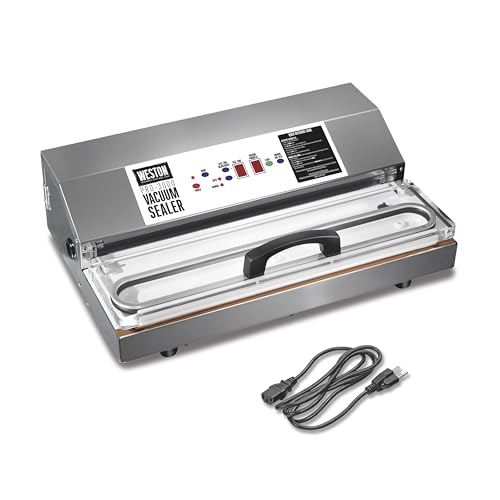
Weston Pro-3000 Vacuum Sealer Machine — Best Programmable for Game
Choose the Pro-3000 when you want the same wide, fan-cooled platform with programmable control. Repeated cuts in consistent sizes benefit from settings you can return to, and the wide bar covers the roasts and bulk grinds that defeat standard home sealers.
Key spec (verified): Seals bags up to 15 in wide; 5 mm bar; 1020 watts; fan-cooled; programmable (from Amazon title).
Strengths
- Programmable settings repeat across uniform cuts
- Same wide platform for large portions
- Fan cooling supports back-to-back sealing
Trade-offs
- Programming rewards setup time upfront
- Size demands dedicated storage
- More machine than small-game-only hunters need
Repetition is the programmable machine’s argument. When a whole animal becomes uniform one- and two-pound packages, returning to saved behaviour removes the small variations that cause the occasional failed seal at hour three, when attention is thinnest.
Pair that consistency with the wide bar and fan cooling, and the Pro-3000 suits hunters who process for more than one household or share equipment across a camp. The setup time it asks for is repaid on every subsequent animal.
Check the current price on Amazon to confirm the exact configuration and what is included before you order.
Best for: Hunters packaging uniform portions at volume / Not suited for: Small-game-only hunters with tiny volume

Weston Pro-1400 Vacuum Sealer Machine (65-0301-W) — Best for Standard Game Cuts
Pick the Pro-1400 when your game volume is real but your cuts run standard width. Sealing bags up to 11 inches with a 5 mm bar and commercial-grade framing, it covers most venison and small-game packaging without stepping to the widest platform.
Key spec (verified): Seals bags up to 11 in wide; 5 mm bar; 720 watts (from Amazon title).
Strengths
- Standard width covers most venison cuts
- Commercial-grade framing for seasonal loads
- Strong seal bar for thick freezer bags
Trade-offs
- 11-inch limit excludes the widest roasts
- Still a substantial seasonal investment
- Pace it on the largest multi-animal days
Most venison packaging is not extreme: chops, steaks, roasts of moderate size and a great deal of ground meat in family portions. The Pro-1400 is sized honestly for that reality, with commercial framing where it matters and without paying for width you will rarely use.
Judge your largest regular cut before deciding. If a favourite roast format truly needs the wider bar, step up without regret; if it does not, this machine’s balance of power and footprint is the season-after-season sweet spot.
Check the current price on Amazon to confirm the exact configuration and what is included before you order.
Best for: Most venison and small-game packaging / Not suited for: Anyone regularly sealing the widest roasts
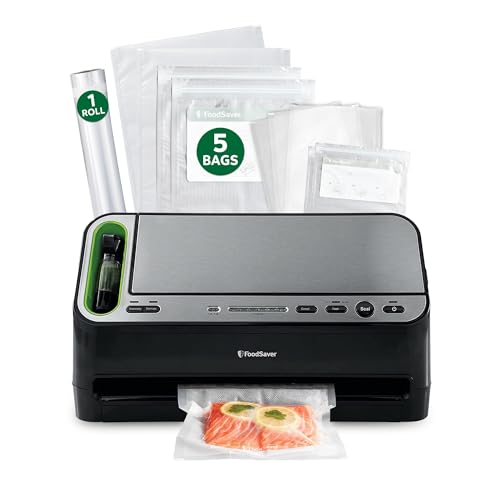
FoodSaver V4400 2-in-1 Vacuum Sealer Machine — Best Automatic for Venison Batches
Take the FoodSaver V4400 for the hunter whose volume sits between kitchen and processing shed. Automatic bag detection speeds repetitive sealing, and the 2-in-1 design handles the mix of portioned cuts, grind and freezer organisation a season produces.
Key spec (verified): 2-in-1 design; automatic bag detection (from Amazon title).
Strengths
- Automation speeds repetitive bag handling
- Versatile for mixed game and kitchen use
- Good bridge between home and heavy use
Trade-offs
- Home-class limits on marathon days
- Automation needs learning before season
- Rest it during the longest sessions
Not every hunter processes at shed scale. For one or two animals handled carefully at home, automation that speeds bag handling can matter more than raw width, and the V4400’s detection system removes the alignment fiddle from dozens of consecutive seals.
Respect its home-class limits: chill cuts well, keep the seal area dry, and take short pauses on the longest runs. Worked that way, it bridges kitchen duty and game duty in a single machine many households prefer.
Check the current price on Amazon to confirm the exact configuration and what is included before you order.
Best for: Hunters balancing kitchen and game duty / Not suited for: Multi-animal marathon processing days

FoodSaver FM2100 Vacuum Sealer Machine — Best Home Hunter Step-Up
Consider the FM2100 as the step-up for occasional hunters processing one animal with care rather than speed. Roll storage, a cutter and dry and moist modes cover a careful single-animal session, provided you pace the work and manage moisture well.
Key spec (verified): Roll storage & cutter; dry & moist modes; accessory port & hose (from Amazon title).
Strengths
- Complete starter setup for careful sessions
- Moist mode helps with fresh game
- Hose adds jar and container options
Trade-offs
- Must be paced on processing day
- Moist game needs chilling and headspace
- Not a multi-animal production tool
The FM2100 on processing day is an exercise in pacing. Work in batches, pat cuts dry, leave generous headspace on moist portions, and let the machine rest between groups of bags. A single animal handled that way seals cleanly without drama.
Be honest about the boundary: a second and third animal on the same day is where this class starts to struggle. Occasional hunters get real value here; high-volume processors should take the Westons above as the correct tool rather than a splurge.
Check the current price on Amazon to confirm the exact configuration and what is included before you order.
Best for: Occasional hunters processing carefully / Not suited for: High-volume processors doing several animals

VacMaster VP210 Chamber Vacuum Sealer — Best Chamber for Game & Liquids
Select the VacMaster VP210 chamber sealer when game work includes marinades, brines and wet packaging that external sealers handle poorly. The chamber design seals liquids properly, and its 10 x 13 inch bag format suits portioned cuts and prepared game dishes.
Key spec (verified): 10.25 in seal bar for 10 x 13 in bags; chamber design for liquids (from Amazon title).
Strengths
- Chamber seals marinades and wet game properly
- Consistent vacuum regardless of liquid
- Suits prepared dishes and brined cuts
Trade-offs
- Chamber size caps bag dimensions
- Heavy countertop footprint
- Overkill for purely dry packaging
Wet game work is where chamber sealers stop being a luxury. Marinating backstrap, brined birds and prepared stews all defeat external machines that pull liquid into the seal; the VP210’s chamber equalises pressure so liquid stays in the bag and the seal stays clean.
Its bag format suits portioned and prepared game better than whole large roasts, so read it as the wet-work specialist alongside, or instead of, a wide external machine depending on how your household actually cooks its game.
Check the current price on Amazon to confirm the exact configuration and what is included before you order.
Best for: Game cooks sealing marinades and wet dishes / Not suited for: Anyone packaging only large dry roasts
Comparison Table
| Pick | Badge | Key spec | Best for |
|---|---|---|---|
| Weston Pro-2300 Vacuum Sealer Machine | Best Overall for Game | Seals bags up to 15 in wide; 5 mm bar; 1020 watts; fan-cooled motor (from Amazon title) | Home processors handling deer-sized game yearly |
| Weston Pro-3000 Vacuum Sealer Machine | Best Programmable for Game | Seals bags up to 15 in wide; 5 mm bar; 1020 watts; fan-cooled; programmable (from Amazon title) | Hunters packaging uniform portions at volume |
| Weston Pro-1400 Vacuum Sealer Machine (65-0301-W) | Best for Standard Game Cuts | Seals bags up to 11 in wide; 5 mm bar; 720 watts (from Amazon title) | Most venison and small-game packaging |
| FoodSaver V4400 2-in-1 Vacuum Sealer Machine | Best Automatic for Venison Batches | 2-in-1 design; automatic bag detection (from Amazon title) | Hunters balancing kitchen and game duty |
| FoodSaver FM2100 Vacuum Sealer Machine | Best Home Hunter Step-Up | Roll storage & cutter; dry & moist modes; accessory port & hose (from Amazon title) | Occasional hunters processing carefully |
| VacMaster VP210 Chamber Vacuum Sealer | Best Chamber for Game & Liquids | 10.25 in seal bar for 10 x 13 in bags; chamber design for liquids (from Amazon title) | Game cooks sealing marinades and wet dishes |
Read the table as a shortlist, not a ranking carved in stone. The best choice for best food vacuum sealers for packaging game depends on how much you make at once, how you store the product, and which small annoyance you would rather live with. If two rows look tied, prefer the one whose trade-offs match the way you already work in your kitchen, because that is the one you will keep using.
How to Choose a Vacuum Sealer for Packaging Game?
Game packaging is a duty cycle question before it is a features question. Processing an animal means dozens of consecutive seals on chilled, sometimes damp cuts, often in wide portions. Fan cooling, seal-bar width and wattage class — all stated in the verified titles of the Weston picks here — are the specifications that decide whether bag forty seals like bag one.
Width comes second. Measure your largest regular portion format: roasts and bulk grind bags push you to the 15-inch class, while standard chops, steaks and family grind portions sit within 11 inches. Buying width you never use costs storage every day of the year; buying too little costs you on the one day that matters most.
Wet work decides the third question. If your game cooking leans on marinades, brines and prepared dishes, a chamber machine like the VP210 in this guide seals what external machines cannot. Many serious processors eventually run both styles; starting with the one that matches most of your packaging is the honest first step.
How Should You Set Up a Game Processing Station?
Cold is the foundation. Cuts should be thoroughly chilled — near freezing for moist portions — before sealing, because cold meat weeps less, seals cleaner and enters the freezer in better condition. Stage an ice bath or freezer rotation so sealing never waits on warm meat and meat never waits at room temperature.
Arrange the line in order: cutting, portioning, bagging, sealing, labelling, freezing flat. Rolls and pre-cut bags staged open, labels and marker at the sealer, and a tray system for finished bags keep the rhythm that makes a long session sustainable. Most processing-day misery is logistics, not machinery.
Protect seals from the game itself. Bone edges are the classic puncture risk: fold a cuff of bag over sharp points or pad them, keep the seal zone wiped dry, and inspect every seal before the bag joins the freezer stack. A failed seal found at the table costs seconds; found in spring it costs the meat.
External vs Chamber Sealers for Game: Which Do You Need?
External machines in the Weston class own the core game job: dry-to-moist cuts in portion bags, sealed in volume, at widths that cover roasts. Their limits are free liquid and the need for moisture discipline, which chilled meat and headspace mostly solve.
Chamber machines own everything wet: marinades that should stay in contact, brined birds, stews and sauces from game trim, and rapid marinating under vacuum. Their limits are chamber size, which caps bag dimensions, and a footprint that demands a permanent station.
Read your own harvest honestly. A deer or two of portioned cuts points external; a household that brines, marinates and batch-cooks game dishes all season has a genuine chamber case. The picks in this guide cover both answers with verified machines rather than compromises.
How to Vacuum Seal Game Meat on Processing Day?
Chill everything before the first seal. Portions destined for the sealer should be refrigerator-cold at minimum, and the moistest cuts benefit from a short freezer firm-up. Cold meat protects seal quality, food safety and your own pace, because firm portions handle and bag far more easily than soft ones.
Bag with headspace and a dry seal zone. Leave several inches above the food, wipe the inside top of every bag, and cuff the bag mouth outward while filling so the seal area never contacts meat juices. This unglamorous discipline is responsible for more processing-day success than any machine upgrade.
Seal in inspected rhythm. Run the machine steadily rather than in frantic bursts, check each seal line for continuity, and double-seal the bags holding your best cuts if you want belt-and-braces freezer life. Label with cut, weight and date at the sealer, not from memory at the freezer.
Freeze flat, then file. Bags frozen flat on trays stack densely and thaw evenly; once solid, stand them upright like files grouped by cut. A season’s game stored this way stays identifiable and usable, which is the entire point of the day’s work.
Common Buying Mistakes
Sealing warm, freshly butchered meat is the foundational game mistake. It weeps into seals, fogs bags and starts its freezer life in poor condition. Chill thoroughly first — overnight where the plan allows — and every downstream step becomes easier and safer.
Underbuying width and discovering it at the roast is a seasonal classic. One oversized portion format can force folding, double-bagging and weak seals across the best meat of the year. Measure your largest regular cut before choosing the machine, not during processing.
Running a home-class machine like a production line burns goodwill and seals alike. If your volume has outgrown pacing and rest breaks, the correct move is the fan-cooled class in this guide, not optimism. Match the machine to the animal count you truly process.
Skipping labels on game is costlier than on any other food, because frozen cuts are genuinely indistinguishable. Cut, weight and date on every bag, written at the sealer, turns a freezer of mysteries into a season of planned meals.
Final Recommendation
For most shoppers, start with the Best Overall pick and only move away from it for a stated reason: a smaller household, a larger batch, a tighter cupboard, or a strong preference for one material or workflow over another. That discipline keeps you from paying for capacity or features you will never use while still leaving room to step up when your routine genuinely demands it.
Keep exploring the cluster once you have shortlisted: Best Food Vacuum Sealers and Best Food Vacuum Sealers For Home Use cover the closest alternatives, while Best Chamber Vacuum Sealers and Best Commercial Vacuum Sealers help if your needs sit just outside this brief. Readers who want the neighbouring angle should also see Best Affordable Vacuum Sealers Machines.
Going Deeper: What Experienced Owners Learn About Best Food Vacuum Sealers For Packaging Game?
The shortlist above will get best food vacuum sealers for packaging game right for most buyers. The sections that follow are for readers who want the second layer — the habits, pairings and small systems that separate a purchase you are satisfied with from one you would repeat without thinking. None of it changes the picks; all of it changes how much value you extract from them.
How Should You Choose Bags and Rolls for Your Sealer?
Bags are the consumable your results depend on, so choose them as deliberately as the machine. Textured bags made for external sealers are not interchangeable with smooth storage bags, and the seal quality difference is immediate. Favour reputable supplies in the widths your machine supports, and treat suspiciously thin bags as the false economy they usually prove to be in a freezer full of food.
Rolls offer the flexibility most households end up preferring: cut exactly the length each portion needs, waste nothing on oversized pre-cuts, and keep one supply for every job. Pre-cut bags answer back with speed on uniform prep days. Many experienced users keep both, and the picks in this guide with built-in storage and cutters are designed around exactly that mixed habit.
Thickness and intended use matter for demanding jobs. Freezer storage over months, sharp-edged contents and sous vide baths all reward sturdier bags, while short-term fridge storage is kinder. Match the bag to the job rather than buying one grade for everything, and your failure rate — punctures, channel leaks, tired seals — falls noticeably.
Store supplies with the machine and track them like a pantry staple. Running out mid-session is the most preventable frustration in vacuum sealing, and it always seems to happen with food already portioned on the counter. A simple rule — open the last roll, order the next — keeps the system invisible and reliable.
How Do You Organise a Freezer Around Vacuum Sealing?
Freeze flat, label fully, file upright: that system turns a freezer from a dig site into an index. Bags frozen flat on a tray become uniform files that stand in rows grouped by type, with labels facing out. You find dinner in seconds, you see quantities at a glance, and nothing migrates to the forgotten back corner to age into waste.
Label with the information your future self actually needs: contents, portion count or weight, and the date sealed. Add the cut or recipe where it matters — one frozen white fish looks exactly like another, and ground meat for two meals differs from ground meat for six only in the plan it was sealed for.
Rotate with a glance, not a project. A monthly look across the files, oldest pulled forward into the week’s meals, keeps stock turning over while quality is at its peak. Vacuum sealing extends freezer life generously, but the goal is food eaten at its best, not records set for storage duration.
Keep a small inventory habit if your freezer is large: a list on the door or in a phone note, updated as bags go in and out. It sounds fussy for exactly one week, after which it saves more time and duplicated shopping than any other habit in this guide. Serious preservers swear by it for a reason.
How Do You Troubleshoot Weak Seals and Lost Vacuum?
Work the problem in order of likelihood. First, the seal zone: moisture, grease or a wrinkle crossing the seal line causes most failures, and the fix is technique — headspace, a wiped bag top, contents flattened. Second, the bag itself: punctures from sharp edges and tired, reused bags account for most of the rest.
Third, the machine’s consumables. Sealing strips wear and gaskets tire, and both announce themselves as gradually weaker seals rather than sudden failure. Consult your model’s guidance for inspection and replacement, and note that storing the lid unlatched where advised preserves gasket shape between sessions.
Fourth, the load. Very wet foods, warm foods and overfilled bags defeat otherwise healthy machines, which is why the how-to section of this guide insists on chilling and headspace. If a seal fails, change one variable at a time and reseal a test bag; random adjustments teach you nothing and waste supplies.
Keep notes during big sessions. Which foods sealed cleanly, which needed a double seal, which bags misbehaved — a few lines after a processing or prep day make the next session measurably smoother. Vacuum sealing rewards system thinkers, and the system includes your own recorded experience.
Shortlist by need: For wide game portions, see Weston Pro-2300 Vacuum Sealer Machine. For programmable batches, see Weston Pro-3000 Vacuum Sealer Machine. For wet game and marinades, see VacMaster VP210 Chamber Vacuum Sealer. Each of those links goes to the verified listing for the exact model discussed above, so you can confirm the configuration and check price on Amazon before deciding.
Which Pick Should Each Kind of Household Actually Buy?
The small household sealing a few bags a week should buy storage and simplicity, not power. A compact machine that lives within reach will be used for the cheese, the herbs and the half-recipe portions where waste actually happens, and those small rescues — repeated weekly — are where a sealer earns its keep fastest. Judge every extra feature against the question: will this make me seal more often?
The batch-cooking household should buy flow. Roll storage, a cutter that lives on the machine, modes that handle a mixed shop, and supplies staged in one place turn a Sunday session from a project into a rhythm. Your bottleneck will never be suction; it will be the small delays between bags, so choose the machine that removes the most of them.
The bulk-buying and preserving household should buy duty cycle without apology. When sessions run long and bags run wide, cooling, seal strength and build decide whether the last bag equals the first. Stepping up a class costs counter space every day, but it buys back the one or two days a year when the harvest or the bulk shop would otherwise defeat a lighter machine.
The specialist household — the hunter, the angler, the gardener with a glut — should read its own guide in this cluster alongside this one and buy for the peak, not the average. Peaks are when seals fail and food is lost, and equipment chosen for the average week will be remembered, unkindly, on the hardest day of the year.
What Should You Check on the Listing Before You Order?
Confirm the exact bundle. Included bags, rolls, hoses and starter kits vary between listings of the same model, and the first session’s convenience depends on them. The verified spec lines in this guide record what the Amazon titles state; the listing confirms what your box will contain, and two minutes there prevents a stalled first weekend.
Confirm bag compatibility in the maker’s own terms: supported widths, textured-bag requirements, and any roll-size limits for built-in storage. Supplies are the ongoing relationship with this machine, and a model that accepts widely available standard sizes will be cheaper and easier to feed for its whole life.
Confirm the modes you are actually counting on. Dry and moist settings, manual or pulse control, seal-only operation and accessory support are model-specific, not category defaults. If your decision rests on one of them — and for delicate foods or jars it reasonably might — verify it on the exact listing rather than assuming the range shares it.
Finally, confirm physical fit: the machine’s footprint against your storage, its weight if you will move it each session, and cord practicalities in your kitchen. A sealer’s specifications include its life in your home, and the listing’s dimensions are the cheapest research you will do in this entire purchase.
Processing Day, Hour by Hour: Where the Machine Earns Its Keep?
Hour one is setup and the first clean seals on chilled, well-prepared cuts. Everything works in hour one; every machine looks adequate in hour one. The station layout decided the night before — rolls staged, labels ready, trays waiting — is what hour one actually tests, and a calm first hour predicts the day.
Hour two is rhythm. Portions arrive steadily, seals are inspected without breaking stride, and the operator learns the day’s small truths: which cuts weep, which bags need a cuff over a bone edge, which portions want a double seal. A fan-cooled, wide-bar machine settles into this hour without complaint, and the difference from home-class equipment begins to tell.
Hour three is where seasons are won or lost. Attention thins, the seal zone wants wiping more often, and tired equipment starts producing the occasional doubtful seal that must be caught and redone. This is the hour the specifications in this guide were chosen for — cooling, seal width and consistency are hour-three virtues, invisible in any showroom.
The final hour is discipline: labels completed at the sealer, bags frozen flat in order, the station cleaned while the lessons are fresh. The hunter who finishes this way opens the freezer in February to a filed, dated, identifiable season — and understands that the machine was never really the product. The system was.
One Last Check: Matching the Sealer to Your Food, Freezer and Habits
Your freezer is part of the machine’s specification. Flat-filed bags need shelf geometry that suits them, and a household with a small freezer should portion smaller and rotate faster rather than sealing a season it cannot store well. Measure the destination as honestly as the machine, and let the two choices inform each other.
Your shopping pattern is the other hidden specification. Weekly small shops reward compact convenience; monthly bulk runs reward flow and duty cycle; seasonal peaks reward the heavy classes in this cluster’s guides. The sealer that matches the pattern disappears into it, while the mismatched one becomes a monthly argument with yourself.
Your tolerance for systems closes the decision. Vacuum sealing pays best inside small habits — labelling, rotating, tracking supplies — and households that enjoy such order extract remarkable value. Households that do not should still buy, but buy simple, and let the machine’s ease carry what routine will not.
Key Takeaways Before You Decide
First, session reality outranks headline specifications. Storage, cutter access, roll handling and mode fit decide whether a sealer becomes a weekly habit or a cupboard monument, and habit is where the money is saved. Judge the picks in this guide against your longest honest session and your actual storage before you judge them against each other.
Second, technique is half the machine. Chilled food, generous headspace, a clean dry seal zone, inspected seals and honest labelling will make a mid-range sealer perform beautifully, while their absence will make a flagship machine look unreliable. Learn the handful of habits in the how-to section and every pick here rises a class in your hands.
Third, supplies are the ongoing purchase. Bags and rolls in standard sizes, kept in stock beside the machine, cost less and frustrate less over the machine’s life than any saving made on the hardware itself. Price the whole system — machine plus a realistic year of supplies, checked on the listings — before deciding what ‘affordable’ means for your household.
Finally, buy for the peak you truly face and the routine you truly keep, in that order of honesty. A machine matched to both will disappear into your kitchen’s working life, sealing quietly in the background of better-stored food and calmer prep days — which is precisely the unglamorous, compounding value this category exists to deliver.
How Does Good Packaging Change the Way Game Is Cooked and Shared?
Well-sealed game invites better cooking. Portions that enter the freezer in known weights, clearly labelled by cut and date, get chosen for recipes deliberately — the backstrap reserved for the dish it deserves, the trim directed to the grinder’s next run — instead of being thawed hopefully and cooked around. Packaging day, done properly, is the first step of every good game meal that follows it.
It also changes sharing. A labelled, neatly sealed portion is a gift a hunter can give with pride and a recipient can store with confidence, and much of a season’s social value travels in exactly those packages. The care taken at the sealer — clean seals, honest weights, clear dates — is legible to anyone who receives the result, and it honours the animal in a way a torn wrapped parcel never quite does.
Finally, it changes the hunter’s own planning. A filed, inventoried freezer turns next season’s decisions into informed ones: which cuts ran short, which were over-supplied, what the household actually eats. That feedback loop, season over season, is how good processors become economical ones — and it begins with the unglamorous discipline of sealing and labelling well.
One final habit ties the whole season together: clean and inspect the machine before it is stored, not when it is next needed. Wipe the seal area, check the strip and gasket, note any behaviour that seemed tired, and record the season’s simple numbers — animals processed, bags used, failures caught — while they are still known. Next season then begins from readiness instead of archaeology, and the first animal is packaged with the calm of a system that was left prepared. That closing discipline is the difference between equipment and a practice, and it is the practice, repeated season after season, that turns game packaging from the hardest day of the year into merely a long, satisfying one with a freezer full of evidence at the end of it.
It is also worth saying plainly what this guide did not do: it did not dress kitchen machines in processing language, and it did not hide the limits of the step-up picks behind enthusiasm. Each machine earned its place through verified duty evidence — width, cooling, seal construction, or a chamber that genuinely handles wet work — matched to an honestly stated volume of game. If your season sits between two picks, choose by your largest regular cut and your longest real day, because those two facts, and not any average week, are what processing equipment must survive. Buy for that day, work the technique this guide describes, and the freezer will testify to the decision all winter.
Decide this week, while last season’s frustrations are still specific enough to be useful, and decide it completely: width measured against your largest cut, cooling matched to your longest day, wet work assigned honestly to the chamber or the external, and supplies ordered alongside the machine rather than discovered missing on the morning itself. Game packaging rewards that completeness like few purchases can, because its test comes once a year, all at once, with a season’s meat on the table and no patience for equipment that almost copes. Buy for that morning, work the technique calmly, and the freezer will hold the evidence until spring.
Related guides
Frequently Asked Questions
What size vacuum sealer do I need for deer processing?
Most venison portions fit an 11-inch seal width; regular roasts and bulk grind bags justify the 15-inch class. Measure your largest regular portion format and choose for that, with fan cooling if you process whole animals in single sessions.
Can I vacuum seal marinated game meat?
With an external sealer, only with discipline: chill well, leave extra headspace, and expect occasional seal trouble. A chamber sealer handles marinades properly and is the right tool if marinated game is a regular part of your cooking.
How do I stop bones puncturing the bags?
Pad sharp bone edges with a folded cuff of bag or a small piece of suitable padding, position bones away from the seal, and inspect bags after freezing. Thick, quality bags and flat freezing further reduce punctures.
How long will vacuum-sealed game keep in the freezer?
Substantially longer than wrapped game, because air removal slows freezer burn and flavour loss. Exact life depends on starting quality, seal integrity and steady freezer temperature, so label with dates and rotate oldest first.
Is a chamber sealer worth it for hunters?
If your game work is mostly portioned dry cuts, a wide external machine is the better first buy. If brines, marinades and prepared game dishes feature all season, the chamber earns its station. Many high-volume households eventually value both.
Why do seals fail halfway through processing day?
Heat, moisture and fatigue — the machine’s and yours. Fan-cooled models resist the first, chilled meat and dry seal zones fix the second, and a staged, labelled line with short pauses fixes the third.
