Disclosure: airfryerkitchensupply.com is reader-supported. When you buy through links on our site, we may earn an affiliate commission at no extra cost to you.
Where to buy
Shopping for the best commercial indoor smokers means shopping for freight-class equipment, so this guide links only to verified listings. Every linked pick below is sold through Amazon, which keeps ordering, delivery and returns in one place for a purchase this large. Use the links below to check price on Amazon and confirm the exact configuration before you commit:
- HAKKA Commercial Electric Smoker DSH-S50B — check price on Amazon
- CLIVIA Electric Smoker, 4-Rack Digital Commercial — check price on Amazon
- Smokehouse Big Chief Electric Smoker — check price on Amazon
- Smokehouse Little Chief Front Load Smoker — check price on Amazon
- Masterbuilt 30-inch Analog Electric Smoker MB20070210 — check price on Amazon
- EAST OAK 30-inch Electric Smoker, Mist Black — check price on Amazon
Commercial smokers are freight-class purchases for many buyers, so confirm liftgate delivery, pallet size and who unloads before checkout. A smoker that arrives on a pallet at the kerb is only a bargain if you have the staff and equipment to move it the last fifty feet.
Let us define the term before it defines your purchase, because ‘indoor smoker’ is the most misunderstood phrase in this entire cluster. The best commercial indoor smokers are not machines that make smoke disappear. Every smoker produces smoke, grease vapour and heat; what makes a smoker an indoor candidate is electric heat — no open flame, no carbon monoxide from combustion — combined with a building that handles the exhaust: a proper hood or venting path, clearances, and local code approval. Any listing or guide that skips the ventilation sentence is selling you a problem with your landlord, your insurer or your fire marshal.
With that honesty in place, the indoor class is genuinely valuable. Electric cabinets let a city restaurant, a hotel kitchen or a production space without an outdoor yard run a real smoking programme. The machines below are the verified candidates: stainless commercial cabinets built for low, steady heat, and established electric smokers whose form factor suits an indoor station under a hood.
Notice who is absent: gas and charcoal. Propane and solid fuel produce combustion gases that belong outdoors, and no amount of wishful listing language changes that. If a space cannot vent an electric cabinet, the honest answer is an outdoor smoker or a different menu — and the restaurant-specific guide in this cluster walks through the approval process in more depth.
In this guide
Quick Picks
If you need the short version of the best commercial indoor smokers before the detail, start here. Each pick below earned its badge for a different commercial job, and the badge stays the same in the full review further down.
- Best Overall Indoor Cabinet: HAKKA Commercial Electric Smoker DSH-S50B — delis and restaurants running indoor sausage, bacon and pastrami production. — Check on Amazon
- Best for Low-Temperature Indoor Work: CLIVIA Electric Smoker, 4-Rack Digital Commercial — restaurants smoking fish, cheese and charcuterie indoors. — Check on Amazon
- Best for Fish and Jerky Production: Smokehouse Big Chief Electric Smoker — smokehouses and delis producing jerky, fish and sausage at low heat. — Check on Amazon
- Best Compact Low-Heat Specialist: Smokehouse Little Chief Front Load Smoker — small kitchens adding a focused fish, cheese or jerky programme. — Check on Amazon
- Best Indoor Barbecue Cabinet: Masterbuilt 30-inch Analog Electric Smoker MB20070210 — restaurants wanting indoor barbecue cuts under a proper hood. — Check on Amazon
- Best for Low-Attention Indoor Runs: EAST OAK 30-inch Electric Smoker, Mist Black — indoor stations where minimising door openings matters most. — Check on Amazon
Budget note that outranks every pick: the ventilation and approval work costs more than the smoker in most indoor installations. Price the hood, the duct route and the inspection before falling in love with a cabinet — the machine is the cheap part of indoor smoking.
How These Picks Were Chosen
Picks were chosen for indoor candidacy, in this order: electric heat only; temperature control precise enough for the low work indoor programmes usually do — fish, sausage, cheese, charcuterie; cabinet construction that cleans to an indoor kitchen’s standard; and sizes that fit under commercial hoods. Every linked pick was verified against the airfry site’s Amazon data before earning a link, and spec boxes quote only those verified listings.
Excluded deliberately: every gas, charcoal and pellet model, however good, because combustion has no place in this category. Also excluded: countertop ‘smoker’ gadgets that flavour a pan of food with a wisp of smoke — a different tool for a different job, and not commercial smoking.
The 6 Best Commercial Indoor Smokers Reviewed

HAKKA Commercial Electric Smoker DSH-S50B — Best Overall Indoor Cabinet
The HAKKA DSH-S50B is the indoor list’s natural leader: an eight-rack electric smoke oven whose own positioning names indoor use, built for pastrami, sausage, bacon and smoked poultry — precisely the menu indoor smoking exists for. Under a hood, it stacks a full production run into a vertical footprint that respects expensive hood space.
Strengths
- Eight racks run a full indoor production batch in one load
- Cabinet explicitly positioned for indoor as well as outdoor use
- Purpose-built for the cured products indoor programmes serve
Trade-offs
- Indoor use still requires ventilation and code approval
- Cabinet width limits the widest barbecue cuts
- High rack count tempts overloading — airflow gaps matter
| Spec | Detail |
|---|---|
| Racks | 8 racks (per verified listing) |
| Format | Vertical electric smoke oven cabinet |
| Positioning | Listed for indoor and outdoor home and commercial cooking |
| Fuel | Electric with wood chips |
Its indoor virtues are practical ones. Electric heat means no combustion in the room; the cabinet format means racks and product stay contained behind a door that opens rarely; and the product list it was designed for is the low-and-steady programme that perfumes a building least aggressively. Pair it with the ventilation it still requires, and it is the closest thing to a turnkey indoor smoking station in this guide.
Ownership and running costs: Ownership is where the HAKKA Commercial Electric Smoker DSH-S50B earns or loses its place after the first month. Its running costs are the ordinary ones for its class — fuel, chips or pellets where relevant, gaskets, probes and the occasional controller or burner part — and none of them should surprise a buyer who budgets a small maintenance line from day one. What protects the economics is routine: a five-minute check on a schedule catches the worn seal, the tired igniter or the ash-choked fire path while it is still a nuisance rather than a lost service. Kitchens that treat this machine as infrastructure, with a named owner and a log, report the familiar pattern of commercial equipment: boring reliability. Kitchens that treat it as a purchase, finished at checkout, meet the other pattern. The HAKKA Commercial Electric Smoker DSH-S50B rewards the first kind of owner, which is precisely the kind a business should be. The verified headline specification — 8 racks (per verified listing) — frames all of it: keep that number in view when you plan loads, staffing and space, and the machine will do the job its badge promises.
Best for: delis and restaurants running indoor sausage, bacon and pastrami production / Not suited for: indoor brisket programmes wanting wide-grate formats
Check the current price on Amazon

CLIVIA Electric Smoker, 4-Rack Digital Commercial — Best for Low-Temperature Indoor Work
Indoors, the CLIVIA’s specification reads like it was written for the building: digital control from 86°F, a 12-hour timer with auto shutoff, and a stainless cabinet. The low floor is the headline — cheese and fish programmes that are impossible in a barbecue cabinet are routine here — and the shutoff timer is the feature that makes overnight indoor runs responsible.
Strengths
- 86°F floor enables cheese, fish and delicate curing indoors
- Timer with auto shutoff suits overnight indoor runs
- Stainless cabinet meets indoor inspection standards happily
Trade-offs
- Four racks is mid-size for production volume
- Barbecue ambitions should note the 248°F ceiling
- Still requires the full ventilation and approval path
| Spec | Detail |
|---|---|
| Temperature range | 86–248°F digital control (per verified listing) |
| Timer | 0–12 hour timer with auto shutoff |
| Body | Stainless steel cabinet |
| Racks | 4 racks |
Stainless matters indoors more than anywhere: it wipes to an inspector’s standard and does not hold last month’s flavours. Four racks keep it a mid-size tool, ideal for a restaurant’s smoked programme rather than a wholesaler’s plant. If your indoor menu is delicate and your standards are professional, this is the cabinet designed around both.
Cleaning and daily care: Cleaning decides how long the CLIVIA Electric Smoker, 4-Rack Digital Commercial stays pleasant to run. Racks and drip paths want attention while they are still warm, when grease wipes rather than chisels; the fire or chip path wants its ash and residue cleared on a fixed rhythm rather than when performance visibly sags. Build both into the closing checklist with initials attached, because commercial cleaning that depends on memory happens exactly as often as memory allows. The good news is that nothing in this machine’s care routine is skilled work — it is timed work, ten minutes in the right places. The bad news is symmetrical: skip those ten minutes for a month and the machine will collect the debt in flavour, in temperature behaviour and eventually in a deep clean that takes an afternoon. Buyers choosing the CLIVIA Electric Smoker, 4-Rack Digital Commercial for restaurants smoking fish, cheese and charcuterie indoors should cost that daily ten minutes into the decision; it is the real subscription the machine charges. The verified headline specification — 86–248°F digital control (per verified listing) — frames all of it: keep that number in view when you plan loads, staffing and space, and the machine will do the job its badge promises.
Best for: restaurants smoking fish, cheese and charcuterie indoors / Not suited for: high-volume cured-meat production
Check the current price on Amazon

Smokehouse Big Chief Electric Smoker — Best for Fish and Jerky Production
The Big Chief is a tradition with a power cord: a front-loading electric smoker rated at 50 lb capacity, specialised for the low-temperature work — fish, jerky, sausage, cheese — that indoor programmes are built on. It has been doing this job, in essentially this form, longer than most of its competitors have existed.
Strengths
- 50 lb batch capacity suits real fish and jerky production
- Decades-old design specialised in low-temperature smoking
- Simple operation — no electronics to programme or fail
Trade-offs
- Low-temperature specialist — not a hot barbecue cooker
- Basic construction compared with stainless cabinets
- Indoor siting still needs full ventilation
| Spec | Detail |
|---|---|
| Capacity | 50 lb capacity (per verified listing) |
| Dimensions | 24.5 x 18 x 12 in (per verified listing) |
| Format | Front-loading electric smoker |
| Fuel | Electric with wood chips |
Its simplicity is the feature. No controller to drift, no programme to learn: chips in the pan, product on the racks, and a gentle heat that treats delicate food correctly. Production kitchens running jerky or smoked fish indoors under a hood will find its batch size honest and its temperament forgiving. Just do not ask it to be a brisket oven; it never claimed to be one.
Staffing and workflow fit: In a working kitchen the Smokehouse Big Chief Electric Smoker is a colleague, and like a colleague it has a temperament the roster must fit. Its demands are predictable — loading, periodic checks, a defined cleaning moment — which makes it easy to write into prep sheets and shift plans. That predictability is worth more than raw capacity in most businesses, because the cook who runs it also runs three other things. Where this machine sits in the workflow matters too: close enough to the pass that checking it costs steps in single digits, far enough from the line’s traffic that its door is not opened by curiosity. Train the routine to two people, write the temperatures and timings on a card that lives with the machine, and the Smokehouse Big Chief Electric Smoker becomes the rare station that survives staff turnover intact. That, more than any feature, is what ‘commercial’ means in practice. The verified headline specification — 50 lb capacity (per verified listing) — frames all of it: keep that number in view when you plan loads, staffing and space, and the machine will do the job its badge promises.
Best for: smokehouses and delis producing jerky, fish and sausage at low heat / Not suited for: anyone wanting high-temperature barbecue indoors
Check the current price on Amazon

Smokehouse Little Chief Front Load Smoker — Best Compact Low-Heat Specialist
The Little Chief is the Big Chief’s smaller sibling, aimed at the same low-to-mid temperature work — fish, jerky, cheese, sausage — in a footprint a crowded kitchen can actually spare. For a restaurant adding one smoked speciality rather than a whole programme, that focus is a virtue.
Strengths
- Purpose-built temperature range for delicate indoor products
- Compact footprint fits under crowded hoods
- Front loading is easy to work in a tight station
Trade-offs
- Small capacity — a specialist, not a production plant
- Low-to-mid heat excludes hot barbecue work
- Shares the ventilation requirement of every pick here
| Spec | Detail |
|---|---|
| Temperature profile | Low to mid temperature (per verified listing) |
| Positioning | Built for fish, jerky, cheese and sausage |
| Format | Front-load electric smoker |
| Fuel | Electric with wood chips |
Indoor stations live and die by hood space, and the Little Chief asks for very little of it while delivering the gentle, steady heat delicate products need. It will not grow with a booming programme — its bigger brother exists for that — but as a deliberate, single-purpose indoor tool it is honestly sized and honestly priced as a class.
Scaling and menu growth: Buyers rarely stay the size they were, so it is worth asking how the Smokehouse Little Chief Front Load Smoker behaves as the programme grows. Its ceiling is honest: when loads regularly fill every rack and the schedule regularly wants a second run, the machine is telling you the programme has outgrown a single unit — at which point it typically becomes the second cooker rather than being replaced, handling overflow, specials or the delicate work while a larger unit takes the core. That graceful second life is a real economic virtue, and it is one reason to choose a recognised design over an obscure one: parts, knowledge and resale interest persist. Plan the growth path when you buy — where a second unit would stand, what it would be — and the Smokehouse Little Chief Front Load Smoker stops being a purchase and becomes the first step of a system sized for small kitchens adding a focused fish, cheese or jerky programme. The verified headline specification — Low to mid temperature (per verified listing) — frames all of it: keep that number in view when you plan loads, staffing and space, and the machine will do the job its badge promises.
Best for: small kitchens adding a focused fish, cheese or jerky programme / Not suited for: volume production of any kind
Check the current price on Amazon
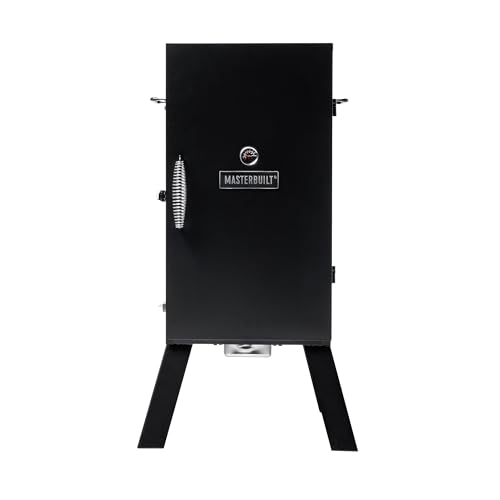
Masterbuilt 30-inch Analog Electric Smoker MB20070210 — Best Indoor Barbecue Cabinet
Where the other indoor picks specialise in curing, the Masterbuilt analog 30-inch brings barbecue indoors: 535 square inches of vertical cabinet for ribs, butts and poultry, run on simple analog control. Sited under a real commercial hood, it lets a yard-less city kitchen serve genuinely smoked barbecue.
Strengths
- Barbecue-sized cabinet for kitchens smoking cuts, not just cures
- Analog control is simple, robust and easy to teach
- Established design with wide parts availability
Trade-offs
- Analog dial lacks the precision of digital low-heat cabinets
- Barbecue loads make more smoke and grease for the hood to handle
- No side chip loader on this analog pattern
| Spec | Detail |
|---|---|
| Cooking space | 535 sq. in. (per verified listing) |
| Control | Analog temperature control |
| Racks | Chrome smoking racks |
| Format | 30-inch vertical electric cabinet |
Analog is a deliberate trade here. You give up the digital cabinets’ low-temperature finesse and gain a control a new hire understands in one sentence, with nothing electronic to fail. The ventilation burden is heavier than the curing cabinets’ — barbecue loads smoke harder — so the hood conversation in the guide above applies with full force. Meet it, and this is the indoor barbecue workhorse.
Who should walk past it: Honesty about fit matters as much as enthusiasm, so here is the other side of the Masterbuilt 30-inch Analog Electric Smoker MB20070210. It is the wrong machine for delicate low-temperature curing programmes, and no discount or deadline changes that. It is also the wrong machine for buyers who will not keep its small routines — the checks, the cleaning, the log — because its design assumes an owner who does. And it is the wrong machine bought for a menu that exists only in ambition: equipment should serve the programme you will actually run this season, with the next season’s growth handled by the scaling path rather than by overbuying today. Buyers whose needs match its badge — Best Indoor Barbecue Cabinet, aimed at restaurants wanting indoor barbecue cuts under a proper hood — will find it exactly as advertised. Buyers outside that description should take the compliment of a clear ‘not this one’ and choose from the other five with this guide’s blessing. The verified headline specification — 535 sq. in. (per verified listing) — frames all of it: keep that number in view when you plan loads, staffing and space, and the machine will do the job its badge promises.
Best for: restaurants wanting indoor barbecue cuts under a proper hood / Not suited for: delicate low-temperature curing programmes
Check the current price on Amazon

EAST OAK 30-inch Electric Smoker, Mist Black — Best for Low-Attention Indoor Runs
The EAST OAK earns its indoor place on a technicality that matters: it is listed as an outdoor smoker, but its design — side chip loader, viewing window, built-in probe — is precisely the design that behaves best under a hood, because it almost never needs its door opened. Every avoided opening is smoke the ventilation does not have to chase.
Strengths
- Side loader and window minimise door openings — exactly what indoor capture needs
- Built-in probe supports unattended, logged cooking
- Largest capacity among this guide’s indoor candidates
Trade-offs
- Listed for outdoor use — indoor siting is the installer’s approval to win
- Window needs cleaning to earn its keep
- Newer brand than the established cabinets
| Spec | Detail |
|---|---|
| Cooking space | 725 sq. in. (per verified listing) |
| Chip system | Side chip loader — refills without opening the door |
| Features | Built-in meat probe and viewing window |
| Fuel | Electric |
That makes it the pragmatic indoor barbecue cabinet where an installer and inspector are comfortable approving it: 725 square inches, long uninterrupted chip loads, and probe-logged cooking. The approval burden is yours to carry — this guide flags the listing’s outdoor positioning plainly rather than laundering it — but as a piece of engineering for low-attention indoor runs, it is the best-shaped tool here.
Delivery, siting and first month: The first month with the EAST OAK 30-inch Electric Smoker, Mist Black decides its reputation in the building, so manage it deliberately. Confirm the delivery route and the final position before it arrives — door widths, floor, clearances and the utility it needs — then commission it empty, then with a cheap load, then with the real programme, in that order. Each stage teaches the team something the next stage depends on: the machine’s hot spots, its recovery habits, its voice. Write those lessons down while they are fresh; the card that lives with the machine is the difference between a cooker one person understands and a cooker the whole kitchen runs. Buyers who invest that first month get the boring, profitable years that follow. The EAST OAK 30-inch Electric Smoker, Mist Black is built for those years — the commissioning is simply how you claim them. The verified headline specification — 725 sq. in. (per verified listing) — frames all of it: keep that number in view when you plan loads, staffing and space, and the machine will do the job its badge promises.
Best for: indoor stations where minimising door openings matters most / Not suited for: programmes needing certified indoor-rated equipment paperwork
Check the current price on Amazon
Comparison Table
| Pick | Badge | Key spec | Best for |
|---|---|---|---|
| HAKKA Commercial Electric Smoker DSH-S50B | Best Overall Indoor Cabinet | 8 racks (per verified listing) | delis and restaurants running indoor sausage, bacon and pastrami production |
| CLIVIA Electric Smoker, 4-Rack Digital Commercial | Best for Low-Temperature Indoor Work | 86–248°F digital control (per verified listing) | restaurants smoking fish, cheese and charcuterie indoors |
| Smokehouse Big Chief Electric Smoker | Best for Fish and Jerky Production | 50 lb capacity (per verified listing) | smokehouses and delis producing jerky, fish and sausage at low heat |
| Smokehouse Little Chief Front Load Smoker | Best Compact Low-Heat Specialist | Low to mid temperature (per verified listing) | small kitchens adding a focused fish, cheese or jerky programme |
| Masterbuilt 30-inch Analog Electric Smoker MB20070210 | Best Indoor Barbecue Cabinet | 535 sq. in. (per verified listing) | restaurants wanting indoor barbecue cuts under a proper hood |
| EAST OAK 30-inch Electric Smoker, Mist Black | Best for Low-Attention Indoor Runs | 725 sq. in. (per verified listing) | indoor stations where minimising door openings matters most |
The two stainless cabinets (HAKKA, CLIVIA) are the professional indoor core. The Smokehouse pair serve the low-temperature fish and jerky tradition. The Masterbuilt and EAST OAK cabinets bring barbecue formats to indoor stations where a hood allows. All six assume ventilation; they differ in programme, not in that requirement.
What ‘Indoor’ Actually Requires: Ventilation, Code and Insurance
A commercial indoor smoker installation has three gatekeepers. The fire and health codes in your jurisdiction decide whether electric smoking equipment may operate indoors and under what exhaust conditions. Your landlord or building owner decides whether ducting may run where it must. Your insurer decides whether the installation, once approved, is covered. A ‘yes’ from the smoker’s product page is not among the gatekeepers.
In practice, most approved installations put the cabinet under an existing commercial hood or a dedicated vent, keep clearances the manufacturer specifies, and treat grease like the fire load it is: drained, contained and cleaned on a documented rhythm. Start these conversations before ordering. More than one kitchen has owned a beautiful cabinet that lived in storage because the duct route was impossible.
How to Choose an Indoor Commercial Smoker
Indoor programmes skew delicate: smoked fish, sausage, cheese, bacon, charcuterie, nuts and vegetables. That means low-temperature control is the first specification — cabinets that hold temperatures well under 200°F without overshoot, like the CLIVIA’s listed 86°F floor, open menus that barbecue cabinets cannot touch. If your indoor menu is brisket, be honest that you are replicating an outdoor programme indoors and size the hood accordingly.
Second, cleanability. Indoor kitchens live under inspection, and a cabinet whose racks, drip system and interior wipe down fast will actually get cleaned; a fiddly one will not, and old grease indoors becomes an odour problem for the whole dining room. Stainless interiors and removable racks are worth real money here. Third, footprint under the hood: hood space is the most expensive real estate in a kitchen, so vertical cabinets that stack racks earn their place over wide formats.
Managing Smoke and Smell Indoors
Even vented, an indoor smoker perfumes a building. Schedule heavy smoking for hours when the dining room is empty where you can; overnight and early-morning runs are the indoor tradition for a reason. Keep door openings minimal during those runs — every opening is a puff the hood must catch — and prefer side-loading chip designs that refill without opening the cabinet.
Wood choice is an odour choice indoors. Fruitwoods and alder read gentle; mesquite announces itself three rooms away. Match the wood to the building as carefully as to the food, and keep chips dry and stored away from the kitchen’s ambient grease. Finally, maintain the vent path: a grease-filmed duct serving a smoker is a maintenance item with a schedule, not a surprise to discover later.
The Real Cost of Indoor Smoking: A Budget Walk-Through
Buyers consistently budget for the cabinet and improvise the installation, so let us reverse the habit with a walk through the real cost stack. At the bottom sits the smoker itself — the smallest line in most indoor projects. Above it: the electrical work to give the cabinet a proper supply; the exhaust work, whether that is tying into an existing hood with capacity to spare or adding dedicated ducting, which is where budgets go to be surprised; the approvals and inspections; and the unglamorous items — clearances honoured, floor protection, a grease plan — that inspectors notice.
Running costs continue the theme. Filters and vent-path cleaning on a schedule, chip supply, and the labour of a documented cleaning routine all belong in the programme’s costing from the first menu draft. None of these numbers is frightening individually; together they routinely exceed the cabinet’s price across the first year, which is fine — provided the menu was priced knowing it.
The walk-through’s point is not to discourage but to sequence: price the whole stack, in writing, before ordering anything. Indoor smoking projects fail on surprise, not on totals. A kitchen that knows its real number can decide like a business; a kitchen that discovers it in instalments has already decided, badly.
Designing an Indoor Menu That Plays to Electric Strengths
Indoor equipment rewards menus designed for it and punishes menus transplanted from a wood yard. The strengths are precision and patience: low temperatures held exactly, gentle smoke, unattended hours. The menu that plays to them reads like a deli board crossed with a fishmonger’s pride — house-cured bacon, pastrami, smoked salmon and trout, sausages, smoked cheeses, nuts, vegetables and eggs — items where smoke is a crafted note and consistency across weeks is the entire value proposition.
Portion and format thinking helps too. Indoor cabinets stack racks; products that portion flat and uniform — fillets, links, slabs of bacon, trays of vegetables — use the geometry best and cook most evenly. Whole large cuts are the geometry’s worst case, which is one more reason the indoor menu leans charcuterie rather than brisket.
Price the programme as the speciality it is. House-smoked items carry a story no bought-in product matches, and menus that tell it — cured here, smoked here, in small batches — convert the installation’s cost into margin. The smoker’s job is to make the story true every week; the menu’s job is to make sure the truth is charged for.
Living With an Indoor Smoker: Neighbours, Staff and Routine
An indoor smoker is a tenant in a building with other tenants, and its long-term welcome depends on manners. Odour is the diplomacy: even a well-vented cabinet announces production days, and neighbours — residential above, retail beside — experience your programme through their windows. Quiet-hours scheduling is partly courtesy and partly self-interest, because the complaint that reaches the landlord or the council rarely mentions how good the pastrami is.
Staff manners matter as much. The smoker’s routine — who loads, who checks, who cleans, who logs — must be written, trained and visibly valued, or it decays into the one enthusiast whose holiday stops production. Kitchens that put the smoker’s tasks on the same prep list as stocks and sauces, with the same status, keep the programme boring in the best sense.
And keep the paperwork alive: approvals, cleaning logs, temperature records. Indoors more than anywhere, the file is part of the equipment. When the inspector, the insurer or the new landlord asks, the kitchen that produces a tidy folder keeps its smoker; the kitchen that produces shrugs starts negotiating. Build the folder with the first cook and add to it forever.
Your Decision Checklist for an Indoor Installation
This checklist runs backwards compared with every other in the cluster, deliberately: permissions before products. Step one is the authority conversation — your jurisdiction’s requirements for electric smoking equipment indoors, taken with a specific model’s manual in hand. Step two is the building: landlord consent and a duct or hood route that physically exists, drawn and measured. Step three is the insurer, presented with steps one and two as documents rather than as intentions. Only a project with three yeses earns step four: choosing the cabinet.
The cabinet choice itself then runs on indoor logic. Lowest working temperature against your menu’s most delicate item; rack geometry against your actual products; a timer and shutoff if any run will be unattended — and indoors, unattended should always mean timer-supervised, never merely hopeful. Footprint is measured against the hood’s capture area, not the floor’s availability, and door swing is tested with a loaded pan in hand at the exact standing position.
Step five is the routine, written before the first cook: loading schedule in quiet hours, chip and cleaning rhythm with names attached, temperature logging from day one, and the vent-path maintenance booked like any other kitchen service contract. Step six is the commissioning cook — light load, walk the building, fix capture while the stakes are a tray of vegetables. A project that works these six steps in order joins the quiet majority of indoor programmes that simply work; the failures this guide has catalogued are, without exception, projects that started at step four.
Maintenance Rhythm for an Indoor Station
Indoors, maintenance is also diplomacy: the station that is visibly cared for keeps its welcome with inspectors, landlords and the dining room alike. After every run: racks and drip system cleaned while warm, interior wiped, and the area around the cabinet left cleaner than the shift found it — indoors, the smoker’s housekeeping is on display. The log entry for the run is part of the same closing motion, not an afterthought for a quieter day that never comes.
Weekly: door seals checked, the cabinet’s temperature verified against a reference probe, and the exhaust path’s accessible points inspected for the grease film that announces the vent’s cleaning is coming due. That inspection habit converts the vent from a surprise into a schedule, which is the difference between a service contract and an emergency call.
Quarterly: the deep clean and the paperwork review together — approvals current, logs complete, cleaning records tidy, the insurer’s conditions still matched by the installation as it stands today. Indoor programmes rarely die from cooking failures; they die from accumulated administrative drift. The quarterly rhythm is the specific against it.
Questions to Ask Before You Order an Indoor Smoker
For indoor purchases the questions outrank the product, so collect the answers in this order. From your authority: is this equipment, installed this way, acceptable here? From your landlord: may the duct run where it must? From your insurer: is the approved installation covered, in writing? From the manual: what clearances, electrical supply and ventilation does the manufacturer require — not prefer, require? From the seller: does the warranty survive commercial indoor use?
From your own team, finally: who runs the quiet-hours schedule, who cleans, who logs, and who is the second name for each? An indoor smoker is a small regulated facility that also cooks; the buyers who thrive with one asked facility questions first and product questions second. This guide’s six cabinets will each serve a well-asked project well. None of them can rescue a project whose questions were never posed.
A Note on Second-Hand and Refurbished Cabinets
Commercial electric cabinets have a healthy second-hand market, and an indoor buyer on a budget will inevitably browse it. Used equipment can be a rational purchase in this class — the machines are simple, and a stainless cabinet ages gracefully — but indoors the paperwork matters as much as the metal. A used smoker still needs its manual, its electrical integrity verified by someone qualified, and the same approvals conversation as a new one; authorities approve installations, not bargains. Inspect seals, element behaviour and temperature honesty with a reference probe before money moves, and treat a missing manual as a cost, because you will be sourcing it before the inspector asks. Bought with those checks, a used cabinet is a legitimate way into indoor smoking. Bought without them, it is a new machine’s price paid in instalments of trouble.
How to Set Up an Indoor Smoking Station That Passes Inspection
Step 1: Get approvals before equipment. Talk to your local authority, landlord and insurer with the specific model and its manual in hand. Written comfort beats verbal comfort when an inspector asks questions.
Step 2: Position under the exhaust. Place the cabinet fully within the hood’s capture area or on its dedicated vent, with manufacturer clearances on every side. Test capture with a tissue or smoke pencil at the door seam before the first real cook.
Step 3: Commission with a light load. Run a small, gentle first cook — fish or vegetables — and walk the building. If smoke escapes where it should not, you learn it on a forgiving load, not on a Friday production run.
Step 4: Write the cleaning roster. Racks, drip tray, interior wipe and vent-path checks go on the closing list with names and frequencies. Indoor smoking survives on documented habits.
Step 5: Log temperatures and runs. A simple log of product, temperature and time is both a quality tool and the paper trail inspectors respect. Start it with the first cook, not the first inspection.
Common Buying Mistakes
Believing ‘indoor’ on a listing. No smoker is indoor without ventilation and approval. The word describes a candidate, not a permission.
Buying the smoker before the duct. Ventilation is the expensive, permission-heavy half of the project. Price and approve it first.
Bringing gas or charcoal inside. Combustion gases make this a hard no, not a judgement call. Electric only.
Smoking through service. Heavy runs during a full dining room test both the hood and the guests’ patience. Schedule production for quiet hours.
Ignoring grease in the vent path. Indoor grease accumulates where inspectors and fires both look. Clean on schedule and document it.
Choosing barbecue size over low-temperature control. Indoor menus live at low heat. A cabinet that cannot hold gentle temperatures cannot do the work.
Final Recommendation
For a professional indoor programme, start with the HAKKA eight-rack cabinet if cured and sausage work leads, or the CLIVIA if low-temperature precision in stainless is the priority. The Smokehouse pair remain the specialists for fish and jerky traditions. Restaurant-specific siting is covered in Best Commercial Indoor Smokers For Restaurants, the wider electric field in Best Commercial Electric Smokers and Best Electric Smokers, and the full commercial cluster at Best Commercial Smokers, with home-scale context in Best Indoor Smokers and meat-led picks in Best Commercial Meat Smokers.
Shortlist again, for convenience: HAKKA Commercial Electric Smoker DSH-S50B, CLIVIA Electric Smoker, 4-Rack Digital Commercial, Smokehouse Big Chief Electric Smoker. Each link goes to the verified listing used throughout this guide — check price on Amazon there and confirm the configuration before ordering.
Frequently Asked Questions
Can any smoker really be used indoors?
Only electric smokers are candidates, and only with proper exhaust ventilation and local code approval. They still produce smoke and grease vapour — ‘indoor’ describes equipment that can be sited indoors under a hood, not equipment that needs no venting.
Why are gas and charcoal smokers excluded?
Combustion produces carbon monoxide and other exhaust gases that must not accumulate indoors. No cabinet design changes that; gas and charcoal smokers are outdoor equipment.
What foods suit indoor commercial smoking?
The delicate, low-temperature programme: fish, sausage, cheese, bacon, charcuterie, nuts and vegetables. Barbecue cuts can be done, but they demand more from the ventilation and the schedule.
How much does ventilation cost compared with the smoker?
Usually more — hoods, ducting and approvals are the project’s main cost and timeline. That is why this guide insists on pricing the installation before choosing the cabinet.
Will the dining room smell of smoke?
A well-captured installation keeps smell minimal, and scheduling heavy runs outside service hours helps further. A poorly vented one perfumes everything — commission the station with a light load and walk the building.
Do I need a timer or auto shutoff indoors?
It is strongly advisable. Timers with shutoff, like the CLIVIA’s listed 0–12 hour system, make overnight and unattended indoor runs safer and more predictable.


