Indoor smokers add smoke flavor without a backyard pit. Some are stovetop boxes that smoke fish and chicken on a burner, some are electric cabinets, and some are handheld devices that infuse food and drinks with smoke.
The six picks below mix those formats so you can match the tool to what you cook. Always use a good hood fan and a smoke detector plan when smoking inside. We have not used these products ourselves, so please confirm details on the current listing before buying.
As an Amazon Associate we earn from qualifying purchases. Links below are affiliate links, and they do not change the product information we give.
What to Look For
| Feature | Why it matters |
|---|---|
| Format | Stovetop, electric cabinet and handheld tools suit different jobs |
| Wood chips | Fine chips or pellets fit different models |
| Capacity | Check how much food fits before you buy |
| Ventilation | Indoor smoke needs a hood fan or an open window |
| Cleanup | Seasoned stainless is easier to clean than grime-prone parts |
In this guide
Specs at a Glance
| Smoker | Type | Best for | Notes |
|---|---|---|---|
| Breville Smoking Gun Pro | Handheld | Finishing and drinks | Uses wood chips |
| Camerons Stovetop Smoker | Stovetop box | Small batches | Stainless steel |
| Cuisinart Electric Smoker | Vertical electric | Multi-rack | Water bowl and chip tray |
| Bradley Original Smoker | Electric cabinet | Bisquette feed | Multi-rack |
| Masterbuilt Electric Smoker | Digital electric | Side chip loader | Large cabinet |
| Aged and Ore Cocktail Smoker | Cocktail topper | Drinks and garnish | Includes chips |
The 6 Best Indoor Smokers
Top pickBest for cocktails and finishing
1. Breville PolyScience Smoking Gun Pro
A handheld smoke infuser that burns small amounts of wood chips and sends cool smoke into a covered dish or glass. It adds flavor to cocktails, cheese and cooked food.
Suits: cocktails and finishing. Strengths: a fast, flexible handheld device. Weaknesses: does not cook food. Skip it if you want a full-size smoker.
View Breville PolyScience Smoking Gun Pro on Amazon

Best for small batches indoors
2. Camerons Original Stovetop Smoker
A stainless steel box with a tight lid and a rack that sits on a burner and smokes fish, chicken and vegetables with fine wood dust. It is made for indoor cooking.
Suits: small batches indoors. Strengths: simple, durable stainless build. Weaknesses: a small capacity. Skip it if you want large brisket cooks.

Best for batch cooking
3. Cuisinart Vertical Electric Smoker
A vertical electric smoker with multiple racks, a water bowl and a wood chip tray. It is a step up in capacity from stovetop boxes and can handle poultry and ribs.
Suits: batch cooking. Strengths: several racks and easy electric heat. Weaknesses: best used outdoors or in a vented space. Skip it if you must smoke in a small apartment.
View Cuisinart Vertical Electric Smoker on Amazon
Best for steady smoke over long cooks
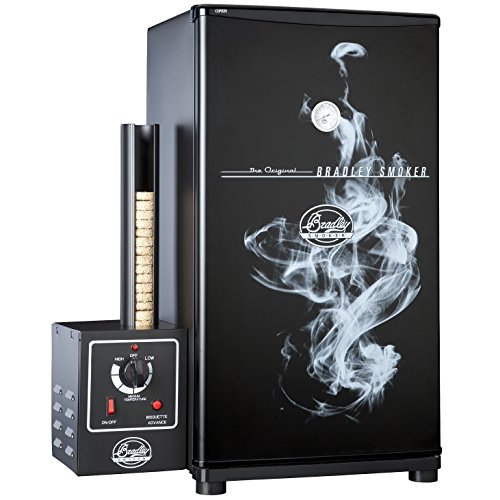
4. Bradley Original Smoker
An electric cabinet smoker that feeds compressed wood bisquettes for a steady smoke. It has adjustable temperature and multiple racks.
Suits: steady smoke over long cooks. Strengths: automatic bisquette feeding. Weaknesses: needs a vented space. Skip it if you want a small footprint.

Best for hands-off smoking
5. Masterbuilt Digital Electric Smoker
A digital electric smoker with an adjustable temperature and timer, a side wood chip loader and a tall cabinet for ribs, brisket or sausages.
Suits: hands-off smoking. Strengths: digital controls and side loading. Weaknesses: outdoor or vented use only. Skip it if you only want a countertop tool.
Best for cocktail makers
6. Aged and Ore Cocktail Smoker Kit
A cocktail smoker kit with a small chimney that sits on top of a glass and includes wood chips for infusing drinks, along with a torch.
Suits: cocktail makers. Strengths: an easy, low-cost route to smoke flavor. Weaknesses: does not smoke meat. Skip it if you want to cook food.
View Aged and Ore Cocktail Smoker Kit on Amazon
Care and Setup
- Clean ash and residue after each use.
- Use only the wood chips the maker recommends.
- Season stainless or cast parts as directed.
- Store chips dry.
Mistakes to Avoid
- Smoking in a closed kitchen without ventilation.
- Adding too many chips and creating bitter smoke.
- Skipping the smoke detector plan.
- Using a handheld tool to fully cook food.
Matching Smoker Format to What You Cook
Indoor smoking covers very different tools, so choose the format by the food you actually want to make. Handheld smoke infusers produce a cool stream of smoke you direct into a covered container, glass or bag. They are suited to cocktails, cheese, nuts, salads, butter and foods that are already cooked, because the smoke adds flavor without cooking the food. They do not replace a cooker, so treat them as a finishing tool.
Stovetop smokers are lidded metal boxes with a tray for fine wood chips and a rack above. You set them on a burner, and the heat and smoke cook small, thin items such as fish fillets, chicken pieces, sausages and vegetables in a short time. They are inexpensive in effort and storage, but they work best with small cuts and need good ventilation because smoke escapes as you open the lid.
Electric cabinet smokers handle larger food such as ribs, poultry and sausages, with a heating element, a wood tray and a thermostat. They give you hours of low heat, but most are designed for outdoor or well-ventilated use. Reading the manual matters, since smoke and heat output can be too much for a closed kitchen. Cocktail smoking kits are a niche tool for drinks. If you only want occasional flavor on small portions, a handheld or stovetop device may be enough. If you want to cook large cuts, an electric cabinet is better placed in a garage with the door open, on a covered patio or outdoors, as the manual allows.
Ventilation and Smoke Alarm Planning
Smoke indoors needs a plan before you light anything. A strong range hood that vents outdoors is the best help for stovetop smoking, since it pulls smoke away from the room. A recirculating hood only filters and returns air, so it is less effective. Open a window or door near the cooking area and use a fan to create a path that moves smoke outside. Running the hood and opening windows before you start helps establish airflow.
Smoke alarms are designed to respond to smoke, and smoking food will often set them off. Do not disable alarms or remove batteries, because that removes protection for your household. Instead, plan around them by ventilating well, keeping the smoke contained and considering cooking when you can open doors widely. If an alarm sounds, ventilate and do not ignore it. Some people choose to smoke outdoors or in a garage with the door open to avoid this issue.
Carbon monoxide is another consideration. Burning wood or fuel in an enclosed area can produce carbon monoxide, so a working CO detector near the kitchen and sleeping areas is a must. Never use charcoal or outdoor smokers inside. Keep flammable items such as towels, paper and curtains away from the smoker, and keep a fire extinguisher accessible. Check your lease or building rules, since some buildings restrict smoke or open flames in units. Smoke also carries odor into fabrics and walls, so be prepared for a lingering smell and plan to air out the space afterward.
Wood Chips, Dust and Smoke Flavor
Indoor smokers rely on small amounts of wood, so the type and size of the wood matter. Stovetop boxes typically use fine chips or sawdust that smolder quickly, while electric cabinets often use chips or chunks in a tray and some use compressed wood pieces. Handheld devices use a small amount of fine chips. Always use the form your maker recommends, since the wrong size can burn too fast, jam the device or produce harsh smoke.
Wood type changes flavor. Hickory and oak give a robust smoke suited to beef and sausage. Apple and cherry are sweeter and suit poultry, fish, pork and cheese. Mesquite is strong and can overwhelm indoor smoking, so use it sparingly if at all. Alder is a common choice for fish. Blends offer a middle path. Choose untreated wood sold for cooking, and avoid softwoods and anything with coatings or chemicals.
Less is more indoors. A small pinch of chips is often enough, and extra wood only increases smoke, bitterness and the chance of triggering alarms. Thin, pale smoke flavors food nicely, while thick, billowing smoke tastes acrid. Keep the chips dry, store them in a sealed container and discard old or damp chips. Pre-soaking is optional and debated, and some manufacturers advise against it, so follow the manual. When you start, try a short smoke on mild foods like nuts or cheese and increase gradually until the flavor is the one you like.
Food Safety When Smoking Small Batches
Because indoor smoking is often quick, people sometimes forget that safety rules still apply. Smoke adds flavor but does not make raw food safe, and cool smoke from a handheld device does not cook anything. Use fully cooked food, or cook the food to a safe internal temperature by another method, when you use cold smoke. Follow reliable food safety guidance for minimum internal temperatures for poultry, pork, fish and other foods.
Use a thermometer rather than guessing. Stovetop smokers cook quickly, so check thickness and doneness with an instant-read thermometer rather than trusting the clock. Cuts of different sizes cook at different rates, and uneven pieces can leave some areas undercooked. Cut food into similar sizes where possible.
Handle raw foods carefully. Keep raw meat and fish separate from ready-to-eat food, wash hands and surfaces and use clean utensils for cooked food. Brining or curing is a separate technique with its own safety rules, so follow a trusted recipe if you try it, and keep food cold until it is time to cook. Refrigerate leftovers promptly. If you smoke cheese or other chilled foods, do it in a cool space so they do not soften or melt. Smoke is not a preservative in the way commercial smoked products are, so treat your smoked food like any other fresh cooked food.
Cleanup, Storage and Odor Control
Smokers get messy, so good cleaning habits make them more pleasant. Let the device cool completely before you clean it. Dispose of ash and spent chips in a metal container, and make sure they are cold before they go in the trash, as embers can smolder for a long time. Scrape the tray, racks and lid with a non-abrasive tool, and wash parts with warm soapy water if the manual allows. Dry them fully to prevent rust.
Smoke leaves a resin that can build up on metal surfaces. A thin layer on the interior is common, but heavy buildup can cause off flavors and may be harder to remove. Follow the maker’s instructions for seasoning and cleaning, and avoid harsh chemicals on surfaces that touch food. Check seals, gaskets and the lid fit, since gaps let smoke leak into the room.
To manage odor, wipe nearby surfaces, wash any fabrics that absorbed smoke and air out the space. Running the hood for a while after smoking helps. A bowl of baking soda or an air purifier with a suitable filter can help reduce lingering smell. Store smokers in a dry place with the lid slightly open if there is any damp or lingering odor. Replace worn parts, such as damaged trays, loose handles or burned-out elements, before they become a hazard. If a smoker produces excessive smoke or heat that your ventilation cannot handle, it is not suited to indoor use.
Reading an Indoor Smoker Listing Line by Line
Product pages for smokers pack a lot into a few bullet points, and the wording can hide the details that matter in a home kitchen. Before you commit to any model, go through the listing slowly and pull out the facts that affect how you will actually use it.
- Heat source: A stovetop box relies on your burner, an electric cabinet plugs into the wall, and a handheld device runs on batteries. Each one changes where it can sit and what else needs to be nearby.
- Interior dimensions: Look for measurements of the cooking space itself, not just the outer shell. A tall cabinet may still have shelves that are too shallow for a whole fish or a rack of ribs.
- Fuel format: Some units use fine dust, others use small chips, and a few use pellets. Check which size the maker recommends, because the wrong grade can burn too fast or stall.
- Cleanable parts: Removable trays, racks and drip pans make a big difference after the session. Ask whether the parts can go in a dishwasher or need hand washing.
- Power details: For electric models, note the wattage and the cord length so you know whether a kitchen outlet will reach the spot you have in mind.
It also helps to read the question-and-answer section on the page. Other shoppers often ask about the things the listing glosses over, such as how much smoke escapes during use or whether the lid seals well. Treat those answers as hints, then confirm anything important in the maker manual before you order.
Which Smoker Fits Which Kitchen Situation
The same appliance can be a joy in one home and a headache in another. Instead of asking which model is strongest, ask which one fits the space, the people and the habits you already have. The table below lines up common situations with the format that tends to suit them.
| Your situation | Format worth a look | Why it fits |
|---|---|---|
| Small apartment with one range | Stovetop smoker box | Needs no extra outlet and stores flat in a cabinet |
| Weekly batches for a family | Electric vertical cabinet | Holds several racks and keeps a steady temperature on its own |
| Cocktails and plated appetizers | Handheld smoke infuser | Adds a quick wisp of smoke to a glass or a dish at the table |
| Shared kitchen with strict rules | Handheld or small box | Short sessions and minimal smoke are easier to manage |
| Cook who likes long, slow projects | Larger electric unit | Longer run times and bigger racks suit patient cooking |
Whatever you choose, read the maker’s guidance on where the unit may be placed and how much clearance it needs. Manufacturers write those rules for a reason, and they matter more than any general tip you read elsewhere.
A Short Glossary for Smoker Shoppers
Smoking has its own vocabulary, and listings assume you already know it. These plain-language definitions should make the product pages easier to follow.
- Cold smoking: Adding smoke flavor at low temperatures without cooking the food through. Handheld devices are often used this way for drinks and cheese, and any food handling rules still come from official guidance.
- Hot smoking: Cooking the food while it takes on smoke. Stovetop boxes and electric cabinets work this way.
- Smoke generator: The part that heats the wood until it smolders. On some models it is a small tray, on others a separate chamber.
- Water pan: A tray that adds moisture to the cooking space. Not every model includes one, so check the parts list.
- Drip tray: The surface that catches juices and fat. A removable one saves a lot of scrubbing.
- Damper or vent: An opening that controls airflow and smoke release. Small adjustments here change how strong the flavor turns out.
- Wood dust and chips: The fuel itself. Finer material smolders quickly, while larger chunks last longer in units designed for them.
Once these terms feel familiar, comparing models becomes a matter of matching the features to your own routine rather than being swayed by marketing language. Keep this list handy while you read, and look up any term the manual uses that is not covered here.
Indoor Smoking as a Hobby: Starting Smaller Than You Think
The sensible way into indoor smoking is smaller than most buyers expect. A finishing tool that adds smoke to a sauce, a cheese board or a cocktail teaches the essential lessons, how little smoke is needed, how quickly too much becomes harsh, how the smell behaves in your rooms, at a fraction of the cost and commitment of a full smoker. Many households discover that finishing is actually the hobby they wanted, and never need the larger equipment. Others graduate with their palate trained and their ventilation proven, and buy the bigger format knowing exactly why.
If you do want cooked, smoked food indoors, let your menu choose the format. Fish and small items suit stovetop and compact formats; larger joints and long sessions push toward the electric smokers in this guide, with their space and ventilation demands honestly faced. Read the reviews above as a menu-matching exercise: each pick is described by what it suits, and the discipline of matching tool to dish, rather than buying the most capable machine and inventing dishes for it, is what separates a used appliance from a stored one.
Household diplomacy is part of the hobby indoors. Smoke flavour in the food is the goal; smoke smell in the curtains is the cost, and other people in the home, and sometimes neighbours, pay it with you. Agreeing when sessions happen, which room hosts them and how the ventilating will work is not bureaucracy, it is what keeps a hobby welcome. The cooks who smoke indoors for years are the ones whose households associate the smell with a good dinner rather than with an imposition, and that association is built by consideration as much as by cooking.
Keep the first sessions simple and recorded. One food, one wood, a modest load, notes taken. Smoking has more variables than almost any other kitchen method, and the beginner who changes one thing at a time learns in a month what the experimenter who changes everything learns in a year. This guide’s picks will all reward that approach; the routine and care sections that follow are written to support it, whichever format you choose.
Choosing an Indoor Smoker Around Format and Ventilation
Indoor smoking equipment falls into families that behave very differently, and the first job is to choose the family, not the model. Smoking guns add a whisper of cold smoke to finished food and drinks and need no cooking space at all. Stovetop smokers cook and smoke small items in a sealed pan on the hob. Electric smokers that are rated for indoor or sheltered use hold larger loads at steady temperatures for hours. Cocktail and finishing kits smoke a glass, a board or a garnish for theatre and aroma. Each family answers a different appetite, and buying the largest when your real interest is finishing touches leads to a cupboard ornament, not a hobby.
Ventilation is the deciding constraint indoors, and it should be assessed before any purchase. Even the gentlest smoking produces odour that lingers in soft furnishings and can trouble smoke alarms, and some formats produce far more than others. A cooker hood that vents outside, a window you can open near the cooking spot and a room you can close off all change what is realistic. Be honest about your home: an enthusiastic smoker in a small flat with a recirculating hood and sensitive alarms should choose cold-smoke finishing tools, while a house with a strong extractor and a utility space can consider larger formats.
Fuel and flavour come next. Chips, dust, pellets and chunks are not interchangeable: each format of smoker is built for a particle size, and using the wrong one gives either no smoke or a choking excess. Wood species changes the flavour, with milder woods suiting fish, cheese and vegetables and stronger woods suiting red meat and robust dishes, and a little smoke flavour goes much further indoors than outdoors because there is nowhere for it to disperse. Buy small amounts of a couple of woods to start, keep them dry, and learn what one handful does before experimenting widely.
Capacity and time finish the choice. Smoking is slow, and a session ties up the equipment for hours, so think in terms of the meals you will actually run: a few portions of fish, a block of cheese, a small joint, a round of cocktails. Check how the temperature is controlled and read, how the smoke source is refilled mid-session if it needs to be, and how the unit cleans afterwards, because ash, tar and grease are the unglamorous truth of smoking. The right indoor smoker is the one whose smoke you can manage, whose size matches your portions and whose cleanup you will still tolerate in month six.
Running a Session: Preparation, Smoke and Patience
Prepare the food before any smoke exists. Surfaces should be dry, because smoke clings to and colours a dry surface evenly, while a wet one takes flavour patchily. Season in advance where the dish allows, keep portions similar in thickness so they finish together, and bring chilled items toward room temperature only as far as food safety allows. Set out everything the session needs, including the wood, a way to handle hot parts, and a resting place for finished food, because once smoke is rolling, opening doors and drawers to hunt for tools lets smoke escape into the room.
Start the smoke gently and settle the temperature before food goes in, following the manual for your format. More smoke is not more flavour; a thin, steady stream over time seasons food, while a dense burst in a sealed space can turn it bitter and acrid. Resist opening the chamber to admire progress, because each opening dumps smoke and heat and extends the session. Work to temperature and time, using a thermometer for anything thick, and remember that smoked food often looks darker than its doneness suggests, so colour alone is a poor judge.
Cold smoking and finishing follow a different rhythm: the food or drink is already cooked or needs no cooking, and the smoke is a seasoning applied briefly, often under a cloche or in a closed container. Keep these exposures short and taste as you learn, because a few seconds too long can swamp a delicate dish. Ventilate as you serve, since the theatrical release of smoke at the table is also smoke in the room. For hot smoking, rest the food afterwards as you would any cooked meat, and expect the flavour to mellow and spread as it rests.
Food safety deserves plain words. Smoking is a cooking and flavouring method, not a preserving shortcut for the home kitchen: refrigerate promptly, keep cold-smoked items chilled and treat their storage life conservatively, and cook hot-smoked foods to safe temperatures verified with a thermometer. Keep raw and finished foods apart, and do not let the romance of the process talk you out of the ordinary rules. If a session goes wrong, with runaway temperatures or smoke you cannot control, stop, ventilate and let everything cool; no dish is worth a room full of smoke and a shrieking alarm.
Cleaning, Odour Control and Storage
Smoking leaves two residues: loose ash and a sticky tar film that carries the smell. Empty ash only when it is completely cold, into a metal container, and never assume a session’s embers are dead because they look grey. Wash racks, pans and drip trays in hot soapy water, since the tar film dissolves far more easily fresh than after a week in a cupboard. Wipe chamber walls as the manual allows, and clean any seals, because a tarred seal leaks smoke and odour at the next session.
Odour control is part of the craft indoors. Run the extractor during and after the session, open a window where you can, and keep soft furnishings out of the smoking room where possible. Store wood in a sealed, dry container, because it absorbs household smells and moisture, both of which show up in the smoke. The equipment itself should be stored clean and dry, ideally in a ventilated spot rather than sealed in a bag while still carrying residue, which concentrates the smell into everything nearby.
Over time, judge the equipment by its seals, its temperature behaviour and the state of its racks and pans. Warped parts and perished seals leak smoke and make sessions harder to control; heavy rust or flaking surfaces are a reason to replace the affected part or the unit. Keep a simple note of what you smoked, with which wood and for how long, and what you thought of it. Smoking has more variables than almost any other home cooking method, and the cooks who improve are the ones who can repeat their successes because they wrote them down.
Mistakes That Make Indoor Smoking Miserable
The first mistake is treating smoke volume as quality, flooding the chamber and producing food that tastes like an ashtray instead of a seasoning. The second is choosing the format for the fantasy rather than the flat: a large hot smoker where ventilation cannot support it will be used once, memorably, and never again. The third is impatience, opening the chamber repeatedly, chasing temperatures up and down and extending the session until the food dries. The fourth is neglecting alarms and neighbours, both of whom will have views about a long session in a shared building.
Owners also use damp or wrong-sized wood, which smoulders dirtily or flares; skip the thermometer because the food looks done; and leave cleaning until the tar has set like varnish. Each is avoidable with the same small disciplines: dry fuel in the right size, a thin steady smoke, a thermometer, ventilation planned before the wood is lit, and cleaning while the session is still warm in memory if not in fact. Indoor smoking done this way is a gentle, controllable craft that adds something no other kitchen method quite can.
Putting the Picks Side by Side
With six options in this guide, the fastest way to narrow the field is to match each pick to the job described in its review above, rather than chasing the longest feature list. Every pick here earned its place for a different kind of buyer, and the review sections spell out who each one suits, what it does well and where its limits sit. The notes below simply restate that positioning in one place, so you can compare the indoor smokers options without scrolling back and forth. Nothing here adds new claims about any model; it is a map of what the guide already says, organised around the decision you are actually making.
The Breville PolyScience Smoking Gun Pro is positioned in this guide for cocktails and finishing. If that description sounds like your household, it deserves a close look; if it does not, its strengths are unlikely to matter much in daily use, however appealing they look on a listing. Re-check its review above for the stated strengths and the honest limitation, and confirm the current details on the listing itself, because included accessories and exact configurations can change over time.
The Camerons Original Stovetop Smoker is positioned in this guide for small batches indoors. If that description sounds like your household, it deserves a close look; if it does not, its strengths are unlikely to matter much in daily use, however appealing they look on a listing. Re-check its review above for the stated strengths and the honest limitation, and confirm the current details on the listing itself, because included accessories and exact configurations can change over time.
The Cuisinart Vertical Electric Smoker is positioned in this guide for batch cooking. If that description sounds like your household, it deserves a close look; if it does not, its strengths are unlikely to matter much in daily use, however appealing they look on a listing. Re-check its review above for the stated strengths and the honest limitation, and confirm the current details on the listing itself, because included accessories and exact configurations can change over time.
The Bradley Original Smoker is positioned in this guide for steady smoke over long cooks. If that description sounds like your household, it deserves a close look; if it does not, its strengths are unlikely to matter much in daily use, however appealing they look on a listing. Re-check its review above for the stated strengths and the honest limitation, and confirm the current details on the listing itself, because included accessories and exact configurations can change over time.
The Masterbuilt Digital Electric Smoker is positioned in this guide for hands-off smoking. If that description sounds like your household, it deserves a close look; if it does not, its strengths are unlikely to matter much in daily use, however appealing they look on a listing. Re-check its review above for the stated strengths and the honest limitation, and confirm the current details on the listing itself, because included accessories and exact configurations can change over time.
The Aged and Ore Cocktail Smoker Kit is positioned in this guide for cocktail makers. If that description sounds like your household, it deserves a close look; if it does not, its strengths are unlikely to matter much in daily use, however appealing they look on a listing. Re-check its review above for the stated strengths and the honest limitation, and confirm the current details on the listing itself, because included accessories and exact configurations can change over time.
Two habits help when you compare the indoor smokers picks. First, decide your non-negotiables before you compare anything else: the space you have, the people you cook for and the one job this appliance must do well. Second, treat every other feature as a bonus rather than a reason to buy. A pick that fits your space, your habits and your cleaning tolerance will serve you better than a more elaborate model that fights your routine. When two picks both fit, choose the one whose stated limitation bothers you least, because limitations are what you live with every day, while strengths are what you notice in the first week.
More Practical Notes Before You Decide
Consider starting a smoke journal before the first session rather than after the tenth. Record the food, its weight and thickness, the wood and amount, the session’s length and temperature behaviour, the ventilation arrangement and your honest verdict at the table. Smoking’s variables are too many for memory, and the journal converts each session from an anecdote into an instruction for the next one. It also protects your successes: the best fish you ever smoked is only repeatable if you wrote down how it happened.
Think about the seasons of indoor smoking. Winter, with windows shut and heating on, is the hardest time to manage odour and alarms; summer lets you ventilate freely and even move some formats to a sheltered threshold. Many indoor smokers settle into a seasonal rhythm, more sessions in the open-window months, finishing work with guns and cloches in the closed ones. Choosing equipment that serves both rhythms, or honestly choosing for the season you will use most, beats discovering the constraint in January.
Share the hobby carefully. Smoked foods make memorable gifts and contributions to other people’s tables, and a small batch of smoked cheese or nuts travels better than almost any other homemade present. Tell recipients how the food was made and how to store it, keep your own safety rules when cooking for others exactly as for your family, and let the compliments recruit interest rather than pressure. A hobby that feeds friends, within its safety rules, is a hobby with a future.
Whatever you choose from this guide, give the unboxing and first setup the same care as the purchase. Check the appliance over before anything is plugged in, read the manual’s safety and setup pages properly rather than skimming for the quick-start, and keep the packaging until the first successful uses are behind you, in case a return is needed. Register the product if the maker offers it, and keep the receipt and the model details together in one place. These small acts take minutes and are the difference between a smooth first week and an avoidable argument with a retailer.
Measure your space one final time before ordering, and measure the route as well as the destination: doorways, cupboard openings, the turn into the kitchen and the shelf or counter where the appliance will live. More good purchases are defeated by a centimetre at a doorway than by any flaw in the product. If the appliance will share a circuit with other heavy loads, note that too, and plan which appliances will take turns. A purchase that arrives to a prepared home starts its life being used; one that arrives to surprises starts its life in a corner.
Build the appliance’s care into an existing routine rather than inventing a new one. The wipe that happens while the kettle boils, the check that happens when the bins go out, the descale or filter change tied to a date you already mark: habits attached to habits survive, while special rituals fade by the second month. Decide now which existing moment will carry this appliance’s small regular tasks, and write the first occurrence on the calendar before the appliance arrives. Ownership is mostly this: tiny attentions, reliably repeated.
Keep expectations in their proper order across the first month. The first uses teach you the appliance; the next uses teach you your own routine with it; only after that does it become the effortless background help you bought. Judging any appliance in this guide by its first outing is like judging a pan by its first egg. Give the learning curve its few sessions, keep notes where the cooking has variables, and let the verdict form over weeks. Most disappointments in this category are premature verdicts, not poor products.
Finally, remember that the best appliance in any of these guides is the one that fits the household that actually exists: its space, its habits, its patience for cleaning and its real menu. Specifications are a way of describing fit, not a substitute for it. If a pick’s described strengths match your life and its stated limitation does not touch anything you care about, you have found your appliance, whatever its position in the running order. Buy it, set it up carefully, learn it properly, and let it get on with the quiet work of feeding the household well.
Indoor Smoker FAQ
Is it safe to smoke food indoors?
Only with strong ventilation and a smoke alarm plan. Stovetop and handheld tools produce less smoke than large smokers.
What wood chips do I use?
Use chips made for your model. Fine chips suit stovetop boxes, while others take chunks or bisquettes.
Can an electric smoker be used inside?
Most are meant for outdoor or well-vented use, so read the manual.
How long does smoking take?
Handheld tools take seconds, stovetop boxes take under an hour for small cuts, and full cabinets need several hours for big meats.
What should I smoke first?
Start with cheese, nuts or a small piece of fish. They take little time and show you how much smoke flavor you like.
Will indoor smoking set off my smoke alarm?
It can, especially with stovetop and cabinet smokers. Ventilate well, open windows and use a hood, and never disable the alarm.
Can I smoke food in an apartment?
Check your lease and building rules first, since some buildings limit smoke or open flames. Handheld infusers produce much less smoke than other types.
Does a handheld smoker cook food?
No, it adds smoke flavor and usually produces cool smoke. Cook food separately or use items that are already cooked.
How do I stop my kitchen from smelling like smoke?
Run the hood, open windows, wash fabrics and wipe surfaces after cooking. Using less wood also reduces lingering odor.
Can I use any wood chips?
Use untreated chips made for cooking and in the size your smoker recommends. Avoid softwoods and anything coated or chemically treated.
What foods work best with a stovetop smoker?
Thin or small items such as fish fillets, chicken pieces, sausages and vegetables work well. Use a thermometer to confirm doneness.
Do I need a carbon monoxide detector?
Yes, a working detector is important whenever any combustion happens indoors. Place it according to the detector's instructions.
How much smoke flavour is enough?
Less than most beginners apply. Smoke is a seasoning, and a thin, steady exposure over the session seasons food deeply, while a dense burst in a sealed space turns it bitter. Start with the smallest amount of wood your format uses well, taste the result honestly, and increase gradually across sessions, keeping notes. Delicate foods like fish, cheese and vegetables need a fraction of what robust red meat can carry, so let the food, not the equipment, set the dose.
Can I smoke indoors without setting off alarms?
You can reduce the risk greatly, but no honest answer can promise it away. Choose the format your ventilation can support, run the extractor, keep the session’s smoke contained and steady rather than billowing, and site the equipment thoughtfully in relation to detectors without ever disabling them. Test your setup with a small session before a long one. If your home’s alarms and layout cannot tolerate even a modest session, cold-smoke finishing in tiny amounts may be the realistic format for you.
What wood should a beginner start with?
Start with a mild, versatile wood in the particle size your equipment is built for, and buy a small amount. Mild woods forgive heavy hands while you learn the dose, and they suit the widest range of foods. Keep the wood dry and stored sealed, because damp or tainted wood makes dirty smoke whatever the species. Add a second, stronger wood only when you can describe what the first one does; that discipline turns random experimenting into learning.
Why does my smoked food taste bitter?
Bitterness comes from too much smoke, dirty smoke or both: a dense, stagnant cloud, damp or wrong-sized fuel smouldering badly, or residue from previous sessions cooking off into this one. Clean the equipment, use dry fuel of the right size, aim for a thin steady smoke with the chamber’s airflow as the manual intends, and shorten the exposure. Bitter sessions are the hobby’s standard tuition; notes taken now prevent repeats later.
How do I store smoked food safely?
Treat smoked food as cooked food, because that is what it is: cool it promptly, refrigerate it in covered containers, and eat it within the sort of window you would give any cooked dish. Cold-smoked items in particular should be kept chilled and treated conservatively, since the smoking was a flavouring, not a preservation. Freeze portions you will not eat soon, label them with the date, and reheat hot-smoked foods until steaming when you serve them again.
The Short Version
For infusing smoke into food and drinks, the Breville Smoking Gun Pro. For stovetop smoking, the Camerons Stovetop Smoker. For a countertop-style electric smoker, the Cuisinart Electric Smoker. For a bisquette-fed electric smoker, the Bradley Original Smoker. For set-and-forget electric smoking, the Masterbuilt Electric Smoker. For a cocktail smoke topper, the Aged and Ore Cocktail Smoker.