Disclosure: airfryerkitchensupply.com is reader-supported. When you buy through links on our site, we may earn an affiliate commission at no extra cost to you.
Where to buy
The best economical vacuum sealers are sold as machines, bundles, and machine-plus-bag kits that change over time, so buy through the verified listing for the exact model: confirm what is in the box — especially bags, rolls, and cutters — before ordering, because at this tier the bundle contents are half the value. Every linked pick below was matched to Amazon catalog data for this site at verification time; check price on Amazon on the listing page.
- MEGAWISE Vacuum Sealer Machine (80kPa) — Check on Amazon
- Bonsenkitchen Vacuum Sealer Machine (Silver) — Check on Amazon
- MEGAWISE Compact Vacuum Sealer with Cutter — Check on Amazon
- FoodSaver PowerVac Compact VS0150 — Check on Amazon
- FoodSaver Compact Vacuum Sealer (White) — Check on Amazon
- Nesco Deluxe VS-12 Vacuum Sealer — Check on Amazon
A quick note on how this guide handles recommendations: every product named below was cross-checked against Amazon catalog data for this site before a link was added. Where a model could not be matched with confidence, it appears as a mention without a link with no buying link, and the reason is recorded rather than hidden.
The best economical vacuum sealers are not the cheapest machines you can find — they are the ones with the lowest cost per successful seal over years of use. That distinction decides this entire guide. A vacuum sealer’s job is unglamorous and absolute: remove air, form a seal that holds in a freezer for months, and do it again next week without drama. Machines that fail at the seal, stall on moist food, or need expensive proprietary supplies are not economical at any sticker, and they were filtered out of this list before ranking began.
What remains are six machines that make the value case in different ways. Some include the cutter and bags that rivals charge extra for. Some trade raw power for manual control that protects delicate food. Two carry the FoodSaver name and its unmatched bag ecosystem at compact, economical sizes. And one — the Nesco — marks the sensible ceiling of the tier, for buyers who already know they will seal in volume. All six are external, bag-style sealers, the format that suits home kitchens and home budgets. If you are also weighing the external format itself against chamber machines, this site’s guide to the best external vacuum sealers covers that comparison in depth; this guide assumes the format and spends its pages on value within it.
A note on what economical sealing can and cannot do, so expectations land correctly: these machines excel at portioning bulk meat, protecting cheese and dry goods, freezing leftovers without burn, and prepping bags for sous vide. They are not chamber sealers, so liquids need the freezing trick described later in this guide, and they are not commercial units, so marathon processing sessions deserve rest breaks for the seal bar. Within that honest brief, a good economical sealer is one of the few kitchen tools that measurably pays for itself in rescued food.
In this guide
Quick Picks
- MEGAWISE Vacuum Sealer Machine (80kPa) — Best Overall Value: 80kPa suction, dry/moist/fresh modes, bags and a cutter included — the most complete economical package in this guide. — Check on Amazon
- Bonsenkitchen Vacuum Sealer Machine (Silver) — Best Budget Pick: A compact multi-mode sealer with an external vacuum system and starter bags — the lowest-friction entry into vacuum sealing here. — Check on Amazon
- MEGAWISE Compact Vacuum Sealer with Cutter — Best Compact Value: Dry and moist settings, manual vacuum control and a seal-only function in a compact body with cutter and bags included. — Check on Amazon
- FoodSaver PowerVac Compact VS0150 — Best Brand-Name Value: FoodSaver’s compact vertical-storage machine — the economical route into the widest bag and accessory ecosystem. — Check on Amazon
- FoodSaver Compact Vacuum Sealer (White) — Best for Small Kitchens: A compact white FoodSaver sold with airtight bags and a roll — a tidy starter bundle for sous vide and everyday storage. — Check on Amazon
- Nesco Deluxe VS-12 Vacuum Sealer — Best Step-Up Pick: 130 watts, a viewing lid and kit bags included — the economical ceiling, for buyers ready to seal like they mean it. — Check on Amazon
How These Picks Were Chosen
We built this list from models verified against Amazon catalog data through this site’s verification process, then ranked them on total value rather than headline price. Total value meant four things: the machine’s sealing competence (suction, modes, seal reliability), what arrives in the box (bags, rolls, cutters — each one is money you do not spend separately), the cost and availability of the bags it will eat for years, and a design a household will actually keep within reach.
Modes mattered more than raw specifications. Dry, moist, and fresh settings — and manual vacuum control where offered — are what separate seals that survive the freezer from seals that quietly fail, because moist food is where budget sealers earn their bad reputations. Every pick here offers at least a sensible answer for moist foods. Prices are deliberately not printed: they move, bundles change, and the only trustworthy number is on the live listing, where each linked pick says to check price on Amazon.
Finally, we were honest about the tier’s limits in each review. Compact bodies cap bag width, seal bars need cooling pauses during marathon sessions, and no external sealer loves free liquid. A guide that hides those limits sells machines; a guide that states them sells the right machine to the right kitchen, which is the only kind of economical that counts.
The 6 Best Economical Vacuum Sealers
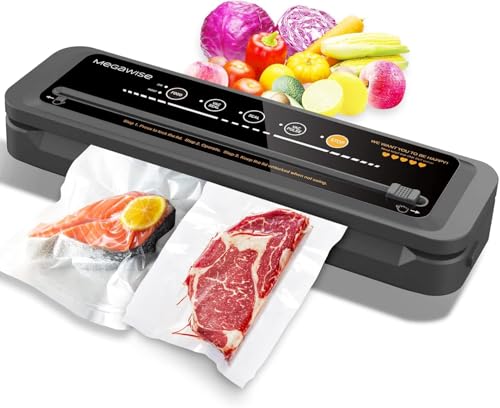
1. MEGAWISE Vacuum Sealer Machine (80kPa) — Best Overall Value
The MEGAWISE Vacuum Sealer with 80kPa suction is what ‘economical’ should mean: not the cheapest machine on the page, but the one where every part of the purchase pulls its weight. It is a compact one-touch automatic sealer with dry, moist, and fresh modes, an external vacuum system for jars and containers, and bags plus a cutter included in the box. That completeness matters at this tier, because a bargain sealer that needs a separate cutter and a bag order before its first use is not actually a bargain.
| Spec | Detail |
|---|---|
| Suction | 80kPa |
| Modes | Dry, moist and fresh modes |
| Extras | Bags and cutter included; external vacuum system |
| Operation | One-touch automatic |
Strengths
- Strong 80kPa suction for a budget-tier machine
- Three food modes cover dry goods through moist leftovers
- Cutter and starter bags included — sealing starts the day it arrives
Trade-offs
- Compact body means standard-width bags only
- Build is light — it is a countertop tool, not a workshop machine
- Seal bar wants a rest between long back-to-back batches
Suction is where cheap sealers usually cheat, because a weak pump leaves air in the bag and air is the enemy the whole appliance exists to defeat. Eighty kilopascals is a serious number at this tier — enough to pull bags tight around dense foods like meat portions and hard cheeses, which is where freezer burn starts when air remains. Combined with distinct dry, moist, and fresh modes, the MEGAWISE handles the realistic weekly mix — bulk meat, pantry goods, marinated items — without asking you to babysit the vacuum level.
The ownership math is the other half of the value case. Vacuum sealing pays for itself by rescuing food: bulk purchases portioned safely, leftovers frozen without burn, cheese that lasts weeks instead of days. A machine that includes its cutter and first bags starts that payback immediately, and its external vacuum port extends it to jars and canisters you already own. As an overall value pick, nothing else in this guide assembles the whole system this completely at an economical tier.
Best for: Most households buying their first sealer for bulk shopping, meal prep and freezer organization / Not suited for: Hunters or processors sealing very large volumes in single sessions
Check on Amazon — check price on Amazon before you buy, because countertop oven pricing moves often and the listing is the only place to confirm the current configuration, included accessories, and delivery options.
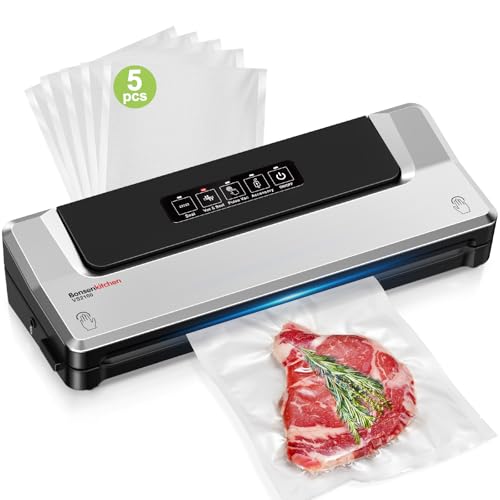
2. Bonsenkitchen Vacuum Sealer Machine (Silver) — Best Budget Pick
The Bonsenkitchen Vacuum Sealer Machine in silver is the budget pick for people who are vacuum-sealer curious but not yet vacuum-sealer committed. It is a compact machine with multiple modes for meal prep, an external vacuum system for containers, and five vacuum bags in the box to start with. Its job in this guide is simple: be the inexpensive, honest machine that lets a household discover whether sealing fits its habits — and for the many households it does fit, to keep doing the job without complaint.
| Spec | Detail |
|---|---|
| Modes | Multiple modes for meal prep |
| Extras | External vacuum system; 5 vacuum bags included |
| Design | Compact, silver finish |
| Use | Food storage and sous vide preparation |
Strengths
- Budget-tier position with the essential modes included
- External vacuum system widens it beyond bags from day one
- Compact body stores in a drawer or small cabinet
Trade-offs
- Starter bag supply is small — regular users will order rolls quickly
- Suction is adequate for household loads, not the strongest here
- Compact size limits it to standard home bag widths
Budget sealers fail in predictable ways: seals that let go in the freezer, pumps that stall on moist food, and lids that need body weight to latch. The Bonsenkitchen’s multi-mode design is the practical defense against the first two — choosing the right mode for dry versus moist food is what produces seals that survive freezing — and its compact, straightforward body keeps the third from being a daily annoyance. For portioning chicken, sealing cheese, and packing sous vide bags, it does the work its price promises.
Think of it as the audition machine. If your household seals a few times a month, it may be the only sealer you ever need, and its low tier position means the food it rescues pays it back quickly. If you discover you seal weekly and in volume, you will upgrade with knowledge instead of guesses — and machines like the FoodSaver and Nesco picks below will be waiting. Either way, the Bonsenkitchen is money spent learning the truth about your own habits, which is the most economical purchase there is.
Best for: First-time buyers and light users who want a compact, inexpensive way to start sealing / Not suited for: High-volume users who seal dozens of bags in one session
Check on Amazon — check price on Amazon before you buy, because countertop oven pricing moves often and the listing is the only place to confirm the current configuration, included accessories, and delivery options.

3. MEGAWISE Compact Vacuum Sealer with Cutter — Best Compact Value
The second MEGAWISE in this guide earns its place on control, not power. This compact model pairs dry and moist settings with manual vacuum control and a seal-only function, and it includes a cutter and bags. Manual control is the feature experienced sealers ask for and budget machines rarely offer: it lets you stop the vacuum at exactly the right moment for delicate foods — berries, baked goods, marinated items — before the pump crushes or over-draws them. In a compact, economical body, that is a genuinely useful combination.
| Spec | Detail |
|---|---|
| Settings | Dry and moist settings |
| Control | One-touch automatic plus manual vacuum control |
| Extras | Cutter and bags included; seal-only function |
| Design | Compact body |
Strengths
- Manual vacuum control protects delicate foods most budget sealers crush
- Seal-only mode reseals snack and pantry bags without vacuuming
- Cutter included for tidy custom-length bags from rolls
Trade-offs
- Compact format suits households, not processing sessions
- Manual control rewards a little practice to use well
- Shares the stage with its 80kPa sibling — power shoppers should compare the two
Here is the scenario this machine is built for: fresh raspberries, a tray of muffins, soft cheese, chips you want to reseal in their own bag. A fully automatic sealer treats all of them like a steak and flattens or over-draws them. With manual control, you watch the bag draw down and release at the moment the food is protected but not punished. That single capability extends vacuum sealing from the freezer aisle to the bakery box and the berry punnet, which is where a lot of household food waste actually lives.
The seal-only function deserves its sentence too: resealing opened pantry bags — coffee, chips, frozen peas — without a vacuum cycle is a daily-use feature that turns the sealer from a weekend project tool into a countertop habit. Add the included cutter for roll bags and the MEGAWISE Compact covers the widest range of small jobs in this guide for its size.
Best for: Households that seal delicate foods and want manual control without leaving the economical tier / Not suited for: Buyers who want set-and-forget automation for large meat batches
Check on Amazon — check price on Amazon before you buy, because countertop oven pricing moves often and the listing is the only place to confirm the current configuration, included accessories, and delivery options.
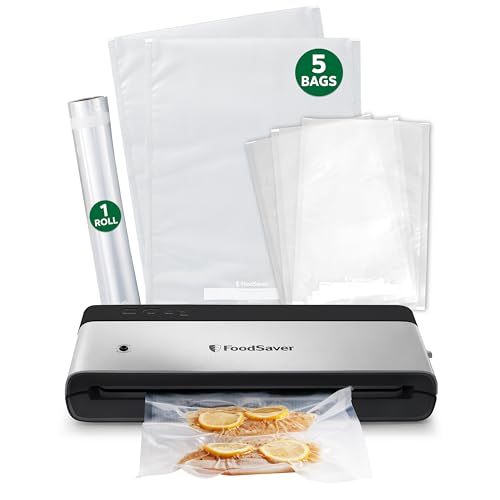
4. FoodSaver PowerVac Compact VS0150 — Best Brand-Name Value
The FoodSaver PowerVac Compact VS0150 is the value pick for buyers who think past the machine to the system. FoodSaver is the name most associated with home vacuum sealing, and its bags, rolls, and accessories are the easiest to find and the most commonly stocked. The VS0150 packages that ecosystem access in a compact machine with vertical storage in stainless steel and black — it stands up in a cabinet or on a counter edge instead of lying flat and eating a drawer. For an economical pick, that storage trick is worth real money in a small kitchen.
| Spec | Detail |
|---|---|
| Design | Compact with vertical storage |
| Finish | Stainless steel and black |
| Model | VS0150 (PowerVac Compact) |
| System | Compatible with FoodSaver bags, rolls and accessories |
Strengths
- Vertical storage solves the where-does-it-live problem
- FoodSaver ecosystem: bags and rolls are the easiest to source
- Compact footprint suits apartments and small kitchens
Trade-offs
- Compact class sealing — not the heavy-duty end of the FoodSaver line
- Accessory breadth tempts extra purchases; budget for bags honestly
- Occasional users may find a drawer-stored budget rival simpler
Ecosystem is an unglamorous word that decides real ownership happiness. A sealer is a consumables appliance: it eats bags and rolls for its entire life, and the machine whose supplies are everywhere — including the multipack rolls verified in this site’s catalog data — is the machine that never sits idle waiting for a specialty order. FoodSaver’s long presence in the category also means its bag sizes and accessory formats are the de facto standard other brands measure against.
The VS0150 itself is sensibly judged as a compact: it seals the everyday household load — portions, leftovers, cheese, sous vide prep — and then stands vertically out of the way, which in a small kitchen is a feature on par with suction. Buy it if you want the economical door into the biggest system, and value a machine that stores like a book rather than a briefcase.
Best for: Small kitchens and buyers who want the FoodSaver bag ecosystem at an economical entry point / Not suited for: High-volume sealers who need a full-size machine’s pace
Check on Amazon — check price on Amazon before you buy, because countertop oven pricing moves often and the listing is the only place to confirm the current configuration, included accessories, and delivery options.
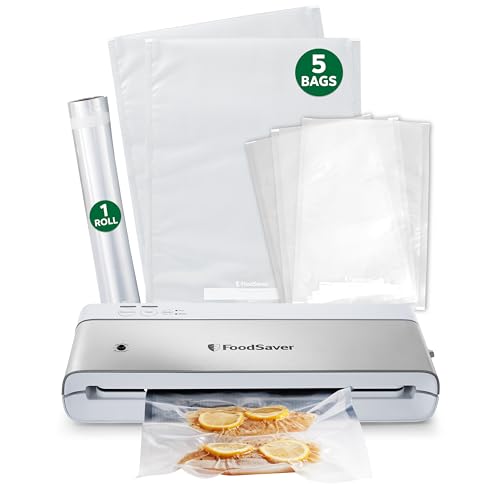
5. FoodSaver Compact Vacuum Sealer (White) — Best for Small Kitchens
This compact white FoodSaver is the tidy starter bundle of the group: the machine arrives with airtight bags and a roll included, positioned for sous vide and everyday airtight food storage. Where the VS0150 above sells vertical storage and ecosystem, this one sells readiness — open the box and you have machine, bags, and roll, the complete starter kit. In white, it also suits the light, bright kitchens where a black appliance slab looks out of place.
| Spec | Detail |
|---|---|
| Bundle | Machine with airtight bags and roll included |
| Finish | White |
| Use | Sous vide and airtight food storage |
| Design | Compact body |
Strengths
- Complete starter bundle — machine, bags and roll in one purchase
- Compact body suits small counters and cabinets
- White finish blends with light kitchens
Trade-offs
- Compact class — bag width and batch pace are household-scale
- White shows splashes more than dark finishes; wipe it down after messy jobs
- Serious sous vide households will outgrow the starter roll quickly
Starter bundles matter because the first week with a sealer decides whether it becomes a habit. A machine that arrives with bags and a roll gets used the day it arrives — portioning the groceries already in the fridge — and early wins build the routine. This FoodSaver’s bundle is built for exactly that first week, and its compact body lowers the other barrier, which is finding it a home. If a sealer must be excavated from a garage shelf, it will not be used for a single chicken breast; this one lives within reach.
Its sous vide positioning is honest at household scale: sealing bags for a water bath is mostly about reliable, watertight seals and bags that tolerate the bath, and a compact FoodSaver delivers that for the portions a home cook actually circulates. Choose this pick if your kitchen is small, your style is light, and you want the fewest possible decisions between ordering and your first sealed bag.
Best for: Small, light kitchens and first-time buyers who want a complete starter bundle / Not suited for: Dark, heavy-use kitchens or high-volume batch sealers
Check on Amazon — check price on Amazon before you buy, because countertop oven pricing moves often and the listing is the only place to confirm the current configuration, included accessories, and delivery options.

6. Nesco Deluxe VS-12 Vacuum Sealer — Best Step-Up Pick
The Nesco Deluxe VS-12 is where this guide’s economical list deliberately ends: a 130-watt sealer with a viewing lid, kit bags included, and a compact silver body that punches at the top of the value class. It costs its place at the premium edge of ‘economical’ by offering the things heavy users eventually demand — power for consistent seals across long sessions, and a viewing lid that lets you watch bag placement and seal formation instead of trusting blindly. If you already know you will seal often, start here and skip the audition stage.
| Spec | Detail |
|---|---|
| Power | 130 watts |
| Lid | Viewing lid |
| Extras | Kit bags included |
| Design | Compact, silver |
Strengths
- 130W power sustains seal quality across longer sessions
- Viewing lid makes bag alignment and seal checks easy
- Reputable step-up for hunters, gardeners and bulk buyers on a budget
Trade-offs
- Top of the economical tier — casual users may not need its headroom
- Compact body still caps bag width at household sizes
- Power invites volume; make sure your bag budget matches your ambitions
The viewing lid sounds minor until you have ruined a seal with a wrinkled bag edge you could not see. Watching the bag sit flat across the seal bar, and watching the seal form, converts the most common budget-sealer failure — the quiet bad seal discovered weeks later in the freezer — into something you catch in the moment. Combined with 130 watts of sustained sealing, the VS-12 is built for the session style of sealing: a harvested garden, a warehouse-club run, a side of salmon portioned for the season.
Position it honestly: this is the pick for buyers who have done the math on their food waste or their bulk buying and know the sealer will work weekly. For them, stepping straight to the VS-12 is more economical than buying a lighter machine twice. For everyone else, the picks above remain the smarter first step — which is exactly what a step-up pick should be: clearly better, clearly for someone specific.
Best for: Frequent sealers — bulk buyers, gardeners, hunters — who want top value-tier performance / Not suited for: Occasional users sealing a few bags a month
Check on Amazon — check price on Amazon before you buy, because countertop oven pricing moves often and the listing is the only place to confirm the current configuration, included accessories, and delivery options.
Comparison Table
Compare on what decides value: what is included, how it handles moist food, and who each machine is really for. Prices are intentionally left to the live listings.
| Pick | Badge | Key spec | Best for |
|---|---|---|---|
| MEGAWISE Vacuum Sealer Machine (80kPa) | Best Overall Value | 80kPa suction, dry/moist/fresh modes | Most households buying their first sealer for bulk shopping, meal prep and freezer organization |
| Bonsenkitchen Vacuum Sealer Machine (Silver) | Best Budget Pick | Compact multi-mode, external vacuum system | First-time buyers and light users who want a compact, inexpensive way to start sealing |
| MEGAWISE Compact Vacuum Sealer with Cutter | Best Compact Value | Manual vacuum control, dry/moist settings | Households that seal delicate foods and want manual control without leaving the economical tier |
| FoodSaver PowerVac Compact VS0150 | Best Brand-Name Value | Vertical storage, FoodSaver ecosystem | Small kitchens and buyers who want the FoodSaver bag ecosystem at an economical entry point |
| FoodSaver Compact Vacuum Sealer (White) | Best for Small Kitchens | Starter bundle with bags and roll, compact white | Small, light kitchens and first-time buyers who want a complete starter bundle |
| Nesco Deluxe VS-12 Vacuum Sealer | Best Step-Up Pick | 130W, viewing lid, kit bags included | Frequent sealers — bulk buyers, gardeners, hunters — who want top value-tier performance |
What makes a vacuum sealer economical over its lifetime?
Three costs decide it, and the machine is only one of them. The second is bags: a sealer eats bags and rolls forever, so a machine locked into expensive proprietary bags can cost more over two years than a pricier machine using standard rolls. The third is failure: every seal that lets go in the freezer wastes the food inside it, which is why seal reliability outranks almost every other feature at this tier. Economical means cheap to feed and trustworthy to run, not just cheap to buy.
Run the payback honestly for your own kitchen. If you buy meat in bulk, freeze garden produce, cook sous vide, or regularly throw away freezer-burned leftovers, a sealer rescues real money every month and even a step-up pick pays back quickly. If you seal twice a year, the budget pick is the rational ceiling. The most uneconomical sealer is the capable one that lives in a cupboard because it is bulky, fussy, or out of bags — which is why this guide keeps returning to storage size and bundle completeness.
Put rough numbers on your own habits before choosing a tier. Count, for one month, the food you discard because it froze badly, dried out, or passed its date in the fridge: the cheese ends, the half-onion, the chicken you meant to cook. For most households that honest tally is startling, and it converts the sealer decision from a gadget question into an arithmetic one. If the monthly waste would cover a bag roll, the machine tier almost does not matter — any reliable pick in this guide pays. If the tally is genuinely near zero, congratulations: buy the budget pick, use it for sous vide and bulk bargains, and let it earn slowly.
Which modes and controls are worth paying for?
A moist mode is the first upgrade that matters: it adjusts the seal timing and temperature for bags whose edges carry moisture, which is most real food. Dry mode handles pantry goods and hard items. A gentle or manual vacuum control — offered by the MEGAWISE Compact in this guide — protects delicate foods that full suction crushes. A seal-only function reseals opened pantry bags and lets you make custom bags from rolls, which is where roll economics come from.
Mode priorities, in order
Skip the features that sound impressive and change nothing: extra preset buttons for foods the basic modes already handle, and suction claims with no mode intelligence behind them. A strong pump with one blunt mode loses to a moderate pump that knows the difference between a steak and a muffin.
- Moist/dry settings — the foundation of reliable seals on real food
- Seal-only function — custom bags from rolls and resealing pantry bags
- Manual or gentle vacuum control — delicate foods, marinades, baked goods
- External vacuum port — jars, canisters and wine accessories extend the machine’s reach
How do bags and rolls affect the real cost?
Buy the machine, then immediately learn its bag economics. Rolls cost less per bag than pre-cut bags and let you size each bag to its contents — less waste, better seals — provided your machine has a cutter or you keep kitchen shears honest. Pre-cut bags cost more and save minutes, which suits small, frequent jobs. Either way, standard-width compatibility is the thing to verify: every pick in this guide uses widely available bag formats, and the FoodSaver ecosystem in particular is stocked everywhere, including the multipack rolls verified in this site’s catalog data.
Store bags flat and dry, keep the seal area of every bag clean and dry before sealing — a greasy or wet seal edge is the leading cause of failure at any tier — and leave headroom: bags need a few inches of empty length above the food for the machine to grip and seal properly. Most ‘my sealer stopped working’ stories are actually bag stories, and they are all preventable with these three habits.
Can an economical sealer handle liquids and sous vide?
Yes, with technique. External sealers draw liquid toward the seal bar as they vacuum, and liquid on the seal edge ruins seals. The home solutions are simple: freeze liquids and marinades first — in the bag, standing upright, or in a tray — then seal the frozen block; or hang the bag over the counter edge so gravity keeps liquid down while air leaves the top; or stop the vacuum manually just before liquid reaches the bar, a job the manual-control pick in this guide was born for.
For sous vide, these machines are genuinely at home: the seal keeps bags watertight through long baths, and removing air keeps bags submerged and cooking evenly. Use bags rated for the purpose, keep the seal area dry before sealing, and double-seal bags destined for long or high-temperature cooks for insurance. An economical sealer plus a basic immersion circulator is the classic entry to sous vide precisely because the sealing half of the system does not need to be expensive to be reliable.
How to organize a freezer around vacuum sealing
A sealer changes how a freezer should be arranged. Freeze bags flat — on a tray until solid — and they become stackable files rather than frozen boulders; a small household freezer suddenly holds weeks of portioned food in tidy rows. Group by protein and by date, oldest at the front, and keep a simple list on the freezer door: what went in, and when. The list feels fussy for one week and indispensable by the second month.
Portion with your future self in mind. Seal in the quantities you actually cook — two chicken breasts, a pound of mince, a single steak — because a perfectly sealed bag of six portions you must thaw whole recreates the waste the sealer was bought to prevent. Flatten ground meat bags thin before freezing: they stack beautifully, thaw in minutes under water, and cook evenly. This is the unglamorous system work that turns an economical sealer into an economical kitchen.
When should you step up from an economical sealer?
Three signs say the tier has done its job and a heavier machine is due. First, volume: if you regularly seal dozens of bags in a session and the cooling pauses dictate your schedule, you are a processing user in a household machine. Second, liquids: if marinades and soups are your staples and the freeze-first workaround has become a burden, chamber sealing exists for you. Third, width: if the foods you seal keep exceeding standard bag widths, the machine’s format — not its quality — is the limit.
Until those signs appear, resist the upgrade itch. The economical tier’s whole argument is that sealing quality at home volumes is a solved problem at modest cost, and the picks in this guide prove it daily in real kitchens. Upgrade when your habits demand it, not when a product page suggests it — that restraint is itself the most economical habit in this entire guide.
How vacuum sealing changes the way you shop
The deepest economy of a sealer is not in the freezer; it is at the store. With a sealer at home, the bulk pack stops being a gamble: the family-size tray of chicken, the whole salmon side, the market-day glut of peppers all become rational purchases, because the excess has somewhere safe to go. Per-portion costs fall, trips shrink, and the ‘buy one get one’ offer finally means what it says instead of feeding the bin.
It also changes what ‘leftovers’ means. Cooked rice, soups, and braises portioned and sealed flat become a private stock of ready meals; cheese keeps its character for weeks; coffee beans and spices sealed in small lots stay nearer their best. None of this requires a premium machine — it requires a reliable seal and the habit of using it, which is why this guide ranks trustworthy economical machines above impressive expensive ones. The sealer is a shopping strategy that happens to live on your counter.
How to Use a Vacuum Sealer: Your First Five Seals, Step by Step
Technique decides results more than the machine does. Work through these steps on your first session and your seals will hold like a veteran’s.
- Size the bag generously: Cut roll material or choose a pre-cut bag with at least three to four inches of empty headroom above the food. Crowded bags cannot grip or seal cleanly.
- Keep the seal zone clean and dry: Wipe the inside top of the bag where the seal will form. Moisture, grease, and crumbs on that strip are the top cause of failed seals.
- Load and align: Place the bag’s open end flat across the seal bar, smooth and unwrinkled, following your machine’s guides. Use a viewing lid or a careful look to confirm alignment before starting.
- Choose the right mode: Dry mode for pantry goods and hard items, moist mode for meats and leftovers, manual control for anything crushable. The mode choice is the seal’s best friend.
- Seal, then inspect: Let the full cycle finish before opening. Inspect the seal line: it should be a continuous, even band with no channels or gaps. Tug it gently — a good seal does not peel.
- Label and freeze flat: Write the contents and date on the bag, freeze it flat for tidy stacking, and stand it upright in the freezer only after it is solid.
Common Buying Mistakes
Buying on sticker price and ignoring bag costs
The machine is bought once; bags are bought forever. A cheap sealer locked into costly bags loses to a fair-priced machine using standard rolls within the first year of regular use.
Sealing with a wet or greasy seal edge
Liquid and fat on the seal strip prevent fusion and cause the classic mystery failure weeks later in the freezer. Wipe the strip, fold the bag cuff while filling, and freeze liquids before sealing.
Overfilling the bag
Food jammed to the top leaves no headroom for the machine to grip and no clean zone to seal. Leave several inches empty — it feels wasteful and saves the whole bag.
Marathon sessions without pauses
Seal bars heat up; back-to-back sealing of dozens of bags without short rests overheats the bar and weakens seals. Work in batches, pause between them, and the last bag seals like the first.
Storing the sealer somewhere inconvenient
A sealer in a distant cupboard seals nothing. Compact and vertical-storage models exist precisely so the machine can live within reach — choose the size your kitchen can actually house.
Final Recommendation
For most households, the MEGAWISE 80kPa is the economical pick to beat: strong suction, the right modes, and a cutter and bags in the box, so the system is complete on day one. If your foods run delicate — berries, bakes, soft cheeses — its compact sibling with manual vacuum control is the smarter buy, and if budget is the hard constraint, the Bonsenkitchen is the honest, inexpensive way to start.
Buyers who value the widest bag ecosystem should take the FoodSaver route: the VS0150 for its vertical storage, or the white compact bundle for the tidiest starter kit. And if you already know you seal weekly and in volume, skip the audition and start with the Nesco VS-12 — the step-up that still respects an economical budget. Whichever you choose, confirm the bundle contents on the listing and check price on Amazon there.
The shortlist to act on first: MEGAWISE Vacuum Sealer Machine (80kPa) (Best Overall Value) — Check on Amazon; Bonsenkitchen Vacuum Sealer Machine (Silver) (Best Budget Pick) — Check on Amazon; MEGAWISE Compact Vacuum Sealer with Cutter (Best Compact Value) — Check on Amazon. Open the listing for the one that matches your kitchen, confirm the configuration and accessories included, and check price on Amazon there.
Keep researching within this site’s guides before you decide: Best External Vacuum Sealers Best Affordable Vacuum Sealers Machines Best Bags For Vacuum Sealers Best Chamber Vacuum Sealers Best Commercial Vacuum Sealers
Frequently Asked Questions
How long does vacuum-sealed food last in the freezer?
Substantially longer than conventionally wrapped food, because removing air is what prevents freezer burn and slows quality loss. Exact times depend on the food — dense meats keep far longer than delicate items — but the practical difference is measured in months, not days, provided the seal is clean and intact. Label everything with contents and date so the system stays honest.
Are vacuum sealer bags reusable?
Bags that held raw meat or fish should not be reused for food safety reasons. Bags that held dry goods can sometimes be washed, dried thoroughly, and reused if the plastic is undamaged, though each reuse shortens the bag. Most households find rolls — cut fresh to size — the simpler and safer economy.
Can economical vacuum sealers do sous vide?
Yes. Sous vide needs a watertight, air-free bag, which is exactly what these machines make. Use bags suited to the purpose, keep the seal area dry, and consider a double seal for long cooks. Several picks in this guide are explicitly positioned for sous vide use.
Why did my seal fail in the freezer?
The usual causes are a wet, greasy, or wrinkled seal edge, an overfilled bag, or a seal bar that overheated during a long session. Wipe the seal strip clean, leave proper headroom, smooth the bag flat, and pause between batches — those four habits eliminate most failures at any price tier.
What is the difference between an external and a chamber vacuum sealer?
External sealers — every pick in this guide — pull air from a bag outside the machine and suit home kitchens and budgets. Chamber sealers vacuum the whole chamber, handle free liquids easily, and cost and weigh far more. Most households are correctly served by an external machine plus the freeze-first trick for liquids.
Do I need special bags for these machines?
You need embossed vacuum bags or rolls designed for external sealers — the texture lets air escape during vacuuming. Beyond that, the picks here use widely available standard formats, and FoodSaver-format bags and rolls are the most commonly stocked of all. Smooth, non-embossed bags are made for chamber machines and will not vacuum properly in an external sealer, no matter how strong the pump — matching the bag type to the machine type is the one compatibility rule that cannot be improvised around.


