Disclosure: airfryerkitchensupply.com is reader-supported. When you buy through links on our site, we may earn an affiliate commission at no extra cost to you.
Where to buy
All six of the best backyard heavyduty smokers below are current-production models sold on Amazon, and every ASIN was verified against the live Amazon catalog before publication — brand and model searched, returned listing title matched, link issued only on a confident match. Heavy-duty cookers are freight purchases: check price on Amazon, read the delivery terms on the listing in front of you, and plan for a two-person move from curb to patio.
- Oklahoma Joe’s Highland Reverse Flow Offset Smoker — Check the current price on Amazon
- Kamado Joe Classic Joe Series II 18-inch — Check the current price on Amazon
- recteq Flagship 1600 Pellet Smoker Grill — Check the current price on Amazon
- Masterbuilt Gravity Series 600 — Check the current price on Amazon
- Dyna-Glo Wide Body Vertical Offset Smoker DGO1890BDC-D — Check the current price on Amazon
- Oklahoma Joe’s Longhorn Offset Smoker and Grill — Check the current price on Amazon
“Heavy duty” is the most abused phrase in smoker marketing, so let us define it before ranking the best backyard heavyduty smokers. In this guide, heavy duty means three measurable things: thermal mass that holds temperature through wind, cold, and lid openings; construction that survives a decade of heat cycles without warping doors, burning out fireboxes, or rusting through; and hardware — hinges, latches, grates, wheels — built for the weight it carries. It does not mean a competition trailer pit. True quarter-inch-plate custom smokers exist, they cost several times what anything here costs, they are not sold on Amazon, and pretending otherwise would make this guide useless. These six are the heavy-duty end of the backyard market: the thickest, most stable, longest-lived cookers a household can actually buy and have delivered.
The physics are worth understanding because they explain the whole ranking. A smoker is a heated box losing energy to the outdoors; the heavier its walls, the slower it responds to every disturbance — a gust of wind, a cold night, a lid opened to spritz. Heavy cookers feel calm. They also cost more fuel to heat up and more patience to correct when you overshoot, which is why heavy duty is a genuine trade and not a free upgrade. The six below express that trade in different materials and fuels: a baffled steel offset, a ceramic kamado, a flagship pellet machine, a gravity-fed charcoal cooker, a wide-body vertical offset, and a big combo barrel.
One more expectation to set: heavy duty buys stability and lifespan, not magic. A thick cooker still needs gaskets checked, ash removed, and a cover in the rain. What it gives back is a cooking experience with fewer surprises and a machine that is still tight and true in year ten — which, for the buyer this guide is written for, is the entire point of paying the premium.
In this guide
Quick Picks
- Best Overall Heavy-Duty — Oklahoma Joe’s Highland Reverse Flow: 1,093 square inches behind a baffle plate that adds thermal mass and evens the chamber — the most stable traditional fire in this guide. Check the current price on Amazon
- Best Ceramic — Kamado Joe Classic Joe Series II: ceramic walls that laugh at winter, with cart, side shelves, and stainless grates included. Check the current price on Amazon
- Best Heavy-Duty Pellet — recteq Flagship 1600: 1,667 square inches and a 40 lb hopper on recteq’s flagship platform — capacity and endurance in one frame. Check the current price on Amazon
- Best Digital Charcoal — Masterbuilt Gravity Series 600: a gravity-fed charcoal hopper with digital fan control — charcoal flavor with appliance manners and real thermal substance. Check the current price on Amazon
- Best Vertical — Dyna-Glo Wide Body Vertical Offset DGO1890BDC-D: a wide-body cabinet offset that stacks capacity vertically for big loads on a smaller footprint. Check the current price on Amazon
- Best Heavy-Duty Combo — Oklahoma Joe’s Longhorn: 1,060 square inches of offset smoker and grill in one long, heavy barrel. Check the current price on Amazon
How These Picks Were Chosen
Every model was verified: brand and model searched, the returned listing title matched to the intended product, and only then was the ASIN linked. Specifications in the mini boxes come from those verified listing titles.
Scoring for this guide weighted durability evidence over feature lists. We looked for thermal mass in whatever form each design offers it — steel and baffle plates on the offsets, ceramic on the kamado, insulated volume and hopper endurance on the pellet and gravity machines. We looked at door and lid engineering: hinges that carry real weight without sag, latches and gaskets that keep a seal after hundreds of heat cycles. We looked at the parts that fail first on cheap cookers — firebox floors, ash zones, thin grate coatings, plastic wheels — and favored designs that overbuild exactly those spots. And we favored brands with a documented parts catalog, because a heavy-duty cooker you cannot re-grate in year six is not heavy duty at all.
Excluded: anything marketed as heavy duty on the strength of a thick coat of paint, and the true custom-pit market, for the reasons given above. Everything here ships to a home, assembles in a driveway, and can be owned by one household for a long time.
The 6 Best Backyard Heavy-Duty Smokers

Oklahoma Joe’s Highland Reverse Flow — Best Overall Heavy-Duty
The reverse-flow Highland earns the top badge in a heavy-duty guide for a reason that is literally structural: its baffle plate. The full-length steel plate that routes heat under the chamber before it crosses the food is not just an airflow device — it is a slab of thermal mass inside the cooker, absorbing heat when the fire runs hot and radiating it back when the fire rests. The result is the calmest temperature behavior of any traditional offset in the backyard class, across 1,093 square inches of grate that cooks evenly enough to use all of it.
Strengths
- Baffle plate doubles as thermal mass and heat distributor — stability you can feel on windy days.
- 1,093 square inches of genuinely usable area; the whole grate cooks at nearly one temperature.
- Oklahoma Joe’s parts ecosystem and owner community make decade-long ownership realistic.
Trade-offs
- The baffle collects grease and must be cleaned on schedule; neglected, it is a flare risk on hot cooks.
- Still a backyard-gauge steel cooker — it is the heavy end of its class, not a quarter-inch custom pit.
- Heavy and long; it wants a permanent, level home.
- Cooking area: 1,093 sq in (per Amazon listing)
- Format: reverse-flow offset charcoal smoker and grill
Heavy-duty ownership of the Highland Reverse Flow is about rhythm: the cooker rewards a small, hot fire and punishes neglect of its one extra chore, the baffle. Owners who scrape the plate as part of their monthly routine report a machine that behaves identically in year three to year one — doors still sealing, chamber still even. For the buyer who wants a real wood fire with the most stability the backyard market offers, this is the summit.
Best for: serious offset cooks wanting maximum stability and full-chamber capacity. / Not suited for: buyers wanting appliance convenience or a cooker they can move often. Check the current price on Amazon

Kamado Joe Classic Joe Series II — Best Ceramic
If thermal mass is the criterion, ceramic is the argument’s end point. The Classic Joe II’s thick ceramic walls absorb and hold heat like a brick oven, which is why a single load of lump charcoal can hold a smoking temperature longer than most cooks run, and why winter barely changes its behavior. The Series II package wraps that fire bowl in a proper cart with side shelves and stainless steel grates, over 250 square inches of cooking space that cooks bigger than it measures thanks to the dome’s radiant heat.
Strengths
- Ceramic insulation is the most weather-proof thermal mass in the guide — wind and cold are nearly irrelevant.
- Fuel efficiency is unmatched; a bag of lump charcoal lasts through many cooks.
- One vessel that smokes low for hours and sears at high heat in the same session.
Trade-offs
- 250 square inches is the smallest capacity here; crowd cooking needs planning and rib racks.
- Ceramic plus cart is genuinely heavy, and the dome should not be bounced across patios.
- Overshooting temperature is easy and slow to correct — the mass holds mistakes as faithfully as it holds heat.
- Cooking space: 250 sq in (per Amazon listing)
- Format: 18-inch ceramic kamado with cart and side shelves, stainless grates (per Amazon listing)
The Kamado Joe’s heavy-duty claim is longevity of a different kind: ceramic does not rust, does not burn out, and does not warp. The wear items are gaskets and hardware, both replaceable, which is why used kamados hold value and why owners talk in decades. For a household of two to six that values efficiency and versatility over raw area, it is the most durable dollar in this guide.
Best for: smaller households wanting the most durable, efficient cooker money buys here. / Not suited for: crowd-capacity cooking or frequent relocation. Check the current price on Amazon
recteq Flagship 1600 — Best Heavy-Duty Pellet
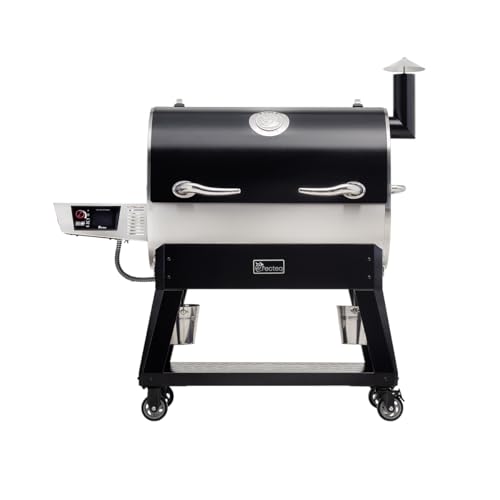
The Flagship 1600 is recteq’s biggest backyard statement: 1,667 square inches of cooking space and a 40 lb hopper on the company’s flagship platform, with Wi-Fi smart control. In heavy-duty terms, its claims are capacity and endurance — the 40 lb hopper turns multi-day cook weekends into a single fill, and recteq’s reputation in the pellet market is built specifically on build substance and controllers that hold temperature when the weather argues.
Strengths
- 1,667 square inches is the largest capacity in this guide — true event-scale cooking.
- 40 lb hopper: the longest unattended runtime of any pick here.
- recteq’s controller and support reputation is the pellet class’s heavy-duty benchmark.
Trade-offs
- Premium tier of the pellet market; capacity you do not use is money parked on the patio.
- Large footprint and substantial weight — a commit-to-the-spot purchase.
- Pellet smoke remains the mild format; mass and capacity do not change smoke physics.
- Cooking space: 1,667 sq in (per Amazon listing)
- Hopper: 40 lb (per Amazon listing)
- Control: Wi-Fi smart grill platform (per Amazon listing)
Who needs this much pellet cooker? The household that cooks for the neighborhood, the small caterer, the competition practice pit, and the family whose “cookout” means thirty people. For them, the Flagship’s combination of area, hopper, and controller discipline is not excess — it is the difference between cooking in batches while guests wait and cooking once. Everyone else should admire it and buy the size they will actually fill.
Best for: event-scale pellet cooking and maximum unattended runtime. / Not suited for: small households or small patios. Check the current price on Amazon

Masterbuilt Gravity Series 600 — Best Digital Charcoal
The Gravity Series is the most interesting engineering in this guide: a vertical charcoal hopper feeds briquettes or lump down into a fire chamber by gravity, a digital fan controller holds the temperature you set, and the cooker delivers real charcoal flavor with pellet-grill manners across 600 square inches. Its heavy-duty credentials are the hopper system and the fire management — a sealed column of fuel that burns from the bottom, giving long, steady cooks without the temperature sag of a depleting charcoal ring.
Strengths
- Gravity-fed charcoal delivers hours of steady heat with digital control — charcoal flavor, appliance behavior.
- Reaches grilling and searing temperatures far beyond pellet ceilings, so it truly replaces a grill.
- 600 square inches is honest family-plus capacity in a relatively compact footprint.
Trade-offs
- More systems than a kettle: fan, controller, and hopper seals all want basic care.
- Charcoal consumption exceeds a kamado’s; the hopper’s convenience is paid in fuel.
- Like all digital cookers, it wants a cover and a dry spot for its electronics.
- Cooking space: 600 sq in (per Amazon listing)
- System: GravityFed charcoal hopper with digital fan control and WiFi (per Amazon listing)
The Gravity 600 is the pick for the cook who loves charcoal’s flavor and searing power but is done with charcoal’s babysitting. In heavy-duty terms it is a different bet than steel mass: engineered consistency. Keep the hopper slides clean, the seals intact, and the ash emptied, and it will run brisket-steady cooks and steak-night sears from the same fuel load — a trick nothing else in this guide performs.
Best for: charcoal lovers wanting digital control and real searing range. / Not suited for: purists wanting zero electronics or kamado-level fuel economy. Check the current price on Amazon
Dyna-Glo Wide Body Vertical Offset DGO1890BDC-D — Best Vertical
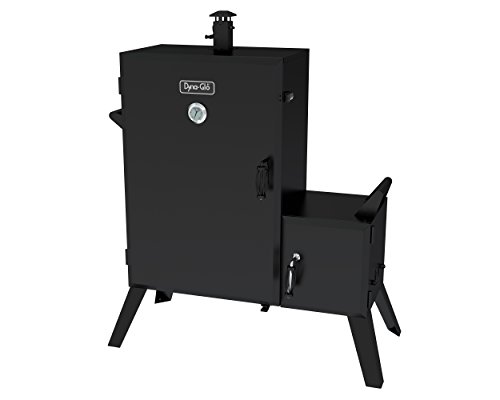
The Dyna-Glo Wide Body takes the offset formula vertical: a side firebox feeding a tall, wide cabinet, so capacity stacks upward instead of sprawling sideways. For heavy-duty purposes the appeal is load architecture — multiple racks in a cabinet suit the foods that dominate big cooks (butts, ribs, chickens, trays of sides) while the wide body avoids the narrow-rack compromises of slimmer verticals, all on a footprint friendlier than a long barrel.
Strengths
- Vertical stacking fits party loads on a barrel-smoker’s fuel budget and half its patio.
- Wide body fits full racks and pans that narrow cabinets force you to cut or angle.
- True offset fire path — real wood smoke, not a cabinet imitation.
Trade-offs
- Vertical heat rises: top racks run hotter than bottom, so rotation is part of the method.
- Door sealing homework applies, as with every backyard offset; budget gasket tape.
- Firebox is sized for charcoal-and-chunk fires more than full split burning.
- Format: wide body vertical offset charcoal smoker (per Amazon listing)
- Brand line: Dyna-Glo (GHP Group)
The Wide Body’s owners tend to be batch cooks: the freezer-fillers, the church-picnic volunteers, the sausage-and-jerky makers who think in racks rather than items. For that cooking style, vertical area is the most usable area, and this cabinet delivers it with an honest offset fire. Manage the vertical gradient by rotating racks at natural check-ins, and it will out-produce barrels costing more.
Best for: batch cooks and big loads on limited patio space. / Not suited for: cooks wanting set-and-forget electronics or split-wood fires. Check the current price on Amazon

Oklahoma Joe’s Longhorn Offset Smoker and Grill — Best Heavy-Duty Combo
The Longhorn is the big traditional barrel in combo form: 1,060 square inches split between an offset smoking chamber and grilling duty, in the long, low profile that has anchored a generation of backyard cookouts. Its heavy-duty case is sheer cooking architecture — one fire system that smokes briskets on Saturday and grills for a crowd on Sunday, in a frame sized for both jobs honestly.
Strengths
- 1,060 square inches across smoker and grill roles — one cooker, two appliances’ work.
- Traditional offset draft that experienced owners find predictable and teachable.
- Shares the Oklahoma Joe’s parts and knowledge ecosystem.
Trade-offs
- Traditional layout keeps the firebox-end gradient the reverse flow was invented to fix.
- The longest footprint in this guide; measure twice.
- Combo versatility means the firebox is a compromise for pure split-burning specialists.
- Cooking area: 1,060 sq in (per Amazon listing)
- Format: offset charcoal smoker and grill combo
The Longhorn is for the backyard that hosts: the cooker lives at the center of gatherings, smoking in the morning and grilling in the afternoon without a second machine. Its mass is in its length and its role — a permanent installation more than an appliance — and owners who buy it for that purpose tend to keep it for a very long time.
Best for: hosts wanting one big cooker for smoking and grilling crowds. / Not suited for: small patios or buyers wanting reverse-flow evenness. Check the current price on Amazon
Comparison Table
| Pick | Badge | Key spec | Best for |
|---|---|---|---|
| Oklahoma Joe’s Highland Reverse Flow | Best Overall Heavy-Duty | 1,093 sq in, baffle-plate thermal mass | Stable wood-fire cooking, full chambers |
| Kamado Joe Classic Joe II | Best Ceramic | 250 sq in ceramic, cart and shelves | Durability and fuel efficiency |
| recteq Flagship 1600 | Best Heavy-Duty Pellet | 1,667 sq in, 40 lb hopper | Event-scale pellet cooking |
| Masterbuilt Gravity Series 600 | Best Digital Charcoal | 600 sq in, gravity-fed charcoal hopper | Charcoal flavor with digital control |
| Dyna-Glo Wide Body Vertical Offset | Best Vertical | Wide-body cabinet offset | Batch loads on a smaller footprint |
| Oklahoma Joe’s Longhorn | Best Heavy-Duty Combo | 1,060 sq in smoker/grill combo | Hosting: smoke and grill in one frame |
How to Choose a Heavy-Duty Backyard Smoker
Begin by naming the failure you are paying to avoid. If your current cooker swings temperature in wind, you are buying thermal mass — steel and baffles, or ceramic. If your current cooker rusted, warped, or burned through, you are buying construction and parts support. If your cooks fail at hour nine because fuel ran out, you are buying endurance — hopper size and fuel efficiency. Heavy duty is not one feature; it is the answer to a specific disappointment, and the six picks map to those disappointments cleanly.
Reading build quality from a listing
You cannot kick the tires online, but you can read the signals. Weight is the first: within a format, heavier usually means more material where it matters. Grate material is the second: stainless and porcelain-enameled steel outlast thin chrome. Hinge and latch design is the third — look at product photos for hinges sized to the lid and doors that latch rather than lean. Fourth, the parts page: a brand that lists replacement grates, gaskets, controllers, and firebox parts is a brand expecting its cookers to be repaired, which is the definition of heavy-duty intent. Fifth, the owner community’s age: models with a decade of documented cooks have survived the only test that counts.
Mass vs. management: the honest trade
Heavy cookers are calm and slow — slow to heat, slow to cool, slow to forgive an overshoot. Light cookers are nimble and nervous. Neither personality is wrong, but they suit different cooks: the planner who loads a brisket and thinks in hours loves mass; the improviser who decides dinner at five loves nimbleness. Most heavy-duty buyers are planners upgrading from nervous cookers, and for them the calm is worth every pound. Just know that the first cooks on a heavy cooker involve relearning timing — preheat earlier, correct smaller, and trust the mass to do what you bought it for.
Where the money goes in each tier
In the steel offsets, money buys size, baffles, and finish quality. In kamados, it buys ceramic quality, hinge engineering, and included furniture like carts and shelves. In pellet and gravity machines, it buys controllers, hopper capacity, and build substance around the electronics. Across all three, the worst purchase is the almost-heavy cooker — the one priced like the real thing with the corners cut where you cannot see them. The six here were chosen because their corners, where cut, are visible and honest.
Fuel formats ranked by inherent stability
Stability comes from two sources — mass and management — and the formats combine them differently. The kamado is mass alone: no electronics, nothing to fail, calm by physics. The baffled offset is mass plus your hands: calm when tended, honest when neglected. The gravity cooker and the flagship pellet machine are management plus moderate mass: controllers that correct faster than weather can disturb, dependent on power and parts. The traditional big barrel is mass plus skill, with the widest variance between a novice’s day and an expert’s. None of these is the “most heavy duty” in the abstract — the kamado wins on pure durability, the pellet flagship on unattended endurance, the offset on repairability with hand tools. Match the kind of stability to the kind of cook you are, and the ranking sorts itself.
How to Set Up a Heavy-Duty Smoker for Its First Season
Heavy cookers reward a deliberate first season. Start with placement: a level, non-combustible surface, sheltered from prevailing wind, with working room on the firebox or hopper side and a clear path for hot trays. Assemble with a helper and check every door and lid for seal before the first fire — a door that leaks on day one gets gasket tape on day one, not after a season of fighting it. Run the seasoning burn long and smoky: oil the interior steel, bring the cooker up slowly, and let it cruise for several hours. That first burn is also your calibration session — note where the lid gauge disagrees with a probe at grate level, how the cooker responds to damper or controller changes, and how long it takes to stabilize.
Then cook in ascending order of difficulty: chicken and ribs to learn the hot spots, a pork butt to learn the long rhythm, and only then a brisket to put it together. Keep a simple log — fuel used, weather, settings, results — for the first dozen cooks. Heavy cookers are consistent enough that a log actually converges into knowledge, unlike a nervous cooker whose behavior changes with the wind. By the second season, the log becomes unnecessary, because the knowledge has moved into your hands. That transfer — from machine mass to cook’s confidence — is the real product a heavy-duty smoker sells.
What Heavy-Duty Does Not Fix
A candid section, because disappointment usually lives in unexamined expectations. Heavy construction does not fix fire quality: a smoldering, dirty fire makes bitter food in a thick cooker as reliably as in a thin one. It does not fix fuel neglect: wet charcoal and damp pellets misbehave at every price. It does not fix impatience: brisket still takes as long as brisket takes, and the mass that holds temperature also holds your mistakes at temperature. And it does not fix a mismatch of format: a buyer who wants push-button cooking will resent an offset’s hourly tending no matter how beautifully it is built. Buy heavy duty to solve stability and lifespan. Solve flavor, fuel, and format fit with the rest of this guide’s advice — and with the sister guides in this cluster, which compare the lighter, nimbler options honestly.
It also does not fix the laws of capacity. A heavy cooker with 250 square inches still cooks for six, not sixteen, and a 1,600-square-inch flagship still needs its fuel fed and its grease managed across a long event. Mass changes how a cooker behaves within its size; it does not change the size. Buy the capacity your cooking actually uses, in the heaviest construction your budget and patio allow, in that order — reversing the order is how patios end up holding magnificent cookers that are wrong for the household standing in front of them.
Maintenance for a Decade of Service
Heavy-duty cookers die from neglect in predictable places, and the prevention is a calendar, not a talent. After cooks: grates brushed, grease path emptied, ash out once cold — ash and moisture are the firebox floor’s executioner in every steel design. Monthly in season: door seals checked, baffle plates scraped (reverse flow owners, this is your chore), hopper and auger zones inspected on the digital machines, kamado bands and hinge bolts checked for tension. Seasonally: a deep interior scrape of flaking creosote, exterior paint touch-ups on steel before rust roots, gasket replacement where seals have gone hard, and one empty calibration burn to confirm the cooker still holds its numbers. Keep it covered between cooks and the fuel dry, and every machine in this guide is a ten-year appliance. The steel is willing; the routine is the variable.
Heavy-Duty in Winter: Where Mass Earns Its Keep
Winter is the heavy-duty cooker’s finest season, and the differences are not subtle. A thin-steel cooker on a January night is a radiator fighting the sky: its fire works as hard to heat the neighborhood as the brisket, temperature sags every time the wind gusts, and the cook tends it in a coat at hourly intervals that feel like twenty minutes. A heavy cooker changes the arithmetic. Once its mass is heat-soaked, the same night becomes a rounding error — the fire settles into the rhythm it would keep in October, and the cook’s job shrinks back to normal tending. Ceramic is the extreme case: kamado owners routinely describe winter cooks as indistinguishable from summer ones, at a small premium in fuel and preheat time.
The digital heavyweights handle winter differently. Pellet and gravity cookers compensate with fuel and fan — they burn more to hold the line, and the better controllers hold it well. Their owners help with insulation blankets, sheltered placement, and the discipline of minimal lid openings. The honest winter ranking of this guide’s formats runs: ceramic first, baffled steel offset second, insulated or large digital machines third, and everything thin and light last. If you live where winter is a season rather than an event, weight that ranking heavily — it is the difference between smoking twelve months a year and smoking eight.
The Weight Question: Delivery, Wheels, and Living With Mass
Heavy-duty cookers impose logistics, and planning them is part of buying well. Delivery arrives as freight or as a very heavy parcel; have a second person, a clear path, and the assembly spot chosen before the truck comes. Assemble where the cooker will live. A finished offset or kamado-in-cart is an awkward carry through gates and across lawns, and ceramic in particular should be moved as rarely and as gently as possible. Once placed, judge the wheels honestly: most backyard heavyweights roll fine on flat concrete and poorly everywhere else, so treat them as patio furniture that can be repositioned on a calm day, not as equipment that travels.
Daily life with mass has compensations beyond stability. Heavy lids and doors close with a sealed, damped finality that light cookers never achieve, and that seal is both a cooking feature and a daily pleasure. Hinges sized for real weight do not sag into leaks after a season. Grates with substance do not flex under a brisket. These are small things, felt weekly, and they are a large part of why heavy-duty owners rarely go back: the machine feels like equipment, not packaging. Budget the logistics once, and the mass pays you back every cook for a decade.
Where Heavy Cookers Die: Firebox Floors and Ash
Post-mortems on dead smokers find the same cause with dreary consistency: the firebox floor, eaten by the combination of ash, moisture, and time. Ash is hygroscopic — it pulls water from the air — and wet ash against steel is a corrosion cell that works twenty-four hours a day, including all the days you are not cooking. Heat accelerates it; the firebox floor, which also endures the most heat cycling, thins from both sides of the problem. This is why the maintenance section insists on ash discipline with almost religious emphasis, and why heavy-duty construction matters most exactly there: a thicker floor has more years of corrosion budget, and a design with a removable ash pan or a raised grate keeps the ash off the steel in the first place.
The digital machines have their own version of the same story: ash and pellet dust in fire pots and auger tubes, moisture in hoppers, grease in places grease should never accumulate. The kamado’s version is gasket compression and band tension. Different materials, same law — cookers die at their dirtiest, hottest, wettest point, and the owner’s routine at that point is the lifespan. When you compare the six picks, you are really comparing how forgiving each design is of an imperfect routine. All six are comparatively forgiving. None is immortal. Choose the one whose chores you will actually do.
A Heavy-Duty Cook, Hour by Hour
To make the mass argument concrete, follow a brisket through a windy Saturday on two cookers. On a light cooker, the morning starts fast — it is at temperature in twenty minutes — and then the negotiation begins. Every gust leans on the temperature; every cloud changes the fire’s mood; the cook spends the day in small corrections, and the brisket’s bark records each swing in its texture. The food is fine. The cook is tired. On a heavy cooker — say the baffled offset or the kamado — the morning starts slower, because hundreds of pounds of material must be persuaded up to temperature. Then the persuasion ends. The fire settles, the needle parks, and the day’s corrections shrink to the format’s natural rhythm: a split when the coal bed asks, a probe check at the wrap, long calm stretches between.
The difference compounds at hour eight, when fatigue makes cooks sloppy. The heavy cooker’s mass forgives a late fuel addition that would have crashed a light cooker; its seals forgive the door opened a crack too long. At hour twelve, both briskets come off — and the honest taster may not separate them, because good cooks compensate. The separation is in the cooks: one spent the day managing equipment, the other spent it cooking. Heavy duty is purchased in the currency of attention, and attention, on a Saturday, is the scarcest fuel of all.
The used market tells the truth
One more field test for heavy-duty claims: look at what survives on the used market. Cookers built with substance — kamados, quality offsets, flagship pellet machines — circulate for years at meaningful fractions of their original price, because buyers know the vessel has life left. Thin cookers mostly do not circulate at all; they rust out in place and leave with the scrap. If you want a single external validation of this guide’s ranking, that is it: durability you can observe in other people’s driveways, priced by strangers with no marketing department.
Warranty and Support: The Paper Side of Heavy Duty
A heavy-duty cooker is a long relationship, and the paperwork predicts its quality. Read warranties by component, not by headline: the vessel or firebox coverage is the number that matters, because that is the part you cannot cheaply replace; electronics, probes, and igniters are wear items and are usually covered for shorter terms on every brand, including the best. What you are really auditing is the manufacturer’s expectation of its own product. A company that warrants its firebox for years and stocks the gasket, grate, and controller on a public parts page is telling you it built the cooker to be repaired — and repair-ability, more than any steel measurement, is what separates a ten-year appliance from a three-year one.
Support quality shows up in smaller ways too: manuals that include exploded parts diagrams, assembly videos that match the current hardware, and an owner community large enough that your exact problem has a photographed solution. Every pick in this guide clears that bar, which is not an accident — it was a selection criterion. The corollary for buyers: register the cooker, keep the receipt, and order the first replacement gasket before you need it. Heavy-duty ownership is a logistics habit as much as a cooking one, and the cooks who master the logistics are the ones still smoking on the same machine when their neighbors are on their third.
Common Buying Mistakes
Believing “heavy duty” on the box. Judge by weight, grate material, hinge design, and parts support — not by the adjective in the product name.
Buying mass you cannot house. The biggest cooker in this guide needs a level, permanent, sheltered spot. A heavy cooker exiled to a damp corner dies faster than a light one kept dry.
Expecting custom-pit steel at backyard prices. These are the heavy end of the consumer market, honestly built for it. Chasing quarter-inch plate means a different market and a different budget entirely.
Skipping the gasket and calibration step. Even the best backyard cooker benefits from sealed doors and a known gauge offset. An evening’s work buys a season of calm.
Paying for capacity instead of stability. If your cooks are family-sized, the kamado’s efficiency or the Gravity’s control will serve you better than a giant chamber you heat for two racks of ribs.
Final Recommendation
For the wood-fire cook, the Oklahoma Joe’s Highland Reverse Flow is the heavy-duty default: mass, evenness, and ecosystem in one barrel. For durability above all, the Kamado Joe Classic Joe II is the decade-proof pick. Pellet cooks with crowds should take the recteq Flagship 1600; charcoal lovers wanting control should take the Masterbuilt Gravity Series 600; batch cooks on tight patios, the Dyna-Glo Wide Body; and hosts, the Oklahoma Joe’s Longhorn. Whichever you choose, do the unglamorous things in the same order as the cooker itself: a cover, gasket tape where the design wants it, a grate-level probe, and a dry spot on the patio — heavy-duty machines reward owners who set them up once, properly, and then simply cook for years. Keep reading the cluster: Best Backyard Smokers, Best Backyard Offset Smokers, Best Backyard Pellet Smokers, Best Bang For Buck High Capacity Smokers, Best Barbecue Smokers Grills, Best Barbeque Smokers.
Frequently Asked Questions
What makes a smoker “heavy duty” in practice?
Thermal mass that stabilizes temperature, construction that survives years of heat cycles, and hardware and parts support that allow repair instead of replacement. In this guide it means the heavy end of the backyard market — not custom quarter-inch-plate pits, which are a different product class with different prices, delivery, and ownership.
Is a heavier smoker always better?
No. Heavy cookers are calmer but slower to heat and slower to correct. Cooks who value nimbleness, portability, or small everyday cooks may be happier with a lighter cooker that matches their rhythm. The test is your calendar: if most of your smoking is planned, long, and weather-exposed, mass is an asset; if most of it is spontaneous and short, mass is a toll you pay for calm you never use.
Does ceramic really outlast steel?
Ceramic does not rust or burn out, so the vessel itself can last decades; its gaskets and hardware are the wear items. Steel cookers last a decade or more with ash discipline, paint touch-ups, and covers. Both outlive thin, cheap cookers by years.
How much more fuel does a heavy cooker use?
More to heat up, often less to hold temperature once soaked — the mass stops the constant small corrections that waste fuel on light cookers. Over a long cook the difference is modest; over a short cook, the light cooker wins on fuel. Think of it as a fixed cost versus a running cost: the heavy cooker charges you a preheat toll every session and then runs the long middle hours efficiently, so its advantage grows with cook length. A household whose smoking is mostly two-hour rib cooks will never recoup the toll; a household cooking briskets monthly comes out ahead within a season, and gains the calm as a free bonus.
Can I leave a heavy-duty smoker outside year-round?
With a fitted cover, a dry-ish spot, and ash kept out of it, yes — that is what they are built for. Electronics on digital models deserve the most shelter; ceramic and steel tolerate weather best. One refinement: “outside” should still mean a chosen place — out of the drip line of the roof, off bare soil that wicks moisture into legs and wheels, and ideally under enough overhang or cover that the cooker dries between rains rather than sitting in its own puddle. Heavy-duty construction forgives weather; it does not repeal it, and the owners who get fifteen years from these machines are the ones who picked the spot with the same care they picked the cooker.
What is the first upgrade for a heavy-duty smoker?
Gasket sealing and a grate-level probe thermometer, in that order. Even excellent cookers benefit from both, and together they cost less than the fuel a leaky cooker wastes in a season.


