Disclosure: airfryerkitchensupply.com is reader-supported. When you buy through links on our site, we may earn an affiliate commission at no extra cost to you.
Where to buy
What makes the best 16 hour smokers is fuel capacity and insulation: a genuine 16-hour smoke is a fuel-capacity and insulation problem before it is anything else, so this guide is built from machines whose listings document the hardware that makes overnight cooking possible: big hoppers, insulated bodies and controllers that feed fuel on demand. Start with the pellet picks if unattended hours are the priority, and confirm hopper capacity on the listing before you order — that single number decides more overnight cooks than any other specification.
- Z GRILLS 2026 Pellet Smoker & Grill with 28-Hour Hopper — check price on Amazon; choose the listing sold or shipped by Amazon or the brand’s own store, and confirm the exact model name before you order.
- Pit Boss 1600 Navigator Series Pellet Grill, 30 lb Hopper — check price on Amazon; choose the listing sold or shipped by Amazon or the brand’s own store, and confirm the exact model name before you order.
- Z GRILLS Pellet Grill with 28 lb Hopper — check price on Amazon; choose the listing sold or shipped by Amazon or the brand’s own store, and confirm the exact model name before you order.
- Pit Boss 850 Navigator Series Pellet Grill, 30 lb Hopper — check price on Amazon; choose the listing sold or shipped by Amazon or the brand’s own store, and confirm the exact model name before you order.
- Masterbuilt Gravity Series 600 Charcoal Smoker Grill — check price on Amazon; choose the listing sold or shipped by Amazon or the brand’s own store, and confirm the exact model name before you order.
- Kamado Joe Classic Joe Series II 18-inch — check price on Amazon; choose the listing sold or shipped by Amazon or the brand’s own store, and confirm the exact model name before you order.
The best 16 hour smokers are not the smokers with the longest advertised burn times; they are the smokers whose fuel systems you can do arithmetic on. Sixteen hours is an overnight brisket, a pair of pork shoulders started after dinner, a cook that begins in the dark and ends at lunch — and it fails in predictable ways: the hopper empties at hour eleven, the charcoal bed burns through at hour nine, the cold night wind strips heat faster than the fire replaces it. This guide ranks six machines by how honestly their hardware answers those three failure points.
Pellet grills dominate this conversation for a structural reason: an auger feeding a firepot from a large hopper is the only common design that carries its own fuel supply and meters it automatically. The verified hopper figures in this guide — taken from the manufacturers’ own listings — range from modest to genuinely large, and the listings that advertise runtime outright are flagged as such. Charcoal earns one place here on different logic: a gravity-fed charcoal hopper and a ceramic kamado both stretch a single load of fuel across very long cooks, by opposite methods.
A necessary honesty note before the picks: no listing can promise you sixteen hours, because runtime depends on set temperature, weather and how often the lid opens. What a listing can promise is hopper capacity and insulation, and those are the numbers this guide verifies and compares. Cook low, cook sheltered, keep the lid shut — the machines below handle the rest.
In this guide
Quick Picks
Six machines built for cooks that run past the length of a night — four pellet grills with documented hoppers, a gravity-fed charcoal smoker, and a ceramic kamado that sips fuel.
- Best Overall for Long Cooks: Z GRILLS 2026 Pellet Smoker & Grill with 28-Hour Hopper — the only pick whose own listing rates its hopper in hours — a 28-hour claim with PID control and a dual-wall insulated base behind it.
- Best Capacity for Long Cooks: Pit Boss 1600 Navigator Series Pellet Grill, 30 lb Hopper — the biggest verified combination in this guide — a 30 lb hopper feeding 1,593 square inches, with WiFi watching it all night.
- Best Fuel Reserve per Footprint: Z GRILLS Pellet Grill with 28 lb Hopper — a 28 lb hopper — capacity rivalling the big flagships — on a mid-sized 697 sq in grill that fits a normal patio.
- Best Mid-Size Long Cooker: Pit Boss 850 Navigator Series Pellet Grill, 30 lb Hopper — the same 30 lb reserve as the flagship, on a 932 sq in body — the sweet spot for most overnight cooks.
- Best Charcoal Flavour, Long Cook: Masterbuilt Gravity Series 600 Charcoal Smoker Grill — charcoal flavour with pellet manners — a gravity-fed hopper and digital control that feed the fire so you do not have to.
- Best Fuel Efficiency: Kamado Joe Classic Joe Series II 18-inch — no hopper, no auger, no electricity — a ceramic body so efficient that one load of lump charcoal outlasts most powered rivals.
How These Picks Were Chosen
Verification came first: every pick was confirmed on 2026-11-20, and every hopper capacity, cooking area and temperature range in the spec boxes is quoted from the manufacturer’s own listing. One pick’s runtime figure — a hopper the maker itself describes in hours — is reported as the maker’s claim, labelled that way, because that is the honest status of any runtime number.
The criteria were built around the three ways long cooks die. Fuel capacity: how much fuel the machine carries and whether it feeds itself. Thermal stability: insulation, double walls and ceramic mass that blunt wind and night cold. Control: a controller that holds a low smoking temperature steadily for hours, with probes so you can monitor the meat without opening the lid and dumping the heat you have been hoarding.
We deliberately mixed fuel types. Pellet machines are the default answer for unattended length, but a gravity charcoal smoker delivers real charcoal flavour across a long cook with similar set-and-forget manners, and a kamado remains the most fuel-efficient cooker most people will ever own. Readers who already know their fuel preference can jump straight to their pick; readers who do not should read the guide section on how the three systems age across a sixteen-hour cook before choosing.
The 6 Best 16 Hour Smokers

Z GRILLS 2026 Pellet Smoker & Grill with 28-Hour Hopper — Best Overall for Long Cooks
This Z Grills model leads the guide because its listing does something rare: it rates the hopper in hours. The maker describes a 28-hour hopper on a 700-square-inch pellet grill with PID 3.0 control, dual meat probes and a dual-wall insulated base. Treat the hour figure as a maker’s claim under favourable conditions rather than a guarantee — but note that the claim is backed by exactly the hardware that makes long runtimes plausible, which is more than most listings offer.
Strengths
- Maker-rated 28-hour hopper — the longest runtime claim in this guide
- Dual-wall insulated base blunts overnight temperature swings
- Dual probes let you monitor two cuts without opening the lid
Trade-offs
- Runtime claim assumes low set temperatures and calm weather
- 700 sq in is mid-sized for very large overnight loads
- Newer model year means a shorter long-term track record
| Cooking space | 700 sq in (from listing) |
| Hopper | Maker-rated for up to 28 hours |
| Controller | PID 3.0, dual meat probes |
| Body | Dual-wall insulated base |
The arithmetic of an overnight cook is pellet consumption per hour, and it is driven by how hard the fire must work to hold temperature. Insulation is therefore a runtime feature, not a comfort feature: the dual-wall base on this grill means the auger feeds less fuel on a cold night, which stretches the same hopper further and holds the cooking temperature steadier while it does it. That is the correct engineering answer to the sixteen-hour problem, and it is why this pick sits at the top rather than a larger grill with a thinner body and a hungrier fire.
The dual probes matter more than they appear to. Every lid opening on an overnight cook costs heat the controller must replace with fuel, and it costs you the sleep you bought the machine to protect. Two probes mean a brisket and a shoulder — or the flat and the point — report in all night without the lid moving. Pair that with a hopper you can fill at dinner with confidence, and the cook becomes what it should be: a machine problem, solved by the machine, while you do the human part in the morning.
Best for: overnight brisket and shoulder cooks where sleep is the point / Not suited for: anyone who wants the largest possible cooking area first
Pit Boss 1600 Navigator Series Pellet Grill, 30 lb Hopper — Best Capacity for Long Cooks
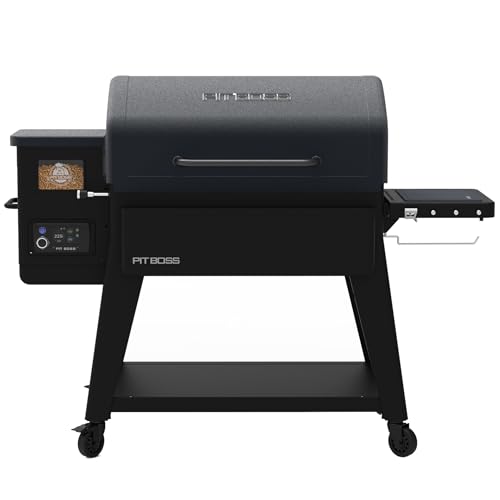
If your sixteen-hour cooks are also your biggest cooks — multiple briskets, a shoulder for a crowd, a full load that justifies the hours — the 1600 Navigator is the pick built to that scale. Its listing verifies a 30-pound hopper, 1,593 square inches of cooking space, a touchscreen controller with WiFi and Bluetooth, and a flame broiler for the cooks that are not low and slow. Size and endurance in one machine is a rarer combination than it should be.
Strengths
- 30 lb hopper is among the largest verified in this guide
- 1,593 sq in swallows multi-brisket overnight loads
- WiFi and Bluetooth monitoring suits sleep-through cooks
Trade-offs
- Large footprint and pellet appetite to match its size
- Flame broiler features are wasted on pure low-and-slow cooks
- Premium tier pricing within this roundup
| Hopper | 30 lb (from listing) |
| Cook space | 1,593 sq in |
| Range | 180°F to 500°F |
| Control | Touchscreen, WiFi & Bluetooth, meat probe |
A big grill changes the runtime equation in both directions. The 30-pound hopper is a deep fuel reserve, but a 1,593-square-inch body has more air to heat and more surface to lose heat through, so consumption per hour runs higher than a compact grill at the same setpoint. The Navigator still wins the overnight argument because its reserve grows faster than its appetite — and because at this scale the alternative is refilling a smaller hopper at 3 a.m., which is the moment this entire category exists to prevent.
The connectivity is not a gimmick on a sixteen-hour cook; it is the alarm system. A phone alert when the cook temperature drifts or a probe hits its target is what turns ‘set and forget’ from a slogan into a sleeping arrangement. Set your low-temperature alarm generously — a pellet grill cycling normally will wander a little around the setpoint, and an alarm set too tight will train you to ignore it, which defeats the entire system on the one night it matters.
Best for: large overnight loads and hosts cooking for crowds / Not suited for: small patios or small households cooking one cut at a time
Z GRILLS Pellet Grill with 28 lb Hopper — Best Fuel Reserve per Footprint
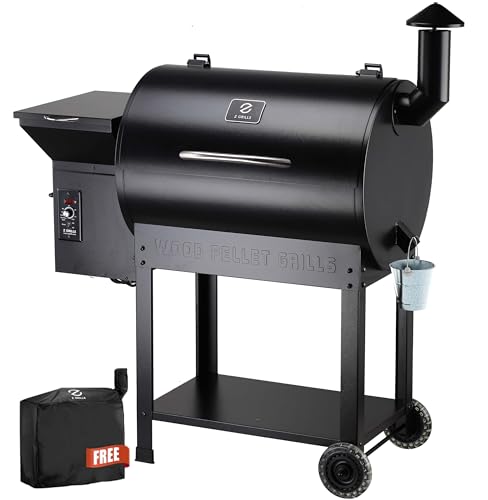
This Z Grills model makes a different trade from its sibling above: instead of an hours rating, its listing verifies the hopper in pounds — 28 of them — on a 697-square-inch grill with PID auto temperature control and a cover included. Twenty-eight pounds of pellets on a mid-sized body is a lot of hours of low-temperature cooking, and it arrives in a footprint that does not demand a dedicated corner of the garden.
Strengths
- 28 lb verified hopper capacity on a mid-sized body
- PID control holds low smoking temperatures steadily
- Cover included — weather protection matters for stored pellets too
Trade-offs
- No maker hours rating: runtime is your arithmetic, not their claim
- Single-probe class monitoring versus dual-probe rivals
- Mid-sized area limits the very largest loads
| Hopper | 28 lb (from listing) |
| Cooking area | 697 sq in |
| Controller | PID auto temperature control |
| Included | Grill cover |
Do the pellet arithmetic honestly and this grill looks strong. At low smoking temperatures a pellet grill of this size sips fuel; a 28-pound reserve therefore covers an overnight cook with a wide margin, and covers back-to-back cooks — tonight’s brisket, tomorrow’s ribs — without a refill in between. The margin is the feature. Overnight cooks fail at the edges: a colder night than forecast, a wind that picks up at midnight. A hopper with reserve absorbs the edges, and that is worth more than a controller with one more decimal place.
Keep the hopper honest and it will keep you honest. Pellets absorb moisture from the air, and damp pellets feed badly and burn dirty, which shows up at hour ten as temperature sag you cannot explain. The included cover is therefore part of the runtime system, not an accessory: use it, keep the hopper lid closed between cooks, and vacuum the firepot on schedule so the overnight fire you are trusting is burning in a clean pot. Sixteen-hour cooking rewards boring maintenance more than any other kind.
Best for: patio-sized setups that still want flagship fuel reserve / Not suited for: cooks who want the maker to state runtime in hours

Pit Boss 850 Navigator Series Pellet Grill, 30 lb Hopper — Best Mid-Size Long Cooker
The 850 Navigator takes the flagship’s verified 30-pound hopper and puts it on a 932-square-inch grill, which for most households is the more sensible overnight machine: big enough for a brisket and a shoulder together, small enough that the fire is not heating empty air for sixteen hours. WiFi and Bluetooth monitoring, a flame broiler and an LCD controller round out a listing that reads like it was specified by someone who has actually lost sleep over a smoker.
Strengths
- 30 lb hopper with a smaller body to feed — excellent runtime margin
- 932 sq in fits the classic brisket-plus-shoulder overnight load
- WiFi monitoring with meat probe included
Trade-offs
- Still a substantial grill for a small deck
- Flame broiler sear zone is a daytime feature on an overnight pick
- Pellet quality matters: cheap dusty pellets shorten real runtime
| Hopper | 30 lb (from listing) |
| Cook space | 932 sq in |
| Range | 180°F to 500°F |
| Control | LCD digital, WiFi & Bluetooth, meat probe |
There is a quiet efficiency argument for this size class. Runtime is hopper capacity divided by consumption, and consumption tracks the volume of hot air the fire maintains. A 932-square-inch grill holding one brisket is maintaining far less hot air than a 1,593-square-inch grill holding the same brisket — with the same 30 pounds of fuel in reserve. If your overnight loads are family-sized rather than event-sized, this pick quietly outlasts its bigger sibling on the same fuel, and the brisket neither knows nor cares that the grill around it was smaller.
Use the flame broiler the way its designers probably did not intend in this context: not at all, overnight. Long cooks are lid-closed cooks. Where the 850 earns daily keep is that the morning after the brisket, it is also a perfectly good grill for lunch — the versatility that justifies its patio space across the year. Sixteen-hour capability is a sometimes feature; the best version of it lives in a machine you also enjoy on the other three hundred days.
Best for: family-sized overnight loads with maximum fuel margin / Not suited for: event-scale cooking for very large groups

Masterbuilt Gravity Series 600 Charcoal Smoker Grill — Best Charcoal Flavour, Long Cook
The Gravity Series is the answer for the reader who wants a sixteen-hour cook without giving up charcoal. Its listing describes a GravityFed charcoal hopper on a digitally controlled, WiFi-connected grill: charcoal sits in a vertical hopper, burns at the bottom, and feeds down as it is consumed, while a fan and controller hold the set temperature. It is the pellet grill’s operating system running on lump charcoal, and the flavour difference is real.
Strengths
- Real charcoal smoke across a long, managed cook
- Gravity-fed hopper removes manual fire-tending
- Digital control and WiFi match the pellet picks feature for feature
Trade-offs
- Charcoal hoppers hold fewer hours than the biggest pellet hoppers
- Ash management is a bigger chore than pellet ash
- Charcoal quality varies: dusty bags burn faster and dirtier
| Fuel system | GravityFed charcoal hopper (from listing) |
| Cooking area | 600 sq in |
| Control | Digital with WiFi technology |
Be straight about the trade this pick makes. A charcoal hopper is a smaller fuel reserve than a 30-pound pellet hopper, and charcoal burns at the rate the fire demands, so the Gravity 600’s realistic long-cook window sits at the demanding end of an overnight cook rather than cruising past it. What you get in exchange is the flavour that made you buy charcoal in the first place, delivered with a controller instead of a lawn chair and a spray bottle. For a brisket started in the evening and served at lunch, that window is enough — and the eating is better.
Fuel discipline decides this machine’s long cooks. Dense lump charcoal burns longer and steadier than briquettes full of filler, and a hopper packed with large, dry pieces feeds more predictably than the dusty bottom of a bag. Top the hopper before the cook, not during it, keep the ash drawer emptied on schedule, and the gravity system does the rest. Owners who treat charcoal selection as part of the recipe get the long cooks the design promises; owners who buy whatever bag is nearest get shorter, smokier ones.
Best for: charcoal loyalists who want to sleep through a brisket / Not suited for: anyone who wants the absolute longest unattended runtime

Kamado Joe Classic Joe Series II 18-inch — Best Fuel Efficiency
The kamado is the oldest answer to the sixteen-hour problem and still one of the best. The Classic Joe Series II is an 18-inch ceramic charcoal grill and smoker on a cart, and ceramic is the whole argument: thick walls that store heat and release it slowly, seals that starve the fire down to a smoulder, and a fuel burn so slow that a single load of lump charcoal is a genuinely long cook. It asks for skill instead of electricity, and repays it with silence, flavour and independence from power cuts and pellet supplies.
Strengths
- Ceramic efficiency stretches one charcoal load across very long cooks
- No power, pellets or parts required to keep cooking
- Superb heat retention makes it weather-resistant in a way thin steel is not
Trade-offs
- 250 sq in is the smallest cooking area in this guide
- Temperature is managed by your vent craft, not a controller
- Heavy ceramic body is a place-it-once decision
| Format | 18-inch ceramic kamado on cart |
| Cooking area | 250 sq in (from listing) |
| Grates | Stainless steel |
| Fuel | Lump charcoal |
A kamado’s runtime secret is that it barely burns. Once the ceramic mass is heat-soaked, the fire needs only a trickle of air to hold a low temperature, and a trickle of air consumes charcoal at a crawl. That is how a cooker with no hopper at all belongs in this guide: its fuel reserve is efficiency. The skill it demands is front-loaded — light a small fire, catch the temperature on the way up rather than overshooting, set the vents and leave them alone. Cooks who fiddle with kamado vents all night get neither sleep nor steady temperatures; cooks who trust the ceramic get both.
Capacity is the honest limit. Two hundred and fifty square inches is one brisket, or one shoulder with room to breathe, and for many households that is the overnight cook that actually happens. What the kamado returns for its small footprint is range: the same cooker that smoulders through the night will, with its vents open, become the hottest grill most people own. As a second cooker beside a big pellet grill it is close to perfect; as an only cooker for a small household that cooks with intention, it might be the best pick in this entire guide.
Best for: skilled cooks and small loads who value efficiency and flavour / Not suited for: large loads or anyone who wants a controller to do the work
Comparison Table
| Pick | Badge | Key spec | Best for |
|---|---|---|---|
| Z GRILLS 2026 Pellet Smoker & Grill with 28-Hour Hopper | Best Overall for Long Cooks | Maker-rated 28-hour hopper, PID 3.0, dual probes | overnight brisket and shoulder cooks where sleep is the point |
| Pit Boss 1600 Navigator Series Pellet Grill, 30 lb Hopper | Best Capacity for Long Cooks | 30 lb hopper, 1,593 sq in, WiFi touchscreen | large overnight loads and hosts cooking for crowds |
| Z GRILLS Pellet Grill with 28 lb Hopper | Best Fuel Reserve per Footprint | 28 lb hopper on a 697 sq in grill | patio-sized setups that still want flagship fuel reserve |
| Pit Boss 850 Navigator Series Pellet Grill, 30 lb Hopper | Best Mid-Size Long Cooker | 30 lb hopper, 932 sq in, WiFi | family-sized overnight loads with maximum fuel margin |
| Masterbuilt Gravity Series 600 Charcoal Smoker Grill | Best Charcoal Flavour, Long Cook | GravityFed charcoal hopper, digital control, WiFi | charcoal loyalists who want to sleep through a brisket |
| Kamado Joe Classic Joe Series II 18-inch | Best Fuel Efficiency | Ceramic body, 250 sq in, cart included | skilled cooks and small loads who value efficiency and flavour |
The honest way to read this table: hopper figures are verified from listings, and exactly one pick carries a maker-stated runtime in hours. Everything else is arithmetic you should redo for your own conditions — low set temperatures and sheltered spots stretch every number here; wind, cold and lid-opening shrink them all.
How to Choose a Smoker That Really Cooks for 16 Hours
Work backwards from the failure points. A sixteen-hour cook dies from an empty fuel supply, a temperature collapse in the small hours, or a cook who keeps opening the lid to check. The right machine answers all three: a fuel reserve with margin over your expected burn, insulation or thermal mass that blunts the night, and monitoring — probes and connectivity — that lets the lid stay shut. Judge every candidate against those three answers and ignore the rest of the feature list until they are satisfied.
Then be honest about your load. Runtime is capacity divided by consumption, and consumption rises with the size of the cooker and the size of the night. A mid-sized grill with a flagship hopper outlasts a flagship grill on the same fuel when the load is family-sized. Buy the smallest cooker that fits your real overnight load and the largest fuel reserve that fits your patio, and the sixteen-hour problem mostly solves itself.
Finally, respect the setpoint. Every pick in this guide cooks longest at low smoking temperatures, which is where brisket and shoulder want to live anyway. A machine asked to hold grilling heat will burn its reserve in a fraction of the time. Sixteen hours is a low-and-slow specification; shop and cook accordingly.
Fuel, Weather and the Real-World Runtime Gap
The gap between a listing’s promise and your backyard is weather. Wind strips heat from thin steel, cold nights deepen the fire’s work, and both show up as pellet or charcoal consumption you did not budget. Insulated and ceramic bodies narrow the gap; exposed steel widens it. Whatever you buy, give it a sheltered spot out of the prevailing wind — it is the cheapest runtime upgrade in barbecue, and it costs a furniture rearrangement.
Fuel quality is the second gap. Dry, dense pellets and large, clean lump charcoal burn longer and steadier than damp or dusty fuel, and they do it without the temperature sags that wake you up. Store fuel dry, buy from stock that turns over, and treat the bottom of the bag as kindling rather than overnight fuel. The machine can only meter what you feed it.
Planning the Load: What Sixteen Hours Does to Food
A sixteen-hour window changes the menu, not just the schedule. The cuts that justify it are the ones built from collagen and patience: brisket, pork shoulder, beef cheeks, whole packer cuts that need the stall endured rather than avoided. Plan the load as a timeline rather than a pile — the cut that needs longest goes on first and lowest, quicker items join later or ride the rested meat’s warmth, and the cook ends as a sequence of landings rather than a single reveal. The machines in this guide hold the temperature; the plan is what you contribute.
Wrapping is the timeline’s main lever. Wrapping in paper or foil at the stall trades bark softness for hours saved, and on a sixteen-hour cook the honest question is whether you are spending the hours on purpose or by accident. If the meal is at lunch, an unwrapped overnight brisket landing at noon is a plan. If the brisket lands at nine and waits three hours, the wrap would have served you better. Decide the landing time first, then choose the wrap, the start time and the setpoint to land it — in that order.
Resting is the final stage and the most commonly rushed. A brisket that cooked for fourteen hours deserves at least one hour of rest, held warm, and large cuts hold safely for several hours when wrapped and rested in a dry cooler — which is the scheduling buffer that makes overnight cooking civilised. Build the rest into the plan and the sixteen-hour cook stops being a gamble on timing and becomes what the equipment in this guide is designed for: a system with margins at every stage.
How to Set Up an Overnight 16-Hour Smoke
The routine below is written for the pellet picks and adapts to the charcoal machines with the notes in the final step.
- Prep the machine in daylight. Clean the firepot or ash drawer, check the fuel reserve and top it up completely, and confirm probes read sensibly in a glass of water beside a known thermometer. Overnight failures are usually daylight maintenance debts.
- Start earlier than feels necessary. Light the smoker in the early evening and let it settle at your smoking temperature for a full hour before the meat goes on. A cooker that has heat-soaked its body cycles gently all night; a rushed one hunts.
- Load the meat cold and close the lid. Cold meat takes smoke well, and from this moment the lid is a sealed door until morning unless an alarm earns an opening.
- Set alarms with margin. A low-temperature alarm far enough below setpoint to ignore normal cycling, a high alarm for safety, and probe targets for the morning — set them all before you sleep, not after the first beep.
- Check fuel at the natural waking points. If you wake in the night, glance at the hopper through the app or a window rather than opening anything. Top up only if the reserve is genuinely low.
- Rest the meat properly in the morning. A sixteen-hour cook deserves a real rest, wrapped and held warm, while you make coffee and assess. The cook ends at slicing, not at the alarm.
Charcoal adaptation: on the Gravity Series, fill the hopper with dense lump and empty the ash drawer before lighting; on the kamado, build a small fire, catch the temperature early, and set the vents once. Both reward the same discipline — prepare in daylight, disturb nothing at night.
Common Buying Mistakes
Trusting the headline runtime. A maker’s hours figure assumes kind conditions. Build your own margin: fill the fuel completely, cook low, and treat any claim as a ceiling rather than a promise.
Opening the lid to check. Every opening dumps heat the fire must replace with fuel, and restarts the meat’s surface cooling. Probes and cameras exist precisely so the lid can stay shut for sixteen hours.
Starting the cook too late in the evening. A cooker rushed up to temperature overshoots and cycles all night. The extra hour of settling in the evening is the cheapest stability you will ever buy.
Neglecting the firepot or ash. Ash is insulation in the wrong place: it chokes airflow, sags temperature and, on pellet grills, can end the fire outright at hour nine. Clean before long cooks, always.
Ignoring the forecast. A windy, freezing night can raise fuel consumption dramatically. Check the weather, shelter the cooker, and fill the hopper like you mean it.
What Actually Happens Inside a Smoker at Hour Twelve
By hour twelve of a long cook, the meat has changed and so has the machine. The brisket or shoulder is deep into the phase where connective tissue converts and the surface bark has set hard; the cooker, meanwhile, is running on the back half of its fuel with ash accumulated and its body fully heat-soaked. This is the hour where well-chosen machines distinguish themselves: insulated bodies are at their most stable, big hoppers still hold reserve, and ceramic is barely sipping. It is also the hour where neglected maintenance sends its bill.
The practical lesson is that long cooks are won in the preparation, not the supervision. Every pick in this guide can be the right machine; none of them can overcome a half-filled hopper, a dirty firepot and a windy pitch. Choose the fuel system that matches your temperament — pellets for the sleeper, gravity charcoal for the flavour-first cook, ceramic for the craftsman — and then be boringly diligent about the setup. Sixteen hours of good barbecue is mostly a logistics exercise with a delicious ending.
Pellet, Gravity or Ceramic: Living With Your Choice
A year of ownership separates the three fuel systems in this guide more clearly than any specification. Pellet owners report the quietest life: fuel from a bag, ash in a cup, a controller that ages like an appliance and a flavour that is clean and mild — perfect for households that came to barbecue for the food rather than the fire. Their complaints are mechanical and occasional: an auger jam from damp pellets, a firepot that needed its scheduled clean. Discipline about dry fuel and cleaning answers nearly all of it.
Gravity charcoal owners report the cookiest life: real charcoal flavour with a controller’s manners, at the price of charcoal logistics — bags to store, ash to manage, a hopper to pack with decent lump. Their cooks taste like the fire they grew up wanting, and their overnight confidence rests on fuel quality more than on any feature. Ceramic owners report the craftsman’s life: the fewest moving parts, the deepest heat, a cooker that will outlive its cart — and a skill curve they climbed once and now own permanently.
None of these lives is the best one; they are three different hobbies wearing the same apron. The sixteen-hour requirement is satisfied by all of them, which is exactly why this guide ranks by hardware honesty and then hands the choice back to temperament. Buy the life you want to live every weekend, and the overnight cooks will take care of themselves.
The Morning After: Holding, Resting and Serving
A sixteen-hour cook ends in a logistics problem disguised as a celebration: a very large, very hot piece of meat that is done before the meal is. The holding solution is part of the system this guide has been building. Wrapped and rested in a dry cooler — towels for insulation, no ice — a brisket or shoulder holds its quality for hours, which converts your overnight timing from a bullseye into a window. Plan the cook to land early inside that window, and the morning becomes coffee and side dishes instead of arithmetic and worry.
Slicing and pulling deserve the same deliberateness as the cook. Rest the meat until it can be handled, slice brisket against the grain with the flat and point treated as the different muscles they are, and hold pulled pork coarse rather than shredded to dust. Sauce at the table, not in the pan. Sixteen hours of fuel, steel and patience are in that meat; the last ten minutes at the board are where the table finds out whether the night was worth it. It was — provided the plan, and not just the smoker, ran the whole sixteen hours.
A Note on Sleep, Safety and Overnight Fires
One responsibility belongs in every overnight-cooking guide, stated once and plainly: an unattended smoker is still a fire. Site it outdoors, on a stable surface, clear of structures, overhangs and anything the wind could carry to it, and check it before you sleep the way the how-to prescribes — fuel full, ash managed, temperatures settled. Pellet and gravity machines are designed for managed, contained combustion, and a kamado’s fire is small and sealed by design, but design is a partner to siting, not a substitute for it. The cooks in this guide who sleep soundly are the ones who did the daylight checks. Do them, set the alarms, and let the machines earn the trust this guide has placed in them — on evidence, in the open air, at a sensible distance from everything you love.
Final Recommendation
Start with the Z GRILLS 28-hour hopper model if you want the longest stated runtime backed by insulation and dual probes — it is the most complete answer to the sixteen-hour brief in this guide. Choose the Pit Boss 850 Navigator if your loads are family-sized and you want the flagship 30-pound reserve working on a smaller body, or the 1600 Navigator when the overnight cook is also the biggest cook of your year.
Take the Masterbuilt Gravity 600 if charcoal flavour is non-negotiable and you accept a tighter fuel window in exchange, and take the Kamado Joe if your loads are small, your vent craft is good and you want the most fuel-efficient cooker here. Every pick was verified against its maker’s listing; the rest is shelter, dry fuel and a lid that stays shut.
- Z GRILLS 2026 Pellet Smoker & Grill with 28-Hour Hopper — overnight brisket and shoulder cooks where sleep is the point
- Pit Boss 1600 Navigator Series Pellet Grill, 30 lb Hopper — large overnight loads and hosts cooking for crowds
- Z GRILLS Pellet Grill with 28 lb Hopper — patio-sized setups that still want flagship fuel reserve
Keep exploring this cluster: Best 100 Pounds Sausage Smokers Best 2 Door Gas Smokers Best 3 In1 Smokers Best 3 Inch Thermometer For Offset Smokers Best 48 Trailer Smokers
Related guides
- Best Choice Products Smokers
- Best Airfilter For Smokers
- Best Airleaner For Smokers
- Best Whiskey Smokers
Frequently Asked Questions
Can any smoker really run for 16 hours unattended?
Yes, with the right hardware and conditions: a large, automatically fed fuel reserve or a very efficient ceramic body, a low set temperature, shelter from wind and a full fuel load at the start. One pick in this guide carries a maker-rated 28-hour hopper; the others achieve long runtimes through verified hopper capacity and insulation rather than stated hours.
How many pellets does an overnight cook use?
It varies with temperature, weather and cooker size, which is why this guide compares hopper capacity instead of promising consumption figures. The safe approach is to start any overnight cook with a completely full hopper from the large-reserve picks here, so the margin absorbs whatever the night does.
Is a kamado really a long-cook smoker with no hopper?
Yes — its fuel reserve is efficiency. Thick ceramic walls store heat and tight seals let the fire smoulder on very little air, so a single load of lump charcoal burns for a very long time. The trade is capacity and the need for vent skill instead of a controller.
What temperature should a 16-hour cook run at?
Low smoking temperatures — the range brisket and pork shoulder are traditionally cooked at. Higher setpoints burn fuel far faster and shorten every runtime in this guide, whatever the hopper size.
What usually goes wrong overnight?
In order: fuel running out, ash choking the fire, weather stripping heat, and a lid opened too often. All four are preparation problems, which is good news — the setup routine in this guide is designed around exactly that list.
Do I need WiFi on a long-cook smoker?
Not strictly, but it changes the quality of the night. An alarm that wakes you only when the cook temperature genuinely drifts is the difference between trusting the machine and sleeping beside it. Two picks here include WiFi monitoring for exactly that reason.


