Disclosure: airfryerkitchensupply.com is reader-supported. When you buy through links on our site, we may earn an affiliate commission at no extra cost to you.
Where to buy
If you are shopping for the best 10 top mixers, start with the shortlist below. Every mixer in this guide is a current model sold through Amazon, which is where we recommend buying a stand mixer: colour and bowl variants are listed side by side, bundle contents are explicit, and returns are straightforward if the machine arrives damaged. Start with the KitchenAid Artisan if you want the default answer, and check the current price on Amazon under the exact model name, because the same mixer name spans several bowl sizes and generations.
- KitchenAid Artisan Series 5 (KSM150PS) — check the current price on Amazon and confirm the exact configuration on the listing before you order.
- KitchenAid 7 Quart Bowl-Lift (KSM70SKXX) — check the current price on Amazon and confirm the exact configuration on the listing before you order.
- Cuisinart Precision Master SM-50 — check the current price on Amazon and confirm the exact configuration on the listing before you order.
- Ankarsrum Assistent Original (AKM6230) — check the current price on Amazon and confirm the exact configuration on the listing before you order.
- Bosch Universal Plus — check the current price on Amazon and confirm the exact configuration on the listing before you order.
- Hamilton Beach 4-Quart Stand Mixer — check the current price on Amazon and confirm the exact configuration on the listing before you order.
Search for the best 10 top mixers and you will find a dozen lists that agree on almost nothing beyond putting a KitchenAid somewhere near the top. That disagreement is honest, in a way: ‘top mixer’ means different machines to a bread baker, a cake maker and a once-a-month cookie household. This guide cuts through it the practical way — six mixers, each verified as a current Amazon listing, each ranked for the job it is genuinely the best at, with the trade-offs stated as plainly as the strengths.
A note on what ‘mixer’ means here. The word covers hand mixers, stand mixers, commercial planetary machines and even audio desks in other corners of this site, but a top-mixers list that people cook from is a stand-mixer list: the countertop machine that kneads dough, whips cream, and earns its footprint every week. If you need dough capacity at production scale, our 10-quart commercial guide covers that class; this list is about the best machines for home kitchens, from first apartments to serious bread programmes.
Every pick below was confirmed on 2026-11-20, and the six split into clear roles: the all-round default, the heavy-duty bowl-lift upgrade, the mid-priced overachiever, two specialist dough machines from Europe, and the budget pick that covers the basics for the least commitment. Read the verdicts, match one to your baking, and you can stop researching — that is what a top list is for.
In this guide
Quick Picks
Best Overall — KitchenAid Artisan Series 5 (KSM150PS). The default answer, earned over decades: a 5-quart tilt-head machine with 10 speeds, a pouring shield in the box, and the largest attachment ecosystem in the category. For the majority of home bakers, this is the mixer the search should end at.
Best for Bread and Big Batches — KitchenAid 7 Quart Bowl-Lift (KSM70SKXX). KitchenAid’s heavy end for home kitchens: a 7-quart bowl on a stable bowl-lift frame, 11 speeds including a gentle half-speed for folding, and a double flex-edge beater in the box. This is the upgrade for bakers who outgrew the Artisan’s bowl or its dough composure.
Best Mid-Range Value — Cuisinart Precision Master SM-50. The overachiever: 5.5 quarts, 12 speeds, a full attachment trio and a splash guard with a pour spout, from a brand with real kitchen credibility — positioned a clear tier below the KitchenAid flagship while giving up very little in daily use.
Best for Serious Dough — Ankarsrum Assistent Original (AKM6230). The dough specialist’s machine, built in Sweden on an entirely different principle: the bowl rotates and the tools work the dough the way hands do. Bread bakers who learn its technique rarely go back — but it is a technique, and the learning curve is part of the purchase.
Best Compact Powerhouse — Bosch Universal Plus. The space-engineer’s favourite: a low, wide, bottom-drive machine with a 6.5-quart bowl that fits under cabinets where tall mixers cannot, with a reputation among whole-grain and big-batch bakers that has lasted decades. The bundle verified here adds the dough hook extender its fans swear by.
Best Budget — Hamilton Beach 4-Quart Stand Mixer. The honest budget pick: true planetary mixing, a 4-quart steel bowl, seven speeds and the full basic attachment set, in a light machine with a carry handle. It covers the baking most households actually do, at a fraction of the flagship commitment.
How These Picks Were Chosen
We chose these six by asking what actually decides satisfaction with a stand mixer over five years of ownership: whether it kneads bread dough without walking across the counter, whether the bowl and attachments cover a household’s real recipes, whether parts and extra bowls will still be sold when you need them, and whether the machine’s size matches the batches you honestly make. Speed counts, wattage claims and colour ranges were treated as the marketing they mostly are.
Verification was strict. Each model was matched to a live Amazon listing, and the specs in the mini boxes come from those listings. We excluded discontinued generations still circulating as marketplace listings, and machines whose ‘top’ status rests on a single viral moment rather than a track record. Two of the six are European designs with devoted followings and real learning curves; both are labelled as such, because a top list that hides a learning curve is not helping anyone.
The 6 Best 10 Top Mixers

KitchenAid Artisan Series 5 (KSM150PS) — Best Overall
The Artisan suits the broad centre of home baking: cakes, cookies, frostings, whipped work and regular bread dough in household batch sizes. The tilt-head design makes bowl and beater changes effortless, the 5-quart bowl matches the scale of standard recipes, and the attachment hub turns the machine into a pasta roller, grinder or spiralizer over time. If you bake weekly and want one machine that simply covers your cooking life, this is it.
Strengths
- The category’s deepest attachment and accessory ecosystem
- Tilt-head access and 5-quart bowl suit everyday recipes perfectly
- Huge owner community — every question about it has been answered somewhere
Trade-offs
- Serious bread bakers will eventually test its dough limits at large, stiff batches
- Tilt-head needs overhead clearance to open fully under cabinets
- Premium positioning among mainstream home mixers
| Spec | Detail |
|---|---|
| Bowl | 5-quart stainless steel, tilt-head design |
| Speeds | 10 speed settings (per listing) |
| Included | Pouring shield (per listing); flat beater, dough hook, wire whip |
| System | Front attachment hub for KitchenAid attachments |
The Artisan’s dominance is not nostalgia; it is systems thinking. The machine itself is very good — consistent planetary mixing, honest speeds, durable construction — and everything around it is the best in the category: spare bowls in every material, attachments that genuinely extend what a home cook can do, colours that let it live on the counter where it will actually be used. Its honest limitation is dough ambition. Weekly sandwich loaves, yes; double batches of stiff bagel dough, regularly, will push it. Most households never find that limit. Those who will should read the next pick first.
Best for: The majority of home bakers who want one versatile, long-lived machine / Not suited for: High-volume bread bakers who routinely mix large, stiff doughs
Check the current price on Amazon for the KitchenAid Artisan Series 5 (KSM150PS).

KitchenAid 7 Quart Bowl-Lift (KSM70SKXX) — Best for Bread and Big Batches
Choose the bowl-lift if bread is your main event or your batches keep outgrowing 5 quarts — holiday baking, double loaves, big cookie production. The lift design keeps the bowl rigid under heavy dough in a way a tilting head cannot, and the extra capacity is real working capacity, not just a taller bowl. The half-speed folding setting is a thoughtful touch for delicate batters that most powerful mixers handle brutally.
Strengths
- 7-quart capacity handles double batches and serious dough
- Bowl-lift frame stays composed under loads that rock tilt-heads
- Generous accessory set included, led by the double flex-edge beater
Trade-offs
- Large and heavy — it claims its counter space permanently
- Bowl removal on a lift is a two-hand habit to learn
- More machine than occasional bakers will ever use
| Spec | Detail |
|---|---|
| Bowl | 7-quart, bowl-lift design |
| Speeds | 11 speeds including a 1/2 speed for folding (per listing) |
| Included | Double Flex Edge Beater and 4 other accessories (per listing) |
| Design | Bowl-lift stability for heavy dough loads |
This is the mixer for the household that bakes like a small business. The engineering story is stability: with the bowl locked on a lift and the head fixed, heavy doughs get worked instead of rocking the machine, and the result is better kneading with less drama. The included accessories matter too — a flex-edge beater removes the scrape-down tax from every batter, and the accessory count in the box is unusually complete. Buyers should measure cabinet clearance and accept the footprint as permanent. In return they get the home KitchenAid with the fewest ceilings in this guide.
Best for: Bread-led and high-volume home bakers who need capacity and stability / Not suited for: Small kitchens and occasional bakers — the Artisan covers them for less space
Check the current price on Amazon for the KitchenAid 7 Quart Bowl-Lift (KSM70SKXX).

Cuisinart Precision Master SM-50 — Best Mid-Range Value
The SM-50 suits bakers who want flagship function without flagship pricing, and who do not plan to buy into an attachment ecosystem. Its bowl is slightly larger than the Artisan’s, its speed range slightly wider, and everything a normal kitchen needs is in the box. For households whose mixer is an appliance rather than a hobby platform, that completeness is the argument. It is also a strong wedding-registry and first-serious-mixer choice for the same reason.
Strengths
- 5.5-quart bowl and 12 speeds edge the flagship’s headline specs
- Complete in the box: whisk, paddle, hook and splash guard
- Mid-range positioning with a reputable kitchen brand behind it
Trade-offs
- Attachment ecosystem is a fraction of KitchenAid’s
- Smaller owner community and accessory aftermarket
- Dough performance is good, not class-leading, at the stiff end
| Spec | Detail |
|---|---|
| Bowl | 5.5-quart stainless steel |
| Speeds | 12 speeds (per listing) |
| Included | Chef’s whisk, mixing paddle, dough hook, splash guard with pour spout (per listing) |
| Design | Tilt-head with die-cast metal construction |
Cuisinart’s strategy with the Precision Master is to win the comparison table, and on capacity, speeds and box contents it does. The more important question is whether it wins the kitchen, and for most baking it does: batters come together evenly, the splash guard with its pour spout is genuinely well judged, and the machine feels substantial rather than built to a price. Where it cannot match the leader is everything after the purchase — the attachments, bowls and community knowledge that accumulate around the Artisan. Buyers who know they will never attach anything beyond the included trio should take the saving without a second thought.
Best for: Value-led bakers who want complete flagship function in one box / Not suited for: Anyone planning to build a pasta, grinding or spiralizing attachment collection
Check the current price on Amazon for the Cuisinart Precision Master SM-50.
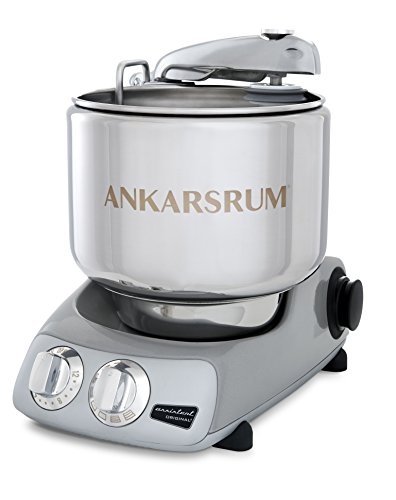
Ankarsrum Assistent Original (AKM6230) — Best for Serious Dough
The Assistent is for bread-first bakers: sourdough programmes, weekly multi-loaf production, and doughs in quantities that make planetary mixers strain. Its rotating bowl handles large, developed doughs with an ease that feels like a different category, and the design has been refined in Sweden for generations. It also whips and mixes with alternative bowls and tools, but dough is the reason to buy it. Cake-first bakers should look elsewhere in this list.
Strengths
- Handles large bread doughs with unmatched composure
- Rotating-bowl action develops dough gently and thoroughly
- Legendary longevity — these machines are measured in decades
Trade-offs
- Real learning curve; the first doughs will feel unfamiliar
- Premium pricing and a smaller dealer and accessory footprint
- Less intuitive for casual cake-and-cookie baking than a planetary mixer
| Spec | Detail |
|---|---|
| Design | Swedish rotating-bowl design; the bowl turns, the tools stay |
| Bowl | Large stainless steel bowl for substantial dough batches |
| Motor | Low, torque-focused drive in the base |
| System | Extensive optional accessory programme from Ankarsrum |
Every top list needs one machine that is the best at something specific rather than good at everything, and the Ankarsrum is the clearest example in stand mixers. Its method — a rotating bowl, a roller and scraper working the dough — mimics hand kneading at a scale no home planetary matches, and bakers producing several loaves a week feel the difference in both the dough and the machine’s calm while making it. The cost is relearning: quantities, order of ingredients and timing all translate imperfectly from planetary habits. For the committed bread baker that tuition is cheap. For everyone else it is unnecessary, and this guide says so plainly.
Best for: Committed bread bakers mixing large doughs every week / Not suited for: Casual or cake-first bakers, and anyone who dislikes learning a new technique
Check the current price on Amazon for the Ankarsrum Assistent Original (AKM6230).
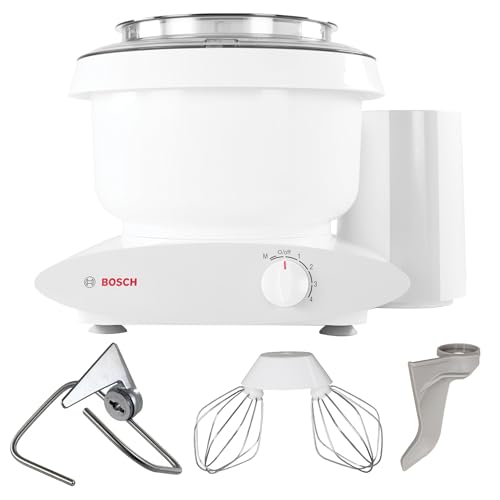
Bosch Universal Plus — Best Compact Powerhouse
Choose the Bosch if your kitchen is short on height or your baking is big-batch and whole-grain. The bottom-drive design puts the motor’s torque directly under the bowl and keeps the profile low enough to slide under standard cabinets — a practical superpower no tilt-head can copy. Its bowl capacity suits the multi-loaf, large-family baking culture it grew up in, and its whips handle large volumes of light mixtures with ease.
Strengths
- Low profile fits and stores where tall mixers cannot
- 6.5-quart bowl sized for genuinely large batches
- Decades-long reputation with whole-grain and high-volume bakers
Trade-offs
- Open-bowl design and plastic bowl divide opinion versus steel planetary machines
- Smaller, lighter mixtures can feel lost in the big bowl
- Aesthetic is functional rather than countertop-jewellery
| Spec | Detail |
|---|---|
| Bowl | 6.5-quart capacity (per listing) |
| Motor | 500 watt (per listing) |
| Included | Wire whips, dough hook and dough hook extender bundle (per listing) |
| Design | Low-profile, bottom-drive design that fits under cabinets |
The Universal Plus is the machine that treats a mixer as infrastructure. Its design priorities — torque, capacity, a footprint that respects real kitchens — have kept it in production and in favour with serious home producers while prettier machines cycled around it. The bundle configuration verified for this guide is the one its community recommends, with the dough hook extender improving how the hook works the full bowl. It will not win a style contest and does not try to. Buyers whose baking volume is real and whose cabinets are low will understand within one batch why this machine has the following it does.
Best for: High-volume and whole-grain bakers, and kitchens short on cabinet clearance / Not suited for: Small-batch bakers and buyers who want a steel-bowl planetary machine’s feel
Check the current price on Amazon for the Bosch Universal Plus.

Hamilton Beach 4-Quart Stand Mixer — Best Budget
Buy this if your baking is real but occasional — birthday cakes, holiday cookies, the odd loaf — and the flagship money would sit idle in a cupboard. Hamilton Beach builds appliances to a price without cheating on the mechanism: the planetary action here is the same principle the expensive machines use, the bowl size matches single standard recipes, and the carry handle acknowledges that this machine will live in storage between uses for many owners. That honesty makes it the right first stand mixer for a lot of kitchens.
Strengths
- Genuine planetary mixing at the budget tier
- Complete basic kit: three attachments and a splash guard
- Light with a carry handle — designed to be stored and retrieved
Trade-offs
- 300W motor and 4-quart bowl cap your batch ambition
- Not built for weekly heavy dough production
- Materials and feel are a clear tier below the flagship machines
| Spec | Detail |
|---|---|
| Bowl | 4-quart stainless steel |
| Speeds | 7 speeds (per listing) |
| Motor | 300 watts (per listing) |
| Included | Whisk, flat beater, dough hook, splash guard and mixing guide (per listing) |
Budget mixers usually fail by faking the mechanism or the capacity; this one does neither. It is a small, light planetary mixer that does small, light planetary work well, and its spec sheet says exactly that. For the household that bakes monthly, the difference between this and a flagship is not the cakes — both make them — it is the decade-long durability and the dough ceiling, neither of which a monthly baker will reach. The sensible path for many readers is to start here, and let heavy use, if it ever arrives, justify the upgrade to the top of this list.
Best for: Occasional bakers and first-time buyers who want real planetary mixing for the least commitment / Not suited for: Weekly bread bakers or anyone planning double batches
Check the current price on Amazon for the Hamilton Beach 4-Quart Stand Mixer.
Comparison Table
| Pick | Badge | Key spec | Best for |
|---|---|---|---|
| KitchenAid Artisan Series 5 (KSM150PS) | Best Overall | 5-quart tilt-head, 10 speeds, attachment hub | The majority of home bakers who want one versatile, long-lived machine |
| KitchenAid 7 Quart Bowl-Lift (KSM70SKXX) | Best for Bread and Big Batches | 7-quart bowl-lift, 11 speeds, flex-edge beater included | Bread-led and high-volume home bakers who need capacity and stability |
| Cuisinart Precision Master SM-50 | Best Mid-Range Value | 5.5-quart, 12 speeds, full attachment trio plus splash guard | Value-led bakers who want complete flagship function in one box |
| Ankarsrum Assistent Original (AKM6230) | Best for Serious Dough | Rotating-bowl Swedish design built around dough | Committed bread bakers mixing large doughs every week |
| Bosch Universal Plus | Best Compact Powerhouse | 6.5-quart low-profile design, 500W bottom drive | High-volume and whole-grain bakers, and kitchens short on cabinet clearance |
| Hamilton Beach 4-Quart Stand Mixer | Best Budget | 4-quart planetary mixing at a budget tier | Occasional bakers and first-time buyers who want real planetary mixing for the least commitment |
How to Choose a Top Stand Mixer
Decide what you actually bake
The top-mixer question has no answer until it is personal. Bread-led bakers need torque, bowl stability and capacity — the bowl-lift KitchenAid, Ankarsrum and Bosch in this guide. Cake-and-cookie households need convenient access, good whipping and a bowl matched to standard recipes — the Artisan and Cuisinart. Occasional bakers need honesty about frequency, which is what the Hamilton Beach is for. Write down your five most-made recipes and their batch sizes before reading any spec sheet; the right machine is the one those recipes point to.
Tilt-head versus bowl-lift versus everything else
Tilt-head machines are the friendliest: the head lifts, the bowl is exposed, attachments swap in seconds. Their limit is stability under heavy dough and the overhead clearance they need. Bowl-lift machines fix the head and raise the bowl into it — sturdier for dough, slightly slower for bowl changes. Then there are the alternative architectures: Ankarsrum’s rotating bowl and Bosch’s bottom drive, both of which outperform conventional designs at their specialities while feeling unfamiliar at first. None is universally best; each trades convenience against capability in a different place.
Bowl size: match the recipe, not the ambition
A 4- to 5-quart bowl covers the standard recipe canon — one cake, one batch of cookies, one loaf — which is why most top mixers cluster there. Bigger bowls earn their space only if you double recipes or bake in production quantities; oversize bowls actually mix small batches worse, because beaters cannot reach a thin layer spread across a wide base. If your honest pattern is single batches with occasional doubles, a 5-quart-class machine plus a second bowl beats a 7-quart machine for daily happiness.
Wattage is the least useful number on the box
Stand mixer wattage is measured inconsistently across brands and says little about kneading ability, which is a torque and gearing question. A well-geared machine with a modest rating will out-knead a headline-wattage machine with a weak drive. Judge dough ability by design and reputation — bowl-lift stability, the Ankarsrum’s and Bosch’s dough-first architectures — rather than by the biggest number in the listing title.
Budget tiers in this category
The budget tier, represented here by Hamilton Beach, buys genuine planetary mixing for occasional baking. The mid-range, where the Cuisinart sits, buys flagship function without the ecosystem. The premium tier buys the ecosystem and the durability story — KitchenAid’s attachments and parts — or outright specialisation, as with Ankarsrum and Bosch. The most common overspend is buying premium capacity for monthly baking; the most common underspend is buying a budget machine for a weekly bread programme. Frequency, honestly assessed, is the whole decision.
The Top Mixers, Task by Task
Rankings settle arguments; tasks settle purchases. This section takes the jobs a stand mixer is actually bought for and names the pick from this guide that does each one best, so you can check your own shortlist against your real recipe book.
Best for weekly bread
The Ankarsrum and the 7-quart bowl-lift KitchenAid share this crown by different routes: the Swedish machine by kneading action that handles large, developed doughs calmly, the bowl-lift by stability and capacity in a familiar format. The Bosch belongs in the conversation for whole-grain bakers specifically. What all three share is that none of them treats dough as an occasional extra — it is the design brief — and that is the quality to buy if bread is your programme.
Best for cakes, cookies and everyday baking
The Artisan, without a serious contest. Its bowl matches standard recipes, its tilt-head makes the constant bowl-and-beater swapping of cake work effortless, and its whipping and creaming are exactly as good as the category gets at home scale. The Cuisinart SM-50 is the value route to nearly the same daily experience. Everyday baking rewards convenience over capacity, which is why the default pick stays the default pick.
Best for the attachment-driven kitchen
Only one machine plays this game seriously: the Artisan again, because its front hub accepts the pasta rollers, grinders, spiralizers and ice-cream makers that turn a mixer into a kitchen system. If your five-year plan includes those tools, the ecosystem is not a bonus — it is the purchase. Buyers certain they will never attach anything should take the Cuisinart’s saving and feel no guilt; certainty is the whole question.
Best for small kitchens and stored-away mixers
Two different answers for two different smalls. If the mixer lives out but space is tight, the Bosch’s low profile slides under cabinets that exclude every tilt-head. If the mixer must be stored and retrieved, the Hamilton Beach’s weight and carry handle are the honest spec — a machine that is easy to fetch gets used, and a flagship that requires a weightlifting session gets admired. Measure your storage as carefully as your counter.
After the Purchase: Making a Top Mixer Earn Its Place
Buying the right machine is half the decision; the other half is the habits that turn a good mixer into a decade of good baking. This section covers the ownership layer the reviews cannot.
The first month: learn your machine’s language
Every mixer in this guide has a personality — the speed at which its beater actually incorporates, the batch size at which its bowl works best, the sound it makes when a dough is right. Spend the first month on recipes you already know, so the only variable is the machine. By the fourth or fifth bake you will know its true speeds better than any dial marking can tell you, and every recipe after that is easier than it was on the old machine.
Accessories in the right order
Resist the catalogue. The correct order for most owners is: a second bowl first, because it changes daily workflow immediately; a flex-edge beater second if your machine’s standard beater leaves you scraping; and attachments — pasta, grinding, spiralizing — only when a real cooking habit calls for them, bought one at a time and used the week they arrive. Accessories bought in that order get used; accessories bought in a bundle of enthusiasm become the cupboard’s archaeology.
When to upgrade, honestly
A mixer has outgrown you when a specific, repeated task defeats it: the weekly double dough that makes it strain, the production weekend that needs a bowl you do not have. Upgrade then, toward the pick in this guide built for that task, and keep the old machine as the second station if space allows — two mid-size mixers running in parallel beat one large one for staged recipes. Upgrading on restlessness rather than evidence is how kitchens accumulate expensive monuments.
How to Get the Best Results from a Stand Mixer
Technique matters more than tier: a mid-range mixer used well outperforms a flagship used carelessly. The routine below applies to every planetary pick in this guide, with notes where the specialist machines differ.
- Bring ingredients to the right state before the mixer is involved: butter properly softened for creaming, liquids measured, flour weighed rather than scooped — mixers amplify preparation, good or bad.
- Start every task at the lowest speed and walk up. Flour added to a fast beater leaves the bowl; cream started too fast splashes. Thirty patient seconds save a cleanup.
- For dough, add flour gradually and let each addition incorporate. Watch the dough, not the clock: it is ready when it cleans the bowl and feels smooth and elastic, and that moment moves with flour and humidity.
- Use the right tool for each stage — hook for dough only, beater for batters and creaming, whip for aeration — and never knead with the whip or whisk, however tempting the shortcut.
- Scrape the bowl once, properly, midway through batters. Planetary action is thorough, not perfect, and one scrape is the difference between even and streaked.
- Rest a hard-working machine between back-to-back heavy batches. A short pause protects the motor on dough days and costs nothing but patience.
- On the Ankarsrum, add liquid first and feed flour in gradually, letting the roller work; on the Bosch, use the extender for full-bowl doughs. Specialist machines reward their own techniques.
- Wash attachments promptly and dry the bowl before storing; a mixer that is clean and assembled gets used, and a used mixer is the only kind worth its counter space.
Finally, keep the mixer where you bake. Every top mixer in this guide performs better in practice when it lives on the counter rather than in a cupboard, because the best machine is the one that is already out when the recipe starts.
Troubleshooting
Problem: the mixer walks across the counter on dough. The batch is too large or too stiff for the machine, or the feet have lost their grip to flour dust. Clean the feet and the counter, reduce the batch, and add liquid a touch earlier in the mix. Persistent walking in a bowl-lift or specialist machine means the dough exceeds the design’s comfort — split it.
Problem: ingredients fling out of the bowl at startup. Speed discipline: start at the lowest setting, add flour in additions, and use the pouring shield that several picks include. Flour added to a moving beater at speed will leave any bowl ever made; the shield contains the rest.
Problem: the bottom of the bowl never gets mixed. Planetary mixers have a designed clearance between beater and bowl; a thin layer at the base is normal and is why the mid-batter scrape exists. If the unmixed layer is thick, the beater clearance may need adjusting — most premium machines provide for it in the manual — or the batch is simply too small for the bowl.
Common Buying Mistakes
Buying capacity you will never use
The 7-quart bowl bought for a twice-a-year double batch makes fifty ordinary batches slightly worse and claims permanent counter space. Match the bowl to your weekly reality; borrow capacity thinking from the recipe list, not the holiday calendar.
Judging by wattage
Wattage marketing has misled more mixer buyers than any other number. Torque, gearing and design decide dough performance. The two best dough machines in this guide win on architecture, not on the wattage printed in their titles.
Ignoring the ecosystem — or overbuying it
Attachments are the Artisan’s superpower and the Cuisinart’s honest gap. Buyers who will roll pasta and grind meat should pay for the ecosystem; buyers who will not are paying for a catalogue. Decide which household you are before the machine, not after.
Skipping the clearance measurement
Tilt-heads need room to open; bowl-lifts need room to work; the Bosch exists because cabinets are low. Measure the space under your cabinets and the depth of your counter before ordering any machine in this guide — it is the most preventable return in the category.
Expecting a budget mixer to run a bread programme
The Hamilton Beach in this guide is excellent at its job and will be destroyed by someone else’s. Weekly stiff dough at double batches is flagship work. Frequency and load, honestly assessed, are what separate a bargain from a false economy.
Final Recommendation
If you want one answer: the KitchenAid Artisan. It is the best-balanced machine in home mixing, with the ecosystem to grow with your cooking. Bread bakers should step up to the 7-quart bowl-lift, or go specialist with the Ankarsrum for dough above all and the Bosch for low-profile capacity. Value buyers lose very little with the Cuisinart SM-50, and occasional bakers lose nothing at all with the Hamilton Beach.
That spread is the real finding of this list: there is no single top mixer, there are six — one per kind of baker. Match the machine to your recipes and your frequency, and any of them will feel like the right answer for years.
Shortlist by baking identity: the KitchenAid Artisan Series 5 (KSM150PS) if you are the typical home baker, the Ankarsrum Assistent Original (AKM6230) if dough is your identity, and the Cuisinart Precision Master SM-50 if value is. Every other pick in this guide is a refinement of one of those three decisions.
One more consideration that rarely appears in mixer guides and decides real-world happiness: the sound of the machine, and the room it lives in. A stand mixer is an appliance you hear at close range, often in the morning, often in a small kitchen where it shares air with conversation. The premium machines in this guide are not silent — no machine that kneads is silent — but their sound is lower, steadier and less strained, and over years of weekly use that difference accumulates into affection or resentment. If you possibly can, hear your shortlist running before you buy: a showroom, a friend’s kitchen, a video recorded in a real room rather than a studio. Judge the dough sound especially, because that is the sound of the machine working hardest, and the one you will hear most if bread is your programme. Pair that with the footprint check and the recipe audit from the buying guide, and you have the three real-world tests that no specification can run for you. The top mixers in this list all pass the tests that can be printed; the one that also passes yours — your recipes, your cabinets, your ears — is your top mixer, whatever any ranking, including this one, says about the others.
And a brief word about colour, since it is the decision buyers agonise over longest and matters least to the baking: buy the finish you will enjoy seeing every day, because a mixer that lives on the counter gets used, and a mixer that gets used justifies itself. The machines in this guide are sold in enough finishes that nobody needs to compromise on the kitchen they actually have. Just order the colour under the exact model listing you chose — variants share pages, and the wrong finish arriving is a sillier return than any defect in this category.
Keep exploring the cluster: Best 10 Quart Mixers Best Affordable Stand Mixers Best 6 Qt Standing Mixers Best 6qt Mixers Best 20qt Dough Mixers Best 0cal Mixers For Rum
Related guides
Frequently Asked Questions
What is the best stand mixer for most people?
The KitchenAid Artisan Series 5, and it is not close for the average household: the right bowl size for standard recipes, friendly tilt-head access, durable construction, and an attachment ecosystem that lets the machine grow with your cooking. Specialist bakers can beat it in their speciality — that is what the Ankarsrum and Bosch picks are for — but as a single all-round answer it leads this list on merit.
Is a bowl-lift mixer better than a tilt-head?
For heavy dough and big batches, yes: the fixed head and lifted bowl stay rigid under loads that make tilt-heads rock. For everyday convenience, the tilt-head is faster and friendlier for bowl and beater changes. Most households bake more everyday food than heavy dough, which is why the tilt-head Artisan is the overall pick and the bowl-lift is the bread pick.
How long should a good stand mixer last?
A premium stand mixer should be a decade-plus purchase, and the European specialists in this guide are often measured in multiple decades. Longevity comes from metal gearing, a serviceable design and a manufacturer that keeps parts and bowls available — all reasons the established brands dominate a top list like this one.
Can a stand mixer replace a hand mixer?
For most tasks, yes — and it adds kneading, which no hand mixer does well. The exceptions are tiny jobs: whipping two egg whites or stirring a small sauce, where hauling out a stand mixer bowl is overkill and a hand mixer is faster to wash. Many serious bakers keep both, using the hand mixer for small work, but the stand mixer is the one that matters.
What size stand mixer do I need for bread?
For single loaves from standard recipes, a 5-quart machine with decent torque suffices. For double loaves, whole-grain doughs or a weekly multi-loaf programme, step up: the 7-quart bowl-lift, the Ankarsrum or the Bosch in this guide all exist for exactly that workload. Dough is the task that separates mixer classes, so bread bakers should choose on dough first and everything else second.
Are expensive mixers worth it for occasional bakers?
Honestly, usually not. A budget planetary mixer like the Hamilton Beach in this guide makes the same birthday cakes and holiday cookies; the premium buys durability, dough capacity and ecosystem that occasional use never touches. Spend the difference on ingredients. If your baking frequency grows, the upgrade path is clear and the budget machine becomes the backup or the gift.
Is it worth buying a second bowl for a stand mixer?
For regular bakers, it is the highest-value accessory in the category: a second bowl removes the wash-between-stages bottleneck from any recipe with two mixtures, and costs a fraction of any machine upgrade. It matters most for the 5-quart class machines in this guide, whose owners bake the widest range of staged recipes.
Do stand mixers need any maintenance?
Very little, which is part of their appeal: keep the machine clean, store attachments dry, and follow the manual’s guidance on resting the motor during long dough sessions. Premium machines reward decades of this minimal care; the most common real-world failure is not mechanical at all, but a mixer exiled to a cupboard and forgotten.
Are refurbished or second-hand premium mixers a good buy?
Often, yes — the premium machines in this guide are built to be serviced, and a well-kept used example from KitchenAid’s bowl-lift line, Ankarsrum or Bosch can serve for years. Inspect the things that wear: beater shaft play, bowl locking, speed consistency under a dough load, and the condition of the cord and feet. Buy from sellers who demonstrate the machine working, and factor a service check into the saving.


