Disclosure: airfryerkitchensupply.com is reader-supported. When you buy through links on our site, we may earn an affiliate commission at no extra cost to you.
Where to buy
The search for the best 6qt mixers runs into the same wall as the spaced-out version of this search: almost nobody sells an exactly-6.0-quart mixer any more. Current production brackets the size — 5.5 quarts below, 6.5 and 7 above — and the listings that do shout ‘6QT’ or ‘6.5QT’ at the lowest prices are mostly unbranded machines with no parts support behind them. This guide ranks the six mixers that serve a 6-quart brief most honestly, all verified as current Amazon listings, and it tells you which side of the size line to land on for the way you bake.
- Bosch Universal Plus Mixer with MUZ6ER1 Stainless Steel Bowl (6.5 Qt) — check price on Amazon; choose the listing sold or shipped by Amazon or the brand’s own store, and confirm the exact model variant before you buy.
- KitchenAid 5.5-Qt Bowl-Lift Stand Mixer (KSM55) — check price on Amazon; choose the listing sold or shipped by Amazon or the brand’s own store, and confirm the exact model variant before you buy.
- Cuisinart Precision Master Stand Mixer (SM-50, 5.5 Qt, Onyx) — check price on Amazon; choose the listing sold or shipped by Amazon or the brand’s own store, and confirm the exact model variant before you buy.
- Ankarsrum Assistent Original Stand Mixer (AKM6230) — check price on Amazon; choose the listing sold or shipped by Amazon or the brand’s own store, and confirm the exact model variant before you buy.
- KitchenAid 7 Quart Bowl-Lift Stand Mixer (KSM70, Contour Silver) — check price on Amazon; choose the listing sold or shipped by Amazon or the brand’s own store, and confirm the exact model variant before you buy.
- Hamilton Beach 4 Qt Electric Stand Mixer (7 Speeds) — check price on Amazon; choose the listing sold or shipped by Amazon or the brand’s own store, and confirm the exact model variant before you buy.
People type ‘best 6qt mixers’ because 6 quarts used to be the thinking baker’s size: the bowl that took a double batch without complaint and still fit under the cabinets. The size made sense, the machines were everywhere, and then the market quietly moved. KitchenAid re-cut its bowl-lift line to 5.5 and 7 quarts, Bosch settled at 6.5, Cuisinart at 5.5 — and the exact 6.0-quart bowl became a legacy size, kept alive mainly by no-name listings whose capacity claims deserve a raised eyebrow.
So this guide does the useful thing instead of the literal thing. It ranks the six mixers that bracket 6 quarts in current production, from the brands that will still sell you a replacement beater in five years, and it is blunt about the trade on each side of the line: the 5.5-quart machines are cheaper, lighter and better at small jobs; the 6.5- and 7-quart machines are the ones that actually feel like an upgrade if your old 6-quart machine kept running out of room.
It also includes one deliberate curveball: a 4-quart pick, clearly labelled, for the many shoppers who discover mid-search that their ‘6-quart’ ambitions were really ‘my current mixer is too small’ ambitions. If your batches are single and your kitchen is small, the honest recommendation is sometimes a size down, not up.
Read the verdict lines if you read nothing else. Each one names the kitchen a machine belongs in and the kitchen it will frustrate — because in this category the wrong size is a more common failure than a weak motor, and it is the one failure you can completely avoid before spending anything. A mixer bought one size wrong is not a bargain at any discount; it is a decade of small daily friction, or an expensive return. The five minutes this guide asks of you are cheaper than either.
In this guide
Quick Picks
The Bosch Universal Plus with the stainless bowl is the closest thing to a true 6-quart-class champion you can buy new today. KitchenAid’s 5.5-quart bowl-lift is the pick for attachment collectors, and the Cuisinart SM-50 is where value hunters should stop.
- Best Overall: Bosch Universal Plus Mixer with MUZ6ER1 Stainless Steel Bowl (6.5 Qt) — the 6.5-quart bottom-drive machine in its best configuration — steel bowl, superb kneading, cupboard-friendly height. — Check on Amazon
- Best for Attachments: KitchenAid 5.5-Qt Bowl-Lift Stand Mixer (KSM55) — half a quart under the brief, but the deepest accessory ecosystem in the category and a proper bowl-lift frame. — Check on Amazon
- Best Value: Cuisinart Precision Master Stand Mixer (SM-50, 5.5 Qt, Onyx) — 12 speeds, a full tool set and a splash guard in the box — the complete 5.5-quart package at a value tier. — Check on Amazon
- Best for Serious Bakers: Ankarsrum Assistent Original Stand Mixer (AKM6230) — the rotating-bowl Swedish original — capacity beyond the brief and kneading quality nothing else here matches. — Check on Amazon
- Best Step-Up: KitchenAid 7 Quart Bowl-Lift Stand Mixer (KSM70, Contour Silver) — when the honest answer to a 6-quart search is ‘you need more’ — 7 quarts, 11 speeds and a rich accessory box. — Check on Amazon
- Best Small-Batch Alternative: Hamilton Beach 4 Qt Electric Stand Mixer (7 Speeds) — deliberately two quarts under the brief — the honest pick if your real problem is a too-small mixer, not a too-small batch. — Check on Amazon
How These Picks Were Chosen
Verification came first: each pick was confirmed as a live Amazon listing on the day this guide was written, with the bowl size taken from the listing title itself. That filter quietly removed the most suspicious corner of this market — the ultra-cheap ‘6.5QT’ machines sold under rotating brand names, which could not be matched to a stable maker, a parts catalogue or a service network. A mixer is a decade-long purchase; a seller who may not exist next year is a risk no discount justifies.
Ranking then weighed working capacity over nominal capacity: how the machine kneads at its stated size, how it behaves with a quarter-load, how rigid the frame feels, and how deep the accessory and replacement-parts support runs. The result deliberately mixes drive architectures — bowl-lift, tilt-head, bottom-drive and rotating bowl — because at this size the architecture matters more than the badge on the front.
We also made a deliberate editorial choice you should know about: this guide would rather recommend a size adjacent to your search, from a maker who will support it for a decade, than an exactly-6-quart machine from a seller who may vanish by spring. If that trade surprises you, the buying-guide section below explains the state of the size in full — it is the single most useful thing a 6qt shopper can learn before spending anything.
- Current, verified listing from a maker with real parts and service support
- Bowl size as stated in the listing, bracketing the 6-quart brief honestly
- Kneading behaviour at full and partial loads
- Frame rigidity and counter manners under load
- Accessory ecosystem and replacement bowl/beater availability
- Storage reality: height, weight and cupboard fit
The 6 Best 6Qt Mixers

Bosch Universal Plus Mixer with MUZ6ER1 Stainless Steel Bowl (6.5 Qt) — Best Overall
This is the Bosch Universal Plus in the configuration bread bakers actually want: the 6.5-quart bottom-drive machine paired with the MUZ6ER1 stainless steel bowl instead of the standard plastic one. The motor lives in the base and drives the bowl from below, so dough is pulled down and worked rather than pushed around, and the whole unit is short and light enough to store in a cupboard. It suits bakers whose 6-quart brief really means ‘serious dough capacity’ — and who would rather spend on a steel bowl once than upgrade later.
Strengths
- Bottom-drive kneading is the strongest in this guide for large, stiff doughs
- Stainless MUZ6ER1 bowl fixes the standard machine’s one real weakness
- Low profile and modest weight make it genuinely storable, unlike tall rivals
Trade-offs
- The centre drive tower changes how you scrape and add ingredients
- Twin-whip system for cakes and creams is effective but unfamiliar at first
- Attachment range is narrower than KitchenAid’s hub catalogue
| Model | Bosch Universal Plus |
| Bowl | 6.5-quart MUZ6ER1 stainless steel (per listing title) |
| Drive | Bottom-drive, motor in base |
| Configuration | Steel-bowl version |
The steel bowl matters more than it might appear. The standard Universal Plus bowl is plastic — durable, light and perfectly serviceable — but bakers who chill bowls, proof dough in them and wash them daily tend to prefer steel, and buying the machine with the MUZ6ER1 in the box is cheaper than adding it later. With the steel bowl fitted, the Bosch has no obvious weak point as a dough machine: it kneads multi-loaf batches, including heavy whole-grain doughs, with a calm competence that belt-and-hook machines struggle to match.
For cakes and whipping, the twin wire whips driven from below are fast and thorough, and the open bowl — no head hanging over it — makes additions and scraping the easiest in this guide once the centre tower stops surprising you. It is also the only pick here that a small kitchen can truly put away: at the end of a bake it goes in a cupboard, not on permanent display. If your 6-quart search is really a bread search, this is the answer; if it is really an attachment-ecosystem search, read the next pick.
Best for: bread-first bakers who want true 6-quart-class capacity and a steel bowl / Not suited for: bakers who want a classic overhead-head machine and the widest attachment range
Check on Amazon — check the current price on Amazon and confirm the variant, included accessories and seller before ordering.
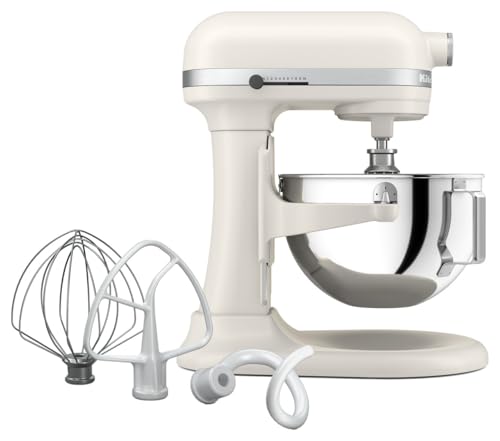
KitchenAid 5.5-Qt Bowl-Lift Stand Mixer (KSM55) — Best for Attachments
The KSM55 gives up half a quart to the 6-quart brief and buys it back in ecosystem. Its front hub accepts the largest attachment catalogue in home mixing — pasta rollers and cutters, grain mills, grinders, spiralizers, ice-cream makers — and its bowl-lift frame and 11 speeds (including a half-speed fold) make it a composed all-rounder. It suits bakers who see a mixer as a platform they will build on for years, and who would rather have the right attachment in year three than the extra half-quart in week one.
Strengths
- Unmatched attachment hub — the machine grows with your cooking
- Bowl-lift rigidity with 11 speeds and a gentle half-speed fold
- Excellent parts, bowls and service availability by model number
Trade-offs
- 5.5 quarts is the smallest ‘large’ bowl here — maxed-out double doughs are tight
- Bowl seating on the lift pins takes practice
- Attachments are bought separately and the good ones are not cheap
| Model | KSM55 series bowl-lift |
| Bowl | 5.5-quart stainless steel |
| Speeds | 11, including 1/2-speed fold |
| Included | Flat beater, dough hook, wire whip |
Judge this machine as a system. On day one it is a very good 5.5-quart mixer: stable under dough, gentle at folding speeds, and precise enough for meringues and mousses. By year two, for many owners, it is also their pasta machine, their grain mill and their ice-cream maker — and that second life is where it pulls away from rivals that mix marginally better but do nothing else. The hub is powered and standard across the range, so attachments bought today fit the machine you will still own in a decade.
The honest cost is capacity at the margin. If your signature bake is a double batch of stiff dough that used to fill a 6-quart bowl to the rim, the KSM55 will ask you to split it or step up to its 7-quart sibling. Most bakers never meet that limit; those who know they will should not pretend otherwise. Buy the ecosystem with your eyes open about the bowl, and this is the most future-proof pick in the guide.
Best for: bakers who plan to grow into pasta, milling and grinding attachments / Not suited for: bakers whose regular batches genuinely need more than 5.5 quarts
Check on Amazon — check the current price on Amazon and confirm the variant, included accessories and seller before ordering.
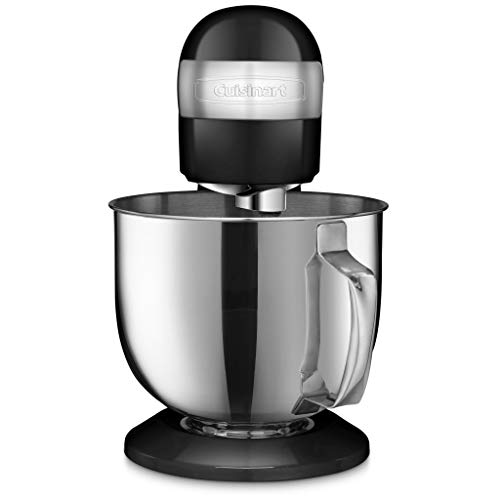
Cuisinart Precision Master Stand Mixer (SM-50, 5.5 Qt, Onyx) — Best Value
In its Onyx finish, the SM-50 remains the value benchmark of this class: a 5.5-quart stainless bowl, 12 speeds, a tilt-head that makes access effortless, and the full starter kit — whisk, paddle, dough hook and a splash guard with pour spout — included rather than upsold. It suits cake, cookie and batter bakers who want a complete, reputable machine without entering premium pricing, and first-time stand-mixer owners who value an easy learning curve.
Strengths
- Everything you need is in the box, including the splash guard
- 12 speeds with genuinely usable low settings
- Tilt-head convenience: fast tool swaps and easy scraping
Trade-offs
- Tilt-head joint flexes slightly under maximum stiff dough loads
- Smaller attachment ecosystem than the hub-based rivals
- Not the machine for a weekly multi-loaf bread routine
| Model | SM-50 Precision Master, Onyx |
| Bowl | 5.5-quart stainless steel |
| Speeds | 12 |
| Included | Chef’s whisk, mixing paddle, dough hook, splash guard with pour spout |
The SM-50’s virtues are the ones you feel weekly rather than the ones that headline spec sheets. The head tilts back and stays back; the bowl locks with a positive twist; the low speeds are slow enough to start flour without a dust cloud; and the splash guard — the accessory every other brand sells separately — is simply there. For the centre of the home-baking distribution, cakes to cookies to frostings to the occasional loaf, it is a complete answer at a fair tier.
Its ceiling is equally clear. The tilt-head architecture is the least rigid here, and a full bowl of stiff dough makes the head nod in a way the bowl-lifts never do. That is a fair trade for its price and convenience — as long as you buy it knowingly. If your baking is batter-led, this is the smartest spend in the guide; if it is dough-led, the Bosch above earns its premium every single week.
Best for: batter-led bakers who want a complete, reputable package at a value tier / Not suited for: heavy dough routines at maximum bowl capacity
Check on Amazon — check the current price on Amazon and confirm the variant, included accessories and seller before ordering.
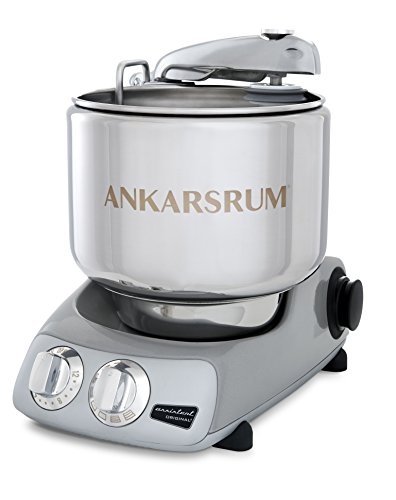
Ankarsrum Assistent Original Stand Mixer (AKM6230) — Best for Serious Bakers
The Ankarsrum answers the 6-quart question by ignoring it: its rotating stainless bowl works in the 7-litre class, driven by a roller and scraper that fold dough the way hands do. Built in Sweden in a design refined over decades, it is the machine serious bakers buy when they stop wanting to upgrade. It suits high-volume, dough-led kitchens, bakers who value serviceability and longevity over fashion, and anyone who has worn out a conventional mixer and understood why.
Strengths
- Rotating-bowl kneading develops gluten gently and thoroughly at large scale
- Capacity comfortably beyond the 6-quart brief for bulk baking
- Decades-long production run with strong parts and accessory support
Trade-offs
- Premium price — the highest in this guide
- Technique differs from every other mixer; expect a short learning curve
- Creaming and whipping use a separate bowl-and-whisks setup
| Model | AKM6230 Assistent Original |
| Design | Rotating bowl, roller and scraper |
| Origin | Made in Sweden |
| Finish verified | Jubilee Silver |
What the Ankarsrum does to dough is difficult to overstate. Because the bowl turns and the roller presses dough against the scraper in a slow fold, large lean doughs develop without the tearing, climbing and overheating that hook-driven machines can inflict. Bakers who produce several loaves at a time — sourdough especially, with its long, gentle handling — consistently rate this action above every rival at any price, and the machine’s sheer capacity means the batch sizes that strain 6-quart machines are unremarkable here.
The costs are money and adaptation. It is the premium pick by a wide margin, and your first bakes involve learning roller position and scraper timing rather than pressing a familiar dial. The separate whipping bowl is one more thing to store. None of that dents its case for the right buyer: if baking is a central, permanent part of your kitchen life, the Ankarsrum is not the expensive option — it is the last one you buy.
Best for: serious, dough-led bakers buying a lifetime machine / Not suited for: budget shoppers or bakers who want familiar controls from day one
Check on Amazon — check the current price on Amazon and confirm the variant, included accessories and seller before ordering.

KitchenAid 7 Quart Bowl-Lift Stand Mixer (KSM70, Contour Silver) — Best Step-Up
Some 6-quart searches are really outgrown-mixer searches. The KSM70 in Contour Silver is the step-up for those bakers: a 7-quart bowl-lift with 11 speeds, the half-speed fold, and a fuller in-box set including a double flex-edge beater. It suits bakers who double everything, bake for events and big households, and want KitchenAid’s attachment hub on top of the extra capacity. If you split recipes to fit your current bowl, this is the machine that ends the splitting.
Strengths
- 7-quart bowl ends recipe-splitting for double and triple batches
- Double flex-edge beater keeps wide-bowl mixes scraped and even
- Full KitchenAid hub ecosystem at the larger size
Trade-offs
- Tall and heavy — a permanent counter resident; measure cabinet clearance
- Small loads sit low in the wide bowl; tiny jobs belong to a hand mixer
- You pay for capacity that single-batch bakers will never touch
| Model | KSM70 series bowl-lift, Contour Silver |
| Bowl | 7-quart stainless steel |
| Speeds | 11, including 1/2-speed fold |
| Included | Double flex-edge beater plus 4 other accessories (per listing title) |
The quality-of-life change at 7 quarts is immediate: double cookie doughs mix with headroom, large enriched doughs knead without drama, and holiday production stops being a logistics exercise. The flex-edge beater is not a gimmick at this size — wide bowls defeat plain beaters at the wall, and the double flex edge keeps the mix honest with far less stopping and scraping. Underneath, it is the same composed bowl-lift behaviour as the 5.5-quart model, scaled.
Buy it with clear eyes about fit. It is the joint-largest footprint in the guide alongside the commercial class, it wants a permanent station, and its bowl is genuinely too big for two-egg-white jobs. But for the baker whose constraint has been capacity, nothing else in this guide — including the nominally-6-quart machines that prompted the search — solves the actual problem. The step-up is the point.
Best for: batch bakers who double and triple recipes and want the hub ecosystem / Not suited for: single-batch bakers or low-cabinet counters
Check on Amazon — check the current price on Amazon and confirm the variant, included accessories and seller before ordering.

Hamilton Beach 4 Qt Electric Stand Mixer (7 Speeds) — Best Small-Batch Alternative
This pick is labelled as what it is: not a 6-quart mixer, but the right answer for a recognisable group of searchers. Many people arrive at ‘6qt’ after years with a cramped hand-me-down, assuming bigger must be the fix — when their actual baking is single cakes, small cookie batches and the odd loaf. The Hamilton Beach 4-quart offers planetary mixing, 7 speeds, a splash guard and a carry handle at a fraction of the cost and counter space. It suits small households, occasional bakers and anyone whose batches are modest but whose current tool is genuinely inadequate.
Strengths
- Planetary mixing action with full bowl coverage at a very accessible tier
- Light, handled and easy to store — the anti-commitment stand mixer
- Complete tool set: whisk, flat beater, dough hook and splash guard
Trade-offs
- 4 quarts will not take double batches — that is the whole point, and the limit
- 300-watt class motor is for home batches, not production dough
- Build is honest budget plastic-and-steel, not heirloom material
| Model | Hamilton Beach electric stand mixer |
| Bowl | 4 quarts |
| Speeds | 7 |
| Motor | 300 watts (per listing title) |
| Included | Whisk, flat beater, dough hook, splash guard, mixing guide |
Within its brief, this little machine is genuinely good. Planetary action — the beater shaft orbits while it spins — gives it more even mixing than its price suggests, the bowl coverage claim holds up in batter work, and the carry handle and light body mean it actually gets used instead of admired. For a single cake or a dozen cookies, it produces results indistinguishable from the big machines in this guide, because those jobs never needed 6 quarts in the first place.
Its presence here is a honesty device. If reading this guide has clarified that your batches are small and your storage is smaller, buying a 7-quart bowl-lift would be the expensive way to learn it. Start here, bake for a year, and let your real batch sizes — not a search term — decide whether you ever need to climb the sizes. Many bakers never do.
Best for: small households and occasional bakers whose batches are genuinely modest / Not suited for: anyone who doubles recipes — stay with the 5.5-quart picks and above
Check on Amazon — check the current price on Amazon and confirm the variant, included accessories and seller before ordering.
Comparison Table
| Pick | Badge | Key spec | Best for |
|---|---|---|---|
| Bosch Universal Plus Mixer with MUZ6ER1 Stainless Steel Bowl (6.5 Qt) — Check on Amazon | Best Overall | 6.5-qt bottom-drive, steel bowl | bread-first bakers who want true 6-quart-class capacity and a steel bowl |
| KitchenAid 5.5-Qt Bowl-Lift Stand Mixer (KSM55) — Check on Amazon | Best for Attachments | 5.5-qt bowl-lift, 11 speeds, hub | bakers who plan to grow into pasta, milling and grinding attachments |
| Cuisinart Precision Master Stand Mixer (SM-50, 5.5 Qt, Onyx) — Check on Amazon | Best Value | 5.5-qt tilt-head, 12 speeds | batter-led bakers who want a complete, reputable package at a value tier |
| Ankarsrum Assistent Original Stand Mixer (AKM6230) — Check on Amazon | Best for Serious Bakers | Rotating 7L-class bowl | serious, dough-led bakers buying a lifetime machine |
| KitchenAid 7 Quart Bowl-Lift Stand Mixer (KSM70, Contour Silver) — Check on Amazon | Best Step-Up | 7-qt bowl-lift, 11 speeds | batch bakers who double and triple recipes and want the hub ecosystem |
| Hamilton Beach 4 Qt Electric Stand Mixer (7 Speeds) — Check on Amazon | Best Small-Batch Alternative | 4-qt planetary, 7 speeds, 300W | small households and occasional bakers whose batches are genuinely modest |
The spread of sizes in this table is the story of the modern market: the 6-quart brief is now served by a bracket, not a size. Choose by your largest regular batch — 5.5 quarts for standard home baking, 6.5–7 for batch work — and treat any listing promising big-brand capacity at a no-name price as a warning, not a bargain worth chasing today.
How to Choose the Right 6Qt-Class Mixer
Why exact 6-quart machines vanished
The short answer is product-line economics. The size was defined by one dominant model; when its maker redesigned the line, the new bowls landed at 5.5 and 7 quarts, and the rest of the market had already scattered to 5.5, 6.5 and roughly-7-litre designs. Tooling a bowl, beater set and gearbox around an exact 6.0-quart standard no longer made sense to any major brand. The size survives in search habits — and in the cupboards of bakers replacing a beloved old machine — long after it left the catalogues.
Practical upshot: do not hold out for an exact match, and do not pay a premium for new-old-stock of discontinued 6-quart models with ageing warranties. The bracket machines in this guide are better supported, better controlled and, at the 5.5-quart end, often cheaper than the classic ever was.
Nominal quarts versus working capacity
A bowl’s quart figure is measured brim-full with water — a state no dough or batter ever reaches. Working capacity is what the machine can mix without throwing food over the rim or straining the drive, and for dough it is set by flour weight. As a field rule: a 5.5-quart machine works standard home doughs, a 6.5-quart machine doubles them, and the rotating-bowl Ankarsrum plays in a league above its nominal size because its action is so efficient. Judge machines by the biggest batch you make monthly, with headroom to spare.
Partial loads matter too. Every design here has a minimum sensible load, and the bigger the bowl, the higher that minimum. If half your baking is small, the 5.5-quart picks — or even the 4-quart alternative — will serve you better than a cavernous bowl you must over-fill to mix properly.
- Size for your largest monthly batch, not your largest imaginable batch
- Keep headroom: a model at its limit every week is a model wearing out
- Match minimum loads to your small jobs, or keep a hand mixer for them
The no-name trap at this size
Search results for this search are thick with unbranded ‘6.5QT 660W’ machines at seductive prices. Some are adequate light-duty mixers; the problem is everything around the machine — no model-number parts support, no replacement bowls when yours dents, no service when the gearbox tires, and capacity and wattage figures nobody verifies. A stand mixer is a ten-year appliance. The value picks in this guide cost more than the no-name floor and are worth it precisely because their makers will still answer for them in year five.
Budget tiers, honestly
The value tier buys the Cuisinart or the Hamilton Beach: complete, competent, honestly built for home batches. The mid tier buys bowl-lift rigidity and ecosystems — KitchenAid and Bosch — and is where most serious bakers should aim. The premium tier buys the Ankarsrum’s kneading and longevity. What no tier buys is a shortcut around sizing: a premium machine in the wrong size is still the wrong machine, just a more expensive one.
Drive Architecture Decides More Than Size
Line the six picks up and the quart figures differ by less than the drive designs do. Bowl-lift KitchenAids hold a rigid frame and spin a beater from above; the Cuisinart trades a little rigidity for tilt-head convenience; the Bosch drives from below and kneads by pulling dough through a hook; the Ankarsrum turns the bowl itself and folds dough with a roller. Each architecture has a centre of gravity: overhead designs are versatile all-rounders, bottom-drive and rotating-bowl designs are dough specialists, and tilt-heads are convenience specialists.
This is why two mixers with near-identical bowls can feel like different species with the same dough. If you bake one thing 70 percent of the time, choose the architecture that specialises in it and let the quart figure fall where it falls within the bracket. Versatility is only worth paying for if your menu is genuinely varied.
What to Do With Your Old 6-Quart Machine’s Accessories
Bakers replacing a classic 6-quart machine usually own a small museum: spare bowls, beaters, a pasta roller, maybe a mill. Hub-driven attachments are the good news — KitchenAid’s front hub standard has carried across generations, so powered attachments generally transfer to the new bowl-lift models. Bowls and beaters are the bad news: they are sized and keyed by model, and the old 6-quart bowls do not fit the 5.5- or 7-quart successors. Verify every piece against your new model number before listing the old kit for sale — and keep the hub attachments out of that sale until you have confirmed the fit on the new machine.
If you are switching brands entirely — to the Bosch or Ankarsrum, say — assume nothing transfers and price the switch honestly: the new machine plus its essential tools, against the old kit sold complete with the old machine, where it is worth most as a working set.
Care Habits That Double a Mixer’s Life
Most stand mixers die of enthusiasm, not age: dough run too fast, batches run too big, motors run back-to-back without rest. The fixes are free. Knead only at the maker’s dough speed. Respect the flour capacity as a ceiling, not a target. Between heavy batches, give the machine a few minutes to shed heat. Keep the beater clearance adjusted so tools neither scrape the bowl nor hover above the mix, and wash bowls and tools promptly — dried dough is a surprising abrasive.
Once a year, wipe down the hub socket, check the bowl pins or lock for wear, and confirm every speed still engages cleanly. Machines in this class reward that minimal attention with decades of service — which, at the end, is the real difference between the picks in this guide and the disposable end of the market.
Reading a Mixer Listing Like a Skeptic
Listings in this category reward a particular reading order. Start with the model number — not the headline — and search your memory of this guide for it: real machines have stable model numbers that appear across years of listings, manuals and parts catalogues. A headline with no model number, or a model number that exists only inside one marketplace, is the signature of the unbranded end of the market.
Next, read the bowl claim against the tool set. A genuine large-capacity machine ships with a dough hook proportioned to its bowl and states its speeds and included tools plainly. Listings that lead with peak wattage in enormous type and hide the bowl material in the fine print are telling you where their money went. Finally, check the replacement-parts trail: search the model number plus ‘replacement bowl’ and ‘beater’. If those searches return real results from the maker, you are looking at a supported appliance. If they return nothing, you are looking at a countdown to a landfill — however attractive the launch price appears.
How to Match a Mixer to Your Baking: A Practical Sizing Method
Forget quarts for five minutes. This short method sizes a mixer from your actual recipes — the only numbers that matter.
- Write down the three things you bake most often, with their batch sizes as you actually make them (single, doubled, tripled).
- For bread, note the flour weight of your largest regular dough; for cakes and cookies, note whether you double the recipe.
- Map flour weight to class: standard single-loaf doughs fit the 5.5-quart picks; doubled doughs want 6.5–7 quarts; production quantities want the Ankarsrum or commercial class.
- Check the small end: if two of your three staples are small batches, favour the smaller bowl or plan a hand mixer alongside.
- Measure your storage: counter height under cabinets for bowl-lifts, cupboard depth for the Bosch, and be honest about whether the machine will live out or be lifted weekly.
- Confirm attachments: list any hub tools you own or plan to buy and match them to the machine’s system before ordering.
- Order by exact model number, and on arrival run your largest regular batch first — inside the return window, not after it.
If that first big batch leaves the machine straining or the bowl overflowing, you have learned the most valuable fact in this category while returning is still easy. Size is a fit, not a virtue — the right bowl is the one your real baking fills to two-thirds.
Common Buying Mistakes
- Chasing the exact number. An exactly-6.0-quart bowl barely exists in current production. Buy the bracket — 5.5 or 6.5–7 — from a supported brand instead.
- Trusting no-name capacity claims. Unbranded ‘6.5QT’ listings pair unverified figures with no parts support. A mixer without a replacement-bowl supply is a disposable appliance.
- Sizing for the imaginary batch. The triple batch you make once a year should not dictate a bowl that ruins your weekly small bakes.
- Ignoring minimum loads. Big bowls mix small loads badly. If your staples are small, size down or add a hand mixer.
- Assuming accessory transfer. Hub attachments often transfer within a brand; bowls and beaters usually do not. Check by model number.
- Comparing watts across brands. Wattage is measured inconsistently. Drive design and gearing predict kneading strength far better.
Final Recommendation
For most readers, the answer is the Bosch Universal Plus with the steel bowl: true 6-quart-class capacity, the best kneading here, and a machine that stores like a normal appliance. Attachment collectors should take the KitchenAid KSM55, value hunters the Cuisinart SM-50, batch bakers the 7-quart KSM70, and lifetime buyers the Ankarsrum. And if the Hamilton Beach’s honest 4 quarts made you pause — trust that pause. It is your real batch size talking.
Buy by exact model number, confirm the bowl material and tool set in the listing, and check price on Amazon when you order. In a category this full of creative labelling, the model number is the only claim that cannot be exaggerated — and the five minutes you spend verifying it are the highest-value minutes in the whole purchase, worth more than any single feature comparison in this guide or anywhere else.
Keep exploring the cluster: Best 6 Qt Standing Mixers Best Affordable Stand Mixers Best 10 Quart Mixers Best Affordable Kitchen Mixers Best 20qt Dough Mixers
Frequently Asked Questions
Does anyone still make a true 6-quart mixer?
In current mainstream production, effectively no — the major brands bracket the size at 5.5, 6.5 and 7 quarts. Listings advertising exactly 6 quarts today are typically unbranded machines or old stock. The bracket sizes cover the same recipes; choose by flour capacity and batch size rather than the nominal figure.
Is 5.5 quarts enough, or will I regret not going bigger?
It depends entirely on dough. For cakes, cookies and standard one-to-two-loaf doughs, 5.5 quarts is complete. If you double stiff doughs regularly, you will feel the limit weekly and should buy 6.5–7 quarts now — capacity regret is the one kind you cannot fix with an accessory.
Why do cheap 6.5-quart mixers get such mixed feedback?
Because the machine is only half the purchase. Unbranded mixers often mix adequately when new, but owners hit a wall at the first dented bowl, worn beater or tired gearbox: no parts catalogue, no service, no recourse. Supported brands cost more because they carry that infrastructure — which is exactly what a ten-year appliance needs.
Bosch or KitchenAid at this size?
Bread decides it. The Bosch’s bottom drive kneads large doughs better and the machine stores far more easily. KitchenAid counters with the attachment hub, bowl-lift familiarity and the deepest parts network. Dough-led kitchens: Bosch. Varied, attachment-hungry kitchens: KitchenAid.
Can I use my old 6-quart bowl on a new 5.5 or 7-quart machine?
Almost certainly not. Bowls are keyed to specific models — the mount, height and beater clearance all differ. Hub attachments are the transferable part of your old kit; bowls and beaters should be sold with the old machine or kept as spares for it.
How can I tell if a mixer listing is a supported brand or a no-name?
Three checks take two minutes: the listing carries a stable model number that also appears in the maker’s manuals and parts catalogue; replacement bowls and beaters for that model are sold separately; and the brand maintains its own storefront and support pages. Unbranded listings fail all three — rotating names, no parts, no support trail — which is why this guide excluded them despite their prices.
I found a new-old-stock 6-quart machine online. Should I buy it?
Only with your eyes open. Discontinued 6-quart models can be excellent machines — the classic that defined the size earned its reputation — but check three things first: that the warranty is the maker’s and still honoured, that bowls and beaters for that exact model remain available, and that the price reflects its discontinued status rather than trading on nostalgia. If any of the three fails, the current bracket models in this guide are the safer buy.
What size mixer do I need for two loaves of bread?
A standard two-loaf batch sits comfortably in the 5.5-quart picks and easily in the 6.5-quart Bosch. What matters more than the bowl is the drive: rigid bowl-lift, bottom-drive and rotating-bowl designs knead that load calmly, while light tilt-heads work harder at it.


