
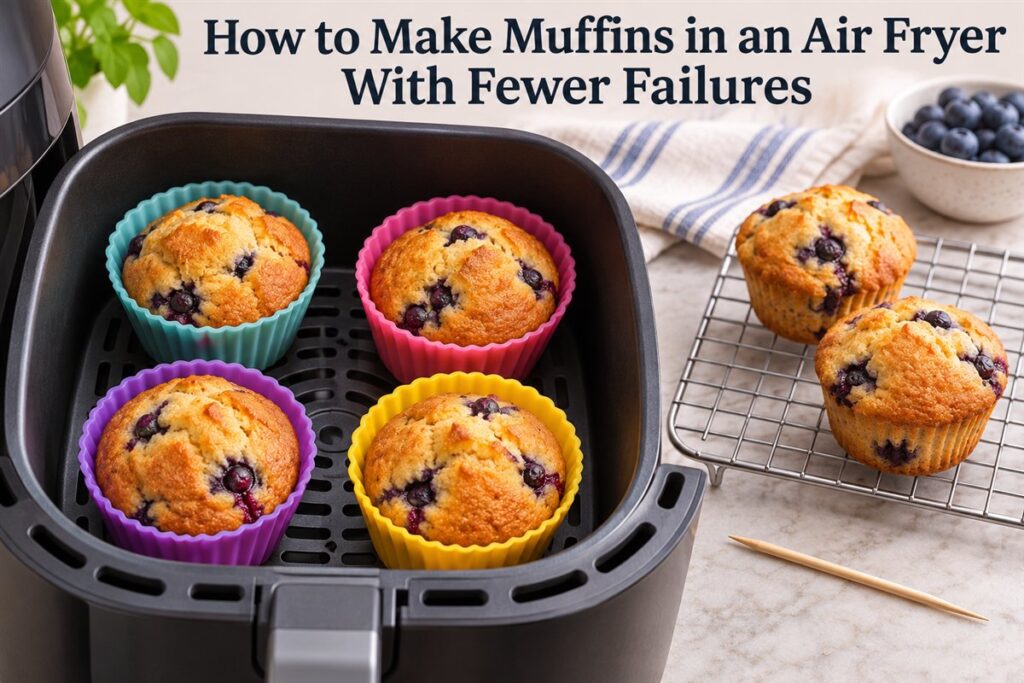
Yes, you can bake muffins in an air fryer. Use sturdy cups, fill them only partway and lower the heat a little compared with a regular oven, because the fan browns tops quickly. A batch of four to six is typical for most baskets.
Gear and Batter Basics
Paper liners can lift and blow around in a strong airflow, so many bakers use silicone cups or metal tins that fit the basket. Check your manual for approved bakeware sizes and any limits on liners.
- Use your usual muffin batter, from a favourite recipe or a packet mix.
- Do not overmix; stir until just combined for a tender crumb.
- Fill cups about two thirds full so there is room to rise.
- Place cups in the basket with a little space between them.
Baking Steps
- Warm the air fryer briefly if your model has a preheat option.
- Set a moderate temperature. Many recipes call for 160 to 180 C (320 to 355 F) in an air fryer, a notch below an oven recipe. Treat this as a first guess.
- Bake for roughly 10 to 15 minutes for standard-size muffins.
- At around 8 minutes, check the tops. If they are browning too fast, cover loosely with a small piece of foil if your manual permits it, and make sure it cannot lift into the heating element.
- Insert a thin skewer into the centre. It should come out clean or with a few dry crumbs.
- Rest the muffins in the cups for a few minutes, then move them to a rack.
When Things Go Wrong
- Dark top, raw middle: the heat was too high. Lower it by 10 to 15 degrees and extend the time.
- Sunken centres: the batter may have been overmixed, or the basket was opened too early.
- Cups tipping over: set them in a small baking dish that fits the basket, or use heavier cups.
- Dry crumb: shorten the bake and check earlier next time.
Small Ideas for Variety
Fold in blueberries, chopped nuts or chocolate pieces at the end. Savoury versions with cheese and herbs follow the same method. Because fillings with eggs or dairy need to be fully cooked, check doneness using food-safety guidance, not only the colour of the top.
Choosing Bakeware That Fits Your Basket
The right cups make the difference between tidy muffins and a mess of tipped batter. Start by measuring the inside of your basket or drawer, then compare it with the outer size of any cup, tin or dish you plan to use. You want a little space around each piece so air can move, and you want the tallest cup to clear the heating element with room to spare. The manual or the maker’s accessory list is the best place to check what is approved.
Each material behaves differently:
- Silicone cups: flexible, reusable and light. They release well, but being soft they can flop sideways when full, so sit them in a small tray or dish to keep them upright.
- Metal tins or ramekins: sturdy and heavy enough to stay put. They conduct heat well, so bases may brown a little faster.
- Paper liners: cheap and convenient, but light enough to lift in strong airflow. If you use them, place them inside a heavier cup or tin so they cannot rise toward the element.
- Ceramic dishes: hold heat well and can bake evenly, but they are heavy and may take longer to warm up.
Whatever you choose, make sure it is designed for high heat and that nothing can touch the top of the cooking chamber. Cups that are slightly narrower and taller than a standard tin often give better rise, but check that they fit. If your cups are too large for the basket, bake fewer at a time instead of squeezing them in.
Handling matters too. Hot cups are awkward to lift out, so a pair of tongs or a small lifting tool made for the job saves burns. Let the cups cool slightly before touching them.
Adjusting Oven Recipes for a Small Basket
Most muffin recipes are written for a full-size oven, which means the batch is often larger than your air fryer can bake at once. You have two options: bake in rounds, or scale the recipe down. Baking in rounds is simplest. Keep the remaining batter covered and, if the wait is long, keep it in a cool place rather than letting it sit warm. Batter with baking powder can lose some lift as it stands, so a short wait is better than a long one.
Scaling down works well for small households. Halving a recipe is usually easy, though dividing an egg needs a little care. Beat the egg and use roughly half by weight or volume. If a recipe uses a packet mix, check whether the packet gives directions for fewer muffins.
Cooking times and temperatures need a first guess and then adjustment. Air fryers vary in power, and the fan makes surfaces brown sooner than in a standard oven. Many people lower the temperature compared with the oven recipe and begin checking before the shortest suggested time. Note your first result and adjust:
- If tops pale but centers are done, increase the heat slightly next time.
- If tops darken early, lower the heat and extend the time.
- If one side bakes faster, rotate the cups once mid-bake if the manual allows opening the basket.
Keep a note beside the recipe with the setting that worked in your own unit. This saves guessing on later batches.
Batter Texture, Fillings and Add-Ins
Batter that works in an oven does not always behave the same way under a fan. Very thin batter can spill or splash, while an overly stiff one may bake into a dense dome. Aim for a thick but pourable consistency that falls from a spoon in ribbons. If a recipe seems runny, check measurements first before changing anything.
Add-ins need a little thought. Fruit such as blueberries is best folded in gently at the end, and a light toss in a spoonful of flour can help prevent sinking. Very wet fruit adds moisture and may leave a soft center, so pat it dry. Chopped nuts and chocolate pieces are easy additions, but those sitting on the surface can brown or darken faster than the rest, so tuck some into the batter.
Streusel or sugary toppings brown quickly under direct airflow. Sprinkle them lightly, and be ready to shield the tops if the manual allows foil. Loose toppings can also blow around, so press them gently into the batter.
Filled muffins, such as those with jam or cream cheese, need extra caution:
- Do not overfill, because fillings can bubble up and spill.
- Check that dairy and egg fillings are fully cooked, using food-safety guidance, not only the color of the top.
- Allow extra cooling time, since fillings stay hot longer than the crumb.
For savory versions, keep cheese and vegetables well chopped so they spread evenly through the batter and cook through in the short bake.
Cleaning the Basket After Baking
Muffin batter can drip, crumbs fall through the grille, and sugar can caramelize on hot surfaces. Cleaning promptly keeps the unit working well and prevents smoke next time. Always unplug and let the appliance cool before you start. Then follow the care notes for your model, since some baskets are dishwasher-safe and others should be washed by hand.
A soft sponge and warm soapy water remove most residue. Avoid steel wool and harsh scrubbers, which can scratch nonstick coatings and shorten their life. For stuck-on sugar, soaking the basket for a while softens it so you can wipe it away without force.
- Check the area beneath the basket for crumbs and drips.
- Wipe the inside of the cooking chamber with a damp cloth, taking care around the heating element.
- Do not let water reach electrical parts.
- Dry everything fully before putting it back.
Old residue is a common cause of smoke and odd smells. If you notice either, stop, let the unit cool and clean thoroughly. Bakeware should be washed too, because built-up grease can burn on in later batches.
Make cleaning easier with a few habits: use cups that contain the batter, avoid overfilling, and wipe up splashes as soon as it is safe. If the nonstick coating starts to flake or peel, check the maker’s advice on replacement parts before using the basket for food again.
Storing, Freezing and Reheating Muffins
Once muffins have cooled completely, they keep best when protected from air. Wait until they are no longer warm before covering them, because trapped steam makes tops sticky. A lidded container with a sheet of paper towel at the bottom helps absorb moisture. Keep them at room temperature for a day or so, or place them in the fridge if they contain perishable fillings such as cream cheese, and follow food-safety guidance for how long they stay good.
Muffins freeze well. Wrap them individually or place them in a freezer bag with the air pressed out, and label the bag with the flavor and date. When you want one, thaw it at room temperature, or warm it straight from frozen. Cover loosely if you use the air fryer and keep the heat gentle, because a frozen center can take longer than the outside needs.
- Reheating a single muffin: a short, low-heat round is enough. Check by touch that the center is warm.
- Restoring a dry muffin: a very brief warm-up with a light brush of butter on top can help, but there is a limit to what reheating can do.
- Muffins with fruit fillings: the filling can be much hotter than the surface, so let them rest before eating.
If a muffin smells sour, looks damp or shows signs of mold, discard it. Baking in small batches, matched to what you will eat in a few days, often gives the freshest result and means less waste.
FAQ
Can I bake two batches back to back?
Yes. The second round often browns slightly faster because the basket is already hot, so check a minute or two earlier.
Do I need to grease the cups?
Silicone and nonstick cups often release without help, but a light brush of oil makes removal easier. Follow the care notes for your bakeware.
Can I use a packet muffin mix in an air fryer?
Yes. Prepare the mix as directed, then lower the temperature a little from the packet's oven setting and check early. The packet is a starting point, not a guarantee for every air fryer.
Why do my muffins have peaked or lopsided tops?
Strong airflow and heat from above can set the surface before the center finishes rising. A lower setting and a slightly longer bake often give flatter, more even tops.
Can I make muffins without any cups at all?
A heat-safe dish or small cake pan that fits your basket is an option, and the result is a small cake rather than individual muffins. Grease it well, and check the manual for approved cookware.
How full should the basket be?
Leave space between cups so air can circulate, and keep them clear of the top of the chamber. The number that fits depends on your unit, so check the capacity and cup size.
Should I use a wire rack to cool them?
A rack is helpful because it lets air reach the base and prevents sogginess. If you do not have one, tilt the muffins in the cups after a few minutes.
Can I bake gluten-free or vegan muffin batter?
Yes, using your preferred recipe. These batters can behave differently, often browning faster or staying denser, so check early and use the skewer test.
Do muffin tops stick to the basket?
They can if a muffin overflows or touches the surface. Fill cups only partway, keep them contained, and clean any batter spill after the unit cools.
Is it safe to leave the air fryer unattended while baking?
It is wise to stay nearby and check regularly, especially on a new recipe. Follow the maker's safety instructions and never cover vents or block airflow.
The Short Version
Use cups that stay put, fill them two thirds, drop the heat a little and begin checking early. A clean skewer and your maker’s manual are the best guides to doneness.









