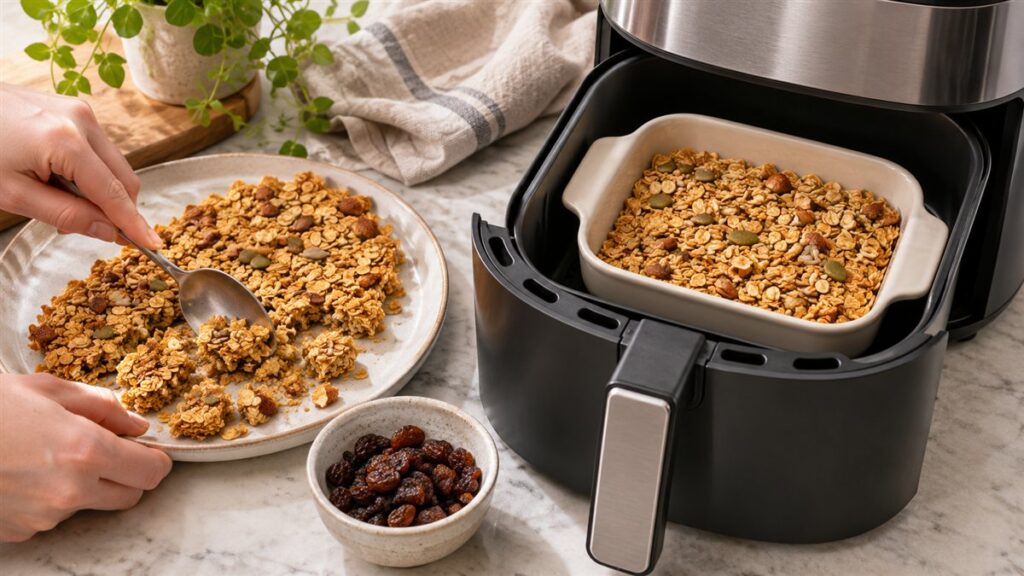
Granola works well in an air fryer as long as you make a small batch, keep the heat gentle and stir often. The fan browns the top layer fast, so frequent mixing is what gives you even clusters instead of burnt edges.
The Basic Mix
A flexible ratio is about three parts rolled oats to one part chopped nuts or seeds, with a binder of oil and something sticky such as honey, maple syrup or mashed banana. Add a pinch of salt and any spices you enjoy. Keep dried fruit out until the end, because it hardens and scorches in hot air.
- Rolled oats (not instant)
- Nuts and seeds, roughly chopped
- Neutral oil, a small amount
- Honey or maple syrup
- Cinnamon, vanilla or other flavourings
Cooking It
- Stir the dry ingredients in a bowl, then add the oil and syrup and mix until every oat looks lightly coated.
- Line a small baking dish or tray that fits your basket, if your manual allows one. Granola dropped straight onto a basket with holes falls through, so use a solid container.
- Spread the mix about 2 cm (under an inch) deep. Thin layers brown more evenly.
- Set a low to moderate temperature. A common range to try is 130 to 150 C (265 to 300 F), then adjust for your model.
- Cook for 3 minutes, stir thoroughly, and repeat. Most batches need somewhere between 8 and 15 minutes in total.
- Look for a light golden colour and a toasty smell. The granola will feel soft while hot and firm up as it cools.
Getting Clusters
After the final round, press the warm granola flat with the back of a spoon and leave it untouched until fully cool. Then break it into chunks. Stirring while cooling gives you loose crumbs instead.
Fold in raisins, dried cranberries or chocolate pieces only after cooling.
Troubleshooting
- Burnt top, pale bottom: lower the temperature and stir more often.
- Chewy rather than crunchy: give it another short round, then cool it fully before judging.
- Oats flying around: the fan may be strong. Press the mix down a little or use a deeper dish.
Every air fryer circulates air differently, so treat these numbers as a baseline and follow your maker’s manual for dish sizes and temperature limits.
Oats, Nuts and Seeds: Choosing Your Base
Granola is mostly dry ingredients, and the choices you make there shape the final texture. Old-fashioned rolled oats are the usual base because they hold their shape and toast to a nutty crunch. Quick or instant oats are cut finer and absorb the binder more readily, so they tend to turn dusty or crumbly rather than forming clusters. Steel-cut oats are too hard to toast in the same way and are better left for porridge.
Nuts and seeds add flavor and fat. Almonds, pecans, walnuts, pumpkin seeds and sunflower seeds all toast well, though smaller pieces brown faster than whole ones, so chop nuts to a size close to the oat flakes. Coconut flakes are very quick to darken, so add them late or toast them separately. Seeds such as sesame and flax are small enough to burn easily and may be best folded in for the last stretch.
Think about allergies if you are sharing the batch, and check labels on oats if you need to avoid gluten, since cross-contact can occur. Use fresh ingredients: old nuts and seeds can taste stale or bitter after toasting. A good starting balance is mostly oats with a smaller share of nuts and seeds, and you can adjust once you know how your appliance browns.
Sweeteners and Binders That Shape Clusters
The sticky ingredient in granola does two jobs: it sweetens and it glues the dry pieces together. Honey, maple syrup and similar syrups are common, and nut butters or a little oil add richness and help the mixture set. Thicker binders tend to hold clusters better, while thin watery ones coat evenly but may leave a looser result.
Use just enough to coat, because too much liquid makes the mix wet, steams in the basket and takes longer to crisp. Too little gives dry, sandy granola without clusters. Warm the syrup slightly so it spreads, and stir until every flake looks lightly glossy with no pools at the bottom of the bowl.
Sugary binders brown and burn faster than plain oats, particularly in a compact air fryer where heat is close to the food. That is why it helps to cook at a moderate temperature and stir often. If you want less sweetness, reduce the binder gradually and compensate with a pinch of salt, spices or vanilla for flavor. Note that honey should not be given to infants under one year, so keep that in mind when sharing. Dried fruit belongs in after cooking, since it hardens and scorches in the heat.
Small Batches and Basket Setup
Granola burns easily in an air fryer because the fan moves hot air fast and the basket is small. Work in a thin, even layer rather than a deep pile, and cook in rounds if your basket is modest. A solid-sided pan or insert that fits inside the basket can hold the mixture and catch crumbs, but make sure it leaves air space around it and is allowed by your manual.
Lightweight oats and seeds can blow around under strong airflow, and loose pieces may reach the heating element. A small baking dish or perforated liner with raised edges keeps the mix in place. Do not place loose parchment where it can lift into the fan, and weigh down any liner with food.
Stir or shake at short intervals and move the edges to the center, since outer pieces brown first. Check often in the final minutes, because the change from golden to dark can take only a short time. The granola will still feel slightly soft when hot and crisps as it cools, so pull it when it is light gold, not deeply brown. Wipe out the basket afterward, since sticky residue hardens and becomes difficult to remove. Using the same measuring cup each time and writing down your ratios of oats, nuts and binder makes it easier to repeat a good batch or adjust a poor one in a controlled way.
Flavor Add-Ins and When to Add Them
Timing is the main difference between a pleasing granola and a burnt one. Warm spices such as cinnamon, nutmeg and ginger can go in with the dry mix. Vanilla extract and citrus zest work best stirred into the binder. Salt is easy to forget and brings out the sweetness and nuttiness, so add a small pinch.
- Add early: oats, larger nuts, pumpkin seeds, spices, salt.
- Add late or after cooking: coconut flakes, sesame seeds, chopped dried fruit, chocolate pieces, cacao nibs.
- Stir in after cooling: anything that melts or hardens with heat, like chocolate or freeze-dried fruit.
Chocolate in particular should wait until the granola is fully cool, or it will smear. If you like a clustered texture, press the cooked granola gently in a tray and let it set before breaking it into pieces. For a looser texture, stir while it cools. Try one flavor change at a time, and note what you did, so a good batch can be repeated. Because every air fryer runs a little differently, shorten the first interval on a new recipe and check after only a couple of minutes, then extend in small steps once you see how quickly your unit browns the mix.
Cooling, Storing and Serving
Cooling is part of the cooking. Spread the granola on a tray in a thin layer and leave it undisturbed until completely cool, so the sugars harden and the clusters lock in. Packing it away warm traps steam and turns it soft.
Store in an airtight container at room temperature, away from heat and light. Homemade granola has no preservatives, and the fats in nuts and seeds can go rancid over time, so make amounts you will finish in a reasonable time and label the container with the date. If it smells stale or off, discard it. Adding dried fruit at serving time keeps the rest crisp.
To serve, use it over yogurt, with milk, as a topping for fruit, or as a snack on its own. If granola loses crunch, a short warm-up in the air fryer in a thin layer can refresh it, but watch closely. For gifts, check for allergens and list the ingredients. Keep a small jar for tasting while you tune the recipe, and write down which amount of binder, which temperature and which stirring pattern gave the texture you prefer. Smaller jars stay fresher than one large tub that is opened daily, since each opening lets in humid air that softens the clusters over time.
FAQ
How long does homemade granola keep?
Stored in an airtight container at room temperature it stays crisp for a couple of weeks, though freshness varies with ingredients. Discard it if it smells off.
Can I skip the sweetener?
Yes, but the granola will be looser and will not form clusters. A spoonful of syrup or mashed fruit helps it bind.
Can I use quick oats?
You can, but they absorb the binder quickly and tend to produce a finer, less clustered result. Rolled oats are the better choice for crunch and texture.
Why is my granola soft after cooling?
It may need a little more time, or it was packed away before it cooled. Re-toast briefly in a thin layer and let it cool uncovered.
How do I stop the edges burning?
Use a thin layer, stir often and lower the temperature if the outer pieces darken first. Sugary binders and small bits brown fastest.
Can I add dried fruit before cooking?
It is best added afterward. Dried fruit can harden, scorch or become bitter in the heat of the basket.
Do I need oil in the recipe?
A small amount helps crispness and carries flavor, but some binders such as nut butter provide fat already. Adjust to taste and watch for dryness.
Can I make granola without nuts?
Yes. Use seeds, extra oats or puffed grains instead, and check labels for allergens. Texture will be lighter, so reduce the time slightly.
Is it safe to leave granola uncovered to cool?
Yes, for the short time it takes to cool, in a clean, dry place. Then store it airtight to keep out moisture and pests.
The Short Version
Mix oats, nuts, oil and a sticky binder, spread thinly in a solid dish and cook gently while stirring. Press and cool it untouched for clusters, and add dried fruit last.