
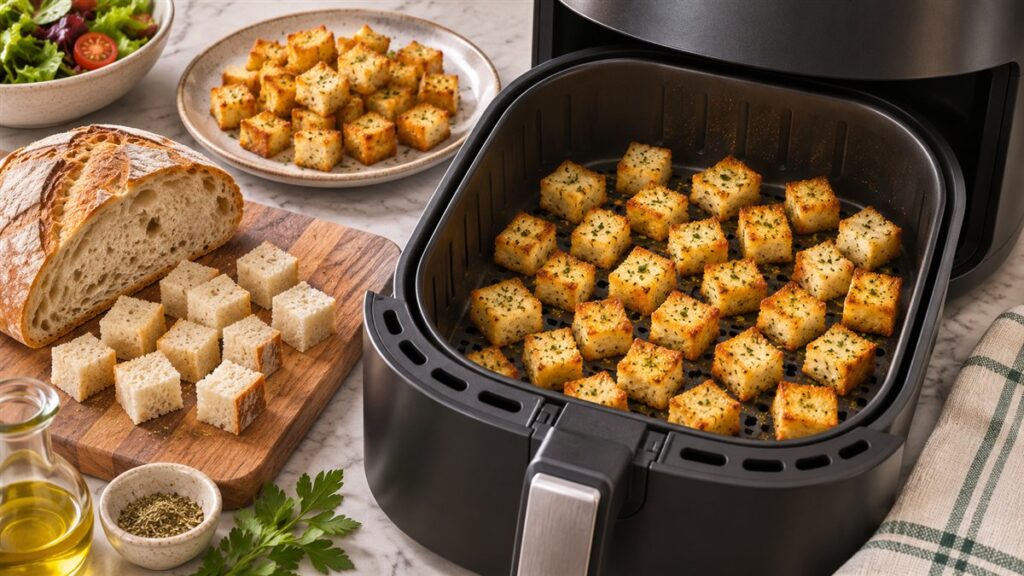
Croutons are an easy way to use up stale bread, and an air fryer makes them crunchy in about 4-8 minutes at roughly 340-375 F. Cube the bread, coat it lightly, shake the basket often, and pull them out as soon as they are golden and dry.
What Bread to Use
Day-old bread works best because it has dried a little. Sturdy loaves such as sourdough, baguette, ciabatta, or country white cut cleanly and stay crisp. Very soft sandwich bread works too, but it browns faster and can feel lighter.
Step-by-Step Method
- Cut the bread into cubes of about three-quarters of an inch. Trim off hard crusts if you prefer.
- Put the cubes in a bowl and drizzle with a tablespoon or two of oil or melted butter.
- Add salt, garlic powder, dried herbs, or any seasoning you like.
- Toss until every cube is lightly coated.
- Spread in a single layer in the basket. Use two batches if necessary.
- Cook for 3 minutes, then shake. Repeat, checking every minute or two, until golden.
- Spread on a plate to cool. They crisp up more as they cool down.
Flavor Combinations
| Style | Add to the oil | Add after cooking |
|---|---|---|
| Garlic and herb | Garlic powder, dried oregano | Fresh parsley |
| Cheesy | Salt, pepper | Fine hard cheese, tossed while warm |
| Smoky | Smoked paprika | Pinch of flaky salt |
| Sweet cinnamon | Melted butter, cinnamon | Light sugar dusting |
Storage and Use
Let the croutons cool fully before storing, or steam will make them soft. Keep them in an airtight container at room temperature, and use within a few days for the best crunch. If they lose crispness, a minute or two in the air fryer brings them back. Add them to salads and soups just before serving.
Making a Bigger Batch
Croutons are easy to scale up, but the basket must stay in a loose layer. Make two or three small batches rather than one deep pile, and cool each one on a tray. Mixed batches of different bread types will brown at different rates, so keep types separate when you can.
Try different cuts for variety. Small cubes work well in soup, while larger chunks suit salads such as Caesar. Torn pieces give rustic, uneven edges that catch dressing nicely. If your bread is very fresh, leave the cubes out on a rack for 20 minutes to dry slightly before oiling them, which helps them crisp.
Choosing the Fat for Crunch
The fat you toss with the bread does more than add flavor. It carries heat into the crumb, helps the surface brown and decides how the finished crouton tastes once it cools. Neutral oils such as canola or sunflower give a clean crunch and let seasonings stand out. Olive oil adds a fruity note that suits salads and tomato soups, though it can taste stronger once browned. Melted butter gives a rich, toasty flavor, but the milk solids darken sooner, so butter croutons need closer watching in the final minutes.
Quantity matters as much as type. Too little fat leaves dry patches that stay pale and chalky. Too much makes the cubes greasy and heavy, and they may stay soft in the center. A light, even coat is the goal: each cube should look glossy in places rather than soaked. Tossing in a large bowl with a spoon or clean hands spreads the fat more evenly than drizzling over the basket.
- Oil spray: convenient for a very light coat, but check that the spray is suitable for your basket coating. Some makers advise against certain aerosol sprays, so read the manual.
- Brushing: useful for torn pieces or thick slices that you cut after cooking.
- Infused oil: garlic or herb oil saves a step, but fresh garlic can scorch, so keep fresh pieces out of the basket until the end.
If you cook for someone with a dietary need, such as dairy-free or vegan, choose the oil rather than butter and check the bread ingredients as well.
When to Add Seasoning and Salt
Timing changes how seasonings behave in the hot airflow. Dry, sturdy seasonings such as garlic powder, onion powder, paprika and dried oregano stick well to oiled bread and can go on before cooking. Because the fan moves air quickly, loose powder that is not stuck to the oil can blow around the basket, so toss thoroughly and avoid dusting on top afterward.
Delicate items are better added after cooking. Fresh herbs turn bitter or burn in minutes, and finely grated hard cheese can melt into a crust that sticks to the basket. Toss these through the croutons while they are warm, when the surface oil helps them cling. Sugar and cinnamon blends brown quickly, so a lighter hand before cooking and a final dusting afterward gives better control.
Salt deserves care because bread, cheese and some seasoning blends already contain it. Start with a small pinch, taste a finished cube, then adjust the next batch. Flaky salt added at the end gives a pleasant bite, while fine salt mixed in early spreads evenly.
- Check the label on seasoning blends, since some contain salt or sugar.
- Keep seasoning amounts modest on the first batch, because flavor concentrates as moisture leaves the bread.
- Write down what you used so you can repeat a batch you liked.
If you plan to serve the croutons with a salty dressing or cheese, go lighter on salt in the cooking stage.
Basket Size and Airflow Checks
Croutons rely on moving hot air touching as many surfaces as possible. That is why the single layer rule matters, and why basket size affects how many batches you will make. A small basket may only take a couple of cups of cubes at a time, while a larger drawer or oven-style unit may hold more. Check your manual or the product listing for the capacity, and treat any quoted number as a rough guide rather than a promise for crunchy results.
Look at how your own unit behaves. Some baskets have a perforated base that lets air pass underneath, while others have a solid base with a grille. Units with a heating element at the top tend to brown the upper cubes first, so shaking or stirring more often helps. Those with a rear fan may brown the back of the basket sooner, and rotating the basket partway through can even things out if your design allows it.
- Leave visible gaps between cubes so air can circulate.
- Use a pan or rack only if the maker permits it and it leaves room around the sides.
- Keep very small crumbs out of the basket, because they can fall through and burn on the heating area.
- Do not press lightweight pieces so close to the element that they could touch it.
If you often cook larger amounts, think about whether a bigger unit or an oven would suit this job better. Many people simply run a few quick small batches.
Fixing Pale, Burnt or Chewy Croutons
When a batch goes wrong, the cause is usually one of a few things, and each has a straightforward fix. Pale, soft croutons typically mean too little time, too much moisture in the bread or a basket that was crowded. Extend the cooking in short steps of one minute, and spread the cubes out more. If the bread was very fresh, let the cubes air dry first, as the post suggests, because moisture has to leave before browning can happen.
Burnt edges with a soft middle point to heat that was too high or cubes that were too small and thin. Lower the temperature a little and cook a bit longer. Mixed sizes also cause this, because small pieces finish well before large ones. Sort the cubes by size, or remove the darker pieces early and return the rest.
Chewy croutons often come from cooling in a closed container while still warm. Steam softens the crust. Cool them on a tray in a single layer until completely at room temperature before storing.
- Too oily: use less fat next time and pat the cooled croutons on paper towel.
- Seasoning stuck to the basket: wash the basket after each batch following the care notes, since residue can smoke on the next round.
- Hard as stone: shorten the cook time and use a more tender loaf.
Make small notes after each attempt. Your own unit is the best guide for timing.
Using Up Bread Ends and Leftover Croutons
Part of the appeal of croutons is that they turn odds and ends into something useful. Collect heels, slightly stale rolls and slices that nobody wants in a freezer bag, then cube them when you have enough. Frozen bread can be cut straight from the freezer for tidier pieces, though you should let it dry briefly on a rack before oiling so extra moisture does not slow browning.
Think about what the bread already contains. Loaves with seeds, dried fruit or sweet glazes behave differently from plain bread. Seeds can fall through the basket, and sugar browns faster, so check these batches earlier. Savory flavored breads such as garlic loaves or herb rolls often need very little extra seasoning.
Beyond salads and soups, croutons have other uses:
- Crush them coarsely and use them as a crunchy topping for baked pasta or casseroles.
- Pulse into rough crumbs for coating fish or vegetables, then check that the crumbs are cooked through when used.
- Scatter over roasted vegetables or creamy dishes just before serving.
- Use as a base for a bread salad, tossing with dressing shortly before eating so they stay somewhat crisp.
When storing, keep batches with different flavors in separate labelled containers so strong seasonings do not transfer. If any stored croutons smell off, look damp or show mold, throw them away rather than reviving them. Because homemade croutons contain no preservatives, treat the few-day storage window as a limit, not a target.
FAQ
Why are my croutons uneven?
Pieces may vary in size, or the basket may be crowded. Cut evenly, and shake more often.
Can I use gluten-free bread?
Yes, but it often browns faster and can crumble. Check early and handle gently.
Do I need to preheat the air fryer for croutons?
It is not essential, but a short preheat can give a more even first round of browning. Check your manual for its preheat advice. Either way, watch the first minutes closely, because small cubes brown quickly.
Can I make croutons from slices instead of cubes?
Yes. Cut or tear the slices into the shape you want, then follow the same method. Larger pieces take a little longer and may need turning, so check them often.
Should I remove the crusts?
It is a matter of taste. Crusts add extra crunch and color, but very hard crusts can feel tough in a crouton. Trim them if you prefer a more even texture.
Can I freeze finished croutons?
Many people do, in an airtight container after they have cooled completely. Warm them briefly in the air fryer before serving to restore crispness. Use your own judgment on quality and follow food-safety guidance.
Why do my croutons taste burnt but look pale?
Seasoning residue or old crumbs in the basket may be scorching. Clean the basket between batches according to the care notes. Garlic powder and sugary blends can also taste bitter if overheated.
Can I use flavored or seeded bread?
Yes, but check earlier. Sweet or seeded breads brown faster, and seeds can drop through the basket. Reduce added seasoning because the bread already has flavor.
How do I know when croutons are done?
They should look golden, feel dry and sound crisp when tapped. They firm up further as they cool, so remove them slightly before they reach the darkness you want.
The Short Version
Cube stale bread, coat lightly with oil and seasoning, and cook for about 4-8 minutes with frequent shaking. Cool fully before storing, and follow your maker’s manual.









