
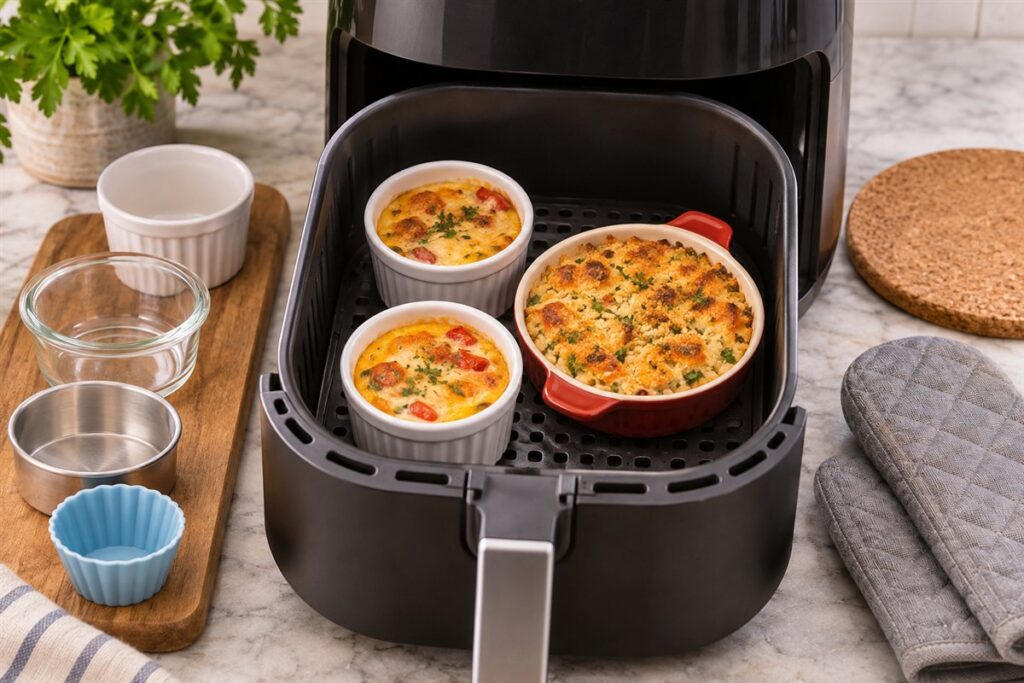
Ramekins and oven-proof dishes can go in an air fryer when they fit the basket and the material is allowed by the maker. Check the temperature limits in the maker’s guide, leave space around the dish for air, and always handle hot dishes with proper mitts. When in doubt, choose a dish that is clearly labeled for oven use.
Which Dishes Make Sense
Small baked dishes are the easiest fit. Ramekins suit individual desserts, baked eggs, dips and small casseroles. A shallow round dish can suit a gratin-style bake or a small loaf of bread. Larger casserole dishes tend to be too wide, so measure first.
Checking the Material
- Ceramic and stoneware: common for ramekins, but they hold heat for a long time after cooking.
- Glass: only if it is labeled for oven use, and avoid moving it between very hot and very cold surfaces.
- Metal: heats fast and suits a crisp base.
- Silicone: flexible; support it on a tray or rack before filling.
If a dish has no label, do not guess. Look up the maker’s instructions, or use a different piece.
Fit and Placement
| Factor | Why it matters | What to check |
|---|---|---|
| Width | A snug fit blocks airflow | Leave a gap on every side |
| Height | Tall dishes near the top cook unevenly | Keep a clear gap above food |
| Weight | Heavy dishes strain thin baskets | Check the basket handles and base |
| Handles | They can stop the basket closing | Test with an empty dish first |
Step-by-Step Handling
- Place the empty dish in the basket and slide it closed to test fit.
- Remove it, fill it, and set it on a flat spot in the basket.
- Do not fill to the brim; leave space for bubbling or rising.
- Cook within the range suggested by your recipe and your model.
- Pull the basket out onto a heat-proof surface.
- Lift the dish with mitts or tongs designed for hot items.
Follow the maker’s manual and safety instructions. Hot dishes stay hot for a while after cooking, and steam can rise suddenly when you lift a lid or foil.
Cleaning and Storage
Let the dish cool before washing to avoid sudden temperature changes. Soak baked-on food, then wash by hand or follow the dish maker’s directions. Store stacked ramekins with a soft cloth between them to avoid chips.
Thermal Shock and Glass Cautions
Ceramic and glass dishes can crack when they experience sudden temperature changes, known as thermal shock. In an air fryer, hot air hits the dish quickly, and removing it to a cold or wet surface can be risky. To reduce the chance of damage, avoid placing a hot dish on a cold counter, in cold water or on a wet cloth. Use a dry trivet or mat instead.
Not all glass is the same. Dishes labeled for oven use are made to cope with heat, but their limits differ, and some are not suited to the intense, direct heat close to an element. Check both the dish label and your air fryer manual. If a dish has chips, cracks or scratches, do not use it, because the damage can spread under heat.
- Let dishes come to room temperature before filling them with cold food.
- Do not put a cold dish into a preheated, very hot basket.
- Allow dishes to cool on a dry, heat-safe surface.
- Avoid dishes with unlabeled or unknown glaze.
If a dish makes cracking sounds during heating, stop, turn off the unit and let everything cool before examining it.
What to Cook in Small Dishes
Small dishes open up many options. Individual egg bakes, baked custards, cheesy dips, mini casseroles and single-serving desserts all work well. Foods that benefit from containment, such as anything saucy or runny, are good candidates because the dish keeps the mixture in place and out of the drawer.
Think about thickness. Shallow dishes cook more evenly and quickly, while deep ones can leave the middle underdone. Cover choices matter too. Open dishes brown on top, which suits gratins and crumbles; foods that need to stay moist may do better if covered, but only with something the manual allows.
Avoid overfilling. Batters rise and liquids bubble, so leave room at the top. Place the dish centrally in the basket with a gap around it. Check the food early, since small portions cook fast. Use a thermometer for egg dishes and meats to check that they are fully cooked. If the top browns before the center sets, lower the temperature and extend the time. Keep notes for future reference.
Adjusting Oven Recipes for Small Dishes
Recipes written for an oven need tweaks. Because air fryers circulate hot air strongly, the surface tends to brown faster. A common approach is to reduce the temperature a little and check earlier, but the amount varies by model, so treat the first attempt as a test.
Scale the recipe to fit your dish. A recipe for a large casserole needs to be divided into smaller portions, and the cooking time will usually be shorter. Keep ingredient ratios the same, particularly for eggs, liquids and thickeners. If the original calls for a water bath, check the manual before attempting something similar in the unit, as water in the basket may not be allowed.
Cook components that need long cooking, such as raw potatoes or dense vegetables, before adding them to the dish. Pre-cooking also reduces excess moisture. Cover loosely with foil if browning is too fast and your manual permits foil. Rest the dish for a few minutes after cooking so that the contents set. Write down the temperature, time and dish size that worked, so repeat attempts are easier.
Buying Guide for Air Fryer Dishes
When shopping for dishes, start with your basket measurements. Pick a size that leaves air space around the edges, and check the height. Look for clear labeling about oven safety and the maximum temperature. Straight sides make good use of space, while flared sides can waste room.
Material is the next choice. Ceramic and stoneware retain heat and look attractive at the table, but they are heavier and can crack under shock. Glass lets you see the browning, but check the rating. Metal heats quickly and is light, and it suits foods needing a crisp base. Silicone is flexible and easy to store but needs a tray for support.
- Choose dishes with handles or a lip that you can grip with mitts or tools.
- Prefer smooth interiors that are easy to clean.
- Check whether the dish is dishwasher safe.
- Avoid decorative dishes with metallic paint or unknown glazes.
A small set of two or three sizes is usually enough, and it is wise to start with a pair of basic ramekins before buying anything more specialized.
Care, Inspection and Replacement
Take care of your dishes and they will last. Wash by hand or in the dishwasher if allowed, and avoid abrasive pads on glazed or coated surfaces. Soak baked-on residue instead of scraping with hard tools. Dry thoroughly and store them where they will not knock into other items.
Inspect dishes regularly. Look for chips, cracks, crazing in the glaze, discoloration that does not wash out, and warping. Small chips on the rim can grow, so replace those dishes. A dish that has been dropped may have hidden cracks even if it looks fine, and heat can make them worse.
Replace dishes that show damage, and do not use them in a hot unit. Dispose of broken ceramic or glass carefully, wrapping it before placing it in the trash. When buying a replacement, check the same factors as before: fit, rating and material. Keep the manual and the dish labels in mind. A small amount of attention keeps your dishes safe and your meals consistent, and avoids unpleasant surprises when you open the basket.
FAQ
Can I cover a dish with foil?
Some people do, but loose foil can lift in the moving air. Press it down firmly and keep it away from the heating element.
Do I need a rack under the dish?
Not always. A small rack can help air reach the base, and it keeps the dish off the basket floor.
Can I use a dish with a lid?
Only if the lid is also oven-safe, fits the basket and the manual allows it. Vented lids are better than tight ones that trap pressure.
Can I use decorative ramekins?
Only if they are labeled oven safe. Avoid ones with metallic paint, unknown glazes or damage.
Why did my dish crack?
Thermal shock, a hidden flaw or exceeding the dish's limit are common causes. Avoid sudden temperature changes and replace damaged dishes.
Do small dishes take longer to cook?
Often they cook faster because the portions are small, but thick contents take longer. Check early and use a thermometer where appropriate.
Can I stack dishes in the basket?
Stacking blocks airflow and can be unstable. Place dishes in a single layer with gaps between them.
How do I clean baked-on food from a ramekin?
Soak in warm soapy water, then scrub with a soft brush or non-scratch sponge. Avoid steel wool on glazed surfaces.
Is it safe to put a cold dish in a hot unit?
Avoid it. Let dishes warm to room temperature and place them in a preheated basket only if the maker allows it.
The Short Version
Choose labeled dishes that fit with room around them, test the fit empty, and handle everything with care. Follow the maker’s guide for limits.









