
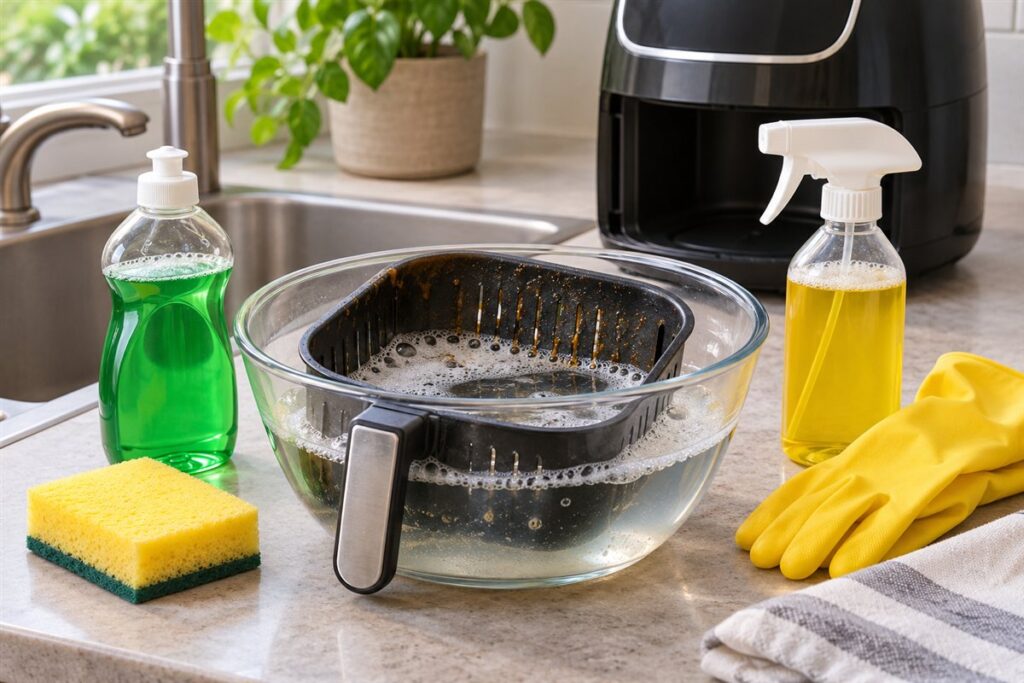
For most air fryer cleaning, warm water and ordinary dish soap are enough. A degreaser is a stronger option for heavy, baked-on grease, but it should only be used on parts the maker says can handle it. Choose dish soap for routine washing, and read the maker’s guide before using any stronger product.
What Dish Soap Does Well
Dish soap breaks up everyday grease and food residue. It is gentle on coated baskets and trays, easy to rinse and usually kept in every kitchen. For a basket washed soon after cooking, it does the job with a soft sponge and a bit of soaking.
What a Degreaser Is For
A degreaser is a stronger cleaner meant for thick, aged grease. It can help on removable metal parts where residue has built up over weeks. The risk is that strong products can dull or damage coatings, leave residue or cause fumes, so they are not right for every part.
Side-by-Side View
| Question | Dish soap | Degreaser |
|---|---|---|
| Best for | Everyday washing | Heavy, built-up grease |
| Coated parts | Generally gentle | Check the maker’s guide first |
| Rinsing | Quick | Needs careful, repeated rinsing |
| Where to use | Basket, tray, rack, drawer | Only parts the maker allows |
| Ventilation | Normal | Open a window or use a fan |
A Gentle First Approach
- Unplug the unit and let it cool fully.
- Fill a sink with warm water and a few drops of dish soap.
- Soak removable parts for 10 to 20 minutes.
- Scrub with a soft brush or non-scratch sponge.
- Rinse well and dry before putting the parts back.
If the grease is still there after a second soak, try a paste of baking soda and water on stubborn spots before moving to anything stronger.
If You Do Use a Degreaser
- Read the product label and the maker’s manual first.
- Apply only to removable parts, never to the heating element or electrical areas.
- Wear gloves and keep the room ventilated.
- Rinse several times with clean water until no film is left.
- Never mix cleaning products together.
Food touches these surfaces, so thorough rinsing matters. When in doubt, follow the maker’s safety instructions and stay with mild soap.
Preventing the Problem
The easiest way to avoid needing a degreaser is regular washing. A quick wash after greasy meals stops oil from baking into a hard layer. Use a rack for fatty foods, keep oil light and wipe the drawer between batches.
Warm water softens grease better than cold water, so let the sink water run warm before you add the soap.
Reading Labels and Understanding What You Are Buying
Cleaning products vary widely, so the label is your best guide. Look for statements on whether the product is safe for food-contact surfaces and for non-stick coatings. If a degreaser says it is for ovens, grills or engines, that is a signal it may be too strong for a kitchen appliance part. Some products need to be diluted, and using them undiluted can damage coatings or leave residue.
Ingredient lists can be hard to interpret, but warnings give clues. Words such as corrosive, flammable or use in ventilated area suggest a strong product. Anything that warns against contact with skin or eyes deserves extra caution and protective gloves. Ordinary dish soap, in contrast, is designed for repeated use on dishes and utensils.
Check the manual for your air fryer, which may list approved cleaning methods or products to avoid. If the maker states that only mild detergent should be used, follow that rather than the label of a third-party product. When a label is unclear, choose the gentler option. If you cannot tell whether a product is safe for your coating, do not use it on that part.
Coating Damage and Residue Risks
The non-stick finish on many baskets and trays is the most delicate part of the unit. Strong chemicals, abrasive pads and prolonged soaking can dull, bubble or peel it. Once the coating is damaged, food sticks more and the part becomes harder to clean, which tempts you to use even stronger products. That cycle is worth avoiding.
Residue is the second concern. A degreaser that is not rinsed away can leave a film that heats up during the next cook, producing odors or a taste in food. Fragrance and thickening agents in some cleaners can also linger. Repeated rinsing in clean water and a final wipe with a damp cloth are essential after using anything stronger than dish soap.
- Do not leave parts soaking in a strong solution for longer than the label says.
- Avoid mixing cleaning products, which can create harmful fumes.
- Smell the part after drying; any chemical scent means it needs more rinsing.
- Stop using a part if the coating flakes, bubbles or turns rough.
If in doubt, wash again with mild soap and warm water.
Gentle Alternatives Before Reaching for Chemicals
Many stubborn residues respond to simple methods. Warm water softens grease, and a longer soak can loosen baked-on food. A paste made from baking soda and a small amount of water can be applied to stubborn spots on removable parts, left for a short time, then scrubbed gently with a soft brush. This is mild enough for many surfaces, but check that your manual does not advise against it.
Some people use diluted white vinegar to cut mineral film or odors on removable parts. It is not a degreaser in the same sense, and it should be rinsed well and never mixed with other cleaners. Avoid using it on parts the maker advises against, and do not apply it to heating elements or electrical areas.
A plastic or wooden scraper can lift thick residue without scratching. Wiping the drawer while it is still slightly warm, but safely cool to touch, makes grease easier to remove. The point of these alternatives is to reduce force and chemical exposure. If one method does not work, try another gentle approach before escalating.
Cleaning Different Parts Differently
Not every part of the air fryer needs the same treatment. Removable baskets, trays and racks can usually be soaked and scrubbed, and some may be dishwasher safe, though you should confirm this in the manual. Fixed parts such as the heating chamber, element and fan housing should never be soaked or sprayed.
For the interior, use a damp cloth or a soft brush and wipe gently. If grease has built up on the element or the cavity roof, follow the maker’s instructions for deep cleaning, and make sure the unit is unplugged and fully cool. Do not use a spray cleaner into the cavity, since liquid can run into places it should not go.
The exterior can be wiped with a cloth dampened with mild soapy water, then dried. Avoid harsh chemicals on plastic and painted surfaces, which can fade or crack. Handles, buttons and seams collect grease, so use a soft detail brush or cloth. Treat each part according to what it is made of, and when you are not sure, choose the mildest method that still works.
Safety, Storage and Disposal of Cleaning Products
If you do keep a degreaser at home, store it safely. Keep it in its original container with the label intact, away from children and pets, and away from heat sources. Do not store it near food. Never decant it into drink bottles or unmarked containers.
Use gloves and ventilate the room while you work, and avoid breathing mist or vapors. Do not combine products, particularly those containing bleach or ammonia, because the fumes can be dangerous. If a product gets on skin or in eyes, follow the label’s first aid advice and seek help if needed.
Dispose of leftover product and used rags according to local guidance, rather than pouring large amounts down the drain without checking. Wash cloths and sponges used with strong cleaners separately from food-prep items. Finally, replace worn gloves and discard sponges that have absorbed heavy grease. Keeping your cleaning routine regular and mild reduces the need for stronger products and keeps both you and your appliance safe.
FAQ
Can I use a degreaser on the inside of the unit?
Generally no. Wipe the interior with a damp cloth and mild soap, and check the manual for approved cleaners.
Why does my basket still feel sticky?
A thin film of oil can remain. Wash again with hot soapy water and dry thoroughly.
Is dish soap safe to use on every removable part?
In most cases it is the recommended option, but check your manual for any exceptions. Use warm water and a soft sponge, and rinse well.
Can I put air fryer parts in the dishwasher?
Only if the manual says the specific part is dishwasher safe. Some coatings wear faster in a dishwasher, so hand washing is often gentler.
How often should I use a degreaser, if at all?
Many people never need one. If grease has built up, use it sparingly on parts the maker allows, and follow the label closely.
Does baking soda damage the coating?
Used as a paste with a soft brush it is generally mild, but avoid scrubbing hard. Check the manual and rinse thoroughly afterward.
What should I do if my basket smells like cleaner?
Rinse it again in clean warm water, dry it fully and air it out. If a smell persists, wash with mild dish soap and consider leaving it to air for longer.
Can I mix vinegar with soap?
It is best to use them separately, rinsing between steps. Never mix cleaning products, especially those with bleach or ammonia.
Is it safe to use oven cleaner on an air fryer?
Generally no. Oven cleaners are strong and may damage coatings and leave residue. Use only products that the maker approves for the part.
The Short Version
Dish soap handles most jobs, and regular washing prevents the need for stronger products. Use a degreaser rarely, only where allowed, and rinse well.









