Disclosure: airfryerkitchensupply.com is reader-supported. When you buy through links on our site, we may earn an affiliate commission at no extra cost to you.
Where to buy
All six smokers below are sold on Amazon. Check the current price on Amazon at each listing before you decide — pricing moves with the season, and the listing page always shows today’s number.
- Masterbuilt 30-inch Digital Electric Smoker MB20071117 — check price on Amazon
- Masterbuilt 710 WiFi Digital Smoker MB20070924 — check price on Amazon
- EAST OAK 30-inch Electric Smoker — check price on Amazon
- Pit Boss 3-Series Electric Vertical Smoker — check price on Amazon
- Char-Broil Analog Electric Smoker — check price on Amazon
- Masterbuilt 40-inch Digital Electric Smoker MB20072918 — check price on Amazon
“Wood fired electric smoker” sounds like a contradiction until you understand the design: the heat is electric — a thermostat-controlled element — while the smoke is genuinely wood-fired, from real wood chips smoldering in a tray or loader inside the cabinet. The best wood fired electric smokers exist because that division of labor is brilliant. Electricity is the most controllable heat source in outdoor cooking; wood chips are the most flavorful smoke source in it. Put each in charge of what it does best and you get a smoker that holds a temperature like an oven and flavors like a fire — brisket that runs overnight without a single damper adjustment, and still tastes like barbecue.
Every pick below was confirmed by brand and model before earning a link. The six span the format’s range: the proven digital standard, a WiFi-connected flagship, a windowed cabinet for cooks who judge by color, a tall vertical for mixed loads, an honest analog budget box, and a 40-inch big brother for crowds. We will be candid about the format’s one real trade — its smoke is cleaner and milder than a charcoal pit’s — because the right buyer for these machines values repeatability over intensity, and deserves to choose with open eyes.
In this guide
Quick Picks
- Best Overall — Masterbuilt 30-inch Digital Electric MB20071117: digital control plus the side wood chip loader that refills smoke without opening the door. Check the current price on Amazon
- Best Smart — Masterbuilt 710 WiFi Digital Smoker MB20070924: WiFi monitoring and control over the same proven 30-inch, 711 sq in platform. Check the current price on Amazon
- Best Viewing Window — EAST OAK 30-inch: a clear window, built-in probe and a side loader built for long uninterrupted smoking. Check the current price on Amazon
- Best Vertical — Pit Boss 3-Series Electric Vertical: a tall four-rack cabinet with a wood chip tray and a wide, gentle temperature range. Check the current price on Amazon
- Best Budget — Char-Broil Analog Electric: the format’s fundamentals — insulated cabinet, element, chip box, dial — for the least money. Check the current price on Amazon
- Best Extra-Large — Masterbuilt 40-inch Digital Electric MB20072918: the digital Masterbuilt formula in a 40-inch cabinet for party-size loads. Check the current price on Amazon
How These Picks Were Chosen
The defining requirement was the hybrid itself: electric heat with a genuine wood chip smoke system designed into the machine — a loader, tray or box, not a foil pouch of chips balanced on an element as an improvisation. Candidates were verified with brand-and-model searches; only listings whose returned titles matched the intended smokers received links.
Evaluation weighted the hybrid’s two halves separately. For the electric half: temperature range and stability, control style (digital, WiFi, analog), insulation and door seal, and recovery after openings. For the wood half: how chips are loaded, whether they can be added mid-cook without opening the door, how long a load smolders, and how the smoke output can be shaped across a cook. Capacity, cleaning and ownership details completed the picture. Each badge below names the machine that leads on a particular combination — because in a format this unified, the differences are about workflow, and workflows are personal.
The 6 Best Wood Fired Electric Smokers

Masterbuilt 30-inch Digital Electric Smoker MB20071117 — Best Overall
This is the machine that defined the category and still anchors it. A digital controller holds your set temperature by cycling the element; four chrome racks give 710 square inches of cooking space; and the side wood chip loader — the feature that separates Masterbuilt from the field — lets you add chips through an external tube, so the wood-fired half of the hybrid never forces you to open the door and dump the electric half’s carefully held heat. It suits the widest range of cooks: weeknight chicken, weekend ribs, overnight brisket. It is not the smoker for maximum smoke intensity — the hybrid’s clean profile is the trade — nor for searing, which no electric cabinet does honestly.
Strengths
- Side chip loader: smoke refills with zero door openings.
- Digital control holds temperature through long, unattended cooks.
- Brisket-capable capacity in a compact 30-inch footprint.
Trade-offs
- Smoke depth is moderate versus charcoal-and-chunk cookers.
- Top temperatures suit smoking and roasting, not searing.
- Electronics require covered, dry storage.
The technique this machine rewards is smoke shaping. Because the loader doses chips in small twists, you can run a heavier smoke curve early — while the meat is cool and receptive — and taper to nothing as bark sets, all without touching the door. Keep the water pan filled for low cooks, the vent flowing, and a probe in the meat, and the MB20071117 produces the most repeatable results in this guide. Repeatability is an underrated virtue: it is what turns a good brisket into your brisket, the one people request.
Best for: most households wanting wood smoke with oven-like control / Not suited for: smoke-intensity seekers or searing
Check the current price on Amazon

Masterbuilt 710 WiFi Digital Smoker MB20070924 — Best Smart
The 710 takes the proven 30-inch Masterbuilt platform — 711 square inches, four racks, the side chip loader — and adds WiFi control and monitoring, so the smoker reports to your phone from the couch, the store, or the other side of the yard. For the hybrid format, connectivity is more than a gadget: the entire promise of electric heat is unattended cooking, and WiFi extends “unattended” from the patio to anywhere with signal. It suits busy hosts, gadget-comfortable cooks, and anyone whose smoking happens alongside a life that leaves the house. It is not for the cook who finds apps between them and dinner to be an intrusion — the analog pick below exists for you — and it naturally depends on your home network behaving.
Strengths
- WiFi monitoring and adjustment of a long cook from anywhere.
- Same loader, racks and capacity as the proven 30-inch platform.
- Digital precision with remote peace of mind for overnight cooks.
Trade-offs
- Connectivity adds cost and a dependency on your network.
- App ecosystems age; the smoker must still work if the app someday does not.
- Same moderate smoke profile as the whole hybrid family.
Used well, the WiFi changes which cooks you attempt. An overnight brisket stops being a vigil and becomes a plan: load the loader, set the temperature, sleep, and check the graph with your coffee. Alerts turn the one real risk of unattended cooking — a problem you do not know about — into a notification. Keep the firmware and app updated, keep a probe thermometer as an independent witness, and the 710 is the most complete expression of the wood-fired electric idea in this guide.
Best for: connected cooks and confident overnight smoking / Not suited for: app-averse cooks or unreliable-network homes
Check the current price on Amazon

EAST OAK 30-inch Electric Smoker — Best Viewing Window
The EAST OAK’s wager is that information is a feature: a clear viewing window and a built-in meat probe let you follow a cook’s two most important variables — color and internal temperature — without opening the door and spending the cabinet’s heat. Its side chip loader is built for long uninterrupted smoking on a single load, and the cabinet offers 725 square inches across its racks. It suits visual cooks, learners who need to see what “bark set” looks like, and hosts who hate the guesswork of a sealed box. It is not for the minimalist: the window is a surface that smokes over and wants wiping, and the digital controls are a maintenance consideration the analog pick avoids.
Strengths
- Window plus built-in probe: monitor color and temperature with the door shut.
- Side loader designed for long single-load smoking.
- Full 30-inch, 725 sq in capacity for family loads.
Trade-offs
- Window needs regular cleaning to earn its keep.
- Digital controls add a failure point over time.
- Smoke intensity is the family’s usual moderate level.
There is a teaching dividend here that owners mention often: beginners on windowed smokers learn faster, because they can finally correlate the clock with what the food actually looks like at each stage — when ribs take color, when a wrap is due, when chicken skin has rendered. That visual library transfers to every smoker you will ever own. Wipe the glass while it is warm after each cook, dose the loader fully for long sessions, and the EAST OAK is the most informative seat in the hybrid house.
Best for: visual learners and cooks who judge doneness by color / Not suited for: buyers who dislike cleaning glass
Check the current price on Amazon
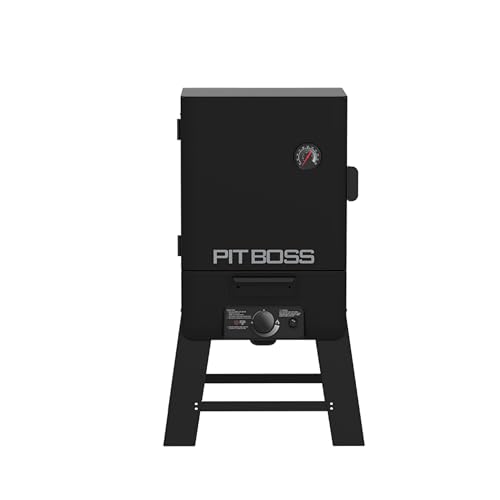
Pit Boss 3-Series Electric Vertical Smoker — Best Vertical
Pit Boss stretches the hybrid tall: four racks in a vertical cabinet, a wood chip tray, and a wide temperature range that runs low enough for delicate work and high enough for poultry with ambitions. The vertical format is a capacity strategy — a modest patio footprint holding a genuinely large, layered load: sausage up top, ribs in the middle, beans below catching drips. It suits mixed-load cooks and brand loyalists who want Pit Boss’s parts network behind the machine. Control is dial-based rather than a digital setpoint, so you will learn the cooker’s temperament with a probe’s help; and there is no window, so you cook by instrument and schedule.
Strengths
- Tall four-rack cabinet excels at mixed and hanging loads.
- Wide, gentle temperature range covers fish through poultry.
- Simple chip tray system, easy to brush out and reload.
Trade-offs
- Dial control rather than digital precision.
- No viewing window.
- Vertical heat stacking means top and bottom racks cook at different rates — rotate on long cooks.
The tall cabinet gives smoke a long path over the food, and owners often find the Pit Boss’s smoke presence a step more assertive than shorter electrics — a pleasant surprise in a format known for mildness. Zone discipline is the skill: robust cuts low near the element, delicate items high, and a rotation at the cook’s midpoint. Add a dual-probe thermometer, keep the tray ash brushed so chips smolder cleanly, and this becomes the high-capacity hybrid of the group.
Best for: mixed vertical loads, sausage and capacity per footprint / Not suited for: cooks wanting a window or typed-in temperatures
Check the current price on Amazon
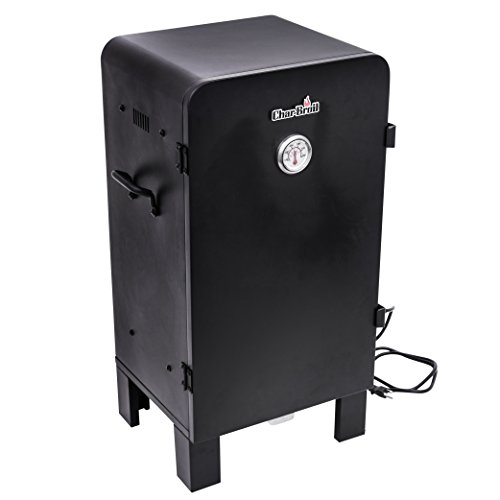
Char-Broil Analog Electric Smoker — Best Budget
The Char-Broil Analog strips the hybrid to its essence: an insulated cabinet, an electric element, a chip box, and a dial. No screen, no app, no probe — and, defenders note, almost nothing to fail. For the buyer testing whether the wood-fired electric life suits them, or adding a second, smaller smoker for fish and chicken, it covers the fundamentals at the lowest cost in this guide. You will supply your own thermometer and learn the dial’s settings by notebook, the way a generation of smokers did; capacity is modest, and chip refills mean opening the door. Within those honest limits, the food it makes is entirely respectable, because the hybrid idea works even in its simplest clothing.
Strengths
- Lowest cost into the true wood-fired electric format.
- Analog simplicity with minimal failure points.
- Compact, quick-heating cabinet for small loads.
Trade-offs
- A probe thermometer is essential equipment, not an accessory.
- Modest capacity and no mid-cook chip access without opening the door.
- Basic fit and finish versus the flagship cabinets.
The right frame for the Char-Broil is apprenticeship. Its dial teaches cause and effect — where the setting sits, what the cabinet does, how weather leans on both — faster than a digital display that hides the machinery behind a number. Run it with a grate-level probe, mark your dial positions for your staple cooks, and it will smoke chicken, ribs and fish for a small household for years. If the habit grows, you will upgrade knowing exactly which features your cooking actually needs.
Best for: beginners, budget buyers and second-smoker duty / Not suited for: precision cooks or large loads
Check the current price on Amazon
Masterbuilt 40-inch Digital Electric Smoker MB20072918 — Best Extra-Large
When the 30-inch cabinet starts forcing you to cook in shifts, this is the step up: Masterbuilt’s digital control and chip system in a 40-inch cabinet with room for the loads that define gatherings — multiple briskets, a turkey with company, four racks working at once. The hybrid format scales gracefully because the electric half does not care how tall the cabinet is; the thermostat simply works, and the chip loader keeps smoke coming without opening a very large, very heat-expensive door. It suits hosts, holiday cooks and freezer-fillers. It is not for small households, whose daily cooking would heat a mostly empty tower, and it asks for a real storage and shelter plan.
Strengths
- 40-inch capacity ends cook-in-shifts hosting.
- Digital control and loader system from the proven platform.
- Vertical room for large birds, hanging items and full mixed loads.
Trade-offs
- Oversized and slower to preheat for everyday small cooks.
- Big door openings are costly — the loader matters even more here.
- Footprint and storage are genuine commitments.
Big electric cabinets reward the same zone discipline as their smaller siblings, amplified: know which racks run hot, rotate once mid-cook on full loads, and let the loader — not the door — manage smoke. Hosts who make the jump rarely go back, because the 40-inch converts smoking from a production into a background activity at exactly the gatherings where the cook wants to be a guest at their own party. That, in one sentence, is the entire philosophy of the wood-fired electric format.
Best for: hosts and batch cooks who have outgrown 30 inches / Not suited for: small households or tight patios
Check the current price on Amazon
Comparison Table
| Pick | Badge | Key spec | Best for |
|---|---|---|---|
| Masterbuilt MB20071117 30-inch | Best Overall | Digital control, side loader, 710 sq in | The all-round hybrid |
| Masterbuilt 710 WiFi MB20070924 | Best Smart | WiFi control, side loader, 711 sq in | Remote-monitored long cooks |
| EAST OAK 30-inch | Best Viewing Window | Window, probe, side loader, 725 sq in | Visual cooks |
| Pit Boss 3-Series Electric Vertical | Best Vertical | 4 racks, chip tray, wide temp range | Mixed loads, sausage |
| Char-Broil Analog Electric | Best Budget | Dial control, insulated cabinet | First hybrid, small loads |
| Masterbuilt MB20072918 40-inch | Best Extra-Large | 40-inch digital cabinet | Hosts and batches |
See them together: Masterbuilt 30-inch, Masterbuilt 710 WiFi, EAST OAK 30-inch, Pit Boss 3-Series, Char-Broil Analog, Masterbuilt 40-inch.
How to Choose a Wood Fired Electric Smoker
Confirm the hybrid is real. Some products marketed with smoky language are electric roasters with a token chip cup. A genuine wood fired electric smoker has a chip system sized and positioned to smoke for hours — a loader or a tray over the element — and a cabinet designed to hold smoke. The six here qualify; when shopping beyond this list, that chip system is the first thing to inspect.
Choose your control philosophy. Digital (Masterbuilt, EAST OAK) buys set-and-hold precision. WiFi buys distance. Analog (Char-Broil, Pit Boss) buys simplicity and longevity at the price of a learning curve and your own thermometer. The food ceiling is similar across all three; what differs is how the cook feels, and how much of it you must attend.
Loader versus tray is the format’s real fork. A side loader lets you shape smoke across a long cook without opening the door — decisive for brisket and ribs. A tray is simpler, cheaper, and entirely adequate for cooks under a few hours and for delicate foods that want their smoke early. Match the system to your longest regular cook, not your average one.
Size by the second-biggest day. Thirty inches covers most households completely, including a brisket. Forty inches is for hosts who cook in shifts today. Smaller cabinets heat and recover faster and smoke small loads more efficiently — resist buying a tower for two people.
Insulation and seals are winter. An electric element has finite power; a well-insulated, tight-sealing cabinet spends it on the food, while a leaky one spends it on the weather. If you will smoke in January, weight build quality over features — or plan a sheltered, wind-free station as part of the purchase.
How to Run an Overnight Brisket in a Wood Fired Electric Smoker
Step 1 — Prep in the evening. Trim and season the brisket, and let it sit uncovered in the refrigerator while you set up. A dry surface builds bark even in an electric cabinet’s gentle environment — arguably it matters more here, where there is no fierce fire to force it.
Step 2 — Preheat fully and load the wood. Bring the cabinet to temperature with the water pan filled with hot water, and load the chip loader or tray with dry chips — hickory or a hickory-oak blend for brisket. Full preheat matters: a cold cabinet plus a cold brisket is a long, steamy start that dulls smoke uptake.
Step 3 — Set the probes and close the door. One probe in the brisket’s thickest point, one at grate level. From this moment, the cook is managed from outside: chip additions through the loader, temperature from the controller (or your phone, on the 710), and no door openings to admire progress.
Step 4 — Feed smoke on a schedule, then stop. Add chips in small doses through the first portion of the cook while the surface is cool and receptive. Once the bark is set and deep in color, stop adding wood — the remaining hours are about tenderness, and continued smoke only risks bitterness.
Step 5 — Wrap by bark, finish by feel. If you wrap, do it when the bark is set and mahogany, in paper or foil as you prefer. The brisket is done when a probe slides into the flat with almost no resistance — use temperature as the signpost and tenderness as the verdict.
Step 6 — Rest like it matters, because it does. Rest the wrapped brisket at least an hour, ideally two, in a cooler or a low oven. The hybrid’s gift is that you slept through the cook; do not spend that gift by slicing in a hurry at the end.
Why the Smoke Is Milder — and How to Get More From It
New owners of wood fired electric smokers sometimes report the smoke is “too light,” and the honest explanation is physics, not defect. In a charcoal pit, the entire fuel bed is wood-derived and burning, generating a deep reservoir of smoke compounds. In the hybrid, only the chips smoke, the element makes clean heat, and the cabinet’s controlled airflow keeps the smoke moving rather than marinating. The result is a cleaner, brighter smoke profile — many palates prefer it, and delicate foods demand it — but brisket traditionalists should know the techniques that close the gap.
First, dose early and steadily: the meat absorbs the most smoke while it is cold and its surface is moist, so the first hours deserve your best chips and your full attention to the loader. Second, keep the surface right — a dry, well-seasoned exterior builds bark that holds smoke compounds at the bite. Third, choose assertive woods for big cuts: hickory over apple when the target is brisket. Fourth, keep the vent at the maker’s guidance rather than wide open; smoke that lingers a little longer deposits more, while smoke that stagnates turns bitter — the line is airflow, and it is learned in two cooks. Fifth, accept the format’s identity: a wood fired electric smoker makes the cleanest version of smoked food, repeatably, on a weeknight schedule. For many households that is not a compromise at all — it is the point.
Common Buying Mistakes
Expecting offset-pit intensity. The hybrid trades depth for control. Buy it for repeatability and freedom, and you will love it; buy it expecting a stick-burner’s bark and you will spend a year disappointed in a machine doing exactly its job.
Ignoring the chip system while comparing screens. Two smokers with identical displays can smoke very differently. The loader-versus-tray question decides more cooks than any control feature — ask it first.
Buying WiFi and neglecting the basics. Connectivity monitors a cook; it does not season, load or clean. The 710 earns its premium on top of the proven platform, not instead of one. Whatever you buy, the probe thermometer and the cover still come first in the budget.
Running the cabinet dry and dirty. The water pan is part of the temperature system, and old grease in the drip path is next cook’s off-flavor. The hybrid’s cleanliness is its flavor advantage — keep the machine clean and it stays true.
Oversizing the cabinet. A 40-inch tower smoking two chicken breasts heats slowly, recovers slowly and smokes inefficiently. Buy for your real loads and the machine will feel responsive instead of ponderous.
Forgetting the outlet plan. These are corded appliances that live outdoors. A safe, weather-appropriate outlet within cord reach — no daisy-chained extension cords across a wet patio — is part of the installation, and worth arranging before the first cook rather than during it.
Final Recommendation
The default buy is the Masterbuilt MB20071117: the loader, the digital control and the size are the format’s center of gravity. If you will smoke overnight often, step up to the Masterbuilt 710 WiFi and sleep properly. Visual cooks should take the EAST OAK 30-inch; mixed-load and sausage smokers, the Pit Boss 3-Series; beginners and budget buyers, the Char-Broil Analog; and hosts who have outgrown 30 inches, the Masterbuilt 40-inch. Every one of them makes real wood smoke with electric manners — choose by workflow, and the format will repay you for years.
Continue in this cluster: Best Wood Chip Smokers, Best Wood Chip Bbq Smokers, Best Electric Wood Smokers, Best Electric Wood Pellet Smokers, Best Electric Smokers Under $500 Dollars. Each of those guides takes one branch of the same family tree — chip technique, pellet convenience, or the wider electric field — and the cooks who read across the cluster tend to end up with the right machine the first time, which is the cheapest outcome in all of outdoor cooking.
Wood Fired Electric Versus Every Other Way to Smoke
It helps to place the hybrid on the map honestly. Against charcoal smokers, it wins on control, convenience and cleanliness, and loses on smoke depth and the romance of fire — if tending a fire is your hobby’s heart, no element will replace it. Against pellet smokers, it wins on simplicity, low-temperature gentleness and purchase cost, and loses on grilling ability and the continuity of wood-fueled smoke. Against propane smokers, it wins on precision and running cost where an outlet exists, and loses on off-grid freedom and raw heat recovery. Against the traditional smokehouse machines, it wins on temperature range and barbecue ability, and loses on the specific, gentle preservation smoking those machines were born to.
That map explains the format’s real constituency: cooks whose lives are full, whose smoking must fit around work and family, and who refuse to give up real wood flavor to get that fit. The hybrid is not the best smoker at any single extreme — it is the best smoker at the combination most households actually live at. Judged on that ground, the six machines in this guide are not compromises. They are the mainstream of modern smoking, and the charcoal pit has become the specialty instrument.
Care and Feeding: Keeping an Electric Cabinet Honest for a Decade
The hybrid’s longevity enemies are moisture, grease and neglect — in that order. Moisture attacks the electronics and the cabinet seams, so the machine lives under a fitted cover in a dry spot, and in humid climates it gets an occasional empty hot run to dry itself out. Grease attacks flavor before it attacks function: the drip tray and water pan are emptied and washed while residues are soft, the chip tray or loader is brushed free of ash so the next load smolders cleanly, and the door gasket is wiped so it keeps sealing — a cabinet that leaks at the door makes its element work harder and its smoke lazier.
The racks and interior want restraint: brush the racks, scrape only flaking deposits from the walls, and leave the hard seasoning layer that protects the steel and steadies the cooking. Check the cord each season for weather damage, keep the controller’s vents and the WiFi model’s sensors clean, and never pressure-wash an electric smoker — water and elements are strangers for a reason. Owners who keep this light discipline routinely report a decade from mid-priced cabinets; the format’s simplicity is its durability, provided water is kept where it belongs: in the pan, not in the works.
The Weeknight Case: Why Electric Cabinets Get Used More
There is a statistic no manufacturer publishes: how often a smoker actually gets used. Charcoal pits cluster on weekends; pellet grills do better; wood fired electric cabinets, in household after household, quietly become weekly appliances — and frequency is where cooking skill and family value actually accumulate. The reason is friction. An electric cabinet asks for an outlet, a handful of chips and a set temperature. It can be running twenty minutes after the idea occurs, on a Tuesday, in the rain, while homework happens at the kitchen table.
That frequency changes the menu. Smoked chicken thighs become a weeknight staple rather than an event. A salmon fillet gets an hour of alder while the sides cook. Sausages, meatloaf, a tray of peppers and onions for the week’s sandwiches — foods that would never justify lighting a charcoal fire justify flipping a switch and twisting a loader. Owners consistently report that the electric cabinet did not replace their other cookers; it replaced the oven for a surprising share of dinners, and paid for itself in meals rather than in masterpieces. When you choose among the six picks here, you are really choosing your weeknight future — buy the workflow you will actually run on a Tuesday, and the weekend heroics will take care of themselves.
Safety and Siting for an Electric Smoker
Electric smokers are the safest smokers to run unattended-adjacent, and they still deserve the respect due any outdoor heating appliance. Site the cabinet on a level, non-combustible surface, outdoors, with clearance from siding, railings and overhangs, and never in a garage or enclosed porch — smoke and the small amounts of carbon monoxide from smoldering chips both need open air. The cord should reach a proper outdoor outlet without stretching across walkways; if an extension is unavoidable, it should be a single, heavy-duty outdoor-rated cord, kept dry and uncoiled.
During the cook, the disciplines are simple: keep the area around the smoker clear of combustibles, keep children and pets briefed that the cabinet is hot, and let the machine’s own controls do the work rather than improvising around them. Afterward, ashes and spent chips cool completely before disposal in a metal container — chip ash can hold a coal far longer than it looks. None of this is onerous, and all of it is what separates a household appliance from a patio incident. The format’s reputation for set-and-forget ease was earned by owners who observed these basics so automatically they stopped noticing them.
A First Season With a Wood Fired Electric Smoker: What to Cook in What Order
New owners get the most from the format by sequencing their education. Month one belongs to chicken: thighs and whole birds teach dosing, vent behavior and your cabinet’s recovery after door openings, in cooks short enough to repeat weekly. Take notes — chip species, dose timing, results — because your notebook is the manual this category actually runs on. Month two, ribs: the first genuinely long cook, where the loader or tray rhythm, the wrap decision and bark judgment all arrive together on a forgiving cut.
Month three is the pork shoulder, the overnight rehearsal: a long, patient cook that proves the machine’s unattended manners on meat that forgives everything. Only then, brisket — the graduation cook, now approached with a season of notes behind you instead of a prayer. In parallel, use the low end: a salmon fillet, a batch of sausage, a tray of nuts, and you will discover the second life of the machine that the brisket-chasers miss. By season’s end you will not merely own a wood fired electric smoker; you will have a repertoire, a notebook and a set of opinions about wood that are entirely your own — which is the actual product this guide has been selling.
Troubleshooting the Hybrid: Three Problems and Their Real Causes
Problem: temperature swings or a cabinet that will not reach its setting. → Check the mundane first: the door gasket’s seal, the vent’s position, wind exposure, and whether the water pan has run dry on a long cook. Then check the load — a cabinet stuffed with cold meat is a refrigerator fighting the element, and big loads legitimately take longer to stabilize. Electronics are the last suspect, not the first; most “controller failures” brought to support forums are gasket and weather stories.
Problem: chips burn out in the first half hour. → The tray is sitting in fiercer heat than intended, the chips were packed too loosely over a fully exposed element, or the cabinet is running hotter than its display claims — verify with your grate-level probe. Dose smaller and more often, and confirm the tray is seated exactly as the maker designed; a tray shifted a half-inch can sit directly in the element’s hottest zone.
Problem: food tastes of nothing, or of bitterness. → Nothing-flavor is usually timing: chips added after the surface set, or exhausted before the meat warmed. Bitterness is the opposite sin plus stale air: too much smoke, a closed-down vent, or old grease in the drip path re-smoking itself onto the food. The fix in both directions is the same discipline — fresh dry chips, dosed early and modestly, air moving, machine clean. The hybrid is honest machinery; when the food is wrong, the inputs were, and the notebook tells you which one.
Frequently Asked Questions
Is the smoke from a wood fired electric smoker real wood smoke?
Yes — the smoke comes from real wood chips smoldering in the tray or loader. Only the heat is electric. The flavor is genuine wood smoke, delivered in a cleaner, more controlled way than a charcoal fire delivers it, which is precisely the format’s appeal.
How does a wood fired electric smoker differ from a pellet smoker?
A pellet smoker burns wood pellets as its actual fuel, feeding them by auger — heat and smoke both come from wood. The hybrid uses electricity for heat and chips only for smoke. Pellet smokers generally grill better and smoke more continuously; hybrids are simpler, gentler at low temperatures, and usually cost less to buy.
Can these smokers cook a brisket overnight unattended?
That is their signature use. Digital models hold temperature for the full cook, loaders extend smoke without door openings, and the WiFi model reports progress to your phone. Use probes, keep the area around the smoker clear as you would for any appliance, and the overnight brisket becomes routine.
What chips work best in an electric smoker?
Dry chips, dosed in small amounts: hickory for pork and brisket, pecan as the all-rounder, apple and cherry for poultry and fish, alder for salmon. Soaking is unnecessary in these machines and delays smoke; the loader and tray are the dosing controls.
Why does my electric smoker produce little visible smoke?
Often it is producing the right amount — thin, clean smoke is nearly invisible and flavors best. If food genuinely lacks smoke flavor, check that chips are fresh and dry, that the tray or loader is positioned over the element as designed, and that you are dosing during the early, receptive phase of the cook rather than the end.
Can a wood fired electric smoker be used in winter?
Yes, with a longer preheat, hot water in the pan, and a sheltered spot out of the wind. Insulated cabinets hold temperature best in the cold. Expect somewhat longer cooks and you will find winter is when the format’s set-and-hold nature is appreciated most.
What accessories are worth buying with the smoker?
In order: a dual-probe thermometer (even digital models benefit from an independent witness at grate level), a fitted cover, heat-resistant gloves for handling trays and racks, and a starter stock of two chip species — hickory and apple cover most of the repertoire. Everything else, from rib racks to extra shelves, should be bought in response to a cook that actually needed it, which your first season’s notebook will identify precisely.
How long do wood fired electric smokers last?
With the light care described in this guide — ash and grease kept current, a cover, dry storage — a mid-priced cabinet commonly serves for many years, and the simple analog models often outlast their digital siblings because they have less to fail. The element and chip tray are the wear items; both are inexpensive and replaceable on the major brands represented here.
Can I use wood chunks or pellets instead of chips in these smokers?
Chunks are generally too large for the trays and loaders and burn unevenly in them. Pellets fit some trays but burn hotter and faster than the chip systems were metered for; if you experiment, use small amounts and supervise the first run. The machines in this guide were designed around chips, and chips deliver their intended smoke curve — feed them what they were built for.
Is a wood fired electric smoker a good first smoker?
It may be the best first smoker there is for most people. It removes fire management — the steepest part of the learning curve — while keeping real wood smoke, so a beginner learns the food side of smoking first: seasoning, timing, wood choice, doneness. Success arrives early, and early success is what turns a purchase into a hobby. If the fire craft later calls, a charcoal cooker makes a natural second machine, and the electric cabinet remains the weeknight workhorse it always was.
Do these smokers work for jerky and sausage?
Yes — both are natural fits for the format. Sausage smokes beautifully at cabinet temperatures with steady chip smoke, and the vertical Pit Boss is shaped for hanging it. Jerky wants the low end of the range held for hours, which electric control does better than almost any fire; run the cabinet low, keep the vent moving air so moisture escapes, and use the bend test — a piece should crack without snapping — to judge doneness.
What is the best first cook in a new wood fired electric smoker?
Chicken thighs with apple or pecan chips. They are inexpensive, cook in about the time the machine takes to teach you its ways, and show you dosing, vent behavior and smoke flavor in a single dinner. Ribs are the correct second cook, a pork shoulder the third, and brisket the graduation — by which point your notebook, not your nerves, is running the cook. Start simple, record everything, and let each cook pay tuition for the next one.


