Disclosure: airfryerkitchensupply.com is reader-supported. When you buy through links on our site, we may earn an affiliate commission at no extra cost to you.
Where to buy
Quick map of this guide: POOL BLASTER Catfish Cordless Pool Vacuum; KOKIDO Cordless Handheld Spa Hot Tub Pool Vacuum; INTEX Rechargeable Handheld Pool Vacuum 28620EP; POOL BLASTER Max Cordless Pool Vacuum; Shake-a-Vac Spa & Pool Water Vacuum; SWIMLINE HYDROTOOLS Venturi Pool Jet Vacuum. Each verified name links to its Amazon listing — check the current price on Amazon there before you order. Unlinked entries, where present, carry no link by design.
All six tools are sold through Amazon, and each review links its exact listing so you can check the current price on Amazon: the Pool Blaster Catfish as the all-round default, the Kokido with its pole for deck cleaning, the Intex 28620EP for inflatable PureSpas, the Pool Blaster Max for debris-heavy gardens, the Shake-a-Vac siphon for a battery-free routine, and the Swimline Hydrotools venturi if a hose lives near your tub. Check the listing’s stated intended use matches your water — spa, inflatable, or small pool — before ordering, since these formats look similar in photos and behave very differently in hand.
Finding the best vacuum for hot tubs starts with recognising that a spa is not a small pool. Treating it as one is how owners end up wrestling a robot or a hose system around four seats and a footwell. Spa debris is specific: grit and sand tracked in on feet, leaves and insects from the garden, hair, and the fine sediment that settles in seat wells where the water barely moves. The six tools in this guide are the formats that actually suit that job — cordless handhelds, a pole-mounted spa vacuum, a siphon, and a hose-powered venturi — each confirmed through Amazon listing, with their intended uses stated the way their listings state them.
The buying decision starts with a habit question, not a power question. Hot tubs stay clean through little-and-often attention: two minutes after a soak beats an hour before guests arrive. The best vacuum for your tub is therefore the one whose format removes friction from that two minutes — charged and within reach, or battery-free entirely, sized for seats rather than pool floors. Runtime, pole length, and whether the tool also helps on drain day are the specs that matter; raw pool-cleaning power mostly does not, because spa debris is light even when it is annoying.
One boundary to set honestly: a vacuum maintains a tub between water changes; it does not replace them, and it does not fix chemistry. Cloudy water, foam, and odour are water-care problems with water-care solutions. What these tools do — superbly, in the right hands — is keep the shell and seats free of the physical debris that makes clean water look dirty and seats feel gritty.
In this guide
Quick Picks
- Best Overall — POOL BLASTER Catfish Cordless Pool Vacuum: a cordless handheld made for spot-cleaning hot tubs and spas, rechargeable, with up to 45 minutes of runtime per charge.
- Best With Pole Reach — KOKIDO Cordless Handheld Spa Hot Tub Pool Vacuum: a cordless spa vacuum with a 6 ft pole and two vacuum brush heads, made for spas, hot tubs, and small pools.
- Best for Inflatable Spas — INTEX Rechargeable Handheld Pool Vacuum 28620EP: a rechargeable handheld with a 94 inch telescoping pole, made for PureSpas and above-ground pools up to 18 ft across.
- Best Power Upgrade — POOL BLASTER Max Cordless Pool Vacuum: the stronger sibling: a hoseless, rechargeable handheld by Water Tech positioned for deep cleaning and strong suction in pools of all sizes.
- Best No-Battery Option — Shake-a-Vac Spa & Pool Water Vacuum: a self-starting siphon vacuum and drain for hot tubs — no battery, no charge, nothing to plug in, ever.
- Best Hose-Powered Pick — SWIMLINE HYDROTOOLS Venturi Pool Jet Vacuum: a compact venturi jet vacuum that runs off a garden hose — made for inflatable and above-ground units, hot tubs, and spas.
How These Picks Were Chosen
Every tool here had to name hot tubs or spas in its own listing, or be a small-water format whose listing covers them — no full-size pool robots wearing a spa costume. Each was confirmed before receiving a link, and the formats were deliberately spread across the real ways owners clean: rechargeable handhelds for spot work, a pole model for deck cleaning, a stronger handheld for debris-heavy gardens, a battery-free siphon that doubles as a drain, and a hose-powered venturi for inflatable setups. If a format could not be described accurately from its listing, it did not make the guide.
- Listing explicitly covers hot tubs, spas, or small water — verified, not assumed
- Format matched to spa scale: handheld, pole, siphon, or venturi
- A realistic maintenance rhythm: quick to deploy, quick to put away
- Debris handling for what spas actually collect: grit, sand, leaves, insects, hair
- No chemistry claims — these tools remove debris, not water-care problems
The 6 Best Vacuums for Hot Tubs

POOL BLASTER Catfish Cordless Pool Vacuum — Best Overall
The Pool Blaster Catfish earns the top spot by being designed for exactly this job and saying so: its listing describes a cordless pool vacuum for spot-cleaning hot tubs and spas, handheld and rechargeable, with up to 45 minutes of runtime. A hot tub does not need a pool robot; it needs a nimble handheld that lives near the tub, wakes up fast, and picks up the grit, leaves, and sand that collect in seat wells and footwells between water changes. The Catfish’s cordless format is the point — no hose to fill, no cord to manage on wet decking, just grab, clean the seats, and put it back on charge.
Strengths
- Purpose-positioned for hot tubs and spas, not adapted from big-pool duty
- Cordless handheld format suits quick spot-cleans between soaks
- Up to 45 minutes of runtime covers a full tub session with margin
Trade-offs
- Handheld reach means you lean over the tub or clean from inside it
- Spot-cleaning design is not a whole-pool solution for large pools
- Rechargeable format rewards a charging routine — a flat battery cleans nothing
| Detail | From the listing |
|---|---|
| Format | Cordless handheld vacuum |
| Runtime (per listing) | Up to 45 min |
| Intended use (per listing) | Spot-cleaning hot tubs and spas |
| Power | Rechargeable |
Hot tub debris has a pattern: it settles where the water is calmest — seat contours, the footwell, the steps. A handheld vacuum matches that pattern because you clean point to point, exactly where the grit is, instead of dragging a hose system designed for a twenty-foot pool. The Catfish’s runtime is well judged for the job; a thorough spa clean takes minutes, not the better part of an hour, so one charge covers several sessions. Keep it charged by the tub and it becomes a two-minute habit after each use, which is how hot tubs actually stay clean — little and often, not heroically and rarely.
Catfish ownership settles into a charger-side ritual: the unit lives by the tub, comes off charge for the clean, goes back on after. Owners who keep that loop tight never think about runtime again. The collection chamber rinses in seconds, and because the tool is small, it stores in the spa cabinet or a deck box rather than colonising the garage. The failure mode to avoid is seasonal abandonment — a battery left flat through winter ages badly — so the winterising checklist should include a charge-and-store step. Treated kindly, this is a multi-season companion that makes the tub feel low-maintenance, which is the entire point of owning one.
Best for: Most hot tub owners who want the simplest effective clean / Not suited for: Owners of large pools needing a primary full-pool vacuum
Check on Amazon — check the current price on Amazon for the exact configuration described above.

KOKIDO Cordless Handheld Spa Hot Tub Pool Vacuum — Best With Pole Reach
The Kokido answers the one ergonomic complaint about handheld spa vacuums: the leaning. Its listing describes a cordless handheld spa and hot tub vacuum supplied with a 6 ft pole and two vacuum brush heads, intended for spas, hot tubs, and small aboveground and inground pools. The pole lets you clean seat wells and footwells from the deck with dry feet and a straight back, and the brush heads add scrubbing action for the biofilm-adjacent grime that settles on textured spa shells. If your tub is deep, your back is particular, or your tub sits in a deck you would rather stay on, this is the format to choose.
Strengths
- 6 ft pole cleans the whole tub from the deck
- Two brush heads add scrubbing to suction for settled grime
- Cordless design keeps the deck free of hoses and cables
Trade-offs
- Pole work is slower for tiny spot-cleans than a bare handheld
- Brush heads suit smooth and textured shells; very delicate surfaces want a gentle touch
- More parts to rinse and store than a single-piece handheld
| Detail | From the listing |
|---|---|
| Format | Cordless handheld vacuum with pole |
| Pole length | 6 ft |
| Heads included | 2 vacuum brush heads |
| Intended use (per listing) | Spas, hot tubs, small pools |
The brush heads are this model’s quiet advantage. Suction alone lifts loose grit; suction plus bristles frees the fine, stuck layer that makes spa seats feel gritty even when the water looks clear. Working from the deck with the pole also keeps you out of the chemistry equation — no standing in treated water to clean it. The rhythm this tool suits is the weekly maintenance clean: pole on, slow passes over seats and footwell, heads rinsed, done. Owners who keep that rhythm rarely need the drain-and-scrub reset that neglected tubs eventually demand.
The Kokido’s ownership rhythm is the weekly deck clean: pole assembled in seconds, slow passes from dry land, brush heads rinsed under the tap, everything back in the spa cabinet. The two heads develop specialisations in practice — one lives as the seat brush, the other as the footwell brush — and owners keep them together on the pole’s storage clip rather than loose in a drawer. Because you clean clothed and dry, this is the tool most likely to be used before guests on a cold evening, which is precisely when the tub most needs to look cared for. Reliability here is a habit the format makes easy.
Best for: Deep tubs, deck-mounted spas, and anyone who prefers cleaning from dry land / Not suited for: Tiny inflatable spas where a bare handheld is quicker
Check on Amazon — check the current price on Amazon for the exact configuration described above.

INTEX Rechargeable Handheld Pool Vacuum 28620EP — Best for Inflatable Spas
Intex owns the inflatable spa market, so its own vacuum deserves attention from inflatable owners: the listing describes a rechargeable handheld pool vacuum cleaner for pools and spas, model 28620EP, made for PureSpas and above-ground pools up to 18 ft in diameter, with a 94 inch telescoping pole. That pole is the longest reach in this guide, which matters for inflatable spas set into gardens where you clean from one side, and for owners who also run a small above-ground pool in summer — one tool covers both. Brand-matched accessories also tend to be easy to source, which inflatable owners learn to value.
Strengths
- 94 in telescoping pole — the longest reach in this guide
- Made by the inflatable spa’s own brand, for PureSpas specifically
- One tool spans inflatable spas and small above-ground pools
Trade-offs
- Sized for small water — not a large inground pool tool
- Long pole is overkill for a compact rigid tub on a patio
- Rechargeable format needs its charging spot by the tub
| Detail | From the listing |
|---|---|
| Format | Rechargeable handheld vacuum |
| Model | 28620EP |
| Pole | 94 in telescoping |
| Intended use (per listing) | PureSpas and above-ground pools up to 18 ft diameter |
Inflatable spas collect a particular debris mix — grass, soil, and insects from garden use — and their soft floors rule out aggressive scrubbing tools. A suction handheld on a long pole is the gentle, thorough answer, and the telescoping reach means the far wall of a round inflatable is reachable without walking the perimeter on wet grass. If your household runs the classic combination of an inflatable spa most of the year and a frame pool in summer, this is the most rational single purchase in the guide. Rigid-tub owners with a nearby power point may still prefer it purely for the pole.
Intex ownership benefits from the brand’s ubiquity: chargers, parts, and advice for the 28620EP are easy to find because the inflatable-spa installed base is enormous. The telescoping pole collapses for storage in the same bag or box as the spa’s own accessories, so the whole kit winters together. Owners running both spa and frame pool find the one-tool economy real: a single charger, a single cleaning habit, two bodies of water covered. Rinse the unit after use in treated water and let it dry before storage — the same advice as every pick here, and the difference between seasons of service and one.
Best for: Inflatable PureSpa owners and households with a small above-ground pool too / Not suited for: Large inground pool owners or anyone wanting brush-head scrubbing
Check on Amazon — check the current price on Amazon for the exact configuration described above.
POOL BLASTER Max Cordless Pool Vacuum — Best Power Upgrade
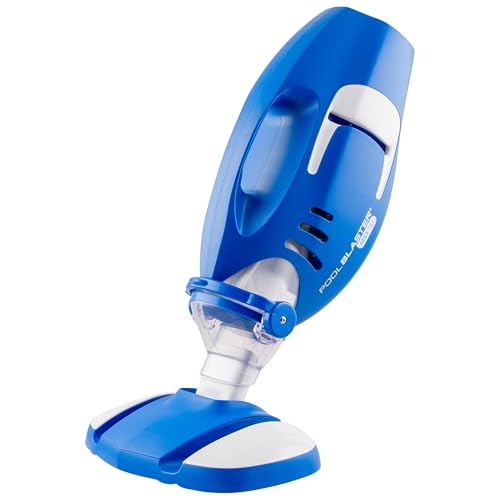
The Pool Blaster Max is the step-up for owners whose debris problem outgrew spot-cleaning: its listing describes a cordless pool vacuum for inground and above-ground pools, positioned for deep cleaning and strong suction, handheld and rechargeable, hoseless, by Water Tech — the same maker as the Catfish at the top of this guide. In a hot tub, that extra strength translates to fewer passes over sand and grit in the footwell and more authority with leaf litter after storms. It is also the pick for households maintaining both a spa and a real pool, where the Catfish handles the tub and the Max can cover both when needed.
Strengths
- Stronger deep-cleaning positioning for stubborn debris
- Hoseless cordless format keeps wet areas cable-free
- Same maker as the Catfish — a natural upgrade path and shared design language
Trade-offs
- More vacuum than a well-kept spa strictly needs
- Larger handheld body is a touch less nimble in tight seat contours
- Pool-first design means spa owners use a fraction of its range
| Detail | From the listing |
|---|---|
| Format | Cordless handheld vacuum |
| Maker | Water Tech (Pool Blaster) |
| Positioning (per listing) | Deep cleaning, strong suction |
| Use | Inground and above-ground pools; suited to spas as a power option |
Think of the Max as insurance against your worst debris week: autumn leaves, a storm that blew the cover open, a sandy-feet gathering. Spot-cleaners handle the routine; this handles the backlog without draining the tub. The hoseless design matters more than marketing suggests — every hose in a spa area is a trip hazard, a kinking frustration, and a thing to coil away wet. If your spa is immaculate and your debris is dust, save the money and take the Catfish. If your spa lives under trees, the Max earns its tier the first windy weekend.
The Max asks slightly more of its owner — it is a bigger tool to store and its appetite makes chamber-emptying a per-session habit rather than an occasional one — and returns the effort in sessions saved. Owners under trees describe the autumn routine transforming from drain-and-scrub events to ten-minute passes. Because it shares Water Tech DNA with the Catfish, households that own both develop a natural division: Catfish for the weekly spa tidy, Max for the storm recovery and the pool. Kept charged and rinsed, it is the tool that makes a debris-heavy garden feel like a manageable place to keep a spa.
Best for: Tree-covered spas, storm-prone gardens, and spa-plus-pool households / Not suited for: Meticulously kept indoor or covered tubs with minimal debris
Check on Amazon — check the current price on Amazon for the exact configuration described above.
Shake-a-Vac Spa & Pool Water Vacuum — Best No-Battery Option
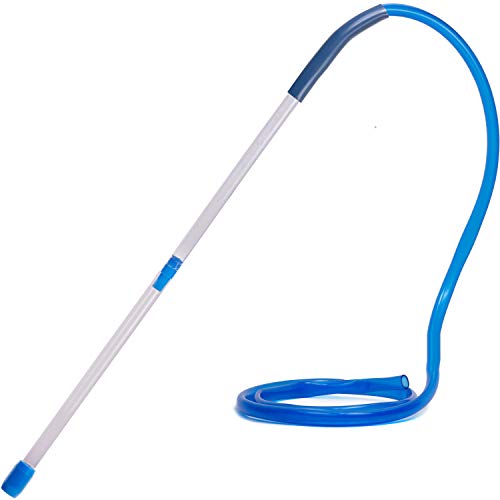
The Shake-a-Vac is the guide’s mechanical minimalist: its listing describes a spa and pool water vacuum and self-starting siphon drain for hot tubs. A siphon vacuum works on water power alone — prime it with the shaking motion its name describes, and the falling water column pulls debris through and out. There is no battery to charge, no motor to fail, and as a bonus the same siphon drains the tub when water-change day arrives, which every hot tub owner faces several times a year. For covered porches without a convenient socket, rental properties, and anyone who prefers tools with nothing to break, this is a genuinely clever answer.
Strengths
- No battery, motor, or charging — it works whenever you pick it up
- Doubles as the tub’s drain tool on water-change day
- Simple mechanism with very little to wear out
Trade-offs
- Siphon cleaning discharges some water along with the debris
- Suction is gentler than a powered handheld — patience over power
- Needs a lower place for the discharge end to run to
| Detail | From the listing |
|---|---|
| Format | Siphon vacuum and drain |
| Start | Self-starting siphon |
| Power | None — water powered |
| Intended use (per listing) | Hot tubs, spas, pools |
The siphon trade is honest: you spend a little water to save all electricity and maintenance. In practice that suits the moments siphons get used — a pre-soak tidy of the footwell, a gritty corner before guests arrive, and the full drain it was born for. Technique is the whole learning curve: keep the intake under water, keep the outlet lower than the tub, and move slowly so you do not stir debris into suspension. Master those three and the Shake-a-Vac becomes the tool that is always ready, including the day every rechargeable in the shed is flat.
Shake-a-Vac ownership is the pleasure of the unbreakable: it hangs on a hook, works in January, works after a year in the shed, and asks for a rinse and nothing else. Owners develop the siphon knack within two sessions — prime, keep the intake submerged, keep the outlet low — and then own a skill as much as a tool. Its second career as the drain makes it the first thing reached for on water-change day, when it empties the tub without a pump to set up. In households with a powered handheld too, the siphon becomes the quiet insurance policy nobody regrets buying.
Best for: Owners who value zero-maintenance tools and want a drain helper in the same purchase / Not suited for: Anyone wanting powered suction for heavy sand and leaf loads
Check on Amazon — check the current price on Amazon for the exact configuration described above.

SWIMLINE HYDROTOOLS Venturi Pool Jet Vacuum — Best Hose-Powered Pick
The Swimline Hydrotools venturi vacuum is the oldest clever idea in small-water cleaning: connect a garden hose, and the water jet creates the suction that lifts debris into its collection area. Its listing describes a compact cleaner for inflatable and above-ground units, hot tubs, and spas, hose-connected, in blue. There is no battery to manage and no siphon to prime — if you have a hose near the tub, you have unlimited runtime, which suits a thorough clean after the cover has been off all weekend. It is also the natural fit for inflatable spas, whose owners already keep a hose nearby for filling.
Strengths
- Unlimited runtime while the hose runs — no charging discipline
- Compact head suits small tubs and tight spa corners
- Simple venturi mechanism with no motor or battery to maintain
Trade-offs
- Adds water to the tub as it cleans — plan the water level accordingly
- Needs a hose connection within reach of the tub
- Jet suction is steady rather than strong; heavy debris takes patience
| Detail | From the listing |
|---|---|
| Format | Venturi jet vacuum |
| Power | Garden hose water pressure |
| Intended use (per listing) | Inflatable and above-ground units, hot tubs, spas |
| Connection | Hose-connected |
Venturi vacuums reward realistic expectations. The suction is gentle and constant rather than dramatic, which is well matched to spa debris — dust, sand, hair, insects — and poorly matched to gravel pits. The water it adds is the consideration owners forget: a long session raises the level and dilutes chemistry slightly, so clean before a soak rather than after topping up, and check levels when you finish. For inflatable spas in gardens with a hose already in hand, it is arguably the most convenient format of all — no charging shelf, no siphon technique, just connect and clean.
The Swimline’s ownership is defined by proximity: it is brilliant if the hose lives near the tub and pointless if the hose lives across the garden, so owners either commit a short hose to the spa area or choose another format. Those who do describe the easiest cleans in this guide — connect, wander the tub slowly, disconnect — with no battery bookkeeping ever. The water it adds becomes part of the routine: clean before the weekly top-up and level check, and the dilution never registers. For inflatable spas filled by that same hose, it is less a purchase than a completion of the kit you already own.
Best for: Inflatable spa owners and garden tubs with a hose already nearby / Not suited for: Owners watching water chemistry tightly or lacking a nearby hose point
Check on Amazon — check the current price on Amazon for the exact configuration described above.
Comparison Table
| Pick | Badge | Key spec | Best for |
|---|---|---|---|
| POOL BLASTER Catfish Cordless Pool Vacuum | Best Overall | Cordless handheld vacuum | Most hot tub owners who want the simplest effective clean |
| KOKIDO Cordless Handheld Spa Hot Tub Pool Vacuum | Best With Pole Reach | Cordless handheld vacuum with pole | Deep tubs, deck-mounted spas, and anyone who prefers cleaning from dry land |
| INTEX Rechargeable Handheld Pool Vacuum 28620EP | Best for Inflatable Spas | Rechargeable handheld vacuum | Inflatable PureSpa owners and households with a small above-ground pool too |
| POOL BLASTER Max Cordless Pool Vacuum | Best Power Upgrade | Cordless handheld vacuum | Tree-covered spas, storm-prone gardens, and spa-plus-pool households |
| Shake-a-Vac Spa & Pool Water Vacuum | Best No-Battery Option | Siphon vacuum and drain | Owners who value zero-maintenance tools and want a drain helper in the same purchase |
| SWIMLINE HYDROTOOLS Venturi Pool Jet Vacuum | Best Hose-Powered Pick | Venturi jet vacuum | Inflatable spa owners and garden tubs with a hose already nearby |
How to Choose the Best Vacuum for Hot Tubs
The Four Formats, Honestly Compared
Cordless handhelds — the Catfish, Kokido, Intex, and Pool Blaster Max — are the mainstream answer: self-contained suction, no hoses, quick deployment. They differ in reach and strength, not in concept. Choose among them by whether you clean from inside the tub or the deck (pole length), and how heavy your debris falls (standard versus Max strength). Their shared weakness is the shared battery: a charging routine is part of ownership.
The other two formats delete the battery. The Shake-a-Vac’s siphon trades a little water for total readiness and doubles as your drain tool. The Swimline’s venturi trades added water for unlimited hose-powered runtime. Owners who hate charging things often end up happiest with one of these as their only tool, or as the always-ready backup beside a cordless — an inexpensive belt-and-braces combination this guide quietly recommends.
Reach, Runtime, and the Shape of Your Tub
Measure your cleaning posture before you buy. If you soak first and clean after, a bare handheld used from inside the tub is fast and precise. If you clean from the deck — before guests, in cold weather, fully dressed — pole length decides everything: the Kokido’s 6 ft pole covers most rigid tubs, and the Intex’s 94 in telescoping pole covers inflatables and wide decks. Runtime is rarely the constraint in a spa: even a thorough clean is measured in minutes, so the Catfish’s up-to-45-minute charge is several sessions of headroom.
Seat contours are the detail photos hide. Deep, sculpted seats trap grit in their curves, and a smaller head with brush assistance — the Kokido’s brush heads — works those curves better than a wide pool head. Flat-bottomed inflatables are the opposite case: any gentle suction head glides fine, and soft shells rule out aggressive scrubbing anyway.
Debris Diaries: Match the Tool to What Falls In
Under trees, your enemies are leaves and blossom — volume debris that rewards the Pool Blaster Max’s stronger appetite. On patios and decks, the enemy is grit and sand on feet, which every tool here handles, with brush heads helping where it settles into textured shells. Garden inflatables collect insects and grass, where long poles and gentle suction win. Indoor and covered tubs collect mostly dust and hair — the lightest tool you will actually use, used weekly, beats the strongest tool used monthly.
Whatever falls in, technique multiplies the tool: clean before the jets run, move slowly so debris lifts instead of billowing, and empty or rinse the collection chamber straight after. The how-to section below turns that into a routine.
How to Vacuum a Hot Tub Without Clouding the Water
Vacuuming a hot tub well is mostly about not stirring up what you are trying to remove. This five-step routine works with any tool in the guide and takes under ten minutes.
Step 1: Clean before the jets, not after
Debris sits settled in seat wells and the footwell while the water is calm — that is when it can be lifted cleanly. Running the jets first suspends everything into a cloud that takes an hour to settle again. Vacuum first, then run the jets and let the filter take its turn.
Step 2: Work from the cleanest area to the dirtiest
Start at the steps and upper seats, finish at the footwell where everything collects. Moving in that direction means debris you disturb drifts toward where you are heading, not back over finished seats.
Step 3: Move the head slowly, slower than feels necessary
A slow pass lets suction lift grit into the chamber; a fast pass pushes a bow-wave of water that shoves debris sideways and into suspension. With brush heads, slow passes are also when the bristles do their work on textured shells.
Step 4: Empty and rinse the tool immediately
Debris left sitting in a damp vacuum chamber is tomorrow’s smell. Empty it, rinse the filter or collection area as the maker directs, and — for cordless models — put it straight back on charge so the next session starts full.
Step 5: Finish with a level and chemistry glance
Siphon and venturi sessions move water out or in; check the level sits where it should, skim any surface stragglers the vacuum missed, and only then treat the water if your testing says it needs it. Vacuum first, chemistry second, soak third.
The Weekly Spa Routine That Prevents Big Cleans
Hot tubs rarely get dirty in a day; they get dirty in a month of skipped two-minute jobs. The routine that prevents the dreaded drain-and-scrub is short enough to attach to something you already do: after the week’s last soak, while the cover is open and the water is settling, vacuum the seats and footwell, skim the surface, and check the filter’s condition. Five minutes, weekly, and the tub’s physical cleanliness never gets ahead of you. Every tool in this guide was chosen to make that routine frictionless — charged and reachable, or battery-free entirely.
Monthly, add the detail pass: the waterline, the steps, around the jet housings and the filter bay, where biofilm-adjacent grime starts. Brush heads earn their place here. Quarterly rhythms — water changes, deep cleans — then become confirmations of a tub already kept well, rather than rescues of a neglected one. Owners who run this rhythm describe their spas the way tidy people describe their kitchens: never perfect, never a project.
Covers, Location, and Debris Prevention
The cheapest vacuum is the debris that never lands. A cover used religiously — not just owned — removes most leaves, insects, and garden fallout from the equation, and a cover lifter makes that religion easy to keep by removing the wrestling match. Where the tub sits matters almost as much: directly under a tree is a debris subscription, while a few feet of clearance, a pergola, or a gazebo cuts the falling load dramatically. The Pool Blaster Max exists for the subscriptions already paid; prevention is for everyone planning placement.
Feet are the other import route. A rinse bowl or a small foot bath by the steps, and a mat that actually gets used, keep the grit load — the sand that makes seats feel scratchy — at a fraction. Households with children will recognise this as the highest-leverage rule in spa ownership: thirty seconds of foot rinsing saves the vacuum sessions that grit otherwise schedules. Prevention and the weekly routine together are why some owners vacuum monthly and others weekly with the same trees overhead.
Water Chemistry Meets the Vacuum: Keeping the Jobs Separate
New owners often ask one tool to do two jobs, so the boundary bears repeating with specifics. The vacuum owns everything you can see and point at: grit in the footwell, leaves in the corner, sand on the seat, insects on the surface (with a skim net as its partner). Chemistry owns everything dissolved or suspended: sanitizer level, pH, the cloudiness that is really microscopic life or imbalance. When the water looks wrong but the shell is clean, test the water. When the water tests fine but the seats feel gritty, vacuum. Each problem is simple once it is assigned to the right department.
The two departments meet at the filter. Debris you vacuum never reaches the filter, which is why a vacuumed tub’s filter stays effective longer between cleans — the vacuum is the filter’s first assistant. Rinse the filter on its own rhythm, vacuum on the weekly rhythm in this guide, and test water on the maker’s rhythm, and the three routines together produce the state every owner wants: a tub that is simply ready, whenever anyone asks, without a project in between.
Safety Around Water and Electricity
A short, serious section, because these tools work where water and electricity meet. Cordless handhelds are the inherently safer format around a filled tub — no mains cable near water — which is one more reason they lead this guide. Charge them away from the tub’s splash zone, on a dry surface, and never handle a plugged-in charger with wet hands. Siphon and venturi tools remove electricity from the scene entirely. Whatever format you own, store it dry, inspect cables and housings seasonally, and retire any tool whose casing cracks — water finds cracks with opinions. Follow the maker’s own electrical guidance for your model over any general advice, including this paragraph: the listing and manual are the authority, and around water, authority is worth obeying.
One Last Check Before You Order
Before you order, answer the three questions that decide this category and ignore everything else for a moment. Where will you stand — in the tub, on the deck, or across the garden — and does the tool’s reach match that answer? What falls into your water — dust, grit, leaves, or all three — and does the tool’s strength match that answer? And will it be ready on your worst day — charged by routine, or battery-free by design? The Catfish, Kokido, Intex, Max, Shake-a-Vac, and Swimline each win a different combination of those three answers, which is why this guide refuses to crown one for everybody. Match your three answers to the reviews and the purchase makes itself; the weekly routine in this guide will do the rest for years.
A Final Word on Expectations
Set the expectation correctly and every tool here over-delivers: a hot tub vacuum keeps the shell honest between water changes, in minutes, with no drama. It will not rescue neglected water, and it was never meant to. Owners who keep that contract — vacuum for debris, testing for chemistry, cover for prevention — describe their tubs as the lowest-maintenance luxury they own. That description is available to you from the first weekly routine onward, whichever of the six formats above your three answers chose.
Common Buying Mistakes
Buying a full-size pool robot for a spa
Robots are built for open pool floors; seats, steps, and footwells defeat their navigation and their size. Spa-scale tools exist precisely because the big tools fail here.
Vacuuming right after a jet session
You will chase suspended debris in circles and conclude the tool is weak. Settle first, vacuum second — the order is the technique.
Letting the cordless live uncharged
A flat handheld at the moment guests arrive converts owners to the siphon. Charge after every use, or choose a battery-free format and skip the discipline entirely.
Expecting a vacuum to fix cloudy water
Cloudiness is chemistry and filtration, not debris. Vacuuming a cloudy tub improves the seats and changes nothing in the water; test and treat the water itself.
Scrubbing inflatable shells with stiff tools
Soft spa floors and walls mark and wear under aggressive brushes. Match tool aggression to shell type — gentle suction for inflatables, brushes reserved for rigid shells.
Final Recommendation
Most owners should buy the Pool Blaster Catfish and be done: it is the purpose-built, cordless, grab-and-go answer this category revolves around. Clean from the deck and take the Kokido; run an inflatable and take the Intex; fight leaves and storms and take the Pool Blaster Max. If charging discipline is your known weakness, the Shake-a-Vac siphon or the hose-powered Swimline will still be ready on your worst day — and the siphon earns double duty every water change.
Setting up a new spa space or upgrading the whole routine? These sibling guides cover the water it sits in and the comfort around it: Best 2 Person Portable Hot Tubs, Best Hot Tub Pillows, Best Pool Vacuums Automatic Or Suction Cleaners, Best Pool Vacuums For Vinyl Liner, and Best Inexpensive Hot Tubs.
Frequently Asked Questions
How often should I vacuum my hot tub?
Little and often wins: a two-minute pass after heavy use or once a week in normal use keeps seats grit-free. The footwell and seat wells collect debris continuously, so waiting until it looks dirty means weeks of sitting in it. A full clean belongs with your regular water-care rhythm and before guests.
Can I use a regular pool vacuum in a hot tub?
Full-size pool vacuums and robots are built for open floors and generally fail in spas — too big for seats and steps, and their hoses and cords are a wet-deck nuisance. The handheld, pole, siphon, and venturi formats in this guide exist because they fit spa scale. Small-pool handhelds like the Pool Blaster Max are the exception that crosses over well.
Do I need to drain the tub to vacuum it?
No — every tool here is designed to clean a filled tub, which is the point of owning one. Draining is for water changes and deep scrub days, a few times a year. The Shake-a-Vac is the handy overlap: it vacuums the filled tub and then serves as the drain when change day comes.
Will vacuuming fix cloudy or foamy water?
No. Cloudiness and foam are water chemistry and filtration issues. Vacuuming removes physical debris — grit, leaves, sand, insects — and keeps seats feeling clean, but the water itself needs testing and balancing. Keep the two routines separate and each stays simple.
Which vacuum is best for an inflatable hot tub?
The Intex 28620EP, made by the inflatable spas’ own brand for PureSpas, with a long telescoping pole for garden setups. The Swimline venturi is the other inflatable-friendly format if a hose is nearby. Avoid stiff brush heads on soft shells — gentle suction is the inflatable rule.
Cordless, siphon, or hose-powered: which is most reliable?
The battery-free pair — siphon and venturi — have the least to fail and are always ready, at the cost of moving some water. Cordless handhelds are more convenient per session and stronger, provided they live on their charger. Many experienced owners keep a cordless for routine cleans and a siphon for drains and dead-battery days.


