Disclosure: airfryerkitchensupply.com is reader-supported. When you buy through links on our site, we may earn an affiliate commission at no extra cost to you.
Where to buy
A vinyl liner is a skin, not a surface — it can be scuffed by aggressive brushes, torn by sharp cleaner edges and wrinkled by suction heads that seal too hard against it, so the shortlist for the best pool vacuums for vinyl liner pools favors cleaners whose listings position them for above-ground and vinyl pools, soft-contact handhelds you control by hand, and established robotic designs used gently. Every model below was confirmed before it earned a link, and the guide sections explain the liner-safety checks that matter more than any single product.
- Dolphin Nautilus CC Robotic Pool Vacuum — Check the current price on Amazon
- Polaris Vac-Sweep 65 Pressure Side Pool Cleaner — Check the current price on Amazon
- Dolphin E10 Robotic Pool Vacuum (2026 Model) — Check the current price on Amazon
- AIPER Seagull SE Cordless Robotic Pool Vacuum (2025) — Check the current price on Amazon
- Hayward Wanda the Whale Suction Pool Cleaner — Check the current price on Amazon
- POOL BLASTER Max Cordless Pool Vacuum — Check the current price on Amazon
Introduction: Best Pool Vacuums for Vinyl Liner, Honestly
Vinyl liner pools — most above-ground pools and a large share of in-ground ones — ask something specific of a vacuum: clean the floor without abusing the liner. The failure modes are all mechanical. A stiff brush scrubs pattern and print off the vinyl over a season. A suction head that parks itself and seals can pull a wrinkle into a floor or stress a seam. A cleaner with hard, sharp undersides can nick a liner that a season of sun has made less forgiving, and a pinhole leak at the floor is a miserable repair. None of this means vinyl pools are hard to vacuum — it means the right cleaner is a gentle one, matched to your pool’s shape and plumbing.
The six picks below cover the realistic options: two established Dolphin robotic cleaners that owners run on vinyl floors every day, a pressure-side cleaner whose listing names above-ground vinyl pools outright, a cordless flat-bottom robotic for above-ground pools, a suction character cleaner designed for above-ground use, and a handheld cordless vacuum that puts your own hand in charge of contact pressure. Each was verified, and where a listing does not itself claim vinyl compatibility, this guide says so and explains the practical checks — brush feel, edge condition, supervised first runs — that make the difference.
One honest framing note before the picks: no vacuum listing can certify your specific liner. Liner age, thickness, pattern and installation quality vary, and a cleaner that is kind to a new liner can still find the one weak seam in an old one. The buying guide covers how to assess your liner first, because the best pool vacuum for a vinyl liner is partly a product choice and partly a condition check.
In this guide
Quick Picks
Start with the Dolphin Nautilus CC if you want the proven robotic route, the Polaris 65 if your above-ground vinyl pool has the return fitting for a pressure-side cleaner, and the Pool Blaster Max if you prefer to control every pass yourself.
- Dolphin Nautilus CC Robotic Pool Vacuum — Best Overall: The established robotic default: wall-climbing with a scrubber brush and top-load filter access, listed for above and in-ground pools — run it supervised the first few times on any liner. — check price on Amazon
- Polaris Vac-Sweep 65 Pressure Side Pool Cleaner — Best Named for Vinyl: The only pick whose verified listing title says it outright — a pressure-side automatic cleaner for above ground vinyl pools, driven by your return line. — check price on Amazon
- Dolphin E10 Robotic Pool Vacuum (2026 Model) — Best Robotic for Above-Ground: A current-model Dolphin with an active scrubber brush and top-load filters, listed as ideal for above-ground pools up to 30 feet in length. — check price on Amazon
- AIPER Seagull SE Cordless Robotic Pool Vacuum (2025) — Best Cordless for Flat Floors: A cordless flat-pool robot with a 90-minute stated runtime and strong suction, listed for above-ground pools up to 40 feet — no cord to drag, no hose to manage. — check price on Amazon
- Hayward Wanda the Whale Suction Pool Cleaner — Best Budget Automatic: A suction cleaner for on-ground and above-ground pools whose listing promises installation in under ten minutes on a 32 ft hose — the character on top is for the kids, the gentle suction pattern is for the liner. — check price on Amazon
- POOL BLASTER Max Cordless Pool Vacuum — Best Handheld Control: A rechargeable handheld vacuum for in-ground and above-ground pools that puts contact pressure entirely in your hand — the safest possible answer for a liner you are worried about. — check price on Amazon
How These Picks Were Chosen
Candidates had to pass a contact test before anything else: what touches the liner, and how hard? Robotic picks needed established designs with scrubber brushes rather than abrasive pads, handhelds needed to put pressure under the operator’s control, and automatic suction or pressure cleaners needed listings that position them for above-ground pools — the Polaris earned its place because its verified title names above-ground vinyl pools directly. Every ASIN was then confirmed, matching the exact listing title to the product named in each review.
Cleaning coverage was weighed second: floor-only versus wall-climbing matters less on vinyl than contact quality, but run time, pool size limits stated in the listings, and whether the cleaner needs a booster pump or a particular fitting all decide whether a pick fits your pool at all. Finally, ownership effort counted — a cleaner that is gentle but so fiddly that it gets used monthly cleans worse in practice than a slightly simpler one used weekly, because algae and grit left sitting on a liner are their own kind of damage.
The 6 Best Pool Vacuums for Vinyl Liner Reviewed
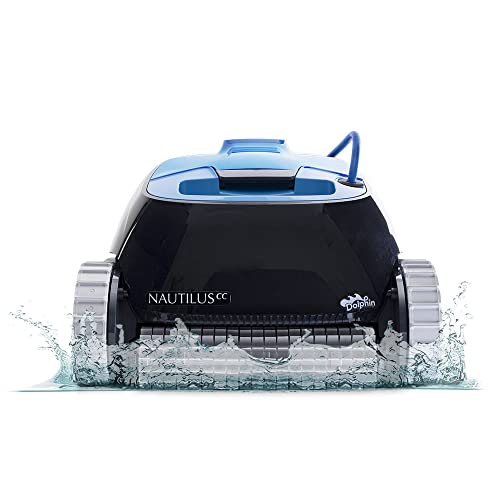
Dolphin Nautilus CC Robotic Pool Vacuum — Best Overall
This is the pick for the vinyl pool owner who wants to stop hand-vacuuming a whole floor every week. The Nautilus CC is one of the most widely owned robotic cleaners in its class, its listing describes a wall-climbing scrubber brush with top-load filter access, and robotic cleaning has a genuine liner argument in its favor: the machine distributes its weight on tracks, keeps moving instead of sealing onto one spot, and its brush is made to sweep debris rather than grind it. It suits in-ground vinyl pools and larger above-ground installations within its stated pool range. Owners of older, brittle or already-patched liners should read the trade-offs and the setup section before choosing any robotic route.
Strengths
- Established robotic design that keeps moving — no parked suction seal on the liner
- Top-load filter access makes the weekly empty genuinely quick
- Wall-climbing scrubber brush handles floor-to-wall corners where grit collects
Trade-offs
- The listing does not itself certify vinyl liners — inspect brush condition and supervise early runs
- Corded robotic format needs a power supply position and cable management
- Overkill for small above-ground pools, where the flat-bottom picks fit better
| Detail (from the verified listing title) | What it says |
|---|---|
| Format | Automatic robotic pool vacuum cleaner |
| Brush | Wall-climbing scrubber brush |
| Filter access | Top load |
| Pool fit in title | Ideal for above/in-ground pools (length limit in full listing) |
Running a robot on vinyl well is a routine, not a leap of faith. For the first three cleans, stay poolside: watch how it turns at the wall, confirm it does not sit spinning against one patch of floor, and check that the brush shows no hardened or damaged sections that could scuff. Keep the pool’s ladder and fittings in mind — robots climb and tug, and a liner already lifting at a fitting deserves a hand-vacuum around that spot instead. Between runs, rinse the filter basket promptly; a clogged robot works harder, pushes less water and scrubs longer in place. Treated that way, the Nautilus CC gives vinyl owners the thing they actually want: a consistently clean floor with the least human time spent dragging equipment across the liner by hand.
Best for: In-ground vinyl pools and larger above-ground pools needing weekly robotic cleaning / Not suited for: Very old, brittle or patched liners that should only meet a soft hand vacuum
Check on Amazon — check the current price on Amazon before you decide, because sizes, colors and configurations change.

Polaris Vac-Sweep 65 Pressure Side Pool Cleaner — Best Named for Vinyl
If your above-ground pool is a vinyl pool and you want the manufacturer to say so on the box, this is your cleaner. The verified listing title describes the Polaris Vac-Sweep 65 as a pressure-side automatic pool cleaner for above ground vinyl pools, and that positioning matters: pressure-side cleaners sweep and bag debris using water pressure from the return fitting rather than dragging suction across the floor, and this model has been the above-ground standard for years precisely because its contact with the liner is a gentle sweep rather than a scrub. It suits above-ground pools with a compatible return fitting and enough pump pressure to drive it.
Strengths
- Listing explicitly positions it for above ground vinyl pools
- Pressure-side design sweeps debris into its own bag instead of loading your filter
- Simple, proven mechanics with few electronic failure modes
Trade-offs
- Needs a suitable return fitting and adequate pump pressure to perform
- It sweeps and collects; it does not scrub algae film the way a brush does
- Hose and bag management is part of the ownership routine
| Detail (from the verified listing title) | What it says |
|---|---|
| Format | Pressure side automatic pool cleaner |
| Pool fit in title | For above ground vinyl pools |
| Model | Vac-Sweep 65, 6-130-00 |
| Brand (API) | Zodiac / Polaris |
The 65’s longevity in the above-ground market is itself evidence: vinyl pools punish cleaners, and a design that damaged liners would not have survived decades of above-ground seasons. Its cleaning style is a patrol — it moves around the floor and walls’ base, stirring fine debris toward its intake and trapping leaves and grit in its bag, which keeps that load out of your pump and filter entirely. Setup is the whole job: confirm the return fitting, set the pressure so the wheels turn at a sensible pace rather than racing, and check the tail sweep moves freely. Too much pressure makes any cleaner hustle and bump; too little leaves it parked. Dialed in, it is the lowest-attention cleaner on this list for the exact pool type this guide is about.
Best for: Above-ground vinyl pools with a compatible return fitting / Not suited for: In-ground pools, or pools whose pump cannot spare return pressure
Check on Amazon — check the current price on Amazon before you decide, because sizes, colors and configurations change.
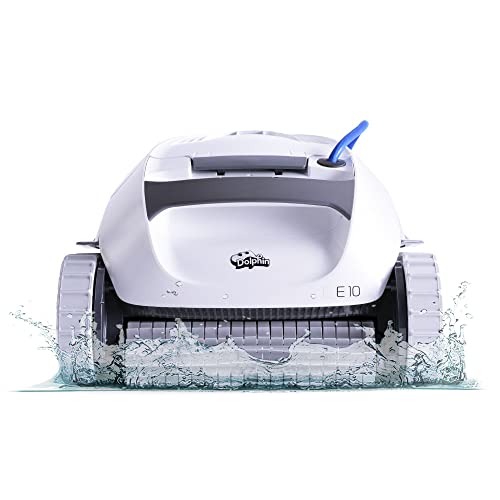
Dolphin E10 Robotic Pool Vacuum (2026 Model) — Best Robotic for Above-Ground
The E10 is the robotic answer sized for above-ground pools rather than adapted to them: its listing states it is ideal for above-ground pools up to 30 feet, with an active scrubber brush and top-load filter access. For a vinyl above-ground owner, that sizing matters twice — the machine is built for the shallower depths and simpler shapes of above-ground pools, so it is not dragging in-ground power and weight across a liner that sits on sand or foam, and its cleaning cycle matches the smaller floor area. It suits owners who want robotic convenience in a round or oval above-ground pool and are willing to supervise early runs as with any robot on vinyl.
Strengths
- Sized and listed specifically for above-ground pools up to 30 ft
- Active scrubber brush for the floor film hand vacuums miss
- Top-load filters keep the post-clean rinse quick
Trade-offs
- Above-ground focus means in-ground owners should choose the Nautilus instead
- Robotic contact still deserves supervised first runs on any liner
- Cord management on an above-ground deck takes a little planning
| Detail (from the verified listing title) | What it says |
|---|---|
| Format | Automatic robotic pool vacuum cleaner |
| Pool fit in title | Ideal for above-ground pools up to 30 FT in length |
| Brush | Active scrubber brush |
| Filter access | Top load |
Above-ground vinyl has one vulnerability in-ground vinyl mostly avoids: the floor beneath is often sand or foam coving, so point pressure dents rather than just scuffs. A right-sized robot spreads its work evenly and keeps moving, which is the correct behavior on such a floor. Help it by clearing the pool of large toys and the thermometer before a run, keeping the cable untangled so the machine completes its pattern instead of circling one quadrant, and lifting it out by its handle rather than its cord when the cycle ends. Check the brush and tracks after the first runs for trapped grit — a pebble embedded in a track is the one genuinely liner-threatening object in robotic cleaning, and a ten-second inspection removes the risk entirely.
Best for: Above-ground vinyl pools up to the stated 30 ft size / Not suited for: In-ground pools or above-ground pools well beyond its stated size
Check on Amazon — check the current price on Amazon before you decide, because sizes, colors and configurations change.

AIPER Seagull SE Cordless Robotic Pool Vacuum (2025) — Best Cordless for Flat Floors
Choose the Seagull SE when your above-ground vinyl pool has a flat floor and your priority is zero-friction cleaning: drop it in, let it run its stated 90 minutes, fish it out. The listing describes 1200GPH suction and positions it for above-ground pools up to 40 feet. Cordless operation removes the two annoyances that stop people cleaning — no power cord floating across the liner, no hose to coil — and a flat-bottom above-ground pool is exactly the geometry this class of cleaner handles best. It is a floor cleaner, not a wall climber, which on a vinyl above-ground pool is an acceptable and arguably liner-kind division of labor.
Strengths
- Fully cordless — nothing drags or floats across the liner
- Stated 90-minute runtime covers a full above-ground floor
- Flat-pool specialization matches above-ground vinyl geometry
Trade-offs
- Floor only — walls and waterline still need a brush by hand
- Slopes, wrinkles and deep footprints in the floor can confuse flat-pool navigation
- Battery care between seasons becomes part of ownership
| Detail (from the verified listing title) | What it says |
|---|---|
| Format | Cordless robotic pool vacuum |
| Runtime in title | Lasts 90 mins runtime |
| Suction figure in title | 1200GPH strong suction |
| Pool fit in title | Above-ground pool up to 40 feet |
Flat-pool cordless robots live or die on floor condition, and vinyl owners should hear that plainly: a liner floor with a pronounced wrinkle ridge, a deep heel dent or a steep cove transition can stall a small robot or send it circling. If your floor is genuinely flat — most well-installed above-ground pools are — the Seagull SE’s simplicity is delightful, and its gentle, wheeled contact is among the least threatening things you can put on a liner. Run it before a swim rather than after a storm, when a load of leaves will fill its chamber early; these machines excel at the frequent light clean that keeps grit — the real liner abrasive — from ever accumulating under swimmers’ feet.
Best for: Flat-floor above-ground vinyl pools needing frequent light cleans / Not suited for: Sloped, wrinkled or dished floors, or owners wanting wall cleaning
Check on Amazon — check the current price on Amazon before you decide, because sizes, colors and configurations change.

Hayward Wanda the Whale Suction Pool Cleaner — Best Budget Automatic
Wanda the Whale is the playful face on a serious budget category: suction cleaners that run off your pool’s own pump. The verified listing describes the W3900 as a suction pool cleaner for on-ground and above-ground swimming pools with easy installation in less than ten minutes and a 32 ft hose. Above-ground suction cleaners are designed around the modest pumps and flexible walls of above-ground pools, and their contact style — a soft, shuffling movement driven by suction pulses — is among the gentlest automatic patterns a vinyl floor can meet. It suits owners who already have a working skimmer suction line and want automatic cleaning at the lowest tier in this roundup.
Strengths
- Designed and listed for above-ground pools specifically
- Runs on your existing pump suction — no extra power supply or battery
- Among the lowest-cost routes to automatic cleaning in this guide
Trade-offs
- Suction cleaners can pause on obstacles and need a correctly set suction level
- Debris loads your pool filter, so filter cleaning becomes more frequent
- The character design will not suit every adult aesthetic — the cleaning is the point
| Detail (from the verified listing title) | What it says |
|---|---|
| Format | Suction pool cleaner, W3900 |
| Pool fit in title | For on-ground/above-ground swimming pools |
| Install claim in title | Easy installation in less than 10 minutes |
| Hose in title | 32 ft hose |
Suction level is the whole craft with a cleaner like Wanda. Too much suction and any suction head grips the liner harder than it should; too little and it stalls in the first corner. Set it at the lowest suction that keeps the cleaner shuffling steadily, watch a full circuit on day one, and re-check after you clean the filter, because a freshly cleaned filter raises suction and changes the balance. The whimsical shell hides a practical virtue for vinyl owners: these cleaners move slowly and softly, with no driven wheels grinding grit into the floor. For a small above-ground pool on a budget, that gentle shuffle, run a few times a week, keeps the floor cleaner than a heroic monthly hand-vacuum ever will.
Best for: Above-ground vinyl pools with skimmer suction and a tight budget / Not suited for: Pools with weak pumps, or owners who dislike filter-cleaning chores
Check on Amazon — check the current price on Amazon before you decide, because sizes, colors and configurations change.
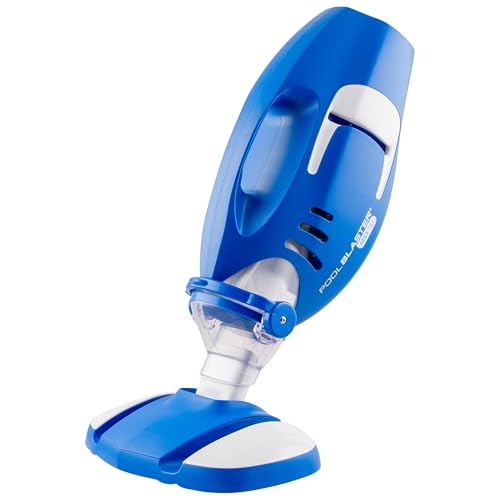
POOL BLASTER Max Cordless Pool Vacuum — Best Handheld Control
When the liner is old, patched, printed with a pattern you love, or simply the thing you worry about, the correct vacuum is the one you hold. The Pool Blaster Max is a cordless, hoseless handheld listed for in-ground and above-ground pools, with deep-cleaning suction in a rechargeable body that mounts on your own pole. You decide exactly how much pressure meets the vinyl, you steer around seams, fittings and that one suspect patch, and you spot-clean the grit line after a windy day instead of running a whole automatic cycle. It suits smaller pools entirely and larger pools as the precision partner to any automatic pick above.
Strengths
- Total operator control of contact pressure — the gentlest option for fragile liners
- Cordless and hoseless; no pump connection or priming ritual
- Perfect for steps, seams and spot debris where automatics are clumsy
Trade-offs
- Your time is the motor — a whole large floor by hand is real work
- Runtime and chamber size suit sessions, not marathon cleans
- No scrubbing action; algae film still needs a soft brush pass
| Detail (from the verified listing title) | What it says |
|---|---|
| Format | Cordless handheld pool vacuum, rechargeable |
| Pool fit in title | Inground and above ground pools |
| Design in title | Hoseless, by Water Tech |
| Use style | Deep cleaning and strong suction, handheld |
Handheld technique on vinyl is simple and worth stating: keep the head moving, let suction do the work instead of pressing down, and slow down over grit patches so debris lifts into the chamber instead of being pushed along the floor. Work from the shallow end toward the deep or main drain area so loosened fines drift where you will finish, and empty the chamber before it packs full, because a choked handheld loses the suction that makes it gentle. Paired with a soft brush for the waterline and steps, the Pool Blaster Max is a complete vinyl care system for small pools — and for owners of big pools, it remains the tool you will reach for after every storm, whatever robot you also own.
Best for: Fragile, patched or patterned liners, small pools, and spot cleaning anywhere / Not suited for: Large pools where whole-floor hand vacuuming is unrealistic weekly
Check on Amazon — check the current price on Amazon before you decide, because sizes, colors and configurations change.
Comparison Table
| Pick | Badge | Key detail | Best for |
|---|---|---|---|
| Dolphin Nautilus CC Robotic Pool Vacuum | Best Overall | Automatic robotic pool vacuum cleaner | In-ground vinyl pools and larger above-ground pools needing weekly robotic cleaning |
| Polaris Vac-Sweep 65 Pressure Side Pool Cleaner | Best Named for Vinyl | Pressure side automatic pool cleaner | Above-ground vinyl pools with a compatible return fitting |
| Dolphin E10 Robotic Pool Vacuum (2026 Model) | Best Robotic for Above-Ground | Automatic robotic pool vacuum cleaner | Above-ground vinyl pools up to the stated 30 ft size |
| AIPER Seagull SE Cordless Robotic Pool Vacuum (2025) | Best Cordless for Flat Floors | Cordless robotic pool vacuum | Flat-floor above-ground vinyl pools needing frequent light cleans |
| Hayward Wanda the Whale Suction Pool Cleaner | Best Budget Automatic | Suction pool cleaner, W3900 | Above-ground vinyl pools with skimmer suction and a tight budget |
| POOL BLASTER Max Cordless Pool Vacuum | Best Handheld Control | Cordless handheld pool vacuum, rechargeable | Fragile, patched or patterned liners, small pools, and spot cleaning anywhere |
How to Judge Whether a Cleaner Is Kind to Vinyl
Forget the marketing category and inspect three things: what touches the floor, how it moves, and what happens when it stops. Soft brushes, smooth wheels and rounded undersides are kind; abrasive pads, sharp molding edges and damaged or grit-embedded tracks are not. Movement should be continuous and unhurried — a cleaner that patrols distributes contact, while one that parks and seals concentrates suction on a single patch of vinyl, which is how wrinkles get pulled into floors. When any cleaner stops mid-pool, the question is whether it is gripping the liner or simply resting on it.
Your liner’s own condition outranks every product claim. A liner in its first seasons tolerates any pick in this guide used sensibly. A liner that is faded, stiff, patched or lifting at fittings deserves the handheld route and a gentle hand, whatever the budget allows elsewhere. Check seams and the cove — the curved transition where floor meets wall — before introducing any automatic cleaner, because that curve is where liners are thinnest-stressed and where cleaners climb, tug and turn.
- Run any new automatic cleaner supervised for its first three cleans
- Inspect brushes and tracks for trapped grit before every run
- Set suction cleaners to the lowest suction that keeps them moving
- Keep ladders, toys and thermometers out of robotic cleaners’ paths
- If the liner is patched or brittle, default to the handheld pick
Robotic, Suction, Pressure or Handheld: Which Suits Your Pool?
Robotics offer the best labor trade: they scrub lightly, filter on board and ask only for a rinse and a plug. On vinyl their kindness depends on condition checks — brush state, grit in tracks, supervised starts — and they reward owners who run them often and lightly. Suction cleaners are the budget automatics, borrowing your pump’s power; they move gently but load your filter and need their suction balanced. Pressure-side cleaners like the Polaris 65 sweep debris into their own bag using return pressure, a naturally soft contact style that above-ground vinyl pools have used for decades.
Handhelds are the control option: zero automation, total authority over pressure and path. The honest pattern for many vinyl owners is a pairing — an automatic for the weekly floor, a handheld for seams, steps and storms. Choose based on your pool’s plumbing reality first (do you have return pressure? healthy skimmer suction?), your liner’s age second, and your tolerance for chores third. A cleaner that matches all three gets used; one that fights any of them becomes garage furniture by July.
Liner Care Habits That Matter More Than the Vacuum
Grit is the enemy, not the vacuum. Sand and fine gravel tracked in on feet grind between soles and vinyl all swim long, so a quick foot rinse and regular vacuuming protect the liner more than any premium cleaner run rarely. Water chemistry is the second silent factor: chronically unbalanced water ages vinyl, fades print and makes the material less forgiving of any contact, so the test kit is a liner-care tool too. Keep the waterline clean with a soft brush — the scum line is where oils and sunscreen concentrate against the vinyl.
Finally, respect the off-season. Debris left sitting on a liner under a cover all winter can stain and stress it; a thorough vacuum before closing, with the handheld around seams and fittings, is the cheapest liner insurance in this entire guide. Open in spring with the same care, and your liner will meet whichever vacuum you chose in the condition that lets it last its full life.
Reading Your Liner Before You Read Another Review
Spend five minutes as your liner’s inspector before any vacuum decision, because the liner’s report outranks every product page. Note its age if you know it, and look at the waterline fade: a liner whose print has faded evenly is aging gracefully, while one that feels stiff or looks crazed at the fold lines is telling you to choose the gentlest tools in this guide. Run a hand along the cove and the seams you can reach; you are feeling for lifting edges, wrinkles that move under pressure, and patches whose borders have begun to lift — each one redraws the map of where an automatic cleaner may travel and where only your hand should go.
Check the floor with your feet while you are in the water. Grit you can feel is a cleaning schedule problem; a soft spot or a dip that has grown is a substrate problem that vacuuming will not fix and aggressive cleaning can worsen. Photograph anything questionable — a season of dated photos turns arguments with installers and warranty departments into short conversations. Then, and only then, pick your vacuum: the liner you actually have, in the condition it is actually in, matched against the contact styles this guide describes. That five-minute inspection is the highest-value step in the entire purchase.
Season Rhythm: How Vinyl Owners Actually Vacuum Across a Year
Spring opening is the deep-clean moment: debris that sat all winter comes up with the handheld and the soft brush, slowly, while you inspect the liner that winter may have changed. This is the one clean where thoroughness beats speed, because it is also your annual liner inspection — the two jobs are secretly the same job. Through the swimming season, the rhythm inverts: light, frequent, almost casual cleaning wins, with the automatic of your choice running weekly and the handheld answering storms, parties and the mysterious grit line that appears after every windy night.
Autumn closing mirrors the opening: a complete, patient vacuum before the cover goes on, because everything left on the liner in October is still there in May, older and more inclined to stain. Winter asks nothing of the vacuum and everything of the cover. Owners who adopt this rhythm discover the pleasant arithmetic of vinyl care — the in-season cleans get shorter every year, because a liner that never accumulates a season of grit never needs a heroic rescue, and heroic rescues are where liners get hurt.
Costs of Ownership: What Each Cleaner Type Really Charges You
The sticker is the smallest part of a pool cleaner’s cost, and vinyl owners should budget the whole picture before choosing a lane. Robotic cleaners concentrate their cost up front and then run on electricity and filter rinses; their consumable story is gentle — a basket or cartridge set on a long replacement cycle, a brush that wears slowly — and their repair story is the one to respect, because a robot is an appliance with a motor and a power supply, and out-of-warranty repairs are real money. The defense is the routine this guide keeps repeating: rinse after use, store the power supply out of the weather, never haul the machine by its cable, and the robot’s expensive years become its reliable ones.
Suction and pressure cleaners invert the math: the units are the cheapest in this guide, and the costs migrate to your pool’s existing systems. A suction cleaner spends your filter’s capacity and your pump’s hours — filter cleanings come more often, and a pump already near the end of its life will feel the extra duty. A pressure cleaner spends return pressure and asks for its bag and hose sections to be treated as consumables on a multi-season rhythm. The handheld spends the scarcest currency of all, which is your Saturday time, priced at whatever your weekends are worth. None of these is the wrong answer; they are different answers, and the vinyl owner’s job is to choose which currency — money, pump life or time — their household holds cheapest.
One more line belongs in every lane’s ledger: the liner itself. A cleaning approach that extends liner life by keeping grit off the floor and chemistry honest is not merely avoiding damage, it is deferring the single most expensive event in a vinyl pool’s life, which is liner replacement. Against that figure, every cleaner in this guide — including the flagship robot — is inexpensive, and the gentle habits that protect the liner are the highest-return maintenance a pool owner performs.
A Short Word on Algae, Stains and What Vacuuming Cannot Fix
Vacuuming removes what lies on the liner; it does not treat what grows in the water or stains from within it, and confusing the three wastes money in every direction. Algae film is a chemistry-and-brushing problem: the vacuum collects the loosened result, but the soft brush and balanced water do the actual work, and a pool that greens repeatedly is asking about sanitizer and circulation, not about a stronger vacuum. Organic stains from leaves left sitting are a patience problem — most fade across a season of balanced water once the source is removed — while metallic stains are a water-source question that no cleaner in this guide pretends to answer. Knowing which problem you have keeps the vacuum in its proper, honored place: the keeper of the floor, not the pool’s entire medical staff.
One Last Check Before the First Run
Before any new cleaner touches your water, do the thirty-second ritual that protects every liner in this guide: run your thumb along the cleaner’s contact surfaces and feel for anything sharp, gritty or proud — a molding edge, a trapped pebble, a hardened brush tip. Your thumb is a better inspector than your eyes for exactly the textures that mark vinyl. Then watch the first ten minutes of the first run from the deck, confirm the machine moves the way its design promises, and only then let it into your routine unsupervised. Two small habits, repeated without exception, are the difference between owners who call robotic cleaning the best money they spent on the pool and owners with a story. Be the first kind.
How to Vacuum a Vinyl Liner Pool Without Damaging It
The technique below works with any pick in this guide and takes one careful session to learn.
- Walk the pool first: remove toys, ladders if they lift out, and any large debris with a leaf net — vacuums are for grit and fines, not branches
- Inspect the cleaner’s contact surfaces — brush, wheels, tracks or head — for trapped grit, cracks or hardened edges, and rinse them clean
- For suction models, set suction to the lowest level that keeps the cleaner moving steadily; for robots, untangle the full cable so the pattern completes
- Work slowly and overlap passes; let suction lift debris rather than pressing the head into the floor
- Slow down further at seams, patches, the cove and around fittings — and switch to the handheld for any spot you do not fully trust
- Finish by emptying the cleaner’s bag, basket or chamber, rinsing the filter, and noting any liner change you spotted while the water was at its clearest
After vacuuming, run the pump long enough to polish the water you stirred up, and skim the surface once — the floor work always floats a little debris, and catching it now is easier than vacuuming it again next week.
Common Buying Mistakes
- Using a stiff or worn brush head meant for plaster or concrete pools on a vinyl floor
- Setting a suction cleaner to maximum and letting it seal itself to one spot
- Letting grit build up for weeks, then grinding it across the liner in one heroic clean
- Dragging a robotic cleaner out of the pool by its cable, stressing both machine and routine
- Ignoring a patched or lifting area and running an automatic cleaner straight over it
- Skipping the pre-close vacuum and leaving debris sitting on the liner all winter
Every one of these mistakes shares a theme: the damage attributed to ‘the vacuum’ is usually damage from pressure, grit or neglect. Gentle equipment, used often and inspected briefly, is the entire secret.
Final Recommendation
For most vinyl liner pools, the Dolphin Nautilus CC is the weekly workhorse — supervised at first, inspected in seconds before each run, and then simply reliable. Above-ground owners should look hard at the Dolphin E10 for a right-sized robot, the Polaris Vac-Sweep 65 for a pressure-side cleaner whose listing names vinyl pools outright, or the Aiper Seagull SE if your floor is flat and you want cordless simplicity. Wanda the Whale covers the budget automatic slot with a genuinely gentle suction shuffle.
And if your liner is the thing you worry about — old, patched, or just precious — the POOL BLASTER Max puts your own hand in charge, which no automatic can match for peace of mind. Whichever route you take, keep the grit from accumulating and the contact soft, and the liner will outlast the cleaner. Keep reading in this series: and.
Dolphin Nautilus CC Robotic Pool Vacuum · Polaris Vac-Sweep 65 Pressure Side Pool Cleaner · Dolphin E10 Robotic Pool Vacuum (2026 Model)
Best Pool Vacuums Automatic Or Suction Cleaners Best Swimming Pool Vacuums Best Economy Above Ground Pool Vacuums Best Affordable Pool Vacuums
Frequently Asked Questions
Are robotic pool cleaners safe for vinyl liners?
Widely used on vinyl, yes — with conditions. Choose an established design, inspect the brush and tracks for trapped grit, supervise the first few runs, and keep it away from patched or lifting areas. A robot that keeps moving is gentler than a parked suction head; a neglected robot with a damaged brush is not gentle at all.
Which cleaner type is gentlest on a vinyl liner?
A handheld vacuum you control yourself is gentlest, because pressure is entirely yours. Among automatics, pressure-side sweepers and correctly balanced suction cleaners have very soft contact, and well-maintained robots are a practical everyday choice for liners in good condition.
Can a pool vacuum wrinkle my liner?
A suction head that seals onto the floor at high suction can pull at the vinyl, which is why this guide insists on the lowest working suction and constant movement. Correctly set cleaners that keep shuffling or patrolling do not sit long enough to create that pull.
My liner is old and patched. What should I use?
The handheld route — in this roundup, the POOL BLASTER Max — with a soft brush for the waterline. Work around patches rather than over them, keep pressure light, and consider that an aging liner’s remaining life is extended more by gentle handling than by any cleaning power.
How often should I vacuum a vinyl pool?
Little and often wins: a weekly automatic run or a short handheld session keeps grit from accumulating, and grit under swimmers’ feet is the main abrasive threat to vinyl. Add a spot clean after storms or heavy use.
Do I still need to brush a vinyl pool if I have a robot?
Lightly, yes — the waterline, steps and cove benefit from a soft brush pass that robots reach imperfectly. Use a brush made for vinyl, keep it soft, and let the vacuum collect what you loosen.


