Disclosure: airfryerkitchensupply.com is reader-supported. When you buy through links on our site, we may earn an affiliate commission at no extra cost to you.
Where to buy
The best traditional smokers below were chosen format-first, then verified before any link was assigned. The linked smokers below were each verified — brand and model matched to the listed title — before receiving a link, and all are sold through Amazon in standard retail packaging. Traditional smokers are heavy, bulky freight, so confirm the delivery arrangement and the assembled dimensions on the listing, and plan where the smoker will live before it arrives: these machines reward a permanent, level, sheltered spot. One pick — the Smokin-It electric — is sold direct by its maker and is written unlinked, with buying guidance instead of a link.
- Weber Smokey Mountain 18″ — check price on Amazon; the listing page is also where you confirm the current colour, bundle and reservoir or jar configuration before ordering.
- Weber Smokey Mountain 22″ — check price on Amazon; the listing page is also where you confirm the current colour, bundle and reservoir or jar configuration before ordering.
- Oklahoma Joe’s Highland — check price on Amazon; the listing page is also where you confirm the current colour, bundle and reservoir or jar configuration before ordering.
- Pit Barrel Cooker 18.5″ — check price on Amazon; the listing page is also where you confirm the current colour, bundle and reservoir or jar configuration before ordering.
- Dyna-Glo Wide Body Vertical Offset — check price on Amazon; the listing page is also where you confirm the current colour, bundle and reservoir or jar configuration before ordering.
- Smokin-It Electric Smoker — sold direct by the maker only — order from Smokin-It’s own store; no Amazon listing is linked for this brand, per the direct-sale precedent.
Budget for the ecosystem at purchase time: a fitted cover, a reliable dual-probe thermometer if your model lacks one, charcoal and wood chunks, and heat-safe gloves. Traditional smoking is a low-cost hobby after the machine, but those five accessories are the difference between a smooth first cook and a frustrating one.
The best traditional smokers make barbecue the way it has been made for generations: a real fire, real wood smoke, and a cook who manages both. No pellets fed by an auger, no app holding the temperature — just charcoal and wood, vents and patience. ‘Traditional’ in this guide means the classic formats that predate the electronics era: the bullet smoker, the offset, the drum, and the vertical offset — plus one honest exception, a direct-sale electric smoker included for readers who want traditional smoke flavour with traditional formats’ one modern concession.
These formats persist because they produce a flavour and bark that convenience machines chase and rarely match, and because the craft itself is the hobby for many cooks. The six picks below cover the tradition’s main dialects: Weber’s bullet in two sizes for the mainstream, Oklahoma Joe’s offset for the stick-burning experience at a sane price, the Pit Barrel drum for hanging-fire simplicity, Dyna-Glo’s wide vertical offset for capacity, and the Smokin-It electric — sold direct, written unlinked — for the reader who wants the flavour with the least fire management.
Set expectations before the picks: a traditional smoker asks for a learning season. Your first brisket will teach you more than any guide, temperatures will wander while you learn your pit’s vents, and that is the deal you are signing. What you get in return is mastery of a machine that can serve you for decades and food with a depth of smoke that starts conversations. If that trade sounds good, read on — this is your category.
In this guide
Quick Picks
- Best Overall Traditional: Weber Smokey Mountain 18″ — the bullet smoker that defines the mainstream tradition — two grates, a water pan, and famously steady temperatures once the vents are set.
- Best for Big Batches: Weber Smokey Mountain 22″ — the same bullet design at full size — whole packer briskets laid flat, party quantities of ribs and shoulders, still with the format’s steady manners.
- Best Traditional Offset: Oklahoma Joe’s Highland — the accessible stick-burner — a real horizontal offset with a side firebox, heavy cooking grates and room to learn genuine fire management.
- Best Drum Smoker: Pit Barrel Cooker 18.5″ — the drum that hangs meat over the coals — ribs and chicken cooked by dripping-fire flavour, with the simplest fire routine in traditional smoking.
- Best Vertical Capacity: Dyna-Glo Wide Body Vertical Offset — a wide vertical cabinet fed by a side offset firebox — shelf after shelf of capacity in a patio-friendly footprint.
- Best Hands-Off Electric: Smokin-It Electric Smoker — the direct-sale electric exception — stainless, insulated, and built for traditional smoke flavour with minimal fire management.
In short: the Weber Smokey Mountain 18 is the traditional smoker most people should buy; the Highland is the offset experience; the Pit Barrel is the easiest path to great ribs; the Smokin-It is the low-effort exception.
How These Picks Were Chosen
Picks were chosen on the traditional virtues: build quality and steel, temperature stability across a long cook, capacity in real food terms, how forgiving the format is while a cook learns it, and the maker’s support trail — replacement grates, covers, gaskets and parts that remain available for years. Every linked model was cross-checked by brand and model before a link was assigned.
One pick is deliberately unlinked. Smokin-It sells its electric smokers direct, following the same direct-sale pattern as Cookshack and Smokin Tex, and per the standing precedent for those brands it is written without a marketplace link and without any substitute product linked in its place. Its inclusion is flagged honestly in its review: it is the modern concession in a traditional guide, present because many readers want exactly that compromise.
Format balance was the other filter. A guide that listed six offsets would serve one dialect of tradition and mislead everyone else; this list spans bullet, offset, drum and vertical formats so the reader can choose a tradition, not just a product. Prices, star ratings and review counts are not printed anywhere in this guide — they change constantly and would mislead within weeks.
We also considered the second-hand reality of this category: traditional smokers hold value, and the models here are the ones a buyer can resell, gift or hand down with their support ecosystem intact. A smoker whose maker still sells its grates and covers in ten years is a different purchase from one whose parts vanish with a model cycle, and that long view is part of what ‘best’ means for equipment built to last decades.
The 6 Best Traditional Smokers
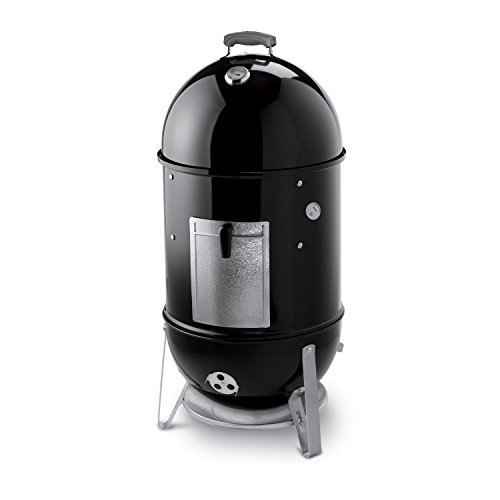
Weber Smokey Mountain Cooker 18-inch — Best Overall Traditional
The Smokey Mountain is the traditional smoker against which others are judged, and its bullet format is the reason: charcoal and wood chunks at the base, a water pan above the fire to buffer heat and humidity, and two cooking grates in a porcelain-enamelled steel tower. It is not exotic, and that is its genius — the design is so sorted that a beginner’s second cook can look like a veteran’s, while the aftermarket of accessories and knowledge around it is the deepest in charcoal smoking.
Strengths
- Exceptionally steady temperatures once vents are dialled in
- Two grates give real capacity in a small footprint
- Porcelain-enamel build and Weber parts support for the long term
Trade-offs
- Water pan refills on very long cooks are part of the ritual
- Door and seams can leak a little smoke until seasoned and settled
- Capacity is family-plus, not event-scale
| Style | Bullet (vertical water smoker) |
| Size | 18-inch, two cooking grates |
| Fuel | Charcoal + wood chunks |
| Build | Porcelain-enamelled steel |
The Smokey Mountain’s party trick is stability: light a measured amount of charcoal using the Minion method — unlit coals with a small lit portion on top — set the bottom vents, and the cooker will hold its cooking temperature for many hours with minimal touching. The water pan does quiet, essential work, absorbing spikes and keeping the chamber humid so brisket and pork shoulder stay moist through the stall. Everything about the machine is understood: gasket kits, hinge mods, and a generation of documented technique. If you buy one traditional smoker to learn on and keep, this is it.
Sizing honesty: the 18-inch handles a couple of briskets or several racks of ribs with rib racks, and it is the right size for most households. The 22-inch below exists for cooks who regularly fill it. Buy the 18 for its fuel efficiency and ease, and let a genuinely crowded grate — not an imagined one — argue you upward later.
Best for: most households learning and living with traditional smoking / Not suited for: event-scale cooks and offset purists
Check on Amazon — check the current price on Amazon before you decide, and confirm the exact configuration on the listing.

Weber Smokey Mountain Cooker 22-inch — Best for Big Batches
Everything said about the 18-inch applies here, enlarged. The 22-inch Smokey Mountain takes whole packer briskets without draping or trimming gymnastics, runs multiple pork shoulders per grate, and feeds a genuine gathering from one load. It is the traditional smoker for the household that hosts — the one whose barbecue calendar includes holidays, team parties and a freezer kept stocked with pulled pork.
Strengths
- Full-size grates fit packer briskets flat
- Same stable, well-documented bullet behaviour at scale
- Shares the deep Weber accessory and knowledge ecosystem
Trade-offs
- Uses noticeably more charcoal per cook than the 18-inch
- Bigger and heavier to move, clean and store
- Overkill — and slower to heat — for a single rack of ribs
| Style | Bullet (vertical water smoker) |
| Size | 22-inch, two cooking grates |
| Fuel | Charcoal + wood chunks |
| Build | Porcelain-enamelled steel |
The 22’s extra capacity changes the cooking programme, not just the portions: two-grate loads let you run brisket below and ribs above on staggered timings, and the big water pan buffers the thermal mass of a full chamber. The cost is fuel and patience — a large bullet wants a full chimney routine and more charcoal per session, and running it half-empty for a weeknight rack of ribs is using a truck to buy milk. Cooks who regularly fill it call it the only smoker they need; cooks who do not should take the 18 and its efficiency.
If you compete or cook for crowds a few times a year, the 22 also pairs sensibly with its smaller sibling over time — big bullet for events, small bullet for family cooks — a combination many long-term owners arrive at. Start with the size your next three cooks need, and let the collection grow the honest way.
Best for: hosts, big families and batch cooks / Not suited for: small households and fuel-misers
Check on Amazon — check the current price on Amazon before you decide, and confirm the exact configuration on the listing.

Oklahoma Joe’s Highland Offset Charcoal Smoker — Best Traditional Offset
The Highland is where most stick-burners start, and it earns that role honestly: a horizontal cooking chamber, a side firebox you feed with charcoal and wood splits, heavy steel grates, and enough cooking area for a brisket-and-ribs programme. It is a traditional offset in the full sense — the fire is separate, the smoke travels, and the cook is the thermostat. No other format teaches fire craft like it, and no other pick here demands as much while it teaches.
Strengths
- Genuine offset fire management at an accessible level
- Large cooking area with a warming rack
- Heavy grates and a proper firebox with clean-out access
Trade-offs
- Offsets wander in temperature until your fire craft develops
- Thinner steel than premium offsets — wind and cold are felt
- Sealing and tuning mods are common owner projects
| Style | Horizontal offset smoker/grill |
| Cooking area | 900 sq in class (per Amazon title) |
| Fuel | Charcoal + wood splits |
| Extras | Side firebox, warming rack |
Run the Highland the traditional way: a charcoal base for coals, small splits for clean smoke, and feeding little and often rather than loading the firebox and walking away. Expect a hotter zone near the firebox and use it — crisping, finishing, or starting items that want more heat — while the far end cruises for the long meats. Owners commonly add gasket tape and latches as they learn; treat those as part of the offset hobby rather than defects, and the Highland becomes a teacher you will remember fondly even if you later buy thicker steel.
As a grill, the Highland’s chamber and firebox give direct-heat options most dedicated smokers lack, which suits households that want one big charcoal machine. But buy it for the smoking: judged as a stick-burning trainer and a family-capacity offset, it is the most instructive money in this guide.
Best for: aspiring stick-burners and offset-curious cooks / Not suited for: set-and-forget cooks and the impatient
Check on Amazon — check the current price on Amazon before you decide, and confirm the exact configuration on the listing.

Pit Barrel Cooker Premier Series 18.5-inch Drum Smoker — Best Drum Smoker
The Pit Barrel takes the ugly-drum tradition and refines it into a system: a porcelain-coated steel drum, a charcoal basket, and — its signature — hooks that hang ribs, chickens and more directly over the fire. Hanging changes everything: meat bastes itself as it drips onto the coals, cooks evenly on all sides, and fits in surprising quantity. The fire routine is the simplest in this guide — fill the basket, light it, hang the food, and let the drum’s fixed airflow do its designed work.
Strengths
- Hanging cooking gives unique flavour and remarkable capacity per footprint
- Simplest fire management of any traditional format here
- Proven drum design with a full hook/grate accessory system
Trade-offs
- Hanging suits many cuts, not all — large briskets use the grate
- Less temperature adjustability than vented bullets and offsets
- Drum format is a specialism; know you want it
| Style | Drum smoker (hang + grate cooking) |
| Size | 18.5-inch drum |
| Fuel | Charcoal (wood chunks optional) |
| Build | Porcelain-coated steel |
Ribs are the Pit Barrel’s manifesto: hung by the hook, they cook faster than on a grate, evenly end to end, with a fire-kissed flavour that drum devotees describe as the taste of barbecue before gadgets. Chickens hang beautifully too, and the grate handles everything else. The drum runs at its own designed temperature rather than a dialled one, which traditionalists either love as honesty or find limiting — taste the results at a friend’s cookout if you can. For cooks whose menu is ribs, chicken and shoulders, it is arguably the most enjoyable machine in this guide.
The smaller Junior model exists for tight spaces, but the 18.5 is the one to buy: capacity is the drum’s advantage and the standard size keeps it. Keep the hooks organised, the basket ash emptied, and the drum seasoned, and it will produce the most complimented ribs in the neighbourhood with the least fire drama in this entire list.
Best for: ribs and chicken devotees, and cooks who want simple fires / Not suited for: temperature-control perfectionists
Check on Amazon — check the current price on Amazon before you decide, and confirm the exact configuration on the listing.

Dyna-Glo Wide Body Vertical Offset Charcoal Smoker (DGO1890BDC-D) — Best Vertical Capacity
The Dyna-Glo Wide Body answers the capacity question vertically: a tall, wide cabinet of adjustable shelves heated and smoked by an offset firebox at its side. Where a horizontal offset spreads food along a barrel, this design stacks it — briskets, shoulders, ribs and trays of sides in one footprint that fits a patio corner. For cooks who entertain and think in full menus rather than single centrepieces, the format is compelling.
Strengths
- Large multi-shelf capacity in a compact footprint
- Offset firebox keeps direct heat away from the food
- Adjustable shelves suit mixed menus and big cuts
Trade-offs
- Vertical cabinets stratify heat — top and bottom shelves cook differently
- Thin-gauge construction benefits from sealing and sheltered placement
- Firebox is charcoal-sized; it is not a split-burning offset
| Style | Vertical offset (cabinet + side firebox) |
| Shelves | Multiple, adjustable |
| Fuel | Charcoal + wood chunks |
| Footprint | Wide-body cabinet |
Cooking well on a vertical offset is a rotation discipline: learn your cabinet’s gradient — hotter low, gentler high, or the reverse on your unit — and schedule food through it, delicate items finishing where the heat is kind. The format shines for mixed loads: shoulders low, ribs mid, beans and sides wherever they fit, all taking smoke together. Keep the firebox ash cleared so airflow stays honest, use a water pan if your cooks run dry, and the Dyna-Glo delivers event-scale food from a footprint a horizontal offset cannot match.
Build expectations should be set by its class: this is accessible-capacity equipment, and owners who seal the door, add a good thermometer and site it out of the wind get results far above its station. If your cooking is measured in full shelves rather than single cuts, it is the most practical traditional capacity in this guide.
Best for: entertainers cooking full menus and big batches / Not suited for: single-cut minimalists and split-burning purists
Check on Amazon — check the current price on Amazon before you decide, and confirm the exact configuration on the listing.
Smokin-It Electric Smoker (Model 2 Class) — Best Hands-Off Electric
Every guide to traditional smokers eventually meets the reader who loves the flavour and cannot give weekends to a fire. The Smokin-It is that reader’s honest answer, included here as a pick without a link because the maker sells direct — the same pattern as Cookshack and Smokin Tex, the other respected direct-sale electric brands. Its stainless, insulated cabinet holds temperature electrically while real wood chunks provide genuine smoke; the craft moves from fire management to seasoning, timing and wood choice.
Strengths
- Real wood smoke with electric temperature holding
- Insulated stainless cabinet — efficient and weather-calm
- Sold direct by a maker known for supporting its owners
Trade-offs
- Not a fire-cooked smoker — the tradition here is flavour, not process
- Direct-sale purchase means no marketplace checkout or returns path
- Smoke intensity is gentler than a charcoal pit’s at full song
| Style | Electric cabinet smoker |
| Build | Stainless steel, insulated |
| Fuel | Electric heat + wood chunks |
| Sales channel | Direct from maker only |
Judge the Smokin-It by its own brief and it is superb: load the wood box, set the dial, and the cabinet holds its temperature through weather that would have a charcoal cook adjusting vents hourly. Briskets and shoulders emerge with real smoke rings and clean flavour, and the running cost is modest. What it will not give you is the fire itself — the tending, the coal bed, the stick-burner’s craft — which for this guide’s other readers is the entire point. Both positions are respectable; this pick exists so the hands-off reader is served honestly inside a traditional guide rather than sold a charcoal pit they will abandon.
If you shop this class, compare the direct-sale trio — Smokin-It, Cookshack and Smokin Tex — on cabinet size, insulation and the maker’s support reputation, and order from the maker’s own store. Do not let any marketplace listing substitute a different product under these names; the precedent in this programme is not linked precisely because these brands control their own channel.
Best for: flavour-first cooks who cannot tend a fire / Not suited for: process-first traditionalists
Sold direct by its maker; per the task brief’s standing precedent for Smokin-It / Cookshack / Smokin Tex, this pick is not linked and no substitute product is linked in its place.
Comparison Table
| Pick | Badge | Key spec | Best for |
|---|---|---|---|
| Weber Smokey Mountain 18″ | Best Overall Traditional | 18″ bullet, two grates, water pan | most households learning and living with traditional smoking |
| Weber Smokey Mountain 22″ | Best for Big Batches | 22″ bullet, two full-size grates | hosts, big families and batch cooks |
| Oklahoma Joe’s Highland | Best Traditional Offset | Offset, 900 sq in class cooking area | aspiring stick-burners and offset-curious cooks |
| Pit Barrel Cooker 18.5″ | Best Drum Smoker | 18.5″ drum, hanging-hook system | ribs and chicken devotees, and cooks who want simple fires |
| Dyna-Glo Wide Body Vertical Offset | Best Vertical Capacity | Vertical cabinet, offset firebox | entertainers cooking full menus and big batches |
| Smokin-It Electric Smoker | Best Hands-Off Electric | Electric insulated cabinet, direct-sale | flavour-first cooks who cannot tend a fire |
The table’s real lesson is format: bullet for balance, offset for craft, drum for hanging-fire flavour, vertical for stacked capacity, electric for hands-off. Capacity and fuel numbers matter second; the tradition you will actually practise matters first, because a traditional smoker is a hobby you inhabit, not an appliance you operate.
How to Choose a Traditional Smoker
Choose your tradition first. The bullet (Weber) is the balanced path — steady, forgiving, compact. The offset (Oklahoma Joe’s) is the craft path — the deepest smoke education and the most demanding fires. The drum (Pit Barrel) is the flavour path — hanging meat over coals, simple fires, a distinctive result. The vertical offset (Dyna-Glo) is the capacity path — shelves of food in a small footprint. The electric cabinet (Smokin-It) is the concession path — real smoke, minimal tending. Each is genuinely traditional in lineage; they differ in labour and dialect, and your weekends should decide.
Then be honest about build and budget as a pair. In charcoal smokers, money buys steel thickness, sealing and grate quality, and those buy temperature stability — the thing beginners struggle with most. A well-sealed mid-range smoker in a sheltered spot will out-cook a leaky premium pit in a gale. Site the smoker out of prevailing wind, on a level fire-safe surface, near enough to the kitchen to be used in February, because the best traditional smoker is the one that gets lit.
Size for your three typical cooks, not your biggest imagined one. A smoker run mostly empty wastes fuel and heats slowly; a smoker regularly overfilled cooks unevenly. Most households land on the 18-inch bullet class for a reason. Add the accessories that remove friction — cover, thermometer, gloves, a chimney starter — and you have the complete traditional toolkit.
- Balanced learner: bullet, 18-inch class
- Regular big batches: bullet 22-inch or vertical cabinet
- Fire craft: horizontal offset
- Ribs and chicken: drum
- Hands-off flavour: direct-sale electric cabinet
One more consideration belongs in every traditional purchase: the people you will feed while you learn. A forgiving audience — family, close friends, a club that eats anything — turns the apprenticeship into pleasure. Schedule your ambitious firsts accordingly, keep a reliable backup dish in the early cooks, and you will arrive at mastery with your reputation and enthusiasm intact.
Fire Management: The Traditional Skill
Every charcoal format in this guide runs on the same principles. Build a coal bed appropriate to the cook’s length — the Minion method for bullets and drums, a maintained coal base with splits for offsets. Add wood for smoke in chunks or small splits, favouring a clean, pale smoke over thick white billows, which taste bitter. Change one vent at a time and wait fifteen minutes before judging; chasing the thermometer with constant adjustments is the beginner’s defining error.
Fuel quality is half the skill. Lump charcoal burns hotter and cleaner; briquettes burn longer and steadier — both have devoted traditionalists, and consistency with one fuel beats switching. Wood must be seasoned and dry: oak, hickory, fruitwoods each bring a dialect, and green wood brings acrid smoke and regret. Store fuel dry, keep a cook log for your first season, and your tenth cook will be unrecognisably better than your first — that progression is the tradition working as intended.
How to Run Your First Traditional Cook
Make the first cook forgiving: a pork shoulder, the most tolerant cut in barbecue, on a day with no guests and no deadline. Season the smoker first if the maker directs it — a hot, empty, oiled run that burns off manufacturing residue and lays down the first seasoning. On cook day, start earlier than your estimate, hold the temperature in your target zone rather than on an exact number, and let the meat finish when it is tender, not when the clock says so.
- Season the smoker per the maker’s instructions before food ever enters it.
- Set up with fuel, water pan (where fitted), thermometer and gloves ready.
- Light a measured fire; stabilise the temperature before loading the meat.
- Season the pork shoulder simply — salt, pepper, your rub of choice.
- Cook in the zone, adjusting one vent at a time, spritzing if the surface dries.
- Rest the meat wrapped for at least an hour before pulling.
- Log everything: fuel, weather, timings, results. The log is your teacher.
After the cook, ash out when cold, oil the grates lightly, and cover the smoker once fully cool. Traditional equipment rewards this small liturgy with decades of service — there are bullets and offsets in regular use today that are older than their cooks.
Wood and Charcoal: A Traditionalist’s Fuel Guide
Wood choice is where traditional smoking becomes personal. Oak is the neutral backbone — clean, medium smoke that suits everything. Hickory is stronger and bacony, magnificent on pork and easy to overdo on poultry. Fruitwoods — apple, cherry — are milder and sweeter, the choice for chicken, fish and cheese. Mesquite is the boldest dialect, best in small proportions and short cooks. Most experienced cooks blend: oak for the fire’s body, a fruitwood or hickory accent for character.
Charcoal deserves the same care. Keep it dry — damp charcoal is the hidden cause of many ‘my smoker won’t hold temperature’ mysteries — and buy in quantities you will turn over in a season. For offsets, think of charcoal as the coal-bed foundation and wood splits as both fuel and flavour; for bullets and drums, charcoal is the engine and chunks are the seasoning. Either way, the fire you build is the recipe before the recipe, and it is the skill this entire category exists to teach.
Seasoning, Maintenance and Making a Smoker Last Decades
A traditional smoker’s first fire should cook nothing but the smoker itself. The seasoning run — a hot burn with the interior lightly oiled, per the maker’s instructions — burns off manufacturing oils and lays down the first protective layer of polymerised seasoning that will deepen with every cook. Skipping it flavours your first brisket with the factory; doing it is the true start of ownership. From then on, the chamber’s blackened interior is not dirt to be scrubbed back to steel — it is the seasoning that protects the metal and steadies temperatures, and it should be maintained, not removed.
The maintenance rhythm is small and specific. Ash out after every cook, once cold: ash holds moisture against steel and is the leading cause of firebox rot. Scrape grates while warm, oil them lightly, and empty grease before it becomes a fire risk or a rancid flavour source. Keep the smoker covered and, if possible, sheltered; check door seals and touch up exterior rust spots annually with high-heat paint. Store charcoal dry and wood seasoned under cover.
Kept this way, traditional smokers are among the longest-lived appliances a household can own — there is no electronics package to obsolete them, and every wear part is replaceable. The decades-old bullets and offsets still cooking today are not survivors of gentle use; they are products of this exact rhythm of small, regular care. Budget ten minutes per cook for it, and your smoker will outlast several generations of gadget cookers.
Reading Smoke and Meat: Judging Doneness the Traditional Way
Traditional cooking runs on signals rather than screens, and learning to read them is the apprenticeship’s core. Smoke should be thin and pale, almost blue; thick white smoke means a smothered or dirty fire and bitter food ahead. The fire’s sound and the coal bed’s look — glowing, ashed-over, alive — tell an experienced cook more than a thermometer does. Meat speaks too: bark that has set firm and dark before wrapping, fat that renders to a jelly softness, bones that begin to loosen in a shoulder or rack.
Doneness itself is a texture before it is a number. Brisket is done when a probe slides through the thickest part with the resistance of warm butter, in several places, not at one lucky spot. Pork shoulder is done when the bone wiggles freely and the meat yields to a gentle pull. Ribs are done when the rack bends and the meat cracks at the bend, or when a toothpick passes between bones without resistance. Temperatures guide you to the neighbourhood; tenderness decides the address.
None of this requires talent — it requires cooks, plural, and attention. That is why this guide keeps returning to the log book and the forgiving first season: the signals are learnable, they are the same on a bullet as on an offset, and once your hands know them, no electronic aid will ever cook better than you do. That mastery, portable to any pit on earth, is the real product a traditional smoker sells.
Common Buying Mistakes
The beginner’s catalogue of errors is well worn because everyone makes them: thick white smoke from a smothered or green-wood fire, vent-chasing every five minutes, opening the lid to admire the meat every half hour (‘if you’re looking, it isn’t cooking’), and cooking to the clock instead of to tenderness. Add buying the biggest smoker first, and placing it where the wind owns it, and you have the full set — all survivable, all avoidable with this guide open.
- Skipping the seasoning run on a new smoker
- Using lighter fluid, whose taste never fully leaves the chamber
- Overfilling the chamber so airflow — the real engine — chokes
- Trusting the lid thermometer as gospel; verify with a grate-level probe
- Storing the smoker uncovered with ash inside, which corrodes steel
The meta-mistake is impatience with the learning curve itself. Traditional smoking is a craft with a season-long apprenticeship; the cooks who accept that become the neighbourhood’s barbecue legends, and the ones who do not sell nearly-new smokers every spring.
Final Recommendation
Buy the Weber Smokey Mountain 18 if you want the tradition’s best-balanced teacher and keeper; the 22 if your cooks are regularly big. Buy the Oklahoma Joe’s Highland if the offset craft itself calls to you, the Pit Barrel if ribs and chicken are your religion, and the Dyna-Glo Wide Body if your entertaining needs shelves of capacity. And if your life honestly has no room for fire-tending, the Smokin-It — bought direct from its maker — will give you real smoke and your weekends back.
Whichever you choose, commit to the season of learning: keep the log, season the pit, burn good fuel, and cook for forgiving audiences first. Traditional smokers repay that commitment like nothing else in outdoor cooking — with mastery, with longevity, and with barbecue that tastes like it was made by a person, because it was.
A closing word on value: traditional smokers are bought in a market full of electronic alternatives at similar money, and they win their buyers on a promise those machines cannot make — that the cook, not the cooker, will be the reason the barbecue is great. If that promise excites you more than it daunts you, you have already chosen correctly; the only remaining decision is which tradition to apprentice in, and this guide’s six answers are the ones a decade of owners would give you.
Start this weekend, start simple, and let the tradition do what it has done for every cook before you.
Start with these three and compare the listings side by side: Weber Smokey Mountain 18″, Weber Smokey Mountain 22″, Oklahoma Joe’s Highland, Pit Barrel Cooker 18.5″, Dyna-Glo Wide Body Vertical Offset. Each opens its Amazon page, where you can check price on Amazon and confirm the current configuration.
Keep exploring the cluster: Best Towable Smokers Best 48 Trailer Smokers Best Backyard Charcoal Smokers Best 30 Inch Electric Smokers Best Affordable Smokers
Frequently Asked Questions
What makes a smoker ‘traditional’?
A traditional smoker cooks with a real charcoal or wood fire that the cook manages manually — no auger-fed pellets, no electronic temperature holding. The classic formats are the bullet, the offset, the drum and the vertical smoker, all represented here. The one electric pick, the Smokin-It, is included transparently as the hands-off exception: it burns real wood for smoke but holds temperature electrically, and it is sold direct by its maker.
Which traditional smoker is easiest for a beginner?
The bullet format — the Weber Smokey Mountain — is the most forgiving teacher: stable temperatures, a water pan buffering mistakes, and the deepest pool of documented technique to learn from. The Pit Barrel is a close second for ribs and chicken because its fire routine is so simple. Offsets are the most rewarding and the most demanding; most beginners thrive by starting on a bullet and adding offset skills later.
How long does a brisket take on a traditional smoker?
Plan on roughly an hour to an hour and a half per pound at typical low-and-slow temperatures, with wide variation by the individual cut, the smoker’s stability and the weather. The honest answer is that brisket is done when it is tender — probes slide in with little resistance — and experienced cooks budget generous extra time and rest the meat, rather than promising a table an exact hour. Resting is part of the cook, not an afterthought: a brisket rested an hour or two, wrapped and held warm, slices juicier and more tender than one cut in haste at the pit.
What wood should I start with?
Oak chunks are the safest foundation: clean, medium smoke that flatters everything. Add hickory for pork if you like a stronger, bacony note, and fruitwoods like apple or cherry for poultry. Avoid green or resinous woods entirely, keep quantities modest — a few chunks per cook in a bullet or drum — and remember that a clean-burning fire matters more than the species: thin, pale smoke is the goal.
Why is the Smokin-It pick unlinked, with no Amazon link?
Because Smokin-It sells its smokers direct through its own store, like Cookshack and Smokin Tex in the same class. Rather than link a substitute product or a marketplace listing of uncertain origin, this guide describes the machine honestly and points you to the maker — the standing precedent for these direct-sale brands across this site.
Do traditional smokers work in winter?
Yes — cold weather is where build quality shows. Insulated and thick-steel designs hold temperature calmly; lighter smokers burn more fuel and dislike wind, so site them sheltered and allow extra time and charcoal. The bullet format with its water pan is a notably steady winter performer, and the insulated electric cabinet is indifferent to season altogether. Many traditionalists consider winter cooks the most enjoyable of the year.
How do I stop my smoker’s temperature from swinging?
Work through the causes in order: wind exposure (site the smoker sheltered), fuel inconsistency (one fuel, dry, added in small amounts), air leaks (check door seals), and vent-chasing (change one vent, wait fifteen minutes). A water pan where the format supports one buffers swings noticeably. Most ‘unstable’ smokers are stable designs being fought by their operator’s impatience — the log from your first season will show your own pattern, and fixing it is the craft.
Charcoal briquettes or lump — which is more traditional?
Both have long histories and devoted camps. Briquettes burn longer and more evenly, which suits long bullet and drum cooks; lump burns hotter and cleaner-tasting, with more variation piece to piece. Consistency matters more than ideology: pick one fuel, learn its behaviour in your smoker across a season, and your results will beat a fuel-switcher’s every time. For offsets, charcoal of either kind is the coal bed — the wood splits are the flavour and much of the fire.


