Disclosure: airfryerkitchensupply.com is reader-supported. When you buy through links on our site, we may earn an affiliate commission at no extra cost to you.
Where to buy
If you are shopping for the best tilt chairs, the fastest route to any verified pick in this guide is Amazon, where each listing carries its own current availability and delivery options. Picks with a verified ASIN are linked directly below and throughout the article — check price on Amazon at the listing, because this guide prints no static prices. Any slot marked as a pick slot has no verified link yet and is labelled as such rather than linked to a guess.
Best Overall: SONGMICS Ergonomic Mesh Office Chair — 90-105° Tilt Function — check price on Amazon
Best Tilt Range for Big and Tall: GABRYLLY Ergonomic Office Chair — 90-120° Tilt Lock — check price on Amazon
Best Deepest Tilt: YORSERNY Mesh Office Chair — 90-135° Tilt Lock — check price on Amazon
Best Proven Design: SIHOO M18 Ergonomic Office Chair — Tilt Lock — check price on Amazon
Best Premium Tilt: FLEXISPOT ErgoX Premium Ergonomic Office Chair — Recline & Tilt — check price on Amazon
Best Stepped Tilt: CAPOT Ergonomic Mesh Office Chair — 3-Level Tilt Backrest — check price on Amazon
Shopping for the best tilt chairs means reading titles the way this guide read them: every claim below traces to a verified listing title, and anything a title does not state is marked Not stated instead of being filled in. Tilt is a mechanism, not a style, and this search lives or dies on whether the mechanism is actually named. A tilt chair lets the backrest — and sometimes the seat with it — recline against adjustable resistance, and lock or float at an angle. This guide only admits chairs whose verified titles say tilt, tilt lock, tilt function or tilt back in so many words. That rule lands the list where the tilt market honestly lives: at the desk. Every pick below is an office or task chair with its tilt range or tilt style printed in its title, and the angles are reproduced exactly as titled. If you came here hoping for tilt lounge furniture, the honest news is in the companion guide’s sources: true tilt-plus-lounge listings are rare, and this article will not dress ordinary recliners up as tilt chairs to fill space.
That discipline costs a little speed and buys a lot of trust. Listings change, colours multiply, and the same product appears under near-identical names, so this guide deduplicates variants, counts each distinct product once, and tells you where a judgement call was made. The result is a shorter, more honest list than the keyword usually gets — six picks, each one defensible, each one labelled with what it is and what it is not.
In this guide
Quick Picks
- Best Overall — SONGMICS Ergonomic Mesh Office Chair — 90-105° Tilt Function: Desk workers who tilt to think, type and take calls without leaving work posture. Check price on Amazon
- Best Tilt Range for Big and Tall — GABRYLLY Ergonomic Office Chair — 90-120° Tilt Lock: Larger desk workers who want to lock a working lean and keep it. Check price on Amazon
- Best Deepest Tilt — YORSERNY Mesh Office Chair — 90-135° Tilt Lock: Workers who take real lean-back breaks at the same desk. Check price on Amazon
- Best Proven Design — SIHOO M18 Ergonomic Office Chair — Tilt Lock: Buyers who value a proven model over the widest spec sheet. Check price on Amazon
- Best Premium Tilt — FLEXISPOT ErgoX Premium Ergonomic Office Chair — Recline & Tilt: Desk workers who nap or decompress at their desk between sessions. Check price on Amazon
- Best Stepped Tilt — CAPOT Ergonomic Mesh Office Chair — 3-Level Tilt Backrest: Heavy sitters and shared-desk offices wanting repeatable tilt positions. Check price on Amazon
How These Picks Were Chosen
Every product in this guide was verified against Amazon listing data: searched by product type, matched by its returned title, and recorded with its ASIN and the exact title wording. Only listing-confirmed products received Amazon links. Products that failed the category rule were excluded even when they were popular, and products whose titles were truncated or ambiguous in the listing return were flagged rather than completed by guesswork.
Within the verified shortlist, picks were spread across the real needs inside the search: a best overall, a budget-leaning or value format where the market offers one, and picks for the specific situations the search implies. Badges are consistent between the Quick Picks, the reviews and the comparison table, so you can trace any recommendation end to end. No pick was admitted for being easy to describe, and no specification appears in this article unless a verified title states it.
The 6 Best Tilt Chairs
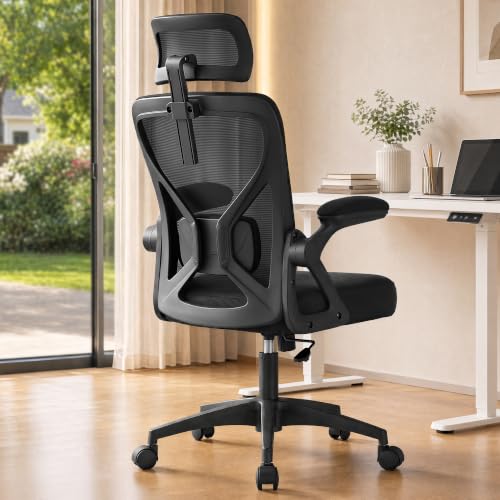
SONGMICS Ergonomic Mesh Office Chair — 90-105° Tilt Function — Best Overall
This pick earns its badge on the strength of what its verified title actually promises. The listing describes it as follows: SONGMICS Ergonomic Mesh Office Chair with Adjustable Lumbar Support | Computer Desk Chair, Headrest, 90-105° Tilt Function, Wide Seat, Flip-Up Armrests, Ink Black, KIME Collection. Everything in this review traces back to that wording — features named there are discussed, and anything the title leaves out is treated as unknown rather than assumed in the product’s favour.
Strengths
- The tilt range is printed numerically in the title — the gold standard for this search
- A modest 15 degree range suits working tilt rather than lounging lean
- Flip-up armrests let the chair tuck under a desk between sessions
Trade-offs
- 90-105 degrees will disappoint anyone wanting a deep recline
- Mesh back comfort is airy but firm
- Lumbar wording is the seller’s title language, reported as such
Key specs (as titled): Tilt: 90-105 degrees Tilt Function per title; back: mesh per title; extras: headrest, flip-up armrests, wide seat per title
In daily use, the question is whether this product’s titled strengths line up with your routine. Read the trade-offs as seriously as the strengths: they are not disclaimers, they are the description of the household this product will quietly frustrate. If none of the trade-offs touches your situation, this is a strong candidate for the best tilt chairs shortlist. If one of them describes your exact circumstances, the next pick exists precisely for you — the guide is built as a set of honest alternatives, not a single crowned winner with five runners-up.
Ownership notes: live with the titled facts for a moment and picture the ordinary week, not the delivery day. Where will this piece stand, fold, stack or park when it is not in use? Who moves it, and how heavy or awkward is that move likely to be given its titled format? What gets cleaned, wiped, tightened or stored, and how often? The SONGMICS Ergonomic Mesh Office Chair — 90-105° Tilt Function answers those questions through the lens of its own listing: its strengths above are the titled reasons it will fit a routine, and its trade-offs are the titled reasons it might not. Buyers who rehearse the ordinary week in this way rarely return furniture, because the mismatch that causes returns is almost always visible in advance to anyone who looks past the first impression and reads the trade-offs as a description of their own home rather than as fine print written for somebody else.
Best for: desk workers who tilt to think, type and take calls without leaving work posture / Not suited for: anyone shopping for a reading or TV recliner
Check on Amazon — check price on Amazon

GABRYLLY Ergonomic Office Chair — 90-120° Tilt Lock — Best Tilt Range for Big and Tall
This pick earns its badge on the strength of what its verified title actually promises. The listing describes it as follows: GABRYLLY Ergonomic Office Chair, High Back Home Desk Chair with Headrest, Flip-Up Arms, 90-120° Tilt Lock and Wide Cushion, Big and Tall Mesh Chairs for Man Woman, Black Task Chair. Everything in this review traces back to that wording — features named there are discussed, and anything the title leaves out is treated as unknown rather than assumed in the product’s favour.
Strengths
- A 30 degree tilt window with a lock, both stated in the title
- Big and tall framing with a wide cushion suits larger sitters
- Tilt lock lets you park an angle instead of holding it with your legs
Trade-offs
- Still a task chair’s recline, not a lounge chair’s
- High back plus headrest needs desk clearance behind when tilted
- Black is the titled colour
Key specs (as titled): Tilt: 90-120 degrees Tilt Lock per title; format: big and tall per title; seat: wide cushion per title; back: high back mesh per title
For GABRYLLY Ergonomic Office Chair specifically, start with the checkable detail: its listing states Tilt as 90-120 degrees Tilt Lock per title. That detail sits behind the first strength noted above — a 30 degree tilt window with a lock, both stated in the title — so test the pick against it rather than against the badge alone. The limiting side is just as concrete: still a task chair's recline, not a lounge chair's. If that limit does not touch your routine, this pick's case is strong on its own stated terms; if it does, the next pick is the better fit for that reason, not as a runner-up.
Ownership notes: live with the titled facts for a moment and picture the ordinary week, not the delivery day. Where will this piece stand, fold, stack or park when it is not in use? Who moves it, and how heavy or awkward is that move likely to be given its titled format? What gets cleaned, wiped, tightened or stored, and how often? The GABRYLLY Ergonomic Office Chair — 90-120° Tilt Lock answers those questions through the lens of its own listing: its strengths above are the titled reasons it will fit a routine, and its trade-offs are the titled reasons it might not. Buyers who rehearse the ordinary week in this way rarely return furniture, because the mismatch that causes returns is almost always visible in advance to anyone who looks past the first impression and reads the trade-offs as a description of their own home rather than as fine print written for somebody else.
Best for: larger desk workers who want to lock a working lean and keep it / Not suited for: small desks in tight rooms — allow rear clearance for the tilt
Check on Amazon — check price on Amazon

YORSERNY Mesh Office Chair — 90-135° Tilt Lock — Best Deepest Tilt
This pick earns its badge on the strength of what its verified title actually promises. The listing describes it as follows: YORSERNY Mesh Office Chair, Ergonomic Office Chair, Home Office Desk Chairs with Headrest, 90-135° Tilt Lock and Breathable Backrest & Lumbar Support, 5D Armrest, Computer Chairs. Everything in this review traces back to that wording — features named there are discussed, and anything the title leaves out is treated as unknown rather than assumed in the product’s favour.
Strengths
- The deepest titled tilt in this guide at 135 degrees
- Tilt lock plus highly adjustable armrests suit long, varied sessions
- Breathable backrest suits warm rooms
Trade-offs
- At full tilt this is a break posture, not a typing posture
- 5D armrests add setup complexity — adjust them once, properly
- Support wording in the title is seller language, not a clinical claim
Key specs (as titled): Tilt: 90-135 degrees Tilt Lock per title; back: breathable mesh per title; armrests: 5D per title
What separates YORSERNY Mesh Office Chair in this line-up is a detail from its own listing: its listing states Tilt as 90-135 degrees Tilt Lock per title. Paired with it, note the second point in its strengths — tilt lock plus highly adjustable armrests suit long, varied sessions — because that is the part you will rely on once the novelty wears off. Weigh that against its clearest trade-off: at full tilt this is a break posture, not a typing posture. A buyer whose routine avoids that trade-off gets the benefit described here; a buyer whose routine runs straight into it should keep moving through the guide.
Ownership notes: live with the titled facts for a moment and picture the ordinary week, not the delivery day. Where will this piece stand, fold, stack or park when it is not in use? Who moves it, and how heavy or awkward is that move likely to be given its titled format? What gets cleaned, wiped, tightened or stored, and how often? The YORSERNY Mesh Office Chair — 90-135° Tilt Lock answers those questions through the lens of its own listing: its strengths above are the titled reasons it will fit a routine, and its trade-offs are the titled reasons it might not. Buyers who rehearse the ordinary week in this way rarely return furniture, because the mismatch that causes returns is almost always visible in advance to anyone who looks past the first impression and reads the trade-offs as a description of their own home rather than as fine print written for somebody else.
Best for: workers who take real lean-back breaks at the same desk / Not suited for: anyone whose desk sits against a wall with no tilt clearance
Check on Amazon — check price on Amazon

SIHOO M18 Ergonomic Office Chair — Tilt Lock — Best Proven Design
This pick earns its badge on the strength of what its verified title actually promises. The listing describes it as follows: SIHOO M18 Ergonomic Office Chair, Mesh Back Desk Chair with Headrest | Adjustable Lumbar Support, Hold 330lbs Computer Chair with 2D Armrests & Wide Cushion, Tilt Lock, for Home Office – Black. Everything in this review traces back to that wording — features named there are discussed, and anything the title leaves out is treated as unknown rather than assumed in the product’s favour.
Strengths
- A long-running, widely bought tilt-lock design
- 330lbs titled capacity covers most sitters
- Wide cushion and headrest suit full workdays
Trade-offs
- The title names Tilt Lock without a degree range — the range is Not stated here
- Mesh and foam feel is functional, not plush
- 2D armrests adjust less than the 5D pick above
Key specs (as titled): Tilt: Tilt Lock per title (range Not stated in title); capacity: hold 330lbs per title; armrests: 2D per title; seat: wide cushion per title
Judge SIHOO M18 Ergonomic Office Chair on the specification it actually publishes: its listing states Tilt as Tilt Lock per title (range Not stated in title). That is also why the strength about a long-running, widely bought tilt-lock design matters here and not in the abstract — it follows from the construction and format the listing states. The check before ordering is equally specific, covering capacity — hold 330lbs per title, and the trade-off to accept knowingly is this: the title names Tilt Lock without a degree range — the range is Not stated here. Confirm those two points on the listing page and you have judged this pick on evidence, not on general category promises.
Ownership notes: live with the titled facts for a moment and picture the ordinary week, not the delivery day. Where will this piece stand, fold, stack or park when it is not in use? Who moves it, and how heavy or awkward is that move likely to be given its titled format? What gets cleaned, wiped, tightened or stored, and how often? The SIHOO M18 Ergonomic Office Chair — Tilt Lock answers those questions through the lens of its own listing: its strengths above are the titled reasons it will fit a routine, and its trade-offs are the titled reasons it might not. Buyers who rehearse the ordinary week in this way rarely return furniture, because the mismatch that causes returns is almost always visible in advance to anyone who looks past the first impression and reads the trade-offs as a description of their own home rather than as fine print written for somebody else.
Best for: buyers who value a proven model over the widest spec sheet / Not suited for: spec shoppers who need a printed tilt range before buying
Check on Amazon — check price on Amazon

FLEXISPOT ErgoX Premium Ergonomic Office Chair — Recline & Tilt — Best Premium Tilt
This pick earns its badge on the strength of what its verified title actually promises. The listing describes it as follows: FLEXISPOT ErgoX Premium Ergonomic Office Chair Black-FT | Adjustable Armrests, Dynamic Lumbar Support, Recline & Tilt Function, Mesh with Footrest, Home & Office Use. Everything in this review traces back to that wording — features named there are discussed, and anything the title leaves out is treated as unknown rather than assumed in the product’s favour.
Strengths
- Recline and tilt are both named in the title
- A footrest turns deep tilt into a genuine break posture
- Mesh build keeps long sessions cooler
Trade-offs
- Tilt range is Not stated in the title — check the listing for degrees
- Footrest adds bulk under the desk
- Premium positioning in its range; buy it for the mechanism, not the badge
Key specs (as titled): Tilt: Recline & Tilt Function per title (range Not stated in title); extras: footrest per title; back: mesh per title; armrests: adjustable per title
For FLEXISPOT ErgoX Premium Ergonomic Office Chair specifically, start with the checkable detail: its listing states Tilt as Recline & Tilt Function per title (range Not stated in title). That detail sits behind the first strength noted above — recline and tilt are both named in the title — so test the pick against it rather than against the badge alone. The limiting side is just as concrete: tilt range is Not stated in the title — check the listing for degrees. If that limit does not touch your routine, this pick's case is strong on its own stated terms; if it does, the next pick is the better fit for that reason, not as a runner-up.
Ownership notes: live with the titled facts for a moment and picture the ordinary week, not the delivery day. Where will this piece stand, fold, stack or park when it is not in use? Who moves it, and how heavy or awkward is that move likely to be given its titled format? What gets cleaned, wiped, tightened or stored, and how often? The FLEXISPOT ErgoX Premium Ergonomic Office Chair — Recline & Tilt answers those questions through the lens of its own listing: its strengths above are the titled reasons it will fit a routine, and its trade-offs are the titled reasons it might not. Buyers who rehearse the ordinary week in this way rarely return furniture, because the mismatch that causes returns is almost always visible in advance to anyone who looks past the first impression and reads the trade-offs as a description of their own home rather than as fine print written for somebody else.
Best for: desk workers who nap or decompress at their desk between sessions / Not suited for: minimalist setups with no room for a footrest
Check on Amazon — check price on Amazon

CAPOT Ergonomic Mesh Office Chair — 3-Level Tilt Backrest — Best Stepped Tilt
This pick earns its badge on the strength of what its verified title actually promises. The listing describes it as follows: CAPOT Ergonomic Mesh Office Chair, Adjustable Lumbar High Back Desk Chair 400lbs, 4D Flip-up Arms, 3-Level Tilt Backrest, 3D Headrest, PU Wheels, Swivel Rolling Computer Chair for Long Desk Work. Everything in this review traces back to that wording — features named there are discussed, and anything the title leaves out is treated as unknown rather than assumed in the product’s favour.
Strengths
- Stepped tilt levels are predictable — the same three angles every day
- 400lbs titled capacity is the highest in this guide
- Flip-up arms plus swivel rolling format suits shared desks
Trade-offs
- Three fixed levels give less fine control than a free-float tilt with tension
- Degrees per level are Not stated in the title
- Feature-dense chairs reward a careful first setup
Key specs (as titled): Tilt: 3-level tilt backrest per title; capacity: 400lbs per title; armrests: 4D flip-up per title; headrest: 3D per title
What separates CAPOT Ergonomic Mesh Office Chair in this line-up is a detail from its own listing: its listing states Tilt as 3-level tilt backrest per title. Paired with it, note the second point in its strengths — 400lbs titled capacity is the highest in this guide — because that is the part you will rely on once the novelty wears off. Weigh that against its clearest trade-off: three fixed levels give less fine control than a free-float tilt with tension. A buyer whose routine avoids that trade-off gets the benefit described here; a buyer whose routine runs straight into it should keep moving through the guide.
Ownership notes: live with the titled facts for a moment and picture the ordinary week, not the delivery day. Where will this piece stand, fold, stack or park when it is not in use? Who moves it, and how heavy or awkward is that move likely to be given its titled format? What gets cleaned, wiped, tightened or stored, and how often? The CAPOT Ergonomic Mesh Office Chair — 3-Level Tilt Backrest answers those questions through the lens of its own listing: its strengths above are the titled reasons it will fit a routine, and its trade-offs are the titled reasons it might not. Buyers who rehearse the ordinary week in this way rarely return furniture, because the mismatch that causes returns is almost always visible in advance to anyone who looks past the first impression and reads the trade-offs as a description of their own home rather than as fine print written for somebody else.
Best for: heavy sitters and shared-desk offices wanting repeatable tilt positions / Not suited for: users who prefer a free-floating tilt they can fine-tune
Check on Amazon — check price on Amazon
Comparison Table
| Pick | Badge | Key spec (as titled) | Best for |
|---|---|---|---|
| SONGMICS Ergonomic Mesh Office Chair — 90-105° Tilt Function | Best Overall | Tilt: 90-105 degrees Tilt Function per title; back: mesh per title; extras: headrest, flip-up armrests, wide seat per title | desk workers who tilt to think, type and take calls without leaving work posture |
| GABRYLLY Ergonomic Office Chair — 90-120° Tilt Lock | Best Tilt Range for Big and Tall | Tilt: 90-120 degrees Tilt Lock per title; format: big and tall per title; seat: wide cushion per title; back: high back mesh per title | larger desk workers who want to lock a working lean and keep it |
| YORSERNY Mesh Office Chair — 90-135° Tilt Lock | Best Deepest Tilt | Tilt: 90-135 degrees Tilt Lock per title; back: breathable mesh per title; armrests: 5D per title | workers who take real lean-back breaks at the same desk |
| SIHOO M18 Ergonomic Office Chair — Tilt Lock | Best Proven Design | Tilt: Tilt Lock per title (range Not stated in title); capacity: hold 330lbs per title; armrests: 2D per title; seat: wide cushion per title | buyers who value a proven model over the widest spec sheet |
| FLEXISPOT ErgoX Premium Ergonomic Office Chair — Recline & Tilt | Best Premium Tilt | Tilt: Recline & Tilt Function per title (range Not stated in title); extras: footrest per title; back: mesh per title; armrests: adjustable per title | desk workers who nap or decompress at their desk between sessions |
| CAPOT Ergonomic Mesh Office Chair — 3-Level Tilt Backrest | Best Stepped Tilt | Tilt: 3-level tilt backrest per title; capacity: 400lbs per title; armrests: 4D flip-up per title; headrest: 3D per title | heavy sitters and shared-desk offices wanting repeatable tilt positions |
How to Choose the Best Tilt Chairs
Tilt, tilt lock and recline are not synonyms
Tilt means the backrest moves through an angle, usually against spring tension you can adjust. Tilt lock means that angle can be fixed at one or more positions — the word lock in a title is worth real money on a long day. Recline is the broader, deeper lean, sometimes moving seat and back together. Titles in this guide use these words distinctly, and the reviews keep them distinct: a 90-105 degree tilt function is a working lean, while 135 degrees with a lock is a break posture. Read the mechanism words before the comfort adjectives.
How much tilt range do you actually need?
Typing and mouse work happen within a few degrees of upright. Thinking, reading and calls use a gentle lean. Breaks and video use the deep end. If your day is ninety percent typing, the SONGMICS range covers you and its narrower window keeps the chair feeling supportive. If you genuinely decompress at your desk, the deeper ranges earn their clearance. Be honest about the ratio — most buyers overestimate their reclining and underestimate how much of the day is spent bolt upright.
Tilt tension and body weight
A tilt mechanism is a spring negotiating with your weight. Too little tension and the chair dumps you backwards; too much and tilting feels like gym equipment. Chairs in this class set tension with a knob under the seat, and it needs setting once for your body, not once per session. Heavier sitters should favour chairs with stated capacities comfortably above their weight, because tilt mechanisms work hardest at the extremes of their range.
Clearance: the forgotten tilt specification
A tilted chair occupies space behind it that an upright chair does not. High backs with headrests sweep the largest arcs. Before ordering a deep-tilt chair, measure from your desk position to the wall, shelf or radiator behind you, and add the chair’s tilt travel. The number of home offices that discover this on delivery day is remarkable, and it is entirely avoidable with a tape measure and thirty seconds.
How to Set Up a Tilt Chair for Work
- Set seat height first: feet flat, knees near level, desk at elbow height.
- Adjust tilt tension until you can lean back smoothly and return without pushing off the desk.
- Find your working angle — usually a slight lean — and lock it if your chair offers tilt lock.
- Test the deepest tilt once, checking rear clearance and that your screen stays readable.
- Revisit the settings after a week; first-day preferences rarely survive real work.
Setup is where most furniture disappointment is actually born — not in the product, but in the first ten minutes of its life in your home. Work through the steps in order, on the floor and at the height the product will really live at, and resist loading, sitting a crowd on, or fully committing to any piece until the checks in the final step have passed. A careful first day prevents the wobble, lean or clearance problem that otherwise gets blamed on the product for years.
Common Buying Mistakes
The first mistake with best tilt chairs is buying from a photograph instead of a title. Photographs show styling; titles carry the verifiable claims — dimensions, capacities, mechanisms, pack counts — and this guide’s whole method is built on reading them literally. The second mistake is assuming a missing specification: if a dimension, capacity or feature matters to you and the title does not state it, treat it as unknown and check the full listing, because assuming in the product’s favour is how the wrong box arrives.
The third mistake is buying for the household you wish you had. Count the people, measure the room, and time the routines the product will actually serve. The fourth is ignoring the stored, folded, parked or put-away state — most furniture spends most of its life not in use, and a purchase that only works in its action photograph will irritate you in its resting state every day. The fifth is skipping the first-week check: hinges, fixings, bases and adjustments all settle, and ten minutes of attention in week one is the cheapest ownership upgrade there is.
Final Recommendation
For best overall needs, choose the SONGMICS Ergonomic Mesh Office Chair — 90-105° Tilt Function. For best tilt range for big and tall needs, choose the GABRYLLY Ergonomic Office Chair — 90-120° Tilt Lock. For best deepest tilt needs, choose the YORSERNY Mesh Office Chair — 90-135° Tilt Lock. For best proven design needs, choose the SIHOO M18 Ergonomic Office Chair — Tilt Lock. For best premium tilt needs, choose the FLEXISPOT ErgoX Premium Ergonomic Office Chair — Recline & Tilt. For best stepped tilt needs, choose the CAPOT Ergonomic Mesh Office Chair — 3-Level Tilt Backrest.
Whichever pick you choose, buy it against the titled facts, keep the category honesty notes in mind, and let the trade-off lists — not the badges — make the final call. Related guides in this programme: Best Office Chairs For Long Use; Best Office Chairs For Back And Posture; Best Office Chairs For Sit And Stand; Best Tilt Swivel Lounge Chairs.
A Closer Look at Living With This Choice
Consider three households shopping this same keyword. The first has measured everything and knows its constraint to the centimetre; for them the titled dimensions and capacities in this guide are the whole decision, and they should buy the pick whose printed figures fit and stop shopping. The second household is furnishing for a routine that is still changing — new home, growing child, shifting work pattern — and should favour the most adaptable pick, the one whose titled adjustments cover the widest range of futures. The third is replacing a previous purchase that disappointed them, and their most valuable information is the reason it disappointed: that reason, matched against the trade-off lists in this guide, is a sharper filter than any badge. Naming which household you are in turns a long guide into a short decision.
Budget thinking for this category works best in tiers rather than numbers. The budget tier buys the titled essentials and accepts plainer finishes and fewer adjustments. The mid tier buys comfort and durability where the product is used daily. The premium tier buys mechanisms, materials and capacities that only pay off under heavy, long or shared use. None of those tiers requires a printed price to be useful: decide your tier from how often and how hard the product will work, then check price on Amazon for the picks inside that tier, and let the tier — not a discount banner — discipline the choice.
Delivery day deserves a small protocol of its own. Photograph the box before opening if it arrives damaged. Keep every bag of fixings together until assembly is finished and checked. Build on a soft surface so finishes survive their first hour. Test the product empty and unloaded before its first real duty: sit, fold, tilt, swivel, stack or adjust it through its full titled range of motion, and listen and feel for anything that catches, grinds or leans. Register or file the paperwork the same day. Ten unhurried minutes here are the difference between a product that starts life verified and one whose small flaw becomes a permanent household grievance.
There is also an environmental and financial honesty to buying once. The cheapest outcome in furniture is rarely the budget-friendly box; it is the purchase that fits, lasts and stays wanted. A pick matched carefully to your titled needs — the right capacity, the right footprint, the right mechanism — avoids the return freight, the replacement order and the landfill trip that follow a hopeful guess. That is the deeper reason this guide reads titles literally and leaves slots empty rather than filling them with maybes: accuracy at the buying stage is the most practical sustainability policy a shopper controls.
Ownership of anything in the best tilt chairs category is a daily, physical relationship, and the details that decide it rarely appear in a title. The first week teaches you the sounds the product makes, the way it meets your floor, and the small adjustments your routine makes around it. Pay attention during that week rather than enduring it: most of what owners later call quality is actually fit — the match between a product’s titled design and the unphotographed reality of your rooms, your people and your habits.
Think about the second year, not just the first week. Surfaces meet spills, sun and cleaning products. Mechanisms meet dust and repetition. Fabrics meet the specific messes of your household, whether that is coffee, craft paint, pet hair or toddler dinners. The picks in this guide were chosen on titled facts, but their longevity in your home will be decided by care routines as simple as wiping, drying, tightening and storing — habits the how-to section of this guide is designed to start.
Finally, consider the household vote. Furniture in shared spaces succeeds when everyone who uses it finds it easy: easy to sit in, easy to move, easy to clean, easy to put away. A product that delights one person and obstructs three others is a bad purchase wearing a good review. Walk the shortlist past the people who will live with it, weigh the trade-offs aloud, and let the quietest objection — often the most practical one — have its full say before you order.
Questions to Ask Before You Order
Before ordering any pick in this guide, run five questions against the listing you are about to buy. First: does the title state the dimension, capacity or mechanism I am relying on, in words and numbers I can point to? If not, that reliance is a hope, not a fact. Second: is this the exact variant — colour, pack size, size option — whose title I verified, or a sibling listing riding on the same page? Variants differ, and the verified facts belong to the verified variant. Third: what is the stored or resting state of this product in my home, measured, not imagined? Fourth: who else will use it, and does the trade-off list describe any of them uncomfortably well? Fifth: if it arrives and one titled claim proves wrong, do I know my return route and window? A shopper who can answer all five in a minute is ready to buy; a shopper who cannot is about to learn the answers expensively.
It also helps to separate the product decision from the timing decision. The right pick bought in a hurry, without measuring, becomes the wrong purchase; the same pick bought a day later, after the tape measure and the trade-off list have done their work, usually stays bought. Listings in these categories are not scarce — packs, colours and near-identical siblings restock constantly — so the cost of a day’s patience is low, while the cost of a wrong bulky delivery is real: repacking, returns, and a room corner occupied by a box nobody wants to open twice. Patience is a feature of good buying, not a delay of it.
If a hinge loosens, a mechanism changes character or a part needs replacing months later, that record turns a vague memory into an actionable claim, and it makes any future warranty or support conversation shorter and more successful. Good furniture ownership is mostly attention, applied early and briefly.
Real-World Scenarios: Matching the Pick to the Day
Picture the weekday version of this purchase first. On an ordinary Tuesday, the best tilt chairs you choose will meet tired people, real messes and no patience for ceremony. The pick that survives Tuesdays is rarely the most beautiful one; it is the one whose titled design removes friction from the routine — the fold that takes seconds, the surface that wipes in one pass, the mechanism that works the same on the hundredth use as on the first. When two picks in this guide both tempt you, choose by Tuesday, not by the photograph of a perfect Saturday.
Now picture the guest version: extra people, extra noise, extra demands arriving all at once. Does your pick scale — more chairs from the same family, a second unit that matches, a stored spare that deploys without a project? And picture the quiet version: the product at rest, in the corner, folded, stacked or parked, occupying your home for the twenty-three hours a day it is not performing. A purchase that wins all three pictures — weekday, guest day and resting state — is the one that will still feel right in a year. A purchase that only wins the first photograph is a compromise you will renegotiate every week.
Picture, finally, the exit. One day this product will be replaced, handed on, donated or sold. Products bought on clear titled facts — known dimensions, known capacities, known materials as far as the title states them — are easy to hand on honestly, because the next owner can be told exactly what it is. Products bought on vague impressions are hard to describe and harder to rehome. Buying accurately is therefore not just a private virtue; it keeps good furniture circulating and out of landfill, and it starts with the unglamorous discipline this guide applies throughout: read the title, believe only what it says, and let the gaps stay gaps until the seller fills them.
Frequently Asked Questions
What does tilt lock mean on a chair?
It means the backrest’s tilt angle can be fixed in place rather than floating against spring tension. Several picks here state tilt lock or stepped tilt levels in their titles, which lets you park a favourite working lean all day.
Is a tilt chair the same as a recliner?
No. A tilt chair leans its backrest through a limited, work-oriented range — the titled ranges here run from 90 to at most 135 degrees. A recliner is lounge furniture with a much deeper range and usually a footrest, and recliners without tilt wording were not admitted to this guide.
Why are all the tilt chairs in this guide office chairs?
Because that is where titled tilt mechanisms honestly live. Requiring the word tilt in a verified title excludes lounge furniture that leans without a named tilt mechanism, and this guide prefers a truthful desk list to a padded lounge list.
How do I know if a tilt range suits me?
Match the range to your day: up to about 105 degrees for working leans, 120 for mixed work and breaks, 135 if you take real lean-back pauses at your desk. The range is printed in most titles here precisely so you can make that call before buying.
Does tilting help posture?
This guide treats tilt as a comfort and variety feature: changing angle through the day feels better for many workers than one fixed posture. It makes no medical claims, and persistent discomfort deserves professional advice rather than a new mechanism.


