Disclosure: airfryerkitchensupply.com is reader-supported. When you buy through links on our site, we may earn an affiliate commission at no extra cost to you.
Where to buy
Shopping for the best sucking vacuums — that is, the vacuums with genuinely strong suction rather than the marketing kind? Every linked pick in this guide is sold through Amazon, where you can check the current price and confirm the exact model and configuration before ordering. Start with the strongest stated suction figure in this guide, the Samsung Bespoke AI Jet Ultra at a manufacturer-stated 400AW (Check the current price on Amazon), then compare the Dyson, Tineco and robot alternatives below. A note on numbers that applies to this entire article: suction figures quoted here are the manufacturers’ own stated specifications as they appear in the verified catalog listings. Air watts (AW) and pascals (Pa) are different measures used by different categories, they are tested under different conditions, and they cannot be converted into each other or compared across brands with any precision. We report each figure faithfully, flag the unit every time, and never merge them into a single ranking score. We also never print fixed prices — use the check-price links for the live figure.
- Samsung Bespoke AI Jet Ultra Cordless Stick Vacuum — Check price on Amazon
- Dyson Gen5detect Cordless Vacuum — Check price on Amazon
- Tineco Pure One A50S Cordless Stick Vacuum — Check price on Amazon
- Tineco A30S Cordless Vacuum Cleaner — Check price on Amazon
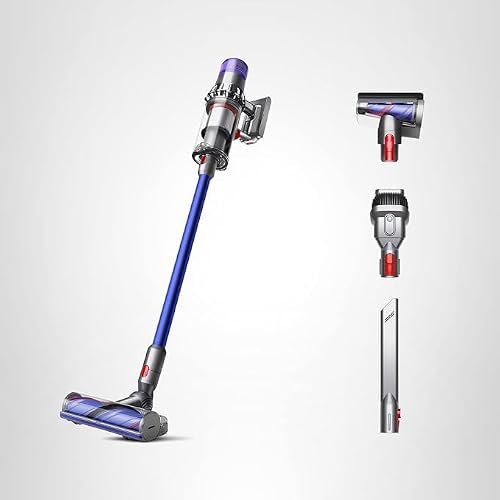
- Dyson V11 Origin Cordless Vacuum — Check price on Amazon
- Roborock Q7 L5 Robot Vacuum and Mop Combo — Check price on Amazon
Introduction: “Sucking” Is a Spec, Not a Slogan
The best sucking vacuums are the ones whose suction you can verify, and that is a higher bar than it sounds. Almost every vacuum listing on the internet claims “powerful suction,” including models that struggle with cereal on a hard floor. The honest way to shop this search is to demand a number with a unit, understand what that unit can and cannot tell you, and then weigh the things suction figures never capture: how well the cleaner head seals to the floor, how the brush handles hair, how much of the suction survives a filling dustbin and a loading filter, and how long the battery sustains top power rather than merely quoting it.
Two units dominate. Air watts (AW) measure the useful cleaning power at the cleaner head end of the system and are the standard currency for premium cordless sticks — the Samsung, Dyson and Tineco picks here state AW figures from 185AW up to 400AW. Pascals (Pa) measure raw pressure differential and are the standard currency for robot vacuums — the Roborock pick states 8,000Pa. Comparing a stick’s AW to a robot’s Pa is meaningless, and any guide that ranks them on one scale is inventing precision. Within a unit family, higher stated figures generally indicate a stronger motor system, but test conditions differ by brand, so treat AW gaps of 10–20 as noise and gaps of 100+ as meaningful.
All six picks below state a suction figure in their verified catalog titles — that was the entry ticket for this guide. Five are cordless sticks spanning the premium tier down to the value end of the strong-suction class, and one is a robot for readers whose definition of a good vacuum is one that sucks while they do something else.
In this guide
Quick Picks
- Best Overall Suction: Samsung Bespoke AI Jet Ultra — a manufacturer-stated 400AW, the highest figure in this guide, with an all-in-one clean station, anti-tangle pet tool and long battery life in the 2025 model. Check price on Amazon
- Best Premium Cordless: Dyson Gen5detect — a stated 280AW with up to 70 minutes of runtime, dust illumination and whole-machine HEPA filtration. Check price on Amazon
- Best Mid-Tier Power: Tineco Pure One A50S — a stated 220AW with a 1L dustbin, 3DSense power brush and PureCyclone separation. Check price on Amazon
- Best Runtime and Capacity Value: Tineco A30S — a stated 200AW with 60 minutes of runtime, a 1L dustbin and a ZeroTangle brush for pet hair. Check price on Amazon
- Best Established Stick: Dyson V11 Origin — a stated 185AW with three power modes and up to 60 minutes, deep-cleaning hard floors and carpets and detangling pet hair. Check price on Amazon
- Best Robot Suction: Roborock Q7 L5 — a stated 8,000Pa with LiDAR navigation, a dual anti-tangle system and vacuum-and-mop combination cleaning. Check price on Amazon
How These Picks Were Chosen
The first criterion was a stated, unit-carrying suction figure in the verified catalog title — AW for sticks, Pa for the robot. Vacuums whose listings offered only adjectives were excluded, however good they might be, because this search is a request for measurable pulling power. Second, every pick had to be a complete floor vacuum for whole-home cleaning: handheld car vacuums, vacuum sealers (which flood catalog searches for this term), replacement batteries and filters were all excluded as non-answers. Third, we required the supporting cast that makes suction usable — runtime and dustbin figures where the listing states them, anti-tangle or pet-hair brush designs, and filtration worth naming. Fourth, we spread the set across formats and tiers: flagship stick, premium stick, two mid-tier sticks, an established previous-generation stick, and a robot, so the guide answers the keyword for different homes rather than six times for the same one. Finally, each ASIN was confirmed against this site’s catalog connection, and the figures quoted are the listings’ own — we did not test these vacuums, and we do not present manufacturer figures as our measurements.
The 6 Best Sucking Vacuums

Samsung Bespoke AI Jet Ultra — Best Overall Suction
The Samsung Bespoke AI Jet Ultra carries the largest suction figure in this guide: a manufacturer-stated 400AW, in a 2025 cordless stick sold with an all-in-one clean station, an anti-tangle pet tool and long battery life, per the verified catalog listing. The clean station matters to a suction conversation more than it first appears: a station that empties the stick’s bin into a sealed bag keeps the bin and filter path clear, and a clear path is what lets a strong motor keep performing like a strong motor in month six rather than only in week one.
Strengths
- 400AW stated suction is the highest figure among the picks — a meaningful gap, not a rounding difference.
- All-in-one clean station empties the bin, protecting real-world suction between deep cleans.
- Anti-tangle pet tool addresses the hair problem that strangles lesser sticks’ brushes.
Trade-offs
- Flagship of this guide in qualitative tier terms — the clean station is part of what you are paying for.
- The station takes floor space and uses bags, an ongoing consumable the stick-only picks avoid.
- 400AW is a maximum-mode figure; everyday auto mode will run below it to preserve battery.
Key specs (from the verified catalog listing): Stated suction 400AW (manufacturer figure); all-in-one clean station; anti-tangle pet tool; long battery life (exact runtime not stated in the catalog title — check the listing); 2025 model, satin black.
Who should buy the Samsung? The household that wants the strongest stated pulling power in a stick format and will actually maintain the system that sustains it — emptying via the station, keeping the pet tool clear, and using max mode for the jobs that need it (deep carpet, embedded grit at doorways) rather than as a default. Used that way, the 400AW headline is a tool you deploy, not a number you admire. If your home is mostly hard floors with light debris, this is more vacuum than you need, and the Tineco picks below will serve you for a lower tier of spend.
Best for: maximum stated suction, pet homes, and buyers who value auto-empty hygiene. / Not suited for: small spaces with nowhere to put a station, or bag-free purists. Check price on Amazon

Dyson Gen5detect — Best Premium Cordless
Dyson’s Gen5detect states 280AW across three power modes with up to 70 minutes of runtime, whole-machine HEPA filtration, and an illumination head that reveals dust on hard floors, per the verified catalog listing. The illumination is easy to dismiss as theatre until you watch it work on a “clean” kitchen floor at a low sun angle: it converts suction from an act of faith into a visible result, and it changes how thoroughly people vacuum because they can see what remains.
Strengths
- 280AW stated suction with the longest stated runtime in this guide — up to 70 minutes.
- Whole-machine HEPA filtration seals the system, so sucked-up fine dust stays in the bin.
- Dust-revealing illumination makes missed debris visible on hard floors.
Trade-offs
- Premium tier positioning; you are paying for the filtration and illumination system as well as suction.
- The 70-minute figure applies to the gentlest mode; max mode runtime is a small fraction of it, as with all sticks here.
- Dyson’s bin is compact beside the Tineco models’ 1L bins — large, hairy homes will empty it mid-clean.
Key specs (from the verified catalog listing): Stated suction 280AW (manufacturer figure); 3 power modes; up to 70 minutes runtime; HEPA filtration; illumination dust detection; all floor types.
The Gen5detect is the connoisseur’s pick in this guide: not the highest AW figure, but the most complete system around a very high one. Filtration is the under-sold half of “sucking” — a vacuum that pulls hard and then leaks fine dust back through its exhaust has moved the dirt, not removed it. If anyone in the home is dust-sensitive, the sealed HEPA system is a legitimate reason to choose this over a nominally stronger rival. Choose it for big homes where the 70-minute eco runtime finishes the job on one charge and where hard floors dominate the visible-dirt problem.
Best for: large homes, dust-sensitive households, and buyers who want filtration with their suction. / Not suited for: buyers who prioritize bin size or the absolute highest AW figure. Check price on Amazon

Tineco Pure One A50S — Best Mid-Tier Power
The Tineco Pure One A50S states 220AW — a figure that would have headlined this category not long ago — with a 1L dustbin, a 3DSense power brush and PureCyclone separation, per the verified listing. PureCyclone matters to sustained suction: by separating debris from the airstream before the filter, the filter loads more slowly, and a slowly loading filter is what keeps a stick’s suction near its specification across a whole clean rather than fading as the bin fills.
Strengths
- 220AW stated suction in the mid tier — genuinely strong, not a token figure.
- 1L dustbin is double the practical capacity of compact premium bins.
- PureCyclone separation protects the filter, sustaining suction between maintenance sessions.
Trade-offs
- Runtime is not stated in the catalog title — confirm it on the listing against your home’s size.
- No auto-empty station in this configuration; you empty the 1L bin by hand.
- Tineco’s accessory and battery ecosystem is smaller than Dyson’s or Samsung’s.
Key specs (from the verified catalog listing): Stated suction 220AW (manufacturer figure); 1L dustbin; 3DSense power brush; PureCyclone technology; designed to tackle large debris.
The A50S is the thinking buyer’s middle path: within striking distance of the flagships on stated power, ahead of them on bin capacity, and positioned a clear tier below them in spend. Its natural home is the mixed-floor family house — carpet in the bedrooms, hard floors downstairs, a pet contributing hair to both — where a 1L bin and strong cyclone separation turn “vacuum the house” into one pass instead of a relay of emptying stops. If you comparison-shop one specification beyond AW, make it the bin: it is the figure that decides how a strong vacuum feels to live with.
Best for: mixed-floor family homes wanting near-flagship power and a big bin. / Not suited for: buyers who want an auto-empty station or a stated-runtime guarantee from the title. Check price on Amazon

Tineco A30S — Best Runtime and Capacity Value
The A30S states 200AW with a 60-minute runtime and a 1L dustbin, plus a ZeroTangle brush and PureCyclone technology, per the verified listing. That combination — a round 200AW, a full hour of stated runtime and the joint-largest bin in this guide — makes it the endurance pick: the vacuum for larger homes and pet hair, where cleans are long and a brush that resists hair wrap keeps suction consistent from the first room to the last.
Strengths
- 200AW stated suction paired with a stated 60-minute runtime — power and endurance together.
- ZeroTangle brush targets pet hair wrap, the silent suction killer in pet homes.
- 1L bin plus PureCyclone separation keeps performance steady through long cleans.
Trade-offs
- The 60-minute figure is a maximum (gentlest mode) number; expect much less on max suction.
- A step below the A50S on stated power and brush sophistication within the same brand family — we present the two Tinecos transparently as siblings at different tiers.
- No clean station; manual emptying.
Key specs (from the verified catalog listing): Stated suction 200AW (manufacturer figure); 60-minute maximum runtime; 1L dustbin; ZeroTangle brush; PureCyclone technology; for pet hair, carpet and hard floor.
Two Tinecos in one guide requires a word of justification, and here it is: they are not the same vacuum twice. The A50S is the power-leaning sibling (220AW, sensor brush); the A30S is the endurance-leaning sibling (200AW, stated hour of runtime, anti-tangle brush). Households choosing between them should ask whether their cleans fail from weak pickup (choose the A50S) or from running out of battery, bin or brush patience (choose the A30S). For pet-heavy homes, the A30S’s anti-tangle emphasis usually answers the real problem.
Best for: pet homes and larger floor plans that need an hour of working time. / Not suited for: buyers wanting the single strongest stated figure regardless of runtime. Check price on Amazon
Dyson V11 Origin — Best Established Stick
The V11 Origin is the previous-generation Dyson formula stated plainly in its listing: 185AW, three power modes, up to 60 minutes of runtime, deep cleaning across hard floors and carpets, and a detangling design for pet hair. Its 185AW is the lowest stick figure in this guide, and we include it deliberately: it demonstrates how far the class has moved (the newest flagships state more than double) while remaining, in absolute terms, a strong-suction vacuum with a mature accessory ecosystem and a runtime that finishes most homes.
Strengths
- Up to 60 minutes stated runtime across three modes — proven, flexible power management.
- Detangling cleaner head design handles pet hair without constant scissor work.
- The V11 platform’s accessories and parts are widely available, years into its life.
Trade-offs
- 185AW is outgunned on paper by every other stick here; deep-pile carpet is where you will notice.
- An older platform: no illumination head, no auto-empty station ecosystem of its own.
- Compact Dyson bin, as with the Gen5 — frequent emptying in big, hairy homes.
Key specs (from the verified catalog listing): Stated suction 185AW (manufacturer figure); 3 power modes; up to 60 minutes runtime; hard floor and carpet; detangles pet hair.
The V11 Origin is the right answer for a specific buyer: the one who values a known quantity. Its figures are honest, its runtime is real-world adequate, and its ownership story — filters, batteries, heads, parts — is the most predictable in this guide because the platform has been in homes for years. If your floors are mostly hard with area rugs rather than wall-to-wall deep carpet, you will rarely touch the suction gap between 185AW and the flagships. If deep carpet dominates, the gap is exactly what the extra money buys, and you should spend it.
Best for: hard-floor-dominant homes wanting a proven platform and long runtime. / Not suited for: deep-pile carpet homes chasing maximum pulling power. Check price on Amazon

Roborock Q7 L5 Robot Vacuum and Mop — Best Robot Suction
The robot entry states 8,000Pa — the strongest robot-class figure among the verified robot listings we reviewed — with LiDAR navigation, multi-level mapping, a dual anti-tangle system and vacuum-and-mop combination cleaning, per the verified listing. Judge that Pa figure only against other robots: it signals a robot that can pull grit from low carpet and hard-floor seams rather than merely skimming dust, but it does not make the robot a substitute for a 200AW+ stick on deep carpet, and we will not pretend otherwise.
Strengths
- 8,000Pa stated suction is strong for the robot class, with LiDAR navigation to apply it methodically.
- Dual anti-tangle system suits pet hair, the robot category’s nemesis.
- Multi-level mapping and self-charging make it a genuine set-and-forget maintenance cleaner.
Trade-offs
- Robot suction, however strong for the class, does not deep-clean carpet like a full-size stick.
- The mop function is a maintenance wipe, not a scrub; do not buy it as a mopping replacement.
- Requires floor discipline — cables, socks and clutter defeat navigation and brushes alike.
Key specs (from the verified catalog listing): Stated suction 8,000Pa (manufacturer figure, robot-class measure); LiDAR navigation; multi-level mapping; dual anti-tangle system; vacuum and mop combo; self-charging.
The Q7 L5’s role in a strong-suction household is frequency. A stick used weekly at 280AW and a robot used daily at 8,000Pa are not rivals; the robot keeps the baseline so low that the stick’s deep cleans get easier and rarer. For pet homes especially, daily robot passes prevent the hair accumulation that makes weekly cleans miserable. Buy it as the second vacuum, or as the only vacuum in a hard-floor apartment where its class-leading robot suction is genuinely sufficient for the surfaces involved.
Best for: daily maintenance cleaning, pet hair control, and hard-floor apartments. / Not suited for: deep-pile carpet as a sole vacuum, or cluttered floors. Check price on Amazon
Comparison Table
| Pick | Badge | Key spec | Best for |
|---|---|---|---|
| Samsung Bespoke AI Jet Ultra (Check price on Amazon) | Best Overall Suction | 400AW stated, clean station, anti-tangle pet tool | Maximum power, pet homes |
| Dyson Gen5detect (Check price on Amazon) | Best Premium Cordless | 280AW stated, up to 70 min, HEPA, illumination | Large homes, dust-sensitive households |
| Tineco Pure One A50S (Check price on Amazon) | Best Mid-Tier Power | 220AW stated, 1L bin, PureCyclone | Mixed-floor family homes |
| Tineco A30S (Check price on Amazon) | Best Runtime and Capacity Value | 200AW stated, 60 min, 1L bin, ZeroTangle | Pet hair and long cleans |
| Dyson V11 Origin (Check price on Amazon) | Best Established Stick | 185AW stated, up to 60 min, detangling head | Proven platform, hard floors |
| Roborock Q7 L5 (Check price on Amazon) | Best Robot Suction | 8,000Pa stated (robot class), LiDAR, anti-tangle | Daily maintenance cleaning |
How to Choose a Strong-Suction Vacuum
Read the unit before the number. AW (air watts) for sticks and uprights; Pa (pascals) for robots. A 400AW stick and an 8,000Pa robot are both “strong” in their own class and incomparable across classes. Within a class, prefer gaps over decimals: 400AW versus 280AW is a real difference in motor system; 220AW versus 200AW is a tier step, not a transformation.
Ask where the figure is measured and in which mode. Headline suction is a maximum-mode figure. Your everyday cleaning happens in auto or standard mode, at a fraction of it, because battery life demands the trade. A vacuum with a smart auto mode that raises suction on carpet and at dirty spots often cleans better in real homes than a nominally stronger vacuum left in eco mode to survive the clean.
Suction is a system, not a motor. The cleaner head’s seal against the floor, the brush’s ability to agitate carpet and resist hair wrap, the cyclone’s separation efficiency and the filter’s loading rate all decide how much of the motor’s power reaches the dirt in month six. This is why this guide weighs bins, cyclones and anti-tangle designs alongside AW figures — they are suction features, wearing different clothes.
Match runtime to floor area, using max-mode honesty. Stated runtimes are gentle-mode numbers. As a planning rule, a large home needs either a 60–70 minute stated runtime, a swappable battery, or an auto-empty station workflow that makes partial cleans painless. Do not discover your home is a two-charge job after the return window closes.
Filtration is the exit door of suction. Everything the vacuum sucks in must either stay in the bin or leave through the exhaust. Sealed HEPA systems (the Gen5detect) keep fine dust in; lesser filtration returns a share of the finest particles to the room. Dust-sensitive households should treat filtration as a first-order spec, equal to AW.
How to Keep Suction Strong: A Maintenance Routine That Works
Strong suction is perishable, and the routine that preserves it is short. Empty the bin at the marked line, not when it is packed solid — an overfilled bin chokes the cyclone and the suction falls off a cliff. Wash or replace filters on the manufacturer’s schedule, and never run a damp filter you rushed back in; moisture plus dust makes concrete. Clear the brush roll weekly in pet homes: a wrap of hair around the brush lifts it off the carpet and silently converts a strong vacuum into a loud broom. Check the head’s seal and the wand joints seasonally for cracks and grit, because a small air leak anywhere in the path taxes every watt the motor makes. For station models, change the station bag before it is drum-tight. None of this is glamorous, and all of it is the difference between the vacuum you bought and the vacuum you will complain about in a year.
Suction Specs Decoded: What the Numbers Hide
Air watts sound precise, and within one brand’s own lineup they are a reasonable ladder: a manufacturer’s 280AW model genuinely out-pulls its 185AW model. Across brands the ladder wobbles, because test rigs, measurement points and the configuration tested (handheld unit alone versus full stick with head attached) are not standardized into a single public protocol that shoppers can audit. The correct way to use AW is the way this guide uses it: as a class indicator. Figures in the high-100s mean a strong stick; figures in the 200s mean a very strong stick; 400AW means the current flagship class. Anyone claiming that 220AW cleans exactly 10 percent better than 200AW is selling you false precision.
Pascals hide a different subtlety. A robot’s Pa figure describes the pressure its fan can generate, typically measured in its most powerful mode, and robot makers have competed the number upward aggressively in recent years. But a robot applies that pressure through a small intake, at a fixed height, while moving — so real pickup depends as much on brush design, side-brush behavior at edges, and how well the robot seals against the floor as on the Pa headline. The Roborock’s 8,000Pa earns its place here because it pairs the figure with LiDAR method and an anti-tangle system, not because the number alone guarantees anything.
One more hidden variable applies to every pick: battery state. A cordless vacuum’s suction is strongest on a full charge and softens as the battery depletes and heats, and max mode accelerates both effects. This is the unglamorous reason runtime belongs in a suction guide — a vacuum that holds strong, steady power for the length of your clean beats a vacuum that is spectacular for six minutes and ordinary for the remaining twenty.
Corded Versus Cordless When Suction Is the Priority
An honest suction guide should acknowledge the elephant in the room: a good corded upright or canister still delivers sustained, fade-free power for as long as you care to clean, with no battery arithmetic at all, and several corded designs state formidable figures of their own. If your single priority is maximum sustained pulling power for deep carpet across a large home, and you do not mind the cord, that class remains formidable — the trade is storage, setup friction and stairs.
Why, then, does this guide’s verified set lean cordless? Because the catalog’s stated-figure leaders for this search are the current cordless flagships, and because real-world cleaning frequency is a suction variable too: the vacuum that lives charged on a wall mount gets used for the two-minute crumb emergency and the twenty-minute weekly clean alike, while the heavy corded machine waits for “vacuum day.” Dirt removed often by a slightly weaker machine is dirt that never embeds. Choose corded for maximum sustained power in big carpeted homes; choose the cordless flagships here for power that is both high and constantly used; and consider the robot as the frequency multiplier that keeps either choice ahead of the dirt between deep cleans.
Pet Hair: Where Strong Suction Goes to Die
Pet hair attacks a vacuum in three places, and raw suction defends none of them directly. It wraps the brush roll, lifting it off the carpet and breaking the seal that suction needs. It mats into the cyclone and filter, throttling airflow no matter what the motor can pull. And it fills bins at a rate that turns a “large capacity” claim into a mid-room interruption. This is why four of the six picks carry explicit anti-hair engineering in their verified listings: Samsung’s anti-tangle pet tool, the A30S’s ZeroTangle brush, the V11’s detangling head, and the Roborock’s dual anti-tangle system. In a pet home, those features are not accessories to suction — they are what suction is made of by week three.
Practical pet-home advice follows from the mechanics. Prefer the largest bin you can get (the Tinecos’ 1L, or a station that swallows the bin’s contents automatically). Prefer a brush you can remove without tools, because you will remove it. And run the robot daily if you have one: hair removed in small daily quantities never becomes the felted mat that defeats a weekly clean. The strongest vacuum in this guide, ignored for a month in a two-dog home, will lose to the weakest one maintained on schedule — suction is a system, and hair is the stress test that proves it.
Matching Suction to Your Floors: A Room-by-Room Reality Check
Walk your own home before you rank these picks, because floor mix decides how much suction is enough. A home that is 80 percent hard flooring with flat-weave rugs asks for head seal, edge cleaning and filtration more than for peak AW; the V11 Origin or the A30S will feel abundant there, and the Gen5detect’s illumination will show you the dust you would otherwise have pushed around. A home with wall-to-wall medium carpet in the bedrooms and a high-traffic carpeted hall asks for sustained carpet performance: the A50S and Gen5detect territory, where cyclone separation and brush agitation protect the headline figure through a long clean. A home with deep or plush carpet, a shedding dog and carpeted stairs is the one case where the flagship premium is rational rather than indulgent — that is Samsung 400AW work, with the station absorbing the hair volume that would otherwise stop the clean every few minutes.
Stairs and second floors add a weight test no spec sheet prints: you will carry this machine, in one hand, while holding a rail with the other. Every pick here is a stick or a robot partly for that reason. And if your home splits levels across floors, a robot per floor (or a robot for the main floor and a stick for the rest) beats one heroic machine carried up and down — frequency and convenience, again, are suction strategies in disguise.
Testing a New Vacuum in the Return Window
Specifications end arguments on paper; your floors end them in fact. Use the return window deliberately with a three-part test on the first day. First, the grit test: vacuum the entryway and the strip in front of the kitchen sink — the two highest-grit zones in most homes — in the auto or standard mode you will actually live in, then inspect what the bin collected and what your bare feet still find. Second, the carpet test: run your worst carpeted area slowly, in both directions, and check whether a second pass still lifts visible debris; a strong system should leave the second pass nearly empty. Third, the endurance test: clean your whole home in one session and note the battery state, the number of bin empties, and whether pickup in the last room matches the first. A vacuum that passes all three in your home, with your dirt, has told you more than any AW figure can — and one that fails has told you in time to exchange it for the pick that fits your floors instead.
Noise, Weight and the Suction You Will Actually Use
Two unglamorous specifications decide whether a strong vacuum gets used at full strength or lives in eco mode: noise and weight. Max suction modes are loud — loud enough that many owners quietly stop using them around children, calls and sleeping households, which converts a 400AW purchase into a 120AW habit. Before buying, consider when you actually vacuum: if it is evenings in an apartment, a model whose auto mode is strong and tolerable may clean more per week than a flagship whose max mode you avoid. Weight works the same way. A stick that tires the wrist gets rested mid-clean, and the second half of the house gets the tired-arm pass. None of the listings in this guide state noise figures we can verify, so we do not quote any — instead, treat your first-day test as the audition: run max mode in your own rooms, carry the machine up your own stairs, and let your ears and arm vote while the return window is open.
Common Buying Mistakes
- Comparing AW to Pa. The most common error with this search. The units measure different things in different categories and do not convert.
- Believing headline suction is everyday suction. Max mode is a tool for deep-clean moments. Judge a vacuum by its auto-mode intelligence and its system design for daily life.
- Ignoring the bin and filter. A strong motor behind a tiny bin and a fast-loading filter delivers strong suction for four minutes at a time.
- Buying a robot to replace a deep-clean stick on carpet. Even the strongest robot here is a maintenance cleaner on carpet. Pair formats; do not substitute them.
- Skipping the return-window test. Vacuum your worst surface — the entryway rug, the carpet under the dining table — on day one, in the mode you will actually use, and judge that.
- Neglecting maintenance, then blaming the motor. Most “lost suction” is a full bin, a loaded filter or a hair-wrapped brush. The routine above is cheaper than a replacement vacuum.
Final Recommendation
For the strongest stated suction in a stick, choose the Samsung Bespoke AI Jet Ultra (Check price on Amazon) and use its clean station religiously. For the most complete premium system, the Dyson Gen5detect (Check price on Amazon) pairs 280AW with sealed HEPA filtration and the longest stated runtime here. The Tineco pair splits the sensible middle: the A50S (Check price on Amazon) for power-leaning family homes, the A30S (Check price on Amazon) for pet hair and hour-long cleans. The Dyson V11 Origin (Check price on Amazon) remains the proven-platform choice for hard-floor homes, and the Roborock Q7 L5 (Check price on Amazon) is the daily-maintenance robot with the strongest robot-class figure we verified. Whichever you choose, maintain the system — bins, filters and brushes — because sustained suction is a habit, not a purchase.
More from the same vacuums cluster on this site: Best Mini Pet Vacuums, Best Mini Upright Vacuums, Best Minimalist Vacuums, Best Bagged Vacuums For Allergies, and Best Affordable Upright Bagless Vacuums.
Frequently Asked Questions
What is a good suction number for a cordless vacuum?
In air watts, the strong class of cordless sticks currently states roughly 185AW and up; the flagships in this guide state 280AW and 400AW. Treat these as manufacturer maximum-mode figures: useful for comparing motor systems within the stick category, not as the power you will use in everyday auto mode.
Why can’t I compare a robot’s 8,000Pa with a stick’s 400AW?
They measure different physical quantities under different test conditions: air watts describe useful cleaning power at the head, pascals describe pressure differential. There is no honest conversion factor. Compare robots with robots and sticks with sticks, and remember that format matters too — a robot’s job is frequent maintenance, a stick’s job is deep cleaning.
Does more suction mean better cleaning on hard floors?
Only up to a point. Hard floors need enough suction plus a head that seals and channels debris; beyond that, brush design and edge cleaning matter more than raw power, and excessive suction can even scatter light debris or stick the head down. Carpet is where high AW figures earn their keep, driving the brush and airflow deep into the pile.
Why does my vacuum lose suction over time?
Almost always the system, not the motor: a bin past its fill line, a filter loaded with fine dust, hair wrapped around the brush roll, or a small leak at a joint. The maintenance routine in this guide addresses each cause in turn. If suction is still weak after all four, then it is time to suspect the machine itself.
Is a clean station worth it?
If you vacuum often, have pets, or dislike handling dust, yes — it keeps the stick’s bin and filter path clear, which sustains suction, and it makes emptying a seconds-long, low-dust task. If your home is small and your cleans are short, a 1L-bin stick like the Tineco models gives you most of the practical benefit without the station’s footprint or bags.
How do I know if a suction claim in a listing is trustworthy?
Look for three things: a number, a unit, and a mode. “400AW” is a claim you can compare within its class; “powerful suction” is an adjective you cannot. Then check whether the figure is tied to a maximum or boost mode — it almost always is — and look for the runtime and bin figures nearby, because a manufacturer willing to state the unglamorous numbers alongside the glamorous one is generally playing straighter. Finally, sanity-check the class: robot figures belong in pascals, stick figures in air watts, and any listing mixing units to sound bigger is telling you something about itself.
What about corded vacuums — are they stronger?
A good corded machine sustains its power indefinitely and never asks you to manage a battery, so for very large, heavily carpeted homes it remains a rational maximum-power choice. The cordless flagships in this guide state higher headline figures and get used far more often, which is its own cleaning advantage. The honest answer is that “stronger” depends on whether you mean peak figure, sustained figure, or dirt actually removed per week in your home.
Do I need HEPA filtration if suction is my priority?
They solve different halves of the same problem: suction gets dust into the machine, filtration decides whether the finest fraction stays there. If anyone in the home is dust-sensitive, a sealed HEPA system like the Gen5detect’s is worth prioritizing alongside suction. If not, a well-maintained cyclone system that you empty and wash on schedule performs perfectly respectably.
How long should a strong-suction stick’s battery last?
Stated runtimes in this guide run from 60 to 70 minutes, but those are gentle-mode figures. On max suction, expect a small fraction of that — max mode is for minutes-long deep-clean tasks. For whole-home cordless cleaning, what matters is the auto or standard mode runtime against your floor area, plus whether the battery can be swapped or quickly recharged.


