Disclosure: airfryerkitchensupply.com is reader-supported. When you buy through links on our site, we may earn an affiliate commission at no extra cost to you.
Where to buy
Every verified pick in this guide to the best small pa mixers is sold through Amazon, which keeps ordering, delivery and returns in one place. Use the Check on Amazon link under any pick to check price on Amazon and confirm the exact configuration before you order. If a listing has drifted to a different model variant, back out and search the exact model name from our review instead of accepting a near-match substitute.
Yamaha MG10XU — Check on Amazon
Mackie ProFX10v3+ — Check on Amazon
Mackie Mix8 — Check on Amazon
Behringer Xenyx 1202SFX — Check on Amazon
Soundcraft Notepad-8FX — Check on Amazon
Allen & Heath ZEDi-10FX — Check on Amazon
Introduction
If you are shopping for the best small pa mixers, start with a blunt truth about what ‘small PA’ actually demands: this board has to run microphones, a playback source and maybe an instrument, feed powered speakers cleanly, and survive being set up by whoever arrives first at the venue. That is a different job from a bedroom recording mixer. A PA mixer lives or dies on mic preamp headroom, a usable main output section, feedback-fighting EQ and effects that make a vocal intelligible in a reflective room — not on how many stereo channels the box claims on its carton.
Count your real inputs before you count features. A duo with two vocals, one guitar and a phone for backing tracks needs four honest inputs, not twelve. A small worship team, a school assembly or a fitness instructor with a headset mic each pushes the count differently, and the most common small-PA failure is buying a board that is exactly full on day one, leaving no spare channel when a guest speaker, a second instrument or a backup mic appears. Every pick below leaves at least one usable spare input for typical small-venue work.
The six boards here span the realistic small-PA range: simple analogue boards for speech and acoustic acts, USB-equipped boards that double as streaming interfaces for hybrid events, and one effects-rich option for singers who need polished reverb without extra outboard gear. None of them is a powered mixer — if your speakers are passive, read our powered-mixer guide instead, because these boards expect powered speakers or a separate amplifier.
In this guide
Quick Picks
Yamaha MG10XU — Best Overall: the dependable all-rounder for speech, acoustic acts and small halls, with Yamaha D-PRE preamps and built-in SPX effects. — Check on Amazon
Mackie ProFX10v3+ — Best for Streaming Events: the hybrid-event pick, adding Bluetooth playback and multi-mode USB recording to Mackie’s Onyx preamps and GigFX+ effects. — Check on Amazon
Mackie Mix8 — Best Budget: the honest budget board for one or two microphones and a playback source, in a metal box that travels well. — Check on Amazon
Behringer Xenyx 1202SFX — Best Value with Effects: a feature-dense value pick with effects and USB streaming for performers who need more inputs than the budget boards offer. — Check on Amazon
Soundcraft Notepad-8FX — Best Compact for Speech: a small, refined board whose Lexicon effects and tidy layout flatter speech and acoustic performance in intimate venues. — Check on Amazon
Allen & Heath ZEDi-10FX — Best Sound Quality: the sound-quality pick, a hybrid mixer and 4×4 USB interface whose preamps and effects reward good microphones and quiet rooms. — Check on Amazon
How These Picks Were Chosen
We chose these six by working backwards from real small-PA jobs: a café duo, a community-hall presentation, a school performance and a small church service. For each job we listed the inputs actually used, the outputs the speakers needed, and the problems that ruin those events — feedback, a vocal buried under playback music, and an operator who has thirty seconds to fix a level. Boards that could not address those problems with their own EQ, effects and routing were cut, however impressive their channel count looked.
Every product name and ASIN in this guide was confirmed against Amazon’s catalogue before a link was attached. Where the listed a bundle or a superseded variant instead of the exact board, we linked only the exact model or left the pick unlinked. We did not print prices or fixed ratings anywhere in this guide: mixer pricing moves with bundles and seasons, so each pick says check price on Amazon instead.
We also weighted build and layout for transport. Small PA boards get carried in tote bags, stacked in cupboards and wiped down after events. Metal chassis, clearly grouped controls and faders or knobs that can be read at a glance in a dim hall matter more here than a long feature list, and the reviews below call out where a board’s layout helps or hinders a hurried operator.
The 6 Best Small PA Mixers

Yamaha MG10XU — Best Overall
The MG10XU suits the widest range of small-PA users: presenters, acoustic performers, schools and houses of worship that need clean mic gain, a little polish from built-in effects and a USB connection for recording or streaming the event. It is the board we would hand to a volunteer operator with minimal briefing.
Strengths
- D-PRE mic preamps deliver clean, quiet gain for speech and vocals
- Built-in SPX effects add venue-appropriate reverb without outboard gear
- USB interface records or streams the event while the board runs the room
Trade-offs
- Only four mic preamps, so larger vocal groups outgrow it quickly
- Stereo channels are basic, with limited EQ for shaping playback sources
- No dedicated monitor send flexibility for complex stage mixes
In a live room the MG10XU’s strength is how forgiving it feels. The preamps stay composed when a nervous speaker suddenly projects, the one-knob compressors on the first channels tame exactly that kind of surprise, and the effects are voiced for real rooms rather than studio fantasy — a short plate or hall setting lifts a dry vocal over an audience without washing the words away. For spoken-word events, intelligibility is the whole game, and this board protects it.
Layout matters when the operator is also the organiser. Yamaha groups the controls logically, labels them in plain language and keeps the master section obvious, so a quick ‘turn the music down, turn the mic up’ instruction works over the phone. The metal chassis shrugs off the knocks of weekly transport, and the footprint fits a small table beside a lectern without crowding the laptop that is feeding playback.
Ownership is where the MG10XU quietly wins. Yamaha’s support network and documentation are excellent, the board’s behaviour is predictable enough that settings from one venue transfer to another, and its resale value holds because schools and churches buy them continuously. If you run a programme with rotating volunteers, standardising on one board model — this one — means training transfers between venues and a spare is always a familiar face.
Best for: mixed speech-and-music events in small halls / Not suited for: bands needing many mic inputs or multiple monitor mixes
Check on Amazon — check price on Amazon before you decide, because bundles and included accessories change over time.

Mackie ProFX10v3+ — Best for Streaming Events
Choose the ProFX10v3+ when the room and the livestream matter equally: hybrid meetings, streamed services and events where walk-in music arrives on somebody’s phone. Bluetooth removes the tangle of adaptor cables that plagues small PA setups, and the USB modes let you send a proper mix — not a phone microphone — to the stream.
Strengths
- Bluetooth playback handles walk-in music without adaptor cables
- Multi-mode USB recording suits live, stream and content workflows
- Onyx preamps and GigFX+ effects keep vocals present and polished
Trade-offs
- More modes and menus mean a slightly longer learning curve for volunteers
- Effects engine is shared, so per-channel effect tailoring is limited
- Larger footprint than the simplest speech-only boards
The ProFX10v3+ earns its place by solving the two failures that define modern small events: the audience in the room hears a decent mix while the online audience hears a distant echo, and the background music never arrives because nobody brought the right cable. Its USB implementation is designed for exactly this split duty, and Bluetooth turns any phone into a reliable playback source in seconds.
As a pure PA board it remains convincing. The Onyx preamps are clean at speech levels, the channel EQ is musical rather than surgical, and the GigFX+ effects give presenters and singers a professional sheen. It asks a little more of the operator than the Yamaha — spend twenty minutes learning the USB modes before event day — and repays that effort every hybrid event afterwards.
Consider the cable bag this board eliminates: no phone adaptor dongles, no separate USB interface, no Bluetooth receiver dangling from an input. For a venue that hosts outside hirers, that simplicity prevents the most common hirer failure — a source that cannot be connected. Hirers bring phones; this board meets them where they are, and the venue’s own operator still gets proper preamps and effects for the microphones that matter.
Best for: hybrid in-room and streamed events / Not suited for: operators who want the simplest possible speech-only board
Check on Amazon — check price on Amazon before you decide, because bundles and included accessories change over time.

Mackie Mix8 — Best Budget
The Mix8 is for the smallest real PA jobs: a single presenter with a backup mic, a solo performer, a classroom or a community group whose powered speaker currently relies on its own crude input section. It adds proper gain, EQ and a sensible master control for very little money or desk space.
Strengths
- Metal chassis survives regular transport better than plastic rivals
- Simple, legible layout that a first-time operator can run confidently
- Two mic preamps plus line inputs cover speech-and-playback setups
Trade-offs
- No built-in effects, so vocals stay completely dry
- Only two mic inputs limits even modest group work
- No USB, so recording or streaming needs a separate interface
Budget boards fail in predictable ways: noisy preamps, scratchy pots within a year, and a layout so cramped that adjusting one knob moves another. The Mix8 avoids the worst of these by keeping the design simple and the case metal. Its preamps are quiet enough for speech and acoustic instruments, and the EQ is voiced for broad, useful moves rather than precision work it cannot deliver.
Understand its ceiling before you buy. With no effects, a singer in a tiled hall will sound exactly as dry as the room makes them, and a third microphone simply has nowhere to go. As a first PA board for a defined, small job — or as a utility sub-mixer feeding a larger system — it is excellent value. As a board you intend to grow a programme around, it is a false economy.
The Mix8 also earns a place as a problem-solver inside larger systems: a sub-mixer for a drum kit or a keyboard rig, a backup board that lives in the venue office, or the speech mixer for a breakout room while the main board works elsewhere. Buying one honest small board often serves three of these roles across its life, which is how budget equipment justifies itself — through usefulness, not specifications.
Best for: single-presenter and solo-performer PA on a budget / Not suited for: singers who need reverb or groups with three or more mics
Check on Amazon — check price on Amazon before you decide, because bundles and included accessories change over time.

Behringer Xenyx 1202SFX — Best Value with Effects
The 1202SFX suits performers and small venues that need a generous input count, built-in effects and a USB connection for streaming, at a value-tier price. Karaoke hosts, small bands rehearsing through a PA and multi-performer community events are its natural home.
Strengths
- Generous channel count handles small bands and multi-mic events
- Built-in effects and USB streaming cover live and online duties
- Value-tier pricing leaves budget for microphones and cables
Trade-offs
- Compact knobs are less precise than faders under pressure
- Feature density makes the panel busier for novice operators
- Build is adequate for careful transport, not for rough touring
Behringer’s Xenyx formula is breadth: more inputs, more facilities and more effects than the price suggests. For a small PA that must accommodate whoever turns up — an extra vocalist, a keyboard, a guitar, a phone — that breadth is genuinely useful, and the effects section gives singers the reverb that makes a bare hall feel like a performance space rather than an announcement system.
The compromises are ergonomic. Rotary controls dominate, which keeps the board compact but makes fast, accurate level rides harder than on a fader board, and the panel rewards a labelled, rehearsed setup rather than improvisation. Treat it as a set-and-check board: soundcheck carefully, mark your settings, and it will run a varied small event without complaint.
For karaoke and variety events specifically, the 1202SFX’s combination of many inputs and ready effects matches the workflow: singers rotate, backing tracks arrive from several sources, and the host needs a spare mic channel permanently live. Set the host channel carefully, keep singer channels matched, and the board’s breadth turns a chaotic format into a repeatable one — the highest compliment a value board can earn.
Best for: karaoke, community events and small bands on a value budget / Not suited for: operators who ride faders constantly during a show
Check on Amazon — check price on Amazon before you decide, because bundles and included accessories change over time.
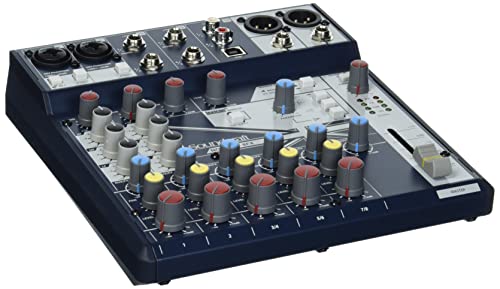
Soundcraft Notepad-8FX — Best Compact for Speech
The Notepad-8FX fits cafés, galleries, small ceremonies and meeting spaces where the board sits in view and the programme is speech plus light music. Soundcraft’s preamps and Lexicon-branded effects give it a polish that suits quiet rooms, where every flaw is audible.
Strengths
- Lexicon effects sound natural at the subtle settings speech needs
- Compact, tidy layout suits venues where the board is visible
- USB I/O covers simple recording and playback duties
Trade-offs
- Input count is modest for anything beyond small ensembles
- Premium positioning within its size class
- Fewer PA-specific conveniences than the Yamaha or Mackie rivals
In a quiet room, a small PA board cannot hide. Hiss, harsh EQ and cheap-sounding reverb are all exposed, and this is where the Notepad-8FX justifies itself: its effects can be dialled to the point where the audience simply hears a clearer, more present voice rather than an obvious effect. That subtlety is the mark of a board designed by people who mix speech professionally.
It is deliberately a small board. Two serious mic channels and supporting line inputs define its world, and trying to stretch it across a full band will frustrate everyone. Within its intended world — the duo, the celebrant, the presenter, the acoustic songwriter — it is one of the most civilised small PA choices you can set on a café table.
The Notepad-8FX rewards good microphones disproportionately. Pair it with a quality vocal condenser in a quiet café and the result sounds like a recording, not a PA — which changes how audiences behave, leaning in rather than talking over. That intimacy is a programme asset for listening venues, and it is why this small board, with the fewest headline features here, may be the right flagship for the right room.
Best for: intimate venues, ceremonies and acoustic duos / Not suited for: full bands or events needing many monitor options
Check on Amazon — check price on Amazon before you decide, because bundles and included accessories change over time.
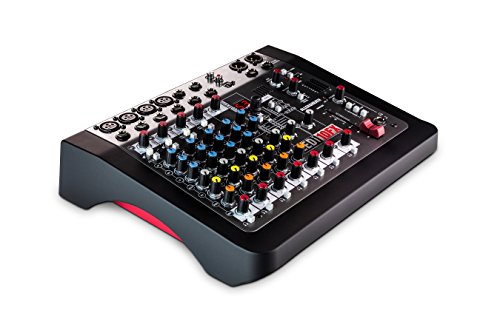
Allen & Heath ZEDi-10FX — Best Sound Quality
Pick the ZEDi-10FX when audio quality is the priority and the event also gets recorded: small concerts, recitals, streamed performances and venues that archive their programmes. Its 4×4 USB interface captures more than a simple stereo mix, giving the recording real post-event flexibility.
Strengths
- Excellent preamp and conversion quality for a board this size
- 4×4 USB interface records more flexibly than stereo-only rivals
- Deep, high-quality onboard effects library for performers
Trade-offs
- Costs more than simpler boards with similar channel counts
- Recording flexibility is wasted on speech-only users
- Panel density rewards a technically confident operator
Allen & Heath’s reputation rests on boards that sound expensive, and the ZEDi-10FX carries that into the small-PA class. Good microphones sound recognisably better through it — clearer consonants for speech, more body for acoustic instruments — and its effects library is deep enough that a singer can find a personal setting rather than accepting a generic wash.
The hybrid design is the other half of its appeal. A school concert or a recital can run the room and simultaneously capture a multitrack-leaning recording for the performers, without a separate interface or a second engineer. If your events are announcements and background music, that capability is surplus. If your events are performances people keep, it is the reason to buy this board.
Budget honestly around the ZEDi-10FX: it deserves microphones and speakers of comparable quality, because it will expose whatever is weakest in the chain. In a matched system it delivers the kind of clarity that makes a small choir or string ensemble sound present rather than amplified. Buy it as the centre of a considered small system, not as an upgrade bolted onto speakers that cannot reveal it.
Best for: small concerts and events that are recorded as well as amplified / Not suited for: announcement-only PA or the tightest budgets
Check on Amazon — check price on Amazon before you decide, because bundles and included accessories change over time.
Comparison Table
| Pick | Badge | Key spec | Best for |
|---|---|---|---|
| Yamaha MG10XU | Best Overall | 10 inputs, D-PRE preamps, USB, SPX effects | mixed speech-and-music events in small halls |
| Mackie ProFX10v3+ | Best for Streaming Events | 10 channels, Onyx preamps, Bluetooth, USB recording, GigFX+ | hybrid in-room and streamed events |
| Mackie Mix8 | Best Budget | 8 channels, 2 mic preamps, compact metal chassis | single-presenter and solo-performer PA on a budget |
| Behringer Xenyx 1202SFX | Best Value with Effects | 12 channels, Xenyx preamps, effects, USB streaming | karaoke, community events and small bands on a value budget |
| Soundcraft Notepad-8FX | Best Compact for Speech | 8 channels, Lexicon effects, USB I/O | intimate venues, ceremonies and acoustic duos |
| Allen & Heath ZEDi-10FX | Best Sound Quality | Hybrid mixer/interface, 4×4 USB, onboard FX | small concerts and events that are recorded as well as amplified |
How to Choose the Best Small PA Mixers for Your Venue
Start with the room, not the board. A carpeted meeting room of forty seats and a tiled hall of two hundred are different acoustic worlds: the hall needs more EQ control and effects restraint, the meeting room needs clean gain and simplicity. Measure your typical audience, note the surfaces, and be honest about who operates the system — the best small pa mixers for a trained sound volunteer will overwhelm a rotating cast of presenters, and the simplest board will frustrate a real engineer.
Next, count inputs by type. Microphones need preamps; keyboards, phones and laptops need line inputs; a guitar may need a high-impedance input or a DI box. Boards advertise total channels, but the mic-preamp count is the number that limits a PA. Buy for your largest regular event plus one spare mic channel, and you will stop renting or borrowing boards within a year.
Finally, decide whether recording or streaming is part of the job. If it is, a USB-equipped board like the ProFX10v3+ or ZEDi-10FX removes an entire layer of extra equipment. If it is not, spend the same money on better preamps and effects instead. Features you never use are not value; they are panel clutter between a nervous operator and the one knob they need.
Channel Count, Preamps and EQ: What Actually Matters
Mic preamp quality shows up as hiss when you push gain for a quiet speaker, and as harshness when a loud one peaks. Every board in this guide uses preamps from manufacturers with genuine live-sound pedigrees, which is why none of them embarrasses itself on speech. When comparing boards elsewhere, treat unnamed preamps and implausibly high channel counts at very low prices as the warning signs they are.
EQ on a small PA board is a problem-solving tool before it is a tone tool. A high-pass filter on mic channels removes handling rumble and room boom; a sweepable or well-chosen mid band finds and tames the frequency where a voice feeds back or turns nasal; the main output EQ shapes the whole system for the room. Three-band channel EQ with a high-pass filter covers most small venues honestly.
Effects deserve restraint. Reverb that flatters a singer in an empty hall turns to soup when the room fills with people, who absorb reflections. Choose boards whose effects sound good at low levels — the Lexicon and SPX implementations here do — and plan to use less of them than your soundcheck suggested.
How to Set Up a Small PA Mixer, Step by Step
Place the powered speakers first: on stands, tweeters at ear height, ahead of the microphones’ line to reduce feedback. Connect the mixer’s main outputs to the speakers with balanced cables, keep power cables away from mic cables where they cross, and only then connect microphones and playback sources. Power the mixer on before the speakers and off after them, so switching thumps never reach the drivers at full level.
Set gain channel by channel. With the channel fader or knob at its unity mark, have the speaker or singer perform at real event volume — not a timid ‘testing, one, two’ — and raise the preamp gain until the signal is strong and clean, with headroom below clipping. Then balance channels against each other, add a small amount of effect, and walk the room while someone else performs: the mix position lies, and the audience’s seats are the truth.
Finish with a feedback check. Raise the master slowly beyond event level, note where ringing begins, and ease the offending EQ band or the master back to a safe margin. Mark the settings with tape or a phone photo. A small PA that is documented can be reproduced by the next operator in minutes instead of being reinvented, badly, before every event.
Matching a Small PA Mixer to Powered Speakers
These boards expect powered speakers or a separate power amplifier; connecting them directly to passive speakers produces near-silence and confusion. Check that your speakers accept line-level balanced inputs, and use the mixer’s main XLR outputs where available for the noise rejection balanced connections provide on long cable runs across a hall.
Speaker capability should match or exceed the programme. Speech and acoustic music are undemanding; a DJ set or a full band through undersized speakers will sound strained regardless of the mixer. If your speakers are the weak link, a better board will not rescue them — budget honestly across the whole chain: microphones, board, speakers, stands and cables.
Caring for a Board That Travels
Small PA mixers die from transport and storage more than from use. A padded bag or case, cables coiled rather than knotted, and storage away from damp halls extend a board’s life by years. Wipe faders and knobs with a dry cloth; never spray cleaner directly into the panel. Once a season, exercise every control through its full travel and check each input with a known-good microphone, so a failing channel is discovered in the cupboard and not during a wedding speech.
Gain Staging for Speech: The Skill That Decides Everything
More small-PA disappointment traces to gain staging than to equipment choice. Gain staging means setting each stage of the signal path — preamp, channel, master, speaker input — to work in its comfortable middle rather than forcing one stage to compensate for another. A preamp run too low and a master run too high produces hiss; a preamp run into clipping produces distortion no later stage can remove. The unity marks on every board in this guide exist to make the correct structure easy to find.
Practise the discipline once, slowly: source at real volume, preamp gain to a strong clean signal, channel at unity, master to the room. Every subsequent setup becomes a variation on that theme rather than a fresh experiment, and the board you own starts to matter less than the consistency you bring to it — which is precisely why this guide weights forgiving, clearly laid-out boards so heavily for volunteer-run venues.
Feedback: Prevention Beats Cure
Feedback is the sound of a microphone hearing itself through the speakers loudly enough to sustain a tone. Small rooms with hard walls are feedback factories, and the cures are mechanical before they are electronic: move the speakers forward of the microphones, point mics away from speaker coverage, keep vocal mics close to mouths so gain can stay low, and never walk a live handheld mic through the space in front of the speakers during a show.
When ringing persists, EQ is the scalpel: identify whether the ring is a low boom, a midrange honk or a high whistle, and cut that band a little on the offending channel or the master. Broad cuts wreck intelligibility, so work narrowly and stop as soon as the ring dies. A board with a sweepable mid, like several picks here, makes this surgery far easier than fixed-frequency EQ allows.
A Realistic Small-PA Budget Beyond the Mixer
The mixer is rarely even half the working budget of a small PA. Microphones and their stands, balanced cables long enough to place speakers properly, speaker stands, a power distribution strip and a padded case for the board routinely equal the board’s cost. Planning the whole chain prevents the classic outcome — an excellent mixer feeding borrowed, crackling cables and one microphone shared between three speakers.
Spend in order of audible impact: microphones first, because they define what the board has to work with; speakers second; the board third; and convenience features last. Every pick in this guide sits comfortably in that philosophy, which is why none of them is the cheapest board in its class and none is extravagantly priced either.
When a Small PA Mixer Is the Wrong Purchase
Some jobs outgrow this category entirely. A band needing multiple monitor mixes, a venue flying speakers over a stage, or an outdoor event for several hundred people needs a larger console, monitor sends and system processing that no compact board provides. Recognising that boundary protects your budget: buying a small board for a big job, then replacing it within a year, costs more than renting for the big dates and owning the right small board for the rest.
Conversely, do not let a rental company’s large console convince you that your hall needs one. If your real programme is speech, acoustic music and playback for under two hundred people, every board in this guide is sufficient, and the money saved buys the microphones and cables that audiences will actually hear.
Speech Intelligibility: The Metric Nobody Advertises
Audiences forgive a small PA almost anything except not understanding the words. Intelligibility is governed less by volume than by the ratio of direct sound to reflected sound, which is why speaker placement — close to the audience, high, and aimed at people rather than walls — outperforms any mixer upgrade. Every board in this guide can support an intelligible system; none can rescue speakers firing into a ceiling from behind the audience.
Practically, this means the operator’s most powerful tools are the high-pass filter, which removes the low-frequency room energy that masks consonants, and restraint with reverb, which smears them. A presenter who sounds clear at modest volume will hold a room that a louder, muddier system loses in ten minutes. When a venue complains that its PA is ‘not loud enough’, the honest diagnosis is usually that it is not clear enough, and the fix lives in this paragraph rather than in a bigger purchase.
Working With House Volunteers and Hirers
Many small PA systems are operated by people who did not choose the job. Designing for them is a purchasing criterion: a laminated one-page setup card taped inside the mixer case — inputs labelled by role, master settings marked, three troubleshooting lines — converts any of this guide’s boards into a system a stranger can run. The card is worth more than the difference between the second-best and best board here.
For hired venues, lock the decisions that can hurt: mark the master level that must not be exceeded, label the microphone inputs that must stay live, and leave a spare channel’s gain down rather than up. Hirers break systems at the extremes, and a board prepared defensively survives the wedding season intact.
Upgrading a Small PA in the Right Order
When a small PA disappoints, upgrade in the order the audience hears: microphones first, because a better microphone improves every downstream component; speaker placement and stands second, because they are nearly free; speakers third, if coverage or clarity still fails; and the mixer last, because a good board — and every pick here is good — is rarely the audible bottleneck. This order offends the instinct to buy the shiny central object, and it is correct anyway.
The exception is capability, not quality: if the board lacks a needed input, a monitor path or USB for a new streaming duty, no microphone upgrade supplies it. Capability gaps justify mixer replacement immediately; quality itches, in a system built from this guide’s picks, almost never do.
A Note on Wireless Microphones With Small Boards
Wireless handheld or headset microphones are often the first upgrade a small venue wants, and they pair happily with every board here: the receiver outputs a line or mic-level signal into a normal channel. Budget for the receiver as part of the system, keep its antennas in line of sight of the stage area, and remember that wireless adds a battery discipline — fresh or freshly charged cells per event — to the operator’s checklist.
A headset system transforms fitness, teaching and celebrant work by keeping the mic position constant as the speaker moves, which stabilises gain and eliminates most feedback drama. If your programme is one mobile voice, wireless plus a mid-tier board from this guide will outperform a flagship board feeding a handheld microphone waved at waist height.
Designing for the Room You Have, Not the Room You Want
Every venue believes its acoustics are ‘not bad’, and most are wrong in the same direction: hard parallel surfaces, a low ceiling over the audience and a stage corner that behaves like a bass trap. A small PA cannot fix architecture, but it can stop exciting it. Keep speakers out of corners, aim them at the absorptive audience rather than the reflective back wall, and resist the urge to add low-frequency energy that the room will multiply unevenly — some seats booming, others thin — no matter what the mixer says.
The boards in this guide support that discipline with the tools that matter: high-pass filters to keep mic channels out of the room’s worst frequencies, master EQ to take the room’s broad character down a notch, and effects that can be kept short and dry. An operator who spends one setup experimenting with speaker position learns more about their venue than a year of equipment upgrades teaches, and the lesson transfers to every future event in that room.
Common Buying Mistakes
Counting total channels instead of mic preamps. A ’12-channel’ board may offer only four mic inputs. Count preamps against your microphone list, or the fifth singer has nowhere to plug in.
Buying a mixer for passive speakers. Every board here is unpowered. Pairing one with passive speakers and no amplifier is the most common small-PA purchasing error.
Running effects at soundcheck levels. An empty room flatters reverb. Set effects for the full room — usually less than you think — or speech turns unintelligible.
Skipping the spare channel. Events grow guests. A board that is exactly full on day one forces rentals and workarounds within months.
Ignoring the operator. The finest board fails in untrained hands if its layout confuses. Match panel complexity to the person who will actually run it.
Final Recommendation
For most buyers, the Yamaha MG10XU is the safest answer to the best small pa mixers question: clean preamps, useful effects, USB when you need it and a layout any volunteer can run. If your events are hybrid, step to the Mackie ProFX10v3+ for Bluetooth and its streaming-friendly USB modes. On a strict budget, the Mackie Mix8 covers honest speech-and-playback work, while the Behringer 1202SFX adds inputs and effects at a value tier.
If sound quality and recording matter most, the Allen & Heath ZEDi-10FX is the connoisseur’s small board, and the Soundcraft Notepad-8FX brings similar refinement to the smallest, quietest venues. Whichever you choose, spend an hour setting it up properly before its first event — the setup steps above are the difference between a PA people compliment and one they endure.
Check on Amazon — check price on Amazon before you decide, because bundles and included accessories change over time.
Check on Amazon — check price on Amazon before you decide, because bundles and included accessories change over time.
Check on Amazon — check price on Amazon before you decide, because bundles and included accessories change over time.
Check on Amazon — check price on Amazon before you decide, because bundles and included accessories change over time.
Check on Amazon — check price on Amazon before you decide, because bundles and included accessories change over time.
Check on Amazon — check price on Amazon before you decide, because bundles and included accessories change over time.
Best Small Power Mixers Best Small Stage Mixers Best Small Studio Mixers Best Small Usb Mixers Best Analog Mixers For Live Sound Best 10 Channel Mixers
Frequently Asked Questions
How many channels do I need for a small PA system?
Count your microphones first, then add playback and instrument sources, then add one spare. Most solo and duo acts, presenters and small services land between four and eight total inputs, with two to four of them being microphone preamps. Buying exactly to today’s count is the classic mistake, because events reliably grow.
Can a small PA mixer power speakers directly?
No — the boards in this guide output line-level signal and need powered speakers or a separate power amplifier. If your speakers are passive and you want amplification inside the mixer, you need a powered mixer instead, which is a different product category covered by our powered-mixer guide.
Do I need built-in effects for speech events?
For pure speech, effects are optional and often best left off. For any singing, a modest amount of reverb or delay dramatically improves how polished a performance feels in a dry room. Boards like the MG10XU and Notepad-8FX include effects voiced subtly enough for both jobs.
Is USB on a PA mixer worth having?
If you record or stream any event, yes: USB sends a clean mix to a computer instead of relying on a phone microphone in the room. If your PA will never meet a computer, USB adds cost and panel complexity you will never use, and a simpler board serves you better.
What is the difference between a PA mixer and a studio mixer?
A PA mixer is voiced and laid out for a live room: fast access, feedback-fighting EQ, effects for vocals and outputs for speakers. A studio mixer prioritises recording routing and monitoring. Many boards here do both adequately, but the design centre differs, which is why this guide is separate from our studio-mixer guide.
How do I stop feedback in a small PA setup?
Keep speakers ahead of microphones, use high-pass filters on mic channels, set gain with real performance volume rather than whispers, and ring out the system during setup to find problem frequencies before the audience arrives. Most feedback is a placement and gain problem, not an equipment problem.


