An indoor electric grill gives you grill marks and quick weeknight meals without charcoal, propane or a balcony. They plug into a standard outlet and sit on the counter, which makes them popular in apartments where open flames are not allowed. They also heat up quickly, so a weeknight burger or a plate of vegetables is ready in minutes.
The six grills below come from established brands and cover smokeless, contact and multi-function designs. We have not used these products ourselves, so confirm the cooking area, plate type and cleaning notes on the current listing before buying. Even smokeless grills need ventilation, so run the range hood or open a window, and keep the unit on a heat-safe counter with space around it.
As an Amazon Associate we earn from qualifying purchases. Links below are affiliate links, and they do not change the product information we give.
What to Look For
| Feature | Why it matters |
|---|---|
| Plate type | Removable nonstick plates simplify cleanup |
| Heat control | An adjustable temperature dial helps with delicate foods and thick cuts |
| Cooking area | Match the surface to the number of people you cook for |
| Smoke control | Smokeless designs cut splatter, but fat still needs a drip tray |
| Extra modes | Some units air fry, griddle, roast or bake |
In this guide
Specs at a Glance
| Grill | Type | Standout feature | Notes |
|---|---|---|---|
| Ninja Foodi Smart XL Grill FG551 | Grill and air fryer | Built-in thermometer and air crisp | Check the listing for size |
| Cuisinart GR-4N 5-in-1 Griddler | Contact grill | Five cooking modes | Removable plates |
| George Foreman GRP1060B | Contact grill | Removable plates | Compact size |
| Weber Lumin Compact | Indoor and outdoor electric | Weber grill design | Check the listing for stand needs |
| Philips Smoke-Less Indoor Grill | Smokeless grill | Reduced smoke design | Check the listing for model |
| Hamilton Beach Indoor Searing Grill | Searing grill | High heat searing plate | Includes a lid with a window |
The 6 Best Indoor Electric Grills
Top pickBest for versatile countertop cooking
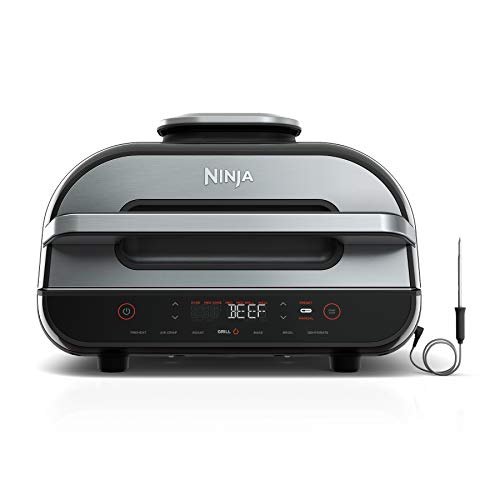
1. Ninja Foodi Smart XL Grill (FG551)
A countertop grill from Ninja that combines grilling with air frying and a built-in thermometer. The lid closes over the food, and the cooking modes cover meats, vegetables and more, which makes it useful on days when you do not want to heat the oven.
Suits: versatile countertop cooking. Strengths: grill and air fryer in one. Weaknesses: it takes counter space. Skip it if you want a basic contact grill.


Best for sandwiches, breakfast and burgers
2. Cuisinart GR-4N 5-in-1 Griddler
A classic contact grill with removable plates and five cooking modes, from panini press to flat griddle. It suits breakfast, sandwiches and quick dinners, and flipping the plates to flat gives you a griddle for pancakes or eggs.
Suits: sandwiches, breakfast and burgers. Strengths: flexible cooking modes and removable plates. Weaknesses: not a high-heat searer. Skip it if you want smoky flavor.

Best for quick meals for one or two
3. George Foreman GRP1060B Grill
A compact George Foreman style contact grill with removable plates. It is a familiar name for quick, simple meals and works for small households.
Suits: quick meals for one or two. Strengths: simple operation and easy storage. Weaknesses: limited cooking area. Skip it if you cook for a crowd.
View George Foreman GRP1060B Grill on Amazon

Best for balconies and patios with restrictions
4. Weber Lumin Compact Outdoor Electric Grill
A compact electric grill from Weber designed for balconies and small patios where charcoal and gas are not allowed. It brings recognizable Weber grill design to electric cooking, though you should check the listing for stand and cover details.
Suits: balconies and patios with restrictions. Strengths: a recognized grill brand. Weaknesses: check stand and cover needs. Skip it if you want a purely indoor tool.

Best for apartment kitchens
5. Philips Smoke-Less Indoor Grill
A Philips indoor grill designed to reduce smoke with a drip tray and a heating plate. It aims to give grilled flavor without filling a kitchen with haze.
Suits: apartment kitchens. Strengths: a smoke-reducing design. Weaknesses: it needs cleaning of the tray. Skip it if you want a large surface.
View Philips Smoke-Less Indoor Grill on Amazon

Best for searing steaks and burgers
6. Hamilton Beach Electric Indoor Searing Grill
A Hamilton Beach grill with a lid and a removable plate that heats for searing. The viewing window lets you check food without lifting the lid.
Suits: searing steaks and burgers. Strengths: a high-heat plate and a window. Weaknesses: splatter can still occur. Skip it if you want air frying.

Care and Setup
- Let the plates cool before washing.
- Use nylon or silicone tools on nonstick plates.
- Empty the drip tray after each cook.
- Wipe the heating base with a damp cloth.
- Keep the cord away from hot surfaces, and plug the grill straight into the wall rather than a power strip.
Mistakes to Avoid
- Cooking with the range hood off.
- Using metal tools that scratch the plates.
- Skipping the preheat.
- Overloading the grill so food steams.
- Letting grease build up in the tray, which can smoke and create odors.
Contact, Open and Multi-Function Designs
Indoor electric grills fall into a few families, and knowing which one you are buying saves disappointment. A contact grill closes a lid with a second plate over the food, so it cooks both sides at once. This is quick and works well for sandwiches, burgers, chicken breasts and vegetables. Because the top plate presses down, very thick cuts or uneven food may not fit well, and the pressing can squeeze out juices from some foods.
An open grill has one heated plate and often a lid or no lid at all. It behaves more like a griddle with ridges, and you flip the food yourself. This suits thicker items and gives you better visibility while you cook. Some models have a lid with a window, as the post notes for one searing grill.
Multi-function units add air frying, baking, roasting or griddling to the grill. They offer variety on a small counter, but they are bigger and have more parts to clean. If you only want grill marks on weeknight meals, a simpler grill may be enough. If you want to replace several small appliances, a multi-function unit makes sense. Decide how you will actually cook, then pick the design that matches. Remember that outdoor-style electric grills, like the compact model in the post, are designed for balconies and patios and are not necessarily intended for indoor use, so check the maker’s guidance.
Ventilation, Smoke and Kitchen Air
Smokeless is a relative term. Designs that use a drip tray, a water channel or a lower plate position reduce smoke, but fatty foods and high heat can still produce smoke and odors. Fat that hits a very hot surface smokes, and the smell of cooking lingers in small rooms. Treat any indoor grill as a source of cooking fumes and ventilate accordingly.
Turn on the range hood before you start, if you have one that vents outdoors. A recirculating hood helps less. Open a window if the weather allows, and keep the kitchen door open to the rest of the home to avoid a buildup. Be aware of the smoke detector in the room. A little smoke can trigger it, so don’t cook right under it. Never disable a detector.
You can reduce smoke through your habits. Trim excess fat, pat food dry and use a thin coat of oil with a high smoke point rather than a heavy pour. Marinades with sugar can burn and smoke, so wipe off excess before cooking. Do not let grease collect in the tray, and clean the plates between batches. If the grill starts to smoke heavily, lower the heat, turn it off and let it cool before checking the tray. Keep a lid or baking sheet nearby for a grease flare, never water.
Counter Space, Power and Placement
Electric grills draw significant power for a small appliance. Plug it directly into a wall outlet, as the post advises, instead of a power strip or a thin extension cord. Avoid running other high-wattage appliances such as a kettle or toaster on the same circuit at the same time. If a breaker trips, move the grill to a different circuit. The listing gives the wattage, and the manual may add specific advice.
Place the grill on a heat-safe, level counter with several inches of clearance around it. Keep it away from the wall and below cabinets, because steam and heat rise, and can damage cabinet finishes. Do not put it on a stovetop burner, a tablecloth or a surface that is not rated for heat. Keep the cord away from the hot plates and out of reach of children and pets.
Think about storage as well. Grills with removable plates and detachable parts take more shelf space when stored apart, but they clean more easily. A large unit may not fit in a cabinet, so decide where it will live before buying. If you plan to leave it on the counter, make sure it does not block traffic. Measure the height with the lid open, since a lid that opens upward can hit a cabinet above. Check the cord length and consider where the nearest outlet is.
Plates, Coatings and Cleanup
Most indoor grills use nonstick coated plates. They make cleanup easy but need gentle care. Use silicone, nylon or wood utensils and avoid metal tools, as the post says. Do not cut food on the plates, and avoid abrasive pads. If the coating scratches or flakes, the plate has reached the end of its useful life, and some makers sell replacement plates. Check whether yours does.
Removable plates simplify washing. Let the unit cool, then take the plates off and wash them by hand or in the dishwasher only if the maker says it is safe. Empty and wash the drip tray every time. Wipe the heating base with a damp cloth without letting water into the electrical parts. Never immerse the base or the cord in water.
Fixed plates need more care. Wipe while still warm with a damp cloth or a paper towel. Stubborn residue can be loosened with a damp towel laid over the plate while it cools, which steams it off. Dry thoroughly before storing. Keep the underside and the vents clear of grease. A buildup of grease can smoke on the next use and may smell. Over time, even good coatings wear, so be careful with heat settings and avoid empty preheating beyond what the manual advises.
Cooking Tips and Food Safety
Preheat the grill until it is fully hot, which many models signal with a light or tone. Food placed on a cool plate sticks and steams. Pat meats and vegetables dry so they brown. Use a thin coat of oil on the food rather than the plate when the maker recommends it. Do not crowd the surface, since food needs space to sear, and cook in batches if needed.
Thickness matters. Even pieces cook evenly, so pound chicken to a consistent thickness, and cut vegetables into similar sizes. For thick meats, a contact grill may overcook the outside before the center is done, so you might use a lower setting or finish in the oven. A thermometer is the best guide to doneness. Follow published food safety guidance for minimum internal temperatures for each type of meat and poultry.
Wash your hands and tools after handling raw meat, and do not reuse a plate or tray that held raw meat for cooked food without washing it. Let meats rest briefly after cooking so the juices settle. Do not expect charcoal flavor, since electric grills give marks and browning but not the same smoke. Seasoning, smoked spices and marinades help. Let the grill cool before storing, and check the cord and plugs regularly. If the cord is frayed, the plate is badly damaged or the unit heats unevenly or fails to heat, stop using it.
Open Grills, Contact Grills and Smoke-Reducing Designs
Indoor electric grills fall into a few groups that behave differently. An open-surface grill, such as the Philips Smoke-Less model, resembles a small outdoor grill and cooks on a ridged plate. A contact grill, such as the George Foreman, closes over the food to cook both sides at once. Multi-function units like the Ninja Foodi Smart XL and the Cuisinart 5-in-1 Griddler add lids, probes or flat plates for other cooking styles. The Weber Lumin is listed as a compact outdoor electric grill, so it appears here as a reference point for people who want both options.
| Grill | Style | Think about |
|---|---|---|
| Ninja Foodi Smart XL Grill (FG551) | Multi-function lidded grill | Counter space and settings to learn |
| Cuisinart GR-4N 5-in-1 Griddler | Contact grill with plate options | How the plates attach and clean |
| George Foreman GRP1060B | Contact grill | Quick cooking for small portions |
| Weber Lumin Compact Outdoor Electric Grill | Compact outdoor-style electric grill | Check the maker’s guidance on where it can be used |
| Philips Smoke-Less Indoor Grill | Open grill with smoke-reducing design | Cleaning the tray and base |
| Hamilton Beach Electric Indoor Searing Grill | Searing grill with a removable plate | Plate care and lid use |
Ventilation, Smoke and Kitchen Setup
Even a grill that is described as low smoke can produce some vapor and cooking odors, particularly when fat drips onto hot surfaces. Use the grill near a range hood or an open window, and follow the maker’s instructions for placement. Keep it on a heat-safe surface with the clearance the manual specifies on all sides, and keep the cord away from hot parts. Do not use an extension cord unless the maker permits it, and avoid plugging other high-power appliances into the same circuit at the same time.
Smoke detectors can be sensitive, so use the grill with some ventilation and keep an eye on it while it cooks. Preheating without food, as some manuals require, can produce a little smell the first few times.
A Cooking Routine That Works
- Preheat the grill to the temperature or setting the maker recommends.
- Pat food dry so it sears rather than steams.
- Lightly oil the food, not the grill plate, to reduce smoke and sticking.
- Do not crowd the surface, leaving room for air and heat to circulate.
- Use a thermometer to check doneness, following food safety guidance for each type of meat.
- Let the grill cool before cleaning, and empty the drip tray.
Cleaning Tips for Faster Cleanup
Cleaning is the main reason people stop using indoor grills, so choose one with a cleanup method you will follow. Removable plates that can go in the dishwasher, if the maker says so, simplify the job. Wipe nonstick plates with a soft sponge, and avoid metal tools. For stubborn residue, a damp towel laid over the warm plate can loosen it. Always unplug the grill and let it cool before cleaning.
Common Mistakes
The first mistake is overcrowding the surface. The second is skipping the drip tray, which can overflow. The third is cooking foods that are too wet or heavily marinated, which cause splatter and smoke. The fourth is ignoring the maker’s temperature limits for the plates. Read the manual, and keep the grill clean after every use.
Counter Space, Power and Everyday Convenience
Indoor electric grills draw a lot of power for their size, so think about where you will plug them in. Many kitchens have only a couple of outlets on a shared circuit, and running a grill alongside a toaster or kettle can trip a breaker. Check the wattage listed by each maker and the circuit you plan to use, and avoid extension cords unless the manual allows them. A grill that lives on the counter needs a permanent spot, while one stored in a cabinet should be light enough to lift easily.
Think about size too. A compact contact grill takes a few minutes to cook a sandwich or a couple of chicken breasts, while a larger lidded grill feeds a family but occupies more space. Look at the cooking surface in square inches and the height of the lid, because thick cuts and stacked sandwiches need room. Consider the length of the cord and the position of the controls, since a short cord may restrict placement.
Finally, think about what you want to cook. Grills with interchangeable plates can switch to griddling or baking, which is useful if you want one appliance for several jobs. A simple grill is easier to learn and clean, and may be all you need for burgers and vegetables.
Electric Grilling Indoors: The Weeknight Case
The electric grill’s natural home is the weeknight: the evening when outdoor grilling is too much ceremony, the hob is busy, and dinner needs to be cooked quickly with one pan’s worth of washing up. Judged on that ground, the best grill is not the largest or the most powerful but the one that goes from cupboard or counter to hot and ready with the least friction, cooks a family’s ordinary portions in one or two batches, and cleans in minutes while the food rests. This guide’s picks divide along exactly those lines, and your ordinary Tuesday is a better judge of them than any special occasion.
Think through a real meal on each design. Burgers and sausages want plate space and fat management; chicken pieces want even heat and patience; vegetables want room to lie flat and not be crowded into steaming; sandwiches and panini want a contact grill’s two-sided speed. Few households cook all of these equally, and the grill that suits your top three meals will be loved while a more versatile one that suits none of them perfectly will be tolerated. Name your top three before you compare features, and the comparison becomes short and honest.
The electric format brings two quiet advantages worth weighing. The first is placement freedom within the limits of a socket and ventilation: the grill can live where the cooking actually happens, including on a table for social cooking, in a way a hob pan cannot. The second is consistency: a thermostat holds a temperature in a way a hob ring only approximates, so the routine you perfect this week repeats next week. For cooks building confidence, that repeatability is often the reason an electric grill becomes the most-used appliance in the kitchen within a month of arrival.
None of this removes the need for ventilation and care, and the guide’s later sections deal with both in detail. It does mean the purchase decision can be refreshingly practical: footprint, batch size for your top three meals, plate cleaning, and the thermostat’s range. Answer those four from your real life, and the right pick in this line-up tends to identify itself without much agonising over features you will never switch on.
Choosing an Indoor Grill Around Smoke, Space and Cleanup
Every indoor grill is a negotiation between three things: how well it sears, how much smoke and smell it makes, and how easily it cleans. Designs differ mainly in where they stand on that triangle. Open grills give the closest feel to outdoor grilling and take larger items, but release the most vapour into the room. Contact grills cook from both sides at once, fast and tidy, and suit sandwiches and thinner cuts. Grills that circulate air or use a lid and water tray aim to cut visible smoke, trading a little of the open-grill character for a calmer kitchen. Decide which corner of the triangle matters most in your home before comparing anything else.
Plate size should be matched to real meals, not ambitions. Count the portions you cook most often and check they fit in one batch with space between them, because crowding drops the plate temperature and steams food instead of searing it. A grill that handles your Tuesday dinner in one round beats a larger one that lives in a cupboard because it dominates the counter. Storage is part of size: check the height with the lid open, whether it stands upright for storage, and where the cord and any drip tray go. The grill you can leave out, or reach in seconds, is the grill that gets used.
Power and heat recovery decide how the second batch cooks. Indoor grills heat plates that lose temperature the moment cold food lands on them; a grill that recovers quickly keeps searing rather than sliding into steaming. Adjustable temperature control widens what you can cook, from delicate vegetables and fish to thick burgers, while a single-setting grill asks you to manage doneness by timing alone. None of this can be read from a photograph, so weigh the control range, plate material and the experiences described in the guide above more heavily than styling or extra accessories you may never fit.
Cleanup is a design feature, not an afterthought. Removable plates that go in the sink or dishwasher, a drip tray that actually catches what the plates shed, and surfaces without grease-trapping seams decide whether weeknight grilling feels easy or like a project. Nonstick coatings ask for gentle utensils and no metal scourers, and they wear over time whatever you do; heavier plates, including cast iron, ask for seasoning and drying care but can be restored. Choose the maintenance style you will genuinely keep up, because a grill that is annoying to clean quietly stops being used.
A Cooking Routine That Gets a Real Sear Indoors
Preheat fully before food goes on. Indoor plates need time to reach a stable temperature, and food added early steams in its own juices while the plate climbs. Pat food dry with kitchen paper, because surface moisture is the enemy of browning, and season before cooking rather than after. Oil the food lightly rather than flooding the plate; excess oil is the main source of smoke and of the greasy film that settles on nearby surfaces. Set up the extractor or a window before you start, not once the room has already filled.
Cook in uncrowded batches and resist moving food too soon. Items release from the plate when a crust has formed; forcing them earlier tears the surface and leaves the best part stuck to the grill. Turn once where the recipe allows, and use the cooler edges of the plate, if your grill has them, to hold finished items while the next batch cooks. For thicker cuts, remember that carryover heat keeps cooking after removal, so rest meat on a warm plate under loose foil while you finish vegetables or bread on the still-hot grill.
Manage smoke with habits rather than hope. Trim excess fat where the dish allows, choose oils suited to high heat, and keep sugary marinades for the final minutes, because sugar burns and smokes faster than the food cooks. If your grill has a drip tray that takes water, keep it filled to the level the manual sets; if it has a lid, use it, since a lid contains vapour and speeds cooking. Should the room still haze, lower the temperature slightly and cook a little longer rather than opening and closing the lid repeatedly, which only spreads the vapour around.
Food safety indoors is the same as outdoors: separate utensils for raw and cooked items, a clean plate for finished food, and a thermometer for thick cuts and poultry rather than guesswork by colour. Juices should run clear is a rough guide at best; temperature is the reliable check. Let the grill cool before cleaning, but scrape and empty the drip tray once it is safe to handle, because grease left overnight hardens into the part of cleanup everyone dreads.
Cleaning and Care That Keep Plates Performing
Clean while the memory of the meal is fresh, once the plates are cool enough to touch safely. Removable plates should be washed in warm soapy water with a soft sponge; burnt residue softens with a soak far better than it yields to force, and abrasive pads shorten a nonstick coating’s life every time they touch it. The drip tray needs emptying and washing each session, not when it is full, and the channel that feeds it should be wiped so old grease does not bake into a permanent obstruction.
The body and lid collect a fine grease film even when the plates are spotless. Wipe them with a damp cloth and a little washing-up liquid, working into hinges and edges where film builds, and dry before storing. Check the cord and plug for grease and damage, and never immerse a part the manual says to keep dry. If plates are cast iron or uncoated, dry them thoroughly and apply the lightest film of oil before storage to hold rust at bay, following the maker’s seasoning guidance.
Over months, judge the grill by its behaviour: longer preheats, uneven browning, sticking where food once released, or a thermostat that overshoots are signs of wear in plates, coating or controls. Replacement plates, where the maker sells them, can give a sound grill a second life. Store the grill clean and dry, with plates fitted and the cord loosely coiled, ideally where it does not need moving other appliances to reach. A grill that is easy to reach, quick to clean and honestly maintained will still be searing well long after a neglected one has been replaced.
Mistakes That Make Indoor Grilling Disappoint
The first mistake is crowding the plate to finish sooner, which drops the temperature and produces grey, steamed food that no sauce rescues. The second is skipping the preheat or adding wet, fridge-cold food straight from a marinade, both of which guarantee steaming. The third is using the wrong oil or too much of it and then blaming the grill for smoke that the oil created. The fourth is pressing food flat with a spatula throughout cooking, squeezing out juice in exchange for a moment of satisfying sizzle.
Owners also neglect the drip tray until it smokes on its own, clean nonstick plates with metal tools that strip the coating in patches, or store the grill dirty because the meal ran late. Each lapse is small; together they turn a capable grill into a smoky, sticking chore. Dry food, a full preheat, honest batch sizes, ventilation ready before the first item lands and cleaning the same evening are the whole secret, and they cost nothing but attention.
Putting the Picks Side by Side
With six options in this guide, the fastest way to narrow the field is to match each pick to the job described in its review above, rather than chasing the longest feature list. Every pick here earned its place for a different kind of buyer, and the review sections spell out who each one suits, what it does well and where its limits sit. The notes below simply restate that positioning in one place, so you can compare the indoor electric grills options without scrolling back and forth. Nothing here adds new claims about any model; it is a map of what the guide already says, organised around the decision you are actually making.
The Ninja Foodi Smart XL Grill (FG551) is positioned in this guide for versatile countertop cooking. If that description sounds like your household, it deserves a close look; if it does not, its strengths are unlikely to matter much in daily use, however appealing they look on a listing. Re-check its review above for the stated strengths and the honest limitation, and confirm the current details on the listing itself, because included accessories and exact configurations can change over time.
The Cuisinart GR-4N 5-in-1 Griddler is positioned in this guide for sandwiches, breakfast and burgers. If that description sounds like your household, it deserves a close look; if it does not, its strengths are unlikely to matter much in daily use, however appealing they look on a listing. Re-check its review above for the stated strengths and the honest limitation, and confirm the current details on the listing itself, because included accessories and exact configurations can change over time.
The George Foreman GRP1060B Grill is positioned in this guide for quick meals for one or two. If that description sounds like your household, it deserves a close look; if it does not, its strengths are unlikely to matter much in daily use, however appealing they look on a listing. Re-check its review above for the stated strengths and the honest limitation, and confirm the current details on the listing itself, because included accessories and exact configurations can change over time.
The Weber Lumin Compact Outdoor Electric Grill is positioned in this guide for balconies and patios with restrictions. If that description sounds like your household, it deserves a close look; if it does not, its strengths are unlikely to matter much in daily use, however appealing they look on a listing. Re-check its review above for the stated strengths and the honest limitation, and confirm the current details on the listing itself, because included accessories and exact configurations can change over time.
The Philips Smoke-Less Indoor Grill is positioned in this guide for apartment kitchens. If that description sounds like your household, it deserves a close look; if it does not, its strengths are unlikely to matter much in daily use, however appealing they look on a listing. Re-check its review above for the stated strengths and the honest limitation, and confirm the current details on the listing itself, because included accessories and exact configurations can change over time.
The Hamilton Beach Electric Indoor Searing Grill is positioned in this guide for searing steaks and burgers. If that description sounds like your household, it deserves a close look; if it does not, its strengths are unlikely to matter much in daily use, however appealing they look on a listing. Re-check its review above for the stated strengths and the honest limitation, and confirm the current details on the listing itself, because included accessories and exact configurations can change over time.
Two habits help when you compare the indoor electric grills picks. First, decide your non-negotiables before you compare anything else: the space you have, the people you cook for and the one job this appliance must do well. Second, treat every other feature as a bonus rather than a reason to buy. A pick that fits your space, your habits and your cleaning tolerance will serve you better than a more elaborate model that fights your routine. When two picks both fit, choose the one whose stated limitation bothers you least, because limitations are what you live with every day, while strengths are what you notice in the first week.
More Practical Notes Before You Decide
Think about the grill’s second jobs before you buy, because a good indoor grill rarely stays in its lane. The same plates that sear burgers will toast sandwiches, cook breakfast, char vegetables for salads and reheat pizza with a crisper base than a microwave ever gives. A design whose temperature range and plate style cover your household’s second jobs will be used several times a week, while a single-purpose specialist may be better at one meal and idle for the rest. Versatility is not a compromise here; it is how counter space earns its keep.
Households with mixed diets get particular value from a grill with room to zone: meat at the hot end, vegetables and halloumi at the gentler end, everything finishing together without sharing more contact than the cooks intend. If that is your table, plate area and temperature control deserve extra weight in the choice, and a lid that lets you melt and warm without drying is worth having. Plan one mixed meal in your head against each pick in this guide and the practical differences appear at once.
Finally, let the grill’s storage answer be honest. Measure the cupboard or counter corner it will truly occupy, with its cord and drip tray, and check the weight you will move if it lives away from its cooking spot. The most capable grill in this guide is worth nothing to the household that finds it heavy, awkward and buried, while a modest one that lives within arm’s reach will cook hundreds of meals. In this category more than most, the best grill is the one that is out, hot and cooking.
Whatever you choose from this guide, give the unboxing and first setup the same care as the purchase. Check the appliance over before anything is plugged in, read the manual’s safety and setup pages properly rather than skimming for the quick-start, and keep the packaging until the first successful uses are behind you, in case a return is needed. Register the product if the maker offers it, and keep the receipt and the model details together in one place. These small acts take minutes and are the difference between a smooth first week and an avoidable argument with a retailer.
Measure your space one final time before ordering, and measure the route as well as the destination: doorways, cupboard openings, the turn into the kitchen and the shelf or counter where the appliance will live. More good purchases are defeated by a centimetre at a doorway than by any flaw in the product. If the appliance will share a circuit with other heavy loads, note that too, and plan which appliances will take turns. A purchase that arrives to a prepared home starts its life being used; one that arrives to surprises starts its life in a corner.
Build the appliance’s care into an existing routine rather than inventing a new one. The wipe that happens while the kettle boils, the check that happens when the bins go out, the descale or filter change tied to a date you already mark: habits attached to habits survive, while special rituals fade by the second month. Decide now which existing moment will carry this appliance’s small regular tasks, and write the first occurrence on the calendar before the appliance arrives. Ownership is mostly this: tiny attentions, reliably repeated.
Indoor Electric Grill FAQ
Are indoor electric grills really smokeless?
They produce less smoke than open grills, but high heat and fatty foods can still smoke. Ventilate the room.
Do they give grill flavor?
They give grill marks and sear, but not the same smoky taste as charcoal. A little smoked paprika in a rub can help.
Can I cook steak on one?
Yes, if the grill reaches high heat. Pat the meat dry and avoid crowding.
Are the plates dishwasher safe?
Check the listing or manual for each model.
Can I use an indoor electric grill in a small apartment?
Many people do, which is part of the appeal. Ventilate the room, keep the unit on a safe counter and check any building rules about cooking appliances.
Why does my grill smoke so much?
Fatty foods, sugary marinades, a dirty plate or a full drip tray are common causes. Trim fat, wipe off marinade, clean the plates and empty the tray. Lower the heat if needed.
Do I need to oil the plates?
It depends on the model and the food. Many cooks lightly oil the food instead. Check the manual for the maker's advice.
Can I cook frozen food on it?
Some makers allow it and others recommend thawing first. Follow your manual and the food's package directions, and use a thermometer to check doneness.
How do I get grill marks?
Preheat fully, dry the food and leave it undisturbed for the first part of the cook. Moving it too soon prevents marks from forming.
Is a contact grill good for steaks?
It can cook thin cuts quickly, but thick steaks may not fit and the pressing can affect juiciness. Check the plate gap and cook to temperature with a thermometer.
How long do the nonstick plates last?
It depends on use and care. Replace or retire plates that are scratched, flaking or no longer release food.
Why does my food stick even on a nonstick grill?
Sticking usually means the plate was not fully preheated, the food was wet, or it was moved before a crust formed and released it. Preheat until the grill signals ready and then give it a moment more, pat food dry, and leave it undisturbed until it lifts easily. If sticking persists on an older grill, the coating may be worn, especially if metal tools or abrasive cleaning have been used on it; at that point the plate, not your technique, is the problem.
How do I get better grill marks indoors?
Marks come from a properly hot plate, dry food and patience. Preheat fully, dry the surface of the food, lay it down and do not move it until the first side has taken its colour, then turn once. Crowding the plate drops the temperature and erases marks, so cook in batches with space between items. A light oil on the food rather than a flooded plate helps the surface sear cleanly without filling the room with smoke.
Can I cook frozen food on an indoor grill?
Some foods cope, many do not. Thin items may cook through acceptably from frozen on a moderate setting, but thick or uneven items tend to burn outside before the centre is safe. The reliable approach is to thaw in the fridge first, which also lets you dry and season the surface properly. If you do cook from frozen, use a thermometer to verify the centre, lower the heat to buy time, and accept that the sear will not match a fresh item’s.
Why does the grill keep tripping or cutting out?
A grill that cuts out may be reaching its thermostat’s limit, which is normal cycling, or it may be overheating because vents are blocked, the drip tray is full of smoking fat, or the plate is heavily fouled. Let it cool, clean the plates and tray, check its clearances and try again on a circuit that is not carrying other heavy appliances. A grill that trips the house supply repeatedly, or cuts out and will not restart, should be checked by the maker.
How do I reduce the smell that lingers after grilling?
Start the extractor before the food goes on and run it for a while after, open a window if the room allows, and keep the grill and its drip tray clean, because old fat reheating is the main source of lingering smell. Wipe nearby surfaces, since a fine film settles close to the grill and keeps releasing odour. Cooking with the lid down where the design allows, and trimming excess fat, reduces what escapes in the first place.
The Short Version
For versatility, the Ninja Foodi Smart XL. For sandwiches and breakfast, the Cuisinart GR-4N. For quick small meals, the George Foreman. For balconies, the Weber Lumin Compact. For less smoke, the Philips. For searing, the Hamilton Beach.
Related Guides
- 6 Best Indoor Smokeless Grills: Electric and Countertop (2026)
- 6 Best Indoor Korean BBQ Grills: Electric and Smokeless (2026)
- 6 Best Smokeless Indoor Grills for Apartments and Winter
- 6 Best Indoor Smokeless Grills: Plates and Smoke Control (2026)
- 6 Best Indoor Grills for Steaks: Electric and Cast Iron (2026)


