Disclosure: airfryerkitchensupply.com is reader-supported. When you buy through links on our site, we may earn an affiliate commission at no extra cost to you.
Where to buy
Every linked pick below was verified against Amazon’s catalog through the Creators API for this site, so the model name and configuration you land on are the ones reviewed here. Egg grills are heavy freight items, so check price on Amazon and confirm delivery options for your address before ordering.
- Kamado Joe Classic Joe Series II, 18 Inch — Check price on Amazon
- Kamado Joe Classic Joe I, 18 Inch — Check price on Amazon
- Char-Griller AKORN Kamado, 20 Inch — Check price on Amazon
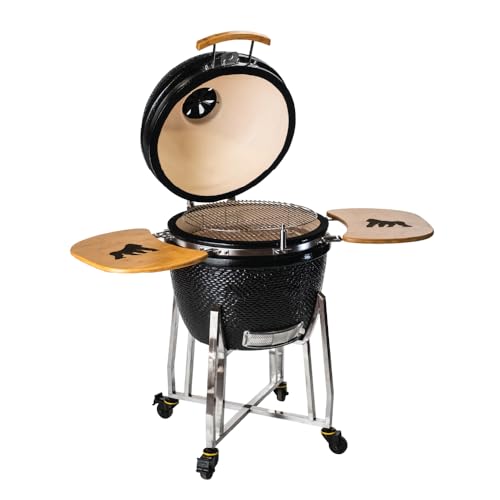
- GRILLA Grills Kong Ceramic Kamado Grill — Check price on Amazon
- Kamado Joe Joe Jr, 13.5 Inch — Check price on Amazon
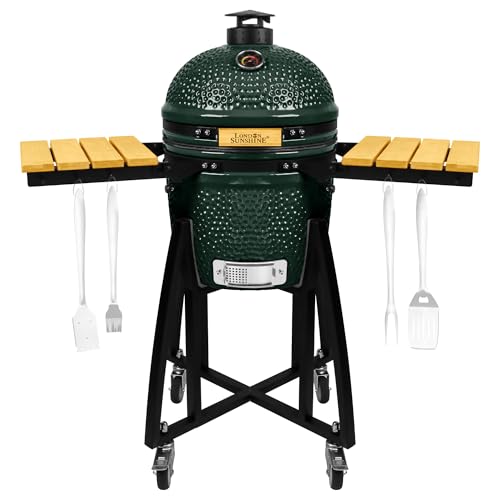
- London Sunshine Ceramic Kamado, 15 Inch — Check price on Amazon
Shopping for the best egg grills usually starts with one famous name, and that is exactly where this guide starts too — but it does not end there. The egg grill category was defined by Big Green Egg, a brand sold mainly through authorized dealers rather than Amazon, so the original Egg itself appears in this guide as a prose-only reference point. Every linked pick below is a kamado we could verify properly, led by Kamado Joe, the brand that built its reputation on matching the Egg’s ceramic cooking while adding the hinges, gaskets and divide-and-conquer systems the original long lacked.
An egg grill is a kamado: a thick-walled, egg-shaped charcoal cooker that holds low smoking temperatures for many hours and still gets hot enough to sear steaks and bake pizza. The shape is not a gimmick — the dome circulates heat, the walls store it, and the tight seals make a small charcoal load last. What separates the best egg grills from the rest is not the silhouette, which everyone copies, but the hardware around it: hinge effort, vent precision, gasket life, grate systems and the accessory ecosystem you will buy into for years.
This guide is written from the brand-and-ecosystem angle. We compare the Kamado Joe lineup against the value steel of Char-Griller’s AKORN line, the big GRILLA Kong, and a compact London Sunshine ceramic, and we explain honestly where Big Green Egg fits if you buy through a dealer instead. Sizes run from a 13.5-inch portable to a 600-square-inch flagship, so there is an egg here for a townhouse patio and for a household that cooks for a crowd.
One warning before the picks: an egg grill is a long-term purchase with a real learning curve. Charcoal management, vent control and gasket care matter more than any single feature, so the buying guide and how-to sections below are as important as the rankings. Read the picks for hardware, then read the rest for ownership.
In this guide
Quick Picks
Best Overall — Kamado Joe Classic Joe Series II, 18 Inch: The most complete egg package we verified: an 18-inch ceramic kamado on a cart with side shelves, a counterbalanced hinge feel, and the deepest accessory system in the class. Check price on Amazon
Best Value Kamado Joe — Kamado Joe Classic Joe I, 18 Inch: The first-generation Classic Joe keeps the same 18-inch ceramic format and cart setup at a lower tier — the sensible way into the Kamado Joe ecosystem. Check price on Amazon
Best Budget Egg — Char-Griller AKORN Kamado, 20 Inch: Triple-wall insulated steel instead of ceramic gives you genuine kamado cooking — low-and-slow plus high-heat searing — at a budget tier, with a roomy 20-inch grate. Check price on Amazon
Best for Big Cookouts — GRILLA Grills Kong Ceramic Kamado Grill: A 600-square-inch ceramic kamado on easy-glide wheels — the egg to pick when briskets, multiple chickens and party-sized cooks are the norm. Check price on Amazon
Best Portable Egg — Kamado Joe Joe Jr, 13.5 Inch: A real ceramic kamado shrunk to 13.5 inches with its own stand — tailgates, balconies and small households get true egg cooking without the freight problem. Check price on Amazon
Best Compact with Stand — London Sunshine Ceramic Kamado, 15 Inch: A 15-inch ceramic kamado that arrives with locking casters and foldable side shelves — the middle path between the tiny portables and the full 18-inch eggs. Check price on Amazon
How These Picks Were Chosen
We verified every linked model through the Creators API on this site, matching brand and model to the returned Amazon title before allowing a link. Big Green Egg grills could not be verified that way — the brand sells through dealers — so the Egg is discussed honestly as a reference and never linked, rather than pointed at a marketplace listing of uncertain origin.
Picks were chosen to span the real decision points in this category: premium ceramic with the best accessory ecosystem, the same brand’s simpler first-generation model, insulated steel at a budget tier, an extra-large ceramic for crowds, and two compact eggs for small households. Within each tier we favored hinge and vent quality, gasket design, grate material and the depth of accessories — heat deflectors, rotisseries, expander racks — because egg owners buy systems, not just cookers.
We excluded cookbooks and accessories that surface in catalog searches for these terms; only complete grills are picks. Prices are never printed here because freight-heavy kamado pricing moves too much to quote responsibly — check price on Amazon on the exact configuration, and factor in the deflector and cover most owners buy in the first month.
The 6 Best Egg Grills

Kamado Joe Classic Joe Series II, 18 Inch — Best Overall
The Classic Joe Series II is the egg most buyers cross-shop against a Large Big Green Egg, and it wins the comparison on hardware. The ceramic body delivers the same heat-soaked, moisture-friendly cooking the category is famous for, while the cart and side shelves in the verified configuration mean it arrives as a working station rather than a heavy shell you must house yourself. For households cooking for four to eight people, the 18-inch class is the sweet spot this whole category revolves around.
Strengths
- 18-inch ceramic body with cart and side shelves included
- Deepest accessory ecosystem of any verified egg pick
- Excellent heat retention for long, low smokes
Trade-offs
- Heavy — plan its home before it arrives
- Premium tier pricing within the egg category
- Accessories add up; budget for a deflector and cover
| Detail | Verified note |
|---|---|
| Type | Ceramic kamado, charcoal |
| Grill size | 18-inch class (per API title) |
| Included | Cart and side shelves (per API title) |
Ownership is where the Series II pulls ahead. Kamado Joe’s ecosystem — tiered grates, heat deflectors, rotisserie and expander accessories sized exactly to this cooker — is the deepest available for any egg not sold through the Egg dealer network, and parts support is straightforward. Temperature control is patient rather than twitchy once the ceramic is heat-soaked, which is precisely what you want for overnight pork shoulders and still having fuel left at dawn.
Day-to-day, the Series II is the egg that disappears into your routine: light it, settle it, and cook dinner without consulting notes. That ease is the real flagship feature, because a cooker this capable only justifies itself if it gets used on Tuesdays as happily as on brisket Saturdays — and this one does, which is why it leads the list.
Best for: most households wanting one egg for smoking, roasting and searing / Not suited for: buyers who need to move their grill often or store it indoors

Check on Amazon — check price on Amazon before you buy, since availability and configuration change.

Kamado Joe Classic Joe I, 18 Inch — Best Value Kamado Joe
The Classic Joe I is the original recipe: an 18-inch red ceramic kamado with cart and side shelves, verified here in its Premium configuration. It cooks the way the category promises — steady low-and-slow, fierce searing heat, and enough thermal mass to shrug off a cold evening — without the later generation’s refinements. If your priority is the cooking itself rather than the newest hardware touches, this is where the value sits inside the Kamado Joe line.
Strengths
- Same 18-inch ceramic format as the flagship pick
- Full compatibility with the Kamado Joe size-class accessories
- Lower tier than the Series II within the same brand
Trade-offs
- Older-generation hardware refinements missing
- Still a heavy, permanent patio fixture
- Red finish is the classic look — like it or look elsewhere
| Detail | Verified note |
|---|---|
| Type | Ceramic kamado, charcoal |
| Grill size | 18-inch class (per API title) |
| Included | Cart and side shelves (per API title) |
Choosing the first generation is a trade you should make knowingly. You keep full access to the same size class of accessories, which matters more over five years than any single feature, and you give up some convenience in hinge and gasket refinement. For a first egg bought to learn kamado cooking properly — charcoal loads, vent discipline, two-zone setups with a deflector — the Classic I teaches exactly the same lessons as its successor.
The Classic I rewards the cook who values ritual: same ceramic patience, same red silhouette that defined the category’s look. Owners tend to keep these for a very long time, passing through gasket changes and grate refreshes while the body simply continues. As a value entry into a premium ecosystem, its logic has survived several newer model launches intact.
Best for: first-time kamado buyers who want the Kamado Joe ecosystem for less / Not suited for: buyers who want the newest hinge and gasket hardware
Check on Amazon — check price on Amazon before you buy, since availability and configuration change.

Char-Griller AKORN Kamado, 20 Inch — Best Budget Egg
The Char-Griller AKORN is the egg for people who love the format and refuse the ceramic price. Its body is triple-wall insulated steel rather than fired ceramic, which changes the ownership math completely: it is far lighter, it cannot crack if knocked, and it costs a fraction of the ceramic picks while still cooking like a kamado — because the insulation, seals and vent control, not the wall material alone, make the style work. The 20-inch size is genuinely generous for the tier.
Strengths
- Real kamado cooking at a budget tier
- 20-inch grate is large for the price class
- Much lighter than ceramic — movable by one person
Trade-offs
- Steel body needs rust vigilance and a cover
- Cast iron grates need seasoning care
- Less thermal mass than thick ceramic on very long cooks
| Detail | Verified note |
|---|---|
| Type | Insulated steel kamado, charcoal |
| Grill size | 20-inch class (per API title) |
| Construction | Triple-wall insulated steel, cast iron grates (per API title) |
Steel ownership has its own rules. The AKORN asks for seasoning care on its cast iron grates and a cover in wet climates, because painted steel and standing water are enemies in a way glazed ceramic is not. In return you get an egg you can actually reposition, load into a truck for a competition or cabin, and replace without grief if life happens. For budget buyers and renters who may move, those are decisive advantages, not compromises.
Treat the AKORN as the gateway that respects your intelligence: it cooks honestly, travels willingly and costs a tier that lets beginners learn without financial fear. Many owners later add a ceramic egg and keep the AKORN for travel and overflow — a second life that speaks well of the first one. Few budget grills earn that kind of retention.
Best for: budget buyers and movers who still want true kamado cooking / Not suited for: buyers wanting a decades-long ceramic heirloom
Check on Amazon — check price on Amazon before you buy, since availability and configuration change.

GRILLA Grills Kong Ceramic Kamado Grill — Best for Big Cookouts
Most eggs are sized for a family dinner; the GRILLA Kong is sized for the neighborhood. The verified listing puts its cook space at 600 square inches, which in kamado terms means whole packer briskets lie flat, beer-can chickens stand in rows, and a two-tier cook for a party does not require Tetris. The ceramic construction keeps the format’s signature efficiency, so the bigger chamber does not mean proportionally bigger charcoal bills.
Strengths
- 600 sq in cook space — largest verified egg here
- Ceramic efficiency despite the big chamber
- Wheeled base helps position a very heavy cooker
Trade-offs
- Footprint will overwhelm small patios and balconies
- Overkill for couples cooking two portions
- Heaviest class of pick — delivery planning required
| Detail | Verified note |
|---|---|
| Type | Ceramic kamado, charcoal |
| Cook space | 600 sq in (per API title) |
| Features | Adjustable vent, EZ Glide wheels (per API title) |
Size is a commitment, and the Kong’s footprint and weight should be measured against your patio door and gate before ordering. The EZ Glide wheels in the verified configuration help once it is home, but this is a place-it-once cooker. What you get for that commitment is the one thing smaller eggs cannot fake: simultaneous capacity — mains and sides at once, or a genuinely large single cut cooked with the airflow a big chamber provides.
The Kong changes party math permanently: instead of sequencing a big cook across hours, everything goes on together and comes off together. Hosts feel that difference in their shoulders. If your gatherings regularly exceed a dozen people, the extra-large class stops being indulgence and becomes the correct tool, and this is its strongest verified form.
Best for: big households and entertainers cooking large cuts whole / Not suited for: small patios, balconies and couples
Check on Amazon — check price on Amazon before you buy, since availability and configuration change.

Kamado Joe Joe Jr, 13.5 Inch — Best Portable Egg
The Joe Jr proves the egg idea scales down honestly. It is a genuine ceramic kamado at 13.5 inches, verified here with its grill stand, and it does the format’s party tricks in miniature: a steak seared hard, a small pork butt smoked patiently, a personal pizza baked at dome heat. For singles, couples, RVers and tailgaters, it delivers the flavor and fuel economy of the big eggs in a cooker one person can carry.
Strengths
- True ceramic kamado cooking in a portable size
- Stand included in the verified configuration
- Perfect portion scale for one to three people
Trade-offs
- Cooks for two to three at most
- Too small for whole briskets or big birds
- Ceramic still needs careful handling in transit
| Detail | Verified note |
|---|---|
| Type | Portable ceramic kamado, charcoal |
| Grill size | 13.5-inch class (per API title) |
| Included | Grill stand (per API title) |
Capacity discipline is the price of portability. A 13.5-inch grate cooks for two, maybe three, and batch cooking for guests means planning waves rather than one grand load. Many owners treat the Jr as a second egg beside a larger grill, dedicated to weeknight portions and experiments, and in that role it is arguably the most-used cooker on the patio. Judge it as a specialist and it is superb; judge it as a family grill and it will frustrate you.
The Joe Jr’s secret virtue is frequency: it is the egg most likely to be lit on a whim, because heating a small ceramic chamber for two portions feels proportionate. Whim cooking is where grilling skill actually accumulates — twenty small cooks teach more than four big ones — which makes the Jr a quietly excellent teacher as well as a portable.
Best for: couples, RVers, tailgaters and second-egg specialists / Not suited for: families cooking for five or more at once
Check on Amazon — check price on Amazon before you buy, since availability and configuration change.
London Sunshine Ceramic Kamado, 15 Inch — Best Compact with Stand
The London Sunshine 15-inch occupies the gap the big brands leave open: bigger than the 13.5-inch portables, smaller than the 18-inch standards, and — unusually for its tier — sold as a complete station. The verified configuration includes locking casters and foldable side shelves, so it rolls into a corner of a townhouse patio, locks in place, and gives you landing space for trays that most compact eggs make you improvise.
Strengths
- 15-inch ceramic size suits small patios
- Locking casters and folding shelves included
- Complete station without accessory upsell
Trade-offs
- Thinner brand accessory ecosystem than Kamado Joe
- Mid size still limits very large cuts
- Newer brand — long-term parts depth unproven
| Detail | Verified note |
|---|---|
| Type | Ceramic kamado, charcoal |
| Grill size | 15-inch class (per API title) |
| Included | Locking casters, foldable side shelves (per API title) |
As a newer name beside Kamado Joe and Big Green Egg, its accessory ecosystem is thinner, and that is the honest trade: you are buying a well-equipped cooker, not a platform. Standard kamado techniques and most generic deflectors and tools sized for mid eggs will serve you, but brand-specific gadgets are limited. For a small household that wants ceramic cooking, real mobility and shelves included rather than upsold, that trade is easy to accept.
For the London Sunshine, judge the whole station, not just the cooker: casters that lock, shelves that fold, and a chamber sized for real small-household dinners. It asks the least assembly-of-life from its owner of any pick here. In a category that loves upselling the ecosystem, a complete, honest package at a mid tier is a genuinely refreshing offer.
Best for: townhouse and small-patio owners wanting a complete mid-size egg / Not suited for: accessory collectors who want a deep branded ecosystem
Check on Amazon — check price on Amazon before you buy, since availability and configuration change.
Comparison Table
| Pick | Badge | Key spec | Best for |
|---|---|---|---|
| Kamado Joe Classic Joe Series II, 18 Inch | Best Overall | 18-inch ceramic, cart + shelves | most households wanting one egg for smoking, roasting and searing |
| Kamado Joe Classic Joe I, 18 Inch | Best Value Kamado Joe | 18-inch ceramic, cart + shelves | first-time kamado buyers who want the Kamado Joe ecosystem for less |
| Char-Griller AKORN Kamado, 20 Inch | Best Budget Egg | 20-inch insulated steel, cast iron grates | budget buyers and movers who still want true kamado cooking |
| GRILLA Grills Kong Ceramic Kamado Grill | Best for Big Cookouts | Ceramic, 600 sq in cook space | big households and entertainers cooking large cuts whole |
| Kamado Joe Joe Jr, 13.5 Inch | Best Portable Egg | 13.5-inch ceramic, stand included | couples, RVers, tailgaters and second-egg specialists |
| London Sunshine Ceramic Kamado, 15 Inch | Best Compact with Stand | 15-inch ceramic, casters + shelves | townhouse and small-patio owners wanting a complete mid-size egg |
How to Choose an Egg Grill
Start with size, because every other egg decision flows from it. The 18-inch class is the category’s center of gravity: big enough for a whole brisket or a spatchcocked turkey, small enough to heat efficiently for a Tuesday chicken. Drop to 13.5–15 inches for couples and portability, and step up to a 600-square-inch class cooker only if you regularly cook for crowds — a big egg used for two burgers wastes charcoal and patience on every cook.
Then choose your wall material. Ceramic is the original egg formula: maximum heat retention, superb fuel economy, and a body that shrugs off weather, at the cost of serious weight and a shell that can crack from a hard impact or thermal shock. Insulated steel, as on the AKORN, trades some thermal mass for lightness, toughness and a budget price — the right call for movers, renters and anyone whose grill will travel.
Finally, buy the ecosystem, not just the cooker. Heat deflectors, tiered grates, rotisseries, pizza stones and quality covers are where an egg becomes a system, and the depth of that catalog differs sharply by brand. Kamado Joe’s is the deepest among verified picks; Big Green Egg’s dealer network is equally deep if you buy the original that way. A cheap egg with no deflector available is a grill that can never truly smoke.
Egg Grills vs the Big Green Egg Original
Honesty first: Big Green Egg invented this category, its cookers are excellent, and its dealer network offers assembly, delivery and local support that no online purchase matches. If a good dealer is near you, buying the original there is a perfectly sound decision. What this guide cannot do is link you to one — the brand is not sold through Amazon in a way we could verify — so treat the Egg as the benchmark the linked picks are measured against.
Measured that way, the modern alternatives compete hard. Kamado Joe built its name on including and refining what Egg owners long bought as fixes: better hinges, better gaskets, tiered cooking systems in the box philosophy. The steel AKORN undercuts everyone for buyers who value mobility. The practical differences today are ecosystem depth, local support and price tier — not cooking quality, which every pick here delivers when the cook does their part.
What Size Egg Grill Do You Actually Need?
Count your biggest regular cook, not your biggest imaginable one. A cooker bought for the annual party sits oversized through fifty ordinary dinners, burning extra charcoal to heat empty ceramic. Most households find the 18-inch class covers everything from weeknight thighs to holiday birds, especially with a tiered grate adding a second level. Add a small portable egg later for travel and overflow, and you own a more flexible pair than one giant cooker.
Also measure the physical path: gate widths, patio doors, deck load and where the egg will live in winter. Ceramic eggs are effectively permanent installations once placed. The wheeled and caster-equipped picks here ease that, but none of them make a 18-inch ceramic cooker something you carry up apartment stairs — apartment shoppers should read the portable picks, or the electric guides in this series, with clear eyes.
Egg Grill Running Costs and Charcoal Math
Eggs are famously frugal with fuel because the sealed chamber recycles heat and unburned lump survives shutdown to cook again. In practice, a household grilling twice a week and smoking twice a month spends modestly on lump charcoal — far less than the per-cook cost of propane refills at heavy use, and a fraction of pellet consumption on long cooks. The bigger running cost is accessories, which is why this guide keeps steering you to buy the ecosystem deliberately rather than impulsively.
Budget the first year honestly: cooker, deflector if not included, cover, a bag or two of quality lump, heat-safe gloves and a reliable thermometer. That kit, bought once, serves for years. The egg habit that bankrupts people is not charcoal — it is gadget accumulation, and it is entirely optional.
Egg Grills for Pizza, Bread and Baking
The dome makes the egg a genuine outdoor oven. With a deflector and stone, the chamber bakes pizza with leopard-spotted crusts, loaves with real oven spring, and casseroles that pick up a whisper of wood. The technique is stabilization: let the stone and dome heat-soak fully at temperature before the first item goes in, because radiant heat from a soaked dome is the ingredient no shortcut replaces.
Size decides the menu: 18-inch eggs take family stones and Dutch ovens comfortably, the portables bake personal pizzas and small loaves beautifully, and the Kong hosts a bakery’s worth of bread at once. If baking is half your motivation — it is for many egg buyers — weight this section heavily and choose the size class your oven ambitions actually need.
How to Set Up and Season a New Egg Grill
An egg’s first week decides how easy its next decade feels. Assembly, placement and the first low burn-in matter more than any recipe.
- Place the egg on a level, non-combustible surface with clear space above and behind the dome — never under a low combustible ceiling, and never in an enclosed space.
- Assemble the stand or cart first and lift the ceramic body with two people, holding it by its base and vent openings as the maker directs — never by the hinge alone.
- Check the dome alignment and band tension before the first fire; a misaligned lid leaks heat and smoke and cooks unevenly until corrected.
- Load lump charcoal — not briquettes — for the burn-in, light it in one spot, and hold a moderate temperature for the first cook to cure gaskets and season the interior gently.
- Cook something forgiving first: chicken thighs or a pork shoulder teach you vent control at low stakes before you attempt an overnight brisket.
- After the first cooks, re-check band bolts and hinge nuts; new hardware settles as the cooker heats and cools.
From then on, vent discipline is the whole craft: make small adjustments, wait for the temperature to settle, and remember that a heat-soaked egg responds slowly and then holds forever. Burp the dome — crack it briefly before opening fully — whenever you open a hot egg, so the rush of oxygen does not flare toward your face.
Living with an Egg: Fuel, Gaskets and the Long Game
Lump charcoal is the egg’s native fuel and the choice is not trivial. Dense, large-chunk lump burns longer and cleaner for overnight smokes; smaller, sparky lump lights fast for weeknight searing but may not last a long cook. Most owners keep one reliable brand for smoking and whatever is handy for grilling. Briquettes are a poor match — their binders and ash choke the fine airflow control the whole design depends on.
Gaskets are the egg’s consumable part. The felt or mesh seal between dome and base flattens and chars over years of high-heat cooks, and a leaking gasket shows up as smoke escaping the rim and temperatures that creep upward. Replacing a gasket is an afternoon job, not a repair bill, and brands with deep parts support make it a non-event. Budget it into ownership the way you budget tires into a car.
The long game is where eggs justify themselves. A ceramic cooker bought today will cook for decades with gasket changes and grate care; a steel egg trades some of that lifespan for mobility and price. Either way, the cooks improve as you learn your individual cooker — every egg has a personality in its vents, and the owners who love theirs are the ones who learned it on forgiving cuts first.
Egg Grill Techniques That Separate Owners from Operators
Holding a True Low-and-Slow
The egg’s party trick is a smoking temperature held for half a day, and the method is restraint: light a small area of lump, let the cooker climb slowly, and begin closing vents well before the target, because the ceramic’s momentum will carry it the rest of the way. Overshoot is the beginner’s tax — a heat-soaked egg cools at a glacial pace, so approaching from below is the professional habit. Once settled, resist touching anything. The cookers in this guide will hold their line for hours while you do something else entirely, which is precisely the luxury their owners paid for. Check the fire, not the vents, when a long cook drifts: a settled egg that slowly cools late in a smoke is usually asking for fuel arrangement, not more air.
Two-Zone Cooking on a Round Grate
A deflector over half the firebox turns the round chamber into two climates: gentle indirect heat above the plate, fierce direct heat over the open coals. Sear over the open side, finish over the plate; or smoke on the plate side and crisp at the end over the flame. This single technique unlocks most restaurant-style kamado cooking — reverse-seared steaks, skin-crisped chicken finished gently, vegetables charred then softened. Kamado Joe’s ecosystem builds this in most elegantly, but every pick here can run a half-deflector arrangement, and learning it will change your opinion of what one cooker can do.
Pizza Night, Done Properly
Pizza exposes lazy heat management because the stone and the dome must be equally hot. Load the deflector and stone, bring the egg to full baking temperature, and then wait — a full heat-soak, dome included, is the difference between a crisp base with a pale top and the blistered, leopard-spotted pie the category promises. Work in small batches, rotate once, and let the cooker recover briefly between pies. The portables make superb personal pizzas; the 18-inch class handles family stones; the Kong can run a small pizzeria. Whichever you own, the ritual is identical and the results embarrass most home ovens.
Managing Ash and Airflow Over a Season
Ash is the invisible hand on every egg’s performance. A thin layer is harmless; a deep bed strangles the airflow that the vents are trying to meter, and the symptom — a cooker that will not climb or will not settle — masquerades as a vent problem. Stir the lump before each cook, let the fines fall, and empty the ash drawer or pan on a rhythm. Once a season, inspect the firebox and the vent tracks. Owners who keep the air path clean find their egg’s personality stays constant for years, which is the real foundation of consistent barbecue.
When to Repair, When to Upgrade
Eggs ask for little: gaskets on a multi-year rhythm, grate replacement when coatings or cast iron finally surrender, band and hinge hardware checks seasonally. None of it is expensive relative to the cooker, and all of it is cheaper than the frustration of cooking on a leaking, wobbling dome. Upgrade when your cooking outgrows the chamber — not when a new color appears. The healthiest egg households we know run decade-old cookers with fresh gaskets and deep confidence, which is the category’s entire value proposition in one sentence.
Egg Grill Buying Questions, Answered in Depth
Dealer or Online: Which Channel Suits You?
The egg category is unusual in offering two legitimate channels, and the choice deserves thought rather than habit. A dealer — the Big Green Egg route — bundles assembly, delivery, a walkthrough and a local human for warranty questions, and for many buyers that bundle is worth a premium. Online purchase of the verified alternatives here trades that bundle for selection and delivered pricing, and suits confident self-assemblers. Neither channel is the smart one in the abstract; match the channel to your appetite for setup and your distance from a good dealer, and be honest about both before the freight truck is booked.
What Does ‘Premium Tier’ Actually Buy in an Egg?
In this category the premium buys three things: thermal mass and finish in the body, hardware refinement at the hinge and vents, and ecosystem depth behind the cooker. It does not buy different food from a well-run mid-tier egg on any given night — a skilled AKORN cook will out-serve a careless premium owner every time. What it buys is ease, longevity and options across a decade. Buyers should therefore price the premium against their own commitment horizon: the longer you will cook, the more sense the top tier makes.
The One Accessory to Buy First, by Pick
For the Kamado Joe models, a quality cover protects the investment while the included systems do the cooking. For the AKORN pair, the deflector and a cover share first place, because indirect cooking and steel protection are both foundational. For the Kong, long-handled tools come first — its chamber is deep and wide. For the portables, a proper carry solution protects the ceramic and the steel alike. Every other gadget can wait a month; these cannot, because each one protects or unlocks the cooker’s core promise from the first week.
What Egg Owners Wish They Had Known at Purchase
First: the learning curve is front-loaded and short. Three cooks teach the vents; ten cooks make them reflex. Owners who quit early quit during those first three, usually after fighting an overshoot that patience would have prevented. Start low, start forgiving, and the cooker becomes the easiest on the patio.
Second: placement is permanent in practice. Almost nobody relocates a ceramic egg after the first season, so the initial spot — its wind, its distance from the kitchen door, its winter accessibility — quietly decides how much the grill gets used for a decade. Choose the spot for February, not for the delivery day in May.
Third: the community is part of the product. Egg owners are evangelical record-keepers, and the accumulated knowledge around these brands — gasket fixes, vent charts, accessory verdicts — is deep and freely shared. Buying into a major ecosystem buys you that library too, which is worth real money to a new cook.
Temperature stability deserves one more honest note: an egg’s steadiness is thermal, not electronic. It will hold a smoking temperature within a narrow band for hours, but it will not chase a setpoint like a pellet grill’s controller. Cooks who love that analog character call it craft; cooks who want to press a button and walk away should consider whether their temperament suits this category before spending at the premium tier.
On covers: an egg under a quality cover ages in dog years more slowly than one left bare, whatever the wall material. Ceramic glazes craze less, steel paints last longer, hardware stays free-moving. The cover is the cheapest decade you will ever buy for any pick in this guide, and the most commonly skipped — do not skip it.
A word about resale and inheritance, because eggs invite both: ceramic cookers hold value unusually well, and a documented, crack-free body with fresh gaskets sells quickly in any market. Buying a major ecosystem is therefore also buying liquidity — a small, practical comfort that few grill purchases offer.
Finally, a note on smoke wood: eggs need only a few chunks of hardwood buried in the lump for a long cook, because the efficient chamber concentrates smoke flavor. More wood is not more better — oversmoked food is the beginner’s signature error in this category. Start with less than feels right; you can always add smoke next cook, and you cannot take it out of this one.
Common Buying Mistakes
Buying the original brand name without checking the channel. Big Green Egg sells through dealers; a too-cheap online ‘Egg’ may be a marketplace listing without the support that makes the brand valuable. Buy the original from a dealer, or buy a verified alternative — both are respectable, mixing them up is not
Skipping the heat deflector. Without a deflector or plate setter, an egg is a fierce grill but a poor smoker. If your chosen model does not include one, it is a first-month purchase, not an optional extra
Using briquettes or lighter fluid. Both fight the egg’s design: ash and binders clog airflow, and fluid flavors linger in ceramic. Lump charcoal and a clean starter are the whole recipe
Oversizing for one annual cook. A giant egg used nightly for two portions wastes fuel and time. Size for your regular cook and handle the party with tiers or a second small cooker
Opening a hot dome without burping it. The oxygen rush can flare dramatically. Crack the lid, pause, then open — every time, until it is reflex
Final Recommendation
For most buyers, the Kamado Joe Classic Joe Series II is the egg to buy: the deepest verified ecosystem, the right size class, and hardware that respects the original idea while fixing its annoyances. The Classic Joe I delivers the same cooking for less, and the AKORN delivers the format itself at a budget tier with mobility no ceramic can match.
Size specialists round out the list: the Kong for crowds, the Joe Jr for portable ceramic cooking, and the London Sunshine for a complete mid-size station. And if your heart is set on the original, buy a Big Green Egg from a local dealer with our blessing — just know the verified alternatives above give up nothing in the cooking.
Shortlist again for convenience: Kamado Joe Classic Joe Series II, 18 Inch, Kamado Joe Classic Joe I, 18 Inch, Char-Griller AKORN Kamado, 20 Inch.
Best Egg Shaped Grills Best Egg Type Grills Best Electric Barbecue Grills Best Electric Grills For Apartments
Frequently Asked Questions
What is an egg grill?
An egg grill is a kamado-style charcoal cooker: a thick-walled, egg-shaped body with a domed lid, tight seals and precise vents. The shape and mass let it hold low smoking temperatures for hours and still reach searing and pizza-baking heat, all on a modest load of lump charcoal.
Is Big Green Egg better than Kamado Joe?
They cook equivalently in practiced hands. Big Green Egg offers dealer assembly and local support; Kamado Joe offers a deeper bundled feature set and accessory catalog through normal retail. Choose by the support model and ecosystem you prefer, not by cooking quality, which is a tie.
Can an egg grill replace both a grill and a smoker?
For most households, yes. With a heat deflector it smokes low and slow; without one it grills and sears; with the dome closed it roasts and bakes. It will not match a large offset smoker for sheer capacity, but it replaces the grill-plus-smoker pair on most patios.
What charcoal should I use in an egg grill?
Lump charcoal, always. It burns clean, produces little ash and responds to the vent control the design depends on. Briquettes add binders and ash that clog airflow, and lighter fluid can flavor the ceramic — use a chimney, cube or electric starter instead.
How long does an egg grill last?
A ceramic egg lasts decades with gasket replacements and basic care; the body itself is essentially permanent if it is not dropped or thermally shocked. Insulated steel models trade some of that lifespan for lightness and price, but still serve for many years with rust prevention and a cover.
Are egg grills hard to learn?
The first few cooks teach the one real skill: vent patience. Make small adjustments and wait for the temperature to settle. Start with forgiving cuts like pork shoulder and chicken thighs, and within a month most owners find the egg easier to hold steady than the kettle grill it replaced.