A good indoor steak grill needs strong, even heat so the surface browns before the center overcooks. Electric grills with high heat settings can do this, and a heavy cast iron grill pan on the stove gives deep sear marks and a crusty finish.
The six options below mix electric grills with a classic cast iron pan and a square enameled pan. We have not used these products ourselves, so confirm the size, heat settings and care notes on the current listing before buying. Always ventilate the kitchen when searing at high heat.
As an Amazon Associate we earn from qualifying purchases. Links below are affiliate links, and they do not change the product information we give.
What to Look For
| Feature | Why it matters |
|---|---|
| Heat level | Steaks sear best at high heat, so look for strong elements or heavy pans |
| Plate or pan | Heavy cast iron holds heat; electric plates are more convenient |
| Thermometer | A built-in or separate probe helps you hit your preferred doneness |
| Drainage | Ridges and drip trays pull fat away from the steak |
| Cleanup | Nonstick plates are easy; cast iron needs seasoning and care |
In this guide
Specs at a Glance
| Product | Type | Standout feature | Notes |
|---|---|---|---|
| Breville Smart Grill Pro BGR820XL | Electric grill | Heating zones with an adjustable plate | Check the listing for size |
| Ninja Foodi Grill IG301 | Electric grill | Cyclonic grilling with a probe | Original Ninja Foodi Grill |
| Cuisinart GR-300WS Griddler Elite | Contact grill | Searing plates and temperature control | Removable plates |
| Zojirushi EB-DLC10 | Electric grill | Wide, flat plate | Check the listing for model |
| Lodge L8SGP Cast Iron Grill Pan | Stovetop pan | Heavy cast iron with ridges | Needs seasoning |
| Le Creuset Square Grill Pan | Stovetop pan | Enameled cast iron | Check the listing for size |
The 6 Best Indoor Grills for Steaks
Top pickBest for searing steaks with control
1. Breville Smart Grill Pro BGR820XL
An electric indoor grill from Breville that uses heating elements and a lid to cook steak, chicken and vegetables. The cooking plate has adjustable settings for different cuts, and the lid helps cook thicker steaks evenly.
Suits: searing steaks with control. Strengths: strong heat and a reputable brand. Weaknesses: it is bulky. Skip it if you want a very small grill.
View Breville Smart Grill Pro BGR820XL on Amazon

Best for steaks and weeknight meals
2. Ninja Foodi Grill IG301
The original Ninja Foodi indoor grill, a countertop unit that combines grilling with air frying and a probe thermometer. It is aimed at cooks who want steak, chicken and vegetables with minimal fuss.
Suits: steaks and weeknight meals. Strengths: a probe thermometer and air crisp mode. Weaknesses: it needs counter room. Skip it if you want a plain contact grill.

Best for searing with a contact grill
3. Cuisinart GR-300WS Griddler Elite
A contact grill with temperature control and removable plates designed to sear. It also functions as a griddle or panini press for breakfast and sandwiches, so it earns its space on the counter.
Suits: searing with a contact grill. Strengths: temperature control and removable plates. Weaknesses: thick steaks may not fit well. Skip it if you want an open grill.
View Cuisinart GR-300WS Griddler Elite on Amazon
Best for tabletop steak dinners
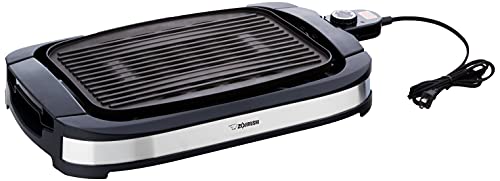
4. Zojirushi EB-DLC10 Indoor Electric Grill
A Zojirushi electric grill with a wide flat plate that works for steaks, burgers and vegetables. Zojirushi is a respected maker of countertop cooking appliances, and the flat plate is easy to wipe down after dinner.
Suits: tabletop steak dinners. Strengths: a trusted brand and a wide surface. Weaknesses: check availability and the exact model. Skip it if you want a compact unit.

Best for stovetop searing and grill marks
5. Lodge L8SGP Cast Iron Square Grill Pan
A heavy cast iron grill pan with ridges that leave grill marks and drain fat. It works on the stove or in the oven and holds heat well for searing, and it can also take a hot oven for finishing thick cuts.
Suits: stovetop searing and grill marks. Strengths: heavy iron that holds heat. Weaknesses: it needs seasoning and care. Skip it if you dislike maintaining cast iron.
View Lodge L8SGP Cast Iron Square Grill Pan on Amazon

Best for grill marks on a stovetop
6. Le Creuset Square Grill Pan
An enameled cast iron grill pan from a French maker known for cookware. The ridged surface produces grill marks, and the enamel avoids the seasoning routine.
Suits: grill marks on a stovetop. Strengths: enameled iron and a respected brand. Weaknesses: it is heavy to handle. Skip it if you want a lightweight pan.

Care and Setup
- Pat steaks dry before they touch the heat.
- Preheat electric plates or pans until very hot.
- Let the grill or pan cool before cleaning.
- Season cast iron pans after washing.
- Clear fat from drip trays after each cook, and wash cast iron by hand.
Mistakes to Avoid
- Crowding the surface so steaks steam.
- Cooking cold steak straight from the fridge.
- Skipping the rest after cooking.
- Not ventilating when searing.
- Washing cast iron aggressively with harsh soap, or leaving it wet so it rusts.
Choosing a Cut and Thickness for Indoor Cooking
Steaks differ, and the cut you pick affects how well an indoor grill will treat it. Tender cuts such as ribeye, strip and tenderloin suit quick high-heat cooking. Tougher but flavorful cuts like flank or skirt do well with a hot sear and thin slicing across the grain. Marbling, which is the fat inside the meat, adds flavor and juiciness but can create more smoke in a hot pan, so ventilate.
Thickness is just as important. A steak about an inch thick is easy to manage on most indoor grills and pans, because the outside browns while the center reaches your preferred doneness. Very thin steaks overcook fast, leaving little time to build a crust. Very thick cuts may brown too much before the inside is done. For those, an indoor approach that starts on the stove or grill and finishes in the oven can help, as the post notes for a cast iron pan that tolerates a hot oven.
Consider whether the steak will fit in your grill or pan. A contact grill with a lid has a limited gap, and an oversized steak may not close properly. A pan has a fixed surface area, so do not crowd it. Ask the butcher to cut steaks to an even thickness so they cook uniformly. Bone-in cuts take longer and cook differently from boneless ones. Read the manual to see if there is a maximum thickness for contact plates.
Preparing the Steak for a Better Crust
A good crust starts before the steak touches the heat. Take the steak out of the refrigerator a short time before cooking, as the post warns against cooking it straight from the fridge. The goal is to remove the deep chill, not to leave raw meat out for long periods, so keep to a modest time and follow food safety guidance. Pat the surface very dry with paper towels. Surface moisture steams and prevents browning.
Season with salt and pepper, or a rub of your choice, just before cooking, or a bit earlier if you prefer. Salt draws moisture out first and then the meat reabsorbs it, so timing affects the surface. Some cooks salt well ahead and leave the steak uncovered in the refrigerator, which dries the surface. Others season at the last minute. Both approaches work, so pick one and be consistent.
Oil the steak lightly instead of pouring oil into the pan, particularly with grill pans, where oil pooling in the ridges can smoke. Use an oil with a high smoke point. Avoid sugary marinades for very high-heat searing, since sugar burns before the steak is done. If you do use a marinade, pat the meat dry before it goes on the heat. Allow the grill or pan to preheat fully, until it is properly hot, because a lukewarm surface gives gray, steamed meat.
Heat, Timing and Doneness Checks
Place the steak on the hot surface and leave it alone. Moving it too soon tears the crust and prevents sear marks. Turn it when it releases easily, usually after a few minutes depending on thickness and heat. Use tongs rather than a fork, which pierces the meat and lets juices escape. For a cross-hatch pattern on a ridged pan or grill, rotate the steak partway through the first side.
Cooking time varies with thickness, starting temperature, cut and the heat of your appliance, so a clock alone is unreliable. A thermometer is a much better guide. Insert the probe into the thickest part, away from bone, and check against your preferred doneness. Food safety agencies publish minimum internal temperatures for beef, so check current guidance, especially when cooking for children, older adults or people with weakened immune systems.
Remove the steak a little before your target temperature, since it continues to rise as it rests. Rest it on a plate or board for a few minutes, loosely covered, so juices redistribute. Cutting too soon sends juices onto the board. Slice against the grain for tenderness, particularly with tougher cuts. If your pan or grill does not get hot enough for a good sear, finish with a brief extra-hot minute or use a pan with more mass.
Electric Grill Versus Cast Iron Pan Trade-Offs
Electric grills offer convenience and control. They plug in, have temperature settings and often include drip trays, and some have probes. They are more consistent from one cook to the next, and cleanup is simple with removable plates. Their heat output is limited by the element and the circuit, so very thick steaks may not develop as strong a crust as in a heavy pan. Lids and contact designs help cook both sides at once.
Cast iron pans retain heat well, which supports a deep sear. They need more care: preheating, seasoning for bare iron and avoiding harsh cleaning. They work on gas and electric stoves, and some are suited to induction, though you should check the base and the specifications. They produce smoke and grease splatter, so ventilation matters. Enameled pans avoid seasoning but can chip, and heavy pans demand a careful grip.
Think about your priorities. If you cook steak occasionally and want less fuss, an electric grill with good heat may be enough. If you care about a strong crust and already own a stovetop, a heavy pan is a simple choice. Consider the size of your household, your counter or stove space and how you feel about cleaning. Both types can produce good results with practice, and neither gives true charcoal flavor.
Smoke, Cleanup and Longevity
Steak cooking at high heat produces smoke, no matter the appliance. Turn on the range hood, open a window and keep a clear space around the cooker. Use oil with a high smoke point, avoid excess oil and wipe off any burnt bits between steaks. If your smoke alarm is sensitive, ventilate before starting and keep a towel nearby to fan air. Never leave the cooker unattended at high heat.
Clean promptly. For electric grills, let the unit cool, remove plates and trays and wash as the maker suggests. Do not immerse the base. For cast iron, wash while still warm with hot water and a brush, dry immediately and apply a thin film of oil to bare iron. Avoid soaking and avoid leaving it wet, since rust can form quickly. Enameled pans can usually be cleaned with a nylon brush and mild soap, but check the maker’s care notes.
Look for signs of wear. Nonstick plates that flake or scratch should be replaced. Cast iron that rusts can often be restored by scrubbing and reseasoning. Enameled coatings that chip or crack expose iron and may be a reason to stop using the pan. Heating elements that fail or heat unevenly, cords that are damaged and plates that warp are reasons to retire an electric grill. Take care of your equipment, and it will give years of steady use.
A Quick Checklist Before You Order an Indoor Steak Grill
Buying a grill for steaks is easier when you settle a few practical points first. Run through this list at the counter or on the sofa with the listing open, and you will avoid most of the disappointments that come from impulse orders.
- Measure the cooking surface and compare it with the biggest steak you plan to cook, leaving a little room around the edges.
- Check how much clear space sits above the unit, because lids and rising steam need headroom under cabinets.
- Confirm the plate is removable or the pan is simple to scrub, since sticky residue is the main chore afterward.
- Look at the cord length and where your nearest outlet sits.
- Decide whether you want a heavy pan that needs stovetop attention or a plug-in unit that manages heat on its own.
- Read the maker’s manual for the recommended oils and utensils, so you do not scratch a coating by accident.
If most of those boxes tick cleanly for one model, you have probably found a sensible match for your kitchen.
Electric Plates and Cast Iron Pans Side by Side
The two families of grill behave quite differently in daily use, so a quick comparison helps you see which one suits your habits.
| Question | Electric grill | Cast iron grill pan |
|---|---|---|
| Heat source | Built-in element with a dial or presets | Your stovetop burner |
| Attention needed | Lower, since the unit holds a set temperature | Higher, because you adjust the burner yourself |
| Storage | Bulky appliance with a cord | One heavy pan that hangs or stacks |
| Cleaning | Plates often lift out; follow the maker’s care notes | Hand wash and re-oil as the maker advises |
| Versatility | May also do sandwiches or vegetables | Works on the stove and sometimes in the oven |
Neither choice is wrong. People who grill several nights a week often enjoy the set-and-forget quality of a plug-in model, while those who like a simple tool tend to reach for iron.
Reading an Indoor Grill Listing Like a Careful Buyer
Product pages are written to sell, so it pays to know which lines carry real information. Begin with the dimensions section and look for the cooking area, not just the outer size of the box. Then check the wattage and the temperature range, because a unit that tops out low will struggle to brown a thick cut.
Next, read the material of the plates and the coating description. A listing that names the surface type clearly is more useful than one that only says “premium”. Scan the list of what comes in the box too, as drip trays, scrapers and manuals matter. Finally, find the section covering care instructions and warranty terms; a maker that explains these plainly is usually easier to deal with if something goes wrong.
Which Setup Fits Your Situation
Different kitchens call for different answers, so match the grill to how you actually live.
- Small apartment with a ventilation hood: a compact plug-in unit or a single pan keeps things manageable.
- Family dinners: favor a larger plate so several steaks cook together.
- Cooking for one: a square pan is quick to heat and quick to wash.
- Shared kitchen with little storage: pick something that stacks or hangs.
When in doubt about electrical load, ventilation or oven use, follow the maker’s instructions and, for wiring questions, ask a licensed electrician.
Grill Terms Worth Knowing
- Contact grilling: cooking with a plate above and below the food, which shortens the time but can press juices out of thick cuts.
- Open plate: a single heated surface with the top left open, closer to a traditional grill pan.
- Ridged surface: raised lines that leave sear marks and let fat drain into the channels.
- Drip tray: the removable catch pan that collects fat and saves your counter.
- Preheat indicator: a light or tone that tells you the plate has reached its set temperature, which saves guesswork.
- Seasoning: the baked-on oil layer on bare iron that gives it a naturally slick surface when cared for as the maker describes.
Knowing these words makes manuals and listings far less confusing, and it helps you ask sharper questions if you contact the seller before buying.
Steak Night Indoors: Building the Occasion Around the Grill
An indoor steak night succeeds as an occasion when the cooking is the calm centre of it rather than a smoky emergency in the middle. That calm is planned: steaks bought at a thickness your grill or pan handles confidently, brought out of the fridge in time, dried and seasoned while the surface heats; sides chosen to cook before, after or alongside without competing for the same hot surface; and a resting spot ready before the first steak lands. The picks in this guide differ in how they support that calm, some with thermostats and lids that forgive conversation, others with heavy iron that rewards attention, and the right one matches the kind of host you are.
Ventilation is the occasion’s invisible guest. Even the best indoor searing makes some smoke and a room full of cooking fat vapour, so the extractor, the window and the closed door to the rest of the home should be arranged before guests arrive, not negotiated during. Hosts who grill indoors often cook the steaks in a concentrated burst, rest them properly, and then sit down to a table that has had five minutes for the air to clear. That rhythm, cook, rest, clear, eat, turns a limitation into a structure and is worth adopting whatever you buy.
Choose the supporting cast with the same care. A board big enough for slicing and serving, tongs you trust, a thermometer that reads fast, and plates warmed so the steak stays hot through the meal are worth more than any extra grill feature. Sauces and butters can be made ahead and refrigerated; salads and breads ask nothing of the grill at all. The meal’s success is decided by these unglamorous arrangements far more than by the difference between two good grills, which is liberating: buy the grill that fits your space and habits, then invest your attention in the ritual around it.
Finally, let the household’s taste set the thickness and the cut, not a magazine’s. A grill that cooks your preferred cut, at your preferred thickness, to your preferred doneness, repeatably, is the best grill in this guide for you, whatever its position in the running order. Use the reviews above to find which pick is described in those terms, confirm the details on the listing, and then practise twice before the big night. Steak rewards rehearsal like almost nothing else in the kitchen.
Choosing an Indoor Steak Setup Around Thickness and Crust
Indoor steak cooking succeeds or fails on two things: a surface hot enough to build a crust quickly, and enough space and heat reserve to cook the thickness you actually buy. Start with the cuts your household eats most. Thin steaks and minute steaks forgive almost any grill, because they cook before the surface can dry. Thick, well-marbled cuts are the real test: they need fierce initial heat for the crust and then gentler heat, or a rest-and-return approach, to bring the centre up without burning the outside. Choose the grill or pan that suits your usual thickness, not the thickest steak you might cook once a year.
Contact grills, open electric grills and heavy grill pans take different routes to that crust. A contact grill cooks both faces at once and is fast and tidy, but its plates can press juices and suit even thicknesses best. An open grill gives you one hot face, room to move the steak between hotter and cooler spots, and the familiar rhythm of turning. A cast iron grill pan on the hob brings the heaviest heat reserve of all and the ridges many people love, at the cost of more smoke and more manual timing. The guide above sets out which of the picks takes which route; match that route to your confidence and your kitchen’s ventilation.
Controls matter because steak is unforgiving of vague heat. A grill with a wide, honest temperature range and a sear setting you can reach quickly gives you options; a pan gives you the hob’s control and your own judgement. Either can work beautifully. What matters is repeatability: you want to be able to do again next week whatever worked this week, so note the setting, the preheat time and the steak’s thickness each time you cook, until your own routine is settled. Steak rewards cooks who keep small notes and punishes those who rely on memory and optimism.
Do not overlook what happens around the steak. You need counter or hob space for resting, a board that catches juice, tongs rather than a fork, and a way to deal with smoke that starts before the room fills. Plate size decides whether vegetables or a second steak can share the heat or must wait. Cleanup decides whether steak night stays a pleasure: ridged plates and pans hold onto fond and fat, and the design that scrubs clean in minutes will be chosen again, while the one that needs soaking and scraping will quietly fall out of the rotation.
From Fridge to Resting Board: A Steak Routine That Works
Take the steak out of the fridge in good time so it is not stone cold at the centre, and pat it thoroughly dry; a dry surface is the single biggest factor in a good crust, ahead of any seasoning blend. Salt in advance if your routine allows, or immediately before cooking, but never leave a wet, brined surface to steam. Preheat the grill or pan until it is properly hot, not nearly hot. A surface that is almost ready produces a pale steak that sticks, and no amount of later heat gives the crust back.
Lay the steak away from you and leave it alone. The urge to nudge, press and peek is strong and always costly: the crust forms in undisturbed contact with the heat, and the steak releases when it is ready. Turn once, or follow the turning rhythm your method calls for, and manage the heat down if the outside is racing ahead of the centre. Render standing fat by holding the steak on its edge with tongs for a short time where the cut invites it. Baste with butter only in the final moments if you use it, since butter solids burn quickly at searing heat.
Judge doneness by temperature, not by the clock or by pressing the meat and hoping your thumb is calibrated. An instant-read thermometer at the thickest part, away from bone and fat seams, tells the truth, and you should pull the steak a little before your target because the temperature keeps rising as it rests. Rest on a warm plate or board, loosely covered, for a meaningful stretch of time; the juices redistribute, the centre finishes gently, and the steak eats tenderer than one cut in a hurry. Use the resting minutes to finish sides on the hot surface and to warm plates.
Slice against the grain where the cut has a clear grain, and serve on warm plates so the steak does not cool on contact. Keep the board juices; they belong over the slices or in a quick pan sauce made while the steak rested. If a second batch follows, let the surface recover its heat fully between batches, and wipe away burnt residue that would smoke and bitter the next steak. Steak night is a short performance with a long preparation, and the routine above is what makes it repeatable rather than lucky.
Cleaning, Seasoning and Looking After the Surface
Deal with the cooking surface once it has cooled enough to handle safely but before residue sets hard. For nonstick and enamelled plates, warm soapy water and a soft sponge are the limit of what the coating allows; soaking lifts most fond without force. For bare cast iron, rinse hot, scrub with a stiff brush, dry thoroughly on a warm hob or in a warm oven, and finish with the thinnest film of oil, as the maker directs. The seasoning on cast iron is built by cooking, not by any single ritual, and it improves every time you sear and care for the pan properly.
Ridges and channels are where old fat hides. Work along them with a brush rather than across them, and check the drip arrangements on electric grills each time, because a blocked channel sends grease where it should never go. Wipe down the exterior, hinges and cord with a damp cloth; the fine film from searing settles everywhere in the room, not only on the grill. Never put a hot pan under cold water, which can warp or crack it, and never leave cast iron soaking, which undoes in an hour what months of cooking built.
Store the pan or grill dry, with air able to reach the surface. If plates or pans stack, a cloth between them protects coatings and seasoning. Watch performance over time: a surface that once released a steak cleanly and now grabs everywhere is telling you the coating or seasoning needs attention, and a grill that heats unevenly or cycles wildly is telling you its controls are tiring. Answer those messages early and the same equipment will cook steak night for years; ignore them and every cook becomes a small argument with your tools.
Mistakes That Ruin an Otherwise Good Steak
The commonest mistake is a wet steak on a not-quite-hot surface, which steams the meat grey and welds it to the plate. The second is cooking straight from the fridge with timings borrowed from a recipe that assumed a warmer start. The third is cutting to check doneness, which spills the juice you rested the steak to keep and still tells you only about the edge you cut. The fourth is skipping the rest because people are hungry; an unrested steak floods the board and eats tougher than the same steak given ten quiet minutes.
Owners also crowd a second steak or vegetables onto a surface that has not recovered, season with sugary rubs at full searing heat so the sugar burns before the crust forms, and clean cast iron with detergent soaks or nonstick plates with metal tools, damaging the very surface the next steak depends on. None of these need new equipment to fix. Dry the meat, heat the surface, trust the thermometer, rest the steak and clean kindly, and indoor steak stops being a compromise and becomes a deliberate pleasure.
Putting the Picks Side by Side
With six options in this guide, the fastest way to narrow the field is to match each pick to the job described in its review above, rather than chasing the longest feature list. Every pick here earned its place for a different kind of buyer, and the review sections spell out who each one suits, what it does well and where its limits sit. The notes below simply restate that positioning in one place, so you can compare the indoor grills for steaks options without scrolling back and forth. Nothing here adds new claims about any model; it is a map of what the guide already says, organised around the decision you are actually making.
The Breville Smart Grill Pro BGR820XL is positioned in this guide for searing steaks with control. If that description sounds like your household, it deserves a close look; if it does not, its strengths are unlikely to matter much in daily use, however appealing they look on a listing. Re-check its review above for the stated strengths and the honest limitation, and confirm the current details on the listing itself, because included accessories and exact configurations can change over time.
The Ninja Foodi Grill IG301 is positioned in this guide for steaks and weeknight meals. If that description sounds like your household, it deserves a close look; if it does not, its strengths are unlikely to matter much in daily use, however appealing they look on a listing. Re-check its review above for the stated strengths and the honest limitation, and confirm the current details on the listing itself, because included accessories and exact configurations can change over time.
The Cuisinart GR-300WS Griddler Elite is positioned in this guide for searing with a contact grill. If that description sounds like your household, it deserves a close look; if it does not, its strengths are unlikely to matter much in daily use, however appealing they look on a listing. Re-check its review above for the stated strengths and the honest limitation, and confirm the current details on the listing itself, because included accessories and exact configurations can change over time.
The Zojirushi EB-DLC10 Indoor Electric Grill is positioned in this guide for tabletop steak dinners. If that description sounds like your household, it deserves a close look; if it does not, its strengths are unlikely to matter much in daily use, however appealing they look on a listing. Re-check its review above for the stated strengths and the honest limitation, and confirm the current details on the listing itself, because included accessories and exact configurations can change over time.
The Lodge L8SGP Cast Iron Square Grill Pan is positioned in this guide for stovetop searing and grill marks. If that description sounds like your household, it deserves a close look; if it does not, its strengths are unlikely to matter much in daily use, however appealing they look on a listing. Re-check its review above for the stated strengths and the honest limitation, and confirm the current details on the listing itself, because included accessories and exact configurations can change over time.
The Le Creuset Square Grill Pan is positioned in this guide for grill marks on a stovetop. If that description sounds like your household, it deserves a close look; if it does not, its strengths are unlikely to matter much in daily use, however appealing they look on a listing. Re-check its review above for the stated strengths and the honest limitation, and confirm the current details on the listing itself, because included accessories and exact configurations can change over time.
Two habits help when you compare the indoor grills for steaks picks. First, decide your non-negotiables before you compare anything else: the space you have, the people you cook for and the one job this appliance must do well. Second, treat every other feature as a bonus rather than a reason to buy. A pick that fits your space, your habits and your cleaning tolerance will serve you better than a more elaborate model that fights your routine. When two picks both fit, choose the one whose stated limitation bothers you least, because limitations are what you live with every day, while strengths are what you notice in the first week.
More Practical Notes Before You Decide
Think about the grill’s second jobs before you buy, because a good indoor grill rarely stays in its lane. The same plates that sear burgers will toast sandwiches, cook breakfast, char vegetables for salads and reheat pizza with a crisper base than a microwave ever gives. A design whose temperature range and plate style cover your household’s second jobs will be used several times a week, while a single-purpose specialist may be better at one meal and idle for the rest. Versatility is not a compromise here; it is how counter space earns its keep.
Consider building a small steak-night kit that lives together: the thermometer, the tongs, the board, a resting rack and the salt you prefer, stored where the grill or pan lives. The kit sounds like a small thing, but it removes the mid-cook scavenger hunt that cools surfaces and frays tempers, and it makes the routine portable between a grill, a pan and even a friend’s kitchen. Steak cooking is a short performance; professionals in any field lay out their tools in advance, and the habit is free to copy.
Keep a house style and write it down: the cut and thickness you buy, the salting time, the setting or hob level, the minutes per side, the target temperature and the rest. A household with a written style can hand the job between cooks, reproduce the best result on demand for guests, and change one variable at a time when improving it. Without the note, every steak night restarts the experiment, and the equipment gets blamed for what is really an unrecorded routine.
Indoor Steak Grill FAQ
Can an indoor grill sear like an outdoor one?
It can brown well with enough heat, though smoky flavor is different from charcoal.
Is cast iron better than electric?
Cast iron holds heat well for a crust, while electric grills add convenience and control.
How do I avoid smoke?
Pat the meat dry, use a high-smoke-point oil and run your range hood.
Do I need a thermometer?
A probe helps you hit your preferred doneness consistently.
What thickness is best for an indoor grill?
About an inch is easy to manage on many grills and pans. Thinner steaks overcook quickly, and thicker ones may need an oven finish. Check your grill's plate gap.
Should I oil the steak or the pan?
Many cooks oil the steak lightly to limit smoke. Use an oil with a high smoke point. Follow your appliance manual.
How do I get a good sear indoors?
Dry the steak, preheat the surface fully and do not crowd it. Leave the steak undisturbed until it releases. Ventilate the kitchen.
How do I know when the steak is done?
Use a thermometer in the thickest part and compare it with your preferred doneness and with food safety guidance. Remember that the temperature rises while it rests.
Can I cook frozen steak on these?
It is usually better to thaw first for even cooking. If you do cook from frozen, follow the manual and food safety advice, and use a thermometer.
Why does my steak turn gray?
The surface was probably wet, the grill not hot enough or the pan overcrowded. Dry the steak, preheat longer and cook fewer pieces at a time.
Is it safe to use a cast iron pan in the oven?
Many are, but check the handle and any coating. Use mitts, since the entire pan gets very hot.
Why does my food stick even on a nonstick grill?
Sticking usually means the plate was not fully preheated, the food was wet, or it was moved before a crust formed and released it. Preheat until the grill signals ready and then give it a moment more, pat food dry, and leave it undisturbed until it lifts easily. If sticking persists on an older grill, the coating may be worn, especially if metal tools or abrasive cleaning have been used on it; at that point the plate, not your technique, is the problem.
How do I get better grill marks indoors?
Marks come from a properly hot plate, dry food and patience. Preheat fully, dry the surface of the food, lay it down and do not move it until the first side has taken its colour, then turn once. Crowding the plate drops the temperature and erases marks, so cook in batches with space between items. A light oil on the food rather than a flooded plate helps the surface sear cleanly without filling the room with smoke.
How thick should a steak be for indoor grilling?
A moderate, even thickness is the indoor sweet spot: thick enough to take a hard sear without the centre overshooting, thin enough to cook through before the surface burns on a fierce plate or pan. Very thin steaks need the hottest surface and the shortest time, and suit contact cooking; very thick steaks benefit from a two-stage approach, sear then gentler heat or a warm oven finish. Choose the thickness your equipment handles confidently rather than the thickest the shop offers.
Should I oil the steak or the grill?
Oil the steak, lightly. A thin film on the meat seasons the surface that actually cooks, while oil poured on a very hot plate or pan mostly smokes and pools in the ridges. Use an oil suited to high heat, apply it just before cooking so the seasoning stays put, and keep the amount modest: you are helping contact and release, not frying. The room’s air will thank you for the restraint as much as the steak will.
Why did my steak turn out grey instead of browned?
Grey steak is steamed steak, and the causes are a short list: the surface was not hot enough, the meat was wet, the pan or plate was crowded, or the steak was moved before a crust formed. Dry the meat thoroughly, preheat without mercy, cook in uncrowded batches and leave the steak alone until it releases. If all four are right and the result is still grey, the equipment may not reach true searing heat, which is a buying fact to note for next time.
Why does the grill keep tripping or cutting out?
A grill that cuts out may be reaching its thermostat’s limit, which is normal cycling, or it may be overheating because vents are blocked, the drip tray is full of smoking fat, or the plate is heavily fouled. Let it cool, clean the plates and tray, check its clearances and try again on a circuit that is not carrying other heavy appliances. A grill that trips the house supply repeatedly, or cuts out and will not restart, should be checked by the maker.
How do I reduce the smell that lingers after grilling?
Start the extractor before the food goes on and run it for a while after, open a window if the room allows, and keep the grill and its drip tray clean, because old fat reheating is the main source of lingering smell. Wipe nearby surfaces, since a fine film settles close to the grill and keeps releasing odour. Cooking with the lid down where the design allows, and trimming excess fat, reduces what escapes in the first place.
The Short Version
For controlled electric searing, the Breville Smart Grill Pro. For grill plus air fry and a probe, the Ninja Foodi Grill IG301. For a contact sear, the Cuisinart Griddler Elite. For a wide plate, the Zojirushi EB-DLC10. For iron on the stove, the Lodge L8SGP. For enameled iron, the Le Creuset Square Grill Pan.


