A home smoker turns tough cuts like brisket, pork shoulder and ribs into tender, flavorful meat by holding low heat and wood smoke for hours. Whether you want set-and-forget convenience or a hands-on fire, there is a model that fits a backyard or patio.
The six smokers below come from established brands and cover electric, pellet and charcoal designs. We have not used these products ourselves, so confirm the size, features and included accessories on the current listing before buying. Details here are kept general on purpose, because pellet grills and electric cabinets change often.
As an Amazon Associate we earn from qualifying purchases. Links below are affiliate links, and they do not change the product information we give.
What to Look For
| Feature | Why it matters |
|---|---|
| Fuel type | Electric and pellet are easy; charcoal and wood give a more hands-on flavor |
| Controls | Digital controllers hold a set temperature with little attention |
| Cooking space | Racks and cabinet height decide how much meat fits |
| Build | Thicker steel and tight seals hold heat better in wind and cold |
| Cleanup | Water pans, ash catchers and grease trays save time after each cook |
In this guide
Specs at a Glance
| Smoker | Fuel | Standout feature | Notes |
|---|---|---|---|
| Weber Smokey Mountain Cooker | Charcoal | Vertical bullet design with water pan | Available in several sizes |
| Masterbuilt Digital Electric Smoker | Electric | Digital controls | Wood chip loading tray |
| Traeger Pro Series 575 | Wood pellet | Digital pellet controller | Check wifi features on the listing |
| Camp Chef SmokePro SE | Wood pellet | Ash cleanout | Check the cooking area on the listing |
| Pit Barrel Cooker Classic | Charcoal | Hanging-hook drum design | Simple, no-fuss setup |
| Char-Broil Vertical Propane Smoker | Propane | Vertical cabinet | Check the listing for rack count |
The 6 Best Home Smokers

Top pickBest for charcoal fans learning to smoke
1. Weber Smokey Mountain Cooker
A classic charcoal bullet smoker with a built-in water pan and stacked cooking grates. It is known for steady low temperatures and a reputation as a beginner-friendly way to learn real barbecue.
Suits: charcoal fans learning to smoke. Strengths: consistent heat control and a strong brand. Weaknesses: you must tend the fire. Skip it if you want electronic controls.

Best for beginners and apartment patios
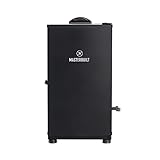
2. Masterbuilt Digital Electric Smoker
A cabinet-style electric smoker with digital controls and a side-loading chip tray. You set time and temperature, add wood chips, and the unit handles the heat, so you can walk away between checks.
Suits: beginners and apartment patios. Strengths: simple controls and easy fuel. Weaknesses: lighter smoke flavor than charcoal. Skip it if you want a deep bark.
Best for set-and-forget cooks
3. Traeger Pro Series 575
A Traeger pellet smoker that feeds wood pellets to a fire pot and holds a set temperature through a digital controller, which takes much of the guesswork out of a long cook. The maker markets it for smoking, roasting and grilling.
Suits: set-and-forget cooks. Strengths: pellet flavor and an easy temperature setting. Weaknesses: it needs electricity. Skip it if you want a bare-bones smoker.
View Traeger Pro Series 575 on Amazon
Best for frequent smokers
4. Camp Chef SmokePro SE
A Camp Chef pellet smoker with an ash cleanout system that simplifies emptying between cooks. It is built for people who smoke often and want less mess.
Suits: frequent smokers. Strengths: easier ash cleanup and pellet convenience. Weaknesses: check the cooking area before buying. Skip it if you prefer charcoal.
View Camp Chef SmokePro SE on Amazon
Best for simple, hands-off charcoal cooks
5. Pit Barrel Cooker Classic
A drum-style charcoal smoker that hangs meat on hooks over the coals. The design is intentionally simple, with few parts to learn and little to adjust once the fire is going.
Suits: simple, hands-off charcoal cooks. Strengths: easy learning curve. Weaknesses: limited rack-style cooking. Skip it if you want multiple racks.
View Pit Barrel Cooker Classic on Amazon
Best for patios without outlets
6. Char-Broil Vertical Propane Smoker
A vertical propane smoker with stacked racks and a wood chip box. Propane gives steady heat without electricity, which suits patios without an outlet.
Suits: patios without outlets. Strengths: gas convenience and rack space. Weaknesses: gas heat can mute smoke character. Skip it if you need a pellet or charcoal flavor.
View Char-Broil Vertical Propane Smoker on Amazon
Care and Setup
- Clean grates and the water pan after each smoke, since old grease can turn rancid and taint the next batch.
- Empty ash and grease before the next cook.
- Season a new smoker as the maker advises.
- Cover the unit when it is not in use.
- Check seals and door gaskets for gaps.
Mistakes to Avoid
- Opening the lid too often and losing heat.
- Using too much wood and creating bitter smoke.
- Cooking by time alone instead of internal temperature.
- Smoking in a closed garage.
- Skipping the preheat step, which leaves meat sitting in cool, smoky air for too long.
Smoker Types and Who They Suit
Home smokers fall into a few families, and the right one depends on how much attention you want to give. Electric smokers heat with an element, hold a set temperature with a thermostat and make smoke from a small tray of wood chips. They are the easiest to run and suit beginners and apartment-style patios where open fire is restricted, though the smoke flavor is usually milder. Pellet smokers feed compressed wood pellets into a fire pot with a fan and controller, giving steady heat and real wood smoke with little tending.
Charcoal smokers, including vertical drum and water-style models, give the classic flavor many people want but demand more of you. You manage vents, fuel and temperature by feel and a thermometer. Propane smokers sit in between: gas holds temperature with simple knobs while wood chips supply smoke. Offset smokers are a separate, more demanding category with a side firebox.
Ask yourself three questions. How much time will you stand next to it? How much flavor intensity do you want? How much space do you have? A person who wants to start a brisket at dawn and leave it needs reliable temperature control more than a purist smoke ring. Someone who enjoys the craft may prefer charcoal and wood. There is no best type, only the one that fits the way you actually cook.
Cooking Space and Capacity Planning
Grate area and chamber height decide what you can cook, and they matter more than fancy features. Think about the largest item you plan to smoke. A whole brisket, a pork shoulder, a turkey or several racks of ribs each need different space, and some smokers have shelves too close together for tall cuts. Check the listing for the interior dimensions, the number of racks and whether they can be rearranged or removed.
A bigger cooker is not always better. Large chambers take longer to heat, use more fuel and cost more to keep running for a small meal. A compact smoker works well for a family dinner and is easier to store. Conversely, a unit that is too small forces you to cook in batches, which is frustrating on a party day.
Remember that you also need room around the smoker for safety. Manuals usually specify clearances from walls, railings and overhead structures, and smoke should drift away from windows and neighbors. Consider where you will place a table for trays and tools, and whether the surface is level and fireproof. If you live somewhere windy or cold, a better-insulated model will hold temperature with less fuel. Measure your space and the unit’s footprint, including side shelves and the chimney, before you buy.
Temperature Control and Monitoring
Low and slow cooking depends on steady heat, and your smoker is only as good as your ability to read it. Built-in lid thermometers are often inaccurate or measure air far from the food, so many cooks add a probe thermometer for the grate and another for the meat. Dual-probe or wireless units let you monitor without opening the lid, which keeps heat in. Verify the reading by checking against ice water or boiling water before relying on any gauge.
Electric and pellet smokers use controllers to hold a set point, and quality varies in how tightly they maintain it. Look for a design with a clear display and sensible placement of the sensor. On charcoal and propane units, tight seals, adjustable vents and good insulation do the work. Gaps in door seals leak both heat and smoke and make temperature wander.
Expect swings and learn the pattern. Weather, wind, cold air and a fresh load of cold meat all change the cooker’s behavior. Resist the urge to open the lid often; each peek costs heat and time. A water pan can stabilize temperature and add moisture in some designs, but it needs refilling and cleaning. Your goal is steady, modest heat and a food probe that tells you when the meat is truly ready.
Fuel, Wood and Smoke Quality
Smoke quality matters more than smoke quantity. Good smoke looks thin and pale, often described as a faint blue wisp, and smells clean. Thick white or grey billows usually mean the fire is starved of air or the wood is smoldering badly, and they leave a bitter taste. Give the fire enough airflow, use dry, seasoned wood and add it in small amounts.
Wood type affects flavor. Fruit woods tend to be mild and slightly sweet, while hickory and oak are stronger and more traditional with beef and pork. Mesquite is intense and can overwhelm if overused. Match intensity to the meat, using lighter smoke for poultry and fish. Pellets, chips, chunks and splits all behave differently, so use the form your smoker is designed for rather than substituting. Soaking wood is a debated practice, and many cooks skip it; follow your manual.
Fuel planning also prevents mid-cook crises. Charcoal and propane run out, pellet hoppers empty and electric units rely on steady power. Keep spare fuel and know roughly how long a load lasts in your unit and weather. Store pellets and wood dry, since damp fuel smokes poorly and can jam feeders. Cheap, heavily flavored additives are not necessary; clean fuel and proper airflow give the best results.
Safety, Placement and Ongoing Upkeep
A smoker is a hot, smoky appliance, so place it outdoors on a stable, non-combustible surface well away from structures, overhangs and dry vegetation. Never use a charcoal, wood or gas smoker in a garage, shed or enclosed space, because carbon monoxide can build up. Keep children and pets clear, and have a way to extinguish embers safely. Check local rules, especially if you live in a multifamily building.
Food safety matters as much as fire safety. Keep raw and cooked foods separate, use clean utensils, and judge doneness by internal temperature rather than appearance. Meat should not sit in a long warm stage, so preheat the smoker before loading and avoid starting with a cold, damp chamber. Follow recognized food safety guidelines for the meat you are cooking.
Upkeep extends the life of the cooker. Remove ash and grease after each use, scrape grates, empty drip pans and check seals. Grease buildup can flare up and spoil flavor. Cover the smoker when not in use and inspect for rust, loose fasteners and worn wires. Replace damaged gaskets, heating elements or igniters instead of improvising. A well-kept smoker will perform predictably for years.
Which Smoker Fits Your Situation
Instead of comparing every feature, begin with how you actually live. A short decision guide narrows the field faster than a spec sheet will.
- You want minimal tending: look at electric or pellet designs, where a controller manages the heat for you.
- You enjoy the craft of fire: charcoal or wood models reward attention and give you full control over the process.
- You have a small balcony or limited yard: check the footprint and the ventilation rules where you live before anything else.
- You cook for crowds: prioritize rack area and a firebox that holds fuel for a long cook.
- You travel or camp: a compact, lighter unit matters more than capacity.
Most households fall into the first or second group. Be honest about how much time you want to spend beside the smoker, because a model that demands constant adjustment will sit unused if your weekends are busy.
Common Beginner Missteps and How to Avoid Them
Almost everyone repeats a handful of errors in the first few cooks. Knowing them ahead of time saves frustration and wasted meat.
The first is opening the lid too often. Every peek lets heat and smoke escape and lengthens the cook. Trust your thermometer and resist the urge. The second is chasing a thick white cloud. Good smoke is thin and almost invisible, and heavy white billows usually signal poor airflow or a fire that needs more oxygen.
The third is cooking to a clock instead of to temperature. Cuts vary, and the time in a recipe is only a guide. Use a reliable probe and follow the doneness guidance for the type of meat, along with official food handling advice. The fourth is skipping the rest. Letting a finished cut sit before slicing keeps it juicier and easier to carve.
Electric, Pellet and Charcoal Side by Side
The three main fuel styles each trade convenience against personal involvement. This table gives a general picture, though individual models differ.
| Feature | Electric | Pellet | Charcoal |
|---|---|---|---|
| Learning curve | Gentle | Gentle to moderate | Steeper |
| Heat control | Dial or digital | Automatic feed | Manual vents |
| Smoke character | Milder | Moderate | Often the boldest |
| Needs power | Yes | Yes | No |
| Attention during cook | Low | Low | Higher |
None of these is the right answer for everyone. Pick the column whose trade-offs you can live with for years, not only for the first weekend.
Smoker Terms Worth Knowing
Product pages and cooking forums use vocabulary that can feel opaque at first. A few terms come up constantly.
- Bark: the dark, flavorful crust that forms on the outside of slow cooked meat.
- Firebox: the chamber where fuel burns, sometimes attached to the side of the cooking area.
- Offset: a layout in which the fire sits to one side so heat and smoke travel across the food.
- Damper: an adjustable vent that controls airflow and therefore temperature.
- Probe: a thermometer that stays in the meat or measures chamber heat during the cook.
- Rest: the period after cooking when meat sits covered before it is cut.
Learning this small glossary makes manuals and cooking instructions far easier to follow, and it helps you ask better questions when comparing models.
Setup, Placement and When to Call the Maker
Where you put a smoker matters as much as which one you buy. Choose a flat, stable spot on a non-combustible surface, well clear of walls, fences, eaves and overhanging branches. Smoke should drift away from windows and from neighbors, so think about the usual wind direction in your yard before you settle on a corner.
Read the maker’s manual before the first fire. It explains the correct way to burn in the unit, how much fuel to load, and which cleaning steps are required. Every design is different, and the instructions for a pellet unit will not match those for a charcoal cooker.
Some issues are best left to the maker or a qualified technician rather than solved with guesses:
- Electrical faults, damaged cords or controllers that behave oddly.
- Gas connections and regulators on propane models.
- Cracked welds, warped doors or frames that no longer sit square.
- Heating elements or igniters that fail to work as described.
For anything involving fuel or power, follow official guidance and the written instructions, and contact customer support when something does not match the manual. A short message to the maker is almost always quicker than a risky repair, and it keeps any coverage intact.
Once the basics are in place, keep a small log of each cook, noting the fuel, weather, cut and result. After a handful of entries you will see patterns that no manual can teach, and your results will become more consistent.
Reading the Picks Side by Side: A Deeper Comparison
The quick picks and individual reviews earlier in this guide give you the facts on each option for home smokers. What they cannot do in a short format is slow the decision down and show how the picks differ when you imagine them in your own kitchen, on your own schedule, doing the jobs you actually repeat every week. This section does that. It uses only the products already covered above, and it adds no new models, so use it as a way of comparing the shortlist you already have rather than as a second list competing with the first. For each pick, the useful questions are the same: who is this design really for, what should you double-check on the current listing before you commit, and what kind of owner tends to be happiest with this style of smoker over months rather than minutes.
Who Should Shortlist the Weber Smokey Mountain Cooker
Put the Weber Smokey Mountain Cooker on your shortlist if its style, as described in its review above, matches the way you already cook and the space you already have. Read that review again with your own routine in mind: the meals you make most often, the number of people you usually feed, and the storage or counter space the smoker will occupy every day, not just on the day it arrives. Before buying, confirm the current listing still shows the same model name, the same included accessories and the same care requirements described earlier in this guide, because line-ups change quietly over time. If two picks seem equal, the tie-breaker is rarely a headline feature; it is usually which design removes a small daily friction, such as awkward cleaning, a door or lid that fights your layout, or controls nobody in the household enjoys using. A pick that fits your habits will be used constantly, and regular use is what turns any smoker from a purchase into a genuinely good buy.
Who Should Shortlist the Masterbuilt Digital Electric Smoker
Put the Masterbuilt Digital Electric Smoker on your shortlist if its style, as described in its review above, matches the way you already cook and the space you already have. Read that review again with your own routine in mind: the meals you make most often, the number of people you usually feed, and the storage or counter space the smoker will occupy every day, not just on the day it arrives. Before buying, confirm the current listing still shows the same model name, the same included accessories and the same care requirements described earlier in this guide, because line-ups change quietly over time. If two picks seem equal, the tie-breaker is rarely a headline feature; it is usually which design removes a small daily friction, such as awkward cleaning, a door or lid that fights your layout, or controls nobody in the household enjoys using. A pick that fits your habits will be used constantly, and regular use is what turns any smoker from a purchase into a genuinely good buy.
Who Should Shortlist the Traeger Pro Series 575
Put the Traeger Pro Series 575 on your shortlist if its style, as described in its review above, matches the way you already cook and the space you already have. Read that review again with your own routine in mind: the meals you make most often, the number of people you usually feed, and the storage or counter space the smoker will occupy every day, not just on the day it arrives. Before buying, confirm the current listing still shows the same model name, the same included accessories and the same care requirements described earlier in this guide, because line-ups change quietly over time. If two picks seem equal, the tie-breaker is rarely a headline feature; it is usually which design removes a small daily friction, such as awkward cleaning, a door or lid that fights your layout, or controls nobody in the household enjoys using. A pick that fits your habits will be used constantly, and regular use is what turns any smoker from a purchase into a genuinely good buy.
Who Should Shortlist the Camp Chef SmokePro SE
Put the Camp Chef SmokePro SE on your shortlist if its style, as described in its review above, matches the way you already cook and the space you already have. Read that review again with your own routine in mind: the meals you make most often, the number of people you usually feed, and the storage or counter space the smoker will occupy every day, not just on the day it arrives. Before buying, confirm the current listing still shows the same model name, the same included accessories and the same care requirements described earlier in this guide, because line-ups change quietly over time. If two picks seem equal, the tie-breaker is rarely a headline feature; it is usually which design removes a small daily friction, such as awkward cleaning, a door or lid that fights your layout, or controls nobody in the household enjoys using. A pick that fits your habits will be used constantly, and regular use is what turns any smoker from a purchase into a genuinely good buy.
Who Should Shortlist the Pit Barrel Cooker Classic
Put the Pit Barrel Cooker Classic on your shortlist if its style, as described in its review above, matches the way you already cook and the space you already have. Read that review again with your own routine in mind: the meals you make most often, the number of people you usually feed, and the storage or counter space the smoker will occupy every day, not just on the day it arrives. Before buying, confirm the current listing still shows the same model name, the same included accessories and the same care requirements described earlier in this guide, because line-ups change quietly over time. If two picks seem equal, the tie-breaker is rarely a headline feature; it is usually which design removes a small daily friction, such as awkward cleaning, a door or lid that fights your layout, or controls nobody in the household enjoys using. A pick that fits your habits will be used constantly, and regular use is what turns any smoker from a purchase into a genuinely good buy.
Who Should Shortlist the Char-Broil Vertical Propane Smoker
Put the Char-Broil Vertical Propane Smoker on your shortlist if its style, as described in its review above, matches the way you already cook and the space you already have. Read that review again with your own routine in mind: the meals you make most often, the number of people you usually feed, and the storage or counter space the smoker will occupy every day, not just on the day it arrives. Before buying, confirm the current listing still shows the same model name, the same included accessories and the same care requirements described earlier in this guide, because line-ups change quietly over time. If two picks seem equal, the tie-breaker is rarely a headline feature; it is usually which design removes a small daily friction, such as awkward cleaning, a door or lid that fights your layout, or controls nobody in the household enjoys using. A pick that fits your habits will be used constantly, and regular use is what turns any smoker from a purchase into a genuinely good buy.
Compared as a group, the picks above fall into natural camps rather than a single ladder from worst to best. Some are built for speed and convenience, some for capacity, and some for the cook who enjoys the process as much as the result. Ranking them without knowing your priorities would be misleading, which is why the reviews describe each one on its own terms. Your job is to name your top two priorities honestly, whether that is easy cleaning, a small footprint, generous room, simple controls or a particular cooking style, and then notice which camp keeps matching them. Most buyers find the decision becomes obvious at that point, and the remaining differences are preferences rather than problems.
Choosing for Your Real Routine, Not an Ideal One
Guides to home smokers are usually read in a hopeful mood, imagining weekend projects and relaxed meals. The better test is a tired Tuesday. Picture the smoker being used when you are short of time, the kitchen is already messy and nobody wants a complicated clean-up afterwards. If the design still sounds appealing under those conditions, it is probably right for you. If it only appeals in the best-case version of your life, keep looking at the other picks. This honest test prevents the most common disappointment in kitchen buying, which is not poor quality but a poor match between a good product and the wrong household.
For Busy Weeknights
On weeknights, the winning qualities are fast setup, forgiving operation and a clean-up that takes minutes rather than a project. Favour the pick whose controls you can understand at a glance and whose parts you can wash without a strategy meeting. Think about who else will use it: a design that only one confident person in the house can operate will sit idle whenever that person is out. Simplicity also compounds over time, because an smoker that is easy on a Tuesday gets used on Saturdays too, while a demanding one gradually becomes furniture. When you compare the reviews above, underline every mention of setup, preheating, monitoring and washing, and let those practical details carry as much weight as the cooking results themselves.
For Weekends, Guests and Bigger Projects
Weekend cooking makes different demands: more capacity, more control and more tolerance for a longer session. If you regularly cook for guests, cook in batches or like learning a technique properly, the pick that offers room to work and steady, adjustable performance will reward you far more than the smallest or simplest option. Think through the whole event, from preparation space to where finished food rests, to how the smoker behaves when it is opened, loaded or checked repeatedly. Also consider noise, smoke, heat or steam in the space where people will gather, because a wonderful result served from an uncomfortable kitchen is only half a success. The right choice supports the occasion instead of becoming the occasion’s main challenge.
For Small Kitchens and Shared Spaces
Space is not only about the footprint on the day of delivery. It is about the cupboard the accessories live in, the clearance the lid or door needs, the route from storage to counter, and whether the smoker can stay out permanently or must be moved for every use. Measure honestly, including the awkward realities such as low cabinets, narrow doors and sockets in inconvenient places. In shared homes, also think about how the appliance affects other people: heat, smells, noise and how long it monopolises a shared surface. A slightly less ambitious pick that lives happily in the space will outperform a larger one that is resented, squeezed in and rarely used. The reviews above note the style and form of each pick; match those notes against your measurements before you fall for any particular model.
Setup and First Use, Step by Step in Practice
Set a smoker up as if the cook will last for hours, because it usually will. Choose a sheltered outdoor spot on a level, fire-safe surface, away from walls, fences and anything the wind could carry sparks toward, and think about smoke drift toward neighbours and open windows before you light anything. Read the maker’s guidance on fuel, assembly and first seasoning, and run that first empty or lightly loaded session to learn how your smoker gains, holds and loses heat before an expensive cut depends on it. Arrange fuel, water, tools, thermometers and a clean resting tray in advance, and plan the cook backwards from when you want to eat, adding generous margin. Smoking rewards the cook who starts early and holds finished food properly far more than the one who tries to rush the final hour with extra heat.
During the first few uses, resist the temptation to judge the smoker by a single ambitious attempt. Start with something simple and familiar so the only new variable is the equipment itself, and pay attention to the small things: how long preparation really takes, where you naturally stand, what you wish you had within reach and how the clean-up feels. Adjust one thing at a time in the next session. Owners who treat the first week as a short learning period almost always end up happier than owners who expect mastery on day one, because most kitchen equipment has a personality that reveals itself through use rather than through its description. Write down what you learn while it is fresh; a few honest notes are worth more than a month of vague impressions when you later wonder which setting, position or routine produced your best result.
Cleaning, Care and Storage in Detail
After the cook, let ash and coals cool completely before disposal in a metal container, and never rush this step after a long session when tiredness makes shortcuts tempting. Scrape grates while they are still warm on the next preheat if residue resists, wipe grease from the places it collects, and check that grease management parts are emptied before they overflow into the fire area. Wipe the interior according to the maker’s guidance rather than stripping it to bare metal; a seasoned interior is part of how many smokers perform. Inspect gaskets, hinges, vents and chimneys for blockages or wear, store the smoker dry and covered if it lives outside, and confirm covers are fully cool and dry underneath. A smoker cleaned in daylight the next morning stays safer and cooks more predictably than one abandoned after midnight.
Storage deserves the same thought as cleaning. Keep the smoker and its accessories together so nothing essential is missing when you come to use it, store cords loosely rather than tightly wound, and never put a unit away while it is still warm or damp inside. If space forces you to store it in a cupboard or garage, check that the spot is dry and that heavier items will not be stacked on top of it. Once a season, do a slightly deeper review: look for wear, check moving parts and seals, confirm accessories are complete and reread any care notes in the manual you may have forgotten. This light rhythm of daily wiping, weekly tidying and seasonal checking is what keeps kitchen equipment working well for years without ever demanding a dramatic rescue effort.
Troubleshooting: Working Through Common Problems Calmly
Temperature swings are the classic smoker frustration, and they usually come from wind, fuel changes, frequent lid opening or vents adjusted too aggressively in response to every small movement. Make one small adjustment, then wait; smokers respond slowly, and chasing the needle creates the very swings you are trying to stop. Thin, harsh smoke rather than a clean wisp usually means the fire needs air or cleaner fuel, while food that stalls for hours is a normal phase of large cuts rather than a failure, so plan for it instead of panicking with heat. If the fire dies, check fuel, ash buildup and airflow before anything else. Keep notes on fuel, weather and vent settings for each cook; a smoker becomes predictable when its owner keeps records, and unpredictable when every cook starts from memory alone.
Whatever the problem, change one thing at a time and observe the result, because changing three things at once teaches you nothing and often creates a new problem on top of the old one. Keep a short record of what you tried; patterns that are invisible in a single session become obvious across three or four. Also remember the limits of troubleshooting: anything involving damaged cords, gas, persistent electrical faults, cracked critical parts or a safety feature that is not working is a reason to stop and get professional help, not a challenge to improvise around. Most owners find that the great majority of frustrations are small, repeatable and fixable with setup, cleaning or technique, and that is genuinely good news, because those are the variables fully within your control.
Planning the Purchase Around Your Home and Budget
Because this guide deliberately avoids fixed prices, which change constantly, plan the budget side in a more durable way. Decide what the smoker must do, what would merely be nice, and what you will never use, then let the must-do list set your tier. Remember the full cost of ownership includes the accessories you will genuinely need, any installation or professional help the design requires, replacement filters or parts where they apply, and the storage it will occupy. None of that argues for buying the cheapest option or the most expensive one; it argues for buying the option whose total picture you understand. Check the current listing for what is included in the box, what is sold separately and what the return options are, and keep your order details and the manual together after purchase.
Finally, give yourself a decision deadline and a shortlist of at most two or three of the picks above. Endless comparison feels thorough but usually produces confusion rather than confidence, because the differences between good options are smaller than the difference between a decision made and a decision endlessly postponed. Re-read the reviews of your finalists, check the measurements and the included accessories one last time, and choose the one that best fits the routine you described honestly at the start of this section. That is the process that leads, reliably, to an smoker you will still be pleased to own long after the excitement of delivery has passed.
Home Smoker FAQ
Which fuel type is easiest?
Electric and pellet smokers need the least attention. Charcoal takes more practice but rewards it with classic flavor.
How much wood should I use?
A little goes far. Use small amounts of dry wood and look for thin, pale smoke.
Can I smoke in cold weather?
Yes, but insulated or thicker-walled units hold heat better. Expect longer cook times.
Do I need a meat thermometer?
Yes. Internal temperature is the reliable way to judge doneness, because time varies with weather, cut size and fuel.
What is the best smoker for a beginner?
Electric and pellet models are generally easiest because they hold temperature for you. Charcoal needs more practice. Choose the one that matches how much time you want to spend tending.
Do I need to season a new smoker?
Most makers recommend a first burn to remove manufacturing oils and condition the interior. Follow the instructions in your manual for time, temperature and fuel.
What is the stall?
During a long cook of large cuts, internal temperature can pause for a while as moisture evaporates from the surface. It is normal. Stay patient and keep monitoring rather than raising the heat sharply.
Should I use a water pan?
In some designs a water pan steadies temperature and adds humidity. Others do not need one. Follow your smoker's design and keep the pan clean and filled if you use it.
How do I avoid bitter smoke?
Use dry wood, give the fire enough airflow and add small amounts at a time. Look for thin, pale smoke rather than thick white clouds.
Can I leave a smoker unattended?
Some electric and pellet models are designed for long unattended cooks, but check the manual. Charcoal and gas units need regular checks, and no smoker should be left near children or in poor weather without supervision.
How do I clean a smoker?
Let it cool, scrape grates, remove ash, empty grease trays and wipe the interior as the manual advises. Avoid scrubbing off the dark seasoning layer inside metal chambers.
What size smoker should I buy?
Match grate space to the biggest cut you plan to cook and the number of people you feed. Leave room for airflow rather than packing every shelf.
How long should I expect a good smoker to last?
Longevity depends far more on care and frequency of use than on any single feature. An smoker that is cleaned after use, stored dry, and used within the limits its maker describes will usually serve a household for years, while the same design neglected after every session will age quickly. Treat the manual’s care schedule as part of the product you bought, keep accessories together so nothing is lost or forced into service as a substitute, and deal with small signs of wear early. When a safety-related part wears out, replace or retire the item rather than stretching its life; with ordinary parts and consumables, following the maker’s replacement guidance keeps performance close to how it felt when new.
What is the most common mistake new owners make?
The most common mistake is expecting the first session to go perfectly and blaming the smoker when it does not. Almost every design in this category has a short learning curve involving setup order, timing, quantities or positioning, and the first few uses are best treated as practice with forgiving food or simple tasks. The second most common mistake is skipping the unglamorous steps: not reading the manual, not measuring the space, and not cleaning promptly afterwards. Owners who slow down for the first week, take a few notes and build a small routine around setup and clean-up almost always end up rating the same product far more highly than owners who rushed, because the product did not change; the ownership did.
Should I buy accessories at the same time?
Only the accessories you already know you will use belong in the first order. A basic tool that supports the way you already cook, such as the right tray, tongs, thermometer or storage cover for your situation, earns its place immediately, while elaborate kits bought in a burst of enthusiasm often end up as cupboard clutter. Live with the smoker for a few weeks first, notice what you actually reach for and what genuinely slows you down, and then buy to fill those specific gaps. Check compatibility with your exact model on the current listing before ordering any accessory, because similar-looking parts are not always interchangeable, and keep the included accessories until you are sure a replacement suits you better.
How do I know if a pick is too big or too small for us?
Judge size against your largest regular job, not your largest imaginable one. If you size for a rare feast, you will live every day with an smoker that is heavier to move, slower to prepare and harder to store than your routine needs, while sizing for an ordinary day and occasionally cooking in two batches is usually painless. Measure the space where it will live and where it will be used, including clearance for lids, doors and your own hands, and compare those numbers with the dimensions on the current listing. Then be honest about portions: count the people you feed most weeks, not at holidays. The picks above span different styles and capacities precisely so that both small households and generous hosts can find a sensible match.
Is it worth paying more for a premium version?
It can be, when the extra money buys things you will feel every week: sturdier construction, controls that are pleasanter to use, easier cleaning, better support from the maker or a design that fits your space more gracefully. It is not worth it when the premium buys only features you will rarely touch. The practical test is to list what the step-up pick actually adds, using its review above, and ask how many times a month each addition would matter in your home. If the honest answer is often, the upgrade tends to justify itself over years of use. If the answer is almost never, the simpler pick is not a compromise; it is the correct choice, and the money saved is better kept for accessories or ingredients you will genuinely enjoy.
The Short Version
For classic charcoal flavor, the Weber Smokey Mountain Cooker. For simple electric use, the Masterbuilt Digital Electric Smoker. For pellet convenience, the Traeger Pro Series 575. For easier cleanup, the Camp Chef SmokePro SE. For no-fuss drum cooking, the Pit Barrel Cooker Classic. For a gas option, the Char-Broil Vertical Propane Smoker.