A gravity fed charcoal smoker stores charcoal in a tall hopper, and the fuel drops down into the burn area as it is consumed. Add a fan and a digital controller and you get steady heat with real charcoal flavor, without the constant tending of a traditional charcoal cooker.
The first five picks below are gravity fed charcoal smokers and grills from Masterbuilt and Char-Griller. The sixth is a classic non-gravity charcoal smoker, included so you can see the difference. We have not used these products ourselves, so confirm cooking area, controls and included accessories on the current listing before buying.
As an Amazon Associate we earn from qualifying purchases. Links below are affiliate links, and they do not change the product information we give.
What to Look For
| Feature | Why it matters |
|---|---|
| Hopper | A deeper hopper lets you burn longer without refilling |
| Controller | A digital fan controller holds a set temperature with little effort |
| Cooking area | The number in many model names refers to square inches of grate space |
| Searing | Some gravity models also run hot for searing, not only for smoking |
In this guide
Specs at a Glance
| Product | Style | Size class | Notes |
|---|---|---|---|
| Masterbuilt Gravity Series 560 | Gravity fed, digital | Smaller | Fan and controller |
| Masterbuilt Gravity Series 800 | Gravity fed, digital | Mid size | Fan and controller |
| Masterbuilt Gravity Series 1050 | Gravity fed, digital | Larger | Fan and controller |
| Masterbuilt Gravity Series XT | Gravity fed, digital | Larger | Upgraded features |
| Char-Griller Gravity Fed 980 | Gravity fed | Mid to large | Hopper design |
| Weber Smokey Mountain 18 | Vertical water smoker | Mid size | Not gravity fed |
The 6 Best Gravity Fed Charcoal Smokers
Top pickBest for smaller households
1. Masterbuilt Gravity Series 560 Digital Charcoal Grill and Smoker
The smallest of the Masterbuilt gravity line, with a charcoal hopper, a fan and a digital controller. It suits small households and patios that want gravity feed convenience.
Suits: smaller households. Strengths: a compact footprint and digital control. Weaknesses: the grate space is limited. Skip it if you cook for large groups.
View Masterbuilt Gravity Series 560 Digital Charcoal Grill and Smoker on Amazon
Best for everyday backyard cooks
2. Masterbuilt Gravity Series 800 Digital Charcoal Grill and Smoker
A mid-size gravity model with the same hopper, fan and controller approach as its siblings. The extra room helps when you cook a few racks of ribs or a pair of pork shoulders.
Suits: everyday backyard cooks. Strengths: a balance of size and patio footprint. Weaknesses: it still takes real patio room. Skip it if you want the smallest model.
View Masterbuilt Gravity Series 800 Digital Charcoal Grill and Smoker on Amazon

Best for large gatherings
3. Masterbuilt Gravity Series 1050 Digital Charcoal Grill and Smoker
A larger gravity fed unit for big cooks, with a wide grate area and the same digital control. It handles several racks or a full spread for a party.
Suits: large gatherings. Strengths: plenty of room. Weaknesses: it is bulky. Skip it if you have a small patio.

View Masterbuilt Gravity Series 1050 Digital Charcoal Grill and Smoker on Amazon
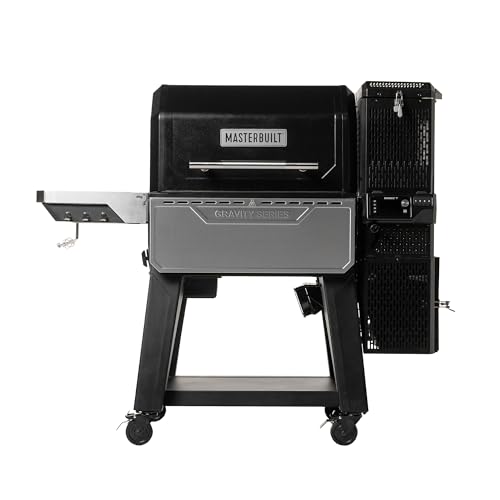
Best for owners who want extras
4. Masterbuilt Gravity Series XT Digital Charcoal Grill and Smoker
A newer, upgraded member of the line with extra features over the base models. Check the current listing for the exact size and feature list.
Suits: owners who want extras. Strengths: a feature-rich gravity design. Weaknesses: details vary by version. Skip it if you want the simplest model.

View Masterbuilt Gravity Series XT Digital Charcoal Grill and Smoker on Amazon
Best for shoppers comparing brands
5. Char-Griller Gravity Fed 980 Charcoal Grill and Smoker
A gravity fed charcoal cooker from a long-established grill maker, with a hopper that feeds fuel as it burns. Check the listing for controller features.
Suits: shoppers comparing brands. Strengths: a different brand and a big cooking area. Weaknesses: features differ from Masterbuilt. Skip it if you want app control.
View Char-Griller Gravity Fed 980 Charcoal Grill and Smoker on Amazon
Best for traditional smoking
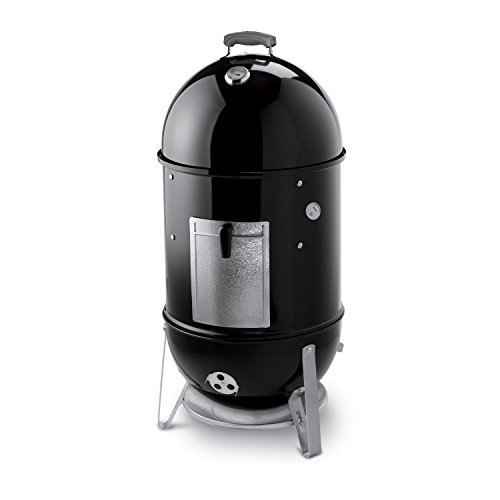
6. Weber Smokey Mountain Cooker 18 Inch
A long-running vertical charcoal water smoker. It is not gravity fed, but it shows the traditional alternative, with a simple design and a gentler learning curve for the basics.
Suits: traditional smoking. Strengths: a simple, proven design. Weaknesses: it needs refueling and tending. Skip it if you want hands-off cooking.
Care and Setup
- Use quality lump or briquettes, and keep them dry so the hopper feeds smoothly.
- Empty ash after each cook to keep air moving.
- Clean grease from the drip area to reduce flare-ups.
- Cover the smoker once it has cooled.
Mistakes to Avoid
- Overfilling the hopper with damp charcoal.
- Opening the lid too often, which loses heat.
- Skipping the first burn-in cook.
- Buying too small a model for your usual cooks.
Gravity Fed Versus Pellet and Offset Cookers
Shoppers often compare gravity fed smokers with pellet grills and offset smokers, because all three promise smoky food. The differences are in fuel, effort and flavor. A gravity fed cooker burns charcoal that slides down from a tall hopper, with a fan and a controller feeding oxygen to the fire. This gives a charcoal taste and the ability to run hotter for searing, but it needs a power source and a bit of ash cleanup. A pellet grill burns compressed wood pellets delivered by an auger, which is very hands-off but usually produces a milder smoke and a lower top temperature on many models.
An offset smoker is the traditional choice. You build and manage a fire in a side box, and the heat and smoke move across the cooking chamber. It rewards skill with excellent results, but it demands attention, wood and practice. A gravity fed unit sits between the two: you still get real charcoal and a bit of wood for flavor, yet the fan and controller handle much of the work.
Choose gravity feed if you want charcoal flavor with less tending, and you are comfortable with an electric controller. Choose pellet for the simplest operation, and offset if you enjoy the craft of fire management. Check each listing for the controller features, hopper capacity and any app support.
Fuel Choices and Burn Planning
Fuel quality has a large effect on how a gravity fed smoker behaves. Lump charcoal is irregular in shape and tends to burn hot and clean, with less ash, while briquettes are uniform, burn steadily and are easy to stack in the hopper. Some makers recommend one type over the other, so check the manual. Avoid briquettes that are soaked in lighter fluid, as they can leave unwanted flavors, and keep all fuel dry so it feeds smoothly.
When you fill the hopper, pack it in a way that avoids large gaps. Big voids can cause the fuel to settle unevenly and the fire to flare up or fade. Many owners use a mix of fuel sizes and add wood chunks on top or alongside the charcoal to give more smoke. Plan the amount of fuel around the cook. Long smokes like brisket or pork shoulder need a full hopper, while a short cook of ribs or chicken may not.
Ask yourself how long you want to cook without refilling. A deeper hopper extends the cooking time, but actual burn time depends on the temperature, the wind, the outside air and the fuel. Treat any stated burn time as a rough guide and keep a spare bag of fuel near the cooker.
Power, Weather and Placement
Because gravity fed models use a fan and a digital controller, they need electricity, and that changes how you place them. Keep the cooker near a protected outlet that can handle outdoor use, and avoid running cords across walkways or through puddles. If you need an extension cord, use one rated for outdoor use and for the power draw described in the manual. Do not plug the controller into a circuit that is also running heavy appliances.
Weather affects both the electronics and the cook. Wind can pull heat out of the cooker and change burn rates, so a sheltered spot helps. Cold air makes the fire work harder, and rain can get into vents or sensor ports. A good cover is a must, and it should only go on after the cooker has cooled. Keep the controller dry and follow the maker’s guidance on storage during storms.
Placement is a safety issue too. Set the cooker on a flat, non-combustible surface with clear space on every side, away from walls, railings, overhangs and fences. Never use a charcoal cooker in a garage or any enclosed space, because charcoal produces carbon monoxide. Keep children and pets away from the hot surfaces and the exhaust.
Learning Curve and First Cooks
Gravity fed cookers are easier than traditional charcoal cookers, but a few cooks will help you learn how yours behaves. Start with the burn-in described in the manual to burn off manufacturing residue and season the surfaces. Then run a simple, forgiving cook, such as chicken thighs or sausages, so you can learn how long it takes to reach temperature, how the controller reacts and how the fire responds to the lid being opened.
Use a separate thermometer at grate level to confirm the controller’s reading. Built-in displays are convenient but can differ from what is happening at the meat. Take notes on settings, outside weather, fuel type and results. After a few cooks you will know how long to preheat, how much fuel to load and how to place food for even cooking.
Avoid common beginner habits: opening the lid constantly, adding fuel to an unready fire and cooking by the clock instead of by internal temperature. Allow the cooker to stabilize before putting food in. If the temperature swings, check for ash buildup, a dirty fan or a hopper that has jammed with small pieces, and consult the manual.
Cleaning, Maintenance and Replacement Signs
Charcoal cookers collect ash, and gravity fed models are no exception. Ash blocks airflow, so clear it after every cook once it is cold. Dispose of ash in a metal container with a lid and keep it away from anything that can burn, since embers can stay hot for a long time. Clean grease from the drip area and the grates regularly to lower the risk of flare-ups and unwanted smoke flavors.
Check the electrical parts now and then. Look at the fan intake for dust or grease, and inspect the power cord and the plug for wear. Keep the temperature probe clean and positioned as the manual describes. Follow the maker’s advice on cleaning the hopper, since stuck fuel or moisture can cause feed problems.
Look for signs that parts need replacing: rust-through on the firebox or hopper, warped or cracked grates, gaskets that no longer seal, a controller that gives erratic readings or a fan that has become noisy or weak. Many parts can be replaced, so check the listing or the maker’s site for spare parts and warranty terms. Cover the cooker when it is cool and keep it off damp ground to extend its life.
Your First-Cook Checklist for a Gravity Fed Smoker
A gravity fed smoker mixes a charcoal hopper, a fan and a digital controller, so the learning curve feels different from a basic grill. Use the list below when you unbox any of the Masterbuilt or Char-Griller models mentioned above, and always put the maker’s manual first.
- Read the assembly and safety pages before you touch a bolt, and confirm that every part in the box matches the parts list.
- Pick a stable, level spot outdoors with plenty of clearance from walls, decks and anything that can burn.
- Follow the maker’s break-in or seasoning steps exactly as described.
- Check the power source for the digital controller and keep cords away from hot surfaces.
- Load charcoal following the hopper guidance and avoid mixing in materials the manual does not allow.
- Keep a thermometer and a notepad nearby so you can log how the cooker behaves.
Those notes become your personal reference. Smokers differ by weather, charcoal type and food, so a record of what you tried and what happened makes later cooks smoother. Do not rush the first session, and pick an easy cut or a simple batch of vegetables for your first run.
Gravity Feed Versus Pellet Versus Offset: Which Style Fits
Many shoppers wonder if a gravity fed smoker is the right type at all. This comparison sets out the general differences between common smoker styles.
| Style | Fuel | Attention needed | Typical appeal |
|---|---|---|---|
| Gravity fed | Charcoal from a hopper | Moderate, digital control helps | Charcoal flavor with steady temperature |
| Pellet | Wood pellets | Low once set | Convenience and simple controls |
| Offset | Logs or charcoal | High, constant fire tending | Craft feel and traditional method |
| Kettle with smoking setup | Charcoal | High, manual vents | Flexible and compact |
Gravity fed models appeal to people who want the taste associated with charcoal but do not want to hover over the fire for hours. The trade-off is more moving parts, including the fan, controller and power supply. If you enjoy fiddling with vents and fire management, a more manual cooker may feel more rewarding. If you want to set a target temperature and focus on prep, the gravity fed design is a sensible fit.
Common Smoker Terms Explained
Product pages and forum threads use shorthand that can feel confusing. Here is a plain-language glossary to keep beside you.
- Hopper: the vertical chamber that holds charcoal and feeds it toward the firebox as the fuel burns down.
- Firebox: the area where the charcoal burns, often with an igniter or lighting method.
- Controller: the digital unit that manages the fan to hold a chosen temperature.
- Probe: a thermometer sensor, either for the cooking chamber or for the food itself.
- Bark: the dark, flavorful crust that forms on slow-cooked meat.
- Stall: a period when a large cut seems to stop rising in temperature while it cooks.
- Clean burn: a steady fire with thin, light smoke, as opposed to thick white smoke.
Once you know these words, instructions and cooking guides make a lot more sense, and you can ask better questions when something behaves in an unexpected way.
Fire, Fuel and Food: Follow the Manual and Official Guidance
Charcoal cooking involves live fire, hot metal and food that needs to be handled correctly. Follow the maker’s instructions for lighting, shutting down, handling ash and storing fuel. Keep the smoker away from combustible surfaces and never use it in an enclosed space. Let the cooker cool fully before you cover it or move it, and dispose of ash as your manual and local rules describe.
For food handling, cooking temperatures and storage times, rely on official food safety guidance from your national or local authority and on the instructions with your thermometer. If the controller shows an error code, the fan stops, or you notice damage to cords or seals, check the manual and contact the maker’s support team. For any electrical fault, avoid opening panels yourself and seek qualified service. A little patience and a respect for the instructions are what turn a new smoker into a dependable part of your outdoor kitchen.
Weather, Placement and Seasonal Habits
Wind, cold and rain all change how a charcoal cooker behaves, so it helps to plan around them. A sheltered but well-ventilated outdoor spot keeps the fan and controller from getting soaked while still allowing safe airflow. In cold weather, expect longer preheating and more fuel use, and keep a lid-closed discipline so heat is not lost every time you peek. In hot weather, watch for surfaces that become very warm and keep children and pets well clear.
Between seasons, clean out ash, empty the hopper of unused charcoal if the manual advises it, and store the fuel somewhere dry. Damp charcoal burns poorly and can make a smoker feel unpredictable. A weatherproof cover that the maker or an approved accessory line supports can protect the controller and electrical parts from moisture while the smoker rests.
How Gravity Feeding Changes the Smoking Day
A gravity fed cooker changes the smoker’s day because the charcoal sits in a hopper and feeds the fire as it burns, with a controller and fan responding to the temperature inside the cooking chamber. Instead of adding fuel piece by piece and chasing swings, the cook loads the hopper, sets a target and checks in as the cook progresses. That does not remove skill from smoking. The cook still chooses the charcoal, prepares the meat, watches bark and tenderness, and decides when to wrap and when to rest. What changes is where attention goes: less time is spent coaxing the fire and more time can go to the food itself. When you compare the models in this guide, keep that trade in mind, because the value of the format is steadiness over many hours.
Charcoal Choice and Smoke Flavour
Charcoal is both fuel and flavour in this style of cooker, so the choice matters more than it first appears. Lump charcoal and briquettes behave differently in a hopper, in how they light, how they ash and how steadily they feed, and the maker’s guidance for each model should decide what you load. Wood added for smoke should be used in the way the manual describes for that cooker, in modest amounts that season the food rather than overwhelming it. A clean, well managed fire gives a lighter, sweeter smoke than a smouldering one, so give the cooker time to settle before the food goes on. If a cook tastes harsh, the cause is more often fire management and timing than the recipe, and adjusting those habits usually improves the next cook more than buying another accessory.
Planning Capacity Around Real Meals
Capacity only matters in relation to the meals you actually cook. A single brisket for a family dinner, several racks of ribs for friends, and a mixed load of poultry and sides all ask different things of the cooking chamber, the grate layout and the hopper. Think in terms of whole cooks rather than headline size: how food is arranged, whether air and smoke can move around each piece, and whether you need to open the door often to rearrange. Crowding a chamber slows cooking and steams surfaces that should be building bark. Choosing a model with room to spread food out in a single layer, with space left between pieces, usually gives a better result than filling every corner of a larger cooker just because the space is there.
Comparing the Picks in This Guide, Side by Side in Practice
Specifications alone do not tell you how the choices in this guide to gravity fed charcoal smokers differ in a real kitchen or on a real patio. The notes above already record, for each pick, who it suits, where it is strong and where it falls short. The most useful comparison is to lay those judgements against your own routine, one pick at a time, and notice which strengths keep mattering to the meals you actually cook. The paragraphs below walk through the list in that spirit, without adding claims beyond what the guide has already set out.
Consider Masterbuilt Gravity Series 560 Digital Charcoal Grill and Smoker through the lens of how it fits the space and equipment you already own. Go back to its entry above and read the suits, strengths and weaknesses lines as a short verdict, then ask whether that verdict describes your household. If the strength speaks to your weekly cooking and the weakness concerns an occasional case, it is a strong candidate. If the reverse is true, keep moving down the list, because another pick in this same guide was included precisely to cover a different kind of cook, kitchen or budget of effort.
Consider Masterbuilt Gravity Series 800 Digital Charcoal Grill and Smoker through the lens of how much setup and cleanup it asks of you on an ordinary day. Go back to its entry above and read the suits, strengths and weaknesses lines as a short verdict, then ask whether that verdict describes your household. If the strength speaks to your weekly cooking and the weakness concerns an occasional case, it is a strong candidate. If the reverse is true, keep moving down the list, because another pick in this same guide was included precisely to cover a different kind of cook, kitchen or budget of effort.
Consider Masterbuilt Gravity Series 1050 Digital Charcoal Grill and Smoker through the lens of how well its strengths match the meals you repeat most often. Go back to its entry above and read the suits, strengths and weaknesses lines as a short verdict, then ask whether that verdict describes your household. If the strength speaks to your weekly cooking and the weakness concerns an occasional case, it is a strong candidate. If the reverse is true, keep moving down the list, because another pick in this same guide was included precisely to cover a different kind of cook, kitchen or budget of effort.
Consider Masterbuilt Gravity Series XT Digital Charcoal Grill and Smoker through the lens of whether its noted limitation touches something you care about or something you rarely do. Go back to its entry above and read the suits, strengths and weaknesses lines as a short verdict, then ask whether that verdict describes your household. If the strength speaks to your weekly cooking and the weakness concerns an occasional case, it is a strong candidate. If the reverse is true, keep moving down the list, because another pick in this same guide was included precisely to cover a different kind of cook, kitchen or budget of effort.
Consider Char-Griller Gravity Fed 980 Charcoal Grill and Smoker through the lens of how naturally it would slot into the routine you already have. Go back to its entry above and read the suits, strengths and weaknesses lines as a short verdict, then ask whether that verdict describes your household. If the strength speaks to your weekly cooking and the weakness concerns an occasional case, it is a strong candidate. If the reverse is true, keep moving down the list, because another pick in this same guide was included precisely to cover a different kind of cook, kitchen or budget of effort.
Consider Weber Smokey Mountain Cooker 18 Inch through the lens of how it fits the space and equipment you already own. Go back to its entry above and read the suits, strengths and weaknesses lines as a short verdict, then ask whether that verdict describes your household. If the strength speaks to your weekly cooking and the weakness concerns an occasional case, it is a strong candidate. If the reverse is true, keep moving down the list, because another pick in this same guide was included precisely to cover a different kind of cook, kitchen or budget of effort.
Putting It to Work: Three Everyday Situations
First, the ordinary weeknight. Time is short, ingredients are whatever is on hand, and the best equipment is the equipment that is already set up, heats or prepares without fuss and cleans down quickly afterwards. Judge every pick for gravity fed charcoal smokers against that tired Tuesday test, because that is where most cooking actually happens. Second, the weekend session, when there is time to try a new recipe, cook for a few more people and enjoy the process itself. Here, capacity, control and comfort matter more than raw speed, and a choice that feels slightly large on a weeknight may come into its own. Third, the gathering, when timing and flow decide whether the cook enjoys the day. Equipment that lets you prepare ahead, cook in calm batches and serve without a last minute scramble earns its place in that third situation, even if it is not the one you reach for daily. A pick that handles two of these three situations well is usually a better buy than one that excels at a single rare occasion.
There is also a fourth, quieter situation worth considering: teaching and sharing. If children, partners or friends join you in the kitchen or at the patio, clear controls, forgiving behaviour and simple cleanup make the experience welcoming rather than stressful. Equipment that a second person can understand at a glance gets shared, and shared equipment gets used more, maintained better and enjoyed longer. Keep that in mind if your cooking is social, because the best choice for a household is not always the best choice for a solo specialist.
Keeping Records That Actually Help
A few brief notes after notable cooks will improve your results faster than memory alone. Record what you cooked, the setup you used, anything you changed, and one thing you would do differently, in whatever notebook or phone note you will actually keep. Over time those notes reveal your own patterns: the portions your household really eats, the settings you return to, the timing that works in your space with your equipment. They also stop you repeating an experiment that already failed and help you repeat a success on purpose for guests. Keep the habit light, a line or two at a time, because a simple record kept consistently beats a detailed log abandoned after a week.
Making Cleanup Part of the Cook
Cleanup goes better when it is planned as the last stage of cooking rather than discovered afterwards. While food rests or is being served, deal with the surfaces and tools that are easiest to clean while still warm, following the maker’s care guidance for the materials involved. Keep a dedicated spot for used utensils, a way to carry hot or greasy items safely, and a routine for cooling, washing, drying and putting things away dry. Drying matters as much as washing for metal tools and cooking surfaces, because stored moisture is what invites rust and stale smells. A tidy reset also means the next cook starts calmly, with everything findable and ready, which is a quiet but real part of enjoying outdoor and countertop cooking alike.
Teaching a Beginner on Your Setup
If someone new will use this equipment, a short, friendly introduction prevents most accidents and most disappointing results. Show them where the heat is strongest, how to tell when a surface is ready, which tools belong with which surface, and how cleaning is done while things are still warm. Let them handle a forgiving food first, something with clear visual cues for doneness, and stay nearby without taking over. Beginners often press, poke and move food too much, so explain the value of leaving things alone to develop colour. A good first experience builds a second cook who wants to help again, which over a season is worth more than any single accessory.
A Simple Routine for the First Few Cooks
The first few sessions with anything in this guide set the habits that follow, so keep them deliberately simple. Choose familiar food, allow more time than you think you need, and pay attention to how the equipment behaves rather than chasing a perfect result. Notice where heat gathers, how controls respond, how cleaning feels while things are still warm, and what you wish you had within reach. Write nothing down if that feels like a chore, but do repeat the same meal once or twice, because repetition is what turns first impressions into reliable judgement. By the third or fourth cook, the setup, timing and cleanup will already feel more natural, and you will know which accessories or adjustments would genuinely help, rather than buying solutions to problems you do not have.
Adapting the Same Equipment to Different Seasons
Cooking equipment earns more of its keep when it adapts across the year. In warmer months, outdoor setups invite larger gatherings, longer sessions and foods that benefit from open air and generous space. In cooler months, the same habits shift toward smaller, quicker cooks, sheltered spots and meals that make the most of stored heat and covered cooking. Storage and protection matter more in the off season, when equipment may sit for weeks between uses, so a clean, dry, covered rest is part of seasonal care. Planning a few dishes for each season, rather than repeating one menu, keeps skills fresh and spreads use across the year, which is the simplest way to get full value from a considered purchase.
Checking Details on the Listing Before You Decide
Listings change, bundles change and included extras change, so the final check before buying should always be the current product page for the exact option you intend to order. Confirm what is included, the size or version, the materials where they are stated, any care instructions the maker gives, and what is not included that you might have assumed. Look at the questions and answers section for practical points about fit and compatibility, and treat photographs as a guide to shape rather than proof of scale. This habit takes a few minutes and prevents most mismatches, whether the item is for your own kitchen or a gift for someone else. If a detail that matters to you is not stated clearly, choose the option whose details you can confirm.
Cooking for a Crowd Without Losing Your Calm
Feeding more people is mostly a logistics problem, and the equipment in this guide helps when you plan the flow before the first item hits the heat. Prepare ingredients in the order they will cook, group portions so they can go on and come off together, and keep a clear landing area for finished food that is separate from raw ingredients. Cook in relaxed batches rather than filling every space at once, because crowded surfaces cook unevenly and create a backlog of half finished items. Hold finished food warm in a low oven or a covered spot as the maker of your equipment allows, and communicate simply with anyone helping. A calm sequence, even a slower one, serves better food than a rush, and it leaves the cook able to enjoy the gathering too.
How to Judge Value Without Chasing Numbers
Value in this category rarely comes from the longest feature list. It comes from how often the item is used, how well it fits the equipment and space you already have, and how gracefully it handles ordinary wear. A simple, well made choice that suits your routine will outlast and outperform a complicated one that fights your habits. Think about cost of ownership in practical terms: replacement parts, consumables, storage, and the time each cook takes to set up and clean down. When two picks in the guide seem close, choose the one whose strengths match your most common meals and whose weaknesses fall on the things you do least, because that alignment is what you will feel every time you cook.
One More Consideration for Gravity Fed Charcoal Smokers
It is worth pausing on how a choice for gravity fed charcoal smokers will feel after the novelty has worn off, because that settled, everyday feeling is the true measure of a purchase. In the first week, almost anything new is interesting. By the second month, what matters is whether it has found a natural home in your space, whether its care routine has become automatic, and whether you reach for it without thinking twice. Choices that demand a special effort every time slowly drift to the back of a cupboard or the corner of a patio, whatever their merits on paper. Choices that fit your habits disappear into the routine in the best possible way, doing their job quietly each time. As you make a final decision among the picks above, trust the option you can most easily picture yourself using on an ordinary day, in your own kitchen or outdoor space, with the people you usually cook for. That picture, more than any feature comparison, predicts whether you will still be glad of the decision a year from now, and it is the standard this guide’s notes on who each pick suits were written to help you apply.
Gravity Fed Charcoal Smoker FAQ
How does a gravity feed smoker work?
Charcoal sits in a tall hopper and slides down as the lower fuel burns. A fan and controller adjust airflow to hold your target temperature.
Is it better than a pellet smoker?
It uses real charcoal for a different flavor and can sear hotter. Pellet smokers burn compressed wood and are often easier to use.
Do I need electricity?
Digital models need power for the fan and controller, so plan for an outlet or a safe, weatherproof extension.
What fuel works best in a gravity fed smoker?
Lump charcoal and briquettes both work, and the maker's manual may recommend one. Keep fuel dry and avoid briquettes soaked in lighter fluid, which can affect flavor.
How long can a gravity fed smoker run on one hopper?
It depends on the cooker, the cooking temperature, the weather and the fuel. Treat any stated burn time as an estimate and keep spare fuel on hand for long cooks.
Can I add wood chunks for more smoke flavor?
Many owners do, placing chunks in or on the fuel as the manual allows. Check your model's instructions so the wood does not block airflow or the feed.
Can I use a gravity fed smoker in the rain?
Light weather may be manageable, but keep the controller and electrical parts dry and follow the maker's guidance. A sheltered spot and a good cover are safer.
Is it safe to use one in a garage?
No. Charcoal produces carbon monoxide, so use the cooker outdoors with plenty of open space and clearance from walls and anything that burns.
Why does my cooker temperature swing?
Common causes include ash buildup, a jammed hopper, wind and a dirty fan or probe. Clean the cooker, check the manual and use a separate thermometer to confirm readings.
How do I dispose of ash safely?
Wait until the ash is fully cold, then put it in a metal container with a lid. Keep the container away from the house and anything flammable.
Do I need an app or a smart controller?
Not necessarily. A basic digital controller handles temperature on its own. App features are a convenience for monitoring from a distance, so decide whether you need them based on how you cook.
How do I choose between the picks in this guide?
Start with the meal or job you repeat most often, then read the strengths and limitations noted for each pick against that routine. The right choice is usually the one whose strengths serve your common cooks and whose weaknesses affect only things you rarely do. Confirm size, version and included items on the current listing, and favour the option that fits the space and equipment you already have, because a good fit gets used far more than a theoretically better option that is awkward to store or set up.
What should I check before the first use?
Read the maker’s instructions that come with the item, wash or prepare parts exactly as directed, and check that everything included is present and undamaged. Do a gentle first use with familiar food rather than an ambitious meal for guests, and pay attention to heat, fit and cleanup. If anything smells, fits or behaves in a way the manual does not describe, stop and check the maker’s guidance rather than improvising, because early care sets up both safety and the life of the product.
How do I clean and store this properly?
Follow the maker’s care instructions for the specific materials, clean while residue is easiest to remove, and dry everything thoroughly before storage. Store pieces where air can circulate and where they will not be knocked, stacked under heavy items or left damp. Metal cooking surfaces generally benefit from the light protective care their makers describe, while fabrics and covers should be clean and fully dry before they are put away. A consistent five minute routine after each use prevents most of the rust, odours and damage that shorten a product’s life.
What is the most common mistake buyers make?
The most common mistake is choosing by headline size or bundle count instead of by fit for real routines. Buyers picture the biggest gathering of the year and end up with equipment that is heavy, awkward or oversized for ordinary weeks, so it gets used less. Picture your typical cook first, then check how the item stores, cleans and works with what you already own. That order of thinking, routine first and features second, leads to purchases that feel right long after the first use.
How do I know whether it will work with my existing setup?
Compare the details stated on the listing with your own equipment: dimensions, fuel or power type, materials and any compatibility notes the maker gives. Measure your space rather than estimating it, including clearance and storage, and look at what you already use successfully, because similar shapes and materials usually behave similarly. If a compatibility point is not stated clearly, treat it as unconfirmed and choose an option whose fit you can verify, rather than hoping a mismatch will work out in practice.
When does it make sense to replace rather than keep using an older item?
Replace when wear affects safety, performance or hygiene in ways cleaning and simple care cannot restore: damaged surfaces, unreliable parts, warped fits or materials that no longer clean properly. Cosmetic marks from honest use are not a reason by themselves. If an older item still does its job safely and you enjoy using it, keeping it and adding one missing piece from a guide like this one is often the sensible path. When you do replace, pass on, recycle or dispose of the old item responsibly as local guidance allows.
Can I use this for cooking beyond the obvious dishes?
Usually yes, within the maker’s intended use. Equipment in this category tends to be more versatile than its headline dish suggests, because the underlying skills, heat control, spacing, timing and resting, transfer across many foods. Start with foods that have clear doneness cues, keep portions modest while you learn how a new dish behaves, and adjust one variable at a time. Stay within the fuels, temperatures and placements the maker describes, and let your own notes from each attempt guide the next one.
How can I get more consistent results over time?
Consistency comes from controlling the few variables that matter most: preparation done before cooking starts, even portions, a properly heated surface, sensible spacing, and the same cleanup and storage routine afterwards. Change one thing at a time when you experiment, and keep brief notes on what worked. Most disappointing results trace back to rushing one of those basics, such as starting before the surface is ready or crowding too much food on at once, rather than to the equipment itself.
The Short Version
For a small footprint, the Masterbuilt 560. For everyday cooks, the 800. For big gatherings, the 1050. For extra features, the Gravity Series XT. For another brand, the Char-Griller 980. For a non-gravity option, the Weber Smokey Mountain.


