Disclosure: airfryerkitchensupply.com is reader-supported. When you buy through links on our site, we may earn an affiliate commission at no extra cost to you.
Where to buy
Every linked pick in this guide to the best food processors for making nut butter was verified against Amazon’s catalog data for this site before writing, so model names, bowl sizes, and included parts match real current listings. Use the links in this box, in Quick Picks, and under each review to check price on Amazon on the day you buy, because configurations change between listings. Nut butter is one of the most demanding jobs a processor can do — long, hot, continuous runs — so every pick below was chosen for sustained power and a bowl size that lets nuts circulate and emulsify.
- Ninja Professional Plus Food Processor BN601 (Best Overall) — check price on Amazon
- Breville Sous Chef 16 Cup Food Processor BFP810 (Best for Big Batches) — check price on Amazon
- Cuisinart 14-Cup Food Processor DFP-14BCNY (Best Classic All-Rounder) — check price on Amazon
- Ninja Mega Kitchen System BL770 (Best Processor-Blender System) — check price on Amazon
- KitchenAid 9-Cup Food Processor KFP0921 (Best for Neat Storage and Steady Batches) — check price on Amazon
- Hamilton Beach 10-Cup Food Processor 70730 (Best Value) — check price on Amazon
Shopping for the best food processors for making nut butter means shopping for endurance, not features. Chopping nuts takes thirty seconds in almost any machine. Turning them into butter takes ten minutes or more of sustained work, during which the mixture passes through distinct stages — chunks, crumbs, fine meal, a dry ball that looks like failure, and then, as the nuts release their own oil, a sudden glossy liquid. Machines that are merely adequate stall, overheat, or give up at the ball stage, which is why so many home attempts end as gritty paste with oil stirred in as an apology.
This guide therefore ranks sustained motor power and bowl circulation above programs and accessory counts. It also treats batch size honestly: nut butter needs a minimum load to work at all, because too few nuts skate under the blade and never build the friction that releases oil. Each pick below is matched to a realistic batch size, and the technique sections explain the stages, the scraping rhythm, and the heat management that separate smooth, pourable butter from a disappointing jar.
One expectation to set now: a food processor, used patiently, makes nut butter as smooth as most households want — especially peanut and cashew. High-speed blenders can go a fraction silkier, and dedicated grinders exist, but the processor you already use for dinner prep can absolutely own this job if it has the power. These six do.
Consider, too, what homemade nut butter replaces. The jarred versions worth eating tend to sit in the premium tier of the grocery aisle, and the everyday versions often lean on added oils and sweeteners to stay spoonable. A processor collapses that choice: the ingredient list becomes nuts and salt, the texture becomes whatever your patience produces, and the flavor of a fresh roast — warm, deep, unmistakably nutty — is something no shelf-stable jar fully reproduces. That gap, more than any saving, is why people who start making nut butter rarely go back.
In this guide
Quick Picks
Ninja Professional Plus Food Processor BN601 — Best Overall. Nut butter is a marathon disguised as a simple job: ten-plus minutes of continuous work while nuts go from chunks to crumbs to a stubborn ball to, finally, a glossy pour. The strongest motor in a mid-size bowl is exactly the profile that survives it, and that is this machine. Check price on Amazon.
Breville Sous Chef 16 Cup Food Processor BFP810 — Best for Big Batches. If your nut butter habit is really a small production run — gifts, a big family’s weekly jars, a baking hobby that eats almond butter by the tub — the largest bowl here lets you process serious quantities in one session instead of three. Check price on Amazon.
Cuisinart 14-Cup Food Processor DFP-14BCNY — Best Classic All-Rounder. The long-running classic formula — 14 cups, 720 watts, simple controls — turns out to suit nut butter well: ample power, a bowl big enough for family batches, and a pulse-and-run control style that matches how this job is actually done. Check price on Amazon.
Ninja Mega Kitchen System BL770 — Best Processor-Blender System. A system answer: 1500 watts driving an 8-cup processor bowl for the nut butter itself, plus a full-size pitcher and travel cups for the smoothies and shakes the nut butter ends up in. One base, the whole routine. Check price on Amazon.
KitchenAid 9-Cup Food Processor KFP0921 — Best for Neat Storage and Steady Batches. The tidy-kitchen pick: a 9-cup bowl sized for standard nut batches, a multipurpose blade design, and all-in-one storage that keeps every blade and disc inside the bowl — a real virtue when a machine comes out weekly. Check price on Amazon.
Hamilton Beach 10-Cup Food Processor 70730 — Best Value. The value pick hides a nut-butter-specific gem in its box: a bowl scraper. The scrape-down is the defining chore of nut butter, and this is the only pick that ships with a tool shaped exactly for it. Check price on Amazon.
How These Picks Were Chosen
Selection started with a hard filter: verified listings confirming bowl capacity and, where manufacturers state it, motor wattage. Nut butter punishes vague specs, because the job’s difficulty is invisible until minute six. Machines whose listings confirmed neither capacity nor power were excluded rather than recommended on reputation.
We then spread the picks across the real decision space: maximum power for speed, maximum capacity for production batches, a classic all-rounder, a processor-blender system, a storage-friendly everyday machine, and a value pick with a nut-butter-specific included tool. Every household’s nut-butter habit is one of those shapes.
Finally, we weighted washability and storage more than usual. Nut butter is oily, frequent, and a little messy; a machine that is annoying to clean or whose blades live loose in a drawer will quietly end the habit. The best nut-butter processor is the one still being used in month six.
We also considered the sound and feel of a long run, because nut butter asks you to stand with a machine for ten minutes. Picks that stayed composed — planted on the counter, not walking or rattling — scored better than jittery performers with similar specs. It is a small thing at minute one and a large thing at minute nine, and it is part of why the heavier, better-built machines in this guide earned their places.
The 6 Best Food Processors for Making Nut Butter

Ninja Professional Plus Food Processor BN601 — Best Overall
Most processors can chop nuts. Very few can finish nut butter, because finishing means sustaining blade speed while the mixture turns thick, hot, and resistant — the stage where underpowered machines stall, overheat, or leave you with gritty paste. The BN601’s 1000-watt motor is the headline for a reason: it holds speed through the ball stage instead of laboring, which shortens the total run and keeps the butter’s flavor fresh rather than cooked-tasting from friction.
Strengths
- 1000-watt motor — the strongest in this guide — powers through the thick ball stage without the stalling that kills weaker machines
- 9-cup bowl is the sweet spot for nut butter: big enough for a two-to-three-cup nut batch to circulate, small enough to scrape efficiently
- Dishwasher-safe parts per the verified listing, welcome after an oily job
Trade-offs
- Auto-iQ presets are designed for other tasks; nut butter is a manual, watch-and-scrape process on any machine
- You will still stop to scrape the bowl several times — no processor eliminates that step
- The powerful motor is loud at full stretch, and nut butter is a long run
| Specification | Verified detail |
|---|---|
| Capacity | 9-cup bowl (from Amazon title) |
| Motor | 1000W (from Amazon title) |
| Programs | Auto-iQ presets (from Amazon title) |
Run a batch mentally through this machine. Two to three cups of warm roasted almonds go in; the first minute gives you coarse crumbs, the next few a fine meal, and then the mass gathers into a dense ball that thumps around the bowl. This is where cooks panic and add oil. Resist: keep the machine running in stretches, scrape the sides down twice, and the ball relaxes as the nuts release their own oil, turning suddenly glossy and pourable. The Ninja’s power compresses the anxious middle stage, which is where most home nut-butter attempts are abandoned.
Heat management is the skill to learn. Process in runs of a couple of minutes with short rests if the bowl feels very warm, because excessive friction heat can push roasted flavors toward scorched. The butter is done when it falls from a spoon in a slow ribbon and looks shiny at the surface. Poured into a jar while warm, it firms as it cools; a brief stir before each use keeps the natural oil incorporated.
Best for: regular nut-butter makers doing almond, peanut, or mixed-nut batches of two to three cups of nuts / Not suited for: someone who wants to make a single half-cup of nut butter at a time — see the small-batch discussion in the buying guide
Check on Amazon — check price on Amazon before you buy, because included accessories and bundle contents vary between listings.

Breville Sous Chef 16 Cup Food Processor BFP810 — Best for Big Batches
Scale changes nut butter economics and effort completely. A 16-cup bowl takes double batches that would choke a mid-size machine, and Breville’s heavy, planted build stays composed through the long, vibrating runs this job involves. The wide bowl also scrapes down faster than tall narrow ones, a small mercy you appreciate at minute eight of a batch. You are paying a premium-tier price for capacity and composure; for high-volume makers, both are the product.
Strengths
- 16-cup capacity handles double batches — the only pick here that truly suits production-style nut butter making
- Heavy, stable build stays planted through long continuous runs
- Wide bowl shape makes the repeated scrape-downs quicker and more complete
Trade-offs
- Premium tier — hard to justify if nut butter is a monthly, small-batch affair
- A double batch still needs scrape-downs; capacity does not automate the process
- Large bowl is inefficient for small test batches of a new nut or flavor
| Specification | Verified detail |
|---|---|
| Capacity | 16-cup work bowl (from Amazon title) |
The right way to use this capacity is a weekly production rhythm: roast a large tray of nuts, process in one extended session while they are warm, and jar several portions at once — plain, salted, and perhaps one spiced batch. Because the bowl circulates a big load properly, the texture across a double batch stays consistent, which is not true when cooks overload smaller machines and end up with silky butter at the blade and dry meal at the walls.
Breville’s disc set also supports the surrounding work — slicing apples for serving, shredding for baking — but for nut butter specifically, judge it on the long run. The machine feels engineered rather than assembled, and long runs are where that difference stops being aesthetic. If nut butter is a staple your household genuinely consumes in volume, this is the buy-once answer in this guide.
Best for: high-volume households, bakers, and gift-makers processing double batches regularly / Not suited for: occasional makers, for whom the mid-size picks deliver the same butter at a lower tier
Check on Amazon — check price on Amazon before you buy, because included accessories and bundle contents vary between listings.

Cuisinart 14-Cup Food Processor DFP-14BCNY — Best Classic All-Rounder
Cuisinart’s 14-cup design has been the reference home processor for years, and nut butter shows why. The 720-watt motor does not match the Ninja’s peak, but it delivers its power in a steady, unhurried way through the long middle stages, and the simple on/pulse paddle layout is ideal for a job that alternates full runs with quick scrape-and-restart cycles. The bowl size suits the classic home batch: about three cups of nuts with room to move.
Strengths
- 720-watt motor with the steady delivery long nut-butter runs reward
- 14-cup bowl fits family-size batches with circulation room to spare
- Simple controls suit the run-scrape-run rhythm of nut butter better than program menus
Trade-offs
- Peak power is a step below the Ninja pick, so the thick stage takes a little longer
- Large bowl means small experimental batches spread thin and process unevenly
- Big parts to wash after an oily job — plan a hot soapy soak for the blade and bowl
| Specification | Verified detail |
|---|---|
| Capacity | 14-cup work bowl (from Amazon title) |
| Motor | 720-watt (from Amazon title) |
Peanut butter is this machine’s home turf: roasted peanuts, warm from the oven, break down willingly and release oil generously, and the Cuisinart takes them from whole to drizzling in a single confident run with two scrapes. Almonds — drier, harder — take longer and reward patience; add the nuts warm, let the machine work, and trust the ball stage to resolve. Cashews, naturally softer and richer, become almost pourable and need the least time of the common nuts.
The classic design also means a deep bench of shared knowledge: replacement parts, technique videos, and recipes are calibrated to this exact machine family. When a recipe says ‘process for eight to ten minutes in a standard processor,’ this is the standard it means. For a cook who wants nut butter as one reliable routine among many, that predictability has real value.
Best for: households wanting one proven, full-size processor whose nut-butter performance is a known quantity / Not suited for: maximum-speed seekers, who should take the 1000-watt Ninja
Check on Amazon — check price on Amazon before you buy, because included accessories and bundle contents vary between listings.

Ninja Mega Kitchen System BL770 — Best Processor-Blender System
Judge this pick as a workflow, not a single appliance. The processor bowl does the nut butter — with 1500 watts behind the system, power is never the question — and the pitcher then turns that butter into smoothies, sauces, and batters without a second machine coming out. For kitchens short on storage, one powerful base replacing a processor and a blender is a rational trade, and the 8-cup bowl is honestly sized for standard two-cup nut batches.
Strengths
- 1500W system power — the highest figure in this guide — shared across processor and blender functions
- 8-cup processor bowl suits standard nut batches; 72-oz pitcher covers the drinks and sauces that follow
- Two 16-oz cups included per the verified listing, handy for single servings
Trade-offs
- System storage: several vessels and lids to house, even though there is one base
- 8-cup bowl caps batch size below the big-bowl picks for production makers
- Jack-of-all-trades design means the processor bowl is good rather than specialized
| Specification | Verified detail |
|---|---|
| Motor | 1500W (from Amazon title) |
| Processor bowl | 8-cup (from Amazon title) |
| Also included | 72-oz pitcher and two 16-oz cups (from Amazon title) |
Nut butter through the processor bowl follows the familiar arc — crumbs, meal, ball, gloss — with the system’s power making the ball stage brief. Where the BL770 pulls ahead is minute fifteen: the batch is jarred, and the same base is now blending a banana-almond smoothie or a peanut sauce for noodles. Households that cook in that blended, saucy, smoothie-heavy style get more total value from this box than from a slightly better standalone processor.
Be realistic about the bowl ceiling. Two cups of nuts is a comfortable batch; three is the practical limit with good circulation. If your ambition is weekly double batches, the Breville above is the honest recommendation. If your ambition is one base that anchors a smoothie-and-sauce kitchen and makes very good nut butter weekly, this system is the efficient buy.
Best for: small kitchens wanting one powerful base for processing and blending, with nut butter as a weekly job / Not suited for: high-volume nut-butter makers who need the largest possible bowl
Check on Amazon — check price on Amazon before you buy, because included accessories and bundle contents vary between listings.
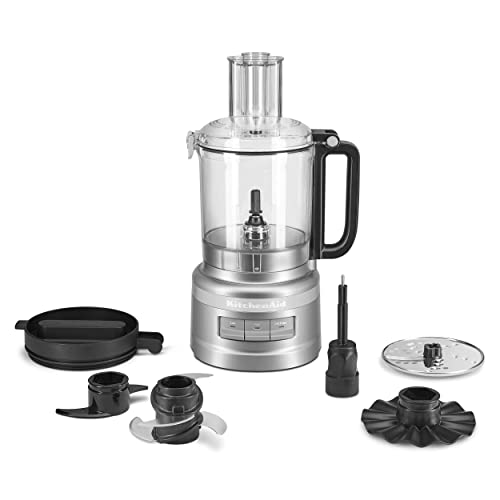
KitchenAid 9-Cup Food Processor KFP0921 — Best for Neat Storage and Steady Batches
Nut butter is a routine food, and routines survive on low friction. The KitchenAid’s storage design — accessories nested in the bowl instead of loose in a drawer — removes the small annoyance that makes people skip a session. The 9-cup bowl matches the Ninja’s capacity class, and the four-blade multipurpose design (per the verified title) is aimed at even processing, which matters when you are asking one blade to take nuts from whole to emulsified.
Strengths
- All-in-one in-bowl storage keeps blades and discs together — the machine is always ready to run
- 9-cup bowl is right-sized for the standard two-to-three-cup nut batch
- Easy-clean bowl design per the verified listing, appreciated after oily nut butter sessions
Trade-offs
- Motor wattage is not stated in the verified title, so we make no power claims for it — judge it as a steady mid-size machine, not a torque leader
- Not the pick for double batches; the Breville owns that role here
- Whisk accessory is irrelevant to nut butter, though useful elsewhere in its week
| Specification | Verified detail |
|---|---|
| Capacity | 9-cup work bowl (from Amazon title) |
| Storage | All-in-one storage for blades and discs (from Amazon title) |
In practice this is the machine for the cook who makes a jar of almond or peanut butter every week or two as part of normal meal prep, alongside slicing, shredding, and dough work. Its nut-butter manner is steady rather than spectacular: keep batches moderate, scrape conscientiously, and the butter arrives smooth and glossy a little after the more powerful picks would finish. For most routines, that trade for tidiness and everyday pleasantness is fairly made.
A practical tip that suits this bowl: process nut butter in two additions when a recipe pushes capacity — grind the first portion of nuts to the ball stage, add the rest, and continue. The partially processed butter lubricates the new nuts and the whole batch finishes more evenly than one maximal load. It is a small technique, but nut butter rewards small techniques more than almost any processor job.
Best for: organized cooks making standard weekly batches who value storage design and easy cleaning / Not suited for: power-first makers who want the fastest possible run to smooth
Check on Amazon — check price on Amazon before you buy, because included accessories and bundle contents vary between listings.

Hamilton Beach 10-Cup Food Processor 70730 — Best Value
Every guide to nut butter tells you to stop and scrape; Hamilton Beach simply included the scraper. That small inclusion signals a design aimed at real home use, and the rest of the package matches: a 10-cup bowl that handles standard batches, slicing and shredding for the machine’s day job, and a value-tier position that makes this the lowest-risk entry into making nut butter at home. The motor is a mid-pack performer — expect the thick stage to take patience — but the finished butter does not know what the machine cost.
Strengths
- Included bowl scraper is genuinely useful for nut butter’s repeated scrape-downs — unique in this guide
- 10-cup bowl covers standard two-to-three-cup nut batches
- Value tier makes it the sensible first machine for testing whether nut butter becomes a habit
Trade-offs
- Mid-pack power means longer runs and more rests on hard, dry nuts like almonds
- Build and finish are functional rather than premium
- Long continuous runs should be broken up to let the motor cool — plan a relaxed session, not a race
| Specification | Verified detail |
|---|---|
| Capacity | 10-cup work bowl (from Amazon title) |
| Included tool | Bowl scraper (from Amazon title) |
Set expectations correctly and this machine delivers: warm roasted peanuts become smooth peanut butter with no drama; almonds take longer, with the scraper earning its keep at every pause; a spoonful of neutral oil is a legitimate assist on very dry batches if you want a softer set, though purists can simply run the machine longer. The scraper also speeds the final transfer — nut butter clings, and a shaped tool recovers the last spoonfuls from the bowl walls that a spatula leaves behind.
As a household strategy, this is the try-it-properly pick. It makes real nut butter, not a compromised version, at the tier where a new habit is cheap to test. If the habit sticks and volume grows, the upgrade path in this guide is clear; if it does not, you still own a perfectly good everyday processor for slicing, shredding, and chopping.
Best for: first-time nut-butter makers and value-focused households doing standard batches / Not suited for: impatient cooks and high-volume makers, who should buy power or capacity instead
Check on Amazon — check price on Amazon before you buy, because included accessories and bundle contents vary between listings.
Comparison Table
| Pick | Badge | Key spec | Best for |
|---|---|---|---|
| Ninja Professional Plus Food Processor BN601 | Best Overall | 9-cup bowl, 1000W motor | regular nut-butter makers doing almond, peanut, or mixed-nut batches of two to three cups of nuts |
| Breville Sous Chef 16 Cup Food Processor BFP810 | Best for Big Batches | 16-cup bowl, premium build | high-volume households, bakers, and gift-makers processing double batches regularly |
| Cuisinart 14-Cup Food Processor DFP-14BCNY | Best Classic All-Rounder | 14-cup bowl, 720W motor | households wanting one proven, full-size processor whose nut-butter performance is a known quantity |
| Ninja Mega Kitchen System BL770 | Best Processor-Blender System | 1500W system, 8-cup processor bowl, 72-oz pitcher | small kitchens wanting one powerful base for processing and blending, with nut butter as a weekly job |
| KitchenAid 9-Cup Food Processor KFP0921 | Best for Neat Storage and Steady Batches | 9-cup bowl, in-bowl accessory storage | organized cooks making standard weekly batches who value storage design and easy cleaning |
| Hamilton Beach 10-Cup Food Processor 70730 | Best Value | 10-cup bowl, included bowl scraper | first-time nut-butter makers and value-focused households doing standard batches |
How to Choose a Food Processor for Nut Butter
Power, sustained. Peak wattage is the spec that predicts whether the ball stage takes two minutes or ten, and whether the motor smells hot doing it. As a working rule from this guide’s lineup: the 1000-watt class finishes fastest, the 700-watt class finishes steadily, and mid-pack motors finish with patience and rests. All three routes reach smooth butter; they differ in time and temperament, so choose by how you cook, not by an idea that only the strongest machine works.
Bowl size cuts both ways. Too large, and a modest batch spreads thin, skates under the blade, and never builds emulsifying friction. Too small, and the mixture climbs the walls and processes unevenly. For the standard home batch of two to three cups of nuts, a 9- to 10-cup bowl is the sweet spot; production makers should jump to 14 or 16 cups and commit to double batches; nobody should plan to make a half-cup of nut butter in any of these machines — that job belongs to a mini chopper or a mortar, honestly stated.
Budget framing, in tiers only: value-tier machines make genuine nut butter with longer runs; mid-range machines add speed and capacity; premium machines add production scale and build. The butter itself does not scale with price — a patient cook with the value pick and a confident cook with the premium pick produce jars that are hard to tell apart. Spend on the tier that matches your volume and your patience, in that order.
The Stages of Nut Butter, and What to Do at Each One
Minutes zero to two: chunks become crumbs, then meal. Run continuously; there is nothing to decide yet. Minutes two to five: the meal packs into a dry, dough-like ball that rolls around the bowl. This is the moment of doubt — the mixture looks drier than when you started. It is supposed to. Keep going. Scrape the bowl down, breaking the ball apart, and restart.
Minutes five to ten: oil release. The ball softens at the edges, the surface turns satiny, and then the whole mass slumps into a thick, glossy flow. Scrape once more, add salt or any flavoring now — cinnamon, a little honey, cocoa for a spread — and run thirty to sixty seconds more. The butter is done when it ribbons off a spoon and the surface looks shiny rather than matte.
Different nuts keep different schedules. Peanuts and cashews are generous and fast; almonds are slower and may want a brief rest mid-run to protect both motor and flavor; walnuts and pecans are delicate and can turn bitter if over-processed hot, so use shorter runs. Seeds follow the same physics — sunflower seed butter is entirely achievable in these machines with the same patience. Roasting beforehand deepens flavor and speeds oil release, because warm nuts give up their oil more willingly than raw ones.
Storage, Separation, and Keeping Butter at Its Best
Homemade nut butter separates in the jar; that is natural oil doing what it does without commercial stabilizers, not a defect. Store jars in the fridge to slow separation and protect the oils from going stale, and stir once when the jar is new — after that, a knife worked to the bottom before serving keeps each portion consistent. Properly stored, most homemade nut butters keep well for weeks refrigerated.
Texture continues to evolve after processing: butter jarred warm and pourable firms to a spreadable set as it cools. If you prefer a softer, drizzling consistency — for smoothie bowls and sauces — process a little longer and store that jar in the pantry for near-term use, stirring before serving. If a batch ever tastes flat, the fix is almost always salt, added in small pinches and processed briefly to distribute.
Label jars with the nut and the date. It sounds fussy until you have three similar jars and a baking project that specifically needs the almond one. Small systems like this are what turn an occasional experiment into a standing homemade staple — which is the entire point of buying the right processor for the job.
Flavored Butters and Mix-Ins: Timing Is Everything
Once plain butter is a solved routine, flavoring is where a processor shows its finesse. The rule is simple: anything dry — salt, cinnamon, cocoa, spices, protein powder — can go in during the final minute of processing, when the butter is flowing and will distribute additions evenly. Anything wet or chunky — honey, maple syrup, chocolate chips, chopped nuts for a crunchy style — goes in at the very end with pulses only, because liquids can seize a nut butter’s texture if processed hard, turning a glossy flow suddenly thick and grainy.
Crunchy style deserves its own note, since it is the one texture a processor makes better than most jars you can buy. Reserve a handful of roasted nuts before processing, chop them coarsely after the butter is finished, and pulse them in with two or three short bursts. The contrast of silky base and distinct crunch is entirely under your control — chunkier or finer, saltier or sweeter — which is, in miniature, the whole argument for making nut butter at home in the first place.
Chocolate-hazelnut spreads follow the same physics with one caution: melted chocolate folded into warm hazelnut butter emulsifies beautifully, but the mixture firms considerably as it cools, so jar it slightly looser than you want the final set. Across all variations, the discipline is identical — finish the plain butter first, flavor second, and never ask the machine to fix a flavoring mistake with more processing, because over-processing is the one error nut butter does not forgive.
Motor Heat, Duty Cycles, and Playing the Long Game
Every processor motor warms under sustained load; nut butter is simply the job that makes you notice. The management strategy is intervals: run two to three minutes, scrape during a thirty-to-sixty-second pause, and continue. The pause serves three masters at once — the motor cools, the mixture redistributes, and you get a clear look at which stage the butter has reached. Cooks who build this rhythm in from the first batch report both better texture and machines that last.
Listen to the machine as your instrument panel. A motor note that climbs and strains as the ball forms is normal; a note that sags, slows, or smells hot is a stop signal, not a challenge. Rest the machine, break the mass apart with a spatula so the restart is easier, and resume when the bowl feels merely warm. No batch of nut butter is worth a burned-out motor, and no batch needs to be finished in one heroic continuous run.
Treat the first batch in any new machine as calibration. Note the nut, the roast, the batch size, and the minutes to gloss; the second batch will be noticeably better simply because you now know your machine’s pace. Within a few sessions the whole process becomes background routine — nuts in, stages watched almost absentmindedly, jars filled — and that ease is the real return on choosing a machine with power to spare.
How to Make Nut Butter in a Food Processor
One method covers nearly every nut and seed; only the timing flexes. Work with warm, freshly roasted nuts whenever you can — the flavor is deeper and the oil releases faster — and give yourself fifteen unhurried minutes.
- Roast raw nuts on a sheet pan in a moderate oven until fragrant and a shade darker, then let them cool only until warm, not cold.
- Add two to three cups of warm nuts to the bowl (scale to your machine’s size) and process continuously for one to two minutes to the crumb and meal stage.
- Stop and scrape the bowl and lid thoroughly, breaking up any packed corners, then resume processing.
- Continue through the ball stage, scraping once or twice more; rest the motor for a minute if the bowl feels very warm.
- When the mass turns glossy and flowing, add salt and any flavorings, then process thirty to sixty seconds to combine.
- Pour into clean jars while warm, cool, refrigerate, and stir once after the first day to set a consistent texture.
Troubleshooting in one paragraph: gritty butter means it needs more time, not more oil — return it to the bowl and run it longer. Butter that never leaves the ball stage usually means the batch is too small for the bowl or the nuts were cold and very dry; warm the mixture gently by running the machine and scrape more often. A scorched note means the runs were too long without rests; shorter intervals fix the next batch. Every failure mode is a timing adjustment, which is good news: the skill is learnable in two or three batches.
One last refinement for regular makers: keep a dedicated jar-filling setup — a wide-mouth funnel or a steady pour from the bowl with the scraper guiding — because nut butter at finishing temperature flows slowly and clings enthusiastically. Filling jars warm, then refrigerating promptly, gives the cleanest set and the least waste left filmed on the bowl.
Keep a small notebook by the jar shelf for the first month: nut, roast level, batch size, and minutes to gloss for every batch. Nut butter looks simple from outside, but those four variables are its entire recipe, and the household that records them stops experimenting blindly and starts improving deliberately.
Common Buying Mistakes
Adding oil at the ball stage. The dry ball is a stage, not a verdict. Oil added in panic makes greasy butter and teaches you nothing; the nuts’ own oil is minutes away. Add oil only at the end, only if a very dry nut genuinely needs help reaching your preferred consistency.
Making too small a batch. A cup of nuts in a 14-cup bowl skates under the blade forever. Nut butter has a minimum viable batch per bowl size — respect it, or use a mini chopper for tiny amounts and accept a coarser result.
Running the motor without rests on hard nuts. Almonds in a mid-power machine need interval discipline. Ignoring heat risks both the motor and the flavor; a one-minute rest costs nothing and saves both.
Processing cold, raw nuts and expecting speed. Cold raw nuts are the slowest possible starting point. A short roast transforms the timeline and the taste; skipping it is the most common reason home nut butter disappoints.
Judging smoothness too early. Butter that looks coarse at minute five is frequently glossy at minute nine. Pulling it early and calling the machine inadequate is the classic beginner error — the stages section above exists to carry you through the doubt.
Final Recommendation
For most makers, the Ninja BN601 is the nut-butter buy: the strongest motor here in the right-sized bowl, finishing batches quickly and confidently. Production volume points to the Breville BFP810; the Cuisinart DFP-14BCNY is the proven classic; the Ninja BL770 suits one-base kitchens; the KitchenAid KFP0921 keeps the routine tidy; and the Hamilton Beach 70730 — scraper included — is the smart value entry. Whichever you choose, roast the nuts, respect the ball stage, and scrape like you mean it. Keep exploring the cluster: Best Food Processors For Making Pesto Best Food Processors For Making Smoothies Best Food Processors For Making Hamburger Best Food Processors For Meat Best Food Processors For Chopping
Frequently Asked Questions
How long does nut butter take in a food processor?
Plan on roughly eight to fifteen minutes of processing, plus scrape-downs, depending on the nut and the machine’s power. Peanuts and cashews sit at the fast end; almonds at the slow end. The stages are consistent — meal, ball, gloss — and the total time shortens noticeably when the nuts go in warm from roasting.
Do I need to add oil to make nut butter?
Usually not. Most nuts release enough of their own oil to become smooth butter with time and scraping. Very dry batches of almonds or seeds may benefit from a small amount of neutral oil at the end, but adding oil early, during the ball stage, is almost always a mistake born of impatience.
Why does my nut butter look dry and ball-like instead of creamy?
Because it is mid-process. The ball stage is a normal, necessary phase where ground nuts pack together before their oil releases. Keep processing, scrape the bowl down, and the mass will slump into a glossy flow. Stopping at the ball is the single most common reason home nut butter ‘fails.’
Can I make nut butter from raw nuts?
Yes, but roasted nuts are better on both axes: deeper flavor and faster oil release. If you prefer raw for dietary reasons, expect longer processing, more rests, and a milder-tasting butter — and be extra disciplined about scraping, since raw nuts pack into the ball stage stubbornly.
How much nut butter should I make per batch?
For most bowls in this guide, two to three cups of nuts is the working batch, yielding roughly one to one-and-a-half cups of butter. Below that range, circulation suffers; above it, processing turns uneven. Big-bowl machines should scale up rather than run small.
How should homemade nut butter be stored?
In a clean sealed jar in the refrigerator, where it keeps well for weeks. Natural separation is normal — stir once after the first day and then work a knife to the bottom of the jar when serving. Fridge storage also protects the nut oils from turning stale.
Can I make seed butters, like sunflower or tahini-style sesame, the same way?
Yes — the method is identical and the stages arrive in the same order. Sunflower seeds make a mild, economical butter that benefits from a pinch more salt than nut butters. Sesame takes longer and runs looser, closer to a pourable sauce than a spread, which is exactly what tahini should be. Pumpkin seeds produce a vividly green, assertive butter that rewards a touch of honey at the end. If a seed is edible ground into paste, these machines can do it.

