Disclosure: airfryerkitchensupply.com is reader-supported. When you buy through links on our site, we may earn an affiliate commission at no extra cost to you.
Where to buy
Shopping for the best food cookers? Start here. Every linked pick on this page was verified against Amazon’s own catalog data for this site before it earned a link, and each one is sold through Amazon. Use the short list below to jump straight to a listing, or read the full reviews first — with a category this broad, the right buying order is to pick your cooker type first and your model second.
- Instant Pot Duo 6 Qt 7-in-1 Electric Pressure Cooker — check price on Amazon
- COSORI 6QT Pressure Cooker, 9-in-1 — check price on Amazon
- Zojirushi 3 Cup Rice Cooker/Steamer — check price on Amazon
- Hamilton Beach Set & Forget 4 Quart Programmable Slow Cooker — check price on Amazon
- Crock-Pot Oval Manual Slow Cooker, 7-Quart — check price on Amazon
- AROMA ARC-914SBD Digital Rice Cooker and Multicooker — check price on Amazon
Start with an honest definition, because best food cookers is one of the broadest searches in the kitchen aisle: there is no single appliance category called a “food cooker.” Shoppers typing this phrase are almost always looking for one of four machines — an electric pressure cooker (multi-cooker), a rice cooker, a slow cooker, or a steamer — and the useful way to shop the term is as an umbrella. This guide treats it exactly that way: six verified machines that together cover the jobs people actually mean when they search for the best food cookers, from weeknight rice to Sunday pot roast.
The umbrella approach matters because the wrong type wastes money in a way the wrong model never does. A superb slow cooker cannot pressure-cook dried beans in half an hour, and the best rice cooker in the world will not braise a stew all afternoon. So the picks below are organised by job first and brand second. If you already know your job — rice every night, set-and-forget stews, fast pressure cooking — go straight to that pick. If you genuinely cook a bit of everything, the multi-cookers at the top of the list are where most households should land.
One market reality to state plainly: at the very bottom of the price ladder, this category fills up with no-name machines whose listings exaggerate capacity and functions. We left those out entirely. Every pick here is from a maker with a real service network, and every linked model was cross-checked against the manufacturer’s catalog data before writing, so the names, sizes and functions described are the ones you will actually receive.
In this guide
Quick Picks
Short on time? These are the best food cookers worth your money, in the order most shoppers should consider them. Every pick below gets a full review further down the page, with its badge carried through so you can match the summary to the detail.
- Best Overall: Instant Pot Duo 6 Qt 7-in-1 Electric Pressure Cooker — the one machine that covers the most jobs under this umbrella — pressure cooking, slow cooking, rice, steaming, sautéing, yogurt and warming in a single 6-quart pot. — Check on Amazon
- Best for Safety-Conscious Cooks: COSORI 6QT Pressure Cooker, 9-in-1 — a 9-in-1 pressure cooker whose listing leads with its safety engineering — 12 safety features — plus a ceramic-coated pot and sous vide for cooks who want more control. — Check on Amazon
- Best Dedicated Rice Cooker: Zojirushi 3 Cup Rice Cooker/Steamer — a compact, single-job rice cooker and steamer from the brand rice devotees trust most — small 3-cup capacity, dead-simple operation, decades-long design lineage. — Check on Amazon
- Best Programmable Slow Cooker: Hamilton Beach Set & Forget 4 Quart Programmable Slow Cooker — a 4-quart programmable slow cooker with flexible heat and time combinations — the set-it-and-leave-it pick for working households cooking for two to four. — Check on Amazon
- Best for Big Batches: Crock-Pot Oval Manual Slow Cooker, 7-Quart — the big, simple end of slow cooking — a 7-quart oval crock with manual high, low and warm settings that serves eight or more and asks almost nothing of its owner. — Check on Amazon
- Best Budget Multicooker: AROMA ARC-914SBD Digital Rice Cooker and Multicooker — a compact digital rice cooker that also steams, slow-cooks and multicooks at 4 cups uncooked / 8 cups cooked — the value pick for small kitchens and first apartments. — Check on Amazon
How These Picks Were Chosen
Each candidate was checked the same way. First, the exact model had to be confirmable in Amazon’s catalog data for this site — name, capacity and function set — before it could carry a buying link; anything we could not confirm is covered without a link. Second, the machine had to be genuinely good at its stated job rather than merely long on preset buttons: a rice cooker is judged on rice, a slow cooker on low-and-slow control, a pressure cooker on safe, consistent pressure and a usable sauté function.
Third, we weighted ownership costs that listings hide: replacement inner pots and gaskets that are actually stocked, lids and crocks that survive the dishwasher, and cords and footprints that suit real counters. Finally, we deliberately spread the six picks across the four jobs under this umbrella term instead of crowning six near-identical multi-cookers, because a guide for a broad search term fails its reader if it only answers one narrow version of the question.
The 6 Best Food Cookers

Instant Pot Duo 6 Qt 7-in-1 Electric Pressure Cooker — Best Overall
If the phrase “food cooker” in your search history really means “one appliance that handles most of dinner,” this is the default answer. The Duo is the machine that defined the modern multi-cooker: it pressure-cooks, slow-cooks, cooks rice, steams, sautés, makes yogurt and keeps food warm, and its 6-quart size is the sweet spot for households of three to five. It suits generalists, batch cookers and anyone replacing a cupboard of single-task appliances. It does not suit a rice purist who eats rice twice a day — a dedicated rice cooker below still does that one job better.
Strengths
- Seven genuine functions in one pot, so it can retire a separate rice cooker and slow cooker for most households
- Stainless steel inner pot with no coating to wear out, and it can go straight from sautéing to pressure cooking in the same vessel
- Enormous recipe ecosystem — timings for this exact machine are published everywhere, which removes guesswork for beginners
Trade-offs
- Slow-cook mode runs cooler than a dedicated crock, so classic slow recipes often need the higher setting or extra time
- The sealing ring absorbs strong odours; curry one night can faintly perfume rice the next unless you keep a spare ring
- Counter footprint and height are substantial, and the lid needs clearance to open under low cabinets
| Type | Electric pressure multi-cooker |
| Capacity | 6 quart |
| Functions (verified from listing) | Pressure cook, slow cook, rice, steam, sauté, yogurt, keep warm |
| Inner pot | Stainless steel |
What makes the Duo the overall pick is not any single function but the absence of a weak one. Pressure cooking is fast and consistent, the sauté mode genuinely browns rather than steams, and the rice program produces acceptable rice for households that eat it a few times a week. The learning curve is real but short: one water test, one pot of beans, and the machine’s logic — seal, pressurise, release — becomes second nature.
Ownership is equally thought-through. Replacement gaskets, inner pots and lids are stocked everywhere, the pot and lid parts are dishwasher-friendly, and the stainless interior means the machine’s tenth year looks much like its first. For an umbrella purchase meant to serve for years, that parts ecosystem matters as much as the spec sheet.
Best for: households that want one cooker for most weeknight jobs / Not suited for: daily rice devotees or anyone whose cabinets cannot fit a 6-quart body
Check on Amazon — check the current price on Amazon before you decide, because set configurations and included pieces change between listings.
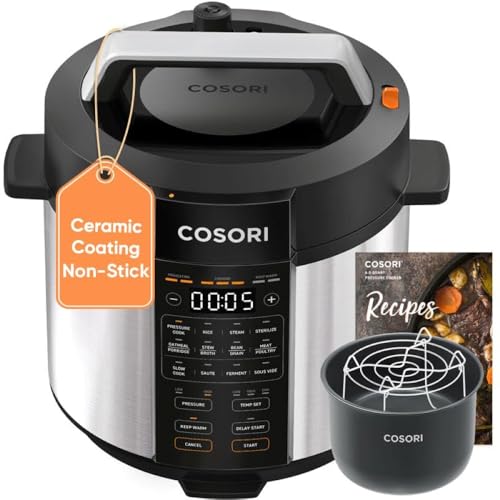
COSORI 6QT Pressure Cooker, 9-in-1 — Best for Safety-Conscious Cooks
COSORI’s 6-quart entry is the pick for shoppers who like the multi-cooker idea but want the safety story and the control set spelled out. Its verified listing highlights 12 safety features, a ceramic-coated inner pot, and a function list that runs from rice and slow cooking to sauté and sous vide. It suits methodical cooks, sous-vide experimenters and anyone nervous about pressure cooking. It does not suit buyers who want the largest possible recipe community — that crown stays with the category leader above.
Strengths
- Safety engineering is front and centre in the verified listing, with 12 named safety features around the pressure system
- Sous vide mode adds a precision job most rival multi-cookers in this class skip entirely
- Ceramic-coated inner pot releases rice and grains cleanly and wipes down fast after pressure cooking
Trade-offs
- A coated pot is a consumable over years of use, unlike the stainless pot of the overall pick
- Sous vide in a sealed cooker suits small portions; a family-size bath it is not
- The control panel offers a lot of programs, and new owners should expect a slower first week of learning
| Type | Electric pressure cooker / multi-cooker |
| Capacity | 6 quart |
| Functions (verified from listing) | 9-in-1 including rice cooker, slow cook, sous vide, sauté |
| Inner pot | Ceramic coating |
| Safety | 12 safety features (per listing) |
The honest way to read this machine is as the control-freak alternative: where the Duo wins on ecosystem, the COSORI wins on deliberate design choices — a lid and release system engineered to be hard to misuse, a pot coating chosen for easy release of grains, and a sous vide program that turns the cooker into a small precision bath for eggs, chicken and steak finishing.
If you pressure-cook several times a week and value a pot that rinses clean in seconds, the trade is fair: accept that a coated pot may eventually be replaced, in exchange for easier daily cleanup and a broader, more modern function set. Keep the stainless purist pick above if you buy appliances by the decade.
Best for: cooks who want modern controls, sous vide and an easy-release pot / Not suited for: buyers who refuse coated pots on principle
Check on Amazon — check the current price on Amazon before you decide, because set configurations and included pieces change between listings.
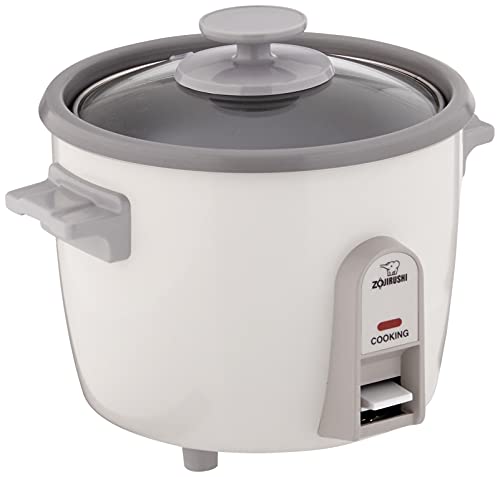
Zojirushi 3 Cup Rice Cooker/Steamer — Best Dedicated Rice Cooker
Every umbrella guide needs one honest specialist, and this is it. Zojirushi’s little 3-cup cooker does one job — rice, plus steaming in the same cycle — and does it with the consistency that made the brand the default recommendation among people who eat rice daily. It suits one-to-three-person households, students and anyone whose meals start with rice several nights a week. It does not suit large families or anyone who needs a cooker to also braise, pressure-cook or slow-cook.
Strengths
- Rice texture is the entire point of the design, and it shows in evenly cooked, distinct grains batch after batch
- Tiny counter footprint and a capacity honestly sized for one to three people, so leftovers stay fresh-sized
- Operation is close to foolproof — load, press, walk away — with a steamer function that handles vegetables and dumplings over the rice
Trade-offs
- Capacity is a hard ceiling: dinner parties and big batch cooking are simply out of scope
- No pressure, slow-cook or sauté functions — it is a specialist and makes no apology for it
- Per-cup cost runs high against big multi-cookers, because you are paying for one job done properly
| Type | Rice cooker / steamer |
| Capacity | 3 cups (uncooked) |
| Functions (verified from listing) | Rice cooking and steaming |
The case for a dedicated rice cooker in a world of multi-cookers is texture and timing. Rice from this machine comes out with the slight chew and separation that pressure-cooked rice rarely matches, and the keep-warm behaviour is tuned for rice rather than borrowed from a stew program. If rice is a side dish twice a month, a multi-cooker above is the smarter buy. If rice is the foundation of your cooking, this small machine earns its counter space every single day.
It is also the most giftable pick in this guide: no learning curve, no intimidating pressure lid, nothing to configure. For a first apartment or a dorm-adjacent kitchen, simple and excellent beats versatile and complicated.
Best for: small households that eat rice constantly / Not suited for: large families or one-appliance minimalists
Check on Amazon — check the current price on Amazon before you decide, because set configurations and included pieces change between listings.

Hamilton Beach Set & Forget 4 Quart Programmable Slow Cooker — Best Programmable Slow Cooker
Slow cooking’s whole promise is walking away, and the Set & Forget is built around exactly that: programmable time and heat combinations in a 4-quart crock sized for real households rather than banquet batches. It suits working couples and small families who load a cooker in the morning and eat from it at night. It does not suit cooks feeding six or more — step up to the 7-quart manual pick below — nor anyone in a hurry, because slow is the point here.
Strengths
- Programmable settings pair multiple heat levels with multiple time options, so recipes finish on your schedule, not the cooker’s
- 4-quart size is the practical middle — big enough for a whole chicken or a stew for four, small enough to store
- Dishwasher-safe crock and lid keep the walk-away promise intact at cleanup time
Trade-offs
- Programming is still simple by modern standards — no app, no remote start, and that will bother gadget-led buyers
- Slow cooking cannot brown; meats need a skillet first for best flavour, which adds a pan to wash
- A 4-quart crock underfills badly for single servings, and slow cookers cook poorly when nearly empty
| Type | Programmable slow cooker |
| Capacity | 4 quart |
| Controls (verified from listing) | 3 heat settings and 5 time settings |
| Crock | Dishwasher-safe stoneware |
The detail that earns this pick its badge is scheduling honesty. Many slow cookers offer low and high and leave you to do the maths; this one lets you combine heat and time deliberately, which is what weekday cooking actually needs — eight hours on low for a shift worker, a shorter high cook on a weekend, and a warm hold that does not keep cooking the food into mush.
Buy it as a rhythm appliance: Sunday sauce, Tuesday stew, Friday beans. Households that cook that way get more value from this modest machine than from any feature-stacked alternative, because the best cooker is the one that fits how you already live.
Best for: working households of two to four who plan morning-load dinners / Not suited for: large-batch cooks or anyone wanting app control
Check on Amazon — check the current price on Amazon before you decide, because set configurations and included pieces change between listings.

Crock-Pot Oval Manual Slow Cooker, 7-Quart — Best for Big Batches
Some kitchens do not need programming; they need volume and reliability. This 7-quart oval Crock-Pot is the classic American slow cooker in its largest mainstream form: a removable stoneware crock, three manual settings and room for the roasts, briskets and party dips that smaller cookers cannot hold. It suits big families, entertainers and batch cookers. It does not suit small households — a 7-quart crock cooked half-empty dries food out — or anyone who wants a timer to think for them.
Strengths
- 7-quart oval shape swallows whole roasts and poultry that round, smaller crocks cannot fit
- Manual controls are indestructible in their simplicity — nothing to program, nothing to reset after a power flicker
- Removable stoneware is oven-safe and dishwasher-friendly, so the same vessel cooks, serves and stores
Trade-offs
- Size cuts both ways: it is heavy, wide, and demands real storage space
- No timer or programmability — unattended all-day cooking relies on the warm setting and your judgement
- Slow cookers this large are poor value if most of your meals serve two or three
| Type | Manual slow cooker |
| Capacity | 7 quart, serves 8+ (per listing) |
| Settings (verified from listing) | High, low and warm |
| Crock | Removable stoneware, dishwasher and oven safe (per listing) |
There is a reason this format has barely changed in decades: for feeding a crowd cheaply and well, nothing beats a big crock, a heavy lid and patience. Pulled pork, chili for a team lunch, a whole brisket — the 7-quart oval handles the jobs that define slow cooking’s reputation, and the manual dial means it will still be working when smarter appliances have died of software.
Choose it with clear eyes about fill levels. Slow cookers perform best between half and two-thirds full; if that describes your cooking at 7-quart scale, this is the best value per serving in the entire guide.
Best for: big families, entertainers and batch cookers / Not suited for: small households or timer-dependent cooks
Check on Amazon — check the current price on Amazon before you decide, because set configurations and included pieces change between listings.

AROMA ARC-914SBD Digital Rice Cooker and Multicooker — Best Budget Multicooker
AROMA built its name on affordable rice cookers, and the ARC-914SBD is the sweet spot of that line: a digital 2-quart machine that cooks rice, steams, slow-cooks and handles grains and oatmeal for one to four people, at the budget end of this guide’s tiers. It suits students, first apartments, couples and anyone who wants multi-cooker behaviour at rice-cooker size and money. It does not suit pressure-cooking fans — there is no pressure function — or families cooking rice for six.
Strengths
- Digital programs cover rice, steam, slow cook and grains in one compact 2-quart body
- Steaming basket lets a protein or vegetables cook over rice for a true one-pot small meal
- Budget-tier positioning with a real brand behind it — parts and support exist, unlike no-name rivals
Trade-offs
- No pressure cooking, so dried beans and tough cuts still take the slow road
- Capacity tops out fast — this is a one-to-four-person machine by design
- The nonstick inner pot needs gentle utensils and will not outlast a stainless pot
| Type | Digital rice cooker / multicooker |
| Capacity | 4 cups uncooked / 8 cups cooked, 2 Qt (per listing) |
| Functions (verified from listing) | Rice, steam, slow cook, grains, oatmeal, keep warm |
| Exterior | Stainless steel (per listing) |
The ARC-914SBD is what smart small-kitchen buying looks like: instead of a full-size multi-cooker used at a third of its capacity, you get a machine sized to your actual meals that still covers four jobs. Rice on weeknights, oatmeal in the morning, a small slow-cooked soup on Sunday — the program list maps neatly onto how one or two people really eat.
Treat the inner pot kindly, fill it within its honest limits, and this budget pick delivers years of service. Ask it to feed a crowd or replace a pressure cooker and you have bought the wrong machine — the guide’s first two picks exist for exactly that.
Best for: singles, couples, students and small kitchens on a budget / Not suited for: pressure-cooking fans or families of five plus
Check on Amazon — check the current price on Amazon before you decide, because set configurations and included pieces change between listings.
Comparison Table
| Pick | Badge | Key spec | Best for |
|---|---|---|---|
| Instant Pot Duo 6 Qt 7-in-1 Electric Pressure Cooker | Best Overall | 6 Qt 7-in-1 multi-cooker, stainless pot | households that want one cooker for most weeknight jobs |
| COSORI 6QT Pressure Cooker, 9-in-1 | Best for Safety-Conscious Cooks | 6 Qt 9-in-1, ceramic-coated pot, 12 safety features | cooks who want modern controls, sous vide and an easy-release pot |
| Zojirushi 3 Cup Rice Cooker/Steamer | Best Dedicated Rice Cooker | 3-cup rice cooker and steamer | small households that eat rice constantly |
| Hamilton Beach Set & Forget 4 Quart Programmable Slow Cooker | Best Programmable Slow Cooker | 4 Qt programmable, 3 heat × 5 time settings | working households of two to four who plan morning-load dinners |
| Crock-Pot Oval Manual Slow Cooker, 7-Quart | Best for Big Batches | 7 Qt oval manual slow cooker, serves 8+ | big families, entertainers and batch cookers |
| AROMA ARC-914SBD Digital Rice Cooker and Multicooker | Best Budget Multicooker | 4-cup (uncooked) digital rice cooker and multicooker, 2 Qt | singles, couples, students and small kitchens on a budget |
How to Choose the Best Food Cookers for Your Kitchen
Choose the job before the brand. Write down the three dinners you cook most often and the cooker type each one needs. Rice-led households need a rice cooker or a multi-cooker with a good rice program; stew-and-braise households need slow-cooker volume; time-pressed households need pressure. The umbrella term “food cooker” hides this decision, and it is the only decision that really matters — every pick in this guide is excellent at its job and wrong for someone else’s.
Size honestly. Cookers are rated by total capacity, but they cook best in a working band: slow cookers between half and two-thirds full, rice cookers at or below their cup line, pressure cookers no more than two-thirds full (half for foaming foods like beans). A 6-quart multi-cooker is the generalist sweet spot; 2-to-4-quart machines serve small households better than their owners expect; 7-quart crocks only make sense if you regularly cook at that scale.
Then weigh the ownership details: inner-pot material (stainless lasts longest, coatings release easiest), whether lids and crocks are dishwasher-safe, whether replacement gaskets and pots are stocked, and whether the cord and footprint fit your counter. These unglamorous checks predict satisfaction better than preset counts ever will.
Pressure, Slow or Rice: The Three Ways Food Cookers Actually Cook
Pressure cookers trap steam to raise the boiling point, cutting cooking times for beans, grains and tough cuts to a fraction of stovetop time. Electric models add set-and-forget safety and a sauté mode, which is why they anchor this guide. Choose pressure when weeknight speed is your bottleneck and you are willing to learn two new skills: liquid minimums and pressure release.
Slow cookers trade speed for rhythm: low, steady heat over hours, ideal for braises, sauces and anything that improves with time. They are the cheapest path to tender food and the easiest to own, but they cannot brown and they cannot hurry. Rice cookers are specialists in controlled absorption — a tuned heat curve that produces consistent grains with zero attention. If grains anchor your meals, no multi-cooker program fully replaces one.
Budget Tiers for Food Cookers, Without the Traps
Think in tiers rather than prices. The budget tier buys honest specialists — a good small rice cooker or a manual slow cooker — and is the right spend for single-job needs. The mid tier is where multi-cookers live, and it is the value peak for most households: one machine, several jobs, real parts support. The premium tier buys build quality, stainless everything and refinement — worth it for daily drivers, wasted on occasional use.
The trap at the very bottom is the unbranded do-everything listing that promises a dozen functions at a specialist price. Functions are cheap to print and expensive to engineer. A verified brand at a modest tier will out-cook and out-last a miracle listing every time, which is why this guide contains no no-name picks at all.
What Each Food Cooker Does to Your Energy Bill and Your Counter
Running costs quietly separate these machines. A slow cooker sips power for hours at a low draw; a pressure cooker spends more per minute but finishes in a fraction of the time, and usually wins the total for beans, grains and stews. A rice cooker’s keep-warm mode is the hidden cost in rice-led homes — a machine holding rice warm all afternoon uses more energy than the cook cycle did, which is one more reason right-sizing matters: cook the amount you will eat, when you will eat it.
Counter economics matter as much. An umbrella appliance that replaces three single-task machines returns two appliances’ worth of counter and cupboard, which in a small kitchen is worth real money. But the reverse also holds: if a multi-cooker’s size pushes your kettle and toaster into exile, the specialist pair — a compact rice cooker plus a modest slow cooker — can be the genuinely smaller footprint. Measure the working triangle you actually use before deciding which consolidation serves you.
Noise and heat are the third axis. Pressure cookers hiss in short bursts and vent steam; slow cookers are silent and barely warm the room; rice cookers vent gentle steam for twenty minutes. In a studio or a hot climate, those differences are not trivia — they decide which machine gets used in August, and the best food cooker is always the one that gets used.
Matching a Food Cooker to Your Week: Four Household Profiles
The batch-cooking household — Sunday prep, weekday reheats — should start from the 7-quart slow cooker or the 6-quart multi-cooker and choose by protein style: braises and sauces point to the crock, beans and grains point to pressure. Either way, capacity and a sturdy lid matter more than programs, and both picks freeze-and-reheat beautifully because their core dishes improve overnight.
The rice-led household — stir-fries, curries, grilled fish over rice — gets the most from the dedicated rice cooker plus whatever protein appliance they already own. Buying a multi-cooker for this household usually means its rice program disappoints daily while its pressure talents sit idle; the Zojirushi profile exists precisely to prevent that mismatch.
The time-poor household — home at six, dinner by seven — is the pressure cooker’s natural constituency, with the COSORI and Instant Pot picks as the shortlist. The small-household profile — one or two people, small kitchen — maps to the AROMA and the 4-quart Hamilton Beach: right-sized machines whose portions, footprints and wash-up all match the life actually being lived. Identify your profile honestly and the shortlist writes itself.
Care, Parts and Lifespan: Owning a Food Cooker for a Decade
Every cooker in this guide can serve for years, but the path differs by type. Pressure cookers ask for gasket care: wash the ring, store the lid loosely, and replace the gasket when it stays stretched or holds odours permanently — a cheap part that restores like-new sealing. Keep the steam valve and anti-block shield clean; most ‘my cooker won’t pressurise’ stories end at a clogged valve or a tired ring, not a dead machine.
Slow cookers ask for thermal kindness: never set a hot crock on a cold wet surface or pour cold water into a hot one, because stoneware cracks from shock, not from age. Rice cookers ask for inner-pot gentleness — the coating on most rice pots is the machine’s wear part, and rice paddles exist precisely to protect it. In all three types, the electronics outlast the accessories; buy brands whose pots, rings and lids remain stocked, as every pick here does, and the appliance’s lifespan becomes a choice rather than a lottery.
Food Cookers and Food Safety: The Rules That Matter
Cookers create one safety situation stovetops rarely do: food held warm for hours. The discipline is simple — hot food stays properly hot or gets refrigerated promptly; the in-between zone is where bacteria thrive. Slow cookers on warm and multi-cookers on keep-warm are holding modes for the length of a meal, not storage. When dinner ends, leftovers move to shallow containers and into the fridge, and the cooker’s job is done for the day.
Rice deserves its own sentence because it is this category’s most-cooked food: cooked rice should be cooled quickly, refrigerated, and eaten within a day or two, then reheated until steaming throughout. Rice cookers make rice so effortlessly that households hold it warm for hours by default — resist that default. Cook the amount the meal needs, serve it fresh, and let the machine rest; both the rice and the household are better for it.
Pressure cookers add mechanical rules that are equally simple: keep the sealing ring and valves clean, never fill past the stated lines, never force a lid, and let the float valve — not impatience — declare the pressure gone. Frozen meat in a slow cooker is the last classic error: a crock warms too slowly to move a frozen roast through the danger zone safely, so thaw first or use pressure, which handles from-frozen cooking by design. None of this is burdensome; it is simply the owner’s manual of the category, written plainly.
Accessories Worth Owning (and the Ones That Are Not)
Three accessories genuinely extend a food cooker. A spare sealing ring for a pressure cooker — ideally two, one for savoury and one for mild foods — ends the odour-transfer problem completely. A glass lid sized to your multi-cooker or slow cooker makes slow modes and serving easier to monitor. And a steamer basket that fits your main vessel turns rice cookers and multi-cookers into vegetable and dumpling stations at almost no cost or storage.
The skip list is longer: dedicated racks, moulds and insert pans for dishes you have not yet cooked are clutter in waiting. Buy accessories the way this guide recommends buying supplementary cookers — after a repeated pattern proves the need, never in anticipation of a fantasy repertoire. A cooker plus two proven accessories outperforms a cooker plus a cupboard of experiments, every week of the year.
How to Use a Multi-Function Food Cooker Safely and Well
Most food-cooker disappointment comes from five avoidable habits. This routine works across the pressure cookers, slow cookers and rice cookers in this guide; adapt the timings to your model’s manual.
Step 1: Respect the fill lines
Load slow cookers half to two-thirds full, pressure cookers no more than two-thirds (half for beans and grains that foam), and rice cookers to their cup markings with the matching water line. Fill level is not a suggestion — it controls both texture and, in a pressure cooker, safe operation.
Step 2: Add enough liquid, in the right order
Pressure cooking needs a minimum of thin liquid to build steam; slow cooking needs far less than stovetop cooking because almost nothing evaporates. Layer slow-cooker ingredients with dense vegetables at the bottom near the heat and proteins above, and keep dairy and fresh herbs for the last half hour in either machine.
Step 3: Brown first when flavour matters
Use the sauté mode (or a skillet, for slow cookers) to brown meat and bloom spices before the main cook. Ten minutes of browning is the single biggest flavour upgrade available to cooker cooking, and skipping it is why beginners call slow-cooked food bland.
Step 4: Release pressure deliberately
Natural release suits meats, beans and foamy foods; quick release suits vegetables and seafood that overcook in minutes. Never force a lid, never cover the steam valve with a towel or your hand, and treat the float valve — not the timer — as the true signal that pressure has gone.
Step 5: Hold, store and reheat safely
Keep-warm modes are for short holds, not storage. Move leftovers to shallow containers and refrigerate promptly, and reheat rice and grains thoroughly — cooked rice in particular should be chilled fast and eaten within a day or two, a food-safety habit worth more than any recipe.
Master those five habits and the specific machine matters far less. Every pick in this guide rewards a cook who fills it correctly, browns when it counts and respects the release — and punishes, gently, anyone who treats it as a magic box.
Common Buying Mistakes
Buying the type before the job
The most expensive mistake in this category is a brilliant machine for dinners you never cook. Audit a week of real meals first; the cooker that matches them is obvious once the week is written down.
Oversizing for imaginary dinner parties
Cookers cook badly when nearly empty, and most households cook for two to four, not ten. Buy for your Tuesday, and borrow or batch in two loads for the twice-a-year crowd.
Judging by preset count
Twenty programs usually means five real functions wearing costumes. Judge the core jobs — pressure, slow, rice, steam, sauté — and ignore the costume count entirely.
Ignoring the inner pot
The pot is the part you will touch, wash and eventually replace. Stainless for longevity, coating for easy release — choose deliberately, and confirm replacements are stocked before you buy.
Skipping the water test
Every pressure cooker should run a plain-water cycle before its first meal. It teaches you the sounds, the seal and the release with zero risk to dinner, and it catches a faulty unit while returns are painless.
Final Recommendation
If you buy one machine from this guide, buy the Instant Pot Duo 6 Qt: it covers more of what “food cooker” searchers actually mean than anything else here, with the deepest recipe support in the category. Choose the COSORI 9-in-1 instead if safety engineering, sous vide and an easy-release ceramic-coated pot matter more than ecosystem. Rice-led households should skip the generalists and take the Zojirushi for daily grains, or the AROMA ARC-914SBD when budget and counter space are tight. Slow-cooking households split by size: the programmable Hamilton Beach for two to four, the 7-quart Crock-Pot when the crowd is real.
Whichever you choose, choose the job first and the badge second — that single habit is worth more than any individual pick on this page.
The shortlist, with direct links for final checking:
- Best Overall: Instant Pot Duo 6 Qt 7-in-1 Electric Pressure Cooker
- Best for Safety-Conscious Cooks: COSORI 6QT Pressure Cooker, 9-in-1
- Best Dedicated Rice Cooker: Zojirushi 3 Cup Rice Cooker/Steamer
- Best Programmable Slow Cooker: Hamilton Beach Set & Forget 4 Quart Programmable Slow Cooker
- Best for Big Batches: Crock-Pot Oval Manual Slow Cooker, 7-Quart
- Best Budget Multicooker: AROMA ARC-914SBD Digital Rice Cooker and Multicooker
Keep researching within this cluster: Best Fish Cookers Best Electric Rice Cookers Best Fast Pressure Cookers Best Electric Slow Cook Pressure Cookers Best Ever Pressure Cookers
Frequently Asked Questions
What is a “food cooker” exactly?
“Food cooker” is an umbrella search term rather than a product category. Shoppers using it almost always mean one of four appliances: an electric pressure cooker (multi-cooker), a rice cooker, a slow cooker or a steamer. This guide covers the term the way shoppers mean it, with verified picks for each of those jobs.
If I can only buy one, which type covers the most meals?
An electric multi-cooker. It pressure-cooks, slow-cooks, cooks rice, steams and sautés in one pot, which covers the large majority of weeknight cooking. Only dedicated rice devotees and big-batch slow-cooking households are better served by a specialist.
Is a dedicated rice cooker worth it if my multi-cooker has a rice button?
If rice is an occasional side dish, no — the multi-cooker program is fine. If rice anchors your meals several times a week, yes: a dedicated cooker’s heat curve and keep-warm behaviour produce noticeably better texture, and the multi-cooker stays free for the main dish.
What size cooker do most households actually need?
A 6-quart multi-cooker, a 4-quart slow cooker or a 3-to-6-cup rice cooker covers most households of two to five. Cookers cook best in their middle fill band, so the right size is the one your typical meal fills halfway to two-thirds — not the biggest your counter can hold.
Are electric pressure cookers safe?
Modern electric pressure cookers from established brands are engineered with multiple independent safety systems — the COSORI pick in this guide lists 12 safety features — and they regulate pressure automatically. Follow the fill lines, keep the valve clean, and let the float valve confirm pressure has dropped before opening.
Can a slow cooker and a pressure cooker replace each other?
Only partly. A multi-cooker’s slow mode runs cooler than a dedicated crock, so classic recipes may need the higher setting or more time; and no slow cooker can match pressure speed for beans and tough cuts. Households that do both jobs weekly often end up owning both, bought in the order of the job they do most.


