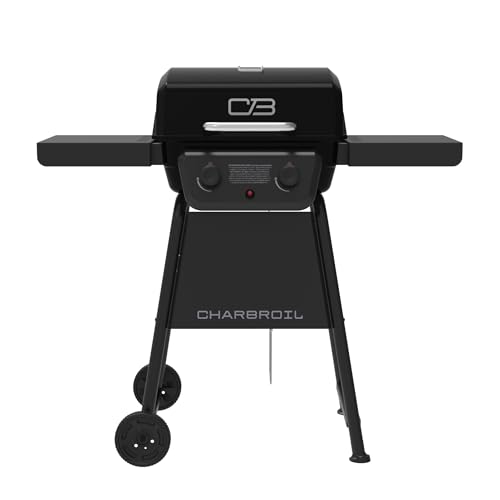
A backyard flat top grill is a griddle that lives on your patio all season. It is usually a four-burner cart with side shelves, a grease trap and often a lid or hood. It handles breakfast, burgers, stir fries and fajitas outdoors, and it replaces a lot of indoor stovetop mess.
The six models below lean toward permanent patio use rather than camping. We have not used these products ourselves, so treat details as unconfirmed and check the current listing for exact size, fuel type and included accessories before buying.
As an Amazon Associate we earn from qualifying purchases. Links below are affiliate links, and they do not change the product information we give.
What to Look For
| Feature | Why it matters |
|---|---|
| Footprint | A big cart needs clear space around it for safe cooking |
| Hood or lid | A hood helps with melting cheese, steaming and rain protection |
| Storage | Shelves and a cabinet keep tools within reach |
| Mobility | Locking wheels make moving a cart across a deck easier |
| Plate type | Steel plates differ in seasoning needs and heat feel |
In this guide
Specs at a Glance
| Griddle | Type | Size class | Notes |
|---|---|---|---|
| Traeger Flatrock | Cart | Large | Brand known for pellet grills |
| Camp Chef Flat Top Grill 900 | Cart | Extra large | Multiple burners; modular |
| Blackstone 36 inch Culinary Griddle with Hood | Cart with hood | Large | Lid for melting and steaming |
| Weber Slate Griddle | Cart | Mid to large | Rust-resistant plate, per the maker |
| Blackstone Iron Forged 36 inch Griddle | Cart | Large | Sturdier build; check the listing |
| Pit Boss Ultimate Lift-Off Griddle | Cart | Large | Removable plate; check the listing |
The 6 Best Flat Top Grills for Backyards

Top pickBest for owners who like a premium brand
1. Traeger Flatrock
A cart-style flat top from a name best known for wood pellet grills. It aims at a tidy, well-built backyard setup, and the listing is worth reading for plate size and any app features.
Suits: owners who like a premium brand. Strengths: a polished build and thoughtful layout. Weaknesses: a higher cost tier than basics. Skip it if you want the cheapest entry point.
Best for large gatherings
2. Camp Chef Flat Top Grill 900
A wide multi-burner cart that expands the cooking area beyond most mid-size stations. Camp Chef offers matching accessories, so it suits cooks who plan to grow their setup.
Suits: large gatherings. Strengths: a huge cooking area. Weaknesses: needs real patio room. Skip it if you have a small deck.
View Camp Chef Flat Top Grill 900 on Amazon
Best for all-season patio cooks
3. Blackstone 36 inch Culinary Griddle with Hood
A familiar four-burner Blackstone cart with a hood added. The lid helps with melting cheese on burgers, finishing thick items and shielding the plate from rain.
Suits: all-season patio cooks. Strengths: a hood and wide plate. Weaknesses: a lid adds bulk and weight. Skip it if you want the lightest cart.
View Blackstone 36 inch Culinary Griddle with Hood on Amazon
Best for cooks who dislike seasoning
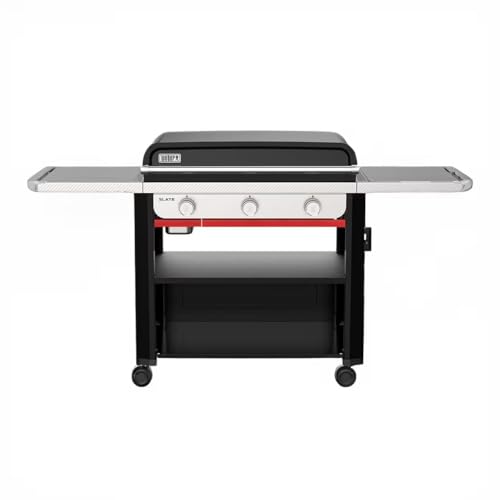
4. Weber Slate Griddle
A griddle from a long-running grill maker, described by the brand as having a rust-resistant plate that needs less seasoning care. Confirm the current size options on the listing.
Suits: cooks who dislike seasoning. Strengths: a quality grill brand and a lower-maintenance plate. Weaknesses: not the cheapest choice. Skip it if you already own a steel griddle.


Best for long-term backyard use
5. Blackstone Iron Forged 36 inch Griddle
A Blackstone line marketed on a sturdier frame and finish. Check the listing for the exact burner count and shelf design before ordering.
Suits: long-term backyard use. Strengths: a robust, familiar layout. Weaknesses: details vary by version. Skip it if you move the grill often.

Best for people who hate scrubbing in place
6. Pit Boss Ultimate Lift-Off Griddle
A multi-burner cart whose cooking plate lifts off for cleaning, per the brand. That feature can make scraping and rinsing easier, so confirm how it works on the listing.
Suits: people who hate scrubbing in place. Strengths: a removable plate for cleanup. Weaknesses: a heavy plate to lift. Skip it if you want a lightweight setup.

Care and Setup
- Place the cart on level ground away from fences and overhangs.
- Season the plate and re-oil it after every cook.
- Empty the grease cup regularly.
- Use a fitted cover to protect the cart between cooks.
Mistakes to Avoid
- Setting a griddle under a low roof or near a wall.
- Letting grease build up in the trap.
- Using soap on a seasoned steel plate.
- Ordering without checking the listing for the hood and shelves.
Burner Layout and Heat Zones on a Cart Griddle
A flat top is only as useful as its heat control. Most backyard carts have several burners under one large plate, and how those burners are arranged decides how well you can run hot, medium and warm areas at the same time. Look for independent knobs for each burner, so you can sear on one side, cook eggs in the middle and keep food warm on the other.
Plate thickness and material affect how evenly heat spreads. A thicker plate holds heat better and recovers faster after cold food is added, while a thin plate responds quickly but can show hot spots directly above burners. Listings do not always state thickness, so read carefully and compare owner comments. Rolled steel is common, and some brands promote alternatives such as coated plates, so check the care steps for each.
Plan your cooking zones. A common approach is to dedicate a hot zone for burgers and smash patties, a medium zone for vegetables and fried rice, and a cooler area for resting and buns. Wind can disturb the flame at low settings, so a cart with side wind guards or a hood helps. Check that the igniter works on each burner and that there is a manual lighting option in case it fails. Finally, make sure the grease channel slopes toward the trap, so cooking oil does not pool.
Seasoning, Cleaning and Rust Prevention
A steel flat top needs seasoning to develop a nonstick surface and to resist rust. Follow the maker’s instructions for the first seasoning, which usually involves cleaning the plate, heating it and applying thin layers of cooking oil until it darkens. Thin coats matter: thick oil turns sticky and flakes. Repeat after heavy cleaning or when the surface looks dull or gray.
After each cook, scrape food debris into the grease trap while the plate is still warm, wipe with a paper towel, and apply a thin film of oil before it cools. Soap is generally discouraged on seasoned steel unless the maker says otherwise, since it can strip the coating. For stuck-on residue, a little hot water on a warm plate loosens it, and a scraper or griddle stone removes the rest.
Moisture is the enemy. If the cart sits outside, use a fitted cover and consider a hard lid or hood to protect the plate. In humid or coastal areas, check the plate more often, and re-oil after rain. If you see surface rust, scrub it off with a scouring tool, wipe clean and re-season. Rust-resistant plates reduce this chore but are not maintenance free, so read the maker’s care steps. Empty the grease cup often and replace liners if the cart uses them, because overflow creates a mess and a fire risk.
Fuel, Connections and Propane Safety
Most backyard flat tops run on propane, with some models offering a natural gas option or a conversion kit. Confirm which fuel the listing supports, whether conversion hardware is included or sold separately, and whether the regulator and hose are provided. If you plan to connect to a house gas line, a licensed professional should do the work.
For propane, check the tank connection, mount the cylinder as the manual shows, and test for leaks with soapy water on connections each season, watching for bubbles. Never use a flame to look for leaks. Keep the tank upright, away from heat sources, and do not store spare cylinders under the cart or indoors. If you smell gas, turn off the tank valve, move away and avoid sparks.
Check that the grill is placed on stable, level, non-combustible ground with clearance from walls, fences, railings and overhead structures. Keep a fire extinguisher rated for grease fires nearby, and never use water on a grease fire. Know how much heat your deck or patio surface can take, and use a mat if the plate drips. Let the cart cool before covering it, and turn off both the burners and the tank valve after each use.
Accessories and Workflow for Large Cooks
A large flat top is easier to use with the right tools. Long, flat spatulas, a sturdy scraper, squeeze bottles for oil and water, a basting cover or dome, and a pair of heat-resistant gloves cover most needs. Metal tools are fine on bare steel but check coated plates before using them. Keep a separate set for raw meat and for finished food.
Think about prep flow. Side shelves are for seasoning, sauces and plates, and a cart with enough shelf space reduces trips to the kitchen. Hooks for tools, a paper towel holder and a trash bag hook keep the station tidy. Storage cabinets keep propane and supplies out of the weather, but make sure the tank compartment is ventilated as the manual states.
Plan big cooks in order. Start with items that tolerate waiting, such as vegetables or onions, then cook proteins, then toast buns or tortillas at the end. Keep a cooler zone for finished food. Pre-chop ingredients and have sauces ready, since a hot plate moves fast. Use a thermometer for chicken and ground meats, and check food safety guidance for proper temperatures. Always wipe the plate between different foods when allergies or flavors matter.
Space, Weather and Where to Place the Cart
A big cart takes up room, and you need clear space around it, not only under it. Measure the footprint and add room for the cook, a helper and any guests who like to stand nearby. Check that the lid, if there is one, can open fully without hitting a wall or overhang.
Wind, rain and sun all change how a griddle behaves. Strong wind pushes flames and cools the plate, so choose a sheltered but ventilated spot. Rain on a hot plate can cause rapid cooling and rust, so cover when idle. Direct sun heats the cart and can fade finishes. Do not use any griddle in an enclosed garage, tent, porch with walls or under low-hanging branches.
Think about movement. Locking casters make the cart easier to reposition for cleaning, but always lock them before cooking. If you have a deck, check that it can hold the weight of a heavy cart plus a full propane cylinder, and protect surfaces from grease. Signs that the cart needs repair or replacement include burners that will not light evenly, a warped plate that no longer sits flat, rusted frames or legs, and cracked hoses, which should be replaced right away with parts the maker approves.
A Pre-Cook Checklist for Your First Flat Top Session
Flat top grills are simple to use, but a quick check before the first cook prevents trouble. Follow the manual first, then run through this list.
- Set up the unit on a level, non-combustible surface outdoors, away from walls, fences and overhead structures.
- Check the propane connection, hose and regulator the way the manual describes, and look for damage.
- Confirm you have the grease cup or tray in place, since it catches drippings.
- Season the cooking surface according to the maker’s directions before cooking food on it.
- Gather tools: a wide spatula, a scraper, tongs, a squeeze bottle for oil and heat-safe gloves.
- Keep a lid, a cover or a rain shield nearby so you can protect the surface afterward.
Leak checks, gas connections and any questions about fuel supply should follow the maker’s instructions and official guidance. If you smell gas, turn off the supply, move away and contact the proper authorities or a qualified professional.
Which Foods Suit a Griddle Surface: A Quick Table
Flat tops shine for foods that benefit from wide contact with hot metal. They are less suited to jobs that need smoke or open flame. This table sums up general fit.
| Food | How it works on a flat top | Tip |
|---|---|---|
| Breakfast items | Pancakes, eggs and bacon cook side by side | Use lower heat zones for delicate items |
| Smashed burgers | Direct contact forms a browned crust | Press with a sturdy spatula and scrape well |
| Stir-fry and fried rice | Plenty of room to toss ingredients | Cut everything into similar sizes first |
| Sandwiches and quesadillas | Even toasting on a wide surface | Keep a lid or dome nearby to melt cheese |
| Vegetables | Quick sear with good color | Avoid crowding so they brown instead of steam |
| Thick steaks | Possible, but different from grill marks | Check food safety temperatures with a thermometer |
A flat top does not give smoky flavor on its own, so many owners pair it with another grill for variety.
Weather, Wind and Placement
Outdoor conditions change how a flat top behaves. Strong wind can pull heat away from the burners and make temperature control harder, while rain can leave the surface open to rust if it is not covered. Pick a spot that offers some shelter without enclosing the grill, and follow the maker’s clearance guidance.
- Keep the grill at least the specified distance from walls, railings and plants.
- Never use the unit inside a garage, tent, porch with walls or other enclosed space.
- Use a windbreak at a safe distance if breezes affect the flame.
- Keep children and pets away from the cooking area.
- Store propane cylinders upright and outdoors as the label states.
Cover the surface after it cools to keep moisture off. A cover sized for the model is a worthwhile accessory.
Troubleshooting Uneven Heat and Sticking
If food sticks or cooks unevenly, a few causes are common. Preheat the surface fully before cooking and add a thin layer of oil. If the surface feels hot in some places and cool in others, check that the burners are all lighting and that the regulator is working as the maker describes.
Warped plates, flickering flames or burners that will not light are signs to consult the manual or the maker. Persistent problems should be handled by qualified service staff, not by modifying the gas parts yourself. For rust spots, scrape them away, clean thoroughly, then reseason the area following the maker’s care steps.
A Short Glossary of Flat Top Terms
- Cold-rolled steel: a common griddle plate material that needs seasoning to resist rust.
- Heat zone: a section of the surface controlled by its own burner.
- Grease management system: the channel and cup that collect drippings.
- Seasoning: baked-on oil that forms a protective, nonstick layer.
- Scraper: a flat metal tool used to push food and residue off the surface.
Seasoning and Cleaning the Griddle Surface
A well-seasoned plate is the heart of a flat top. Seasoning is a thin layer of oil baked onto the steel, which helps prevent rust and keeps food from sticking. The maker will describe the first seasoning steps, which usually involve cleaning the plate, heating it and applying thin coats of oil.
- Wash off the factory coating if the maker tells you to.
- Heat the plate and wipe on a very thin layer of the oil the maker suggests.
- Let the oil smoke off and darken, then repeat for the number of coats described.
- After each cook, scrape off food while the plate is still warm.
- Wipe with a little water if the manual allows it, dry the plate and add a thin protective coat of oil.
Avoid soaking the plate or using strong soap unless the instructions allow it. Soap can strip seasoning that you worked to build. If the surface turns sticky, you have probably applied too much oil, and a gentle scrape and reheat usually fixes it. Regular small habits beat occasional deep cleaning. A bit of attention after every cook keeps the surface smooth and ready for the next meal.
Choosing a Flat top grills for backyards Around Your Real Routine
Specifications only tell half the story with flat top grills for backyards. The other half is your routine: what you actually cook, how often you cook it, and who else uses the kitchen. A model that suits a household frying breakfasts, searing burgers and smash patties, cooking pancakes, fajitas and large batches of vegetables outdoors several times a week can be the wrong shape entirely for someone who only reaches for it at weekends. Before you compare the picks above any further, spend ten minutes being honest about your patterns, because the right flat top griddle is the one that removes friction from the cooking you already do, not the cooking you imagine doing once a year.
Start With Your Three Most Common Jobs
Write down the three jobs you will ask of this flat top griddle most often. For most households that list centres on frying breakfasts, searing burgers and smash patties, cooking pancakes, fajitas and large batches of vegetables outdoors. Now judge every candidate against those three jobs first and treat everything else as a bonus. Features that serve your top three jobs earn their place in the budget; features aimed at jobs you do twice a year rarely do. This simple test also explains why two reviewers can disagree about the same product: they are quietly scoring it against different lists. Your list is the only one that matters, and it should drive which of the reviews above you read most closely.
Household Size Is Only Part of the Capacity Question
Capacity advice is usually given per person, but appetite, batch cooking and entertaining habits matter just as much. A couple who batch-cooks on Sundays may need more usable space than a family of four who cook fresh each evening. Think about your biggest realistic load rather than your average one, then check it against the honest discussion of usable space in the reviews above. Remember that headline capacity and usable capacity are different things: shape, layout and the way items are arranged decide how much of the stated volume you can genuinely use on a busy day.
Who Else Will Use It?
If teenagers, older relatives or housemates will also use this flat top griddle, controls and access matter more than the brochure suggests. Clear labelling, predictable behaviour and a layout that does not demand strength or reach will decide whether everyone uses it confidently or one person becomes the only operator. Think about height, grip, visibility of markings and how forgiving the controls are when someone is in a hurry. A slightly simpler model that the whole household uses well will outperform a sophisticated one that only one person understands.
A Pre-Purchase Checklist That Catches Expensive Surprises
Most returns and regrets with flat top grills for backyards come from a short list of avoidable surprises rather than from the product itself. Work through these checks before you order, while changing your mind is still free.
- Measure the space, then measure the route. Check a level outdoor surface, clearance from fences and walls, shelter from wind and a safe route for the gas bottle, and also the doorways, corners and stairs the unit must pass through to reach its home.
- Confirm the services it needs. Power, water, drainage, fuel or ventilation, whichever apply, should be verified in your kitchen rather than assumed from the listing.
- Read the manual before the box arrives. Most manufacturers publish it online. The installation and care pages reveal clearances, restrictions and upkeep that listings gloss over.
- Plan where the accessories live. Think through a fitted cover, utensils and oil bottles stored dry, plus the gas bottle kept upright and outdoors before the new arrival creates a storage problem elsewhere.
- Check what is included. Racks, trays, hoses, fittings and starter accessories vary between models, and the extras you must buy separately change the real cost of ownership.
- Keep the paperwork. Photograph the serial plate, save the receipt and register the warranty in the first week, while it is still at the front of your mind.
None of these checks takes long, and together they prevent the classic pattern of a good product installed badly, in the wrong place, missing a part, and blamed for all three. If a check raises a question you cannot answer, the manufacturer’s support line or a local installer will usually answer it in minutes, and that call is far cheaper than a return collection.
Getting the Best From It Day to Day
The first fortnight with a new flat top griddle sets the habits that decide how well it serves you for years. Resist the urge to test it with your most ambitious recipe first. Start with familiar food you already know how to sear and fry, so the only new variable is the equipment. Note what you changed, what worked and what you would adjust, because those early notes become your personal settings guide long after the novelty fades. Most owners find their results improve steadily over the first month simply because they learn how their particular unit behaves, and that learning curve is normal rather than a sign of a bad purchase.
Build a small rotation of reliable everyday uses before experimenting. In practice that means leaning on the flat top griddle for frying breakfasts, searing burgers and smash patties, cooking pancakes, fajitas and large batches of vegetables outdoors, and paying attention to timing, arrangement and portion size as you go. Crowding, rushing and guessing are the three habits that spoil results most often, whatever the category. Give items room, let the unit do its work without constant interference, and change one variable at a time when you are troubleshooting, so you actually learn what fixed the problem.
Finally, think in terms of workflow rather than single tasks. Decide where ingredients wait before cooking, where hot or finished items land afterwards, and what gets washed as you go. A flat top griddle that fits your workflow feels effortless; the same unit fighting your workflow feels disappointing, even when it performs exactly as designed.
Cleaning and Care: A Routine That Actually Sticks
Care advice fails when it asks for too much at once. Split it into three rhythms. After each use, deal with the obvious: spills, splashes and crumbs are always easier now than next week. Weekly, wipe down the plate surface, the grease trap, the burners you can access and the side shelves, and check for the early signs of build-up that a deep clean will later have to fight. Monthly or seasonally, do the slower jobs the manual describes, the ones involving soaking, descaling, deep degreasing or a thorough inspection, as they apply to this type of flat top griddle.
Use gentle tools first. Soft cloths, non-scratch sponges and warm soapy water handle most kitchen soil, and they do not damage the finishes, seals and coatings that keep the unit working properly. Harsh abrasives and improvised chemicals cause a surprising share of the damage owners later blame on build quality. Where the manufacturer names a specific product or method, follow it: warranty support is much easier when you can honestly say the care instructions were followed.
Keep a small care kit together near the unit: a cloth, a soft brush, your chosen cleaner and a note of when the last deep clean happened. That tiny bit of organisation turns maintenance from a project into a five-minute habit, and a well-kept flat top griddle not only lasts longer, it performs more consistently, because seals seal, surfaces heat or cool evenly, and moving parts move as they should.
Comparing the Picks in This Guide Against Each Other
The shortlist above — Traeger Flatrock, Camp Chef Flat Top Grill 900, Blackstone 36 inch Culinary Griddle with Hood, Weber Slate Griddle, Blackstone Iron Forged 36 inch Griddle, Pit Boss Ultimate Lift-Off Griddle — was chosen because each model earns its place for a slightly different buyer. Comparing them well means resisting the urge to find a single winner and instead matching each pick to the household it suits. Re-read the individual reviews with your own top three jobs in mind, and notice which strengths keep mattering to you and which you can honestly live without.
Traeger Flatrock is the opening pick, which sets the benchmark the rest are judged against. The fairest way to judge it is against the job list you wrote earlier: if its strengths line up with the tasks you do weekly, it deserves to be on your final two; if its appeal rests on capabilities you would rarely use, the reviews above give you permission to pass it by, however impressive it looks in isolation. Pay particular attention in its review to the honest limitation noted there, because limitations matter only when they collide with your routine.
Camp Chef Flat Top Grill 900 is a strong alternative whose appeal lies in a different balance of strengths. The fairest way to judge it is against the job list you wrote earlier: if its strengths line up with the tasks you do weekly, it deserves to be on your final two; if its appeal rests on capabilities you would rarely use, the reviews above give you permission to pass it by, however impressive it looks in isolation. Pay particular attention in its review to the honest limitation noted there, because limitations matter only when they collide with your routine.
Blackstone 36 inch Culinary Griddle with Hood is a mid-shortlist option that suits buyers who prioritise everyday ease. The fairest way to judge it is against the job list you wrote earlier: if its strengths line up with the tasks you do weekly, it deserves to be on your final two; if its appeal rests on capabilities you would rarely use, the reviews above give you permission to pass it by, however impressive it looks in isolation. Pay particular attention in its review to the honest limitation noted there, because limitations matter only when they collide with your routine.
Weber Slate Griddle is a pick that makes most sense for a specific style of cooking or household. The fairest way to judge it is against the job list you wrote earlier: if its strengths line up with the tasks you do weekly, it deserves to be on your final two; if its appeal rests on capabilities you would rarely use, the reviews above give you permission to pass it by, however impressive it looks in isolation. Pay particular attention in its review to the honest limitation noted there, because limitations matter only when they collide with your routine.
Blackstone Iron Forged 36 inch Griddle is an option worth serious attention if the earlier picks do not fit your space or routine. The fairest way to judge it is against the job list you wrote earlier: if its strengths line up with the tasks you do weekly, it deserves to be on your final two; if its appeal rests on capabilities you would rarely use, the reviews above give you permission to pass it by, however impressive it looks in isolation. Pay particular attention in its review to the honest limitation noted there, because limitations matter only when they collide with your routine.
Pit Boss Ultimate Lift-Off Griddle is the closing pick, which rounds out the shortlist for buyers with different priorities. The fairest way to judge it is against the job list you wrote earlier: if its strengths line up with the tasks you do weekly, it deserves to be on your final two; if its appeal rests on capabilities you would rarely use, the reviews above give you permission to pass it by, however impressive it looks in isolation. Pay particular attention in its review to the honest limitation noted there, because limitations matter only when they collide with your routine.
A useful final exercise is to reduce the shortlist to two and then ask a single question of each: what would I notice about this flat top griddle on an ordinary Tuesday evening, six months from now? The answer is rarely a headline feature. It is the loading, the cleaning, the controls, the noise, the fit in the room. Those everyday qualities are where satisfaction is won, and the reviews above give you the material to judge them if you read for them deliberately.
More Mistakes Worth Avoiding
Beyond the mistakes covered earlier in this guide, a few patterns catch out even experienced buyers of flat top grills for backyards. The first is buying for the biggest day of the year. Sizing everything for a holiday feast or a once-a-year gathering leaves you with a unit that is awkward, hungry for space and harder to clean for the other fifty weeks. Buy for your heavy-but-normal week, and borrow, batch or improvise for the exceptional day.
The second is ignoring running costs and consumables. Filters, fuel, specialist cleaners, replacement parts and accessories add up across years of ownership, and they differ between models in ways listings rarely highlight. The third is skipping the first-use steps: the initial cleaning, seasoning, calibration or test run the manual describes exists because it affects both performance and flavour or hygiene from day one. The fourth is judging too quickly. Almost every flat top griddle has a learning curve, and verdicts delivered after a single rushed use say more about the cook’s evening than the equipment.
The last pattern is letting the purchase end the thinking. The owners who get the most from equipment like this review their setup after a month: what lives where, what gets used, what annoys them. Small changes to arrangement, accessories or routine at that point pay back for years, and they cost almost nothing compared with replacing a unit that was never quite set up properly.
Safety, Efficiency and Considerate Use
Safe use of a flat top griddle is mostly about respect for the obvious risks: hot plate edges, grease flare-ups, gas connections and never cooking in an enclosed garage or tent. Build the small habits that neutralise them. Keep the area around the unit clear while it works, use the right protective equipment for hot or heavy items, supervise children and pets around it, and never defeat a safety feature because it slows you down. If anything about the unit’s behaviour changes suddenly — a new noise, a smell, a seal that no longer sits right — stop, check the manual’s troubleshooting section, and treat the change as information rather than an annoyance to ignore.
Efficiency follows a similar pattern of small habits. Use the flat top griddle at sensible loads rather than nearly empty or hopelessly overfilled, keep seals, filters and surfaces clean so it does not work harder than it should, and match the size of the job to the size of the equipment where you have a choice. None of this requires specialist knowledge; it requires only the decision to treat efficiency as part of everyday use rather than a separate project, and over years of ownership those habits are worth real money and a longer working life.
Long-Term Ownership: Repairs, Parts and Knowing When to Replace
A flat top griddle should be judged across its whole life, not its first month. Keep the manual, the receipt and a note of the model and serial details somewhere findable, because every future conversation about parts, service or warranty starts with them. Consumable and wear parts — seals, filters, racks, trays and similar items depending on the type — are worth replacing promptly: a tired wear part can make a healthy unit perform badly and tempt you towards a replacement you do not need.
When something does go wrong, describe the symptom precisely before you book help: when it happens, what you were doing, and what has changed. That detail saves diagnostic time and money. Weigh repair against replacement honestly, considering the unit’s age, the cost and availability of parts, and how well it still suits your household. Replacement makes sense when repairs repeat, parts disappear, or your needs have genuinely outgrown the unit; repair makes sense when the fault is isolated and the rest of the machine is sound. Either way, the decision is easier when the unit has been maintained, because its history is known rather than guessed.
Living With a Flat top grills for backyards: Practical Notes
One underrated skill with any new kitchen equipment is learning to read results instead of instructions alone. When something comes out better or worse than expected, ask what actually changed: the load, the arrangement, the timing, the temperature of the ingredients at the start, or simply how long the door stayed open while you decided. Keeping those variables in mind turns every ordinary meal into useful information, and within a few weeks you will be adjusting by instinct rather than by guesswork. That instinct, more than any single feature, is what separates owners who love their equipment from owners who tolerate it.
More Flat top grills for backyards Questions, Answered
How long should a unit like this realistically last?
Longevity depends far more on use and care than on the badge. A unit that is loaded sensibly, cleaned on the simple rhythm described above and given prompt attention when a wear part tires will serve for many years, while a neglected unit can feel old quickly. Keep the paperwork, follow the manual’s care schedule, and treat small changes in behaviour as early warnings; that combination does more for lifespan than any single buying decision.
What should I do in the first week of ownership?
Start with the manual’s first-use steps, then cook familiar food rather than ambitious projects. Note the settings, timings and arrangements that work for your household, check that the installation is level, sealed and ventilated as required, and register the warranty while the receipt is still to hand. By the end of the first week you should know how the unit behaves on your everyday jobs, which is the knowledge everything else builds on.
How do I know whether a problem is mine or the product’s?
Change one variable at a time and retest with a simple, familiar job. If results improve, the issue was technique or setup, which is good news because it is free to fix. If the same fault appears regardless of load, arrangement and settings, consult the troubleshooting section of the manual and then the manufacturer’s support, describing the symptom precisely. Keeping a brief note of what you tried makes that conversation far more productive.
Are extended warranties and service plans worth it?
They are worth judging case by case rather than by habit. Consider the unit’s complexity, the availability of local repair, and whether you would genuinely claim or simply replace. Read what is excluded as carefully as what is covered, especially around consumables and cosmetic damage. A plan that covers the parts most likely to fail, from a provider who actually answers, can be sensible; a vague plan bought under pressure at the checkout rarely is.
What is the single best habit for getting value from this purchase?
Use it for your real routine, consistently, and keep it clean as you go. Equipment earns its cost through hundreds of ordinary uses, not a handful of special occasions. The owners who report the highest satisfaction are rarely those who bought the most features; they are the ones whose unit fits their space, whose household all use it confidently, and whose care routine is light enough to survive busy weeks.
When is it time to stop repairing and replace instead?
Replace when faults start repeating, when parts become hard to source, when running it has become noticeably less efficient or less safe, or when your household’s needs have genuinely changed. Repair when the fault is isolated, the rest of the unit is sound and the cost is modest relative to a replacement you would actually want. Decide with the unit’s full history in front of you, which is another reason the simple ownership notes recommended above are worth keeping.
Backyard Flat Top Grill FAQ
Is a hood necessary on a backyard flat top?
No, but it helps with melting cheese and keeping rain off the plate. Open plates are simpler to cook on and clean.
Can I leave a flat top outside?
Most owners do with a good cover. Oil the plate and keep it dry to limit rust.
What fuel do backyard flat tops use?
The models here are gas-fired and generally use propane. Confirm connection type and any natural gas conversion on the listing.
How much space does a large cart need?
Plan for the cart plus clear room on every side. Check the listing for the footprint.
Do I need to season a new flat top?
Usually yes. Follow the maker's seasoning steps, because a good first coating improves release and helps prevent rust.
Can I cook delicate foods like fish on a griddle?
Yes, on a well-seasoned, moderately hot plate with a bit of oil. Use a wide spatula and give the fish time to release before flipping.
Why does my plate have hot and cold spots?
Burner layout, wind and plate thickness all play a part. Preheat longer, rotate food and shield the cart from wind.
What oil is best for seasoning?
Many makers suggest oils with a high smoke point, and some name specific products. Check your manual and apply thin layers.
How often should I clean the grease trap?
Empty it regularly, and always before it is full. Overflow creates a mess, attracts pests and can be a fire risk.
Can I use a griddle in the rain?
It is best to avoid it. Wet conditions affect the plate and pose electrical or slip hazards, so use a sheltered spot and cover the cart afterward.
Is stainless or steel plate better?
Each has different care and heat behavior. Steel is the common choice and can be seasoned, but check the listing for the plate type and the care steps.
The Short Version
For a premium feel, the Traeger Flatrock. For the largest surface, the Camp Chef 900. For a hood, the Blackstone 36 inch Culinary. For lower upkeep, the Weber Slate. For a sturdier frame, the Blackstone Iron Forged. For easy cleaning, the Pit Boss Lift-Off.