Disclosure: airfryerkitchensupply.com is reader-supported. When you buy through links on our site, we may earn an affiliate commission at no extra cost to you.
Where to buy
If you are shopping for the best cookbook for gas grills, start with the verified shortlist below. Every linked model on it was confirmed against a live Amazon listing through the retailer data available to this site before it earned its place here, and every unlinked pick is labelled honestly so you know exactly what you are getting.
- Gas Grill Cookbook (Better Homes and Gardens) (Best Overall) — Check the current price on Amazon
- How to Grill Everything by Mark Bittman (Best for Learning Technique) — Check the current price on Amazon
- Weber’s Ultimate Grilling by Jamie Purviance (Best Step-by-Step) — Check the current price on Amazon
- The Outdoor Propane Grill Cookbook (Best for Propane Specifically) — Check the current price on Amazon
- Weber Gas Grill Cookbook: 100+ Recipes and Expert Tips (Best for Weber Owners) — Check the current price on Amazon
- Gas Grill Cookbook for Beginners: 200+ Simple & Healthful Grill Recipes (Best for Beginners) — Check the current price on Amazon
This page never prints a fixed figure for any product, because grill and grill-book prices and stock move constantly. Use the links above to check price on Amazon at the moment you are ready to buy, and treat any budget language in this article as a tier guide — where the best cookbook for gas grills market sits — rather than a promise about a specific listing on a specific day. Always confirm the exact model name, size, and fuel type on the listing matches the model reviewed here before you order, because lineups change mid-season and near-identical model names often hide different grates, burners, or included accessories.
Searching for the best cookbook for gas grills usually means you already own the grill — what you are missing is a repertoire. Gas grilling rewards repertoire more than any other style, because the machine removes fire management from the equation and leaves the cook with the interesting decisions: what to cook, in what order, over which zone, for how long. A good gas grill cookbook is therefore not a souvenir; it is the second half of the grill purchase.
The six books in this guide were chosen the way the grill guides on this site choose hardware: verified against live listings, matched to distinct jobs, and described honestly, including who should skip each one. They range from a test-kitchen all-rounder to a technique encyclopedia, a photo-driven step-by-step masterclass, a propane-native collection, a Weber-specific bench book, and a beginner-first volume built for weeknight wins. One of them matches the cook you are now; the buying sections after the reviews help you decide which, and how to build a small shelf that covers you for years.
A quick note on formats and prices: cookbooks appear in hardcover, paperback, spiral-bound, and digital editions that suit different cooks — a lay-flat book survives at the grill, a digital copy searches beautifully in the kitchen. Prices move like everything else on Amazon, so this guide prints none; use the links to check price on Amazon for the edition you actually want, and be sure the listing’s edition matches, because page counts and photo content can differ between printings.
Finally, a word about what these books cannot do. No cookbook fixes a grill with a dead burner, a warped lid, or grates rusted to lace — and no cookbook substitutes for the thermometer and tongs work of paying attention. What the right book does is remove the planning friction that keeps a good grill idle: the Tuesday question of what to cook, answered in a way your machine can execute. That is a smaller promise than most covers make, and it is the one that changes how often you grill.
In this guide
Quick Picks
Short on time? These are the six best cookbook for gas grills picks explained in full below. Each one owns a distinct job, so match the badge to the way you actually cook instead of chasing the longest feature list.
- Gas Grill Cookbook (Better Homes and Gardens) — Best Overall. The dependable all-rounder from Better Homes and Gardens: tested recipes, clear gas-specific heat guidance, and a layout beginners can actually cook from. — check price on Amazon
- How to Grill Everything by Mark Bittman — Best for Learning Technique. Mark Bittman’s encyclopedic grilling guide — the pick that teaches the why behind heat, timing, and doneness across hundreds of recipes. — check price on Amazon
- Weber’s Ultimate Grilling by Jamie Purviance — Best Step-by-Step. A photo-heavy, step-by-step guide to barbecue with over 800 photos — the most visual way to learn gas grill craft. — check price on Amazon
- The Outdoor Propane Grill Cookbook — Best for Propane Specifically. Written for propane grills and compatible with Char-Broil and other brands — 101 recipes with pro tips and illustrated instructions. — check price on Amazon
- Weber Gas Grill Cookbook: 100+ Recipes and Expert Tips — Best for Weber Owners. A Weber-focused collection of 100+ recipes and expert tips for getting more from a Weber gas grill specifically. — check price on Amazon
- Gas Grill Cookbook for Beginners: 200+ Simple & Healthful Grill Recipes — Best for Beginners. A beginner-first collection of 200+ simple, healthful recipes with expert advice for new and advancing users. — check price on Amazon
How These Picks Were Chosen
Every book below was confirmed against a live Amazon listing through this site’s retailer data before it was recommended, and we matched each title to the job its own contents claim to do — then checked that the claim made sense for gas grilling specifically. Books that were really charcoal texts with a gas paragraph were excluded; gas owners deserve burner counts, zone language, and lid guidance written natively, or at least technique that transfers cleanly.
We also weighted staying power. A cookbook earns its shelf space if it is still being cooked from in year three, so test-kitchen reliability, technique teaching, and recipe counts that survive repetition all counted more than novelty. Where a book is an independent companion rather than a publisher flagship, the review says so plainly — readers deserve to know what kind of book they are buying before it arrives.
One more filter deserves stating, because cookbook publishing invites it: recipe count inflation. Some titles in this category are assembled quickly around search terms, with recipes that were plainly never cooked on the grill named in the title. We favoured books whose contents show evidence of testing — consistent timing language, zone instructions, realistic yields — and where a listed book is a lighter, independent production, the review tells you what it is good for rather than dressing it as something grander. Honest small books beat padded ones at the grill, where every recipe is auditioned by fire.
Best Cookbook for Gas Grills: The 6 Picks by the Cook You Are

Gas Grill Cookbook (Better Homes and Gardens) — Best Overall
The best cookbook for gas grills for most people is not the most ambitious one — it is the one whose recipes work the first time, on a normal three-burner grill, on a weeknight. The Better Homes and Gardens Gas Grill Cookbook earns Best Overall on exactly that ground. It comes from a test-kitchen publishing tradition, and it shows in the details gas cooks actually need: which burner configuration to use, when the lid stays down, and how long things genuinely take over direct and indirect heat.
It suits new gas grill owners building a reliable rotation and experienced cooks who want a trustworthy base library. The chapters move through the foods households grill most — poultry, beef, pork, seafood, vegetables, and the sauces and rubs that tie them together — with the kind of clear, unshowy instructions that survive being read through patio-door glass with tongs in hand.
Skip it if you already own several grilling books and want deep cuts, regional barbecue, or competition technique. This is a foundation book. But foundations are what most gas grilling actually is, and a foundation whose recipes are tested beats a spectacular book whose timings were never checked on gas.
Keep this book honest company: pair it with an instant-read thermometer and a notebook. The recipes give you the map; your notes about your own grill’s hot spots turn that map into directions that fit your patio.
Strengths
- Recipes come from a test-kitchen tradition, so timings and heat settings are written for real gas grills, not adapted from charcoal
- Covers the everyday canon — burgers, chicken, vegetables, seafood — before it chases novelty
- Clear structure makes it the book most likely to live by the grill instead of on a shelf
Trade-offs
- Conservative flavour profile — adventurous cooks will outgrow some chapters
- Less deep technique theory than the specialist picks below
- Assumes a standard multi-burner cart grill; mini-grill owners must adapt batch sizes
| Specification | Detail |
|---|---|
| Publisher | Better Homes and Gardens (per Amazon listing title) |
| Focus | Gas grill recipes and technique (per Amazon listing title) |
Best for: new and everyday gas grill owners who want tested recipes that work first time / Not suited for: advanced cooks hunting regional barbecue or competition technique
Check the current price on Amazon
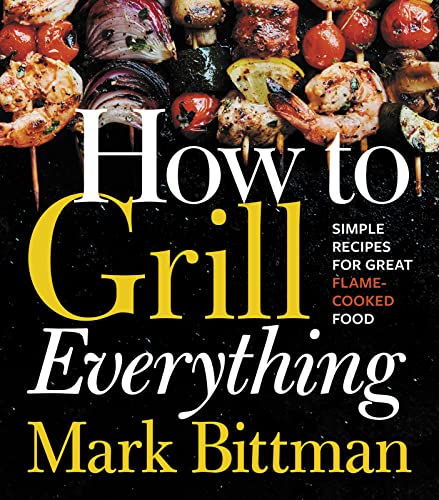
How to Grill Everything by Mark Bittman — Best for Learning Technique
How to Grill Everything is the thinking cook’s answer to best cookbook for gas grills. Mark Bittman’s approach in the How to Cook Everything series is to teach the underlying method — how heat, thickness, and timing interact — and then give recipes as worked examples with variations. For gas grillers that matters enormously, because gas cooking is control cooking: your skill is burner management, and this book builds exactly that judgement.
It suits cooks who want to get genuinely better, not just busier. Work through its chicken chapter and you understand poultry on any grill; work through the vegetable chapters and your side dishes stop being an afterthought. The global reach — skewers, flatbreads, grilled salads, sauces from several traditions — also rescues households stuck in a burger-and-sausage loop.
Skip it if you want a slim book of forty foolproof recipes to keep by the grill; this is a study-and-cook reference that lives in the kitchen. Gas-only purists should also know it speaks to grilling generally, so a few passages address charcoal setups. The technique transfers completely, and for a cook who will grill for decades, this is the highest-value book on the list.
Use it as a course, not a catalogue: pick one chapter a month, cook three recipes from it, and write down what your grill did differently from the page. That loop — recipe, observation, adjustment — is how a cookbook becomes skill instead of entertainment.
Strengths
- Teaches transferable technique, so one recipe becomes a method you can apply to whatever is in the fridge
- Huge breadth — proteins, vegetables, and global flavours far beyond standard barbecue fare
- Bittman’s variations habit trains cooks to improvise instead of depending on a single recipe
Trade-offs
- Breadth means gas-specific detail is spread thinner than in a gas-only book
- A big book — more reference tome than patio companion
- Vegetable and global chapters will be dead weight for strictly burgers-and-steaks households
| Specification | Detail |
|---|---|
| Series | How to Cook Everything Series, 8 (per Amazon listing title) |
| Scope | Grilling and BBQ cookbook — the ultimate grilling guide (per Amazon listing title) |
Best for: cooks who want to understand grilling deeply and improvise with confidence / Not suited for: readers who want a slim, gas-only, patio-side recipe flipbook
Check the current price on Amazon
Weber’s Ultimate Grilling by Jamie Purviance — Best Step-by-Step
Some cooks learn from words; most grillers learn from pictures. Weber’s Ultimate Grilling is built for them — a step-by-step guide with over 800 photos, written by Jamie Purviance, the name behind Weber’s best-known grilling books. For gas grill owners the advantage is specificity: the two-zone fires, sear-then-slide sequences, and lid discipline are demonstrated on the kind of multi-burner gas grill most readers actually own.
It suits visual learners, new Weber and cart-grill owners, and anyone who has ever read ‘grill until done’ and reasonably asked what done looks like. Here, done is photographed. So are the setups — where the burners sit for indirect cooking, how food is arranged for a rotisserie-style result without the attachment, and how a proper rest is staged.
Skip it if you dislike brand-centred books on principle or want maximum recipe count above all. But judged as a teaching tool for gas grilling specifically, nothing else in this guide shows its work so completely, and showing the work is what turns a recipe follower into a griller.
The photos make this the best book here to cook alongside with a partner or teenager learning the grill: one person reads the sequence aloud, the other works the tongs, and the pictures settle every argument about what the next step should look like.
Strengths
- Over 800 photos show hand positions, setups, and doneness cues that text alone cannot teach
- Written from inside the Weber gas-grill world, so burner and zone instructions match real cart grills
- Step-by-step structure suits visual learners and nervous beginners equally
Trade-offs
- Weber-centric examples assume Weber-style controls and layouts in places
- Photo-heavy format means fewer recipes per page than text-first rivals
- Owners of very small or very old grills will adapt some setups
| Specification | Detail |
|---|---|
| Format | Step-by-step guide with over 800 photos (per Amazon listing title) |
| Author | Jamie Purviance (Weber grilling author) |
Best for: visual learners and cart-grill owners who want every step shown, not just told / Not suited for: recipe collectors who prize sheer quantity over instruction
Check the current price on Amazon

The Outdoor Propane Grill Cookbook — Best for Propane Specifically
Plenty of grilling books are charcoal books in disguise, with a paragraph telling gas owners to adapt. The Outdoor Propane Grill Cookbook starts where propane owners actually live: it is written for outdoor propane grills, states compatibility with Char-Broil and other brands, and delivers 101 recipes with pro tips and illustrated instructions. That focus is its whole argument, and for the largest group of gas grillers — cart-grill propane households — it is a strong one.
It suits owners of Char-Broil, Nexgrill, and similar mainstream propane carts who want recipes written in their grill’s native language: burner counts, lid-down timings, and zone setups that match the machine on their patio. The illustrated format keeps pages scannable mid-cook, which matters more than literary style when chicken fat is flaring.
Skip it if your grill runs on natural gas and you want fuel-specific guidance, or if you want the deep technique education of the Bittman pick. As a propane-native recipe source to pair with a general reference, though, it fills the exact gap the big general books leave open.
Because its recipes assume mainstream propane carts, this is also the most giftable book in the guide: buy it for the relative who just brought home a big-box propane grill and it will match their machine without any translation work on their part.
Strengths
- Propane-first writing — no charcoal conversions or guesswork for the most common home fuel
- Brand-agnostic within propane, explicitly compatible with Char-Broil and other brands
- Illustrated instructions keep it usable at the grill, not just in the kitchen
Trade-offs
- A narrower, more commercial catalogue than the big publishing-house picks
- 101 recipes is a focused set — heavy cooks will want a second book sooner
- Less technique theory; it tells you what to do more than why it works
| Specification | Detail |
|---|---|
| Recipes | 101 delicious recipes (per Amazon listing title) |
| Compatibility | Char-Broil and other propane brands (per Amazon listing title) |
| Extras | Pro tips and illustrated instructions (per Amazon listing title) |
Best for: mainstream propane cart owners who want recipes written for their exact fuel and grill style / Not suited for: natural-gas owners and technique students
Check the current price on Amazon

Weber Gas Grill Cookbook: 100+ Recipes and Expert Tips — Best for Weber Owners
Brand-specific cookbooks live or die on one question: does the specificity actually help? For Weber gas grill owners, the Weber Gas Grill Cookbook makes its case with 100+ recipes and expert tips written around Weber gas grills rather than grilling in the abstract. Sear-zone use, burner layouts, and the accessories Weber owners tend to accumulate are treated as givens, not afterthoughts.
It suits the large installed base of Spirit and Genesis owners who feel they are using half their grill. If your cooking has plateaued at burgers and boneless chicken, a book that assumes your exact machine and pushes it — different zones, lid techniques, timing for thicker cuts — is a practical way to break the plateau without buying new hardware.
Skip it if you grill on any other brand; the general picks above will serve you better. And choose between this and Weber’s Ultimate Grilling by learning style: choose that one for photographed step-by-step teaching, this one for a larger recipe bench aimed at your specific grill.
Weber owners building a two-book shelf should pair this with the Bittman technique pick rather than a second brand book: one book that knows your machine, one book that teaches you to think — together they cover nearly every gas grilling question a home cook will ask.
Strengths
- Speaks directly to Weber gas grill layouts, controls, and accessories
- 100+ recipes give Weber owners a deep bench without adaptation
- Expert-tips framing suits owners trying to move past the basics on a grill they already own
Trade-offs
- Value drops sharply if you do not own a Weber gas grill
- An independent companion book, not a Weber-published reference — set expectations accordingly
- Overlaps with the step-by-step Weber pick above for owners building a small library
| Specification | Detail |
|---|---|
| Recipes | 100+ recipes (per Amazon listing title) |
| Focus | Weber gas grills specifically (per Amazon listing title) |
Best for: Spirit and Genesis owners who want a deep recipe bench written for their grill / Not suited for: owners of any other grill brand
Check the current price on Amazon

Gas Grill Cookbook for Beginners: 200+ Simple & Healthful Grill Recipes — Best for Beginners
First-season grill owners do not need ambition; they need wins. The Gas Grill Cookbook for Beginners is built to deliver them: 200+ simple and healthful grill recipes with expert advice pitched at beginners and advancing users. The healthful angle is more practical than it sounds — households that grill three weeknights a week need food they can eat three weeknights a week, and this book’s centre of gravity sits exactly there.
It suits brand-new gas grill owners, families rebuilding weeknight cooking around the grill, and anyone whose doctor or conscience has asked for lighter food that still tastes like it came off a flame. The sheer count matters for this audience: when a Tuesday recipe disappoints, there are two hundred more, so the habit survives.
Skip it if you are chasing smoke rings, regional barbecue authenticity, or chef-level projects — other picks here serve those goals. As a first gas grill cookbook, though, it understands its reader better than books that open with a brisket and a lecture.
New owners should cook this book in order of confidence, not in order of chapters: start with its simplest chicken and vegetable recipes, learn your grill’s hot spots on forgiving food, and only then spend money on thick steaks. The book’s structure quietly encourages exactly that progression.
Strengths
- Largest recipe count in this guide, weighted toward simple preparations a new owner can succeed with immediately
- Healthful framing suits households grilling several nights a week, not just on weekends
- Advice for beginners and advancing users stretches its useful life past the first season
Trade-offs
- Simple-first recipes will feel basic to experienced grillers
- Breadth over depth — technique teaching is lighter than the Bittman or Purviance picks
- Healthful emphasis means classic indulgent barbecue is not its home turf
| Specification | Detail |
|---|---|
| Recipes | 200+ simple and healthful grill recipes (per Amazon listing title) |
| Audience | Beginners and advanced users (per Amazon listing title) |
Best for: first-season owners and weeknight cooks who want many simple, lighter recipes / Not suited for: experienced grillers chasing barbecue projects and rich classics
Check the current price on Amazon
Comparison Table
| Pick | Badge | Key spec | Best for |
|---|---|---|---|
| Gas Grill Cookbook (Better Homes and Gardens) — check price on Amazon | Best Overall | Better Homes and Gardens tested-recipe collection for gas grills | new and everyday gas grill owners who want tested recipes that work first time |
| How to Grill Everything by Mark Bittman — check price on Amazon | Best for Learning Technique | Part of the How to Cook Everything series (per Amazon listing title) | cooks who want to understand grilling deeply and improvise with confidence |
| Weber’s Ultimate Grilling by Jamie Purviance — check price on Amazon | Best Step-by-Step | Step-by-step guide with over 800 photos (per Amazon listing title) | visual learners and cart-grill owners who want every step shown, not just told |
| The Outdoor Propane Grill Cookbook — check price on Amazon | Best for Propane Specifically | 101 recipes, pro tips and illustrated instructions (per Amazon listing title) | mainstream propane cart owners who want recipes written for their exact fuel and grill style |
| Weber Gas Grill Cookbook: 100+ Recipes and Expert Tips — check price on Amazon | Best for Weber Owners | 100+ recipes and expert tips for Weber gas grills (per Amazon listing title) | Spirit and Genesis owners who want a deep recipe bench written for their grill |
| Gas Grill Cookbook for Beginners: 200+ Simple & Healthful Grill Recipes — check price on Amazon | Best for Beginners | 200+ simple and healthful recipes (per Amazon listing title) | first-season owners and weeknight cooks who want many simple, lighter recipes |
Read the table as a map, not a ranking. The right best cookbook for gas grills choice depends on your space, your fuel, and how often you cook — the sections below walk through each of those decisions in the order that actually matters.
How to Choose a Cookbook for Your Gas Grill
Match the book to your stage, honestly
Beginners need early wins more than education: short ingredient lists, forgiving timings, and recipes that teach the grill’s hot spots on cheap food. That is the beginner pick’s entire design. Intermediate cooks — the largest group — need the opposite: a reliable tested base plus a few chapters that stretch them. Advanced cooks should buy technique and range, because they already own recipes; what they lack is judgement about heat and timing on unfamiliar foods, and only a technique-first book builds that.
Be suspicious of the stage marketing on covers. ‘For beginners’ sometimes means dumbed down, and ‘ultimate’ sometimes means untested bulk. The reviews above flag which books actually deliver their stated stage; when in doubt, choose the book one stage below your ego and one stage above your current Tuesday dinner.
Gas-specific versus general grilling books
A gas-specific book writes in your machine’s language: burner configurations, preheat times, lid-down rules, and zone maps for two-, three-, and four-burner carts. A general grilling book teaches fire in the abstract and covers charcoal and sometimes smoking too. Neither is automatically better. If your grill is your only outdoor cooker and you are new, gas-specific wins. If you own or dream of owning a kettle or smoker as well, a general technique book serves all three — which is why this guide includes both kinds and labels them clearly.
What to avoid is the worst hybrid: a charcoal book with a conversion chart. Charcoal timing does not convert to gas by arithmetic, because the heat curves differ. If a book’s gas content fits in an appendix, it is not a gas grill cookbook, whatever the cover says.
Format is a cooking feature
Decide where the book will be used. At the grill, you want lay-flat binding, pages that survive a splash, and type you can read at arm’s length through heat shimmer — spiral and sturdy hardcover formats win. In the kitchen, for planning and learning, a big reference or a searchable digital edition wins. Many serious cooks end up with one of each kind, which is exactly the two-book shelf the final recommendation describes.
Also check the index before you romanticise the table of contents. A cookbook is a database you query by ingredient — ‘what do I do with these chicken thighs tonight?’ — and a book with a thorough ingredient index gets used weekly, while a prettier book with a weak index gets admired monthly.
Judging a book by its first recipe test
Before committing your season to any cookbook, run the cheapest audition in cooking: pick its basic grilled chicken recipe — every grilling book has one — and cook it exactly as written. A book that gets chicken right, with a stated preheat, a zone, a lid position, and a believable time, will get most things right, because chicken exposes vague writing instantly. A book whose chicken recipe says only ‘grill over medium-high heat until done’ has told you everything about its standards in one page.
Apply the same test to one vegetable recipe, because vegetables are where gas technique — oil discipline, zone placement, timing against the protein — actually lives. Books that treat vegetables as a garnish chapter will not support weeknight cooking, however strong their steak chapter looks. The six books above passed this kind of reading before they were listed; use the test on any book you are considering that we did not cover.
What Makes a Gas Grill Recipe Trustworthy
A trustworthy gas grill recipe states four things most recipes skip: the preheat, the zone, the lid position, and a doneness cue that is not only a time. Preheat and zone tell you the cooking environment; lid position changes that environment completely on gas, because a closed lid turns the grill into a convection oven while an open lid keeps it a radiant broiler. When a book consistently specifies all four, its author cooked on gas. When it specifies only a time and a temperature word like ‘medium-high’, its author cooked somewhere else and translated — and translated recipes are where disappointing dinners come from.
Doneness cues deserve their own sentence: the books in this guide were favoured when they describe what food looks, feels, and reads like at doneness, and when they build in resting. Time is a plan; temperature and touch are the truth. Pair any of these books with an instant-read thermometer and their timings become starting points you refine with your own notes — which is the moment a cookbook stops being the author’s and starts being yours.
There is a second trust test, quieter than the first: check how a book handles failure. Gas grilling’s common failures are specific — flare-ups from fatty food over direct heat, skin that sticks because the grate was not hot or the chicken was moved too early, vegetables that carbonise at the edges while staying raw in the middle. A serious gas cookbook names these in the recipes where they happen and gives the counter-move in the same breath: slide to the cool zone, wait for release before turning, cut vegetables to even thickness and oil them, not the grate. Books that pretend grilling is frictionless are writing advertising, not instruction, and your dinners will pay the difference.
Building a Two-Book Shelf That Covers Everything
Most households do not need a cookbook library; they need two books that correct each other’s weaknesses. The reliable pattern is one book that knows your machine and your weeknights — tested recipes, your fuel, your burner layout — plus one book that teaches you to think, so unfamiliar ingredients stop being a reason to order takeaway. Every pairing suggested in the final recommendation follows that pattern, because a second book of the same kind adds recipes, while a book of the other kind adds ability.
Resist the third book until the first two are marked up. Cookbook buying is pleasurable in a way cookbook cooking is not always, and shelves fill with good intentions. The discipline that works: a new book must replace a gap you can name — a cuisine, a technique, a protein you keep failing — not a mood. When you can name the gap, the reviews in this guide will point you at the right shelf-mate; when you cannot, your next great recipe is probably already in a book you own, in a chapter you skipped.
When the gap finally has a name, you will know it from your own margin notes — and that is the deepest reason to write in your books from the very first cook, long before a second volume joins the shelf beside the grill.
How to Use a Grill Cookbook: The First Four Weeks
A new cookbook fails when it is read like a novel and cooked from at random. Use this four-week on-ramp instead, with whichever pick you buy.
Treat the month as tuition, not as a test. Every cook in the sequence below teaches one thing — your grill’s heat map, the author’s timing habits, a new protein, a small audience — and by the end of it the book will have stopped being a purchase and started being a member of the household.
- Week one: cook two of the book’s simplest recipes exactly as written, on inexpensive food, and note your grill’s hot spots and any timing differences in the margin.
- Week two: repeat one recipe and change one variable only — a different zone, a marinade, a thicker cut — so you learn cause and effect instead of collecting anecdotes.
- Week three: cook one recipe from a chapter you would normally skip (vegetables and seafood teach gas control faster than any steak).
- Week four: host the small cookout. Choose recipes you have already made twice; a cookbook proves itself when its recipes survive an audience without improvisation.
- Throughout: write in the book. Date every cook, mark what worked, and correct timings to your grill. A marked-up cookbook is worth three pristine ones.
After the first month, organise by your own rotation: flag the six recipes your household asks for again, because those six — plus the technique chapters — are what you actually bought. The rest of the book becomes exploration stock for weekends, which is the healthiest relationship a home cook can have with a big cookbook.
Keep the book where the cooking decisions happen. For most households that is the kitchen counter by the back door, not a living-room shelf: a cookbook stored with the tongs gets opened on Tuesdays, and Tuesday openings are the entire point of owning one.
Common Buying Mistakes
Buying the biggest book first
A 600-recipe debut overwhelms new owners and quietly teaches them that cookbooks are homework. Start with the book matched to your stage; the encyclopedia earns its place in season two.
Ignoring the edition on the listing
Hardcover, paperback, spiral, and digital editions of the ‘same’ book can differ in photos, layout, and sometimes content. Check the edition details on the listing before ordering, especially for photo-driven books.
Cooking the hardest recipe first
Opening a new book at the brisket or the whole fish burns money and confidence together. The first cooks should be cheap, fast, and forgiving, so you learn your grill and the author’s style at low stakes.
Never writing in the book
Unmarked cookbooks repeat the same small disappointments forever, because grill timings are always local. A pencil note — ‘my grill runs hot, minus two minutes’ — is the highest-value sentence in any cookbook you own.
Buying a cookbook for a grill you wish you owned
Sear-zone techniques in a book are no use to a two-burner owner, and kamado chapters do not help a cart-grill household. Match the book to the machine on your patio today; aspiration is a fine reason to buy a grill, but a poor reason to buy its cookbook first.
Final Recommendation
If you buy one book, buy the Better Homes and Gardens Gas Grill Cookbook for tested everyday reliability — or, if you know you learn visually, Weber’s Ultimate Grilling instead. If you buy two, pair a machine-specific or everyday book with How to Grill Everything, so recipes and technique cover each other. Beginners cooking several nights a week should start with the beginners’ volume and graduate deliberately, and Weber owners with a plateau should go straight to the Weber bench book.
Whichever you choose, cook from it this week, pencil in hand. A gas grill plus a well-used cookbook is a complete system; a gas grill plus a pristine cookbook is still just a grill.
And if your household’s real bottleneck is not recipes but the grill itself — uneven heat, tired burners, too little space — fix that first and let the book follow. The grill guides in this cluster, starting with the consumer grills roundup linked below, will get the hardware right; then any book on this page will taste better than it did on a struggling machine.
Ready to decide? Start with the three most-chosen picks in this guide — Gas Grill Cookbook (Better Homes and Gardens) (check price on Amazon), How to Grill Everything by Mark Bittman (check price on Amazon), Weber’s Ultimate Grilling by Jamie Purviance (check price on Amazon) — and confirm the exact configuration on the listing before you order.
Keep exploring the cluster: Best Consumer Grills Best Cooking Bbq Grills Portable Gas Best Cookbook For Ceramic Grills Best Compact Gas Grills Best Economical Gas Grills Best Durable Gas Grills
Frequently Asked Questions
What is the best cookbook for a beginner gas griller?
The beginners’ pick in this guide — 200+ simple, healthful recipes with advice for new users — is built for first-season success. The Better Homes and Gardens volume is the close alternative if you prefer a test-kitchen name and a more classic recipe mix.
Are Weber cookbooks useful if I own another brand?
The technique in Weber’s step-by-step book transfers to any cart grill, because zones and lid work are universal. The brand-specific bench book is the exception: its value is tied to Weber layouts, so owners of other brands should choose a general pick instead.
Should I buy a physical book or a digital edition?
Physical, lay-flat formats win at the grill; digital wins for searching and planning in the kitchen. If you cook with your phone already and keep it in a sealed bag outdoors, digital is fine — but most households get more use from one sturdy print copy.
How many recipes does a good grill cookbook need?
Fewer than marketing suggests. A household rotation is six to ten recipes; a book with one hundred tested recipes and good technique chapters will out-serve a book with a thousand untested ones. Judge testing and clarity before count — except for beginners, where a large simple bench genuinely helps.
Can one cookbook cover gas grilling and smoking?
General technique books touch smoking, but gas grills are poor smokers compared with dedicated equipment, and the honest books say so. If smoking becomes a serious interest, buy a dedicated smoker book — and consider the pellet and charcoal guides in this cluster — rather than asking a gas book to pretend.
What should I check on the Amazon listing before buying a cookbook?
Confirm the edition and format, the publication date (newer editions revise timings for modern grills), and that the title and author match the review exactly. Cookbook titles are heavily imitated, so match the author or publisher, not just the title words.
Do grill cookbooks go out of date?
Recipes do not expire, but grill hardware evolves: modern carts run hotter, sear zones are common, and older books assume gentler burners and no infrared. Prefer recent editions for timing-sensitive food, and treat any book’s times as starting points for your grill’s own notebook — the technique chapters of a good book stay true for decades even as its minutes drift.


