Disclosure: airfryerkitchensupply.com is reader-supported. When you buy through links on our site, we may earn an affiliate commission at no extra cost to you.
Where to buy
If you are shopping for the best consumer grills, start with the verified shortlist below. Every linked model on it was confirmed against a live Amazon listing through the retailer data available to this site before it earned its place here, and every unlinked pick is labelled honestly so you know exactly what you are getting.
- Weber Spirit E-310 Gas Grill (Best Overall) — Check the current price on Amazon
- Weber Original Kettle Premium Charcoal Grill 22-Inch (Best Charcoal) — Check the current price on Amazon
- Traeger Pro 22 Wood Pellet Grill & Smoker (Best Pellet) — Check the current price on Amazon
- Blackstone 1883 Original 28-Inch Omnivore Griddle with Hood (Best Griddle) — Check the current price on Amazon
- Coleman RoadTrip 285 Portable Propane Grill (Best Portable) — Check the current price on Amazon
- Ninja Foodi Smart XL 6-in-1 Indoor Grill & Air Fryer DG551 (Best Indoor) — Check the current price on Amazon
This page never prints a fixed figure for any product, because grill and grill-book prices and stock move constantly. Use the links above to check price on Amazon at the moment you are ready to buy, and treat any budget language in this article as a tier guide — where the best consumer grills market sits — rather than a promise about a specific listing on a specific day. Always confirm the exact model name, size, and fuel type on the listing matches the model reviewed here before you order, because lineups change mid-season and near-identical model names often hide different grates, burners, or included accessories.
Shopping for the best consumer grills starts with an unfashionable truth: there is no single best grill, only the best grill for the way your household actually cooks. The six picks in this guide were chosen to cover the six jobs real consumers hire a grill to do — dependable family propane cooking, charcoal flavour, hands-off smoking, flat-top batch cooking, portable cooking, and indoor grilling — with one verified winner for each, instead of six near-identical carts ranked by burner count.
That job-first approach matters because the consumer grill market is built to confuse. Listings shout BTU totals that say little about heat at the grate, cooking-area figures that quietly include warming racks, and model names that differ by one letter while changing the grates, the ignition, or the warranty. This guide cuts through that by verifying every linked pick against a live listing, printing no fixed prices or fixed ratings, and telling you plainly who each grill is not for — which is usually the fastest way to find the one that is for you.
A note on budgets before the picks: consumer grills sort into a budget tier of basic carts and kettles, a mid-range tier where build quality and parts support jump noticeably, and a premium tier that buys thicker materials, better burners, and longer design life. Every pick below sits where its job is done properly; the buying-guide sections after the reviews explain how to judge the tiers for your own shortlist, including the used-grill and sale-timing traps that catch first-time buyers every spring.
One more promise about how this guide reads: every pick below names its trade-offs in the same breath as its strengths, and the verdict line under each review tells you plainly who should walk past it. A consumer guide that recommends everything recommends nothing, so if a pick is wrong for your home, the review itself will talk you out of it — that is deliberate, and it is how you should judge any grill advice, including ours.
In this guide
Quick Picks
Short on time? These are the six best consumer grills picks explained in full below. Each one owns a distinct job, so match the badge to the way you actually cook instead of chasing the longest feature list.
- Weber Spirit E-310 Gas Grill — Best Overall. The three-burner propane cart grill most households will be happiest owning: even heat, porcelain-enameled cast-iron grates, and parts support that lasts for years. — check price on Amazon
- Weber Original Kettle Premium Charcoal Grill 22-Inch — Best Charcoal. The classic 22-inch kettle with a built-in thermometer and One-Touch cleaning — still the best-value route to real charcoal flavour. — check price on Amazon
- Traeger Pro 22 Wood Pellet Grill & Smoker — Best Pellet. A set-and-hold pellet grill and smoker with 572 square inches of cooking area and a meat probe — low-and-slow without babysitting a fire. — check price on Amazon
- Blackstone 1883 Original 28-Inch Omnivore Griddle with Hood — Best Griddle. A 28-inch flat-top with a hood and counter-height side shelves — the pick for smash burgers, breakfast, and feeding a crowd fast. — check price on Amazon
- Coleman RoadTrip 285 Portable Propane Grill — Best Portable. A three-burner portable propane grill with Instastart ignition and 20,000 BTUs that folds down for camping and tailgating. — check price on Amazon
- Ninja Foodi Smart XL 6-in-1 Indoor Grill & Air Fryer DG551 — Best Indoor. A countertop 6-in-1 indoor grill and air fryer with a smart thermometer — real grill marks and doneness control without a yard. — check price on Amazon
How These Picks Were Chosen
Each pick had to pass three tests. First, verification: the exact model had to be confirmable against a live Amazon listing through this site’s retailer data, with the model name, fuel, and format matching what we intended to recommend. Models we could not confirm cleanly were dropped or written about without a link — never guessed at. Second, job fit: the grill had to be a genuinely strong answer to its specific job, not a mediocre all-rounder. Third, ownership: parts availability, cleaning burden, and storage reality had to be acceptable for a normal household, because a grill that is wonderful twice and annoying forever is a bad consumer recommendation.
We deliberately mixed fuels and formats. Propane, charcoal, pellets, and electric indoor grilling each win for somebody, and a guide that only lists propane carts quietly assumes a backyard, a tank, and a tolerance for open flame that many readers do not have. If your situation matches one pick strongly, buy that pick with confidence and skip the rest of the list — the comparison table and final recommendation are built to help you do exactly that.
The 6 Best Consumer Grills, One for Each Real Job

Weber Spirit E-310 Gas Grill — Best Overall
If the phrase best consumer grills means anything useful, it should mean the grill a normal household can buy once, light on a Tuesday, and still be cooking on five summers later. The Weber Spirit E-310 is that grill. It is a three-burner propane cart grill with porcelain-enameled cast-iron grates and Snap-Jet ignition, and its real advantage is not any single feature — it is how few surprises it delivers. The burners light reliably, the heat spreads evenly enough that you are not rotating food away from hot spots all evening, and the grate leaves proper marks without demanding cast-iron-seasoning rituals.
It suits households of two to six who grill a few times a week in season: burgers, chicken thighs, vegetables, and the occasional steak night. The three-burner layout gives you a genuine two-zone setup — food over direct heat on one side, finishing gently on the other — which is the single technique that separates relaxed grilling from burnt-outside, raw-inside grilling. New owners should still budget a first evening for assembly and a burn-off, and should register the grill so the long parts pipeline stays attached to their name.
Who should skip it? Anyone who needs a side burner for sauces and corn, anyone cooking for crowds of ten every weekend, and anyone whose heart is set on charcoal flavour. Within its job — dependable family propane grilling — it is the benchmark the rest of this list is measured against, and it earns Best Overall because ownership, not just cooking, is easy.
Ownership is where this pick quietly wins. The grease tray is easy to reach, the grates lift out for a real clean, and a Saturday-morning brush-down while the grill heats is genuinely all the routine maintenance most owners will ever do. When a burner eventually tires years in, it is a replaceable part, not a death sentence for the whole grill — and that difference is the entire argument for buying in this tier instead of the cheapest cart on the floor.
Strengths
- Even, predictable heat across the grate, so weeknight chicken and burgers cook without constant shuffling
- Porcelain-enameled cast-iron grates hold sear marks well and resist rust better than plain steel
- Deep parts and support ecosystem — burners, grates, and covers stay easy to replace years later
Trade-offs
- No dedicated sear zone or side burner at this step in the line
- Cart storage is open rather than a closed cabinet on some configurations — confirm the listing
- Costs more than big-box house brands with similar burner counts
| Specification | Detail |
|---|---|
| Fuel | Liquid propane |
| Burners | 3 |
| Grate material | Porcelain-enameled cast iron (per Amazon listing title) |
| Ignition | Snap-Jet ignition (per Amazon listing title) |
Best for: families who want one dependable propane grill for years of weeknight and weekend cooking / Not suited for: cooks who need a side burner, a sear station, or charcoal flavour
Check the current price on Amazon

Weber Original Kettle Premium Charcoal Grill 22-Inch — Best Charcoal
Every consumer grill list needs an honesty anchor, and the 22-inch Weber Original Kettle Premium is it. Charcoal is slower and messier than gas, and this kettle will not pretend otherwise. What it offers instead is flavour — the real, smoke-kissed kind — in a design so refined over decades that there is almost nothing left to go wrong. The Premium step adds a built-in lid thermometer and the One-Touch cleaning system, both of which matter more in week ten than they look like they will on day one.
It suits flavour-first cooks, smaller households, and anyone who treats grilling as a ritual worth twenty extra minutes. Bank the coals to one side and you have a proper indirect zone for ribs, whole chickens, and thick steaks finished after a sear. Add a chimney starter — never lighter fluid — and the routine becomes simple: light, wait for ash-grey coals, cook, close the vents, sweep the ash next day.
Skip it if your grilling is mostly fifteen-minute weeknight dinners, if your balcony rules ban charcoal, or if you hate temperature management. For everyone else, this is the cheapest ticket in this guide to the flavour people actually mean when they say barbecue, and it will likely outlive every electronic grill on this page.
A word on learning curve, because it scares people off unfairly: the kettle forgives beginners. Vents half-open is a safe default for most cooks, the lid thermometer tells you when you are wildly off, and charcoal itself is cheap practice fuel. Give yourself three cooks — burgers, then chicken pieces, then something indirect like a whole chicken — and the fire management that looked mysterious becomes a set of small habits: how the vents feel, how ash-grey coals look, when to add a handful more.
Strengths
- Genuine charcoal flavour no gas grill fully reproduces
- Simple, proven design with almost nothing to break and cheap replacement parts
- One-Touch cleaning system makes ash removal a quick sweep instead of a shovel job
Trade-offs
- You manage the fire yourself — no knob sets a temperature
- Slower to start and to cool than gas, so weeknight timing takes planning
- Two-zone cooking works, but the round grate gives you less straight-line space than a cart grill
| Specification | Detail |
|---|---|
| Fuel | Charcoal |
| Size | 22-inch kettle (per Amazon listing title) |
| Thermometer | Built-in lid thermometer (per Amazon listing title) |
Best for: flavour-first cooks who enjoy managing a real fire / Not suited for: speed-first weeknight cooks and anyone banned from using charcoal
Check the current price on Amazon

Traeger Pro 22 Wood Pellet Grill & Smoker — Best Pellet
The Traeger Pro 22 answers a different consumer question: not how do I grill, but how do I smoke without giving up my whole Saturday to fire management. Its controller feeds wood pellets to hold a set temperature, the hopper carries 18 pounds of pellets for long cooks, and the 572 square inches of cooking area swallow a brisket or several racks of ribs at once. The included meat probe closes the loop, so a pork shoulder becomes a schedule instead of a vigil.
It suits patient cooks who love brisket, pulled pork, smoked salmon, and reverse-seared steaks, and who grill often enough to justify a dedicated machine. The brand calls it 6-in-1 versatile, and that is fair: smoke, grill, bake, roast, braise, and barbecue all happen in the same barrel. Burgers on a pellet grill are good; brisket on a pellet grill is the reason to buy one.
Skip it if you want screaming-hot sears as your main event — its ceiling is a grilling temperature, not a steakhouse crust machine — or if you have nowhere dry to store pellets. Kept covered, with pellets kept dry and ash vacuumed out on schedule, it is the easiest route in this guide to genuinely good smoked food at home.
Pellet choice is the owner’s main creative lever here. Fruitwoods flatter poultry and fish, oak and hickory stand up to brisket and ribs, and blends split the difference for everyday cooking. Buy pellets in quantities you will use while they stay dry and fresh, store them sealed off the ground, and vacuum the fire pot on the maker’s schedule — ash discipline is the difference between a pellet grill that feels automatic and one that flames out mid-brisket at hour nine.
Strengths
- Controller holds low smoking temperatures steadily for hours, freeing you from vent-tending
- 572 square inches handles briskets, multiple racks, or a family cookout in one load
- Meat probe takes the guesswork out of large cuts
Trade-offs
- Needs electricity at the grill, so placement depends on an outdoor outlet
- Pellet flavour is milder than charcoal or offset-smoker smoke
- More moving parts — auger, fan, controller — than any other pick here, so keep it covered and the hopper dry
| Specification | Detail |
|---|---|
| Fuel | Wood pellets |
| Cooking area | 572 sq in (per Amazon listing title) |
| Hopper | 18 lb (per Amazon listing title) |
| Max temperature | 450°F (per Amazon listing title) |
| Probe | Meat probe included (per Amazon listing title) |
Best for: home smokers who want low-and-slow results without tending a fire all day / Not suited for: sear-first steak cooks and anyone without dry pellet storage
Check the current price on Amazon

Blackstone 1883 Original 28-Inch Omnivore Griddle with Hood — Best Griddle
A flat-top griddle earns its place on a consumer grills list because half of what families actually want to cook outdoors — breakfast, smash burgers, fajitas, fried rice, grilled sandwiches — is impossible or miserable on open grates. The Blackstone 1883 pairs a 28-inch Omnivore griddle top with a hood and counter-height side shelves, which turns it into a genuine outdoor short-order station rather than a novelty.
It suits big-breakfast households, burger-night families, and anyone who cooks for groups: food goes down in zones, finished items hold at the cool edge, and nothing falls through a grate ever again. Season the top properly on day one, keep a squirt bottle of water and a good scraper at hand, and cleanup becomes a two-minute scrape-and-oil routine while the top is still warm.
Skip it if your outdoor cooking identity is steaks with crosshatch marks and smoky chicken — a griddle does neither. Many owners end up pairing a griddle with a small kettle for exactly that reason. As the single outdoor cooker for a family that cooks more diner food than barbecue, though, it may honestly be the most-used pick in this entire guide.
Technique on a flat top is zone cooking, and the 28-inch surface gives you room to run it properly: a hot zone for searing, a medium zone for cooking through, and a cool edge where finished food waits without burning. Keep squeeze bottles of water and oil, a wide scraper, and a dome lid for melting and steaming within arm’s reach, and the griddle stops feeling like a big frying pan and starts feeling like a diner line you happen to own.
Strengths
- Flat top cooks foods grates cannot: eggs, pancakes, fried rice, cheesesteaks, and smash burgers
- Large surface feeds a crowd in batches without flare-ups, since fat drains away from the flame
- Hood helps with melting cheese, steaming vegetables, and keeping heat in on windy days
Trade-offs
- No grate marks and no open-flame char — it is a different style of outdoor cooking
- The steel top needs seasoning and a light oil coat after cooking to stay rust-free
- Takes patio space like a grill while doing none of a grill’s smoky work
| Specification | Detail |
|---|---|
| Format | 28-inch flat-top griddle (per Amazon listing title) |
| Hood | Included (per Amazon listing title) |
| Shelves | Counter-height side shelves (per Amazon listing title) |
Best for: families who cook breakfast, burgers, and batch food outdoors / Not suited for: cooks who want grate marks, smoke, and open-flame char
Check the current price on Amazon
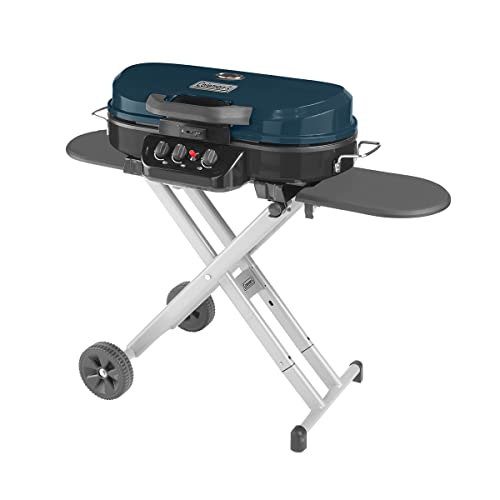
Coleman RoadTrip 285 Portable Propane Grill — Best Portable
Most portable grills ask you to accept one small burner and hope for the best. The Coleman RoadTrip 285 does not: it packs three adjustable burners and 20,000 BTUs into a folding, stand-up design with Instastart ignition, so tailgate and campsite cooking feels like a smaller version of home grilling instead of a compromise ritual. That burner count matters — you can sear on one side and hold finished food warm on the other, even in a parking lot.
It suits car campers, tailgaters, apartment dwellers with a small patio, and families who want one grill that does home overflow duty and travel duty. Set it up on its stand, cook, let it cool, fold it, and roll it back to the car or closet. Keep a spare canister in the kit; running out mid-cook at a campsite is a rite of passage you only need once.
Skip it if portable to you means a tiny tabletop unit for two, or if you mostly grill at home — a full-size cart grill gives you more area and stability for the same storage corner. As the travel-first pick in this guide, the RoadTrip 285 is the one that least feels like a downgrade when you leave the backyard.
Travel routine matters more than travel specs. Let the grill cool fully before folding, knock loose debris off at the site rather than at home, and carry the canisters upright and separate from food. Owners who build that five-minute pack-down habit use this grill constantly; owners who treat cleanup as a home problem stop bringing it by the third trip. At home, the same grill on its stand is a perfectly good overflow cooker when the main grill is full.
Strengths
- Real three-burner control in a grill that travels — rare at portable sizes
- Instastart push-button ignition avoids the lighter hunt at campsites
- Swappable tops on this platform extend it beyond basic grates on some configurations — confirm the listing
Trade-offs
- Heavier and bulkier than tabletop portables, so it suits car camping, not hiking
- Runs on small propane canisters for travel; longer home use wants an adapter and tank, sold separately
- Wind affects any portable — plan a sheltered cooking spot
| Specification | Detail |
|---|---|
| Fuel | Propane |
| Burners | 3 (per Amazon listing title) |
| Output | 20,000 BTUs (per Amazon listing title) |
| Ignition | Instastart ignition (per Amazon listing title) |
Best for: campers, tailgaters, and small-patio cooks who need real burner control on the move / Not suited for: minimalists who want the smallest possible tabletop grill
Check the current price on Amazon
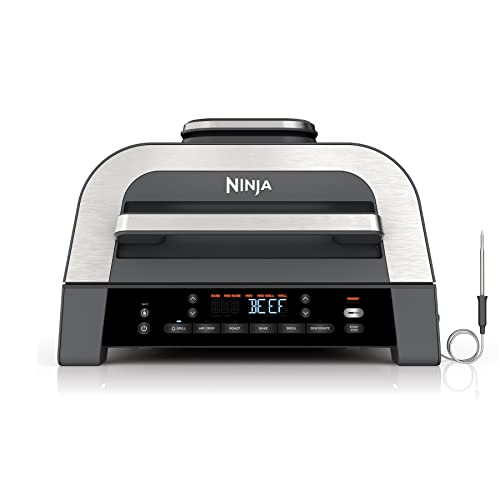
Ninja Foodi Smart XL 6-in-1 Indoor Grill & Air Fryer DG551 — Best Indoor
For apartment and condo readers, best consumer grills cannot mean a propane cart on a patio they do not have. The Ninja Foodi Smart XL DG551 is the indoor answer that actually grills: a 6-in-1 countertop machine with a Smart Cook System and a Foodi Smart Thermometer, so a thick steak or chicken breast cooks to the doneness you selected rather than the time you guessed. It also air fries, which is why it survives on counters that would evict a single-purpose gadget.
It suits renters, small households, winter grillers, and anyone whose building bans open flame. Frozen-to-grilled weeknight proteins are its party trick, and the thermometer probe is genuinely useful for thicker cuts that defeat timing charts. Measure your cabinets before ordering — XL indoor grills need vertical clearance when the lid opens, and that measurement has ended more purchases than any feature debate.
Skip it if you have a yard and love smoke, or if you regularly cook for six at once. But as the indoor representative in a consumer guide, it is not a token pick: for a large share of households, this style of grill is the one that will actually be used three times a week, in January, without a coat on.
Getting the best from an indoor grill is mostly about thickness and patience. Bring proteins out of the fridge briefly before cooking, pat surfaces dry for better marks, and trust the probe instead of opening the lid to peek — every peek costs the heat that makes the marks. Batch in a warm oven set low if you are feeding more people than the grate holds at once; the first batch rests happily while the second grills, and nobody eats a cold steak.
Strengths
- Grills indoors year-round — the only pick here immune to weather, darkness, and balcony bans
- Smart thermometer cooks to a chosen doneness instead of a guessed time
- Air frying and the other functions mean it earns counter space beyond grilling days
Trade-offs
- Capacity is countertop-sized — family cookouts happen in batches
- Needs counter space and clearance, and produces cooking smells like any indoor appliance
- No smoke or charcoal character; it grills, it does not barbecue
| Specification | Detail |
|---|---|
| Format | Countertop indoor grill and air fryer (per Amazon listing title) |
| Functions | 6-in-1 (per Amazon listing title) |
| Thermometer | Foodi Smart Thermometer (per Amazon listing title) |
Best for: apartment cooks and small households who need real grilling indoors / Not suited for: yard owners who want smoke flavour and cookout capacity
Check the current price on Amazon
Comparison Table
| Pick | Badge | Key spec | Best for |
|---|---|---|---|
| Weber Spirit E-310 Gas Grill — check price on Amazon | Best Overall | 3 burners, porcelain-enameled cast-iron grates | families who want one dependable propane grill for years of weeknight and weekend cooking |
| Weber Original Kettle Premium Charcoal Grill 22-Inch — check price on Amazon | Best Charcoal | 22-inch charcoal kettle, built-in thermometer | flavour-first cooks who enjoy managing a real fire |
| Traeger Pro 22 Wood Pellet Grill & Smoker — check price on Amazon | Best Pellet | 572 sq in cooking area, 18 lb hopper, meat probe | home smokers who want low-and-slow results without tending a fire all day |
| Blackstone 1883 Original 28-Inch Omnivore Griddle with Hood — check price on Amazon | Best Griddle | 28-inch flat-top griddle with hood | families who cook breakfast, burgers, and batch food outdoors |
| Coleman RoadTrip 285 Portable Propane Grill — check price on Amazon | Best Portable | 3 burners, 20,000 BTUs, Instastart ignition | campers, tailgaters, and small-patio cooks who need real burner control on the move |
| Ninja Foodi Smart XL 6-in-1 Indoor Grill & Air Fryer DG551 — check price on Amazon | Best Indoor | 6-in-1 indoor grill and air fryer, smart thermometer | apartment cooks and small households who need real grilling indoors |
Read the table as a map, not a ranking. The right best consumer grills choice depends on your space, your fuel, and how often you cook — the sections below walk through each of those decisions in the order that actually matters.
How to Choose the Right Consumer Grill
Start with fuel, because fuel decides your routine
Gas lights instantly and cleans up fast, which is why it dominates weeknight grilling. Charcoal asks for twenty extra minutes and ash management, and pays you back in flavour. Pellets automate low-and-slow cooking but need electricity and dry fuel storage. Electric indoor grills trade smoke and scale for permission — they work where flame is banned. Choose by your calendar first: if most of your grilling is squeezed between work and dark, instant-on fuel will get used; the flavour champion that takes an hour to start will not, however good it is in theory.
Also check your constraints before falling for a format. Balcony and lease rules, HOA rules, and local fire codes can ban charcoal or all open flame. Outdoor outlets decide whether a pellet grill is even possible. Storage decides the rest: a grill that lives under a cover in the rain needs better materials than one that winters in a garage.
Size for your regular Tuesday, not your biggest party
Cooking area is the most gamed number in grilling. Compare primary grate area only, and translate it into food: roughly a dozen burgers is a family grill; half that is a couple’s grill. For the one or two big parties a year, the honest solutions are batch cooking, a borrowed second grill, or a griddle’s batch speed — not buying a six-burner monument that heats a patio to cook four chicken breasts in March.
Burner count matters mainly as zoning. Two burners allow a hot side and a safe side; three or four allow finer control and bigger indirect zones. Beyond that, evenness of heat beats raw burner count every time, and evenness comes from burner design, heat tents or plates, and lid construction — things you judge from the design and the maker’s track record, not from a BTU headline.
Judge build quality where it actually fails
Grills die in predictable places: burners rust or clog, igniters quit, grates corrode, and thin lids warp and leak heat. Prefer cast-iron or heavy steel grates over thin wire, stainless or coated burners with a replacement path, and a lid that feels rigid when you lift it by one corner. Ask one question of any model you are considering: can I buy its burners and grates in five years? Brands with long parts pipelines win the ownership decade even when a rival looks shinier in the showroom photo.
Covers are not accessories; they are part of the purchase. Budget for a fitted cover from day one, store pellets and charcoal bone-dry, and oil cast-iron grates lightly after cooking. Those three habits do more for a consumer grill’s lifespan than any single upgrade tier.
New, used, or wait for a sale?
Consumer grills go on sale on a predictable rhythm — spring launches, midsummer holiday weekends, and end-of-season clearance — so a patient buyer in the mid-range tier rarely needs to pay the season’s first price. Used grills are a smarter buy than most used appliances, because the failure points are visible: lift the grates and look at the burners, check the igniter, inspect the grease tray and the inside of the lid for rust-through. A solid used cart grill that needs a grate and a burner can be excellent value; a rusted firebox cannot be fixed at any price, so walk away from structural rust no matter how good the deal looks.
Whichever route you take, do the unglamorous checks before money moves: measure your patio door, gate, or balcony space against the assembled size, confirm the fuel the model actually uses matches the listing configuration, and make sure a tank, cover, and basic tools are budgeted alongside the grill itself. More first grills disappoint through a missed measurement than through any cooking flaw.
BTU, Grate Material, and Other Numbers That Actually Matter
BTU headlines mislead because they measure gas burned, not heat delivered to food. A well-sealed grill with heavy grates and modest output will out-sear a leaky, thin-lidded grill boasting twice the number, because searing is about grate temperature and heat stored in the metal. Use output only as a sanity check within one format and size class, and let grate material carry more weight in your decision: porcelain-enameled cast iron is the consumer sweet spot for marks plus manageable care, stainless rod grates are durable and easy to clean, and thin porcelain steel wire is the first thing you will replace on a budget cart.
Thermometers deserve a word too. Lid thermometers measure air near the lid, not grate temperature and never food temperature. Treat them as a weather report — useful for trends, wrong in detail. The thermometer that changes your results is a probe in the food, which is why the pellet and indoor picks in this guide that include probes earned real credit for them. Whatever grill you buy, add an instant-read thermometer to the same order if you do not own one; it prevents more ruined dinners than any other purchase in grilling.
Finally, ignore cooking-area math that folds the warming rack into the headline number and then compares it against another brand’s primary grate. Warming racks hold finished food; they do not cook dinner. When you compare any two grills — in this guide or anywhere else — compare primary cooking surface, grate material, and burner layout in that order, and let the marketing numbers trail behind where they belong.
How to Set Up and Season a New Grill
A calm first hour decides whether a new grill feels like a tool or a chore. Work through these steps before the first real cook, whatever format you bought.
- Unpack on a flat surface, inventory every part against the manual, and photograph the box contents before discarding anything.
- Assemble loosely first, then tighten in the order the manual gives; racks and lids bind when one corner is fully tightened too early.
- For gas and pellet grills, check every fuel connection, then run a first empty burn on high to clear manufacturing oils — expect smoke and smell; that is the point.
- Season cast-iron or steel cooking surfaces: heat the grill, wipe the grates with a thin coat of high-heat cooking oil on a folded paper towel held in tongs, and repeat two or three times as it cools between coats.
- For a griddle, season the whole top the same way, working oil to the corners, until the surface darkens evenly.
- Do a bread test: cover the grate with slices of white bread on medium heat and note which slices brown fastest — you have just mapped your grill’s hot spots, knowledge you will use every cook.
- Register the product, save the manual and receipt together, and fit the cover before the first night outside.
After that first session, your only jobs are rhythm jobs: preheat fully before food goes on, oil food more than grates, clean the grate while it is still warm, and empty ash and grease before they become a project. Consumer grills reward owners who do small things every cook and punish owners who do big things once a year.
One last setup habit separates happy owners from frustrated ones: keep a small grill notebook for the first season. Note what you cooked, the settings or vent positions, and what you would change. Grill manuals cannot tell you how your patio wind, your fuel, and your food behave together — ten short notes can, and by the second summer you will be cooking from your own data instead of from hope.
Common Buying Mistakes
Buying by BTU headline
Shoppers compare the biggest number on the box and end up with a leaky grill that burns gas instead of searing food. Judge heat at the grate — design, sealing, and grate mass — and use output only to compare near-identical models.
Sizing for the annual party
A grill bought for the one day twenty people visit will waste fuel, space, and money the other fifty weekends. Size for your regular household and solve the party with batches or a second small grill.
Skipping the cover and the dry-fuel rule
Rain on an uncovered grill and damp pellets or charcoal cause more early deaths than cooking ever does. A fitted cover and dry fuel storage are part of the purchase price, not optional extras.
Trusting the lid thermometer with dinner
Lid gauges read lid air, not food. Cooking expensive cuts to a lid reading is how good meat gets ruined on a good grill. Probe the food; it is the only number that decides doneness.
Forgetting to check the rules
Every season, buyers discover their balcony, lease, or HOA bans the fuel they just bought. Check the rules for charcoal, gas, and flame where you live before the grill is assembled, not after.
Final Recommendation
If you want one answer: the Weber Spirit E-310 is the best consumer grill for most households, because it cooks evenly, cleans up simply, and stays supported for years. Flavour-first cooks should choose the Weber kettle; smokers should choose the Traeger Pro 22; batch and breakfast cooks should choose the Blackstone griddle; travellers should choose the Coleman RoadTrip 285; and apartment cooks should choose the Ninja Foodi Smart XL with a clear conscience — it is a real grill for the home you actually have.
Whichever job is yours, buy the pick that matches it, add a cover and an instant-read thermometer, and spend your remaining budget on good food and a little practice. That combination beats an expensive grill bought for the wrong job every single summer.
Ready to decide? Start with the three most-chosen picks in this guide — Weber Spirit E-310 Gas Grill (check price on Amazon), Weber Original Kettle Premium Charcoal Grill 22-Inch (check price on Amazon), Traeger Pro 22 Wood Pellet Grill & Smoker (check price on Amazon) — and confirm the exact configuration on the listing before you order.
Keep exploring the cluster: Best Compact Gas Grills Best Cookout Grills Best Durable Grills Best Easy To Use Grills Best Countertop Grills Best Dual Fuel Gas Grills
Frequently Asked Questions
What is the best type of grill for a beginner?
A two- or three-burner propane cart grill is the easiest start: instant ignition, knob-controlled heat, and quick cleanup mean beginners cook more often and learn faster. Add charcoal or pellet cooking later, once the basics of heat zones and doneness are habits.
How long should a consumer grill last?
With a cover, dry storage, and grate care after cooking, a mid-range grill should serve for many seasons; burners and grates are wear parts on every brand, so judge a maker by how easily those parts can be replaced in five years, not by a promise that nothing will wear.
Is a griddle a grill?
Not exactly — a griddle is a flat-top that cooks with contact heat and no flame char or grate marks. It replaces a grill for burgers, breakfast, and batch cooking, but not for smoky chicken or marked steaks. Many households happily own one of each in modest sizes.
Do I need a side burner?
Only if you will actually cook sauces, corn, or side dishes outdoors regularly. Most side burners become expensive shelves. If your kitchen is steps away, skip it and put the money toward better grates or a cover.
Can I grill on a balcony?
It depends entirely on your building, lease, and local fire code. Many buildings ban charcoal and open flame but allow electric grills, which is why the indoor and electric options in this guide exist. Always check your own rules first.
What should I check on the Amazon listing before buying?
Confirm the exact model name and number, the fuel type, whether a cover or tools are actually included, and the delivery and assembly options for your address. Near-identical model names often hide different grates or burner counts, so match the listing to the review before ordering.


