Disclosure: airfryerkitchensupply.com is reader-supported. When you buy through links on our site, we may earn an affiliate commission at no extra cost to you.
Where to Buy
If you are shopping for the best commercial smoker grills, start here. Commercial smoking splits into two worlds: the gas-fired rotisserie smokers that barbecue restaurants buy from specialist dealers, and the high-capacity pellet, offset and electric smokers that Amazon genuinely lists and that smaller restaurants, caterers and food trucks run commercially every day. Every linked pick below was verified against Amazon’s catalog data for this site; the dealer-only rotisserie class is covered honestly in the guide, in prose, with no invented listings.
- recteq Flagship 1600 Pellet Grill Smoker — Best Overall. Check the current price on Amazon before you order, and confirm the listing matches the exact model described in this guide.
- recteq DualFire 1200 Wood Pellet Smoker Grill — Best for Smoke-and-Sear Programs. Check the current price on Amazon before you order, and confirm the listing matches the exact model described in this guide.
- GRILLA Mammoth Vertical Pellet Smoker — Best Vertical Capacity. Check the current price on Amazon before you order, and confirm the listing matches the exact model described in this guide.
- Oklahoma Joe’s Longhorn Offset Charcoal Smoker — Best Stick-Burner Value. Check the current price on Amazon before you order, and confirm the listing matches the exact model described in this guide.
- Masterbuilt 710 WiFi Digital Smoker — Best Electric for Small Operations. Check the current price on Amazon before you order, and confirm the listing matches the exact model described in this guide.
- Traeger Timberline 1300 Wood Pellet Grill & Smoker — Best Premium Pellet. Check the current price on Amazon before you order, and confirm the listing matches the exact model described in this guide.
The best commercial smoker grills are bought on capacity math, not romance. A barbecue program lives or dies on how many briskets, butts and racks fit in the cooker at once, how steadily it holds temperature across a twelve-hour service window, and how much skilled labor it demands per pound of finished product. That is why the commercial end of the market looks so different from the backyard end: labor is the most expensive ingredient in smoked meat, and the equipment that wins commercially is the equipment that turns an overnight cook into a supervised process instead of an all-night vigil.
Here is the honest shape of the market. The famous restaurant rotisseries — the big gas-and-wood rotisserie pits that famous barbecue joints run — are dealer products, sold with installation and service contracts, and they are discussed in prose in this guide because that is where they belong. What Amazon does stock, legitimately and in depth, is the tier below and beside them: high-capacity pellet smokers with Wi-Fi controllers, dual-chamber pellet grills that smoke and sear in one footprint, vertical pellet cabinets, a proven commercial-scale offset, and digital electric smokers that small operations use for consistent, code-friendly production.
The six picks below cover those real buying situations. Two rules before we start. First, commercial food rules apply: your health department cares about holding temperatures, cooling and reheating, and your smoker is part of that system, so buy temperature control you can document. Second, wood is a supply chain, not a feature — pellet and stick-burning programs both fail when fuel sourcing is an afterthought, so the guide covers fuel logistics alongside the hardware.
In this guide
Quick Picks
If you only read one section, make it this one. These are the best commercial smoker grills worth serious consideration this season, each chosen for a different kind of buyer:
- recteq Flagship 1600 Pellet Grill Smoker — Best Overall. The largest pellet platform in the roundup — 1,667 square inches of Wi-Fi-controlled cook space that lets a small crew run a full barbecue menu off one cooker. Check the current price on Amazon.
- recteq DualFire 1200 Wood Pellet Smoker Grill — Best for Smoke-and-Sear Programs. Two chambers in one footprint — a low-and-slow smoking side and a hot-and-fast grilling side — for menus that smoke brisket and sear steaks on the same ticket. Check the current price on Amazon.
- GRILLA Mammoth Vertical Pellet Smoker — Best Vertical Capacity. A five-tray vertical pellet cabinet built for high smoke production — maximum hanging and tray capacity per square foot of patio. Check the current price on Amazon.
- Oklahoma Joe’s Longhorn Offset Charcoal Smoker — Best Stick-Burner Value. A 1,060 sq in offset stick-burner at a price that lets caterers and startup smokehouses sell genuine wood-fire cooking without a five-figure pit. Check the current price on Amazon.
- Masterbuilt 710 WiFi Digital Smoker — Best Electric for Small Operations. A 711 sq in, four-rack digital electric smoker with Wi-Fi and a side wood-chip loader — the code-friendly option for cafés, delis and small kitchens. Check the current price on Amazon.
- Traeger Timberline 1300 Wood Pellet Grill & Smoker — Best Premium Pellet. Traeger’s flagship-class pellet cooker — 1,300 sq in, WiFIRE app control and a Super Smoke mode — for operations that want the most polished pellet ecosystem. Check the current price on Amazon.
How These Picks Were Chosen
These picks were chosen on the criteria a pitmaster-operator actually uses: usable cooking capacity in real proteins (not headline square inches), temperature stability and controller quality, fuel cost and labor per cook, build weight where it matters, and whether the model was verifiably listed on Amazon through Amazon data — model names, capacities and features in the spec boxes come from that verified listing data.
Pellet smokers take four of the six slots, and that is a deliberate reflection of commercial reality rather than fashion. For a restaurant or caterer, a pellet cooker with a good controller converts smoking from a skilled-labor problem into a loading-and-monitoring task, holds temperatures that satisfy food-safety documentation, and produces consistent product across cooks and locations. The offset earns its place because some programs — Texas-style brisket houses, competition-led caterers — sell the stick-burner process itself, and their customers can taste the difference. The electric vertical earns its place for the indoor-adjacent and small-footprint operations where combustion appliances are restricted.
Excluded: residential smokers with “commercial” in the marketing title but consumer controllers and thin steel, and any rotisserie we could not verify — the dealer rotisserie class is real, respected, and covered in prose below rather than dressed up with a buy link it does not have.
The 6 Best Commercial Smoker Grills
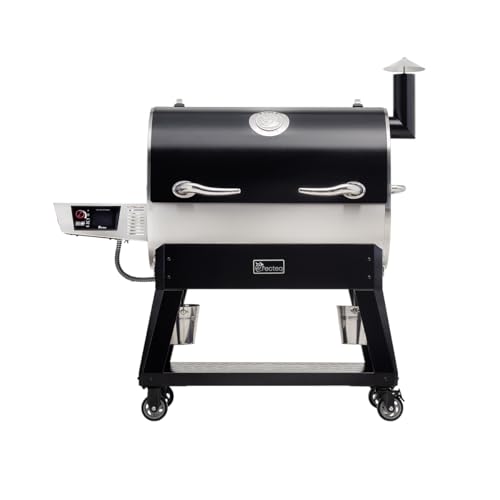
recteq Flagship 1600 Pellet Grill Smoker — Best Overall
The recteq Flagship 1600 is what a pellet smoker looks like when it is specced for production rather than patio bragging rights: 1,667 square inches of cooking space under a Wi-Fi smart controller, in a heavy build that holds temperature like a much more expensive cooker. For a restaurant, caterer or large food truck building a smoked-meat program without a full-time pitmaster, this is the most complete single purchase in the category.
Strengths
- 1,667 sq in of cook space runs a full menu — briskets, butts, ribs and chicken — in one load
- Wi-Fi controller with app monitoring turns overnight cooks into supervised, documented processes
- recteq’s heavy-gauge build holds heat through door openings and cold nights better than thin rivals
Trade-offs
- Pellet flavor is clean and consistent but milder than a stick-burner’s — some programs will care
- Large footprint and weight; plan its home and power run before delivery
- Premium pricing within the pellet class
| Specification | Detail |
|---|---|
| Cook space | 1,667 sq in (per verified listing) |
| Fuel | Wood pellets |
| Control | Wi-Fi smart controller (per verified listing) |
| Format | Freestanding pellet smoker grill |
Capacity is the commercial argument. A cooker this size lets a two-person operation load a full service in the evening, monitor it from the app overnight, and open with finished product — the labor pattern that makes barbecue economics work at small scale. The controller is the other half of the argument: temperature logs and remote alerts are not gadgets in a commercial kitchen, they are how you prove holding temperatures and catch a flame-out before it becomes a lost load. Smoke character is the honest trade. Pellet smoke is real wood smoke, but it is a cleaner, lighter profile than an offset burning splits; if your brand promise is old-school Texas bark, read the Longhorn review below. If your promise is consistency across every service and every cook on the roster, the Flagship is the right flagship.
Best for: Restaurants, caterers and large food trucks that need maximum pellet capacity and documented temperature control / Not suited for: Programs whose identity depends on stick-burner smoke character, or sites without the footprint and power to house it
Check on Amazon — check the current price on Amazon, since listings and configurations change through the season.

recteq DualFire 1200 Wood Pellet Smoker Grill — Best for Smoke-and-Sear Programs
Most commercial menus are not pure barbecue. The same kitchen that smokes briskets all day also needs to sear steaks, char chicken and finish ribs at service. The recteq DualFire 1200 answers with dual chambers in one unit — one side built for hot and fast grilling, the other for low and slow smoking — sharing one pellet system and one Wi-Fi controller across 1,222 square inches of total cook space.
Strengths
- Dual chambers let one unit run a smoke program and a grill station simultaneously
- 1,222 sq in total space in a single footprint — valuable where outdoor line space is priced
- Wi-Fi control across both chambers keeps the process documented and monitorable
Trade-offs
- Each chamber is smaller than a dedicated single-purpose cooker of the same footprint
- Two cooking styles on one unit means one failure can idle both programs
- Pellet smoke profile, as with all pellet units, is cleaner than offset smoke
| Specification | Detail |
|---|---|
| Cook space | 1,222 sq in total (per verified listing) |
| Chambers | Dual — hot/fast and low/slow (per verified listing) |
| Fuel | Wood pellets |
| Control | Wi-Fi (per verified listing) |
The DualFire is a menu decision disguised as an equipment decision. Brewpubs, smokehouse-casual restaurants and caterers whose packages mix smoked and grilled items get the most from it: ribs finish on the hot side while butts rest on the slow side, and a steak ticket does not have to wait for a separate grill to free up. Operationally it also simplifies the fuel and controller story — one pellet supply, one app, one cleaning routine. The discipline it demands is scheduling: with both programs on one chassis, a long brisket cook and a heavy grill service have to be planned against each other, and the operator who treats the chambers as two independent restaurants will eventually collide with themselves. Planned properly, it is the most flexible square footage in this roundup.
Best for: Mixed menus — smokehouses, brewpubs and caterers that grill as much as they smoke / Not suited for: Pure barbecue programs that need maximum single-chamber capacity for overnight loads
Check on Amazon — check the current price on Amazon, since listings and configurations change through the season.

GRILLA Mammoth Vertical Pellet Smoker — Best Vertical Capacity
Vertical smokers trade grate width for stacked capacity, and the GRILLA Mammoth is the commercial expression of that idea: five trays in a cabinet format, a Wi-Fi touchscreen controller, and a design brief that emphasizes high smoke production. For operations smoking ribs, jerky, sausages, fish and trays of chicken in volume — especially where floor space is the constraint — the cabinet format outperforms every horizontal cooker here per square foot.
Strengths
- Five-tray vertical layout maximizes capacity per square foot of floor space
- Purpose-built for high smoke production — strong smoke kiss for a pellet unit
- Wi-Fi touchscreen controller suits documented, multi-batch production
Trade-offs
- Vertical cabinets do not grill — no searing, no finishing over direct heat
- Whole briskets and large cuts are a tighter fit than on a wide horizontal grate
- Tray-by-tray temperature varies more than a single-grate cooker; rotation is part of the routine
| Specification | Detail |
|---|---|
| Trays | 5 (per verified listing) |
| Control | Wi-Fi touchscreen controller (per verified listing) |
| Format | Vertical pellet smoker cabinet |
| Design focus | High smoke production (per verified listing) |
Think in product mix. A commissary producing smoked sausage, jerky, bacon, ribs and party wings in batches will fill five trays more profitably than any single wide grate, and the vertical footprint fits the corner of a patio or prep yard that a Flagship cannot. The high-smoke design matters commercially too: cabinet smokers can under-smoke because product drips and steams in its own moisture, and a cooker engineered to push smoke addresses the category’s known weakness. The working routine is tray rotation — top and bottom trays cook at different rates in every vertical smoker ever built — and a batch card that records which tray held what. Build that discipline in and the Mammoth is a production machine; skip it and the same cabinet produces uneven batches that no controller can rescue.
Best for: Commissaries and producers smoking tray-friendly products in batches on a small footprint / Not suited for: Programs centered on whole briskets and packer cuts, or anyone who needs one unit that also grills
Check on Amazon — check the current price on Amazon, since listings and configurations change through the season.

Oklahoma Joe’s Longhorn Offset Charcoal Smoker — Best Stick-Burner Value
Some barbecue programs are selling the process as much as the product, and for those, no pellet controller substitutes for splits burning in a firebox. The Oklahoma Joe’s Longhorn is the accessible end of that world: a horizontal offset smoker and grill with 1,060 square inches of cooking area, big enough for a caterer’s brisket-and-butts service and priced so a startup can own the real thing instead of a photograph of it.
Strengths
- Genuine offset stick-burning — the smoke character and bark pellet units cannot replicate
- 1,060 sq in is honest commercial-catering capacity for briskets, butts and ribs
- Price point makes it viable as a first pit or a second, event-only cooker
Trade-offs
- Demands a skilled fire manager — labor cost per cook is the highest here
- Consumer-grade steel thickness means more temperature swing and faster wear than pro pits
- No controller, no logs — food-safety documentation is a manual discipline
| Specification | Detail |
|---|---|
| Cooking area | 1,060 sq in (per verified listing) |
| Fuel | Charcoal and wood splits |
| Format | Horizontal offset smoker and grill |
Judge the Longhorn by what it is: the entry ticket to real offset cooking at commercial-catering scale. In practiced hands it produces the deep smoke ring and bark that anchor a Texas-style menu, and at events it is also marketing — customers watch a live-fire pit the way they never watch a pellet hopper. The ownership truths are equally real. Thin steel by professional standards means the fire needs feeding and the temperature needs riding, especially in wind and cold; a good pit hand treats that as craft, a short-staffed kitchen experiences it as chaos. Many owners improve it with gasket seals and tuning plates, and a caterer who runs it weekly should budget for that tinkering. As a restaurant’s only cooker it is a labor gamble; as a caterer’s signature pit or a smokehouse’s second cooker, it earns its keep in both product and theater.
Best for: Caterers and startup smokehouses whose brand is genuine wood-fire cooking / Not suited for: Short-staffed operations that need set-and-monitor smoking, or high-volume restaurants needing documented unattended cooks
Check on Amazon — check the current price on Amazon, since listings and configurations change through the season.

Masterbuilt 710 WiFi Digital Smoker — Best Electric for Small Operations
Not every commercial smoking job is a brisket program. Cafés smoke their own salmon and cheese, delis smoke turkey and pastrami-style cuts, small restaurants add a smoked item or two — and many of them operate where open combustion is impractical or restricted. The Masterbuilt 710 is built for exactly that work: a vertical digital electric smoker with 711 square inches across four racks, Wi-Fi control, and a side wood-chip loader that adds chips without opening the door.
Strengths
- Electric heat is steady, simple and workable where combustion appliances are restricted
- Side wood-chip loader adds smoke without dumping cabinet heat
- Four racks and 711 sq in suit small-batch, high-variety production
Trade-offs
- Electric smoke flavor is the lightest here — a seasoning smoke, not a pit profile
- Capacity is small-batch; this is not a brisket-production machine
- Element and control electronics are the wear items to keep spares for
| Specification | Detail |
|---|---|
| Cooking area | 711 sq in (per verified listing) |
| Racks | 4 chrome-coated (per verified listing) |
| Control | Digital with Wi-Fi (per verified listing) |
| Smoke source | Side wood-chip loader (per verified listing) |
The Masterbuilt’s commercial case is consistency at small scale. Electric elements do not care about wind, wood moisture or a pit hand’s day off; the cabinet holds its set temperature and the Wi-Fi link lets a manager verify a batch from the pass. For a deli smoking two turkeys and a tray of salmon, that reliability is worth more than smoke-ring aesthetics. The side loader deserves its mention because opening a cabinet door mid-cook costs real temperature and time, and small batches are exactly where that loss shows. Set expectations on flavor: plan menus where smoke is a seasoning — fish, cheese, nuts, vegetables, poultry — rather than the main event, and this unit will quietly become one of the most-used appliances in a small kitchen. Keep a spare element on the shelf; it is the part that decides whether a failure is an hour or a week.
Best for: Cafés, delis and small restaurants adding smoked items where combustion is restricted or volume is small / Not suited for: Barbecue programs built on brisket and ribs, or any high-volume production
Check on Amazon — check the current price on Amazon, since listings and configurations change through the season.

Traeger Timberline 1300 Wood Pellet Grill & Smoker — Best Premium Pellet
The Traeger Timberline 1300 is the premium end of the pellet world: 1,300 square inches of cooking space, WiFIRE app control, a Super Smoke mode for low-temperature smoke density, and a maximum temperature of 500°F that lets it finish and sear as well as smoke. For restaurants and caterers standardizing on the Traeger ecosystem — parts, pellets, support, resale — it is the polished, no-excuses version of the pellet proposition.
Strengths
- Super Smoke mode addresses the standard pellet criticism with denser low-temp smoke
- WiFIRE app control and the Traeger support ecosystem suit multi-unit standardization
- 500°F ceiling lets one unit smoke overnight and grill at service
Trade-offs
- Premium price buys polish and ecosystem more than raw capacity per dollar
- Still a pellet profile — cleaner than offset smoke, whatever the mode
- App-dependent features need reliable site Wi-Fi to earn their keep
| Specification | Detail |
|---|---|
| Cooking area | 1,300 sq in (per verified listing) |
| Control | WiFIRE Wi-Fi app control (per verified listing) |
| Max temperature | 500°F (per verified listing) |
| Modes | Super Smoke mode (per verified listing) |
Where the Flagship argues capacity per dollar, the Timberline argues refinement: insulation, fit, controller polish and an app ecosystem that a multi-location operator can train once and deploy everywhere. The Super Smoke mode is a genuine working feature for commercial menus — run it for the first hours of a brisket or rib cook when the meat takes smoke most readily, then finish at standard settings. The 500°F ceiling changes service planning too: the same unit that smoked overnight can roast chickens and sear steaks at lunch without a second appliance. The buying question is standardization. A single-site operator may get more cooker for the money elsewhere in this list; an operator building three locations on one platform, one pellet contract and one training program will find the Timberline’s premium easier to justify.
Best for: Operators standardizing on the Traeger ecosystem, and menus that smoke and grill on one premium unit / Not suited for: Single-site buyers optimizing purely for capacity per dollar
Check on Amazon — check the current price on Amazon, since listings and configurations change through the season.
Comparison Table
| Pick | Badge | Key Spec | Best For |
|---|---|---|---|
| recteq Flagship 1600 Pellet Grill Smoker | Best Overall | 1,667 sq in, Wi-Fi pellet | Restaurants, caterers and large food trucks that need maximum pellet capacity and documented temperature control |
| recteq DualFire 1200 Wood Pellet Smoker Grill | Best for Smoke-and-Sear Programs | Dual chamber, 1,222 sq in | Mixed menus — smokehouses, brewpubs and caterers that grill as much as they smoke |
| GRILLA Mammoth Vertical Pellet Smoker | Best Vertical Capacity | 5-tray vertical, Wi-Fi pellet | Commissaries and producers smoking tray-friendly products in batches on a small footprint |
| Oklahoma Joe’s Longhorn Offset Charcoal Smoker | Best Stick-Burner Value | Offset, 1,060 sq in, wood/charcoal | Caterers and startup smokehouses whose brand is genuine wood-fire cooking |
| Masterbuilt 710 WiFi Digital Smoker | Best Electric for Small Operations | Electric vertical, 711 sq in, Wi-Fi | Cafés, delis and small restaurants adding smoked items where combustion is restricted or volume is small |
| Traeger Timberline 1300 Wood Pellet Grill & Smoker | Best Premium Pellet | 1,300 sq in, WiFIRE, Super Smoke | Operators standardizing on the Traeger ecosystem, and menus that smoke and grill on one premium unit |
Capacity figures are not interchangeable: the vertical cabinets stack trays, the offsets and pellet grills spread grates, and whole-cut fit differs from square-inch fit. Match the cooker to your product mix first — briskets want wide grates, batch products want trays — and let the controller and fuel questions come second. One more reading note: the two recteq units and the Traeger are full grill-smokers that can work a service as well as an overnight cook, while the GRILLA and Masterbuilt are dedicated smoking cabinets that assume a separate grill exists in your operation. That single distinction — one-box program versus cabinet-plus-grill program — quietly decides which half of this table belongs on your shortlist.
How to Choose Commercial Smoker Grills
Do the capacity math in proteins, not inches. A packer brisket needs roughly two feet of grate length and room for air to move around it; a “1,000 square inch” cooker that fits four briskets comfortably is worth more commercially than a larger number that crowds six. Crowded smokers cook unevenly, steam instead of smoke, and cost you the bark your menu promises. Load plans — drawn on paper, tray by tray and grate by grate, for your actual peak menu — are the only honest sizing tool.
Price the labor, not just the cooker. An offset demands a fire manager through the cook; a pellet unit demands loading, monitoring and cleaning. At commercial wage rates, the labor difference across a year of overnight cooks routinely exceeds the price difference between the cookers. That is why pellet platforms dominate this list — and why the offset still belongs on it for programs whose brand is the live-fire process itself.
Temperature control is a food-safety system. Your health department’s questions about smoking will be about time and temperature: how long product sat in the danger zone, how holding was maintained, how cooling and reheating were handled. Controllers with logging and alarms turn those answers into records. Manual pits can comply, but the documentation discipline has to be built by hand — thermometers, logs, and a person who owns them.
Fuel is a supply chain. Pellet programs need a dry storage spot and a standing supply of food-grade pellets in your chosen wood; a disruption mid-season is a menu problem. Stick-burners need seasoned splits of consistent size and moisture — green or wet wood is the number-one cause of dirty smoke and bitter product. Price fuel per cook, per cooker, before you sign for any of them.
The Dealer Rotisserie Class, in Honest Prose
The smokers that define famous barbecue restaurants — the large gas-assisted wood rotisseries that turn dozens of briskets on rotating racks — are sold through dealers and manufacturers’ reps, installed, and covered by service contracts. They are superb tools, and they are not Amazon products. If your program is a high-volume barbecue restaurant, that is the channel to shop: expect site surveys, utility planning, freight and installation in the quote, and ask hard questions about parts lead times and who services the unit in your state.
The practical dividing line is volume and labor model. A rotisserie earns its price when a restaurant smokes hundreds of pounds daily with a small crew and needs the consistency only a rotating, gas-assisted fire delivers. Below that volume — caterers, food trucks, cafés, brewpubs, and restaurants adding a smoked program — the pellet, offset and electric units in this guide deliver the product at a fraction of the capital and complexity. Buy for the program you will actually run this year, not the one in the five-year dream, because an oversized pit is a cost center every single day it sits underfilled.
How to Run a Commercial Smoke Program: From Load Plan to Service
The hardware is half the program. The other half is a repeatable routine that any trained cook on your roster can execute:
- Write the load plan. For each service, list proteins, quantities, target finish times and cooker positions. Work backward from service: briskets and butts go on first, ribs mid-cook, chicken and small items last.
- Standardize the fuel. One pellet blend or one wood species mix, from one supplier, stored dry. Record the fuel in the batch log — when flavor drifts, fuel is the first suspect.
- Probe and log. Every cook gets probe temperatures at set intervals — or controller logs where fitted — recorded against the batch. This is your food-safety evidence and your quality-control history in one document.
- Rest and hold by the book. Rest large cuts wrapped in a preheated holding cabinet or cooler, hold at or above your jurisdiction’s hot-holding minimum, and never let the smoker become an unmonitored holding box after the fire dies down.
- Cool and reheat correctly. Product not served gets cooled in shallow pans on a documented schedule and reheated once, properly, the next day. Smoked meat forgives a lot; food-safety rules do not.
- Close the cooker down. Ash out (fully cold, into a metal container), scrape grates or trays, empty grease, and log anything abnormal — a sticking auger, a lazy igniter, a door seal starting to leak. Small notes prevent Saturday failures.
Smoke Flavor, Honestly: What Each Fuel Actually Delivers
Customers describe smoked meat in simple words — smoky, tender, bark — but operators need a finer vocabulary, because the fuel platform sets the ceiling on all three. An offset burning seasoned splits produces the full spectrum: heavy smoke deposition early, a pronounced smoke ring, and bark built from hours of dry, convective heat. It is the reference flavor, and it is inseparable from skilled fire management — the same pit produces bitter, acrid meat in careless hands, because dirty smoke from smoldering or green wood coats food with compounds no sauce can fix.
Pellet smoke is the same chemistry run cleaner and leaner. Pellets burn efficiently, so the smoke is thinner and the flavor milder and more consistent — many diners actually prefer it, and competition results prove pellet cookers can win at the highest level. Electric cabinet smoke, generated from smoldering chips over an element, is the lightest of the three: a seasoning note rather than a foundation. None of these is a lie or a cheat; they are three positions on a spectrum, and the commercial question is which position your menu, your labor model and your customers actually reward. Choose the platform that matches the promise on your menu board, and then run it well — a well-run pellet program beats a badly run offset every service of the week.
Maintenance Schedules That Keep Commercial Smokers Earning
Commercial smokers fail at predictable points, and a written schedule defuses nearly all of them. Daily: ash and grease management, grate or tray scraping, and a glance at door seals and probe cables. Weekly: a deeper degrease of the cook chamber, inspection of igniters and elements, and — on pellet units — a vacuum of the fire pot and a check of the auger for fines buildup, which is the quiet cause of many flame-outs. Monthly: calibrate probes against an ice bath and a known reference, inspect gaskets and replace any that have gone hard or torn, and check firebox and cabinet steel for the first freckles of rust, which are cheap to stop now and expensive later.
Seasonally, plan a full teardown clean before your biggest service period, not after it: the cooker should enter the holidays or the summer rush freshly serviced, with spare igniter, probes and a gasket set on the shelf. Keep the schedule in the batch log, initialled by whoever did the work. This paperwork sounds like bureaucracy until the day a health inspector, an insurer or a buyer for your business asks how the equipment was maintained — then it reads as professionalism, and it has been quietly preventing your worst Saturday all along.
Staffing the Pit: Roles, Training and the Batch Log
Every successful commercial smoke program eventually discovers that its real equipment is a person with a routine. Define the pit role explicitly: who loads, who probes, who logs, who decides when a brisket is done — and train at least two people into it, because a program that only one employee can run is a program that closes when that employee is sick. Training should be tactile, not theoretical: new pit staff should cook alongside the lead through at least three full services, learning the feel of a properly rendered brisket, the color of clean smoke, and the sound of a healthy auger or a settling fire, before they run a load alone.
The batch log binds it together. One page per cook: date, cooker, fuel batch, proteins and weights, rub and wood notes, probe readings at intervals, finish and rest times, and a line for what went wrong. Reviewed weekly, the log becomes the program’s memory — it is how you learn that your briskets finish forty minutes faster in August, that one supplier’s butts run fattier, that the cabinet’s top tray needs rotating at hour three. Reviewed never, it is just paper. The restaurants with the most consistent barbecue are rarely the ones with the most expensive pits; they are the ones whose logs let every cook stand on the last cook’s shoulders. Build the log on day one, keep it without exception, and the hardware choices in this guide will repay you for years.
Wood and Pellet Sourcing: Building a Fuel Program That Never Runs Dry
Fuel failures end more barbecue services than equipment failures. For a stick-burning program, the discipline starts at the woodpile: buy splits by the cord from a supplier who can tell you the species, the cut date and the seasoning — and verify moisture yourself with an inexpensive meter, because “seasoned” is the most abused word in the wood trade. Wood that hisses and steams in the firebox is wet, and wet wood makes the dirty, bitter smoke that ruins a load of brisket more surely than any mechanical fault. Store splits off the ground, covered on top, open on the sides, and rotate stock so the oldest, driest wood burns first. Plan the pile by the month of your heaviest service, and reorder when you hold a month’s buffer, not when you can see the ground under the stack.
Pellet programs trade the woodpile for a different discipline: dry indoor storage and brand consistency. Pellets are compressed sawdust and they behave like it — a bag left in a damp yard swells, crumbles and jams augers, so store them off concrete, sealed, and off-season stock rotated like any dry good. Stick to one or two blends your menu is built on; swapping pellet species changes smoke character the way swapping wood does, and consistency is the product your regulars are buying. Finally, keep the emergency honest: a small reserve of charcoal and a kettle grill will not save a brisket program, but a documented backup plan — a second cooker, a par-cooked reserve held correctly, a menu that can flex — is the difference between a fuel hiccup and a closed sign. Suppliers fail, trucks break down; programs endure.
Common Buying Mistakes
- Sizing by square inches instead of proteins. Crowded smokers steam product and ruin bark. Load-plan in briskets, butts and racks.
- Ignoring labor cost. The cheapest cooker to buy can be the most expensive to run. Price the pit hand’s hours.
- Treating fuel casually. Wet wood and bargain pellets produce dirty smoke and bitter meat. One supplier, dry storage, no exceptions.
- No temperature documentation. If it is not logged, it did not happen — for your inspector and for your own consistency.
- Buying the dream pit. An underfilled rotisserie or offset burns fuel and money daily. Size to this year’s program.
- Skipping spare parts. Igniters, probes, elements and auger motors are cheap on the shelf and expensive as emergency freight.
Final Recommendation
For most commercial programs, the recteq Flagship 1600 is the complete answer: maximum pellet capacity, documented control, and a labor model a small crew can sustain. Menus that mix smoking and grilling belong on the recteq DualFire 1200; tray-batch production on a tight footprint belongs in the GRILLA Mammoth; programs selling genuine stick-burner craft should start with the Oklahoma Joe’s Longhorn and staff it properly; small and combustion-restricted kitchens should take the Masterbuilt 710; and operators standardizing across locations will find the Traeger Timberline 1300 the most polished platform here. If your volumes point at a dealer rotisserie instead, the guide above explains how to shop that channel — buy it deliberately, with service in writing.
Start your shortlist there: recteq Flagship 1600 Pellet Grill Smoker, recteq DualFire 1200 Wood Pellet Smoker Grill, GRILLA Mammoth Vertical Pellet Smoker — check the current price on Amazon for each and confirm the configuration matches your site before ordering.
Keep exploring the cluster before you decide:
- Best Commercial Outdoor Grills
- Best Commercial Wood Smoker Grills
- Best Competition Bbq Grills
- Best Compact Outdoor Grills
Frequently Asked Questions
What makes a smoker “commercial” rather than residential?
Capacity, duty cycle and documentation. Commercial units are built to run daily under load, hold documented temperatures for food-safety compliance, and be serviced with available parts. A residential smoker used commercially typically voids its warranty and wears out its controller, element or firebox within a season or two of daily service.
Are pellet smokers acceptable for a restaurant barbecue program?
Yes — many successful restaurants and caterers run pellet platforms precisely because they convert smoking into a supervised, documented process with low labor per cook. The flavor is a cleaner wood-smoke profile than an offset; whether that matters depends on your menu and brand promise, not on any rule.
How much capacity do I need for a catering operation?
Plan from your largest event, not your average one. List the proteins for that event, lay them out grate by grate or tray by tray with air space around each piece, and that layout — not a square-inch headline — is your required capacity. Then add one protein of headroom for the day the event grows.
Do I need a permit or inspection for a commercial smoker?
Usually the smoker itself falls under your kitchen’s existing permits, but local rules vary on outdoor cooking, fire separation, and ventilation, and your insurer will have conditions too. Confirm with your health department and fire marshal before the unit arrives, not after.
Offset vs pellet: which produces better brisket?
A well-run offset produces the deepest smoke flavor and bark; a well-run pellet cooker produces very good brisket with far more consistency across cooks and days. “Better” commercially means the brisket your customers get on a bad Tuesday, not your best Saturday — judge both platforms by that standard.
What are the ongoing costs of a commercial smoker?
Fuel (pellets or seasoned splits), replacement probes, igniters and elements, gaskets, cleaning supplies, and the labor to run and document cooks. Pellet programs should also budget a dry fuel store; offset programs should budget the fire manager’s hours as a first-order cost, not an afterthought.


