A convection oven uses a fan to move hot air around the food, which helps trays brown evenly and often shortens cooking times compared with a still-air oven. The foodservice versions are built for daily use in cafes, bakeries and small kitchens, with metal housings and simple dial or digital controls.
The six ovens below mix true commercial half-size units with a few heavier-duty countertop models that home cooks and small shops often use. We have not used these ovens ourselves, and the notes come from our general product knowledge. Please confirm size, voltage, tray fit and features on the current listing before buying. Half-size foodservice ovens tend to suit bakeries and cafes, while the home-style models are better for families that want convection without a full-size range.
As an Amazon Associate we earn from qualifying purchases. Links below are affiliate links, and they do not change the product information we give.
What to Look For
| Feature | Why it matters |
|---|---|
| Size class | Half-size units fit half-sheet pans; quarter-size ovens suit small counters |
| Power | Check voltage and plug type against your outlet before ordering |
| Controls | Dials are simple to clean and repair; digital controls add presets |
| Build | Stainless steel bodies and sturdy doors last longer under daily use |
In this guide
Specs at a Glance
| Oven | Class | Body | Notes |
|---|---|---|---|
| Waring Commercial WCO250X | Half-size commercial | Stainless steel | Foodservice-rated countertop oven |
| Cadco XAF-113 | Half-size commercial | Stainless steel | Fits half-sheet pans |
| Cuisinart TOA-60 | Home countertop | Stainless steel | Air fry and convection modes |
| Breville Smart Oven Pro | Home countertop | Stainless steel | Digital controls and presets |
| Oster Extra Large Convection Oven | Home countertop | Metal and glass | Large interior for family meals |
| Hamilton Beach Sure-Crisp | Home countertop | Metal | Air fry function with convection |
The 6 Best Commercial Convection Ovens

Top pickBest for small commercial kitchens
1. Waring Commercial WCO250X Convection Oven
A half-size countertop convection oven from a long-standing foodservice brand. It is meant for shops, cafes and catering kitchens that bake, toast and reheat through the day.
Suits: small commercial kitchens. Strengths: a restaurant-supply pedigree and a stainless body. Weaknesses: large for a home counter. Skip it if you have no space or a standard outlet limit.


Best for bakeries and sandwich shops
2. Cadco XAF-113 Half-Size Convection Oven
A half-size convection oven made for commercial use, sized for half-sheet pans. Cadco is known for compact foodservice ovens and warmers.
Suits: bakeries and sandwich shops. Strengths: a pan-friendly interior. Weaknesses: basic controls. Skip it if you want digital presets.


Best for home or light commercial use
3. Cuisinart TOA-60 Convection Toaster Oven Air Fryer
A popular stainless countertop oven that combines convection baking with an air fry mode. It is a lighter-duty pick for small cafes, offices and home kitchens.
Suits: home or light commercial use. Strengths: several cooking modes in one oven. Weaknesses: not a foodservice-rated unit. Skip it if you bake all day.

Best for serious home bakers
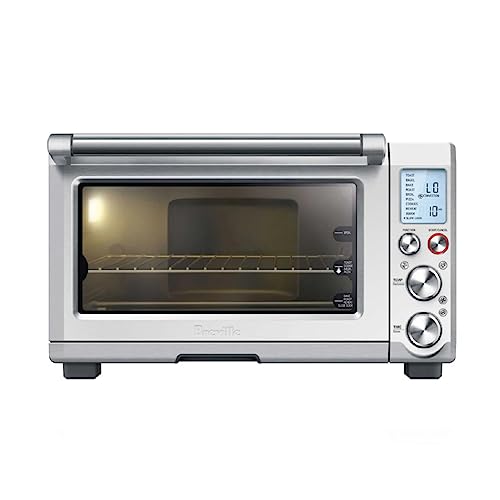
4. Breville Smart Oven Pro BOV845BSS
A well-known countertop oven with convection, digital controls and preset functions. Reviewers often cite its steady results for toast, roasting and reheating.
Suits: serious home bakers. Strengths: precise settings and presets. Weaknesses: takes counter space. Skip it if you need a commercial rating.
Best for big batches at home
5. Oster Extra Large Digital Countertop Convection Oven
A large-capacity countertop convection oven with a roomy interior, aimed at families and small gatherings. It uses a fan to cook trays more evenly.
Suits: big batches at home. Strengths: a generous interior. Weaknesses: bulky footprint. Skip it if counter space is tight.
View Oster Extra Large Convection Oven on Amazon
Best for light daily use
6. Hamilton Beach Sure-Crisp Air Fry Toaster Oven
A budget-friendly countertop oven that pairs convection heat with air frying. It handles toast, small pizzas and frozen snacks.
Suits: light daily use. Strengths: an accessible, multi-function design. Weaknesses: lighter build than commercial units. Skip it if you need foodservice durability.
View Hamilton Beach Sure-Crisp on Amazon
Care and Setup
- Let the oven cool fully before wiping the interior.
- Check the voltage and plug type before you plug it in.
- Leave clear space around the vents for airflow.
- Remove crumbs from the bottom tray often.
- Wipe fan covers and door seals when they are cool.
- Use pans that leave a gap for air to move around the food.
Mistakes to Avoid
- Overloading trays and blocking airflow.
- Assuming a home toaster oven is a commercial unit.
- Ignoring the pan size an oven accepts.
- Skipping the manual when it lists limits for wattage.
- Crowding trays so the fan cannot circulate air.
Sizing an Oven to Your Pans and Daily Volume
The first question is not which oven, but how much you need to bake in a day. Foodservice ovens are usually described by the pan size they accept. A full-size sheet pan is roughly 18 by 26 inches, a half-size is about 13 by 18, and a quarter-size is smaller still. Many commercial countertop ovens are built for half-size pans because they fit a standard counter and a standard outlet. Measure the interior width, depth and height on the listing, and check the number of rack positions, since that decides how many trays you can run at once.
Think about throughput. A cafe that bakes pastries each morning and reheats sandwiches in the afternoon needs reliable recovery after the door is opened, plus enough racks to keep trays moving. A home cook who bakes a few trays of cookies on weekends needs less capacity and may value a smaller footprint more. A bigger oven is not always better: it heats more air, uses more power and may be harder to place.
Also look at the pan height. Some ovens have limited clearance between racks, which restricts tall items such as loaf pans, roasting dishes or proofed bread. Ask whether the rack spacing is adjustable and whether the oven accepts both pans and wire racks. If you plan to use unusual trays, check their dimensions against the interior before you buy.
Power, Venting and Installation Requirements
Commercial ovens can draw more power than a typical countertop appliance, so electrical compatibility is critical. Check the voltage, amperage and plug type on the listing and compare them with the outlet where the oven will sit. Some units need a dedicated circuit, and plugging a high-draw oven into a shared outlet with other appliances can trip a breaker. If the listing mentions a plug type your outlet does not match, an electrician should handle any change; do not modify plugs or cords yourself.
Ventilation is the next issue. Ovens give off heat and sometimes steam or smoke, and many manufacturers specify minimum clearances from walls, shelves and cabinets. Follow the manual for these distances, and make sure there is clear space around vents. Placing an oven under a low shelf or in a closed cabinet can overheat the surrounding surfaces and create a hazard.
In a business, local codes may regulate equipment placement, ventilation hoods, fire suppression and listed certifications. Ask your local authority or a licensed professional what applies to your kitchen, because rules differ by location. For a home, check the lease or home insurance if you plan to run a high-power commercial unit. Also consider weight: a stainless steel oven can be heavy, so the counter or stand must support it, and you may need help to move it into place.
Controls, Timers and Temperature Accuracy
Controls come in a few forms. Dial controls are simple, durable and easy to fix, and many bakers prefer them for straightforward baking and reheating. Digital controls add precise temperature settings, timers and presets, but they have more parts that can fail and are harder to repair. Some ovens offer both a thermostat and a timer with an automatic shut-off, which is handy in a busy kitchen.
No matter the controls, accuracy matters. An oven dial may not match the actual temperature inside. A cheap oven thermometer placed in the center of the oven will show whether it runs hot or cold. If the difference is consistent, you can adjust the setting by that amount. Large swings during cooking suggest a thermostat problem, and the maker or a technician should check it.
Look at the temperature range. Some ovens suit baking but not high-heat roasting, and others have low settings for holding food warm. Check whether the fan has multiple speeds, because a gentler fan helps delicate bakes such as meringues or cakes. A fan that cannot be slowed can dry out or push batter to one side. Check the door too: a sturdy handle, tight seal and a window with an internal light make it easier to monitor food without opening the door and letting heat escape.
Adjusting Recipes and Loading Trays for Convection
Convection ovens cook differently, and recipes often need small changes. A common starting point is to lower the temperature somewhat or shorten the time, then check the food earlier than the recipe says. The exact adjustment depends on the oven and the food, so use the manual as your guide and take notes on what works. Heavily crusted foods and roasts tend to brown quickly, while batters and custards can dry out if the fan is strong.
Loading matters. Air needs space to move, so leave gaps between pans and between the pans and the oven walls. Overloaded racks create uneven results, with some trays browning faster than others. For multiple trays, rotate them halfway through baking, swapping top and bottom positions and turning them front to back. Use low-sided pans for roasting and baking when you want browning, and use darker pans for crisper bottoms if the recipe calls for it.
Use the right pan for the job. Light-colored aluminum pans bake evenly, while dark pans absorb more heat and brown faster. Parchment or silicone liners prevent sticking but should be secured, since a strong fan can lift a loose sheet. Avoid covering whole racks with foil, as it blocks airflow. When baking delicate items like cookies, rotate the pans for even color, and when reheating, cover dishes lightly to prevent drying.
Cleaning, Servicing and Making the Oven Last
A commercial oven works hard, so a cleaning routine keeps it reliable. Wipe spills as soon as the oven is cool and safe to touch, because baked-on grease is difficult to remove and can smoke on the next use. Clean the interior with a cleaner the maker approves, and avoid abrasive scrubbers on glass or coated surfaces. Remove the racks and wash them separately. Keep the door seal clean and inspect it for cracks, since a leaky seal wastes energy and causes uneven heat.
The fan needs attention too. A greasy fan cover or blade can reduce airflow and create odors. Unplug the unit and let it cool before cleaning near the fan. Check vents and the area behind the oven for dust and grease, which can be a fire hazard. Do not spray water on electrical controls, and follow the manual for cleaning the exterior.
Consider service and parts. For a business, downtime costs money, so ask about the warranty, parts availability and whether a local technician can repair the model. Look for replaceable parts such as door gaskets, knobs and heating elements. Signs of trouble include uneven baking, strange noises from the fan, a door that no longer shuts tightly, and a thermostat that cannot hold steady temperatures. If repair costs approach the price of a new unit, it is time to replace.
Commercial Versus Home Use: What Changes
A commercial convection oven is built for busy service, with a heavier frame, stronger fans and larger interior space. Many cafes and small bakeries choose them for steady output, and some home bakers consider them for the same reason. Before bringing one home, though, think about how the differences play out in a regular kitchen.
| Area | Commercial model | Home consideration |
|---|---|---|
| Power | Often high draw, sometimes needing a dedicated circuit | Check your panel and outlets |
| Size | Deep and wide to fit sheet pans | Measure the counter and clearances |
| Controls | Simple dials, built for repeated use | Easy to learn but fewer presets |
| Ventilation | May require clearance or a hood | Follow the maker’s rules |
| Weight | Heavy | Needs a strong stand or counter |
For wiring, gas supply or ventilation, follow the maker’s installation instructions and consult a licensed electrician or technician as required.
A Pre-Purchase Checklist
- Measure the space, including the door swing and the clearance the maker asks for around the sides and back.
- Confirm the voltage and plug type, then check them against your outlet.
- Decide on the pan size you plan to use, such as half-sheet or full-sheet.
- Count how many racks you need and how far apart the rack guides are.
- Check whether the fan can be paused or set to a lower speed for delicate bakes.
- Look for a steam or humidity option if you bake bread.
- Find out whether glass doors, interior lights and removable racks are standard.
Mistakes to Avoid With a Convection Oven
- Using the same time and temperature as a standard oven. Forced air cooks faster, so many recipes call for a lower setting or a shorter time. Check the maker’s guidance.
- Blocking airflow. Pans that touch the walls or each other limit circulation and cause hot spots.
- Using tall, loose foil. The fan can blow it around. Secure it or use a pan with lipped edges.
- Skipping the rotation. Even good ovens can have warmer corners, so turn pans partway through when a recipe benefits.
- Cleaning with aggressive chemicals. Use only what the maker approves.
Day-to-Day Care Notes
Wipe spills as soon as the oven has cooled and the surface is safe to touch. Crumbs and grease left on the floor of the cavity can smoke the next time you bake. Take racks out occasionally for a soak and scrub, and keep the door gasket clean so it seals properly.
Check the fan area when the oven is cool and unplugged, looking for build-up on the guard. Never reach inside while the oven is on or connected, and follow the manual for servicing. If the oven shows an uneven temperature or a strange noise, contact the maker or a qualified technician instead of attempting internal repairs yourself.
Sizing and Capacity Questions
Capacity is described in several ways: number of pans, interior volume, or the dimension of the largest pan that fits. Use pan count as a practical measure, since it tells you how much you can bake at once. A half-size unit holds smaller pans and fits more kitchens, while full-size units accept large sheet pans and suit a steady production schedule.
Check the rack spacing as well. Tall items like loaves and roasts need gaps between racks, and fixed guides may limit flexibility. Compare interior height, door opening and the distance from the door to the fan, and keep in mind that a larger oven also takes longer to reach temperature and uses more energy.
When to Call a Professional
Installation of a commercial oven may involve high-capacity electrical service, a gas line or ventilation requirements. These are not casual projects. Follow the maker’s installation manual and local codes, and have a licensed electrician, gas fitter or appliance technician do the work where needed. Many makers also specify service intervals, so keep their schedule on hand.
If you use the oven in a business, check local health and fire rules, since inspectors may ask about placement, ventilation and cleaning records. Keep the manual, model number and receipt together in one folder for quick reference.
Choosing Commercial Convection Ovens With Confidence: A Deeper Look
The reviews above give you the short version of each pick: what it is, who it suits and where it compromises. This added section slows down and looks at commercial convection ovens the way ownership actually feels — choosing between close options, setting up well, building a routine, cleaning and caring for what you buy, and avoiding the mistakes that make good products disappoint. Nothing here changes the reviews themselves; it is the thinking that helps you choose between them and get the best from whichever one comes home with you.
Capacity should be judged by the food, not the headline size
Manufacturers describe capacity in ways that flatter the product, but what matters is the food you cook: a whole chicken, a batch of fries in a single layer, two different items at once, or leftovers reheated without drying. Single-layer cooking is the secret behind most good results with hot-air and convection cooking, so a design that lets food spread out will outperform a nominally larger one where food must be piled. Translate every pick in the guide above into your three most common meals before you compare anything else.
Controls you understand are controls you will use
Touch panels, dials, presets and app features all promise convenience, but the best control layout is the one you can operate with greasy fingers, in poor light, without fetching the manual. Think about how you set time and temperature, whether you can adjust mid-cook, and whether the machine remembers anything useful. Presets are a starting point, not a promise: your food, your portions and your preferences will always need small adjustments, so a machine that makes adjusting easy beats one with a longer list of automatic programmes.
How the heat reaches the food shapes every result
Fan-driven hot air, radiant elements, steam assistance and microwave energy all cook differently, and combination machines blend those methods in different proportions. The reviews above describe how each pick is built to cook; read them for the method, not just the feature list. Crisping needs dry, fast-moving air and space around the food. Gentle reheating and baking reward even, moderate heat. Matching the method to your favourite foods matters more than collecting the most methods in one box.
Cleaning effort decides whether it becomes a daily tool
Any countertop cooker used several times a week must clean up quickly, or it will migrate to a cupboard. Look at how many parts come out, whether crumbs and grease collect in places you cannot reach, and whether the cooking surface releases food easily after a soak. The honest test is a weeknight: if washing up takes longer than the cooking saved, the machine has failed, whatever its results. The guide's notes on removable parts and finishes are worth more than any preset count.
Footprint, storage and the counter you actually have
Measure the counter space with the machine in working position, including room for the door or basket to open fully, clearance above and behind for heat and steam, and a safe route for the power cord. Then measure where it will live when not in use. A machine that must be hauled from a cupboard for every use will be used for special occasions only, while a slightly smaller one that lives on the counter becomes part of daily cooking.
Commercial Convection Ovens in Day-to-Day Life
For busy weeknight cooking, the value of these machines is parallel progress: protein crisping in the cooker while vegetables, grains or a sauce happen elsewhere. Choose the pick that handles your most repeated weeknight meal without supervision drama — food you can shake or turn once and otherwise leave alone — and the machine will pay for itself in evenings rescued from takeaway decisions.
For small households and solo cooking, speed and portion fit matter more than raw capacity. A compact machine that heats quickly and cooks a single portion well, without heating the whole kitchen, changes what cooking for one feels like. The temptation is to buy bigger 'just in case'; the reality is that an oversized chamber used for tiny portions is slower, harder to clean and less satisfying every single day.
For families and batch cooking, workflow is everything. Can you cook in two waves without the second wave suffering? Does the design let you keep the first batch warm sensibly? Is there room for the flat, wide foods families actually eat — fillets, chops, frozen staples — rather than only tall, narrow loads? Judge family suitability by a real Friday night menu, not by a headline capacity figure.
For healthier-feeling everyday cooking, these machines shine with vegetables, fish and reheated leftovers, where hot circulating air restores texture that a microwave softens. They are not magic, and breaded or battered foods still need space and a light hand, but a household that uses the cooker for the foods it genuinely improves will use it constantly, while one bought for a single novelty recipe will not.
Because this guide covers commercial-grade equipment used in or around the home, add a businesslike check to the usual questions: duty cycle, serviceability, availability of parts, and what happens on the day it stops working during your busiest period. Equipment built for commercial settings rewards owners who maintain it on a schedule and keep basic spares and contacts ready. It also tends to assume a confident user, so be honest about the gap between domestic habits and commercial routines, and choose the pick whose demands your household or small operation will genuinely meet.
Getting Set Up and Into a Routine
Unpack and set up on a stable, heat-safe surface with the clearances the manual specifies, and run the machine empty for the first cycle if the maker recommends it. New machines often carry manufacturing residues that produce a noticeable smell on first heating; burning that off before food is involved is a small step that prevents a disappointing first meal and a lot of unnecessary worry.
For the first real cooks, choose forgiving foods and keep notes. Frozen staples, sturdy vegetables and simple proteins teach you how your machine browns, where its hot spots are and how its timings compare with packet guidance. Change one variable at a time — a little more space between pieces, a few minutes longer, a turn halfway — and write down what worked. Three documented cooks teach more than thirty guessed ones.
Set up a small station around the machine: tongs or a spatula that will not damage the surface, a trivet for the hot basket or tray, and a place for cooked food to rest. Cooking with countertop machines is fast, and most early failures happen in the scramble — food overcooking while you hunt for a plate, or a hot tray set down somewhere it should not be.
Cleaning, Care and Keeping It at Its Best
Clean the cooking chamber, basket, tray or turntable after every use while residues are still easy to remove, following the maker's guidance on which parts can be soaked or dishwashed. Grease left to bake on through several cycles becomes progressively harder to shift and starts to smoke and flavour later meals. A soft cloth, warm soapy water and patience handle nearly everything if you do it promptly.
Pay attention to the parts people forget: the area around the heating element and fan, door seals, vents and the drip zones underneath removable parts. Crumbs in these areas are the usual source of lingering smells and uneven performance. Let everything dry fully before reassembling, and never operate the machine with cleaning residue or pooled water inside.
Store the cord and accessories so the machine can be moved without strain, and check periodically for damage to the cord, plug and door or basket mechanism. Countertop cookers live hard lives of heat, steam and being slid around counters; a monthly once-over catches small problems — a stiff latch, a warped tray, a seal that no longer sits flat — while they are still cheap and simple to sort out.
How the Picks in This Guide Compare With Each Other
Read side by side, the six picks in this guide are less a ranking than a set of answers to different questions. Each review above names a role, a strength and a reason to skip, and those three things together are the honest comparison. The notes below restate that positioning in one place, so you can match each pick against the situations described earlier in this section and see which answer sounds like your household.
Waring Commercial WCO250X Convection Oven. A half-size countertop convection oven from a long-standing foodservice brand. In the review above, it is presented as suiting small commercial kitchens. Come back to this one after reading the rest of the list; its value usually becomes clearer in contrast. Several picks in this guide will look similar at first glance, and the differences that matter are the ones this review names — role, strengths and the reason you might skip it.
Cadco XAF-113 Half-Size Convection Oven. A half-size convection oven made for commercial use, sized for half-sheet pans. In the review above, it is presented as suiting bakeries and sandwich shops. Shortlist this one if that description matches your household, and check the current listing for the details that decide fit — dimensions, what is included and the care it needs — because versions under similar names can differ in ways that matter once the box is open.
Cuisinart TOA-60 Convection Toaster Oven Air Fryer. A popular stainless countertop oven that combines convection baking with an air fry mode. In the review above, it is presented as suiting home or light commercial use. Where this pick earns its place is in that specific role; where it asks for compromise, the review above is candid about it. Weigh the compromise against how often you will actually use it that way, rather than against an ideal product that does not exist at any point in this guide.
Breville Smart Oven Pro BOV845BSS. A well-known countertop oven with convection, digital controls and preset functions. In the review above, it is presented as suiting serious home bakers. If you are torn between this pick and the next one, decide by the meal or task you repeat most often. The right answer is the one that makes your most common day easier, not the one that wins on the day you cook for the most people or buy the most ambitious ingredients.
Oster Extra Large Digital Countertop Convection Oven. A large-capacity countertop convection oven with a roomy interior, aimed at families and small gatherings. In the review above, it is presented as suiting big batches at home. Treat the description above as the promise and the current listing as the contract: confirm the version, the included parts and the maker's guidance there before ordering, and this pick should behave exactly as the review leads you to expect.
Hamilton Beach Sure-Crisp Air Fry Toaster Oven. A budget-friendly countertop oven that pairs convection heat with air frying. In the review above, it is presented as suiting light daily use. This is also the pick to measure your space against most carefully, because its strengths only count if it fits your counter, your storage or your routine without a daily workaround. A tape measure and five honest minutes now prevent the most common disappointment in this whole category.
Putting It Together: How Different Readers Decide
Abstract criteria become clearer when they are attached to real situations. The examples below take situations described earlier in this section and pair them with the picks in this guide that the reviews position for them. Use them as starting points rather than verdicts: your space, your habits and your tolerance for upkeep still have the final say, but a concrete starting point beats staring at six similar options.
Starting point 1. For busy weeknight cooking, the value of these machines is parallel progress: protein crisping in the cooker while vegetables, grains or a sauce happen elsewhere. In the reviews above, the first is presented as suiting small commercial kitchens, while the second is presented as suiting bakeries and sandwich shops. If that sounds like your household, compare Waring Commercial WCO250X Convection Oven and Cadco XAF-113 Half-Size Convection Oven first, reading both reviews again with your own space and routine in mind. Notice which compromise you would mind less after a month of ownership, because that instinct — checked against the details on the current listing — is a better guide than any ranking. These picks were positioned for different households, and choosing well means matching the position to your life, not crowning an overall winner.
Starting point 2. For small households and solo cooking, speed and portion fit matter more than raw capacity. In the reviews above, the first is presented as suiting home or light commercial use, while the second is presented as suiting serious home bakers. If that sounds like your household, compare Cuisinart TOA-60 Convection Toaster Oven Air Fryer and Breville Smart Oven Pro BOV845BSS first, reading both reviews again with your own space and routine in mind. Notice which compromise you would mind less after a month of ownership, because that instinct — checked against the details on the current listing — is a better guide than any ranking. These picks were positioned for different households, and choosing well means matching the position to your life, not crowning an overall winner.
Starting point 3. For families and batch cooking, workflow is everything. In the reviews above, the first is presented as suiting big batches at home, while the second is presented as suiting light daily use. If that sounds like your household, compare Oster Extra Large Digital Countertop Convection Oven and Hamilton Beach Sure-Crisp Air Fry Toaster Oven first, reading both reviews again with your own space and routine in mind. Notice which compromise you would mind less after a month of ownership, because that instinct — checked against the details on the current listing — is a better guide than any ranking. These picks were positioned for different households, and choosing well means matching the position to your life, not crowning an overall winner.
Final Checks Before You Order
Work through these checks in order, for the one or two picks that survived the comparison above. They revisit the criteria from the start of this section as questions to verify, because the gap between a good decision and a disappointing one is usually a detail that could have been confirmed in five minutes before ordering.
Capacity should be judged by the food, not the headline size. Manufacturers describe capacity in ways that flatter the product, but what matters is the food you cook: a whole chicken, a batch of fries in a single layer, two different items at once, or leftovers reheated without drying. Before you order, turn that point into a question you can actually answer from the current listing and the maker's information: what does this specific version include, what does it require from your space, and what will it ask of you each week? If the answer is unclear, that is a reason to pause, not to guess, because this is exactly the kind of detail that decides satisfaction a month later.
Controls you understand are controls you will use. Touch panels, dials, presets and app features all promise convenience, but the best control layout is the one you can operate with greasy fingers, in poor light, without fetching the manual. Write your answer down next to the other candidates you are comparing, in plain words rather than scores. A shortlist compared on the same few honest questions produces a decision you can defend to yourself later, and it stops a single eye-catching feature from outweighing the qualities you will live with every day.
How the heat reaches the food shapes every result. Fan-driven hot air, radiant elements, steam assistance and microwave energy all cook differently, and combination machines blend those methods in different proportions. If two picks still tie after this check, choose the one whose demands you are more willing to meet — the cleaning, the storage, the routine, the installation — because ownership is mostly demands met happily or resented quietly. The product itself rarely changes after purchase; your willingness is the variable that decides whether it feels like a good buy.
Cleaning effort decides whether it becomes a daily tool. Any countertop cooker used several times a week must clean up quickly, or it will migrate to a cupboard. Revisit this after reading the comparison section below, not before. The reviews give each pick a role, and this criterion means something different for each role: what is essential for one kind of household is optional for another. Judged in context, the right priority usually becomes obvious without forcing it.
Footprint, storage and the counter you actually have. Measure the counter space with the machine in working position, including room for the door or basket to open fully, clearance above and behind for heat and steam, and a safe route for the power cord. Finally, check this point against the version actually being sold today. Products in this category are revised, bundled and renamed more often than their listings suggest, and the gap between the reviewed version and the delivered version is where most avoidable disappointment begins.
Common Mistakes and How to Avoid Them
- Piling food in to save time: Crowded food steams instead of crisping or browning. Cook in a single layer with space around pieces, in two batches if needed; two good batches are faster than one soggy batch redone.
- Trusting presets and packet times blindly: Presets assume a portion, a starting temperature and a machine that may differ from yours. Use them as a starting estimate, check early, and adjust based on what you see.
- Skipping the halfway turn or shake: Most countertop cookers heat unevenly by nature. Turning or shaking food halfway is not an optional refinement; it is how even browning happens at all.
- Using the wrong oils, sprays or utensils: Some coatings dislike aerosol sprays and metal tools. Follow the maker's guidance for your surface, use suitable utensils, and apply oil to the food rather than flooding the chamber.
- Neglecting the clean after ‘clean’ foods: Even foods that look grease-free leave residue that builds invisibly. A quick wipe after every use prevents the slow build-up that eventually smokes, smells and flavours everything.
A practical decision method: write down the five meals you would cook in this machine in its first month. If you cannot name five without inventing occasions, a simpler or smaller pick will serve you better than a flagship. If your list overflows the page, prioritise the design whose layout — basket, oven-style chamber, dual zones or combination modes — matches the top three meals, and let the rest go.
Remember to budget counter space and attention, not just money. Every additional function is something to learn, clean and store accessories for. The households happiest with these machines a year later are usually those who chose one size up from their daily need, mastered it completely, and ignored the features they never wanted in the first place.
Before ordering, confirm the dimensions, included accessories and care instructions on the current listing for the exact model in the guide above. Countertop cookers are sold in multiple sizes and regional versions under similar names, and most disappointment in this category begins with a box that is not quite the one the review described.
Commercial Convection Oven FAQ
What does convection do?
A fan circulates hot air, so food browns more evenly and often cooks faster than in a still-air oven.
Can a home kitchen use a commercial convection oven?
Sometimes, if the power and space fit. Check the listing for voltage and size first.
Do I need to adjust recipes?
Many cooks lower the temperature or shorten the time a little. Follow the maker’s guidance.
How do I pick between a commercial and a home convection oven?
Think about daily volume and power. A commercial half-size unit takes heavy use, while a home countertop model is lighter and usually easier to fit on a counter.
What does half-size mean for an oven?
It usually means the oven fits half-size sheet pans, which are about 13 by 18 inches. Check the interior dimensions on the listing for the exact fit.
Do I need a dedicated circuit?
Some commercial ovens draw a lot of power and may need one. Check the voltage and amperage on the listing and ask an electrician if unsure.
Why are my cookies browning unevenly?
The pans may be crowded, the oven may run hot in one area, or the fan may be strong. Leave space between pans and rotate them halfway through baking.
Should I lower the temperature in a convection oven?
Many recipes work better with a slightly lower temperature or a shorter time. Start with the manual's advice and adjust as you learn how your oven behaves.
Can I use foil in a convection oven?
A small piece to catch drips can be fine, but do not cover whole racks or block vents, because it restricts airflow.
How often should I clean the oven?
Wipe spills after use once the oven is cool, and do a deeper clean on a regular schedule suited to how much you cook.
How can I check if my oven temperature is accurate?
Place an oven thermometer in the center and compare its reading with the dial. If it is off consistently, adjust the setting or have it serviced.
Is a commercial oven louder than a home oven?
The fan can be noticeable. Check the manual and listing, and consider where the oven will sit if you work or live nearby.
Do I need to preheat, and for how long?
Many countertop cookers benefit from a short preheat so the first batch starts cooking immediately, but the maker's guidance for your model comes first. If you skip preheating, expect the first batch to need a little longer, and judge by the food rather than the timer alone.
Why is my food browning unevenly?
Uneven browning usually comes from crowding, pieces of very different sizes in the same batch, or skipping the halfway turn. Spread food out, group similar sizes together, and turn or shake once during cooking.
Can I open the machine to check without ruining the cook?
Brief checks are fine and better than guessing. Open, look quickly, and close; every long pause loses heat, so have your tongs and plate ready before you open rather than deciding afterwards.
How do I stop food drying out?
Dry results usually mean the cook ran long for the thickness of the food, or the pieces were too small for the temperature chosen. Cook thicker pieces, check earlier than the preset suggests, and let food rest briefly before serving so juices settle.
What should I cook first to learn the machine?
Start with sturdy, forgiving foods you know well — frozen staples, root vegetables, simple proteins — so you can judge the machine against results you recognise. Save delicate and expensive ingredients until you know its hot spots and timing habits.
When is a bigger model actually worth it?
A bigger model earns its counter space when you regularly cook for more people, cook two components at once, or find your current portions genuinely do not fit. If most of your cooking is one or two portions, the bigger chamber mostly costs you time, space and cleaning effort.
The Short Version
For a commercial half-size, the Waring or the Cadco. For modes and air fry, the Cuisinart. For digital precision, the Breville. For family batches, the Oster. For a lighter budget-friendly option, the Hamilton Beach. Match the oven to your volume, and measure your counter and outlet before you order.

