A convection oven adds a fan that moves hot air around the food, which usually gives faster and more even browning than a standard oven. For most homes the practical choice is a countertop model that plugs into a normal outlet and handles roasting, baking, broiling and toast without heating a full-size range.
The six ovens below run from a classic stainless steel countertop unit to a French door design and an air fry oven. We have not used these products ourselves, so confirm the size, power and included accessories on the current listing before buying.
As an Amazon Associate we earn from qualifying purchases. Links below are affiliate links, and they do not change the product information we give.
What to Look For
| Feature | Why it matters |
|---|---|
| Capacity | Check whether a 12 inch pizza or a full sheet pan really fits |
| Fan control | Some ovens offer more than one convection speed or a dedicated setting |
| Controls | Knobs are simple; digital panels add presets and timers |
In this guide
Specs at a Glance
| Oven | Style | Cooking extras | Notes |
|---|---|---|---|
| Breville Smart Oven Pro BOV845BSS | Stainless steel countertop oven | Convection, broil and toast presets | Digital controls with preset functions |
| Cuisinart TOB-260N1 Chef’s Convection Toaster Oven | Stainless steel countertop oven | Convection, bake, broil and toast | Dial controls |
| Hamilton Beach Countertop Oven with Convection and Rotisserie | Large countertop oven | Convection plus a rotisserie option | Dial controls |
| NuWave Bravo XL Smart Oven | Digital countertop oven | Convection, air fry and grill modes | Digital panel with preset programs |
| Oster French Door Countertop Oven | Countertop oven with French doors | Convection baking and broiling | Dial or digital controls, check the version |
| Ninja Foodi Digital Air Fry Oven SP101 | Flip-away air fry oven | Air fry, convection bake, roast and more | Digital controls |
The 6 Best Convection Ovens for Home
Top pickBest for cooks who bake and roast often
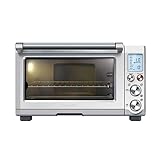
1. Breville Smart Oven Pro BOV845BSS
A long-running stainless steel countertop oven with a convection fan and several preset cooking functions. It is a popular stand-in for a small wall oven, and the interior light makes it easy to watch browning.
Suits: cooks who bake and roast often. Strengths: a wide set of presets and a solid build. Weaknesses: it is large for a small counter. Skip it if you only toast bread now and then.
Best for simple, no-menu operation
2. Cuisinart TOB-260N1 Chef’s Convection Toaster Oven
A roomy dial-operated oven with a convection fan and a stainless steel finish. The controls are straightforward, which suits anyone who dislikes menus and screens.
Suits: simple, no-menu operation. Strengths: easy dials and a familiar Cuisinart design. Weaknesses: fewer smart features than digital rivals. Skip it if you want preset programs.
View Cuisinart TOB-260N1 Chef’s Convection Toaster Oven on Amazon
Best for whole chickens and family dinners
3. Hamilton Beach Countertop Oven with Convection and Rotisserie
A larger Hamilton Beach oven that adds a rotisserie function to the convection fan. It is meant for bigger roasts and family meals that a small toaster oven cannot hold.
Suits: whole chickens and family dinners. Strengths: a rotisserie feature and generous space. Weaknesses: it takes up real counter room. Skip it if you cook for one or two people.

View Hamilton Beach Countertop Oven with Convection and Rotisserie on Amazon
Best for multi-mode cooking in one unit
4. NuWave Bravo XL Smart Oven
A digital countertop oven that combines convection baking with air frying and grilling modes. It is aimed at people who want one appliance to replace several gadgets.
Suits: multi-mode cooking in one unit. Strengths: a digital panel and varied cooking modes. Weaknesses: a learning curve for the settings. Skip it if you prefer plain knobs.

Best for easy access to hot trays
5. Oster French Door Countertop Oven
An oven with two doors that open outward together, so you can reach in without a single heavy door swinging down. Many versions are large enough for a pizza or a casserole dish.
Suits: easy access to hot trays. Strengths: the dual door that opens in one pull. Weaknesses: it needs clearance in front to open. Skip it if your counter space is tight.
View Oster French Door Countertop Oven on Amazon
Best for small kitchens and air fry fans
6. Ninja Foodi Digital Air Fry Oven SP101
A compact oven that flips up and away against the backsplash to save counter space. It combines air frying with convection baking, and it is among the best-known models of its type.
Suits: small kitchens and air fry fans. Strengths: a space-saving flip design. Weaknesses: a smaller interior than a full oven. Skip it if you often bake on full sheet pans.
View Ninja Foodi Digital Air Fry Oven SP101 on Amazon
Care and Setup
- Let the oven cool fully before wiping the interior.
- Clean the crumb tray often to limit smoke.
- Leave space around the back and sides for heat.
Mistakes to Avoid
- Buying a small oven for large pans.
- Not allowing for the counter room needed to open the door.
- Ignoring how convection speeds cooking, so food overbrowns.
How Convection Changes Your Cooking
Understanding what the fan does makes it easier to decide whether a convection oven suits your cooking. In a standard oven, heat comes from elements and the air inside stays fairly still, so a layer of cooler air can sit around the food. A fan keeps the air moving, which helps heat reach the surface of the food more evenly. Many cooks notice more even browning on sheet-pan vegetables, roasted potatoes and cookies, and some foods finish sooner.
The effect is not the same for every dish. Foods that benefit from dry, circulating heat, such as roasted vegetables, poultry skin, pastries and crisp-edged cookies, tend to do well. Delicate batters such as some cakes, custards and soufflés can be disturbed by a strong fan, so many ovens let you turn convection off or run it at a lower setting. Check your manual to see whether yours has a separate convection button, a speed choice or a fan that runs automatically with certain modes.
Recipes are written for standard ovens, so expect to adjust. A common approach is to check the food a little early and lower the temperature a bit, but the right amount depends on the oven, the dish and the size of the load. Treat the manual as your first reference and your own notes as the second. Keep a small record of what worked for your oven, such as a time for a tray of cookies, so that next time you can skip the guessing.
Finally, remember that airflow depends on space. Crowding a tray or covering the whole rack with foil can block the movement of air and reduce the benefit of the fan.
Interior Size and Pan Compatibility
Interior size is the detail that most often disappoints. A countertop oven can look large from the outside and still have a modest cooking space, because walls, elements and the door take up room. Use the listing’s interior dimensions or capacity figure rather than the outside width, and compare them to the pans you already own.
List the dishes you cook most often. If you bake cookies, check whether a standard quarter or half sheet pan fits, and whether it fits flat or only on a diagonal. If you cook casseroles, measure your baking dish, including the handles. If you want to cook a pizza, look for a stated pizza size and confirm there is clearance above it so the topping does not touch the heating element.
Height matters too. Tall roasts, a whole chicken or a deep dish may need more vertical space than the rack positions allow. Look at how many rack positions the oven offers and which positions let you broil without the food sitting too close to the top element. Racks that slide smoothly on a stop make it safer to pull out a hot tray.
Remember that a pan that just fits can limit airflow around the food, which defeats part of the point of convection. A little gap around the pan lets the fan do its work. If you often cook for a crowd, think about whether a larger countertop unit or a full-size range is the better tool, and use the countertop oven as a second oven for side dishes and smaller meals.
Power and Kitchen Circuit Considerations
Countertop ovens draw a lot of electricity for their size, because heating elements need substantial power. Check the wattage on the listing and the plug type, and think about what else shares the same circuit. Running a large countertop oven at the same time as a microwave, kettle or toaster on one circuit can trip a breaker in some homes. If you have had that problem before, plan to use the oven on a different outlet or avoid running several heating appliances at once.
Avoid using an extension cord or a lightweight power strip unless the manual explicitly allows it, since high-draw appliances are usually meant to plug straight into a wall outlet. Make sure the cord is long enough to reach the outlet without being stretched or hanging near a hot surface.
Ventilation and clearance are part of safe use. Leave the space around the back, sides and top that the manual specifies, and do not push the oven against a wall or tuck it under a low cabinet without checking. Heat and steam can damage cabinet finishes over time. Placing the oven on a heat-tolerant, level surface also helps keep it stable when you open the door or slide out a tray.
If you rent or have limited outlets, think about where you will actually put the oven. Count the distance to an outlet, the height of the cabinets above it and whether the door or the French doors have room to open fully. These practical details matter as much as the cooking features.
Cleaning and Long-Term Upkeep
A convection oven that is easy to clean is more likely to stay in regular use. Spatter and crumbs build up on the elements, the walls and the crumb tray, and burnt residue can create smoke and odors. Wipe the interior after cooking once the oven has fully cooled, and empty the crumb tray often. For stuck-on grease, use the cleaner and tools the manual recommends rather than harsh abrasives, which can damage coatings.
Look at the interior finish when you compare models. Some interiors have a nonstick or easy-wipe coating, and others are plain metal. Coatings can wear if scrubbed hard, so follow the maker’s guidance. Removable racks, trays and pans are easier to wash, and it helps to confirm whether they are dishwasher safe or hand-wash only.
Pay attention to the fan area as well. Grease can collect around the fan cover, and a dirty fan area may cause smoke or uneven cooking. If your model has a removable cover or filter, check the manual for how to clean it. Never immerse the main unit in water.
Signs that the oven is wearing out include a door that no longer closes firmly, elements that heat unevenly, a fan that becomes noisy, a cord that is damaged or frayed, or controls that respond unpredictably. If you notice a burning smell that does not clear after cleaning, stop using the oven and look to the manufacturer’s service guidance. Safety issues are not worth risking for a cooking appliance.
Choosing by Cooking Style and Budget Tier
The six ovens in this guide cover different styles, so the right pick depends on how you cook. If you like predictable results with few menus, a dial-based model is simple, and the controls are easy to read at a glance. If you like presets and timers, a digital model can reduce guesswork for common tasks such as toast, bake and roast, although it often takes some time to learn the menu.
If you want one appliance to cover several jobs, look at models that combine convection with air frying or a rotisserie function. These can be convenient, but they usually trade interior space or simplicity for the extra modes, so confirm that the modes you care about are really on the model you plan to buy. An oven with two doors or a flip-away design solves access or storage problems, and each has its own clearance needs.
In terms of budget, think in tiers rather than numbers. Entry-level ovens tend to have fewer presets, simpler controls and a smaller interior. Mid-range ovens usually add more modes, better rack systems or digital controls. Higher-tier ovens often focus on build, preset variety and interior lighting. Whatever tier you consider, compare the warranty terms and the availability of replacement parts or support on the maker’s site.
Before you buy, ask yourself how often you will use it, whether it will replace or supplement your main oven, and whether your counter can hold it comfortably. An honest answer to those questions usually narrows the choice quickly.
Converting Recipes for Convection Heat
A convection oven moves hot air with a fan, which speeds up cooking and browns food more evenly. That is helpful, but it means recipes written for a standard oven may need small changes. Many cooks lower the temperature a little and watch the clock earlier than the recipe says. Because every model behaves differently, the manual’s conversion guidance is your best reference, and an oven thermometer helps you confirm what the cabinet is really doing.
| Food | What convection does | Adjustment to consider |
|---|---|---|
| Roasted vegetables | Crisper edges, faster browning | Check a little early, turn the pan once |
| Cookies and pastry | Even color across trays | Lower heat slightly and rotate trays if needed |
| Roast meats | Browner exterior, shorter time | Use a thermometer to judge doneness |
| Delicate cakes | Fan can dry or disturb the top | Use a standard bake mode if one is offered |
Cookware and Rack Placement
Air needs room to move, so crowded racks cook unevenly. Use shallow, low-sided pans and sheet trays to let heat reach the food, and avoid covering whole racks with foil. Dark metal pans brown faster than shiny ones, while glass and ceramic hold heat longer. Keep the food a few inches from the heating elements and the fan, and follow the diagram in the manual for the best rack positions.
- Leave space between pans and around the walls.
- Rotate trays halfway for balanced browning.
- Use a rimmed pan to catch drips rather than lining the base of the oven.
Cleaning and Everyday Care
Grease and crumbs build up quickly in a small oven, and baked-on residue can smoke at high heat. Unplug the unit and wait until it is fully cool before cleaning. Remove the crumb tray, wash racks and trays as the manual allows, and wipe the interior with a soft damp cloth and mild cleaner. Avoid abrasive pads on coated surfaces, and never spray cleaner into the fan or controls.
Leave space on all sides for ventilation and keep the oven away from walls and cabinets that could be damaged by heat. Do not store items on top while it is hot. If you hear a rattling fan or notice an electrical smell, stop using it and consult the maker or a qualified technician.
Reading the Controls and Modes on a Countertop Oven
Most convection models offer several modes: bake, broil, toast and convection variants of each. Learn what each one does before cooking. Broil uses the top element only, which is useful for browning but easy to overdo. Convection bake adds the fan, which suits trays of cookies, roasts and vegetables. Presets for pizza or reheating are shortcuts, and it is worth checking them against your food the first time. Use the timer, and open the door as little as possible, since each peek drops the temperature.
A Closer Look at Convection Cooking at Home
In a home kitchen, a convection oven’s value shows up in ordinary moments: vegetables that roast while you make a sauce, biscuits baked in one batch instead of three, a weeknight traybake that cooks evenly without being turned every ten minutes. Choosing a model for home use is therefore less about maximum performance and more about fit with your routines: the size of your household’s typical tray, the counter or cabinet it will live in, and how much cleaning you will honestly do. This guide’s picks span those priorities, and the sections below explore the criteria, techniques and upkeep that decide whether a convection oven becomes the most-used appliance in the house or an occasional extra.
Choosing a Convection Oven in Depth: Airflow, Accuracy and Honest Capacity
Every convection oven moves hot air with a fan, but the quality of that airflow decides whether your food cooks evenly or needs constant turning. When you compare the picks in this guide, look for how the fan and elements are arranged, whether the cavity shape helps air reach the corners, and whether racks can be positioned so trays do not block each other’s airflow. True convection designs, where the fan has its own heating element, generally hold more even temperatures across several racks than designs that simply blow air from a standard element around the cavity. The practical test is batch cooking: cookies on two trays, or vegetables spread across shelves, should finish together rather than in relays.
Temperature accuracy is the second deep criterion. Compact ovens in particular can run hotter or cooler than the dial claims, and fan assistance changes how recipes behave. A clear, fine-grained control, ideally with a display you can trust, makes the oven easier to live with than a vague dial with wide steps. Whatever you choose, an inexpensive oven thermometer used for the first few weeks teaches you your particular unit’s habits, after which you can adjust recipes by instinct.
Capacity deserves scepticism. Quoted volumes count corners you cannot use, and the real questions are tray dimensions, the height between racks, and whether your favourite dishes fit with room for air to circulate. Measure your most-used roasting pan, baking dish and tallest covered pot, handles included, and compare them with the cavity before falling for a generous-sounding figure. Finally, consider cleaning and controls: removable racks, a crumb tray or liner that slides out, and knobs or buttons that work with greasy hands all decide whether the oven is a pleasure in month six, not just week one.
Before You Buy: Measuring Space, Dishes and Power
Convection ovens reward five minutes with a tape measure. For countertop models, measure the footprint plus the clearance the manual will require around and above the unit, check the door or lid opens without fouling cupboards, and confirm the surface beneath tolerates heat. For built-in models, the cabinet dimensions, ventilation path and electrical supply are fixed facts that narrow the shortlist immediately, and they should be verified rather than assumed from the old oven’s paperwork.
Then measure your food, not the marketing. Your widest baking tray, tallest lidded pot and favourite roasting dish, handles included, define the cavity you actually need, with room around each for air to move. Think about the largest batch you honestly cook: two trays of biscuits, a family roast with a tray of vegetables beneath, a deep casserole for six. If the shortlist’s internal dimensions swallow that load comfortably, the oven fits your life; if they only just fit, batch cooking will fight the fan. Checking now prevents the slow disappointment of an oven that is technically large enough and practically always cramped.
Cooking Well With Moving Air: Technique for Convection Ovens
Fan heat cooks faster and dries surfaces more than still heat, so recipes written for conventional ovens need small adjustments. The usual starting points are to reduce the temperature slightly or shorten the time, then check early; your first few cooks with a new oven are calibration, and notes taken then pay off for years. Use shallow, low-sided trays where you want browning, because high sides shelter food from the airflow. Spread food in a single layer with gaps between pieces so the air can do its work; a crowded tray steams, no matter how good the fan is.
Multi-rack cooking is the convection oven’s party trick, but it works best with foods of similar thickness and timing. Rotate trays only if your particular oven shows a consistent bias, and swap rack positions halfway for large batches. Delicate items such as meringues, soufflés and light sponges prefer gentler handling: use the lowest fan setting if one exists, or conventional mode if the oven offers it, because strong airflow can lean a rising cake or dry a delicate surface before the structure sets.
Roasting is where most households will use the fan daily. Vegetables caramelise beautifully if they start dry, so pat them dry and do not salt too far ahead, which draws out water. Whole chickens and joints benefit from a rest while the oven stays on for sides, and the fan crisps skin that a still oven leaves pale. Keep a simple log of your regular dishes with rack position, temperature and time; convection ovens vary more between models than conventional ovens do, and your own record becomes the most reliable recipe book you own.
Your First Week With a Convection Oven: Calibration Cooks
Treat the first week as calibration, not performance. Begin with something revealing and cheap: a tray of pale biscuits or slices of bread spread across the racks shows you the hot spots and the evenness of the fan in one glance. Follow with roast vegetables, the dish most owners will cook weekly, and note the temperature and time that give you colour without scorching. Then bake one familiar recipe, a cake or traybake you know by heart, and compare it honestly with your old oven’s result.
Write down the settings that worked, including rack positions, and keep the note where you cook. By the end of the week you should know three things: how far your oven’s dial strays from reality, which rack is the workhorse, and how much to adjust your standard recipes. That knowledge, not the feature list, is what makes the new oven feel like an upgrade, and every cook after the first week benefits from it.
Comparing the Picks in This Guide, Side by Side
Six products can look similar in a list and feel very different in a kitchen. The comparison below restates what each review in this guide already says about the convection ovens for home, in one place, so you can match each pick to your household before deciding. Read it alongside the full reviews above: the aim is not to crown one winner, but to make the trade-offs impossible to miss.
Breville Smart Oven Pro BOV845BSS
It is positioned for cooks who bake and roast often; its stated strengths are a wide set of presets and a solid build; its honest limitation is it is large for a small counter. As the review notes, skip it if you only toast bread now and then. If that profile matches your cooking, this is the pick to examine first; if the limitation touches something you do every day, one of the other five will serve you better, and the contrast with its neighbours in this list is the quickest way to see why.
Cuisinart TOB-260N1 Chef’s Convection Toaster Oven
It is positioned for simple, no-menu operation; its stated strengths are easy dials and a familiar Cuisinart design; its honest limitation is fewer smart features than digital rivals. As the review notes, skip it if you want preset programs. If that profile matches your cooking, this is the pick to examine first; if the limitation touches something you do every day, one of the other five will serve you better, and the contrast with its neighbours in this list is the quickest way to see why.
Hamilton Beach Countertop Oven with Convection and Rotisserie
It is positioned for whole chickens and family dinners; its stated strengths are a rotisserie feature and generous space; its honest limitation is it takes up real counter room. As the review notes, skip it if you cook for one or two people. If that profile matches your cooking, this is the pick to examine first; if the limitation touches something you do every day, one of the other five will serve you better, and the contrast with its neighbours in this list is the quickest way to see why.
NuWave Bravo XL Smart Oven
It is positioned for multi-mode cooking in one unit; its stated strengths are a digital panel and varied cooking modes; its honest limitation is a learning curve for the settings. As the review notes, skip it if you prefer plain knobs. If that profile matches your cooking, this is the pick to examine first; if the limitation touches something you do every day, one of the other five will serve you better, and the contrast with its neighbours in this list is the quickest way to see why.
Oster French Door Countertop Oven
It is positioned for easy access to hot trays; its stated strengths are the dual door that opens in one pull; its honest limitation is it needs clearance in front to open. As the review notes, skip it if your counter space is tight. If that profile matches your cooking, this is the pick to examine first; if the limitation touches something you do every day, one of the other five will serve you better, and the contrast with its neighbours in this list is the quickest way to see why.
Ninja Foodi Digital Air Fry Oven SP101
It is positioned for small kitchens and air fry fans; its stated strengths are a space-saving flip design; its honest limitation is a smaller interior than a full oven. As the review notes, skip it if you often bake on full sheet pans. If that profile matches your cooking, this is the pick to examine first; if the limitation touches something you do every day, one of the other five will serve you better, and the contrast with its neighbours in this list is the quickest way to see why.
Notice how the six divide: some trade convenience for control, some trade capacity for compactness, and some trade features for simplicity and price-free virtues like durability and easy cleaning. Your own priority among those trades, stated honestly before you shop, is the most reliable decision tool in this whole guide.
Three Household Scenarios: Matching a Convection Oven to Your Cooking
The batch baker
If you bake in quantity, biscuits by the trayful, bread for the week, cakes for events, your priorities are evenness across racks and a cavity that takes your trays without a fight. Choose the pick whose reviews praise consistent colour on multiple shelves, and expect to rotate less but still check the first batches carefully while you learn the oven. Your calibration notes are production records; keep them with your recipes.
The small household and the second oven
For one or two people, or as a companion to a main oven, the winning qualities are speed to temperature, modest footprint and running costs that make heating it for a single dish feel sensible. A compact pick that preheats while you chop vegetables changes weeknight cooking more than a cavernous model used twice a month. Measure your everyday dishes, choose the size that fits them with air to spare, and enjoy retiring the big oven to Sundays.
The entertainer
Hosts ask an oven to do several things at once: hold a roast, crisp potatoes, warm bread and keep plates of food coming. Multi-rack evenness and a door that opens without drama in a crowded kitchen matter most, along with controls you can set confidently while talking to guests. Choose the pick that handles your largest real gathering, rehearse it once before the big day, and the oven becomes part of the hospitality rather than a source of suspense.
Cleaning and Caring for a Convection Oven
Fan ovens distribute grease as efficiently as they distribute heat, so light, frequent cleaning beats heroic scrubbing. After roasting or other fatty cooking, let the oven cool, then wipe the walls, floor and door glass with warm soapy water and a soft cloth before the residue bakes on again at the next session. Remove racks and trays and wash them in the sink, where you can soak them properly. A paste of bicarbonate of soda left on stubborn spots softens them without harsh chemicals or abrasive pads that damage enamel and coatings.
Pay attention to the fan cover and the door seal. The cover, where removable, collects a film of grease that eventually smokes and scents food; wipe it as the manual directs, never poking tools into the fan itself. The seal keeps heat in and protects the surrounding cabinetry, so keep it clean and check for splits or flattening. If your oven has a self-cleaning or steam-clean function, use it on the maker’s schedule rather than as an emergency rescue, and always ventilate the room during high-heat cleaning cycles.
Everyday habits extend the oven’s life. Line the floor only with liners the manufacturer approves, since foil draped over elements or vents disrupts airflow and can damage the cavity. Wipe spills of sugar and acidic foods promptly, because they attack enamel when reheated. Keep the exterior vents dust-free, avoid slamming the door, and if temperatures start behaving oddly or the fan grows noisy, arrange a repair rather than compensating indefinitely; an oven that cannot hold temperature wastes food as well as energy.
Convection Oven Mistakes and How to Fix Them
The commonest disappointment is food that browns outside before it cooks through. With fan heat this usually means the temperature is too high for the thickness, or the dish is placed too close to the element. Lower the heat a little, move the food down a rack, and give the centre time. The opposite fault, pale and soggy results, points to crowding, wet food or covered dishes trapping steam: spread food out, dry its surface, and leave lids off when you want colour.
Uneven batches frustrate new owners, but the causes are mechanical rather than mysterious. Trays that fill the entire rack block airflow to the food below; pans of very different sizes finish at different rates; and a fan oven loaded cold with a huge mass of food takes time to recover temperature. Load thoughtfully, preheat fully, and accept one tray swap for very large batches. Burned edges on bakes often trace to dark metal pans, which absorb heat eagerly under a fan; lighter pans, or a small temperature reduction, restore balance. Finally, many cooks blame the oven for timing problems that are really recipe-conversion problems. Adjust one variable at a time, write down the result, and within a few weeks the oven’s personality will be familiar rather than frustrating.
Preheating deserves respect in fan ovens. Because the cavity is often smaller than a conventional oven, it heats quickly, and it is tempting to shave the last minutes. Food that enters before the walls and racks are hot starts in a cooler, damper environment and never quite catches up on texture. Give the oven its few minutes while you finish preparing the tray; the consistency is worth it.
Think about what sits beside and above the oven. Fan ovens push out hot, moist air when the door opens, and in compact kitchens that steam heads straight for cupboard doors and smoke alarms. Position and ventilation are part of cooking comfort, and a moment spent arranging the space saves daily annoyance.
When you find a setting combination that works perfectly for a household staple, write it on a card kept near the oven. Convection cooking rewards this kind of household knowledge more than almost any other appliance, because model-to-model variation is real. Your card of proven settings becomes, in effect, the manual you actually use.
Consider where the heat and steam go when the door opens. In compact kitchens a convection oven vents a surprising amount of both, and positioning it so that blast does not hit faces, smoke alarms or the underside of cupboards makes daily use pleasanter. This is part of choosing, not an afterthought: the same oven can feel civilised or chaotic depending on the thirty centimetres around it.
And think about the second year, not just the first week. Racks, trays and liners wear; fans gather grease; seals age. A model whose parts are available and whose cleaning routine you have genuinely adopted will cook in year three exactly as it did in month one. That quiet continuity, more than any programme list, is what owners end up valuing.
One last habit ties everything together: leave the oven cleaner than the meal required. A wiped door glass, an emptied crumb tray and racks returned to their usual positions mean the next cook starts from a known state, with no mystery smoke and no flavours borrowed from last week. Convection ovens reward that tidiness more than most appliances, because the same fan that cooks so evenly will happily redistribute old grease if you let it accumulate.
Convection Ovens for Home FAQ
Do I need to change recipe times in a convection oven?
Usually food cooks faster, so start checking a little early. Many cooks also lower the set temperature, but follow your oven’s manual.
Is a countertop convection oven big enough for a turkey?
Most are not. Check the capacity on the listing, and consider a roast or a smaller bird instead.
Can I bake cookies in one?
Yes, in most models. A smaller pan fits better, and rotating the tray helps with even browning.
What is the difference between a convection oven and an air fryer?
Both use a fan to move hot air. Air fryers are typically smaller and are designed for faster, crisper results on a basket, while convection ovens usually have more interior space and trays for baking and roasting.
Can I use any pan in a countertop convection oven?
Only pans that fit with some space around them and that are rated for oven use. Check the interior size on the listing, and leave a gap so air can circulate.
Should I use foil or parchment in the oven?
Follow the manual. Foil or paper that touches the elements or blocks airflow can be a hazard, and loose paper may be lifted by the fan, so secure it under the food or the pan.
Is it safe to leave a countertop oven plugged in?
Many people do, but it is sensible to unplug it if the manual advises it or if you notice any damage. Keep the area around it clear of flammable items.
Why does my food brown unevenly?
Crowded trays, a pan that blocks airflow and hot spots near the elements can all cause it. Rotating the tray partway through and leaving space around the food often helps.
Do I need a separate heat-safe surface under the oven?
Place it on a stable, level, heat-tolerant surface and keep the clearances the manual lists. Hot exteriors and steam can damage some counter finishes.
Can a countertop convection oven replace a full-size oven?
For small households it can handle many daily tasks, but large roasts and multiple big pans may not fit. Check the interior size against your usual dishes before relying on it.
Do I always need to reduce the temperature when using convection?
As a starting point, yes: fan ovens usually cook as if they were a little hotter than the dial says, so recipes for conventional ovens often need a modest reduction or a shorter time. Treat the first cooks as calibration, check food early, and note what worked. Once you know your oven’s habits, the adjustment becomes automatic for your regular dishes.
Why does my convection oven cook one side faster than the other?
Most compact fan ovens have a mild bias from the fan’s position, and trays placed hard against one wall exaggerate it. Centre your pans, leave gaps around them for airflow, and turn the tray once halfway through if the bias is consistent. If the difference is dramatic or new, have the fan and element checked, because a failing fan changes airflow noticeably.
Can I bake delicate cakes and meringues with the fan on?
You can, with adjustments. Use the gentlest fan setting available, or a conventional mode if the oven offers one, because strong airflow can dry surfaces and lean rising sponges. Meringues in particular like low, steady, dry heat. Many bakers use convection for biscuits and traybakes, where evenness helps, and stiller heat for their most delicate work.
What pans work best in a convection oven?
Low-sided, sturdy pans that leave room around them for air to circulate. Light-coloured metal gives gentler browning, dark metal gives more aggressive colour, and glass or ceramic suit casseroles and gratins where fierce surface heat is not the goal. Avoid pans so large they touch the walls or door, since blocked airflow defeats the purpose of the fan.
How do I stop roasted vegetables going soggy?
Start with dry surfaces, a properly preheated oven and a single layer on the tray with space between pieces. Crowding is the main cause of sogginess, because the vegetables steam in their own moisture. Use a second tray on another rack rather than piling one deep, and salt at the end if you find early salting draws out water in your oven.
Is a convection oven worth it if I already have a standard oven?
It depends on the model type in this guide and your cooking. Countertop convection ovens add a fast, economical second oven for small meals and overflow; built-in convection improves batch baking and roasting in the main oven. If you regularly cook for a crowd, bake in batches or reheat foods that suffer in a microwave, the fan’s evenness earns its keep quickly.
The Short Version
For a feature-rich stainless oven, the Breville Smart Oven Pro. For simple dials, the Cuisinart TOB-260N1. For roasting, the Hamilton Beach with rotisserie. For multi-mode cooking, the NuWave Bravo XL. For easy access, the Oster French Door. For saving counter space, the Ninja Foodi Digital Air Fry Oven.

