A sous vide cooker, also called an immersion circulator, heats a water bath to a precise temperature and keeps it there while food cooks slowly in a sealed bag. The method gives even results on steak, chicken, pork, eggs and vegetables, and it is forgiving because the water never goes above the temperature you set. For a beginner, that means far less guessing and less overcooked meat.
The six cookers below are well-known stick-style models that clip onto a pot, plus one all-in-one option. We have not used these products ourselves, so confirm the wattage, app features, clamp style and what is included on the current listing before you buy, because makers update models often.
As an Amazon Associate we earn from qualifying purchases. Links below are affiliate links, and they do not change the product information we give.
What to Look For
| Feature | Why it matters |
|---|---|
| Size and clamp | A compact body stores easily; the clamp must fit your pot’s wall |
| Power | More power heats water faster and handles larger pots |
| Controls | Buttons and a display are simple; app control adds remote monitoring |
| Connectivity | Bluetooth or Wi-Fi lets you start or check a cook from your phone |
| Water level markings | Minimum and maximum lines prevent dry running |
| Guides and recipes | Helpful for first cooks when you do not know times and temperatures |
Beginners often do best with a model that has clear controls, solid recipe guidance and a clamp that fits the pot they already own. A fancy feature set is less important than a simple first experience.
In this guide
Specs at a Glance
| Cooker | Style | Control | Notes |
|---|---|---|---|
| Anova Precision Cooker Nano | Stick circulator | Bluetooth app | Compact build |
| Anova Precision Cooker | Stick circulator | Bluetooth and Wi-Fi, per the model | Higher-power version of the line |
| Breville Joule Turbo | Stick circulator | App-controlled | Small, magnetic base |
| Instant Pot Accu Slim | Stick circulator | On-device controls | Slim body |
| Inkbird ISV-100W | Stick circulator | Wi-Fi app and on-device | Wi-Fi control |
| Gourmia sous vide cooker | Stick circulator | Digital control, some app models | Check exact model on listing |
The 6 Best Sous Vide Cookers for Beginners

Top pickBest for first-time sous vide cooks
1. Anova Precision Cooker Nano
Anova is one of the best-known names in home sous vide, and the Nano is the compact, entry-level model in that range. It clips onto the side of a pot, connects to a phone by Bluetooth and has a large recipe library in the app. That library is a real help when you do not yet know what temperature suits a steak or an egg.
The smaller body takes up less cupboard space than bigger models. Check the listing for the stated power and the clamp opening, because a small cooker can take longer to heat a big pot of water. For small and medium batches, it is a sensible starting point.
Suits: first-time sous vide cooks. Strengths: a compact body and a strong app. Weaknesses: slower on very large pots. Skip it if you cook for big groups often.


Best for regular use and larger batches
2. Anova Precision Cooker
The full-size Anova Precision Cooker is the step up from the Nano, with more heating power and an app that lets you start and monitor cooks remotely. It is built for people who expect to use sous vide often and want faster heat-up and steadier performance in larger containers.
Anova sells more than one version of this cooker, with differences in connectivity and power. Review the listing closely to see which model you are choosing, and confirm that it includes Wi-Fi if you want to control cooks from outside the house. A bigger body also means a bigger clamp, so make sure your pot or container has a wall that fits it.
Suits: regular use and larger batches. Strengths: more power and remote monitoring. Weaknesses: bulkier to store. Skip it if you only want an occasional steak.

Best for small kitchens and app-friendly cooks
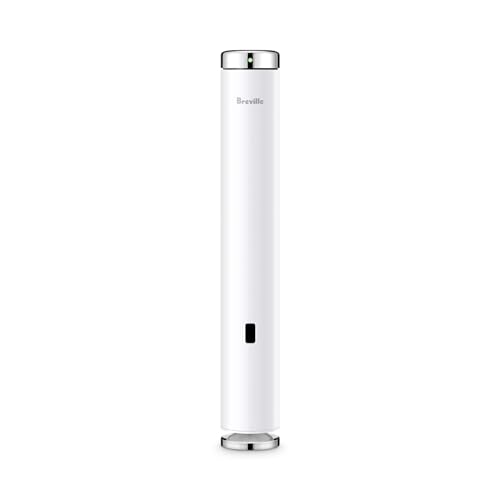
3. Breville Joule Turbo
The Joule is a very small stick cooker that is controlled entirely by a phone app, with no buttons on the body to push. It has a magnetic base, so it can sit on the bottom of a steel pot without a clamp, and the Turbo version is sold as a faster heater than the original Joule.
Because it relies on the app, it suits cooks who are comfortable with their phone and like guided recipes. The lack of controls on the unit itself can annoy some people, so check that you are happy to use an app every time. Read the listing for the version you are choosing and the stated power.
Suits: small kitchens and app-friendly cooks. Strengths: a tiny body and a polished app. Weaknesses: no on-device controls. Skip it if you want buttons and a display.

Best for beginners who prefer on-device controls
4. Instant Pot Accu Slim
Instant Pot is well known for pressure cookers, and the Accu Slim is its slim immersion circulator. It has on-device controls, so you can set the time and temperature without opening an app, which makes it a friendly choice for beginners who like pressing buttons.
The slim shape stores easily in a drawer. Check the listing for the stated power and the clamp style, and confirm the minimum and maximum water levels. It is a solid option for cooks who want the benefits of sous vide in a familiar brand.
Suits: beginners who prefer on-device controls. Strengths: a slim body and a trusted kitchen brand. Weaknesses: fewer app features than some rivals. Skip it if you want a large recipe app.
View Instant Pot Accu Slim on Amazon
Best for budget-friendly Wi-Fi sous vide
5. Inkbird ISV-100W
Inkbird is known for temperature controllers and thermometers, and its ISV-100W is a sous vide cooker with Wi-Fi control as well as on-device settings. It lets you start, change or monitor a cook through a phone app, which helps for long cooks you do not want to babysit.
It tends to be positioned as a value-minded option compared with the best-known brands. Read the listing for the wattage, the water capacity it is rated for and the clamp design. Also look at how the app rates in recent reviews, since the software matters as much as the heater.
Suits: budget-friendly Wi-Fi sous vide. Strengths: on-device and app control. Weaknesses: a smaller recipe library than the biggest names. Skip it if you want the most polished app.
View Inkbird ISV-100W on Amazon

Best for trying sous vide on a budget
6. Gourmia Sous Vide Cooker
Gourmia sells several stick-style sous vide cookers with digital controls, and some versions work with a phone app. They are aimed at newcomers who want a low-cost way to try the method before committing to a more expensive unit.
Because the line has more than one model, confirm the exact model name, the power rating and the connectivity on the listing. Make sure the clamp suits your pot, and check whether the box includes a recipe booklet or other extras.
Suits: trying sous vide on a budget. Strengths: accessible entry point. Weaknesses: model details vary across listings. Skip it if you want a long track record and a large user community.

How to Choose Your First Cooker
Decide first whether you want app control or button control. App-driven cookers like the Joule give you recipes and remote monitoring but require a phone for every cook. Button-driven ones, like the Accu Slim, are quicker to start and do not depend on software. Many models give you both, which is a good compromise for a beginner.
Think about the pot you already own. Most stick cookers clip to the side of a stockpot or a plastic storage container, and a wide, shallow pot can make the clamp awkward. Choose a container with straight walls, and check that the cooker’s minimum water line is reachable without the water overflowing.
Finally, consider how much you will cook. If you plan to feed a family or use large containers, favor a cooker with more power. If you cook for one or two and have limited storage, a compact model is plenty.
Setup and First Cook
Fill a pot with enough water to cover the food and reach between the cooker’s minimum and maximum lines. Attach the cooker, set the temperature and let the water come up to heat before the food goes in. Starting with warm tap water can shorten the wait.
Seal the food in a bag. Zip-style freezer bags work for many beginners, using the water displacement method: lower the open bag slowly into the water, letting the pressure push air out, then seal it just before the opening reaches the surface. A vacuum sealer also works and is helpful for long cooks. Make sure the bag is fully submerged and does not float.
Use a trusted source for time and temperature, since food safety depends on both. Chicken and pork, in particular, need careful attention. Many sous vide cooks finish steaks with a quick sear in a very hot pan after the bath, because the surface comes out pale from the water.
Food Safety Basics
Low-temperature cooking relies on time as well as temperature, so do not shorten the cook or lower the setting without checking a reliable chart. Cook foods to the times given for the thickness of the cut, not just the weight. Chill foods quickly in an ice bath if you plan to store them after cooking rather than eating right away.
Keep raw and cooked foods apart, wash hands and surfaces, and discard bags that leak or show signs of damage. Use bags rated for cooking, and avoid reusing single-use bags that held raw meat. If you are cooking for someone who is pregnant, elderly or has a weak immune system, follow guidance from a trusted food safety authority.
Keep the cooker’s water level in range and place the pot where the cord cannot be pulled. Never leave a cooker running in an unattended place where children or pets could knock it over.
Budget Tiers
Sous vide cookers fall into rough tiers. Entry-level models, such as the Gourmia and the Inkbird, aim to give you a working circulator at a friendly cost, and they are a reasonable way to find out whether you enjoy the method. Mid-range models, such as the Anova Nano and the Instant Pot Accu Slim, add better software, a more established brand or a compact body.
The upper tier, including the full-size Anova and the Breville Joule Turbo, focuses on faster heating, stronger apps and a more refined build. These are worth considering if you expect to cook sous vide weekly. Check each listing for the current price and warranty, since both change, and remember that a cheaper cooker still needs a suitable pot, bags and a way to sear the finished food.
Care and Cleaning
- Unplug and let the cooker cool before handling it.
- Rinse the skirt and sleeve, and wipe the body with a damp cloth. Do not submerge the top.
- Descale with a mild solution of white vinegar if hard water leaves deposits, following the maker’s directions.
- Dry the unit before storing it.
- Check the cord and clamp for wear now and then.
- Store it somewhere dry with the cord loosely coiled.
Mistakes to Avoid
- Letting water drop below the minimum line during a long cook.
- Using a container whose wall does not fit the clamp.
- Letting bags float and cook unevenly.
- Skipping a final sear and judging the results too soon.
- Guessing times for poultry or pork instead of checking a trusted chart.
- Choosing an app-only cooker when you dislike using your phone in the kitchen.
A Checklist Before Your First Sous Vide Session
Sous vide cooking means heating sealed food in a water bath held at a steady temperature, and it rewards a little preparation. Before you buy or use your first cooker, work through the points below and keep the maker’s instructions close at hand. They cover the practical matters that beginners tend to overlook.
- Choose a container that is deep enough for the cooker to reach the minimum water line, and wide enough for the food to sit in a single layer.
- Check the clamp or mounting method and make sure it fits the thickness of the container wall.
- Gather bags that their maker approves for cooking in a water bath, or a vacuum sealer and its bags.
- Find a lid or cover, or use the one the maker suggests, to reduce evaporation on long cooks.
- Prepare a probe or instant-read thermometer so you can check the food’s temperature at the end.
- Read the maker’s guidance on water levels, including the minimum and maximum marks.
- Choose a recipe from a reliable source that states both a temperature and a time.
Button Control and App Control Compared
| Control type | Convenience | Things to consider |
|---|---|---|
| Buttons and a display on the unit | Works without a phone, simple to learn | Fewer features, and you set time and temperature at the unit |
| App control through a phone | Start, adjust and monitor from another room | Depends on a connection and an updated app |
| Both | Flexible for different habits | More to learn, though you can ignore what you do not need |
Food Safety Matters Worth Taking Seriously
Cooking at lower temperatures for longer times is a different approach from conventional cooking, and food safety guidance matters. Time and temperature work together, and official sources publish guidance for safe combinations for different foods. Follow trusted recipes from trustworthy sources and the instructions that come with your cooker, and do not improvise with unfamiliar combinations. Keep raw food refrigerated until you are ready to cook it, and chill food promptly if you are not serving it right after cooking.
If you have questions about specific foods, people who are pregnant, young, elderly or have health conditions, check official food safety guidance in your country or speak to a qualified professional. This guide does not make health claims and cannot replace those sources.
Bags, Sealing and Keeping Food Submerged
Food has to stay in contact with the water for the heat to reach it properly, and trapped air makes bags float. A vacuum sealer removes most of the air, while the water displacement method pushes air out as you lower a partly sealed bag into the water. Make sure seals are strong before you cook, and check the bag from time to time during long cooks. If a bag floats, weigh it down with a clip or a suitable weight designed for the purpose.
Use bags and sealing methods that the maker approves for this kind of cooking. Avoid overfilling a bag, and leave space around it so that the water can circulate freely.
Finishing, Searing and Serving
Food that comes out of a water bath is cooked evenly but often pale on the surface. Many cooks finish it with a quick sear in a hot pan, on a grill or with a kitchen torch, following safe practice for each tool. Pat the food dry first, since moisture stops browning, and work quickly to avoid overcooking the interior. Pour the juices from the bag into a pan to make a simple sauce, and rest the food briefly before serving. Clean the cooker after each use according to the manual, and descale it as the maker advises.
Glossary for First-Time Sous Vide Cooks
- Immersion circulator: a stick-shaped device that heats and moves water to hold a steady temperature.
- Water bath: the container of heated water that surrounds the food bag.
- Vacuum seal: removing air from a bag before cooking so water contacts the food evenly.
- Water displacement method: lowering a zip bag into water so pressure pushes air out.
- Sear: a quick finish in a hot pan or with a torch to add color and flavor.
- Min and max fill lines: marks on the device showing the allowed water depth.
Equipment You Might Want Beyond the Cooker
| Item | Why it helps |
|---|---|
| A deep container | Holds enough water for the bag to stay submerged |
| Food-safe bags | Made for cooking at temperature |
| Clips or weights | Keep bags from floating |
| A lid or cover | Slows evaporation on long cooks |
| A heavy pan | For searing after the bath |
Follow Trusted Times and Temperatures
Low-temperature cooking depends on correct times and temperatures for safety. Use charts and recipes from the maker or from official food safety sources instead of guessing. Chill food quickly if you are not serving it right away, and follow official guidance on storage. If you are cooking for anyone with a higher risk from foodborne illness, ask your local health authority for advice.
Easy First Cooks
- Chicken breasts or thighs, following a trusted time and temperature chart.
- Eggs, which suit gentle low-temperature cooking.
- Vegetables such as carrots, which hold their shape.
- Thick steaks, finished with a quick sear.
Pick one simple recipe and repeat it a few times before you branch out. Learning how your device, your bags and your container behave together is more useful than trying many new dishes in one week.
Sous Vide Cooker FAQ
Is sous vide hard for beginners?
No. You set a temperature, wait for the water to heat and drop in a sealed bag. Most of the learning is about times, safety and finishing the food.
Do I need a vacuum sealer?
Not at first. A zip-style bag with the water displacement method works for many cooks. A vacuum sealer helps with long cooks and freezing.
What pot should I use?
A deep stockpot or a large plastic container with straight sides works well. Check the cooker’s minimum and maximum water lines.
Can I leave it running while I am out?
Some cooks do for long cooks, but follow the maker’s safety guidance and use a stable setup. Many people stay at home for the first few cooks.
Why is my steak pale?
Food cooked in a water bath does not brown. Pat it dry and sear it in a very hot pan, on a grill or with a torch.
Is the app required?
It depends on the model. Some, like the Joule, need the app for control, while others have buttons and a display on the unit.
Can I cook from frozen?
Often yes, with extra time, but check a reliable chart. Frozen food in the bath simply takes longer to reach temperature.
How long do these cookers last?
With normal care they can last for years. Descale when needed and check the warranty details on the listing.
The Short Version
For a compact first cooker with a great app, the Anova Precision Cooker Nano. For more power and bigger batches, the full-size Anova Precision Cooker. For a tiny app-driven unit, the Breville Joule Turbo. For simple on-device controls, the Instant Pot Accu Slim. For Wi-Fi control at a friendly level, the Inkbird ISV-100W. For a low-cost trial, the Gourmia.
A Deeper Look at How to Choose Sous Vide Cookers
The headline features of a sous vide cooker are easy to compare and often the least important. What decides satisfaction a year from now is fit with your space, your habits and your household’s real appetite for the job it does. As you read the picks above, keep asking three questions: how often will this genuinely be used each week, who else will use it, and where will it live when it is not working? Honest answers protect you from both underbuying, which leads to frustration, and overbuying, which leads to an expensive ornament.
A sous vide circulator is a heater, a pump and a thermostat in one stick, and for beginners the differences that matter are how clearly it communicates, how firmly it clamps to different vessels, and how forgiving its controls and app are when you are mid-recipe with wet hands. Power differences matter less than beginners fear; temperature stability and ease of setup are what the picks above are really trading in. Treat every specification as a clue rather than a verdict: a number only matters once you connect it to a task you actually perform, a pan you actually own, a counter you actually have, or a journey you actually take.
Space deserves a tape measure, not a guess. Measure the footprint where the appliance will sit, the clearance it needs around and above it, and the cupboard or shelf it must fit when stored, then compare those numbers with the dimensions on the listing. Allow for doors, lids and handles in their open positions, and for the human being who has to stand in front of it. Many returns and much quiet resentment trace back to a centimetre nobody measured.
Finally, judge the cost of ownership, not just the purchase. Consumables, replacement parts, filters, descalers, spare seals and the electricity or fuel it uses all belong in the real price, as does your own time: an appliance that takes ten fussy minutes to clean will be used less than a slightly humbler one that rinses in two. The reviews above flag where those burdens fall for each pick; weight them as heavily as performance.
Matching a Sous Vide Cooker to Real Life
No sous vide cooker serves every household equally, and the picks in this guide differ because households differ. A cautious first-timer cooking chicken breasts, a steak enthusiast chasing repeatable doneness, and a meal-prepper batching proteins for the week will all use the same machine at three different levels of ambition — and a beginner-friendly pick should welcome all three. The scenarios below describe the situations that most often decide between one pick and another.
Small kitchens and tight counters
In a compact kitchen, the best appliance is the one that earns its footprint every week. Favour a pick that stores neatly, sets up in moments, and does not demand a supporting cast of accessories that need homes of their own. If counter space is the scarcest resource you own, consider where the appliance goes during the other twenty-three hours of the day, and be honest about whether a cupboard shuffle will quietly kill your enthusiasm within a month.
Families, sharing and heavier use
Shared households reward capacity, durability and simple controls that a second person can use without a tutorial. If children, flatmates or a partner will all operate it, look for intuitive settings, parts that survive enthusiastic handling, and cleaning routines that do not depend on one careful owner. Agree where it lives and how it gets cleaned before it arrives, because most appliance friction in a shared home is really unresolved housekeeping wearing a disguise.
Enthusiasts and weekend projects
If this purchase feeds a hobby, your priorities invert: control, consistency and room to experiment matter more than speed of setup. Choose the pick whose adjustments let you learn — repeatable settings, honest feedback about what changed, and a community of recipes or guidance to borrow from. Enthusiasts should also plan the second purchase now, whether that is a particular accessory, a storage solution or a supply of consumables, so the hobby grows in an order rather than a muddle.
Getting the Best From It Day to Day
The first week with any new appliance is a learning curve, and treating it as one pays off. Start with the maker’s basic instructions and the simplest version of the task, note what you did and what resulted, and change one variable at a time as you improve. Most disappointing first attempts come from changing everything at once and learning nothing, or from skipping the maker’s guidance entirely and blaming the machine for a technique problem.
Start with forgiving foods and the maker’s or a trusted guide’s time-and-temperature charts, chill and store cooked food safely by food-safety guidance, and always finish with a confident sear, since sous vide cooks the inside perfectly and leaves the outside to you. Small rituals help: keep the accessories it needs in one place, wipe or rinse parts while residues are fresh rather than dried on, and leave the appliance clean and ready, because a tool that greets you ready gets used, and a tool that greets you dirty gets postponed.
Keep a short note — on paper or in your phone — of the settings and timings that worked for your favourite tasks. Households repeat a handful of jobs endlessly, and a personal record turns early experiments into reliable routine. It also helps a second user reproduce your results instead of starting from zero, and it makes troubleshooting simple, because you can see exactly what changed when results change.
Care, Cleaning and Storage in More Detail
Care is where good appliances are kept and careless ones are lost, and it begins with the maker’s instructions for your exact model. Descale the circulator by the maker’s guidance if your water is hard, since mineral build-up on the heating element is the quiet enemy of accuracy, and dry the unit fully before storage. Keep the water bath covered during long cooks to limit evaporation, top it up as the maker allows, and never run the circulator below its minimum water line. As a rule, clean sooner and gentler than feels necessary: fresh residues lift easily, while baked, dried or soured deposits demand the harsh scrubbing that damages finishes and seals.
Build a rhythm rather than relying on rescue cleans. A quick wipe or rinse after each use, a proper clean on a weekly cycle if the appliance works daily, and a deeper session — descaling, deep degreasing or seal inspection, as the maker directs — at the intervals your water, fuel or ingredients demand. Put the deep clean in the calendar if you must; appliances rarely fail from one missed clean, but they decline steadily from a habit of missed cleans.
Storage protects the machine between uses. Dry every part fully before reassembling or putting it away, since trapped moisture corrodes, smells and grows things nobody wants near food. Store cords loosely rather than wound tight, keep sharp or heavy items from resting on delicate parts, and leave lids ajar where the maker allows so seals rest in their natural shape. In humid homes, where the appliance sits matters as much as how it was cleaned.
Watch for the small warnings and act while they are cheap: a seal that no longer sits flat, a filter past its life, a cord with a nick, a part that has started to smell even when clean. Replacing a minor part early is almost always less costly — in money and in ruined meals — than nursing a failing one, and keeping the maker’s part numbers from your manual makes ordering the right piece a two-minute job instead of a research project.
How the Picks in This Guide Compare With Each Other
Several picks in one guide can look interchangeable until you map them to your own priorities. The reviews above describe each model’s character; the way to compare them is to decide which two or three criteria matter most to you — size, control, ease of cleaning, capacity, portability — and let everything else be a tiebreaker rather than a distraction.
Use the Anova Precision Cooker Nano as your benchmark, since it represents the balance this guide puts first. Read its review and note where it is strong and where the guide itself admits a limitation. Then test each alternative against it: a rival pick earns your money only if it beats the benchmark on a criterion you genuinely care about, not merely on a longer feature list.
The Anova Precision Cooker illustrates the usual trade: a shift in emphasis — perhaps more capacity or control in exchange for size, or simplicity in exchange for fewer adjustments. Neither direction is wrong; the right one is the one that matches your kitchen and your patience. If you find yourself defending a pick against your own habits, that is the wrong pick, however impressive it looks.
Options like the Breville Joule Turbo show how wide the category runs once you look past the headlines. Rank all the picks by your top criterion, discard the bottom half without regret, then rank what remains by ease of cleaning and storage. The survivor of those two rankings is very rarely the wrong purchase, and the exercise takes ten honest minutes.
Before ordering, re-read the listing for your chosen pick with fresh eyes: dimensions, what’s in the box, care requirements and warranty terms. Keep the packaging until the appliance has done its real job in your kitchen at least twice, because performance on your counter, with your ingredients and your water, is the only review that finally counts.
Common Mistakes and How to Avoid Them
The most frequent mistake is buying for an imagined life — the daily fresh juice, the weekly expedition, the elaborate weekend routine — rather than the life visible in last month’s calendar. Appliances punish optimism by taking up space. Choose for the routine you already have, and let a well-used first purchase, not a fantasy, justify any upgrade later.
Second comes skipping the manual. Modern appliances hide their best features and their important warnings in those pages: the correct assembly order, the part that must never be immersed, the setting meant for exactly your task. Twenty minutes with the manual and the maker’s quick-start guidance will save most owners at least one ruined meal, one avoidable mess, or one damaged part in the first month alone.
Third, many owners clean by folklore instead of by instructions — soaking what should only be wiped, scrubbing coatings that should only be soaked, or using a fashionable cleaning hack that voids common sense along with the finish. When advice conflicts, the maker’s word wins, because the maker knows the materials. When in doubt, start with warm water, mild detergent and patience, which solve the large majority of kitchen cleaning problems.
Finally, people often blame the appliance for ingredient problems. Stale, wrong-sized, wrong-temperature or simply unsuitable ingredients defeat good machines daily, and the fix is in the shopping and the prep rather than the settings. Before concluding that a pick underperforms, repeat the task once with fresh, appropriate ingredients and the maker’s recommended method; that single honest test separates machine faults from material ones.
More Questions Buyers Ask
How long should an appliance like this last?
With cleaning and care that follow the maker’s guidance, a well-chosen kitchen appliance should serve for years of regular use. Lifespan is decided mostly by habits: prompt gentle cleaning, correct storage, timely replacement of seals and filters, and never forcing parts or settings beyond what the design intends.
Should I buy the largest or most powerful option?
Only if your household’s real workload demands it. Oversized appliances cost more to buy, house and often to run, and they can perform worse at small jobs than a right-sized model. Match capacity and power to your typical batch and your biggest regular occasion, not to the largest event you can imagine hosting once.
What should I do in the first week of ownership?
Read the manual, run the maker’s recommended first-use steps, and practise on the simplest version of the main task before attempting anything ambitious. Keep notes on settings and results, register the warranty if the maker offers one, and keep all packaging until the appliance has proved itself on your counter.
How do I know whether a problem is the machine or my technique?
Repeat the task exactly as the maker’s basic instructions describe, with fresh, suitable ingredients or materials. If the problem vanishes, it was technique or materials; if it persists under the textbook method, consult the troubleshooting section of the manual and then the maker’s support, describing the steps you followed.
Are accessories worth buying at the same time?
Buy only the accessories you already know a job for. Most owners use one or two attachments constantly and store the rest forever. Live with the appliance for a month, note which tasks genuinely felt limited by a missing accessory, and buy for that list — it will be shorter and far more accurate.
How should I store it between uses?
Clean, fully dry, and assembled loosely or stored exactly as the maker directs, with the cord loose and delicate parts protected. Avoid damp cupboards, heavy items stacked on top, and lids sealed tight on a still-warm or damp machine. A stored appliance should be ready to use the moment it comes out, not a cleaning project before it can start.
What regular maintenance is easiest to forget?
The unglamorous kind: seals, filters, blades, gaskets and descaling schedules, depending on the appliance. These small items decide performance quietly and fail gradually, so the decline feels like the machine ageing rather than a part expiring. Check them on a fixed rhythm — monthly is a good default for daily-use appliances — and replace by the maker’s guidance.
Ownership Notes: The First Season With It
The first season with a sous vide cooker is about building a small, trusted repertoire. Notice which three or four cooks you repeat — the weeknight chicken, the weekend steak, the eggs for a slow breakfast — and write down the times, temperatures and finishing steps that pleased your household, because those notes are worth more than any generic chart once they are yours. Notice also the logistics: where the container lives, whether the bags and clips have a drawer, and how the long cooks fit around work and family. A circulator whose setup takes two calm minutes gets used on Tuesdays; one that requires a hunt through cupboards becomes a Sunday project and then a memory.
Troubleshooting: When a Cook Does Not Go to Plan
Most sous vide disappointments are bath problems or bag problems rather than cooker problems. Food that cooks unevenly usually floated, overlapped, or sat in a bath whose water could not circulate around it, so weigh bags down, give pieces room, and check the water level before blaming the machine. A bath that will not hold temperature in a large container may simply be losing heat faster than a small cooker can replace it; cover the container, insulate it with a towel around the outside as many cooks do, and start with warm water so the cooker is maintaining heat rather than fighting from cold. Evaporation over a long cook quietly lowers the water line towards the minimum mark, which is why covered baths and a mid-cook glance matter.
Texture surprises have their own logic. Meat that seems firmer than expected often needed more time for its thickness rather than more heat, while meat that turns mushy has usually spent far too long in the bath, since time tenderises relentlessly even at a perfect temperature. Pale, wet surfaces are not a cooking failure at all — they are the normal state of food leaving a water bath, and they are solved at the finish: pat thoroughly dry, sear hot and briefly, and rest before slicing. If a bag leaks or balloons oddly, remove it, and follow food-safety guidance about whether the food is usable rather than guessing. Work through water level, circulation, time and finish in that order, and nearly every sous vide problem turns out to be a small, fixable one.
A Note on Cooking for Guests
Sous vide quietly changes how a cook hosts, because the bath holds food at its perfect point while the rest of the evening unfolds at human speed. Proteins can be cooked in advance, chilled in their bags by the food-safety guidance, and brought back through the bath before a brief sear, which turns the frantic last ten minutes of a dinner party into the calmest. Plan the searing in batches, keep the bath covered and topped up, and let the method do what it is genuinely best at: removing timing panic from cooking for people you like, so the cook can sit down with everyone else.
From Shortlist to Checkout: A Practical Walkthrough
Once the reviews have narrowed your choice to two or three cookers, make the final decision around your pot and your phone. Take the container you will actually use — the stockpot or storage box that lives in your kitchen — and check each candidate against it: the clamp must grip its wall, the water must reach the cooker’s minimum line without threatening the maximum, and the whole setup must fit where you plan to cook, cord included. Then decide the control question honestly. If your phone is already the remote for your lights and your music, an app-driven cooker will feel natural; if you resent apps in the kitchen, choose on-device controls and never think about it again. Check on the listing what is included, what the warranty covers, and whether the maker’s recipe guidance suits a beginner, because your first month will lean on it heavily.
When the cooker arrives, baptise it with the easiest cook in the repertoire — eggs or a chicken breast, following a trusted chart exactly — and judge the setup rather than the cuisine: how long the bath took to heat, whether the bag stayed down, how the sear went. Keep the packaging until two or three cooks have gone well, write your household’s favourite times and temperatures on a card that lives with the cooker, and give the kit a permanent home near the pot it serves. Bought and settled this way, a sous vide cooker becomes a quiet guarantee of repeatable results, which is the entire promise of the method and the reason beginners who start calmly tend to stay with it.
Is it worth repairing an older appliance?
Often, yes, when the fault is a replaceable part and the body and motor remain sound — a fresh seal, filter or blade can restore years of service. Repair stops making sense when parts are unavailable, when several systems are failing together, or when the repair approaches the cost of a modern replacement that would also be cheaper to run. Decide with the part price in hand, not by guesswork.
Related Guides
- Air Fryer Cooking Basics for Beginners: What to Know First
- 6 Best Countertop Induction Cookers: Single and Double (2026)
- 6 Best Slow Cookers: 6 to 7 Quart Manual and Programmable (2026)
- 6 Best Dual Fuel Cookers: Gas and Electric Ranges (2026)
- 6 Best Electric Pressure Cookers for Busy Families (2026)