A countertop induction cooker heats the pan directly with a magnetic field, so the glass surface stays much cooler than a gas or electric coil. It is fast, easy to wipe down and handy for dorms, RVs, small kitchens and extra burners at a holiday meal. You only need a plug and compatible cookware.
The six units below include single-burner and double-burner models from well-known makers. We have not used these products ourselves, so confirm the power level, the size and the control features on the current listing before you buy. Speed and safety claims are the makers’ own.
As an Amazon Associate we earn from qualifying purchases. Links below are affiliate links, and they do not change the product information we give.
What to Look For
| Feature | Why it matters |
|---|---|
| Burners | Single units save space; double units help with larger meals |
| Cookware | Pans must be magnetic, so test with a fridge magnet |
| Controls | Temperature and power presets make steady cooking easier |
| Surface | A smooth glass top wipes clean in seconds |
| Safety | Auto shut-off and pan detection prevent accidents |
In this guide
Specs at a Glance
| Model | Burners | Controls | Notes |
|---|---|---|---|
| Duxtop 9600LS | One | Digital panel with presets | A long-running best seller |
| Duxtop 8100MC | One | Digital panel with presets | Slim and light; a step up from basic |
| Duxtop 9620LS | Two | Digital panel for each side | Double burner for larger meals |
| NuWave PIC Flex | One | Precise temperature steps | Known for fine control |
| Secura 9100MC | One | Digital panel with timer | Straightforward single unit |
| Max Burton 6400 | One | Digital panel with presets | Stainless-style body |
The 6 Best Countertop Induction Cookers
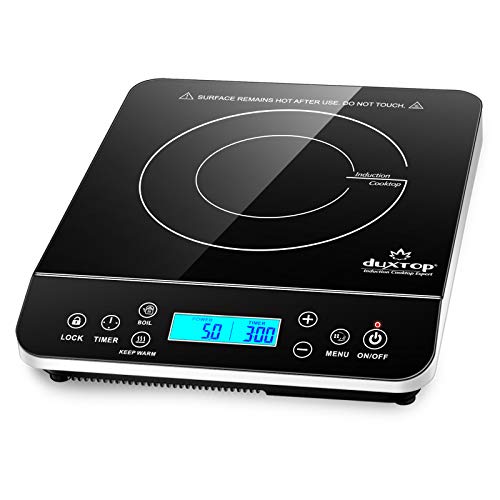
Top pickBest for a dorm, RV or extra burner
1. Duxtop 9600LS Portable Induction Cooktop
A single-burner induction cooktop with a glass top, a digital panel and preset cooking levels. It has been a popular choice for years among people who want a dependable portable burner.
Suits: a dorm, RV or extra burner. Strengths: clear controls and a long record. Weaknesses: it needs magnetic cookware. Skip it if you want two burners at once.
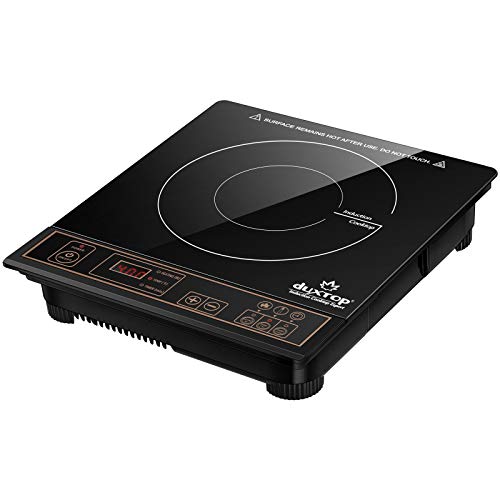
Best for a small kitchen
2. Duxtop 8100MC Portable Induction Cooktop
A slim, light single burner from the same maker with a simple front panel. It is easy to stash in a cabinet between uses.
Suits: a small kitchen. Strengths: a slim body and easy storage. Weaknesses: fewer extras than larger units. Skip it if you need heavy-duty cooking.

Best for a family meal
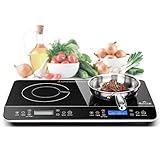
3. Duxtop 9620LS Double Burner Induction Cooktop
A double-burner countertop unit with separate controls for each side. It suits cooks who want to simmer a sauce and sear at the same time.
Suits: a family meal. Strengths: two zones with their own controls. Weaknesses: a larger footprint and more weight. Skip it if you cook for one.
View Duxtop 9620LS Double Burner Induction Cooktop on Amazon
Best for careful, precise cooking
4. NuWave PIC Flex Induction Cooktop
A single-burner cooktop known for fine temperature steps, so you can set a precise heat for sauces and delicate dishes.
Suits: careful, precise cooking. Strengths: a wide range of temperature steps. Weaknesses: pan size limits on a compact burner. Skip it if you prefer a basic dial.
View NuWave PIC Flex Induction Cooktop on Amazon
Best for a simple everyday burner
5. Secura 9100MC Induction Cooktop
A single burner with a digital panel, timer and several power levels. It is a straightforward portable unit for a countertop or camper.
Suits: a simple everyday burner. Strengths: a clear panel and a timer. Weaknesses: a plain look. Skip it if you want fancy touch features.
View Secura 9100MC Induction Cooktop on Amazon
Best for a tidy counter
6. Max Burton 6400 Induction Cooktop
A stainless-style single burner that is often chosen by people who want a portable unit that looks neat on the counter.
Suits: a tidy counter. Strengths: a stainless-style body. Weaknesses: check the listing for the exact features. Skip it if you want a double burner.
View Max Burton 6400 Induction Cooktop on Amazon
Care and Setup
- Wipe the glass top once it has cooled.
- Keep the vents clear so the fan can cool the electronics.
- Use flat-bottomed pans so heat transfers evenly.
- Store the unit with the top free of heavy objects.
- Let the fan run on for a moment after cooking so heat clears the electronics.
Mistakes to Avoid
- Using aluminum or glass pans that are not induction compatible.
- Dragging rough pot bottoms across the glass.
- Leaving an empty pan to heat.
- Plugging into a crowded extension cord.
- Placing the unit on a tablecloth that can block the air intake.
How Induction Heating Works and Why Pans Matter
An induction cooker has a coil under the glass top that creates a changing magnetic field. When a suitable pan sits on the surface, the field induces electrical currents in the metal of the pan itself, and that heats the pan from within. The glass heats only from contact with the hot pan, which is why the top stays cooler than a gas flame or an electric coil. It is also why the unit responds quickly when you change the setting, and why it switches off the heating when the pan is removed.
The pan must contain magnetic material. Cast iron, enameled cast iron and many types of stainless steel work well, and many makers label compatible cookware with an induction symbol. Aluminum, copper and glass do not work unless the base has a magnetic layer. A simple test is to hold a magnet to the bottom of the pan. If it sticks firmly, the pan should heat on induction. Pans with a flat, smooth base make the best contact, and warped bases can rock, heat unevenly or buzz.
- Check the minimum pan diameter in the manual, since very small pans may not be detected.
- Avoid pans much larger than the cooking zone, as the edges heat less.
- Look for a flat base and a thick bottom for even heat.
- Test your existing cookware before buying a new set.
Switching from gas or coil is often easy, but some cooks need to replace one or two pans.
Power Levels, Wattage and Electrical Limits
Portable induction cookers plug into a standard outlet, but they draw a lot of power, so it is worth understanding the numbers on the listing. The wattage rating tells you the maximum heating power, and a higher number generally boils water faster and gives a stronger sear. Household circuits have limits, and plugging a high-wattage unit into a circuit that already powers a kettle, microwave or toaster can trip the breaker. Use a dedicated outlet where possible, and avoid extension cords and power strips unless the maker approves them.
Double-burner models share a limited supply of power. When both zones run at once, the unit may split the available wattage between them, so the maximum power for each side can be lower than a single-burner unit. Check how the listing describes this, and read the manual for how the power is shared. If you often cook with both burners on high, look for a model that handles it well, or use a single burner for the demanding task.
In an RV, boat or off-grid cabin, check your generator or inverter capacity before buying. Many portable power systems cannot handle a high-wattage induction unit, and some induction cookers require clean, stable power. Compare the cooker’s draw with your supply, and leave a margin for other appliances.
- Read the plug type and voltage on the listing.
- Check the cord length, so you do not need an extension.
- Know your circuit’s limit before running multiple appliances.
Temperature Modes, Power Modes and Presets
Controls vary more than people expect, and they shape how the cooker feels in use. Power modes let you pick a heat level, often numbered, similar to a stove dial. Temperature modes aim for a target temperature in the pan, which can help with frying, simmering and keeping a sauce steady, but accuracy depends on the sensor and the pan. A timer lets you walk away, and a keep-warm setting holds food at a low heat. Some units have presets for boiling, frying or soup, which are convenient but not always exactly what a recipe needs.
Think about how you cook. For sauteing and searing, you want fast response and a range of power steps. For delicate sauces such as custard or chocolate, fine control at low settings matters. Some induction units cycle on and off at low power to keep heat down, which can be a problem for very delicate foods. Read user feedback on low-heat behavior, but remember that this is general guidance, not a guarantee for any model.
- Touch controls look neat but can be harder to use with wet hands.
- Dials and buttons are simple and quick to adjust.
- A child lock helps in homes with small children.
- Auto shut-off and overheating protection add a layer of safety, as long as you do not rely on them alone.
Preheat the pan with a little oil or food in it, since an empty pan can overheat quickly on induction and may damage nonstick coatings.
Safety, Placement and Noise
Induction surfaces stay cooler than other heat sources, but they are not cool. The glass absorbs heat from the pan, so it can stay hot for some time after cooking, and many models show a hot-surface light. Treat the unit like any stove. Keep loose sleeves and flammable materials away, and never place metal utensils, foil or lids on the glass top, because they can heat up as well. Keep the cord away from hot pans and from the edge of the counter.
The magnetic field is the reason some makers advise people with pacemakers or other implanted medical devices to keep a distance or consult their doctor. If this applies to you or someone in your home, read the manual and ask your physician before using an induction appliance. Likewise, avoid wearing watches or placing cards with magnetic strips close to the unit when it is running.
Place the unit on a stable, level, heat-safe surface with clearance for its air vents, as the fan cools the electronics. Do not cover the vents with a tablecloth or place the unit close to a wall. A hum, buzz or click is normal at times, especially at high power or with certain pans, and a fan runs during and after cooking. Noise can also come from thin or layered pans, so try a different pan if the sound bothers you.
- Keep liquids away from the vents and the control panel.
- Let the fan finish before you unplug or store the unit.
- Use a pan that fits the cooking zone to avoid wasted heat.
Cleaning, Storage and When to Replace
Cleaning is one of induction’s advantages. Because the surface does not get as hot as an open burner, spills are less likely to bake on. Wipe the glass with a soft damp cloth once it has cooled, and use a cleaner made for glass-ceramic surfaces for stubborn marks. Avoid abrasive pads and harsh chemicals that can scratch the surface, and do not use a razor scraper unless the maker says it is safe. Keep the vents free of dust, and use a soft brush or a vacuum to clear them. Do not immerse the unit in water.
Scratches matter more than cosmetic marks. Deep scratches or cracks in the glass can let liquid into the electronics, so stop using the unit if the top is cracked. Lift pans straight up instead of dragging them, and place a thin silicone mat only if the maker allows it, as some mats can interfere with heating or melt.
Store the unit in a dry place, with nothing heavy on top. Keep the cord loosely coiled, not tightly wound, so it does not fray.
Signs it is time to replace the unit:
- The glass is cracked or has deep scratches.
- It shows error codes repeatedly even with suitable pans and clear vents.
- The fan is loud, seized or not running.
- It no longer heats evenly, shuts off early or smells burnt.
- The cord or plug is damaged or becomes hot.
Repair is rarely practical for inexpensive portable units, so check the warranty terms before you buy.
A Quick Checklist Before You Buy an Induction Burner
A countertop induction cooker is a simple appliance, yet a few small checks decide whether you will enjoy using it. Work through this list with your own kitchen in mind.
- Pick a spot near a suitable outlet, with clear space on every side of the unit for airflow.
- Look at the pans you already own and see which ones a magnet clings to firmly on the base.
- Decide whether one burner is enough or whether you often cook two dishes at once.
- Check the footprint of the cooker against the shelf or cabinet where it will live between uses.
- Note the size of the heating zone and compare it with the width of your favorite pan.
- Read the control layout in the product photos and ask whether you would find it easy with wet hands.
Your answers usually point toward either the single or the double model before you compare any other detail.
Single Burner or Double Burner: A Decision Table
The choice between one zone and two comes down to how you cook rather than which unit looks more impressive. Use the table as a rough guide.
| Your situation | Leaning toward | Why |
|---|---|---|
| Small apartment or dorm | Single burner | Compact and easy to put away |
| Extra burner for holiday meals | Single or double | Depends on how many dishes need heat at once |
| Family cooking a main and a side together | Double burner | Two pans going at the same moment |
| Travel or camping with a power source | Single burner | Lighter to carry and simpler to set up |
Remember that a double unit usually shares its power between the two zones, so running both at the top level may reduce what each one receives. The maker’s manual explains exactly how that sharing works for your model.
When to Check the Manual or Ask an Electrician
Most buyers will simply plug the cooker into a standard household outlet and carry on. Still, there are moments when the maker’s instructions or a qualified electrician should lead the way. If you plan to run the cooker on a long extension lead, on a shared circuit with other heavy appliances, or in a location where you are unsure about the wiring, stop and look up the manual’s guidance first.
The same applies if breakers trip, if the cord or plug feels unusually warm, or if the unit shows an error code you do not recognize. Error codes are listed in the manual, and each one has a recommended response. Do not open the casing yourself. A licensed repair service or the maker’s support line is the right route when something seems wrong, and any electrical question about your home circuits belongs with a licensed professional.
Small Habits That Make Induction Cooking Easier
Induction responds quickly, so a few small habits go a long way. Keep your ingredients chopped and within reach before you switch the unit on, because the pan reacts fast to a change in power. Lift the pan off the surface when you want to pause, rather than reaching for a different setting in a hurry.
Use a pan whose base sits flat and covers most of the heating zone, and center it carefully. Wipe the glass surface once it has cooled, since stuck-on splashes are far simpler to remove before they bake on. Lift pans rather than sliding them, which protects the surface from scratches.
Finally, give yourself a moment to learn the controls. Try boiling water, then a gentle simmer, then a quick sear, so you know how each level behaves on your own unit. The manual is the best place to confirm what each button does.
Choosing Countertop induction cookers: What Actually Matters
A countertop induction cooker gives you a precise, fast burner that lives where you put it, so judge it first by control. The useful range runs from a gentle hold for sauces and chocolate to a fierce boil, and the steps between settings matter: small, even increments let you find a true simmer, while wide jumps make delicate work frustrating. Power is only part of the story, because a portable unit shares its strength through one cooking zone; what you feel in daily use is how quickly it responds when you lift the pan or lower the setting, and induction’s near-instant response is the reason cooks choose it.
Pan compatibility is the second gate. The cooker heats only pans with a magnetic base, and the pan’s base diameter should sit within the marked zone: too small and detection may falter or heating concentrate, too large and the edges beyond the zone cook only by conduction. Bring your most-used pan’s measurements into the decision, and test favorites with a magnet before assuming. The surface itself should be smooth, easy to wipe, and marked clearly where the pan belongs, and the controls should be usable with damp or busy hands, since a portable burner is often bought for exactly the messy, crowded cooking days.
Portability cuts both ways, so think about the whole life of the unit. It should be light enough to move and store without dread, with a cord length that reaches sockets in the places you will actually cook: the counter for an extra burner, a table for a hotpot night, perhaps a balcony or a small rental kitchen. Check how it stores, flat in a drawer or upright in a cupboard, and whether the surface is protected in storage. A portable cooker that is easy to fetch gets used for everything from jam to tempering; one that is awkward lives in its box.
How Countertop induction cookers Fit Real Routines
The extra burner on big cooking days
Most countertop induction cookers earn their place on the days the main hob runs out: holidays, preserving sessions, and meals with three pans that all need heat at once. The portable unit takes the steady jobs beautifully, a pot of potatoes, a simmering sauce, a pan of stock, freeing the main hob for the cooking that needs your hands. Because it heats the pan directly and responds instantly, it is also the better burner for anything that might boil over; the moment you lower the setting, the bubbling calms. Set it on a stable surface away from the crowd’s elbows and it quietly doubles your kitchen.
Table cooking: hotpots, fondue, and keeping dishes warm
A portable induction cooker turns the table into a cooking place, which changes the feel of a meal. Hotpot diners cook their own ingredients in a shared broth, fondue stays at a gentle, even warmth without a flame, and a buffet dish holds its temperature through a long evening. The cool surface around the pan is a genuine safety advantage with children and crowded tables compared with open flames or hot plates. Keep the cord routed where nobody trips, place the unit on a heat-safe mat, and the table becomes the most social cooking spot in the house.
Small kitchens, rentals, and single-burner living
For studios, rentals, dorm-adjacent living, and tiny kitchens, one good induction burner plus a kettle and a microwave can be a complete kitchen. It boils fast, simmers honestly, fries properly, and wipes clean in seconds, then stores away so the counter returns. The limits are real, one pan at a time, pan size capped by the zone, but sequencing solves most meals: grains first to rest covered, sauce next, protein last. Many cooks who start with a portable unit as a stopgap keep it permanently for its precision, even after a full kitchen arrives.
Setup, Daily Use, and Getting the Best Results
Setup is minutes: a flat, stable, heat-safe surface near a suitable socket, with clearance around the unit for its cooling fan, which usually draws air from beneath or the sides. Never run it on a metal surface that can interfere or heat up, and keep the underside vents unblocked by tablecloths or mats. Before cooking seriously, boil a pan of water to learn the controls, the sound of the fan, and how the settings map to real heat in your pans. Induction is quiet and invisible compared with gas, so this short calibration teaches your hands what the numbers mean.
Technique adjusts in small ways. Because the pan itself heats, preheating is fast, and oil can pass its best point quickly; have ingredients ready before you start. Use the boost or highest setting for boiling water, then settle to a working setting for cooking, rather than holding maximum power, which can stress pans and scorch food in the center of the base. Lift the pan to toss or stir rather than sliding it, to protect the glass surface. If the unit beeps and pauses, it is usually telling you the pan was lifted, is incompatible, or is off-center, which is information, not malfunction.
Care for the surface as you would any glass-ceramic top. Let it cool, then wipe with a soft cloth; sugary spills deserve prompt attention once safe, because cooked-on sugar can pit glass surfaces. Store the unit where nothing heavy rests on it, and coil the cord loosely rather than wrapping it tightly around the body. Keep the manual’s error-code list somewhere findable, since portable cookers communicate through codes, and knowing that a code means ‘pan not detected’ saves a worried evening. Simple handling keeps these units working for years.
Care, Cleaning, and Keeping It Working Well
Know the behaviors that are normal so you do not chase phantom faults. A soft hum or clicking at low settings is the power cycling that holds gentle temperatures. The surface stays relatively cool except where the pan warms it by contact, and it will be hot to the touch after cooking with a heavy pan, so treat it with the same caution as any hob until it cools. If the unit shuts down with an overheat message, the cause is usually blocked airflow, an empty pan left heating, or a very hot environment; let it cool fully and correct the cause before restarting.
Daily care is a wipe and a glance: a wipe for the splashes while they are fresh, and a glance at the vents and fan area for the dust and crumbs that kitchens generate. Periodically check that the fan runs freely and the underside is clear, because a portable cooker’s cooling depends on airflow that a blocked vent quietly removes. Use only cleaning products suitable for glass-ceramic surfaces, and avoid abrasive pads that cloud the glass and make future spills harder to remove. Dry the surface after cleaning so water spots do not bake on during the next use.
Common Mistakes and How to Avoid Them
Handling mistakes shorten the unit’s life. Sliding heavy cast iron across the glass scratches it, dropping a pan onto the surface can crack it, and running the cooker on a wobbly table or a thick cloth invites both spills and overheating. Using maximum power as a default warps thin pans over time and makes scorching likely. Induction rewards a calmer style: lift rather than drag, center the pan, use the middle settings for cooking and the top for boiling, and let the technology’s responsiveness, not raw power, do the work.
The classic mistake is assuming any pan will work. Aluminum, copper, and glass pans without a magnetic base simply will not heat, and discovering this with dinner half-prepared is miserable. Test your pans with a magnet when the cooker arrives, and plan one induction-ready workhorse if your set falls short. The second mistake is size mismatch: a pan far larger than the zone cooks with a hot center and cool edges, which no amount of stirring fully fixes for searing. Match the pan base to the marked cooking area and results become predictable.
How the Picks in This Guide Compare
Comparison only makes sense against your own priorities, so use this section as a decision exercise rather than a ranking. The picks above were chosen to cover different needs within countertop induction cookers: different sizes, styles, and strengths for different kitchens. Read across them with your space measurements, your regular recipes, and your cleaning tolerance in hand, and the shortlist usually narrows itself to one or two. What follows revisits each pick in turn and frames the question you should ask of it.
Duxtop 9600LS Portable Induction Cooktop represents one answer to the question this guide is asking, and the other picks represent others. Compare them by the criteria that opened this article: how they fit your space, how they behave in the cooking you repeat, and how they clean and store afterwards. If you find yourself torn between this pick and another, choose by the tie-breaker of daily friction: the one that will be easier to reach for, easier to wash, and easier to live with usually wins the year, whatever wins the afternoon.
Duxtop 8100MC Portable Induction Cooktop earns its place in this line-up for the role set out in its review above. When you weigh it against the neighbouring picks, compare what the reviews themselves say about what it does well, where its limits are, and the kind of cooking it suits. The right choice is rarely the most elaborate option; it is the one whose strengths match your weekly routine rather than your most ambitious day, and whose handling and care you will be happy with long after the novelty fades.
Duxtop 9620LS Double Burner Induction Cooktop is the pick to study closely if its purpose in this guide matches the job you most need done. Read its section alongside the picks either side of it, and notice the trade-offs the guide describes: every design in this category gives something to get something. If the compromise it makes is one you would happily make too, that is a strong signal. If its strengths answer a problem you do not have, a simpler pick further down the list will probably serve you better.
With NuWave PIC Flex Induction Cooktop, the decision is about fit for your household rather than rank. Its review above explains the cooking it is built for; your task is to be honest about how often that cooking happens in your kitchen. A pick used three times a week at the centre of your routine is worth more than a technically broader one used monthly. Check also the practicalities the review raises, size, handling, and care, because those are the details still shaping your satisfaction a year from now.
Secura 9100MC Induction Cooktop represents one answer to the question this guide is asking, and the other picks represent others. Compare them by the criteria that opened this article: how they fit your space, how they behave in the cooking you repeat, and how they clean and store afterwards. If you find yourself torn between this pick and another, choose by the tie-breaker of daily friction: the one that will be easier to reach for, easier to wash, and easier to live with usually wins the year, whatever wins the afternoon.
Max Burton 6400 Induction Cooktop earns its place in this line-up for the role set out in its review above. When you weigh it against the neighbouring picks, compare what the reviews themselves say about what it does well, where its limits are, and the kind of cooking it suits. The right choice is rarely the most elaborate option; it is the one whose strengths match your weekly routine rather than your most ambitious day, and whose handling and care you will be happy with long after the novelty fades.
More Practical Notes on Countertop induction cookers
Think of a portable induction cooker as flexible capacity rather than a gadget. It is the burner that appears when the kitchen needs one and vanishes when it does not, and that flexibility serves many lives: the renter, the hotpot host, the jam maker, the family whose holiday cooking overflows the hob. Judged that way, the purchasing questions become simple. Does it control heat finely at the low end, boil convincingly at the top, fit your pans, and store where you have room? If yes, it will be used constantly, which is the only appliance review that finally matters.
Pairing the cooker with the right pan multiplies its value. One flat-based, induction-ready skillet and one lidded pot cover most of what a portable burner is asked to do, from frying eggs to simmering soup at the table. If your current pans fail the magnet test, budget for a single good compatible piece rather than replacing a set. And keep the cooker somewhere reachable: these units suffer the fate of all stored-away appliances, so a drawer or cupboard at waist height, not the top shelf, is part of making the purchase succeed.
Safety habits complete the picture. Route cords away from walkways and water, cook on surfaces that do not wobble, and remember that the pan, not the glowing ring you are used to, is the hot thing. Teach children that the quiet black square can still hold a hot pan, and let the unit cool before it goes back into storage. With those habits, a countertop induction cooker is among the safest, cleanest ways to cook, and its precision tends to convert cooks who try it for a week.
Teach the whole household the appliance’s few rules and its ordinary routine. Shared appliances fail at the boundaries between users: one person’s shortcut becomes another’s mystery fault. A short conversation, or a note on the fridge door covering what goes in, what never does, and what to do when a cycle ends, aligns everyone. Children old enough to use countertop induction cookers are old enough to learn their care, and guests are happier with a sentence of guidance than with anxious hovering. An appliance the whole house understands is an appliance that lasts.
Keep a small log for the first season: what you cooked or processed, the settings that worked, and the one thing you would change. Appliances have personalities, and published guidance is written for an average kitchen that is not yours. Your own notes, rack positions, timings, doses, and quantities for your regular tasks, become the real manual within a dozen uses. This is the least technological advice in this guide and the most valuable: the difference between owners who love their appliances and owners who tolerate them is usually a page of notes.
Accessories should be bought in the order your frustration dictates. Live with countertop induction cookers for a month first, and let real friction, the missing rack, the awkward jug, the pan that does not fit, tell you what to buy. Each accessory should remove a named annoyance from a task you perform weekly; anything bought for an imagined task will join the drawer of good intentions. And when you do buy, measure first and buy once, because the accessory that fits properly and is used daily is cheaper at any price than the almost-right one replaced twice.
Plan for the appliance’s whole life in your home, including its end. Keep the packaging only if storage is free and returns are plausible; register the warranty; note where spare parts and consumables for your model are sold. When performance drifts, work through the simple causes in order, cleanliness, loading, settings, placement, before assuming failure, because most appliance misery is maintenance wearing a disguise. A well-kept machine, honestly assessed, will tell you clearly when it is done; until then, steady care beats anxious replacement.
Consider how countertop induction cookers interact with the rest of your kitchen’s cast. The best kitchens are ensembles: each appliance covers the others’ weaknesses, and tasks flow to the tool that does them best rather than the newest one. Let the appliance in this guide take the jobs it is genuinely best at, and resist forcing it to be universal. That division of labor is what makes a kitchen feel calm at the busiest hour, and it is the real destination of every comparison and criterion in this guide: the right tool, in the right place, doing its best work.
Safety around countertop induction cookers is mostly a set of small, unbroken habits. Keep the area around the appliance clear and dry, route cords and hoses where they cannot be tripped over or pinched, and let hot parts cool before cleaning or covering. Never defeat a safety feature because it slows you down, and never leave a heating appliance in a state you would not leave a hob. Teach these habits as part of the appliance’s routine rather than as warnings, and they will be followed on the tired evenings when warnings are forgotten.
Finally, judge countertop induction cookers by the standard of your ordinary week. The right choice is the one that makes Tuesday easier: faster to set up, calmer to use, simpler to clean, and reliable enough to be forgotten between uses. Feature lists and first impressions fade; the weekly rhythm is the product. If you choose by fit, by your real loads and recipes, and by the care you will actually give, the appliance will repay you in the only currency that matters in a kitchen, which is good food with less friction, week after week.
Where countertop induction cookers sit in the kitchen deserves the same care as the purchase itself. Appliances earn their keep when they are reachable at the moment of need, with a clear landing space beside them and a socket they do not share with a tangle of other demands. Before committing to a position, walk through the task the appliance serves, from fetching ingredients to setting down something hot, and check the route for obstacles and crossings. Five minutes of this rehearsal prevents the daily irritations, a door that opens against a wall, a cord across the sink, that quietly turn a good appliance into a resented one.
Induction Cooker FAQ
Which pans work with induction?
Pans made of cast iron, magnetic stainless steel or marked induction-ready. If a magnet sticks to the base, it should work.
Is an induction cooker safe to use?
The surface itself stays cooler than a coil, but the pan gets hot, so use the same care as any stove.
Can I use one in an RV?
Yes if your power supply can handle it. Check the unit’s draw against your outlet before you plug it in.
Do these make noise?
A fan and some humming are normal, and cheap or warped pans can buzz.
Can I use my cast iron pans on an induction cooker?
Yes, cast iron is magnetic and generally works well. Lift it instead of sliding, since rough bottoms can scratch the glass, and heat it gradually because cast iron holds heat for a long time.
Why does my pan not heat on the induction cooker?
The pan may not be magnetic, may be too small or may sit off-center. Test it with a magnet, check the minimum pan size in the manual and center it on the cooking zone.
Is it normal for induction cookers to make noise?
A fan and some humming or clicking are common, especially at high power or with certain pans. If noise is loud or new, check the pan base and vents and consult the manual.
Do induction cookers use less energy?
They transfer heat directly to the pan, so less heat is lost to the room than with some other methods. Actual savings depend on the appliance and your cooking habits, so treat claims as general.
Can I use a wok on a flat induction burner?
A flat-bottomed wok that is magnetic can work. Round-bottom woks need a concave burner or a special induction wok, so check the listing before buying.
Is it safe to use with a pacemaker?
Manufacturers often advise people with implanted medical devices to consult a doctor and follow the manual's distance guidance. Do not assume it is safe without that advice.
Can I put a mat or paper under the pan?
Most makers advise against it, since mats and paper can melt, burn or reduce heating. If you want protection for the glass, check what the manual allows.
Can I use a countertop induction cooker for canning or very large pots?
Only if the pot’s base fits the cooking zone and the total weight is within the maker’s stated limit for the surface. Oversized pots heat unevenly beyond the zone and can strain the glass. Most portable units are designed for everyday pan sizes; for very large preserving kettles, a full-size hob rated for the load is the safer tool.
Why does the fan keep running after I switch off?
The fan cools the electronics inside the unit and commonly runs for a short time after cooking ends, especially after high-power use. Leave the unit plugged in and unobstructed until the fan stops, and do not pack it away while it is still warm. If the fan never stops or the unit stays hot without use, unplug it and consult the manual’s guidance.
Does an induction cooker use much electricity?
Induction is efficient because energy goes into the pan rather than the room, and it boils and simmers with little wasted heat. Actual consumption depends on the setting and duration, like any appliance. Using lids, matching pan size to the zone, and dropping to a simmer once boiling all keep usage honest, and the speed often means the burner runs for less time overall.
Which pans work on a countertop induction cooker?
Any pan with a magnetic base: hold a fridge magnet to the base, and if it clings firmly, the pan should work. Cast iron and many stainless steel pans qualify; plain aluminum, copper, and glass do not unless they have a magnetic layer built in. The pan’s base should also suit the size of the marked cooking zone for even heating.
Why does the cooker beep and stop when I lift the pan?
Most portable induction cookers detect the pan’s presence and pause or beep when it is lifted away, which is a safety and control feature. Returning the pan usually resumes cooking. If it beeps with the pan in place, check that the pan is magnetic, centered, and large enough for the sensor, and that the base is flat and clean.
Is induction cooking safe around children and pacemakers?
The cooking surface itself stays much cooler than other hobs because heat is generated in the pan, though the pan and the surface beneath it still get hot. For medical devices, manufacturers and medical guidance advise keeping a sensible distance from induction fields and checking the specific guidance for your device and the cooker’s manual. When in doubt, consult your clinician and follow the maker’s stated precautions.
The Short Version
For a proven single burner, the Duxtop 9600LS. For a slim unit, the Duxtop 8100MC. For two burners, the Duxtop 9620LS. For fine control, the NuWave PIC Flex. For a timer, the Secura. For a tidy look, the Max Burton.

