A hot water dispenser keeps water ready for tea, instant noodles, oatmeal, cocoa and coffee, so nobody waits on a kettle. Commercial hot water dispensers are made for offices, cafes and break rooms, with larger tanks and sturdier parts than a basic kettle, while smaller countertop and under-sink units work well at home.
The six dispensers below cover a commercial-style brewer-side unit, countertop pots and an under-sink faucet system. We have not used these dispensers ourselves, and we avoid specs we cannot back up. Please confirm capacity, power, plumbing needs and temperature range on the current listing before buying. Plumbed commercial units suit steady traffic, while countertop pots and under-sink systems fit homes and small offices.
As an Amazon Associate we earn from qualifying purchases. Links below are affiliate links, and they do not change the product information we give.
What to Look For
| Feature | Why it matters |
|---|---|
| Tank size | A bigger tank serves more people before it needs to reheat |
| Temperature control | Adjustable settings suit tea, coffee and other drinks |
| Connection | Plumbed units need a water line; countertop pots are filled by hand |
| Safety | Child locks and tip-over protection help in busy spaces |
| Cleaning | Easy descaling keeps the tank in good condition |
In this guide
Specs at a Glance
| Dispenser | Type | Connection | Notes |
|---|---|---|---|
| BUNN H5X | Commercial hot water machine | Plumbed | Made for offices and cafes |
| Zojirushi Micom Water Boiler and Warmer | Countertop pot | Filled by hand | Multiple temperature settings |
| Breville HotCup | Countertop | Filled by hand | Heats by the cup |
| InSinkErator hot water dispenser | Under-sink | Plumbed | Dedicated faucet |
| VEVOR commercial hot water dispenser | Countertop | Check listing | Budget-friendly commercial style |
| Brio self-cleaning water cooler | Floor-standing | Bottleless or bottled by model | Hot and cold taps |
The 6 Best Commercial Hot Water Dispensers

Top pickBest for offices and cafes
1. BUNN H5X Hot Water Dispenser
A commercial hot water machine from BUNN, a name familiar in cafes and breakrooms. It is meant for places that pour a lot of hot water through the day.
Suits: offices and cafes. Strengths: a commercial maker and dependable use. Weaknesses: needs plumbing and power. Skip it if you want a portable pot.


Best for homes and small offices
2. Zojirushi Micom Water Boiler and Warmer
A well-regarded countertop hot water pot with several temperature settings and a keep-warm function. Families and small offices use it for tea and formula.
Suits: homes and small offices. Strengths: selectable temperatures. Weaknesses: filled by hand. Skip it if you need plumbed service.

Best for single servings
3. Breville HotCup Hot Water Dispenser
A countertop dispenser that heats water by the cup for tea and instant drinks. It is a tidy fit for a small kitchen or office desk.
Suits: single servings. Strengths: quick cup-at-a-time heating. Weaknesses: not for groups. Skip it if you serve many people.
View Breville HotCup on Amazon
Best for built-in kitchen use
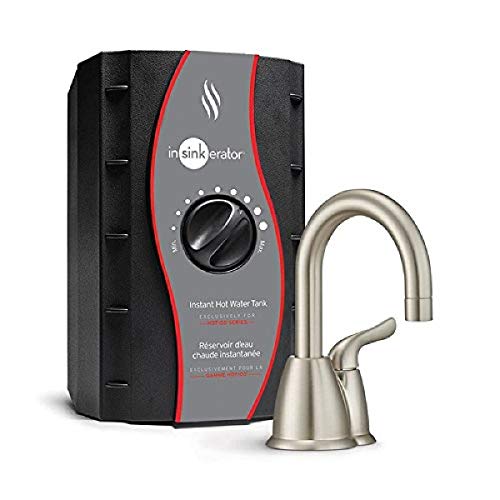
4. InSinkErator Instant Hot Water Dispenser
An under-sink system with a dedicated faucet that gives hot water at the sink. It frees up counter space in a home or small shop.
Suits: built-in kitchen use. Strengths: no counter clutter. Weaknesses: needs installation. Skip it if you rent or cannot drill the sink.


Best for events and small cafes
5. VEVOR Commercial Hot Water Dispenser
A budget-friendly commercial-style countertop dispenser for cafes, churches and event tables. VEVOR sells several tank sizes.
Suits: events and small cafes. Strengths: size options. Weaknesses: less brand history. Skip it if you want a long-established maker.


Best for shared spaces
6. Brio Self-Cleaning Water Cooler
A floor-standing dispenser with hot and cold taps, sold in bottleless and bottle-loaded styles. It suits offices and waiting rooms.
Suits: shared spaces. Strengths: hot and cold in one unit. Weaknesses: large footprint. Skip it if you only need hot water.

Care and Setup
- Descale the tank on the schedule the maker recommends.
- Use filtered water if your tap water is hard.
- Place the unit near an outlet and clear of the wall.
- Wipe spouts and drip trays often.
- Follow the manual for any plumbing hookup.
- Empty and refill countertop pots with fresh water instead of topping up old water.
Mistakes to Avoid
- Buying a plumbed unit without a water line nearby.
- Skipping descaling and letting scale build up.
- Ignoring the child lock in a busy space.
- Picking a single-cup model for a whole office.
- Overlooking the power requirements.
- Leaving a dry unit switched on with an empty tank.
Sizing for Peak Demand Rather Than Daily Average
The most common sizing mistake is to count total cups per day. What matters is how many cups are poured in your busiest window, because a tank can only supply so much hot water before it has to reheat. A break room where thirty people reach for tea at ten in the morning tests the machine far more than the same thirty cups spread across a working day.
To estimate, watch a normal busy period and count the cups, noting the size of each. Add a margin for growth and for guests. Then compare that figure with the tank size and the recovery rate on the product listing. Recovery describes how quickly the unit reheats cold water after you draw from it. A tank that is large but slow to recover may leave the last person in the queue with lukewarm water, while a smaller tank with fast recovery can serve a steady stream.
Think too about what people are making. Instant noodles and oatmeal use more water per serving than a cup of tea, and a cafe preparing pour-over coffee or filling a large urn draws a lot at once. If your demand is low and steady, a countertop pot is likely to be enough. If it is high and bursty, a plumbed commercial unit or a larger tank makes sense. Ask the seller or read the manual for guidance on cups per hour, remembering that those figures are claims and depend on incoming water temperature.
Plumbed Versus Fill-by-Hand: Installation Realities
A plumbed dispenser connects to a water supply, so it refills itself and never needs a jug. That saves time in busy settings, but it brings installation needs. You need a cold water line nearby, a shutoff valve, an electrical outlet that suits the unit and enough space to reach the connections for service. Some units require a drain or a drip tray plumbed to a drain, and many local codes require a licensed plumber for the connection.
A fill-by-hand pot is simpler. You plug it in, fill it from a tap or jug and press a button or lever to dispense. There is no plumbing work, and you can move it. The downside is the effort of refilling and the risk of running it low, which is a problem in a busy office. Fill levels also matter for safety, so watch the maximum line.
Under-sink systems sit between the two. A small tank under the counter feeds a dedicated faucet, which frees up counter space but needs room under the sink, a water connection and an electrical outlet. Check the cabinet space and the countertop hole for the faucet. If you lease the space, ask your landlord before making plumbing changes, and keep records of the installation.
Temperature Range and Water Quality
Different drinks suit different temperatures, so an adjustable dispenser adds value. Water used for green and white teas is usually cooler than for black tea, while coffee brewing tends to want water just below boiling. Instant meals and oatmeal prefer very hot water. Check the listing for the range and how precisely it holds each setting. Some units use a small number of preset levels, while others let you adjust in small steps.
Water quality affects taste and the life of the machine. Hard water leaves scale, a white crust that builds up on the heating element and inside the tank, and reduces efficiency. A filter on the supply line can reduce scale and improve flavor, but filters need replacing on schedule. If you use a fill-by-hand pot, using filtered or softened water has a similar benefit.
- Check the minimum and maximum temperature settings.
- Ask whether the unit holds the set temperature at idle.
- Find out the filter type and replacement interval.
- Check if parts that touch the water are food-safe materials.
For baby formula, follow the formula maker’s and your pediatrician’s guidance on water temperature and preparation, as a dispenser alone does not make a bottle safe. Always let the water cool to a safe level before feeding.
Safety Features for Shared and Public Spaces
Hot water scalds quickly, so safety features matter more in an office, church hall or cafe where many people, including visitors and children, use the machine. A child lock or a two-step dispensing action reduces accidental pours. A stable base or tip-over protection keeps a countertop pot from spilling if someone knocks it. Spouts that stay cool to the touch and drip trays that catch spills help reduce hazards.
Think about where you place the unit. Put it at a height that allows people to hold a cup under the spout without leaning over, and away from the edge of a counter. Keep the area dry, and add a non-slip mat or tray under a busy dispenser so spills do not create slip risks. Make sure the cord does not trail where someone can trip on it.
Post simple instructions near the machine, including how to use the lock and what to do if there is a spill. Train staff to report leaks and to turn the unit off if it behaves oddly, such as steaming heavily, making strange noises or leaking. Check for any local rules or insurance requirements for equipment in public spaces. If the machine is used by the public, consider whether it needs periodic inspection under your workplace rules.
Descaling, Cleaning and Planning for Service
A dispenser that is never cleaned will eventually underperform. Scale narrows pipes, coats the heating element and shortens the life of the tank. Descale on the schedule in the manual, using the cleaner the maker recommends, and rinse thoroughly before use. Hard-water sites may need to descale more often. Keep a log so that the task does not fall through the cracks, particularly in a shared office.
Everyday cleaning is simple. Wipe the spout and drip tray, empty and wash the tray, and clean the exterior with a damp cloth. Never immerse the base in water, and unplug the unit before cleaning. For fill-by-hand pots, rinse out the tank and refill with fresh water instead of topping up old water, which can taste flat or develop deposits.
Plan for service before you need it. Ask what the warranty covers, whether replacement parts are available and who can repair the machine locally. Commercial units tend to be built for repair, with replaceable elements and valves, while low-cost countertop pots are often replaced rather than fixed. Keep the manual and the receipt. Signs that it is time to replace include persistent leaks, a heating element that no longer reaches temperature, constant scale despite descaling and unusual noises or tripping breakers.
Hot Water Dispenser Terms Explained
Commercial-style hot water dispensers come with technical language that can obscure what a unit actually does. This glossary covers the words you will see most often.
- Tank capacity: how much hot water the unit holds ready. It affects how many cups you can draw before waiting for a refill.
- Recovery rate: how quickly the unit heats new water after drawing from the tank.
- Temperature range: the settings the unit offers, often tuned for tea, coffee or instant meals.
- Plumbed-in and countertop: plumbed-in units connect to a water line, while countertop units use a manual fill reservoir.
- Filtration: a filter that treats incoming water. Replacement schedules are set by the maker.
- Lockout or child safety: a control meant to prevent accidental dispensing, as described by the maker.
- Dispense volume settings: programmable amounts for cups or pots.
Matching a Dispenser to Your Space
Small office or break room
A countertop unit with a modest tank may suit a handful of users. Check the footprint and the reservoir size, and plan where the outlet is.
Busy workplace or cafe
Look for a larger tank and a quick recovery rate, along with a plumbed-in option if available, to reduce refilling. Confirm the maker’s description of intended use.
Home kitchen with frequent tea or instant meals
A smaller unit with precise temperature settings can be convenient. Think about the counter space and whether you prefer a sink-mounted tap.
Event or catering use
Capacity matters most. Consider how many cups you will need to serve in a short window, and check the power requirements of the unit.
Plumbed-In Versus Fill-By-Hand
| Question | Plumbed-in | Manual fill |
|---|---|---|
| Installation | Needs a water line connection | Plug in and fill |
| Convenience | No refilling | Needs regular topping up |
| Flexibility | Fixed location | Easy to move |
| Professional help | A licensed plumber is wise | Not required |
Installation, Electricity and Calling a Professional
A hot water unit combines plumbing, electricity and very hot water, so installation deserves care. Follow the maker’s instructions closely. For plumbed-in units, use a licensed plumber for connections, shutoff valves and any changes to the water line. Check the electrical needs on the specification sheet, and ask a licensed electrician if the circuit may be overloaded. Place the unit on a stable surface, with space for ventilation, away from splashes.
Always keep children away, and never block the vent or spout. Hot water can cause burns, so follow the maker’s warnings about safe use, and use cups that can handle the temperature. Descale on the maker’s schedule, particularly if your water is hard, since mineral buildup affects performance.
How to Read a Listing for a Commercial Unit
Look past the word commercial, which can mean different things to different sellers. Check the stated capacity and recovery rate, and consider how those numbers match your daily demand. Look at the voltage, wattage and plug type so the unit suits your outlet. Read about the construction, including the materials of the tank and the spout. See what the listing says about filtration and what filters cost to replace over time. Look at the dimensions, including clearance above for refilling. Read the warranty summary, and check what the maker says about commercial use, since some warranties differ for business settings.
Finally, read the return terms. A large appliance is hard to ship back, so understand the process before you commit.
Keeping It Clean and Working Well
A simple routine keeps the water tasting fresh. Wipe the exterior and drip tray regularly, descale on the schedule in the manual and replace filters when the maker advises. If the unit sits idle for a long time, empty and dry it as directed. Post a short instruction card if many people share the dispenser, so everyone knows how to use it safely.
Mistakes to Avoid With a Hot Water Dispenser
A dispenser is simple to use, which makes a few common slips easy to overlook. Buying for peak demand without checking recovery is one: a large tank that refills slowly can leave the last person in line waiting. Compare how many cups you need in the busiest ten minutes with the maker’s stated capacity.
Another slip is ignoring water quality. Hard water builds scale inside the tank and heating element, which can reduce performance over time. Follow the descaling schedule, and consider filtration if the maker offers it. Placing the unit in a cramped spot is a third problem, since steam and heat need room to escape and the spout needs space for tall cups.
Finally, never assume every cup or container can take boiling or near-boiling water. Read the manufacturer’s guidance for cups, and keep a stable, flat surface beneath the spout. Label the controls if several people share the unit, and keep the manual close at hand for quick reference.
With a little forethought about demand, water quality and placement, a dispenser becomes one of the most appreciated appliances in a shared space.
Commercial Hot Water Dispenser FAQ
How hot does the water get?
Settings differ by model. Check the listing for the exact temperature range.
Can I use one for baby formula?
Some have lower settings for that. Follow the maker’s guidance and your pediatrician’s advice.
Is plumbed or countertop better?
Plumbed units save effort at high volume. Countertop pots need no installation.
How much hot water will I really use?
Count the cups poured at your busiest hour. A bigger tank or a plumbed unit helps when many people pour at once, while a countertop pot is fine for a household.
How do I estimate the tank size I need?
Count the cups poured during your busiest period, add a margin, and compare it with the tank size and recovery rate on the listing. Peak demand matters more than the daily total.
Can a hot water dispenser make coffee?
It supplies hot water for brewing methods such as pour-over or instant coffee. Check the temperature range on the listing for your preferred method.
Do I need a plumber to install a plumbed unit?
Often yes, and local codes may require a licensed professional. Follow the manual and ask about drain and shutoff valve requirements.
How often should I descale?
Follow the manual. Hard water usually means more frequent descaling, and keeping a log helps in shared spaces.
Is filtered water necessary?
It is not always required, but a filter can reduce scale and improve taste. Remember that filters need replacing on schedule.
What safety features should I look for in an office?
Look for a child lock or two-step dispensing, a stable base, tip-over protection and a drip tray. Place the unit away from counter edges.
When should I replace a dispenser?
Replace it if it leaks persistently, fails to reach temperature, shows heavy scale despite descaling, or trips breakers. Compare repair cost with replacement.
A Working Day With a Commercial Hot Water Dispenser: Where It Helps and Where It Does Not
The buyers who get the most from a hot water dispenser are cafe staff, office managers and home tea drinkers. Their day rarely revolves around one perfect test dish. It revolves around keeping hot water ready for drinks and prep throughout the day, with tea, coffee, instant soups and bowls of oatmeal moving through in whatever order the day demands. Judged against that reality, the right hot water dispenser is not the one with the longest feature list. It is the one whose size, controls and cleaning routine fit the rhythm of the work without asking anyone to reorganise their space or their habits around it.
At the busy end of the day the pattern is always the same: several jobs arrive at once, counter or floor space disappears, and the hot water dispenser has to perform while people are tired and distracted. This is where honest capacity matters more than headline capacity. A hot water dispenser that handles a realistic load of tea, coffee, instant soups and bowls of oatmeal in a steady, predictable way will serve cafe staff, office managers and home tea drinkers better than a larger or fancier option that only shines when it is loaded carefully and watched constantly. Predictability is a feature, even though it never appears in a specification table.
The honest limitation is that no hot water dispenser removes the work around the work. There is still prep before, attention during and cleaning after, and a model that is awkward to clean will slowly be used less, whatever its cooking or cooling performance. Before you buy, picture the least enjoyable job the hot water dispenser will ask of you on a wet, busy evening, and check that the design makes that job short and simple. Buyers who think about the worst day, not the best one, are the buyers who stay satisfied in year two.
Comparing the Six Picks Above Without Guesswork
The six options reviewed in this guide are BUNN H5X Hot Water Dispenser, Zojirushi Micom Water Boiler and Warmer, Breville HotCup Hot Water Dispenser, InSinkErator Instant Hot Water Dispenser, VEVOR Commercial Hot Water Dispenser and Brio Self-Cleaning Water Cooler. Treat that order as a shortlist, not a league table. The reviews above describe each model in the same terms, so the fairest comparison is to line up the points that matter to your situation and ignore the rest. Start with the Specs at a Glance table, note which size class and control style each pick belongs to, and then read the individual reviews again with your own space and routine in mind.
A useful method is to cut the list in two passes. On the first pass, remove any pick that does not fit your measured space, your power or connection options, or the way you actually work with tea, coffee, instant soups and bowls of oatmeal. Fit problems do not improve with use, and a hot water dispenser that fights its surroundings will annoy you daily. On the second pass, compare what is left on the softer points: how the controls feel, how the parts come apart for cleaning, and how the design handles scale left by minerals in the water. Those details decide long-term satisfaction far more often than a small difference on a specification line.
If two picks still look equal after both passes, choose the one whose routine you understand better. Familiar controls, a cleaning process you can picture yourself repeating, and parts that look straightforward to replace are worth more than a feature you might use twice a year. And if none of the six fits, that is useful information too: it usually means your space, your volume or your budget assumption needs adjusting, not that you should force the closest match into service.
Setup Day: A Calm, Step-by-Step Routine for Your Commercial Hot Water Dispenser
Before it comes out of the box
Measure the space one final time, including the route the hot water dispenser will travel to reach it: doorways, corners, lift doors and the swing of any door or lid once it is in place. Clear the spot fully, clean it, and check the outlet or connection point is where the listing led you to expect. Keep the packaging until the hot water dispenser has run through its first full job, because returns and exchanges are far simpler with the box and inserts intact, and photograph any transit damage before you throw anything away.
Positioning and first checks
Set the hot water dispenser level and stable, with the clearance around it that the manual asks for, especially near vents, doors and anything that gets hot or cold in use. Wipe or wash the removable parts, run through the controls without a load so the buttons, dials and indicators make sense before food is involved, and confirm that doors, lids, trays or baskets move the way they should. Small checks now are cheap; the same checks after a week of use tend to turn into arguments about whether a fault was there from the start.
The first run and what to watch
Make the first job an easy one: a small, familiar load of tea, coffee, instant soups and bowls of oatmeal that you know well, so any odd behaviour is easy to spot and nothing important is at stake. Stay nearby, watch how the hot water dispenser settles into its cycle, listen for sounds that seem strained or unusual, and note anything that surprises you while it is fresh. If the first run matches the description in the manual and in the review above, you can move on to normal use with confidence. If it does not, stop and resolve it while the purchase is new, rather than adapting your routine around a problem.
Cleaning and Care: A Rhythm for Daily, Weekly and Monthly Jobs
After every use
The daily job is short and non-negotiable: deal with the drip tray, the spout and the reservoir while the traces of the day are still easy to remove. Empty what needs emptying, wipe what needs wiping, and leave the hot water dispenser dry and open or closed exactly as the manual recommends for storage between uses. Five unhurried minutes at this point prevent most of the scale left by minerals in the water that later takes an hour of soaking and scrubbing, and it keeps flavours, odors or hygiene problems from carrying into the next batch of tea, coffee, instant soups and bowls of oatmeal.
Once a week
The weekly job goes one layer deeper. Remove the parts that come out, wash them properly rather than wiping them in place, and inspect the areas you cannot see during daily cleaning: seals, hinges, corners, filters and the places where scale left by minerals in the water quietly accumulates. This is also the moment to check for wear while it is still cheap to address, such as a seal that no longer sits flat, a coating that is starting to lift, or a control that feels different from the others. Small faults found on a quiet weekly check rarely become emergencies.
Once a month and seasonally
Monthly care is about the surroundings as much as the machine. Pull the hot water dispenser out if its design allows it, clean behind and beneath it, check cords, hoses or connections for damage, and confirm the space still gives it the airflow and clearance it started with. Kitchens drift: items migrate, vents get blocked and routines slip. A short monthly reset keeps the hot water dispenser working in the conditions it was chosen for, and it is the simplest way to stretch the working life of any model on the list above, whichever one you picked.
Troubleshooting: Checks to Make Before You Blame the Hot water dispenser
When results slip, the cause is usually one of four ordinary things rather than a failing machine. The first is loading: too much at once, pieces packed too tightly, or a load that is very different from the tea, coffee, instant soups and bowls of oatmeal the hot water dispenser handles best. The second is cleaning, because scale left by minerals in the water changes how surfaces heat, seal, drain or circulate air long before it becomes visible damage. Work through loading and cleaning first; they cost nothing and they explain most disappointments.
The third cause is placement. A hot water dispenser that has been nudged against a wall, boxed in by stored items or moved to a warmer, colder or more crowded spot than it started in will behave like a different machine. Restore its original clearances and level footing before judging its performance. The fourth cause is expectation: comparing results with a different style of equipment, or with the first careful week of use when everything was new, clean and closely watched. Recreate those early conditions once, honestly, and see whether the gap closes.
There are also clear signs to stop troubleshooting and get help. Electrical smells, damaged cords, leaking connections, a door or lid that no longer seals or closes properly, and any fault that returns immediately after a thorough clean and a careful test run all deserve professional attention or a warranty conversation. Keep your proof of purchase and a short note of what you observed and when. A clear description gets a faster, better answer from any support team than a general complaint, and it protects you if the problem turns out to be a defect rather than wear.
Before You Order: A Short Decision Worksheet
Write down your real numbers first
Before comparing models, write down the numbers that describe your situation rather than the situation you imagine: the measured width, depth and height of the space, the distance to the nearest suitable outlet or connection, the number of people or orders involved on a normal day, and the busiest load you face in a normal week. These four figures settle most of the choice on their own. A hot water dispenser that matches them will feel right from the first day, while one chosen from a showroom impression or a friend’s recommendation has to be forgiven daily, and forgiveness wears out.
Decide in advance what you will not compromise on
Every buyer has one point that matters more than the rest, whether it is a door or lid that must open a particular way, controls a particular person can use confidently, a cleaning step that must stay simple, or a footprint that cannot grow by even a small margin. Name that point before you shop and treat it as a filter, not a preference. The picks above that fail your filter are not bargains at any point in the range; they are future frustrations. The picks that pass it can then be compared calmly on everything else, including the details of how they handle tea, coffee, instant soups and bowls of oatmeal and how their parts come apart for cleaning.
Plan the first week, not just the first day
Finally, plan how the hot water dispenser will be introduced. The first week should include one easy job, one normal job and one honest test at the busy end of your routine, followed by the first full clean while the steps are still fresh in your mind. That sequence teaches you more than a month of occasional use, and it surfaces any delivery damage, missing part or misunderstanding about the controls while the purchase is still new and easy to put right. Buyers who schedule that first week deliberately rarely join the group who discover a problem at the worst possible moment, months later, with a kitchen full of people waiting.
More Commercial Hot Water Dispenser Questions Buyers Ask
How do I choose the right size of hot water dispenser?
Work backwards from a real day rather than a special occasion. Count the people, portions or orders the hot water dispenser must handle at the busiest moment you face regularly, then choose the size class that covers that moment without strain. Buying for a rare peak leaves you cleaning and storing an oversized machine all year, while buying for an average day leaves you short exactly when it matters. The size classes in the Specs at a Glance table above are the right starting point for that calculation.
Can a hot water dispenser like this be used every day?
Yes, provided the daily routine in this guide is realistic for you: a sensible load, a short clean after use and a weekly check of the parts that wear. Daily use is usually kinder to a machine than occasional use followed by long, dirty storage, because problems are noticed early and moving parts, seals and surfaces stay in regular working order. The buyers who struggle with daily use are almost always the ones whose cleaning routine was designed for a quieter life than the one they actually lead.
What should I check on the day it arrives?
Check the exterior for transit damage before the courier leaves if you can, confirm that every part, tray, rack or accessory named on the listing is in the box, and run the hot water dispenser once with a small, unimportant load before relying on it. Confirm that doors, lids and controls behave as described, and keep the packaging until that first run is done. Most problems with a new hot water dispenser are delivery or completeness problems, and they are far easier to resolve in the first days than in the first month.
Which accessories are actually worth having?
Only the ones that match jobs you already do. A spare of the part you wash most, a tool shaped for the surface you clean most, and storage that protects the hot water dispenser in your actual space are sensible purchases. Accessories bought for imaginary future habits usually join the drawer of good intentions. Read what each review above says about included parts first, because several picks already bundle the extras that other brands sell separately, and duplicating them adds cost and clutter without adding capability.
Should I pay extra for delivery or installation help?
It depends on the route between the street and the final spot. If the hot water dispenser must travel up stairs, through narrow doors or into a fitted space, help is usually money well spent, because most early damage happens during moving rather than during use. Measure the route honestly, including corners and door swings, and decide before the delivery day rather than improvising with whoever happens to be present. If the route is short, level and wide, a careful self-install following the manual is perfectly reasonable for most models in this guide.
What if my household or business grows?
Growth usually shows up first as queuing: people waiting for the hot water dispenser, loads being split more often, or cleaning being rushed because the machine is needed again immediately. Those are signs that the routine, not necessarily the machine, is under strain. Before replacing anything, check whether a second smaller unit, a change in prep habits or a simple rota solves the queue. If the strain survives those fixes, the size-class discussion in the reviews above will tell you honestly whether stepping up a class is justified or whether you were simply loading the current machine badly.
How do I know when a hot water dispenser needs replacing rather than repairing?
Replace when the same fault returns after a proper clean and a careful test, when seals, coatings or safety-related parts have worn past the point where a replacement part restores them, or when the machine can no longer hold the steady performance your routine depends on. Repair when the fault is isolated, the part is available and the rest of the machine is sound. Age alone is a poor guide: a well-kept hot water dispenser that has followed the care rhythm above will outlast a neglected newer one, which is why the weekly inspection matters.
Practical Notes for the First Month of Ownership
Teaching someone else to use it
Sooner or later someone else will run the hot water dispenser: a colleague covering a shift, a partner helping with dinner, or a guest who insists on helping. The two-minute handover is worth doing properly. Show them the load you consider full, the control setting you use most, and the one cleaning job that must happen straight after use. Most damage and most disappointing results come from a well-meaning second user who was never told those three things, not from the machine itself.
Keeping a simple note of what works
Keep a short note, on paper or in a phone, of the settings and timings that worked for your regular jobs with tea, coffee, instant soups and bowls of oatmeal. Memory is unreliable across a busy month, and a written record turns second and third attempts into repeats of a success instead of new experiments. Note the load size as well as the setting, because the two travel together: a result you loved with a half load will not repeat exactly with a full one, and knowing that saves you blaming the hot water dispenser for a difference you introduced yourself.
Planning around your busiest days
Every household and every kitchen has a predictable peak: a weekend gathering, a market day, a holiday morning. Plan the hot water dispenser around it rather than discovering its limits during it. Prep what can be prepped the day before, clear the space around the machine, and make sure the cleaning supplies for the drip tray, the spout and the reservoir are actually in stock. A machine that copes easily on a planned busy day will feel far more capable than a technically stronger one that is always being improvised around.
Storing it well between uses
How a hot water dispenser waits matters almost as much as how it works. Store it clean and dry, with cords, hoses or loose parts kept with it rather than scattered, and with nothing heavy resting on doors, lids or controls. If it will sit unused for a stretch, follow the manual’s guidance for that situation and give it a short test run before the next important job. Machines rarely fail at the moment of greatest need; they fail quietly in storage and are discovered at the moment of greatest need.
Being honest about running costs
The purchase is only the first cost. Energy or fuel, water, detergent or other consumables, replacement parts and the occasional accessory all belong in the real budget for a hot water dispenser. None of this argues against buying; it argues for choosing a model whose ongoing needs you understand from the start. The reviews above note the connection and consumable requirements of each pick, so read those lines as running-cost information, not fine print, and factor them into the comparison before you decide.
Safety habits that become second nature
A few habits protect both the machine and the people around it. Keep cords and connections dry and visible rather than trapped behind the unit, give hot or cold surfaces the respect the manual describes, and never defeat a door, lid or guard that is there to keep hands away from harm. Teach these points to anyone who uses the hot water dispenser, including guests and new staff, on their first use rather than after the first scare. Equipment used by several people needs shared habits, not private ones, and the time to agree them is before the busy day, not during it.
The seasonal deep clean
Twice a year, give the hot water dispenser the clean that daily and weekly routines cannot reach: every removable part out and washed, every seal wiped and inspected, the area behind and beneath it cleared, and a full test run afterwards with a simple load of tea, coffee, instant soups and bowls of oatmeal. Seasonal cleaning is also the natural moment to replace worn small parts, restock cleaning supplies and reread the manual pages you skimmed on setup day. Owners who keep this appointment rarely meet the slow decline that makes a good machine feel tired before its time.
The Short Version
For offices and cafes, the BUNN. For tea at home, the Zojirushi. For single cups, the Breville. For under-sink convenience, the InSinkErator. For a budget-friendly commercial style, the VEVOR. For hot and cold, the Brio. Pick by volume first, then by whether you can plumb the unit in.
Related Guides
- 6 Best Water Dispensers for Offices and Break Rooms (2026)
- 6 Best Hot Water Dispensers: Countertop and Under-Sink (2026)
- How to Choose the Best Commercial Water Dispensers (2026 Guide)
- How to Choose the Best Instant Hot Water Dispensers (2026 Guide)
- 6 Best Bottom Loading Water Dispensers: Hot and Cold (2026)