Disclosure: airfryerkitchensupply.com is reader-supported. When you buy through links on our site, we may earn an affiliate commission at no extra cost to you.
Where to buy
For best clean air machine for smokers, start here: Smoke duty is the hardest work an air purifier does, so every pick below was verified as a current listing with the carbon capacity smoke actually requires. Every linked pick below was verified against Amazon’s catalog before this guide was written, so the product you land on is the product described. Linked picks say “check price on Amazon” because live pricing changes too often to print honestly. Picks marked as unlinked are real products sold mainly outside Amazon; they are described in full, with no purchase link, rather than replaced with a weaker substitute.
WINIX 5510 Air Purifier (Best Overall): Check on Amazon — check the current price on Amazon.
Austin Air HealthMate Plus (Best for Heavy Smoke Odour): Check on Amazon — check the current price on Amazon.
Coway Airmega Mighty AP-1512HH (Best for Most Rooms): Check on Amazon — check the current price on Amazon.
Blueair Blue 211i Max (Best for Large Spaces): Check on Amazon — check the current price on Amazon.
Medify MA-50 Air Purifier (Best for Big Open-Plan Areas): Check on Amazon — check the current price on Amazon.
Rabbit Air MinusA2 SPA-780A (Best Wall-Mounted / Design Pick): Check on Amazon — check the current price on Amazon.
Introduction: what actually matters here
A clean air machine for smokers has two enemies, and most purifiers only fight one. Smoke particles are fine and plentiful — that is the HEPA filter’s job. Smoke odour is gas — volatile compounds that pass straight through HEPA and only stop in a serious bed of activated carbon. The best clean air machine for smokers is therefore chosen by carbon weight and filter design first, and by headline coverage second. All six picks below were verified through Amazon’s catalog with that priority in mind.
Set expectations honestly before the list. A good purifier in a smoking room dramatically reduces lingering odour and the particles that settle into fabrics, and it protects the rest of the home from drift. It does not make indoor smoking harmless, it does not scrub a room instantly while someone is actively smoking beside it, and no machine in this guide is presented as a health device — they are comfort and household-air machines, judged on odour and particle control.
Placement and running costs decide real-world results as much as the machine: a purifier sized for the room, run continuously on auto, with its carbon filter replaced on schedule, outperforms an oversized unit run occasionally with an exhausted filter. The guide sections cover sizing, placement and the filter economics that listings prefer not to emphasise.
In this guide
Quick Picks
WINIX 5510 Air Purifier — Best Overall: The smoke-room benchmark: True HEPA for particles plus a dedicated high-deodorization carbon stage for the smell, with auto mode that reacts when smoke appears. — Check on Amazon
Austin Air HealthMate Plus — Best for Heavy Smoke Odour: A heavy carbon-and-zeolite bed with a filter life measured in years — the heavy-duty answer for daily smoke and stubborn odour. — Check on Amazon
Coway Airmega Mighty AP-1512HH — Best for Most Rooms: A polished all-rounder with a real air-quality display — you can watch it react to smoke, which builds the habit of actually using it. — Check on Amazon
Blueair Blue 211i Max — Best for Large Spaces: Very large coverage with quiet operation — for open-plan homes where smoke drifts across one big space. — Check on Amazon
Medify MA-50 Air Purifier — Best for Big Open-Plan Areas: High-coverage HEPA duty for big rooms and shared houses — a workhorse for landlords, lounges and large families. — Check on Amazon
Rabbit Air MinusA2 SPA-780A — Best Wall-Mounted / Design Pick: Wall-mountable, quiet and design-conscious, with a dedicated odour-removal stage — for rooms where the machine must be seen politely or not at all. — Check on Amazon
How These Picks Were Chosen
Picks were ranked on odour control architecture first — dedicated deodorization carbon stages, carbon-and-zeolite beds, washable or replaceable odour filters — then on verified coverage, noise at usable speeds, and filter replacement cost and interval. Each model was matched by brand and model against its Amazon listing title before linking; generic ‘smoke’ marketing claims without a carbon stage behind them were not enough to earn a place.
The list spans the realistic budgets of the job: heavy-duty machines with multi-year filter life for daily smoking households, mid-range all-rounders for a smoking room or a home office, and design-led options for rooms where a plastic tower will not be tolerated. What it does not include is any desktop novelty purifier — smoke overwhelms them in days, and recommending one would be a disservice dressed as a bargain.
Coverage figures quoted are the manufacturers’ own from the Amazon listing titles, stated as classes rather than promises: real smoke duty wants the machine sized generously, because running a purifier at half speed in a larger room beats running a small one at full, noisy tilt in a small one.
The 6 Best Options: Best clean air machine for smokers in detail

WINIX 5510 Air Purifier — Best Overall
Winix built its reputation in smoking households because its PlasmaWave-era machines paired real HEPA with a proper carbon deodorization filter, and the 5510 continues that formula with app support and an auto mode driven by an air-quality sensor. When smoke enters the room, the machine notices and works; when the air clears, it settles back to quiet.
Strengths
- Dedicated high-deodorization carbon filter — the component smoke odour actually requires
- True HEPA captures the fine particle fraction that carries smell into fabrics
- Auto mode with air-quality sensing matches effort to conditions, saving filter life and noise
Trade-offs
- Carbon filters are consumables — budget replacements to keep odour performance real
- App features are a convenience, not a substitute for correct sizing
- Like all purifiers, it reduces rather than eliminates smoke exposure in an active smoking room
Key specs (verified): True HEPA plus high-deodorization carbon filter, auto mode, app support, large-room coverage (per Amazon title)
Its strength is balance: no single specification leads the class, but the combination — carbon stage, HEPA, sensing, sane running costs, large-room sizing — is the most complete answer to the actual question smokers ask, which is ‘will the room smell better tomorrow morning’. On the evidence of its design, yes, more reliably than particle-only rivals.
WINIX owners should learn the machine’s sensor behaviour in their own room: where it sits relative to the smoking seat decides how honestly it reacts, and a week of watching its auto responses teaches placement better than any diagram. Move it a metre, live with it for days, and let the sensor’s diary arbitrate — purifiers reward this patient calibration with years of unconsidered service, which is the actual product being bought.
Best for: Most smoking households wanting one machine that handles a main living room / Not suited for: Anyone wanting a set-and-forget filter measured in years — see the Austin Air pick
Check on Amazon — check the current price on Amazon before you buy, and confirm the exact configuration in the listing title matches the model reviewed here.

Austin Air HealthMate Plus — Best for Heavy Smoke Odour
The HealthMate Plus attacks odour the industrial way: a deep bed of activated carbon blended with zeolite, a mineral that targets the chemical fraction of smoke smell, behind staged particle filtration. Its filter is rated in years rather than months, which changes the economics completely for a household that smokes daily — the machine costs more, the consumable treadmill slows to a crawl.
Strengths
- Carbon-and-zeolite bed targets smoke’s gaseous odour compounds directly
- Multi-year filter life transforms running costs for daily use
- Steel-bodied, serviceable design built for a decade of service
Trade-offs
- Large, heavy and visually utilitarian — it is equipment, not décor
- Higher upfront cost within this category
- No smart features or app layer; controls are deliberately simple
Key specs (verified): 4-stage filtration with activated carbon and zeolite, up to 1,500 sq ft, long filter life (per Amazon title)
Judge it over five years, not five minutes. Households that have cycled through lightweight purifiers — each fine for a month, each defeated by saturated carbon by month three — recognise the pattern this machine breaks. For a dedicated smoking room, a cigar lounge at home, or a property fighting inherited smoke smell, it is the heavy artillery and priced accordingly.
The Austin Air’s long filter life changes one habit worth naming: with replacements years apart, owners forget the filter exists, including the date it went in. Write the install date on the filter housing in marker, and set a calendar reminder at the rated interval minus a margin. The machine’s economics are superb precisely because the consumable is rare — protect that rarity from becoming neglect by making the date impossible to lose.
Best for: Daily-smoke households, cigar rooms and inherited-odour properties / Not suited for: Small rooms or buyers wanting smart features and a light footprint
Check on Amazon — check the current price on Amazon before you buy, and confirm the exact configuration in the listing title matches the model reviewed here.

Coway Airmega Mighty AP-1512HH — Best for Most Rooms
The Airmega Mighty is the purifier most often recommended across categories, and it earns a place here on behaviour as much as hardware: its air-quality monitor shows the room’s state in plain sight, its auto and eco modes run it continuously without thought, and its filtration handles smoke particles and everyday odour competently in medium and larger rooms.
Strengths
- Visible air-quality monitoring encourages continuous, correct use
- Auto and eco modes suit leave-it-running smoke management
- Strong all-round filtration for mixed smoke, dust and pet households
Trade-offs
- Carbon capacity is all-rounder class, not the heavy beds of the Winix or Austin picks
- Heavy daily smoke will shorten filter intervals versus gentle use
- Design suits modern rooms; traditional interiors may prefer the Rabbit Air
Key specs (verified): HEPA filtration, air-quality monitor, auto and eco modes, up to 1,748 sq ft (per Amazon title)
Its quiet insight is behavioural: purifiers fail when they are switched off, and they get switched off when they are noisy, mysterious or fiddly. The Mighty is none of those, so it stays on — and a mid-weight machine that runs 24/7 beats a heavyweight that runs when remembered. For a home office or bedroom-adjacent smoking pattern, that reliability of use is the performance that matters.
Coway Mighty’s visibility cuts both ways usefully: guests see the air-quality display react, which starts the conversation smoking households often need — the machine as neutral evidence rather than accusation. Hosts report that a purifier with a legible display changes behaviour in shared homes more gracefully than house rules do, because the room itself appears to be giving the feedback. It is a social feature disguised as a sensor.
Best for: Mixed households wanting one visible, automatic machine for a main room / Not suited for: Dedicated heavy-smoke rooms needing maximum carbon mass
Check on Amazon — check the current price on Amazon before you buy, and confirm the exact configuration in the listing title matches the model reviewed here.

Blueair Blue 211i Max — Best for Large Spaces
Open-plan living defeats small purifiers by volume. The Blue 211i Max is sized for genuinely large spaces, uses Blueair’s HEPASilent approach to move a lot of air without a lot of noise, and adds Wi-Fi auto control — a combination aimed at the lounge-kitchen-diner where a smoker, a cook and a family all share one atmosphere.
Strengths
- Coverage class up to 3,235 sq ft addresses open-plan drift properly
- Quiet operation at working speeds keeps it running in living spaces
- Wi-Fi and auto mode suit whole-home background duty
Trade-offs
- Filtration emphasis is particles and general odour; the heaviest smoke rooms still favour deep carbon beds
- Large-room sizing is wasted — and costlier to feed filters — in a small study
- Premium positioning within the category
Key specs (verified): HEPASilent filtration, up to 3,235 sq ft, Wi-Fi, auto mode (per Amazon title)
Drift is the problem it solves: smoke rarely stays in the room where it was made, and chasing it with an undersized machine in each room costs more than one correctly sized unit commanding the shared space. If your home is one big volume, size for the volume — this is the pick that does.
Blueair’s open-plan role works best with a deliberate seating geography: the machine commanding the shared volume, the usual smoking seat positioned in its effective circulation rather than in a dead corner behind it. Large-space purification is airflow management at furniture scale, and five minutes spent arranging the room around the machine’s path pays out every evening the home is used.
Best for: Open-plan homes and large shared living spaces / Not suited for: Small smoking rooms better served by a carbon-heavy compact
Check on Amazon — check the current price on Amazon before you buy, and confirm the exact configuration in the listing title matches the model reviewed here.

Medify MA-50 Air Purifier — Best for Big Open-Plan Areas
The MA-50 is built around coverage and filtration throughput: a large HEPA surface, a room-size rating in the thousands of square feet class, and a plain, serviceable design. In shared houses and multi-use rooms where smoke is one of several air burdens — cooking, pets, traffic dust — its capacity keeps it effective where smaller machines saturate.
Strengths
- Large coverage class suits big rooms and shared houses
- Substantial HEPA surface for sustained particle duty
- Straightforward controls and filter access suit shared, multi-user homes
Trade-offs
- Odour performance depends on keeping its carbon stage fresh under smoke load
- Size and presence are utilitarian
- Smart features are minimal compared with app-led rivals
Key specs (verified): HEPA filtration, 2,640 sq ft coverage class, smoke and odour duty (per Amazon title)
Shared housing is the unglamorous centre of the smoke-purifier market: several adults, several habits, one machine that everyone ignores until it stops helping. The MA-50’s capacity and simplicity fit that reality — it tolerates neglect longer than delicate machines and returns to form with a filter change rather than a replacement unit.
Medify’s shared-house value includes a maintenance roster problem worth solving on day one: name the person who owns the pre-filter’s monthly vacuum and the carbon fund, however small, that the household contributes to. Machines in shared homes die of diffused responsibility, not of hard use — the MA-50’s tolerance for neglect is generous, and a named owner makes it nearly immortal.
Best for: Shared houses, large lounges and multi-burden rooms / Not suited for: Design-led interiors or app-first buyers
Check on Amazon — check the current price on Amazon before you buy, and confirm the exact configuration in the listing title matches the model reviewed here.
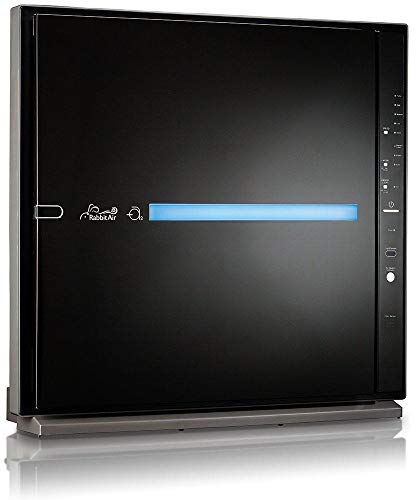
Rabbit Air MinusA2 SPA-780A — Best Wall-Mounted / Design Pick
The MinusA2 is the purifier for the room that rejects appliances: slim enough to wall-mount like a picture, quiet enough for a bedroom or a study, and equipped with an odour-remover filter stage aimed at exactly the smoke-and-cooking smells that embarrass hosts. Its customisable front panel exists because Rabbit Air understands the real objection in most homes is aesthetic.
Strengths
- Wall-mountable slim form frees floor space and looks intentional
- Dedicated odour-removal stage addresses smoke smell, not just particles
- Ultra-quiet operation suits bedrooms, studies and nurseries-adjacent duty
Trade-offs
- Coverage suits single rooms, not open-plan volumes
- Filter set is multi-stage; replacements are a system, not a single cartridge
- Premium for its size class — you pay for design and quiet
Key specs (verified): HEPA purification with odour-removal filter stage, ultra-quiet, wall-mountable (per Amazon title)
Its role in this list is the machine that actually gets bought and kept in the room where someone smokes in the evening — the study, the snug, the bedroom balcony door. A heavier machine exiled to a hallway cleans the hallway. The MinusA2 stays where the smoke is, looking like it belongs there, and that placement honesty is worth real performance.
The Rabbit Air’s wall-mounting deserves its practical due: mounted at breathing height on the wall a smoker faces, it intercepts the plume’s path through the room rather than waiting for general circulation, and it never becomes the obstacle floor machines become in small rooms. In studios and one-room living, that placement logic — not the panel artwork — is the design feature that earns its premium.
Best for: Single rooms where appearance and quiet decide what stays plugged in / Not suited for: Whole-home or heavy daily smoke loads
Check on Amazon — check the current price on Amazon before you buy, and confirm the exact configuration in the listing title matches the model reviewed here.
Comparison Table
| Pick | Badge | Key spec | Best for |
|---|---|---|---|
| WINIX 5510 Air Purifier — Check on Amazon | Best Overall | True HEPA + heavy carbon | Most smoking households wanting one machine that handles a main living room |
| Austin Air HealthMate Plus — Check on Amazon | Best for Heavy Smoke Odour | Carbon + zeolite / 1,500 sq ft | Daily-smoke households, cigar rooms and inherited-odour properties |
| Coway Airmega Mighty AP-1512HH — Check on Amazon | Best for Most Rooms | HEPA + AQI monitor / auto | Mixed households wanting one visible, automatic machine for a main room |
| Blueair Blue 211i Max — Check on Amazon | Best for Large Spaces | 3,235 sq ft / HEPASilent | Open-plan homes and large shared living spaces |
| Medify MA-50 Air Purifier — Check on Amazon | Best for Big Open-Plan Areas | 2,640 sq ft / HEPA | Shared houses, large lounges and multi-burden rooms |
| Rabbit Air MinusA2 SPA-780A — Check on Amazon | Best Wall-Mounted / Design Pick | Wall-mountable / odour stage | Single rooms where appearance and quiet decide what stays plugged in |
How Does a Purifier Interact With Ventilation, Cooking and Candles?
A smoking home’s air has several authors: cooking, candles, wood stoves, traffic through an open window. A sensor-driven purifier responds to all of them impartially, which is why auto mode sometimes works hard at a Sunday roast and rests during a quiet cigarette by an open door. Understanding this stops owners misreading diligence as malfunction — the machine is reporting the room, not commenting on one habit.
Ventilation strategy should be seasonal and deliberate: in mild weather, source ventilation (an open window or extractor near the smoking seat) does the heavy lifting and the purifier polishes; in winter, with the home sealed, the purifier becomes the primary system and its sizing and carbon freshness matter correspondingly more. Households that grasp the handover stop expecting summer performance from a winter-sealed room without adjusting the machine’s speed.
Candles and incense deserve a sentence of honesty: they are smoke sources too, and a purifier working against a room’s worth of scented candles is fighting a battle its owner is funding from both sides. The machines here will cope — at filter life’s expense. Fragrance, like smoke, is cheapest at the source.
What Should Landlords, Hosts and Shared Homes Agree About Smoke and Air?
Most smoke conflict in shared living is about smell in shared spaces, not about smoking itself — which makes a correctly specified purifier a diplomatic instrument. Agreements that work name the machine’s home (the smoking room), its running pattern (continuous auto), and the filter fund (shared, scheduled, unglamorous). Written into a house agreement or a tenancy conversation early, these details prevent the slow resentment that builds when one person’s habit becomes everyone’s background smell.
For hosts, the calculus is simpler: a purifier running in the guest room and living areas, fresh carbon before the holiday season, and soft furnishings washed on the same schedule turns ‘a smoker’s home’ into a non-topic for visitors. The machines in this guide are sized and styled for exactly that hospitality duty, including the design-led pick for rooms where guests actually look at the walls.
Sellers and landlords inherit the mirror-image problem — a property that smells of its previous chapter. Here the heavy-carbon pick earns its place in a preparation programme alongside washing and repainting (the companion paint guide covers the sealing system): air, surfaces and textiles addressed together, in that order of honesty, is what ‘the smell is gone’ actually consists of.
How Do You Know When a Purifier — Not Its Filter — Needs Replacing?
Distinguish the consumable from the machine. Returning odour with a fresh carbon filter, declining airflow with clean stages, new mechanical noise, or a sensor that no longer reacts are machine symptoms; odour with an old filter is a shopping reminder. The brands in this guide build serviceable machines — fans and housings that run for years — so replacement is the exception, and filters are the routine.
Keep the evidence straight before concluding anything: run the machine in a different, smaller room for a day. If it performs there, your original room has outgrown it — a sizing story, common after a move or a change in habits — and the honest fix is reassigning machines between rooms, not condemning a healthy unit. Purifiers migrate around homes over their lives; plan purchases with that cascade in mind.
When replacement is genuinely due, dispose of loaded filters thoughtfully and note what the old machine taught you — the carbon weight your household actually consumes per year is the single most valuable specification for your next purchase, and no listing can tell you yours.
Which Household Scenario Fits Which Machine? A Decision Walk-Through
Scenario one: one smoker, one main living room, a partner who does not smoke. The WINIX 5510 is the household treaty in appliance form — carbon for the smell, sensing that works harder when it must, quiet when it can. Place it by the rules in this guide, agree the continuous-auto habit, and judge it after a fortnight of mornings, which is the timescale on which these machines honestly prove themselves.
Scenario two: a dedicated smoking room — study, snug, cigar corner — used daily. Buy carbon mass: the Austin Air for the multi-year, set-and-forget version, or the Rabbit Air where the room’s appearance and floor space argue for the wall. Dedicated rooms concentrate both the problem and the solution; they are where heavy filtration pays back fastest and where undersized machines are exposed soonest.
Scenario three: a shared house or a family home where smoke is one burden among several — pets, cooking, a busy road. The Coway Mighty’s visible, automatic all-round duty or the Medify’s capacity serves the politics as well as the air: one machine, obviously working, owned by a named person, with a filter fund agreed before the first replacement is due. Most shared-home purifier failures are organisational; solve the organisation at purchase.
Scenario four: open-plan modern living, where the lounge, kitchen and dining share one volume and smoke drifts through all of it. Size for the volume with the Blueair pick, arrange the seating geography around its airflow, and resist scattering small machines room to room — in one connected space, one correctly sized unit with fresh carbon outperforms a archipelago of novelties, in performance, in noise and in the simplicity of feeding it filters.
Your Pre-Purchase Checklist: Seven Questions Before You Pay
One: what is the carbon architecture, in plain terms — a dedicated deodorization filter, a deep carbon bed, carbon with zeolite — and would the listing still sound convincing if the word ‘HEPA’ were removed from it? For a smoke purchase, that test separates the machines built for your problem from the machines marketed at it. Two: what does two years of filters cost at smoke-duty intervals, added to the purchase price, and how does the total reorder your shortlist?
Three: is the machine sized above your room’s area, so its working speed is a quiet one — and have you measured the room rather than guessing it from the estate agent’s description? Four: where exactly will it stand or hang, between which seat and which door, with what clearance — and does that spot have a socket that lets it run continuously without an extension lead crossing a walkway?
Five: who owns the pre-filter’s monthly clean and the carbon fund, by name, in a shared home — and is the first spare filter in the first order? Six: what does the machine’s auto behaviour actually sense, and will its display or app tell you the truth about the room, or merely reassure you? The picks in this guide were chosen partly on the honesty of their feedback loops.
Seven: what is the rest of the system — source ventilation when weather allows, soft furnishings on a washing rhythm, the household agreement about where smoking happens? A purifier bought as the whole answer disappoints; a purifier bought as the centrepiece of a small, honest system — the way this guide frames every pick — is the purchase owners describe, a year later, as the thing that changed the house.
After the First Month: Reading the Evidence of Your Own Room
Judge the machine at day thirty, in the morning, before the room is used: that first breath is the dataset. Households consistently report that the change announces itself there — the absence of yesterday — rather than during active hours, when any machine is outpaced by events. If the mornings have changed, the system is working and the remaining work is maintenance discipline; if they have not, the diagnosis runs in order — placement, sizing, carbon age, the textiles — and this guide’s sections address each in that sequence.
Month one also teaches your household’s true filter economics: how hard auto mode works in your room, how grey the pre-filter gets, how the sensor’s diary maps to your actual habits. Write the install date and the month-one observations on the filter housing itself. Your second purchase decision — a spare filter, a second machine for the bedroom, an upgrade — will be made from that evidence, and evidence beats every review, including the one you are reading.
Finally, let the machine renegotiate the house quietly: the guest room that no longer needs apologising for, the morning the curtains smell of nothing, the shared-home conversation that stops recurring because the room now gives the feedback. These are the returns the category actually pays, and they arrive on the monthly timescale — which is why this guide insists on judging, and maintaining, on that same patient clock.
A Note on Second-Hand Purifiers and Inherited Machines
Purifiers change hands constantly — house moves, upgrades, the machine from a relative’s spare room — and a used purifier’s value lives entirely in its filters and its fan. Price any second-hand machine as a housing plus a motor: assume the carbon is spent (in a smoking home, assume it twice), add a full new filter set to the cost, and compare the total honestly against new. The arithmetic sometimes blesses the used buy, particularly for the heavy-built picks in this guide whose housings outlast several filter generations; it more often reveals that the bargain was a filter subscription with a free fan attached.
Test before money moves: run the machine at full speed and listen for bearing noise, check that auto mode reacts to a disturbed room, and confirm that replacement filters for that exact model are still sold — a discontinued filter line converts a purifier into a sculpture on a schedule set by its last cartridge. Model numbers matter more than brand names here; the filter’s availability is the machine’s life expectancy, printed in a catalogue.
Inherited machines in a newly smoke-free home deserve a kinder paragraph: a relative’s purifier, deep-cleaned and re-filtered, is a genuinely useful start, and its limits — sizing, carbon class — can be learned from this guide’s framework in an afternoon. Run it correctly for a month, read the mornings, and let the evidence decide whether it is the answer or the audition.
How to Choose a Clean Air Machine for Smoke: Carbon First, Then Coverage?
Read listings backwards. Start at the filter: smoke odour is gas, and gas is stopped by activated carbon in meaningful quantity — a dedicated deodorization filter, a deep carbon bed, or carbon blended with zeolite. A purifier whose carbon is a thin sheet behind the HEPA will freshen a room for weeks, then quietly stop helping while its particle numbers still look impressive. Every pick above names its carbon architecture; demand the same of any machine you consider elsewhere.
Then size generously. Manufacturers’ coverage assumes a clean-air delivery rate for ordinary dust duty; smoke is heavier work, so choose a machine rated above your room’s size and run it at a comfortable, quiet speed continuously. A large machine loafing is quieter, longer-lived in filter terms and more effective than a small machine screaming — the picks are ordered with that principle applied.
Finally, price the filters before the machine. Add two years of replacement carbon and HEPA at the manufacturer’s intervals under smoke load (which shortens them) to the purchase price, and compare totals. The Austin Air’s economics only make sense on this maths, and several cheap machines stop looking cheap on it too.
Where Should a Smoke Purifier Sit — and What Else Actually Helps?
Placement is free performance. Put the machine in the room where smoking happens, with clear air around its intake and outlet, between the usual smoking seat and the door the smoke drifts through. Wall-mountable and compact picks exist for rooms where floor placement fails. Do not exile the purifier to a hallway and expect it to defend a lounge.
Ventilation beats filtration when it is available: an open window or an extractor near the source removes smoke before it becomes the room’s problem, and the purifier then handles the residue it is good at. Soft furnishings are the other half of the battle — smoke smell lives in curtains, upholstery and carpets, and washing or steam-cleaning them does what no machine can, because the machine cleans air, not fabric.
Be honest about limits in shared and rented homes: a purifier reduces drift and lingering smell substantially, which is what neighbours and landlords actually complain about, but it is not invisibility. Courtesy — smoking near ventilation, running the machine on higher speed during and after — is part of the system, and the machines above make that system as automatic as current designs allow.
How Often Do Smoke Filters Really Need Changing?
Under smoke duty, carbon saturates faster than the calendar on the box suggests, because the rating assumes average household air. The reliable indicator is your nose: when the room’s morning-after smell returns despite the machine running, the carbon is spent, whatever the indicator says — though sensor-equipped picks like the Winix and Coway give fair warning by working harder in auto mode.
HEPA stages last longer but load visibly in smoking homes; a grey, ash-flecked pre-filter is your cue to vacuum or wash it (where the design allows) to protect the expensive stages behind it. Build the replacement cost into the purchase decision as the guide above insists, keep one spare carbon filter in the cupboard, and the machine will never quietly retire on you mid-winter.
How to Set Up a Purifier for a Smoking Room, Step by Step?
Ten minutes of deliberate setup separates a purifier that transforms a room from one that merely hums in it. Work through the sequence on day one.
- Unpack and remove every filter’s protective wrapping — the most common purifier failure in existence — then refit filters in the order and orientation the manual shows.
- Place the machine in the smoking room with hand-width clearance around intakes, between the smoking seat and the door, away from direct draughts that short-circuit its airflow.
- Run it on its highest tolerable speed for the first day to pull the room’s standing load down, then switch to auto for continuous duty.
- Close the loop: smoke as usual, leave the room, and check the smell an hour later and the next morning — the honest test every manufacturer hopes you skip.
- Set a calendar reminder for the first carbon check at half the rated interval; smoke duty earns early inspection, and your nose makes the final call.
- Wash or vacuum the pre-filter monthly in a smoking home; it is the cheap stage defending the expensive ones.
If odour persists despite correct setup, the remaining reservoir is soft furnishings and walls, not air — launder what can be laundered, and read the result before blaming or replacing the machine.
Common Buying Mistakes
Buying HEPA-only for an odour problem. Particles and gases are different enemies. Without a real carbon stage, the smell stays — the single most common disappointment in this category.
Undersizing to save money. A small machine at full speed is loud, short-lived in filter terms and still behind the smoke. Size up and run slower.
Running it only during smoking. Smoke loads a room for hours. Continuous auto operation is the usage pattern these machines are designed and priced around.
Ignoring filter costs until the smell returns. Saturated carbon fails silently. Budget replacements at purchase and keep a spare; the machine is a subscription in disguise.
Expecting a health guarantee. These are comfort machines for air and odour. They reduce particles and smell meaningfully; they do not make indoor smoke safe, and no honest listing should imply otherwise.
Final Recommendation
For most smoking households the WINIX 5510 is the balanced answer — real carbon, real HEPA, sensing that does the thinking. Daily, heavy smoke justifies the Austin Air’s deep bed and multi-year filter; the Coway Mighty suits automatic all-round duty; Blueair and Medify cover large and shared spaces; the Rabbit Air serves rooms ruled by quiet and appearance.
Choose the carbon first, size for the room you have, run it continuously, and feed it filters on schedule — that system, more than any single badge, is what a cleaner-smelling home is actually made of.
Shortlist again, for convenience: WINIX 5510 Air Purifier — Check on Amazon; Austin Air HealthMate Plus — Check on Amazon; Coway Airmega Mighty AP-1512HH — Check on Amazon.
Related reading on this site: Best Color Paint For Smokers; Best Commercial 270 Smokers; Best Clean Air Machine For Smokers; Best Air Purifiers For Smokers; Best Smokers.
Frequently Asked Questions
Will an air purifier remove the smell of smoke completely?
It reduces lingering odour substantially — that is the honest claim. Smoke odour is gas, captured by activated carbon; with a proper carbon stage, correct sizing and continuous running, most households find rooms smell neutral by morning. Active smoking in the room will always outpace any machine in the moment.
Why does carbon matter more than HEPA for smokers?
HEPA captures particles; odour is gas and passes through HEPA untouched. A purifier for smoke needs both — HEPA for the particle load, a meaningful carbon bed for the smell. Listings that lead with particle numbers and whisper about carbon are telling you which problem they solve.
How big a purifier does a smoking room need?
Size above the room’s area and run the machine slower and continuously. Manufacturers’ coverage assumes ordinary dust duty; smoke is heavier work. A large machine on a quiet speed out-cleans and out-lasts a small machine at full tilt.
How often will I replace filters in a smoking home?
More often than the box’s gentle-use estimate. Carbon saturation announces itself by returning morning smell — trust your nose over the calendar, keep a spare carbon filter, and vacuum or wash the pre-filter monthly to protect the expensive stages.
Where should the machine go?
In the smoking room, with clearance around its intakes, between the usual seat and the door smoke drifts through. A purifier exiled to a hallway defends the hallway. Ventilation near the source, when available, does the first shift and lets the machine handle residue.
Does a purifier make indoor smoking safe?
No — and no honest guide should imply it. These are comfort machines: they reduce particles, drift and lingering smell meaningfully for the household. Health decisions about smoking belong to you and your clinician, not to an appliance.


